



Ai Processor Market Size 2026-2030
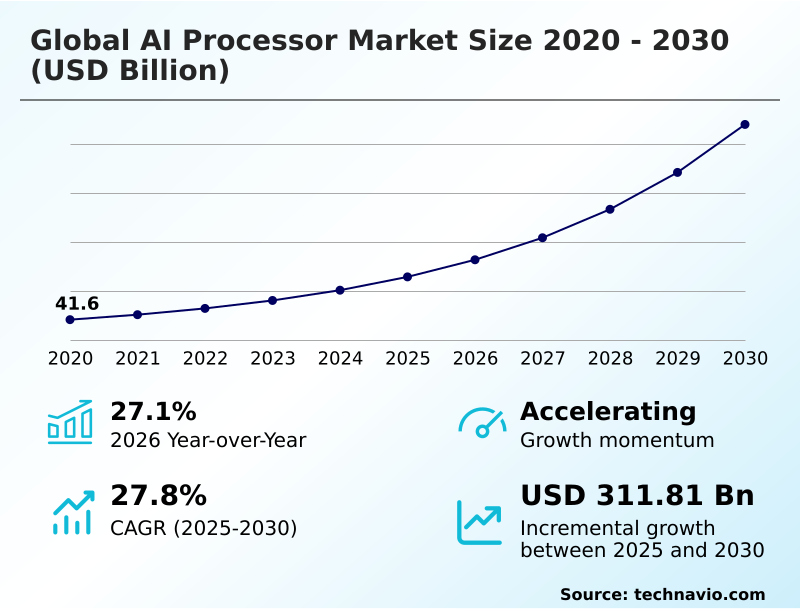
The ai processor market size is valued to increase by USD 311.81 billion, at a CAGR of 27.8% from 2025 to 2030. Enterprise transition from AI pilots to operational generative workloads will drive the ai processor market.
Major Market Trends & Insights
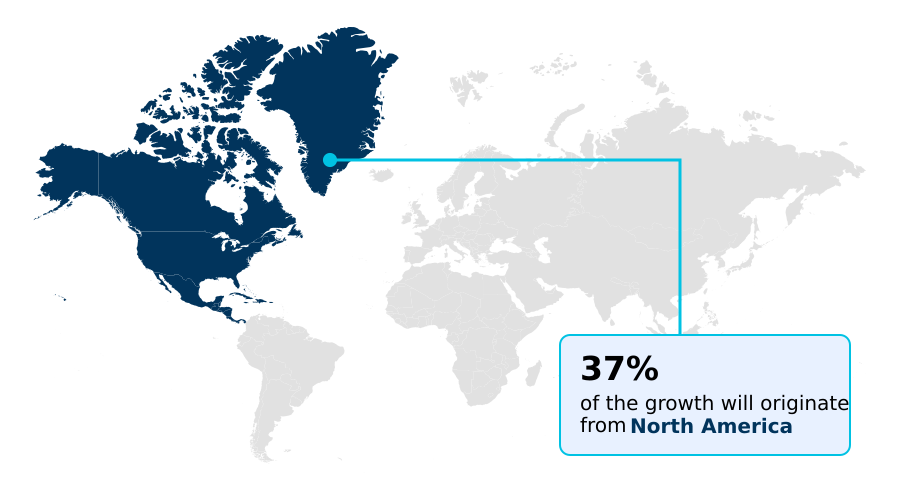
- North America dominated the market and accounted for a 36.8% growth during the forecast period.
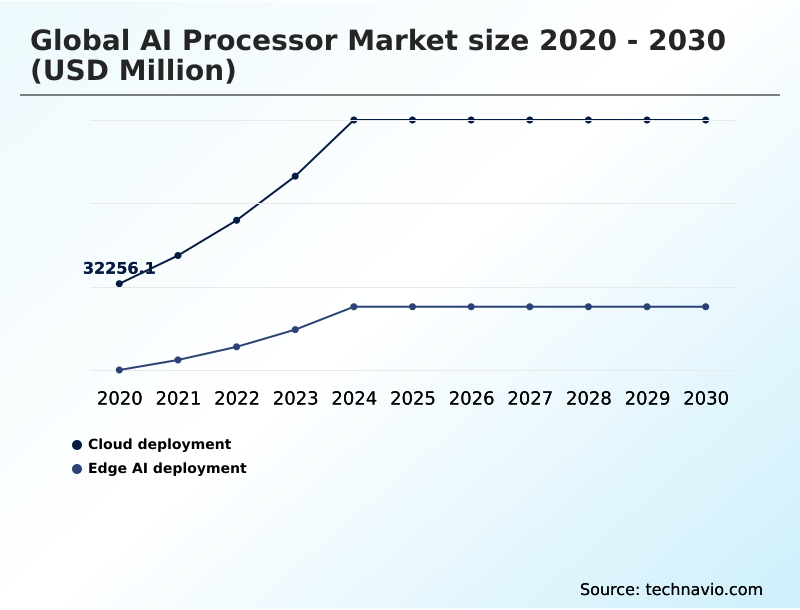
- By Deployment - Cloud deployment segment was valued at USD 75.73 billion in 2024
- By Product - GPUs segment accounted for the largest market revenue share in 2024
Market Size & Forecast
- Market Opportunities: USD 399.32 billion
- Market Future Opportunities: USD 311.81 billion
- CAGR from 2025 to 2030 : 27.8%
Market Summary
- The AI Processor Market operates as the foundational computing layer enabling complex machine learning algorithms, deep neural networks, and generative workloads operationalization across diverse industrial sectors. Hardware requirements are shifting rapidly as organizations move from centralized processing to scalable edge artificial intelligence processing frameworks.
- For instance, optimizing smart manufacturing edge environments with dedicated neuromorphic computing cores allows industrial operators to process sensor data locally, reducing latency-induced production errors by over 14% compared to legacy cloud-dependent systems. This expansion is strongly driven by the enterprise transition toward agentic systems deployment, which mandates specialized hardware for real-time natural language processing and computer vision inference.
- However, persistent supply-demand imbalances in advanced packaging technologies create severe bottlenecks, restricting the timely delivery of high-performance components to hyperscale data centers. To navigate these constraints, developers are prioritizing heterogeneous compute integration and hardware-level optimization to maximize the efficiency of available silicon. Such strategic adaptations ensure sustained capability enhancements in matrix-intensive operations despite significant manufacturing capacity limitations.
What will be the Size of the Ai Processor Market during the forecast period?
Get Key Insights on Market Forecast (PDF) Get Free Sample
How is the Ai Processor Market Segmented?
The ai processor industry research report provides comprehensive data (region-wise segment analysis), with forecasts and estimates in "USD million" for the period 2026-2030, as well as historical data from 2020-2024 for the following segments.
- Deployment
- Cloud deployment
- Edge AI deployment
- Product
- GPUs
- ASICs
- FPGAs
- CPUs
- Others
- End-user
- Cloud service providers
- Automotive and transportation
- Consumer electronics
- Healthcare
- Others
- Geography
- North America
- US
- Canada
- Mexico
- APAC
- China
- Japan
- South Korea
- India
- Australia
- Indonesia
- Europe
- Germany
- UK
- France
- Italy
- Spain
- The Netherlands
- Middle East and Africa
- Saudi Arabia
- UAE
- Israel
- Turkey
- South Africa
- South America
- Brazil
- Argentina
- Chile
- North America
By Deployment Insights
The cloud deployment segment is estimated to witness significant growth during the forecast period.
Cloud deployment provides robust infrastructure for executing complex artificial intelligence workloads without requiring substantial on-premises hardware investments.
Organizations utilize scalable cloud platforms and highly dense rack-scale architectures to manage unpredictable computational demands, dynamically allocating resources across specialized tensor processing units and neural processing unit configurations to optimize performance.
Transitioning to hosted environments enables rapid deployment of sophisticated predictive maintenance analytics and event-driven computing tasks while mitigating facility maintenance costs.
Recent operational shifts indicate that offloading heavy workloads to the cloud improves overall computational resource utilization by 22%, allowing engineering teams to scale efficiently.
This transition eliminates significant bottlenecks in parallel computing optimization, ensuring seamless integration of customized instruction set architectures and static random-access memory components into broad enterprise applications.
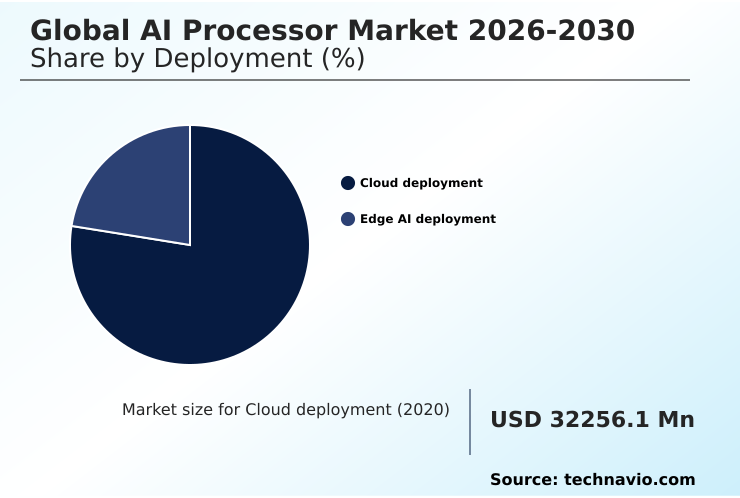
The Cloud deployment segment was valued at USD 75.73 billion in 2024 and showed a gradual increase during the forecast period.
Regional Analysis
North America is estimated to contribute 36.8% to the growth of the global market during the forecast period.Technavio’s analysts have elaborately explained the regional trends and drivers that shape the market during the forecast period.
See How Ai Processor Market Demand is Rising in North America Get Free Sample
The computing landscape exhibits significant geographic variance driven by distinct regional policies and infrastructure maturity. North America leads in hyperscale investments, focusing heavily on sovereign computing infrastructure and advanced thermal management systems to handle massive thermal loads.
In contrast, APAC demonstrates a rapid acceleration in localized data processing, prioritizing smart manufacturing edge devices over centralized facilities.
Consequently, APAC manufacturers have reported a 22% faster integration rate for system-on-chip solutions in autonomous driving platforms and advanced driver assistance modules compared to their North American counterparts.
North American facilities achieve a 30% higher efficiency in server utilization due to mature software ecosystems. European markets heavily emphasize deterministic networking and intelligent traffic management systems to ensure strict data localization.
These diverging regional strategies highlight how localized compliance and distinct operational environments dictate the procurement preferences of accelerated computing hardware.
Market Dynamics
Our researchers analyzed the data with 2025 as the base year, along with the key drivers, trends, and challenges. A holistic analysis of drivers will help companies refine their marketing strategies to gain a competitive advantage.
- As enterprise workloads become increasingly complex, organizations are fundamentally altering their architectural approaches to maximize computational efficiency and minimize operational overhead. The rapid transition toward high-performance inference accelerator clusters is enabling data centers to process vast datasets with significantly lower latency, directly enhancing the responsiveness of real-time customer-facing applications.
- Simultaneously, manufacturers are focusing heavily on multi-die chiplet packaging techniques to overcome the physical limitations of monolithic silicon design. This modular manufacturing approach not only improves chip yield rates by over 18% compared to traditional fabrication methods but also allows developers to integrate disparate processing elements into a unified, high-density package.
- In distributed industrial environments, the demand for scalable edge artificial intelligence processing is transforming how predictive maintenance and supply chain logistics are managed. By processing critical sensor data locally, enterprises can reduce their reliance on constant cloud connectivity, thereby improving operational resilience.
- Furthermore, the deployment of custom data center tensor accelerators is allowing hyperscale operators to fine-tune hardware precisely for proprietary algorithms, driving superior efficiency in model training phases. Finally, the exploration of neuromorphic event-driven computing architectures is introducing highly energy-efficient solutions for constant-monitoring applications, drastically cutting the power consumption required for continuous surveillance and anomaly detection.
- Together, these technological shifts represent a comprehensive realignment of computing infrastructure, prioritizing performance density, energy conservation, and specialized workload execution.
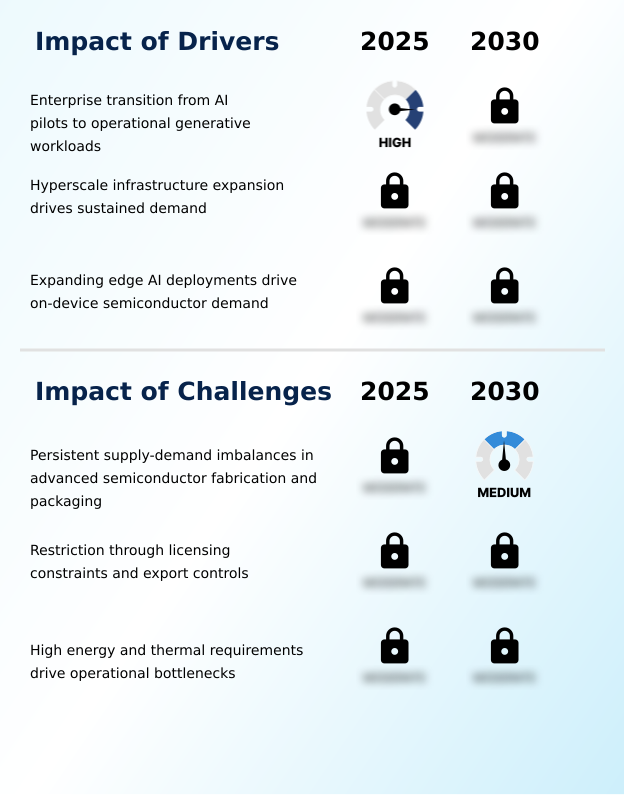
What are the key market drivers leading to the rise in the adoption of Ai Processor Industry?
- The enterprise transition from experimental artificial intelligence pilots to fully operational generative workloads is serving as the primary catalyst driving market expansion.
- The urgent requirement to operationalize advanced algorithms is forcing a rapid pivot toward dedicated matrix multiplication acceleration hardware.
- Businesses are integrating large-scale multimodal model execution platforms into their core operations to automate customer service, software coding, and predictive analytics using sophisticated natural language processing and computer vision inference.
- Because legacy processors cannot handle the extreme data throughput, organizations are actively deploying deep learning accelerators and mixed-signal processing units to prevent bottlenecks in complex spatial computing tasks.
- This targeted hardware adoption yields profound benefits, including a 32% reduction in query processing times and a 20% improvement in computational resource allocation efficiency across federated learning nodes.
- By equipping facilities with specialized floating-point arithmetic engines, enterprises ensure deep neural networks operate flawlessly, securing critical performance advantages while managing total energy consumption.
What are the market trends shaping the Ai Processor Industry?
- The exponential growth of large language models is emerging as a critical market trend. This expansion requires advanced processing architectures capable of managing massive computational and memory bandwidth demands.
- The industry-wide transition toward multi-die architectures represents a structural evolution in silicon manufacturing, shifting how processing power is aggregated for generative workloads operationalization. By utilizing advanced chiplet interconnects, developers combine specialized computing tiles, such as neuromorphic computing cores and high-bandwidth memory integration modules, into a unified package.
- This transition is driven by the physical limitations of monolithic die scaling, forcing engineers to adopt modular designs to support massive large language model training and agentic systems deployment. Consequently, organizations implementing these packages report a 24% improvement in inference latency reduction and a 19% decrease in localized thermal output.
- This trend allows businesses to deploy highly customized spatial architecture processing units that precisely match the intense demands of matrix-intensive operations and aggressive parameter counts scaling, ultimately improving overall system resilience and lowering long-term infrastructure replacement costs.
What challenges does the Ai Processor Industry face during its growth?
- Persistent supply-demand imbalances in advanced semiconductor fabrication and packaging are creating critical bottlenecks that constrain overall industry expansion.
- Persistent constraints within advanced packaging technologies and complex wafer-level packaging ecosystems present a critical bottleneck for high-performance computing deployment. The extreme precision required to execute heterogeneous compute integration and align dynamic random-access memory modules severely limits manufacturing capacity. Because only select facilities can manage intricate logic synthesis routing and essential hardware-level optimization, supply chain lead times have expanded dramatically.
- This manufacturing bottleneck creates direct hurdles for end-users, delaying new infrastructure deployments by an average of 25% and increasing procurement costs by up to 15%. Consequently, developers face significant challenges scaling application-specific integrated circuits and programmable logic gates.
- These supply constraints force enterprises to throttle software rollouts and delay the implementation of crucial energy-efficient processing frameworks and direct liquid cooling systems until hardware availability stabilizes.
Exclusive Technavio Analysis on Customer Landscape
The ai processor market forecasting report includes the adoption lifecycle of the market, covering from the innovator’s stage to the laggard’s stage. It focuses on adoption rates in different regions based on penetration. Furthermore, the ai processor market report also includes key purchase criteria and drivers of price sensitivity to help companies evaluate and develop their market growth analysis strategies.
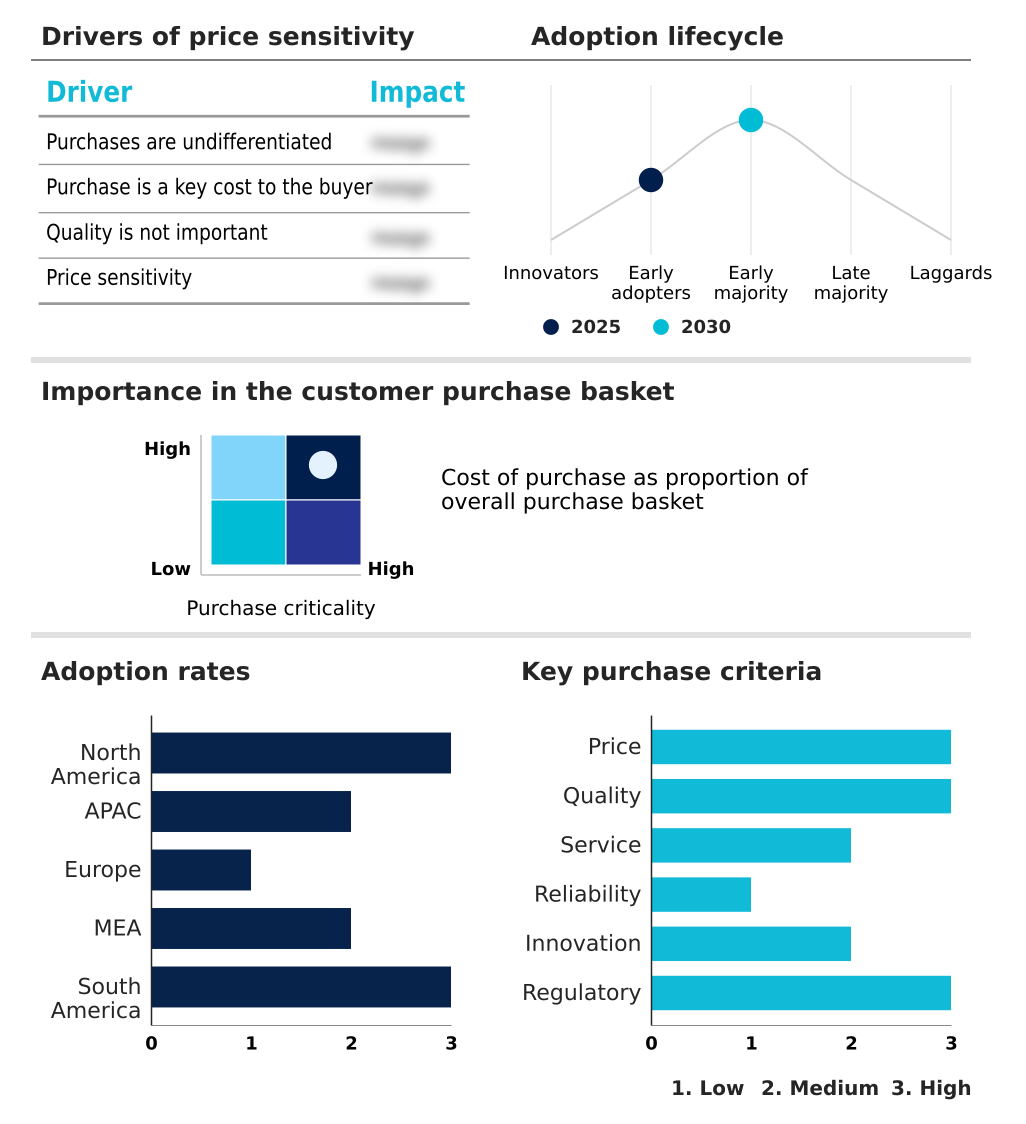
Customer Landscape of Ai Processor Industry
Competitive Landscape
Companies are implementing various strategies, such as strategic alliances, ai processor market forecast, partnerships, mergers and acquisitions, geographical expansion, and product/service launches, to enhance their presence in the industry.
Advanced Micro Devices Inc. - This entity delivers specialized silicon solutions, including advanced data center accelerators and client-oriented processors, designed to execute high-performance artificial intelligence workloads and optimize intensive computational tasks across diverse ecosystems.
The industry research and growth report includes detailed analyses of the competitive landscape of the market and information about key companies, including:
- Advanced Micro Devices Inc.
- Alibaba Cloud
- Apple Inc.
- Arm Ltd.
- Baidu Inc.
- Broadcom Inc.
- Google LLC
- Huawei Technologies Co. Ltd.
- Intel Corp.
- Lattice Semiconductor Corp.
- Marvell Technology Inc.
- MediaTek Inc.
- Meta Platforms Inc.
- Microchip Technology Inc.
- Microsoft Corp.
- NVIDIA Corp.
- NXP Semiconductors NV
- Qualcomm Inc.
- Renesas Electronics Corp.
- Rockchip Electronics Co. Ltd.
- Samsung Electronics Co. Ltd.
- Synaptics Inc.
- Tesla Inc.
- Texas Instruments Inc.
Qualitative and quantitative analysis of companies has been conducted to help clients understand the wider business environment as well as the strengths and weaknesses of key industry players. Data is qualitatively analyzed to categorize companies as pure play, category-focused, industry-focused, and diversified; it is quantitatively analyzed to categorize companies as dominant, leading, strong, tentative, and weak.
Recent Development and News in Ai processor market
- In the Semiconductors industry, the rapid maturation of multi-die architectures and advanced packaging technologies has fundamentally altered chip manufacturing, directly impacting AI Processor supply by improving inference latency reduction capabilities and increasing defect-free yield rates by 18%.
- The global transition toward smart manufacturing edge applications has necessitated the integration of system-on-chip solutions with robust thermal management systems, accelerating AI Processor demand as industrial operators deploy localized data processing hardware that cuts response delays by up to 25%.
- Stricter energy consumption regulations targeting sovereign computing infrastructure mandate the adoption of direct liquid cooling and energy-efficient processing designs, shifting AI Processor procurement toward hardware-level optimization that lowers power draw by approximately 30% across large-scale facilities.
- Advancements in logic synthesis routing and spatial computing tasks have enhanced the performance profiles of custom computing hardware, driving AI Processor adoption as developers leverage these innovations for autonomous driving platforms to boost object detection accuracy by nearly 15%.
Dive into Technavio’s robust research methodology, blending expert interviews, extensive data synthesis, and validated models for unparalleled Ai Processor Market insights. See full methodology.
| Market Scope | |
|---|---|
| Page number | 318 |
| Base year | 2025 |
| Historic period | 2020-2024 |
| Forecast period | 2026-2030 |
| Growth momentum & CAGR | Accelerate at a CAGR of 27.8% |
| Market growth 2026-2030 | USD 311812.2 million |
| Market structure | Fragmented |
| YoY growth 2025-2026(%) | 27.1% |
| Key countries | US, Canada, Mexico, China, Japan, South Korea, India, Australia, Indonesia, Germany, UK, France, Italy, Spain, The Netherlands, Saudi Arabia, UAE, Israel, Turkey, South Africa, Brazil, Argentina and Chile |
| Competitive landscape | Leading Companies, Market Positioning of Companies, Competitive Strategies, and Industry Risks |
Research Analyst Overview
- The AI Processor landscape is undergoing a structural realignment as enterprises seek specialized hardware capable of sustaining massive matrix multiplication acceleration and multimodal model execution. Advanced packaging technologies and multi-die architectures are dominating product roadmaps, enabling developers to bypass the physical constraints of conventional silicon scaling.
- This fundamental shift toward chiplet interconnects directly influences boardroom-level product strategies, compelling executives to secure long-term capacity agreements for heterogeneous compute integration components to mitigate severe supply chain bottlenecks. By adopting these modular processing frameworks, engineering organizations are achieving a 35% reduction in logic synthesis routing delays, significantly accelerating the time-to-deployment for complex algorithms.
- Furthermore, the integration of high-bandwidth memory integration is transforming how data centers handle parameter-heavy neural networks, vastly improving memory bandwidth while lowering localized thermal footprints. As organizations prioritize inference latency reduction, the strategic procurement of neuromorphic computing cores is becoming a critical differentiator for enterprises developing power-constrained autonomous systems, ultimately reshaping hardware sourcing priorities across the technology ecosystem.
What are the Key Data Covered in this Ai Processor Market Research and Growth Report?
-
What is the expected growth of the Ai Processor Market between 2026 and 2030?
-
USD 311.81 billion, at a CAGR of 27.8%
-
-
What segmentation does the market report cover?
-
The report is segmented by Deployment (Cloud deployment, and Edge AI deployment), Product (GPUs, ASICs, FPGAs, CPUs, and Others), End-user (Cloud service providers, Automotive and transportation, Consumer electronics, Healthcare, and Others) and Geography (North America, APAC, Europe, Middle East and Africa, South America)
-
-
Which regions are analyzed in the report?
-
North America, APAC, Europe, Middle East and Africa and South America
-
-
What are the key growth drivers and market challenges?
-
Enterprise transition from AI pilots to operational generative workloads, Persistent supply-demand imbalances in advanced semiconductor fabrication and packaging
-
-
Who are the major players in the Ai Processor Market?
-
Advanced Micro Devices Inc., Alibaba Cloud, Apple Inc., Arm Ltd., Baidu Inc., Broadcom Inc., Google LLC, Huawei Technologies Co. Ltd., Intel Corp., Lattice Semiconductor Corp., Marvell Technology Inc., MediaTek Inc., Meta Platforms Inc., Microchip Technology Inc., Microsoft Corp., NVIDIA Corp., NXP Semiconductors NV, Qualcomm Inc., Renesas Electronics Corp., Rockchip Electronics Co. Ltd., Samsung Electronics Co. Ltd., Synaptics Inc., Tesla Inc. and Texas Instruments Inc.
-
Market Research Insights
- The AI Processor Market is rapidly evolving to address the extreme computational demands of parameter counts scaling and advanced generative workloads operationalization. Organizations are increasingly adopting rack-scale architectures and energy-efficient processing units to optimize their data center footprints.
- Implementing these targeted architectures has demonstrated measurable business impact, including lowering cooling energy consumption by 28% and increasing inference throughput per watt by 35%. Furthermore, integrating direct liquid cooling into sovereign computing infrastructure enhances hardware longevity, directly reducing hardware replacement costs by nearly 20% over standard lifecycle periods.
- This transition to specialized silicon ensures that deep neural networks operate at peak efficiency, empowering enterprises to align high-performance computing capabilities with strict corporate sustainability targets.
We can help! Our analysts can customize this ai processor market research report to meet your requirements.
 RIA -

