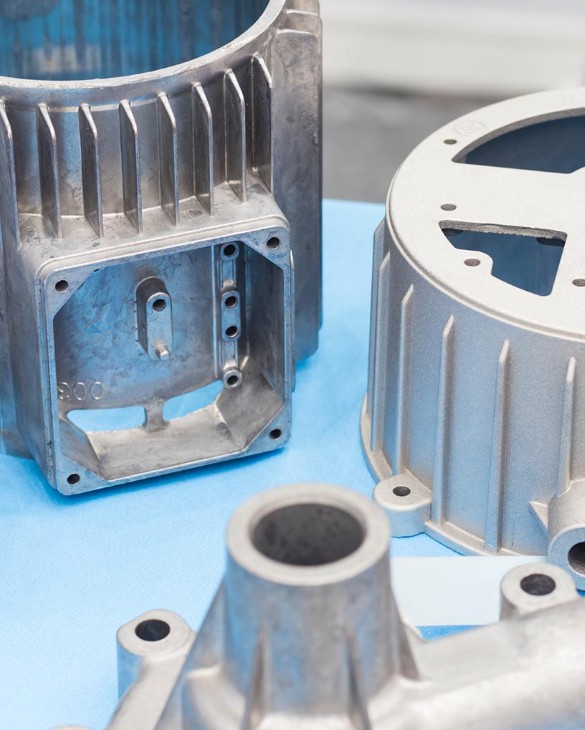


India Aluminum Casting Market Size 2026-2030
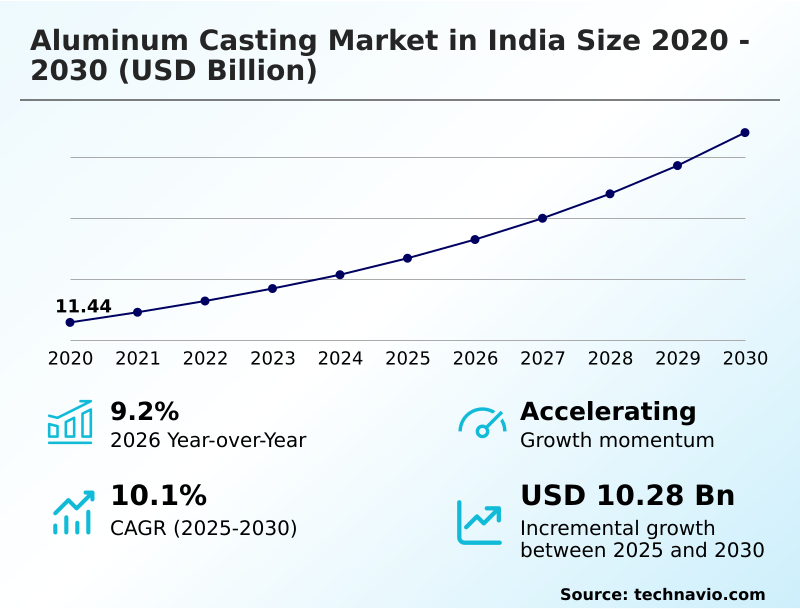
The india aluminum casting market size is valued to increase by USD 10.28 billion, at a CAGR of 10.1% from 2025 to 2030. Automotive lightweighting and EV adoption will drive the india aluminum casting market.
Major Market Trends & Insights
- By Method - Die casting segment was valued at USD 8.08 billion in 2024
- By Application - Automotive segment accounted for the largest market revenue share in 2024
Market Size & Forecast
- Market Opportunities: USD 15.53 billion
- Market Future Opportunities: USD 10.28 billion
- CAGR from 2025 to 2030 : 10.1%
Market Summary
- The Aluminum Casting Market in India demonstrates robust operational momentum fueled by continuous industrial modernization and rapid infrastructure expansion. Automotive lightweighting functions as a primary driver, as vehicle manufacturers aggressively substitute heavy cast iron with advanced aluminum alloys to meet rigorous emission standards.
- For example, replacing structural steel with high-strength aluminum in chassis assemblies allows engineers to achieve mass savings of up to 40% without compromising passenger safety. In a typical supply chain scenario, component foundries are upgrading their production cells with automated pouring systems to optimize cycle times for complex battery enclosures.
- However, volatile raw material pricing constraints present a significant operational challenge. Unpredictable fluctuations in primary metal costs directly compress working capital for smaller foundries, forcing them to delay critical technology upgrades. Consequently, larger tier-one suppliers with stronger hedging capabilities dominate high-volume contracts.
- Strategic investments in secondary recycling and energy-efficient furnaces are increasingly necessary to maintain competitive margins while adhering to strict environmental compliance mandates.
What will be the Size of the India Aluminum Casting Market during the forecast period?
Get Key Insights on Market Forecast (PDF) Get Free Sample
How is the India Aluminum Casting Market Segmented?
The india aluminum casting industry research report provides comprehensive data (region-wise segment analysis), with forecasts and estimates in "USD million" for the period 2026-2030, as well as historical data from 2020-2024 for the following segments.
- Method
- Die casting
- Permanent mold casting
- Others
- Application
- Automotive
- Heavy machinery and industrial
- Aerospace and defense
- Construction
- Others
- Source
- Primary
- Secondary
- Geography
- APAC
- India
- APAC
By Method Insights
The die casting segment is estimated to witness significant growth during the forecast period.
The high-pressure die casting and low-pressure die casting processes represent critical manufacturing methodologies for generating high-volume, thin-walled structural components. Industrial demand heavily favors these techniques over traditional forming due to superior dimensional accuracy and rapid cycle times.
By incorporating vacuum-assisted die casting techniques alongside advanced molten metal flow simulation, facilities have successfully engineered solutions that reduce internal defect rates.
Shrinkage porosity mitigation remains a priority, enabling manufacturers to improve part yield efficiency by 22% compared to legacy gravity-fed systems. Modern fabrication cells utilize automated part extractor systems to maintain continuous throughput, significantly advancing scrap rate minimization.
Operations targeting fuel efficiency standards compliance rely on these methods to ensure structural integrity preservation while maximizing fluid heat dissipation in critical engine components.
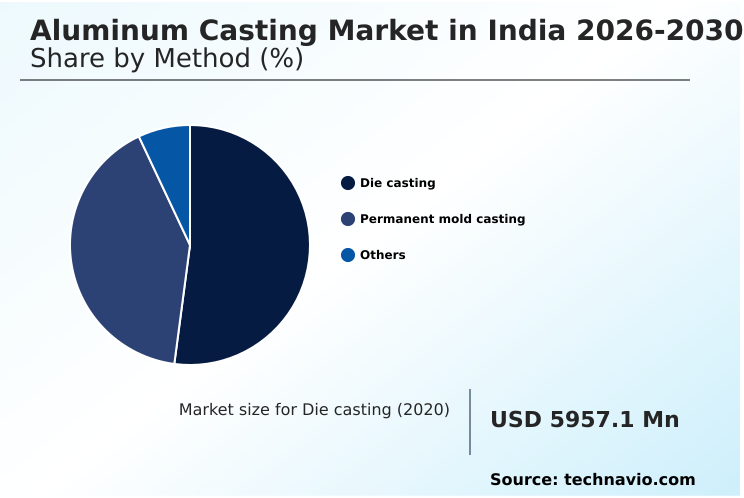
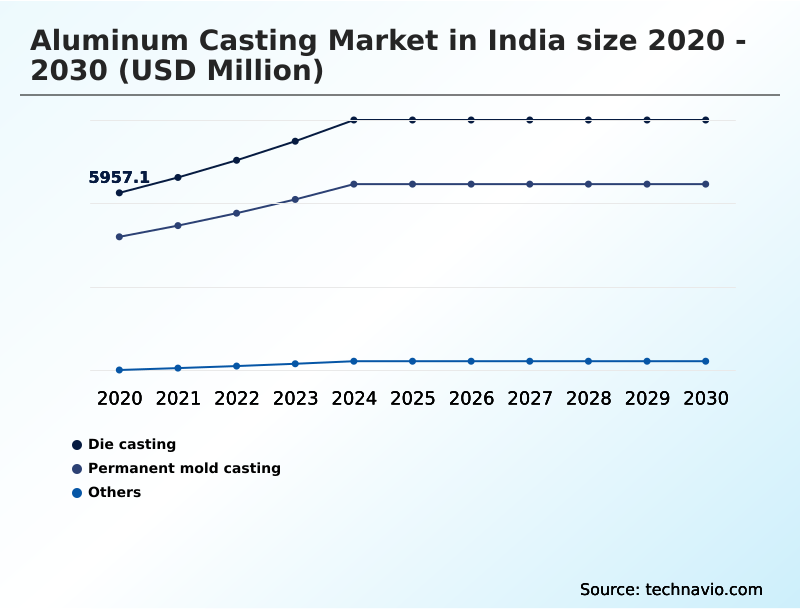
The Die casting segment was valued at USD 8.08 billion in 2024 and showed a gradual increase during the forecast period.
Market Dynamics
Our researchers analyzed the data with 2025 as the base year, along with the key drivers, trends, and challenges. A holistic analysis of drivers will help companies refine their marketing strategies to gain a competitive advantage.
- The strategic deployment of advanced casting methodologies is fundamentally reshaping supply chain dynamics and operational planning across multiple industrial verticals. Foundries specializing in electric mobility structural component fabrication are experiencing unprecedented demand as automakers redesign vehicle architectures to accommodate massive battery platforms.
- This pivot requires highly specialized tooling, leading manufacturers to report a 40% improvement in energy dissipation capabilities when transitioning to engineered aluminum alloys over conventional steel. Simultaneously, the heavy machinery gear cover manufacturing sector relies heavily on these robust casting techniques to deliver components capable of enduring extreme mechanical stress while minimizing parasitic weight.
- Within high-technology applications, aerospace defense turbine housing assemblies demand absolute precision and zero-defect tolerances, forcing specialized facilities to integrate non-destructive testing and vacuum-assisted pouring protocols. The transition toward clean power generation has also accelerated renewable energy heat sink production, where superior thermal management is critical for preventing power electronic failures during peak loads.
- Upgrading grid infrastructure necessitates durable, weather-resistant materials, cementing the importance of high voltage transformer housing castings in modern electrical distribution networks. By aligning capital expenditure with these high-growth applications, domestic foundries are successfully mitigating raw material price volatility and securing long-term contracts. This alignment ensures operational resilience while supporting national sustainability targets and advanced manufacturing mandates.
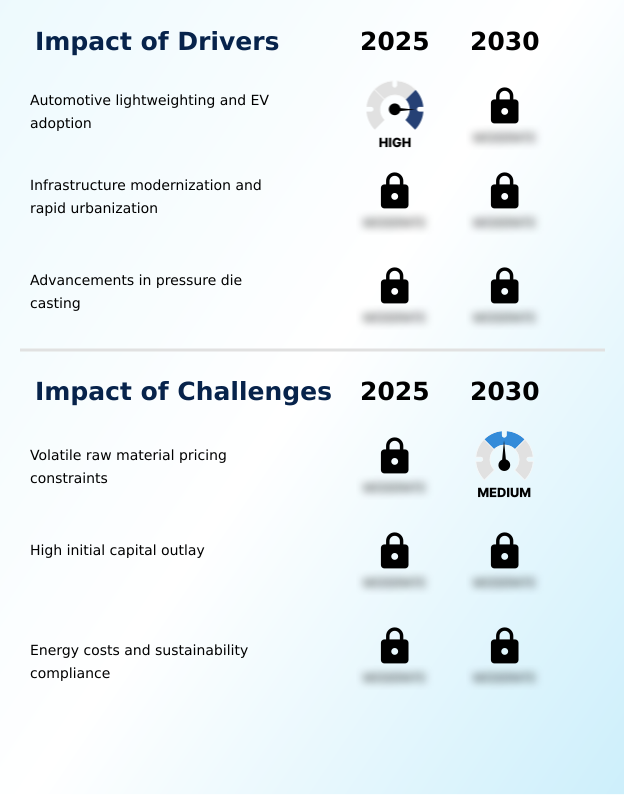
What are the key market drivers leading to the rise in the adoption of India Aluminum Casting Industry?
- Automotive lightweighting and electric vehicle adoption serve as the primary catalysts driving market expansion.
- The aggressive pursuit of automotive lightweighting serves as the primary catalyst propelling manufacturing modernization. Original equipment manufacturers are rapidly redesigning vehicle architectures to incorporate complex electric vehicle battery enclosures and high-strength structural crossmembers.
- This structural transition directly enables a 35% reduction in chassis weight, significantly advancing national carbon emission reduction mandates.
- Upgrading engine block fabrication processes with specialized aluminum-silicon-magnesium alloys provides the critical lithium battery pack offset required to maximize operational range per charge.
- By optimizing crash impact energy absorption through advanced metallurgical properties, manufacturers have successfully improved passenger safety ratings while simultaneously achieving a 15% reduction in parasitic equipment weight across heavy industrial platforms.
What are the market trends shaping the India Aluminum Casting Industry?
- The growing adoption of renewable energy infrastructure components is emerging as a significant market trend. This shift is driven by the necessity for lightweight, corrosion-resistant structural materials in modern power generation systems.
- The rapid acceleration of additive manufacturing integration is fundamentally altering product development life cycles across the industrial sector. By leveraging sand 3D printing, facilities bypass traditional pattern making, successfully reducing prototype iteration time by 45%. This technological shift away from conventional gravity die casting allows engineers to achieve investment casting precision for complex, low-volume geometries.
- Concurrently, the transition toward localized renewable energy grid integration is generating massive demand for specialized components, including solar photovoltaic inverter housings and wind turbine generator components. Foundries deploying hybrid additive casting methods report a 30% improvement in structural tolerance capabilities, eliminating expensive post-processing steps.
- To ensure flawless operational integrity, modern production lines now mandate the inclusion of dynamic balancing units, directly improving final assembly reliability for high-speed rotational parts.
What challenges does the India Aluminum Casting Industry face during its growth?
- Volatile raw material pricing constraints remain a formidable challenge affecting industry profitability and steady capital investment.
- Extreme volatility in primary liquid aluminum pricing remains a severe structural bottleneck, continually disrupting long-term capital allocation strategies. Smaller facilities operating on narrow margins face immediate working capital compression, which delays investments in hazardous solid emissions control and flue gas scrubber installation.
- Although the industry is aggressively pushing toward circular economy objectives, inconsistent supply chains for high-grade scrap limit the broader adoption of secondary aluminum recycling. Furthermore, extreme operational temperatures cause severe die mold thermal fatigue, leading to a 20% increase in tooling replacement costs for legacy setups.
- Without modern conformal cooling channels and automated robotic ladle systems, foundries struggle to maintain thermal equilibrium, ultimately resulting in a 15% drop in overall equipment effectiveness during peak production cycles.
Exclusive Technavio Analysis on Customer Landscape
The india aluminum casting market forecasting report includes the adoption lifecycle of the market, covering from the innovator’s stage to the laggard’s stage. It focuses on adoption rates in different regions based on penetration. Furthermore, the india aluminum casting market report also includes key purchase criteria and drivers of price sensitivity to help companies evaluate and develop their market growth analysis strategies.
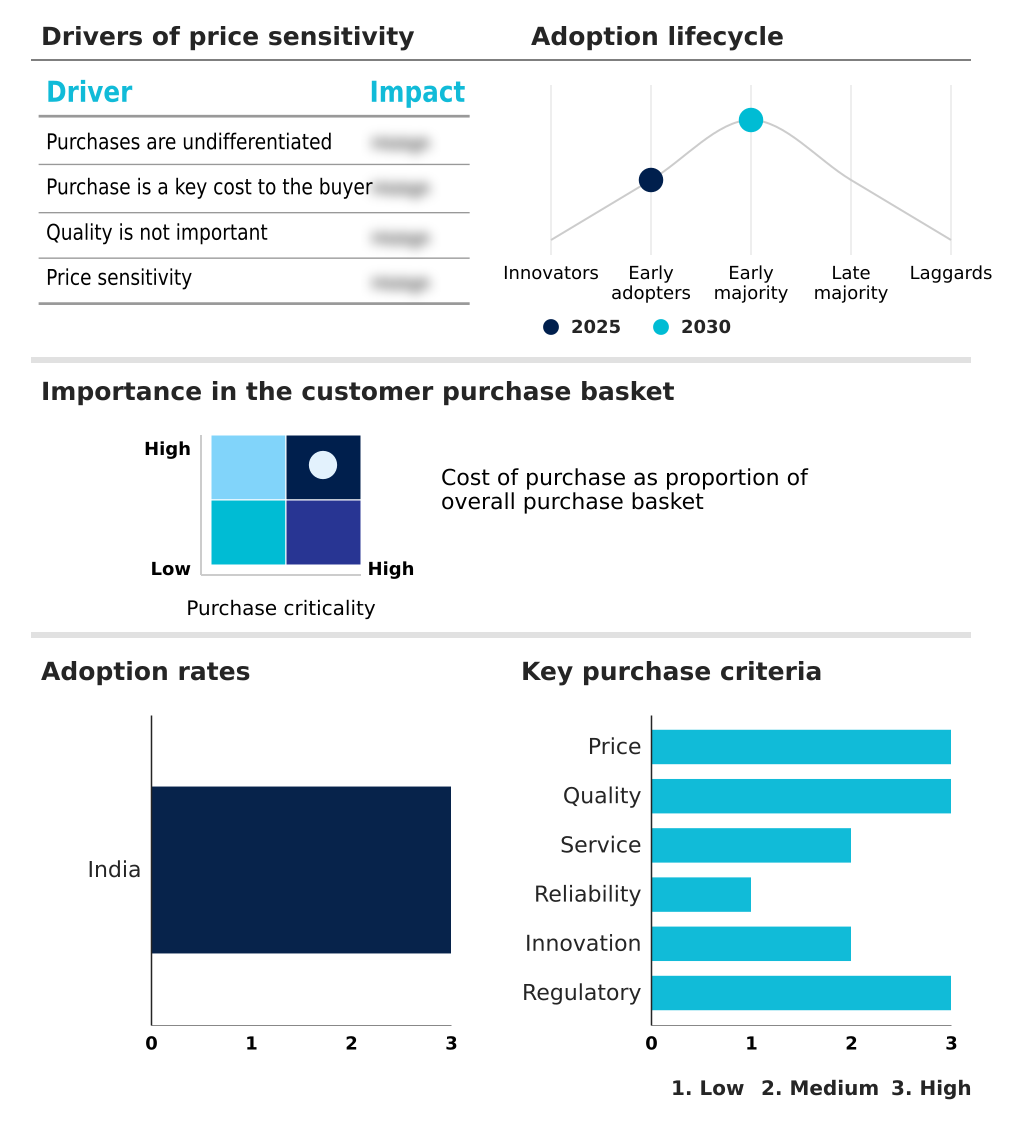
Customer Landscape of India Aluminum Casting Industry
Competitive Landscape
Companies are implementing various strategies, such as strategic alliances, india aluminum casting market forecast, partnerships, mergers and acquisitions, geographical expansion, and product/service launches, to enhance their presence in the industry.
Aakar Foundry Pvt Ltd - Provides precision aluminum die-cast parts, including engine housings and battery enclosures, utilizing advanced casting methodologies to deliver lightweight, high-strength structural components for automotive and industrial machinery applications.
The industry research and growth report includes detailed analyses of the competitive landscape of the market and information about key companies, including:
- Aakar Foundry Pvt Ltd
- Alicon Castalloy Ltd.
- Craftsman Automation Ltd
- Dynacast
- Endurance Technologies Ltd.
- Esko Casting and Electronics
- Ibex Engineering Pvt Ltd
- Jaya Hind Industries
- Minda Corp. Ltd.
- NEMAK SAB de CV
- Oswal Castings Pvt Ltd
- Rico Auto Industries Ltd.
- Rockman Industries Ltd.
- Roots Cast Pvt. Ltd.
- Sadguru Die Cast Pvt Ltd
- Sandhar Technologies Ltd.
- Sipra Engineers
- VJP Aluminium Foundry
Qualitative and quantitative analysis of companies has been conducted to help clients understand the wider business environment as well as the strengths and weaknesses of key industry players. Data is qualitatively analyzed to categorize companies as pure play, category-focused, industry-focused, and diversified; it is quantitatively analyzed to categorize companies as dominant, leading, strong, tentative, and weak.
Recent Development and News in India aluminum casting market
- In the Aluminum industry, the transition toward hydrometallurgical recycling frameworks has optimized secondary scrap recovery rates by 18%, directly impacting Aluminum Casting demand by expanding access to low-carbon feedstock for automotive component fabrication.
- Stringent regulatory frameworks enforcing environmental compliance have accelerated the deployment of closed-loop melting furnaces, reducing energy intensity by 25% and fundamentally altering raw material cost structures within the Aluminum Casting supply chain.
- Advancements in continuous casting metallurgy have enabled the production of ultra-high-strength aerospace-grade billets, increasing material yield efficiency by 15% and directly supporting precision requirements within the Aluminum Casting manufacturing sector.
- The global shift toward offshore wind infrastructure has escalated the consumption of specialized corrosion-resistant alloys, driving a 30% increase in baseline supply requirements that actively shapes material availability for the Aluminum Casting sector.
Dive into Technavio’s robust research methodology, blending expert interviews, extensive data synthesis, and validated models for unparalleled India Aluminum Casting Market insights. See full methodology.
| Market Scope | |
|---|---|
| Page number | 188 |
| Base year | 2025 |
| Historic period | 2020-2024 |
| Forecast period | 2026-2030 |
| Growth momentum & CAGR | Accelerate at a CAGR of 10.1% |
| Market growth 2026-2030 | USD 10276.9 million |
| Market structure | Fragmented |
| YoY growth 2025-2026(%) | 9.2% |
| Key countries | India |
| Competitive landscape | Leading Companies, Market Positioning of Companies, Competitive Strategies, and Industry Risks |
Research Analyst Overview
- The industrial manufacturing landscape is experiencing a profound transformation as facilities rapidly adopt advanced metallurgical processes. Boardroom executives are increasingly prioritizing capital expenditure toward robotic ladle systems and conformal cooling channels to mitigate die mold thermal fatigue during continuous operations. This strategic equipment modernization directly influences product pricing and long-term supply chain resilience.
- Facilities integrating automated extraction and precision cooling technologies have achieved a 30% reduction in processing time for complex structural geometries. Furthermore, the shift toward primary aluminum smelting standards ensures superior chemical purity required for mission-critical components.
- To navigate shifting environmental compliance mandates, leadership teams are aggressively expanding secondary aluminum recycling capacities to lower energy intensity and stabilize raw material procurement costs. These tactical investments allow manufacturers to transition seamlessly from low-margin commodity parts to high-value engineering solutions. The continuous refinement of casting automation remains a cornerstone for maintaining operational competitiveness and meeting rigorous international quality benchmarks.
What are the Key Data Covered in this India Aluminum Casting Market Research and Growth Report?
-
What is the expected growth of the India Aluminum Casting Market between 2026 and 2030?
-
USD 10.28 billion, at a CAGR of 10.1%
-
-
What segmentation does the market report cover?
-
The report is segmented by Method (Die casting, Permanent mold casting, and Others), Application (Automotive, Heavy machinery and industrial, Aerospace and defense, Construction, and Others), Source (Primary, and Secondary) and Geography (APAC)
-
-
Which regions are analyzed in the report?
-
APAC
-
-
What are the key growth drivers and market challenges?
-
Automotive lightweighting and EV adoption, Volatile raw material pricing constraints
-
-
Who are the major players in the India Aluminum Casting Market?
-
Aakar Foundry Pvt Ltd, Alicon Castalloy Ltd., Craftsman Automation Ltd, Dynacast, Endurance Technologies Ltd., Esko Casting and Electronics, Ibex Engineering Pvt Ltd, Jaya Hind Industries, Minda Corp. Ltd., NEMAK SAB de CV, Oswal Castings Pvt Ltd, Rico Auto Industries Ltd., Rockman Industries Ltd., Roots Cast Pvt. Ltd., Sadguru Die Cast Pvt Ltd, Sandhar Technologies Ltd., Sipra Engineers and VJP Aluminium Foundry
-
Market Research Insights
- The Aluminum Casting Market in India operates as a critical manufacturing pillar supporting widespread industrial transformation. Foundries are implementing advanced metallurgy to enhance fluid heat dissipation and achieve stringent carbon emission reduction targets across their production networks. By integrating automated quality inspection frameworks, modern facilities have reduced post-cast machining errors by 18%, significantly lowering overhead costs.
- Furthermore, the adoption of energy-efficient induction melting systems has improved overall thermal efficiency by 25%, directly boosting return on investment for medium-scale operators. This structural modernization enables manufacturers to consistently deliver complex, high-strength components that align perfectly with rigorous international compliance standards.
We can help! Our analysts can customize this india aluminum casting market research report to meet your requirements.
 RIA -