



Ambulatory Healthcare Service Market Size 2026-2030
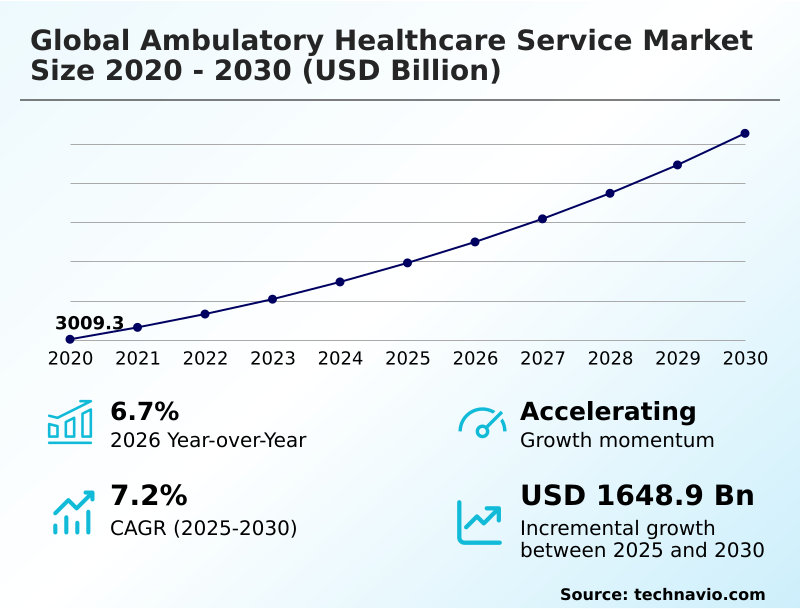
The ambulatory healthcare service market size is valued to increase by USD 1648.9 billion, at a CAGR of 7.2% from 2025 to 2030. Integration of artificial intelligence diagnostics will drive the ambulatory healthcare service market.
Major Market Trends & Insights
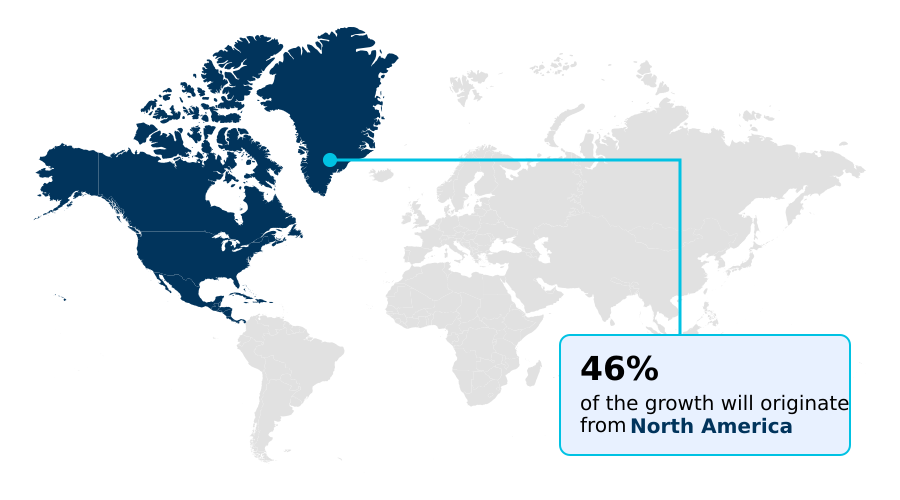
- North America dominated the market and accounted for a 45.5% growth during the forecast period.
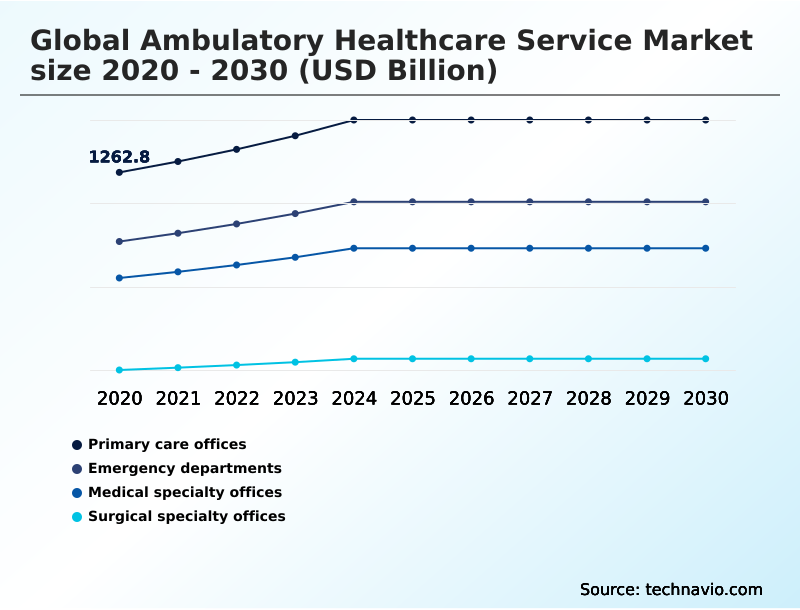
- By Type - Primary care offices segment was valued at USD 1550 billion in 2024
- By Application - Ophthalmology segment accounted for the largest market revenue share in 2024
Market Size & Forecast
- Market Opportunities: USD 2621 billion
- Market Future Opportunities: USD 1648.9 billion
- CAGR from 2025 to 2030 : 7.2%
Market Summary
- The Ambulatory Healthcare Service Market exhibits rapid structural transformation, driven by an accelerating shift from traditional inpatient hospital settings toward decentralized outpatient care. Healthcare systems prioritize cost-effective delivery models that optimize operational expenditures while maintaining high clinical efficacy.
- As a primary growth driver, the integration of advanced artificial intelligence algorithms directly reduces administrative bottlenecks, enhancing overall triage protocols and operational efficiency. Conversely, stringent reimbursement compliance mandates present a substantial challenge, often delaying facility expansion and increasing administrative overhead for independent practitioners.
- In a practical business scenario, multi-specialty outpatient networks deploying sophisticated predictive analytics for patient scheduling and supply chain logistics have optimized clinician workloads significantly. Facilities adopting these targeted digital integration tools experience a 25% improvement in diagnostic throughput compared to traditional manual scheduling systems.
- This technological adoption acts as a catalyst, attracting robust investments and cementing outpatient delivery as a permanent pillar of modern health systems. Consequently, stakeholders across the continuum of care continue to expand ambulatory surgical centers and urgent care facilities.
What will be the Size of the Ambulatory Healthcare Service Market during the forecast period?
Get Key Insights on Market Forecast (PDF) Get Free Sample
How is the Ambulatory Healthcare Service Market Segmented?
The ambulatory healthcare service industry research report provides comprehensive data (region-wise segment analysis), with forecasts and estimates in "USD billion" for the period 2026-2030, as well as historical data from 2020-2024 for the following segments.
- Type
- Primary care offices
- Emergency departments
- Medical specialty offices
- Surgical specialty offices
- Application
- Ophthalmology
- Gastroenterology
- Orthopedics
- Pain management
- Others
- Ownership
- Physician owned
- Hospital or health system owned
- Corporate or private equity owned
- Joint ventures
- Geography
- North America
- US
- Canada
- Mexico
- Europe
- Germany
- UK
- France
- Italy
- Spain
- The Netherlands
- Asia
- China
- India
- Japan
- South Korea
- Thailand
- Indonesia
- Rest of World (ROW)
- North America
By Type Insights
The primary care offices segment is estimated to witness significant growth during the forecast period.
Primary care offices function as the foundational entry point for patients navigating modern health systems, serving as vital hubs for clinical laboratory testing and decentralized clinical trials.
These clinical environments continuously prioritize cost-effective delivery by integrating advanced electronic health records and clinical workflow automation to streamline operations.
By expanding diagnostic capabilities, facilities adopt point of care testing equipment, which drastically reduces diagnostic turnaround times and enables general practitioners to initiate therapies immediately.
Demonstrating substantial operational gains, independent practice associations utilizing these digital tools report a 20% increase in daily patient encounter capacities and a 15% reduction in administrative processing errors.
Furthermore, these primary care networks act as critical referral gateways into multi specialty groups, stabilizing the broader outpatient ecosystem while optimizing targeted patient outcomes.
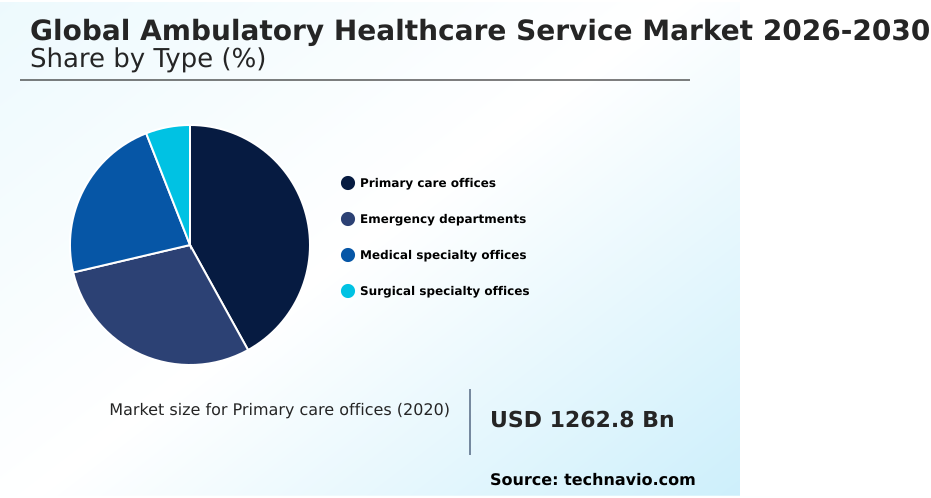
The Primary care offices segment was valued at USD 1550 billion in 2024 and showed a gradual increase during the forecast period.
Regional Analysis
North America is estimated to contribute 45.5% to the growth of the global market during the forecast period.Technavio’s analysts have elaborately explained the regional trends and drivers that shape the market during the forecast period.
See How Ambulatory Healthcare Service Market Demand is Rising in North America Get Free Sample
The geographic distribution of the Ambulatory Healthcare Service reveals distinct regional dynamics driven by varying medical infrastructure and regulatory policies. North America dominates outpatient care delivery, heavily utilizing group purchasing organizations to equip advanced ambulatory surgical centers and emergency departments.
In contrast, the APAC region accelerates infrastructure development, focusing on mobile health clinics and medical specialty clinics to serve expanding urban populations.
North American facilities leveraging robotic assisted orthopedic procedures and gastroenterology services report a 35% higher throughput rate and lower rates of hospital acquired infections than traditional inpatient wards.
Conversely, APAC healthcare networks adopting localized diagnostic tools achieve a 20% reduction in patient wait times, effectively advancing population health management.
This divergence highlights how North American providers prioritize technological optimization, while APAC stakeholders focus on rapid capacity expansion to meet localized needs.
Market Dynamics
Our researchers analyzed the data with 2025 as the base year, along with the key drivers, trends, and challenges. A holistic analysis of drivers will help companies refine their marketing strategies to gain a competitive advantage.
- The structural evolution of modern health systems heavily relies on the continuous optimization of outpatient ecosystems, where precision and accessibility dictate operational success. A critical development in this space is the integration of artificial intelligence in outpatient care, which fundamentally reshapes how clinical triage and administrative workflows are managed.
- Facilities transitioning from conventional manual processing to AI-driven analytics report up to a 30% improvement in supply chain inventory management, minimizing medical consumable waste while ensuring critical availability. Simultaneously, the advancement of minimally invasive ambulatory surgical procedures enables surgeons to perform complex interventions with reduced physical trauma, leading to faster recovery times.
- This shift is deeply supported by the implementation of remote patient monitoring in clinics, allowing continuous tracking of patient vital signs post-discharge, thereby reducing hospital readmission rates by nearly 15%. To sustain these technological investments, healthcare stakeholders increasingly advocate for value based reimbursement for outpatient, aligning financial incentives with clinical efficacy rather than service volume.
- Furthermore, bridging socioeconomic and geographic healthcare gaps remains a priority, driving the strategic deployment of mobile health clinics for underserved populations. These specialized mobile units eliminate severe transportation hurdles, ensuring equitable healthcare access while mitigating the escalation of minor conditions.
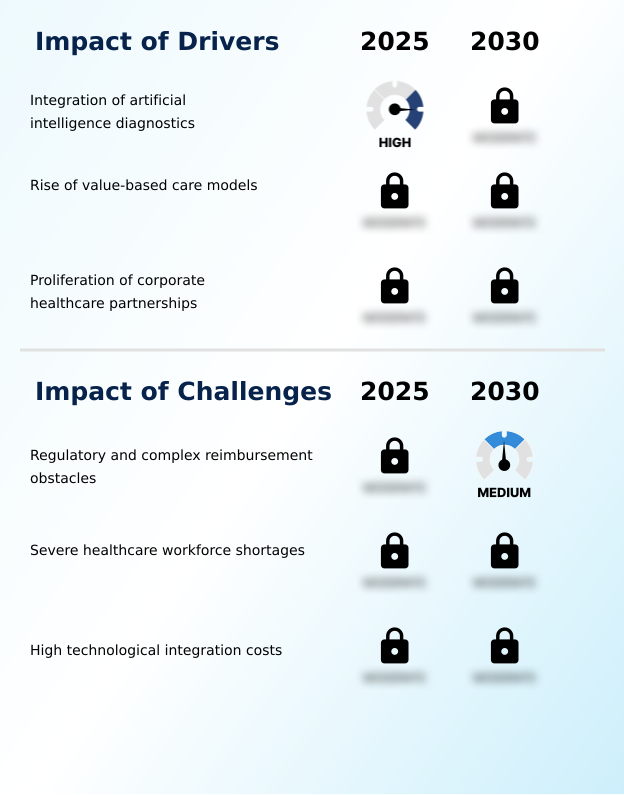
What are the key market drivers leading to the rise in the adoption of Ambulatory Healthcare Service Industry?
- The integration of artificial intelligence diagnostics serves as a primary driver, fundamentally transforming diagnostic accuracy and operational efficiency within outpatient settings.
- The primary catalyst propelling the Ambulatory Healthcare Service is the widespread integration of advanced diagnostic imaging systems and artificial intelligence diagnostics into community-based outpatient facility networks.
- This technological evolution is driven by the urgent need to alleviate severe hospital bottlenecks and improve accuracy for complex pathologies. By deploying sophisticated machine learning algorithms and advanced patient triage algorithms, clinical facilities drastically reduce manual administrative burdens.
- Providers implementing these technologies experience a 30% reduction in image interpretation delays and a 15% decrease in operational costs. This operational efficiency empowers third party payers to confidently incentivize value based care models and same day discharge protocols.
- Consequently, procedures utilizing phacoemulsification devices for same day surgery fundamentally shift patient volumes into highly specialized, cost-effective ambulatory environments while ensuring superior clinical outcomes.
What are the market trends shaping the Ambulatory Healthcare Service Industry?
- The expansion of mobile health clinics emerges as a significant market trend. This strategic deployment facilitates decentralized care delivery to underserved communities.
- A defining trend reshaping the Ambulatory Healthcare Service is the rapid deployment of hybrid virtual care models and remote patient monitoring systems. This technological shift occurs as healthcare systems seek to optimize chronic disease management while minimizing unnecessary facility visits.
- By integrating sophisticated digital health integration tools and telehealth platforms, providers continuously track patient vitals outside clinical settings, enabling proactive therapeutic adjustments. Consequently, facilities utilizing patient engagement platforms and predictive analytics report a 35% reduction in avoidable emergency admissions and a 20% increase in adherence to preventive screening protocols.
- Furthermore, the adoption of automated clinical documentation tools across outpatient rehabilitation therapies reduces administrative overhead by 25%. This structural transition directly impacts businesses by lowering overhead costs associated with physical clinic space while maximizing overall operational efficiency.
What challenges does the Ambulatory Healthcare Service Industry face during its growth?
- Regulatory compliance mandates and complex reimbursement frameworks constitute a significant challenge restricting broader expansion of community-based ambulatory facilities.
- Despite rapid technological advancements, the Ambulatory Healthcare Service faces significant operational constraints due to stringent reimbursement compliance frameworks and severe healthcare workforce shortages. This structural limitation stems from outdated payer policies that frequently underfund complex outpatient ophthalmic procedures and specialized pain management interventions.
- The resulting financial friction directly impacts business sustainability, as specialized diagnostic evaluations and urgent care facilities face mounting pre-authorization delays. Clinics grappling with these complex regulatory hurdles report a 25% increase in administrative processing overhead and a 15% reduction in operating margins compared to fully integrated hospitals.
- Consequently, administrators are forced to allocate excessive resources toward compliance rather than expanding minimally invasive procedures or adopting advanced technologies like femtosecond laser precision, hindering the broader deployment of highly efficient community-based outpatient care.
Exclusive Technavio Analysis on Customer Landscape
The ambulatory healthcare service market forecasting report includes the adoption lifecycle of the market, covering from the innovator’s stage to the laggard’s stage. It focuses on adoption rates in different regions based on penetration. Furthermore, the ambulatory healthcare service market report also includes key purchase criteria and drivers of price sensitivity to help companies evaluate and develop their market growth analysis strategies.

Customer Landscape of Ambulatory Healthcare Service Industry
Competitive Landscape
Companies are implementing various strategies, such as strategic alliances, ambulatory healthcare service market forecast, partnerships, mergers and acquisitions, geographical expansion, and product/service launches, to enhance their presence in the industry.
AMSURG Corp. - Provides strategic management of ambulatory surgical centers, delivering high-quality same day surgery, gastroenterology, and ophthalmology procedures with a superior patient experience.
The industry research and growth report includes detailed analyses of the competitive landscape of the market and information about key companies, including:
- AMSURG Corp.
- Apollo Hospitals Enterprise Ltd.
- Athletico Physical Therapy
- ChenMed LLC
- DaVita Inc.
- Fresenius Medical Co. KGaA
- GoHealth Urgent Care
- Laboratory Holdings Inc.
- LifeStance Health
- Mediclinic Group
- NextCare Holdings Inc.
- Patient First
- Quest Diagnostics Inc.
- Ramsay Health Care Ltd
- SCA health
- Select Medical Holdings Corp
- Sonic Healthcare Ltd.
- Surgery Partners Inc.
- U.S. Physical Therapy Inc.
- United Surgical Partners
Qualitative and quantitative analysis of companies has been conducted to help clients understand the wider business environment as well as the strengths and weaknesses of key industry players. Data is qualitatively analyzed to categorize companies as pure play, category-focused, industry-focused, and diversified; it is quantitatively analyzed to categorize companies as dominant, leading, strong, tentative, and weak.
Recent Development and News in Ambulatory healthcare service market
- In the Health Care Supplies industry, the rapid integration of artificial intelligence diagnostics and machine learning algorithms into imaging equipment has accelerated diagnostic turnaround times, directly impacting Ambulatory Healthcare Service demand by increasing the throughput of specialized diagnostic evaluations.
- The implementation of connected health technologies and wearable monitoring devices has decentralized traditional clinical workflows, directly impacting Ambulatory Healthcare Service demand by enabling continuous chronic disease management outside acute care facilities.
- Stringent regulatory mandates prioritizing value based care models have shifted institutional procurement toward cost-effective testing tools, directly impacting Ambulatory Healthcare Service demand by financially incentivizing outpatient care delivery over inpatient admissions.
- The advancement of robotic assisted orthopedic platforms and phacoemulsification devices has enhanced surgical precision, directly impacting Ambulatory Healthcare Service demand by facilitating safer same day discharge protocols and reducing hospital acquired infections.
Dive into Technavio’s robust research methodology, blending expert interviews, extensive data synthesis, and validated models for unparalleled Ambulatory Healthcare Service Market insights. See full methodology.
| Market Scope | |
|---|---|
| Page number | 306 |
| Base year | 2025 |
| Historic period | 2020-2024 |
| Forecast period | 2026-2030 |
| Growth momentum & CAGR | Accelerate at a CAGR of 7.2% |
| Market growth 2026-2030 | USD 1648.9 billion |
| Market structure | Fragmented |
| YoY growth 2025-2026(%) | 6.7% |
| Key countries | US, Canada, Mexico, Germany, UK, France, Italy, Spain, The Netherlands, China, India, Japan, South Korea, Thailand, Indonesia, Saudi Arabia, Brazil, UAE, Argentina, South Africa, Israel, Turkey and Colombia |
| Competitive landscape | Leading Companies, Market Positioning of Companies, Competitive Strategies, and Industry Risks |
Research Analyst Overview
- The Ambulatory Healthcare Service demonstrates a persistent structural pivot toward decentralized, high-efficiency clinical environments. Executive boards and healthcare administrators increasingly prioritize the expansion of ambulatory surgical centers and urgent care facilities to mitigate acute-care capacity constraints and optimize capital allocation.
- A defining boardroom-level strategy involves the aggressive adoption of telehealth platforms and electronic health records to ensure seamless interoperability and regulatory compliance. By transitioning to these integrated digital ecosystems, healthcare organizations align their product strategies with evolving value based care models.
- Operational data indicates that networks deploying automated patient triage algorithms achieve a 25% reduction in initial processing times compared to legacy administrative systems. This measurable business outcome directly enhances patient throughput and reduces costly operational bottlenecks. Furthermore, the incorporation of minimally invasive procedures utilizing femtosecond laser precision elevates surgical accuracy, facilitating rapid same day surgery discharges.
- Consequently, independent practitioners and large health systems alike continuously adapt their service portfolios to capture higher patient volumes outside traditional hospital walls, solidifying outpatient networks as the cornerstone of modern healthcare delivery.
What are the Key Data Covered in this Ambulatory Healthcare Service Market Research and Growth Report?
-
What is the expected growth of the Ambulatory Healthcare Service Market between 2026 and 2030?
-
USD 1648.9 billion, at a CAGR of 7.2%
-
-
What segmentation does the market report cover?
-
The report is segmented by Type (Primary care offices, Emergency departments, Medical specialty offices, and Surgical specialty offices), Application (Ophthalmology, Gastroenterology, Orthopedics, Pain management, and Others), Ownership (Physician owned, Hospital or health system owned, Corporate or private equity owned, and Joint ventures) and Geography (North America, Europe, Asia, Rest of World (ROW))
-
-
Which regions are analyzed in the report?
-
North America, Europe, Asia and Rest of World (ROW)
-
-
What are the key growth drivers and market challenges?
-
Integration of artificial intelligence diagnostics, Regulatory and complex reimbursement obstacles
-
-
Who are the major players in the Ambulatory Healthcare Service Market?
-
AMSURG Corp., Apollo Hospitals Enterprise Ltd., Athletico Physical Therapy, ChenMed LLC, DaVita Inc., Fresenius Medical Co. KGaA, GoHealth Urgent Care, Laboratory Holdings Inc., LifeStance Health, Mediclinic Group, NextCare Holdings Inc., Patient First, Quest Diagnostics Inc., Ramsay Health Care Ltd, SCA health, Select Medical Holdings Corp, Sonic Healthcare Ltd., Surgery Partners Inc., U.S. Physical Therapy Inc. and United Surgical Partners
-
Market Research Insights
- The Ambulatory Healthcare Service Market is undergoing rapid decentralization, driven by the need for accessible outpatient care and specialized evaluations. Healthcare networks increasingly leverage mobile clinics and emergency departments to mitigate institutional bottlenecks. Facilities integrating robust engagement platforms demonstrate a 30% reduction in missed appointments and a 20% improvement in patient retention rates compared to conventional models.
- Furthermore, the adoption of automated documentation tools across primary care offices reduces administrative processing times by 25%, directly lowering overhead costs. This operational shift empowers independent practices to optimize workflows and enhance care quality without requiring expensive institutional expansion, solidifying outpatient networks as highly efficient delivery ecosystems.
We can help! Our analysts can customize this ambulatory healthcare service market research report to meet your requirements.
 RIA -

