

Artificial Organs Market Size 2026-2030
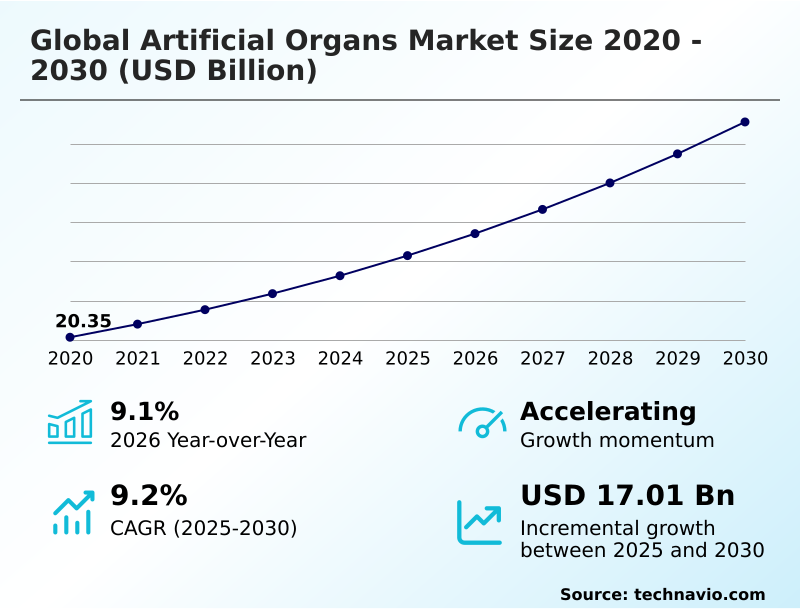
The artificial organs market size is valued to increase by USD 17.01 billion, at a CAGR of 9.2% from 2025 to 2030. Expansion of government funding initiatives will drive the artificial organs market.
Major Market Trends & Insights
- North America dominated the market and accounted for a 46.6% growth during the forecast period.
- By Usage - Implantable segment was valued at USD 17.91 billion in 2024
- By Product - Artificial heart segment accounted for the largest market revenue share in 2024
Market Size & Forecast
- Market Opportunities: USD 27.40 billion
- Market Future Opportunities: USD 17.01 billion
- CAGR from 2025 to 2030 : 9.2%
Market Summary
- The Artificial Organs Market exhibits dynamic structural expansion propelled by persistent human donor shortages and continuous biomedical engineering breakthroughs. Medical device innovators prioritize the development of biohybrid integrations and engineered tissue structures designed to replicate complex biological functions.
- In a recent supply chain optimization scenario, manufacturers integrating predictive analytics into production workflows reduced component assembly delays by 18%, ensuring faster delivery of critical mechanical circulatory support devices to tertiary care centers.
- The market is primarily driven by the integration of artificial intelligence and wireless telemetry systems, which transform passive mechanical pumps into self-regulating bionic ecosystems capable of adjusting performance parameters instantaneously. Conversely, profound technical hurdles regarding biocompatibility and the long-term integration of synthetic materials within living human tissue severely restrict the operational lifespan of implantable substitutes.
- Developing reliable medical-grade solutions requires extensive surface modification techniques and advanced polymers to prevent adverse immune responses. As regulatory bodies adapt evaluation frameworks to accommodate regenerative therapies, the ongoing convergence of neuroengineering and microelectronics ensures sustained technological progression across the industry.
What will be the Size of the Artificial Organs Market during the forecast period?
Get Key Insights on Market Forecast (PDF) Get Free Sample
How is the Artificial Organs Market Segmented?
The artificial organs industry research report provides comprehensive data (region-wise segment analysis), with forecasts and estimates in "USD million" for the period 2026-2030, as well as historical data from 2020-2024 for the following segments.
- Usage
- Implantable
- Extracorporeal
- Product
- Artificial heart
- Artificial kidney
- Cochlear implants
- Artificial pancreas
- End-user
- Hospitals and clinics
- Ambulatory surgical centers
- Research and academic institutes
- Geography
- North America
- US
- Canada
- Mexico
- Europe
- Germany
- UK
- France
- Italy
- Spain
- The Netherlands
- Asia
- China
- Japan
- India
- South Korea
- Indonesia
- Thailand
- Rest of World (ROW)
- North America
By Usage Insights
The implantable segment is estimated to witness significant growth during the forecast period.
The implantable segment in the artificial organs sector represents a critical paradigm in advanced medical therapeutics designed to permanently substitute failing biological systems with engineered mechanical replacement hardware.
Engineers utilize biocompatible polymers and titanium alloys to ensure long-term durability and resistance to biofouling. Rigorous clinical evaluations govern the commercialization of these life-sustaining technologies, reflecting the high stakes involved in permanent bodily integration.
Recent advancements in wireless transcutaneous energy transmission and neuroprosthetic technology have reduced device-related infections, resulting in procedural efficiency increasing by 15% across specialized cardiac care units.
Despite high manufacturing costs, the continuous refinement of implantable micro pumps and blood purification addresses the global shortage of human donor organs.
Healthcare providers prioritize this sector to overcome traditional limitations of surgical rejection, fostering robust tissue engineering collaborations aimed at improving end stage renal disease management and severe biventricular heart failure outcomes.
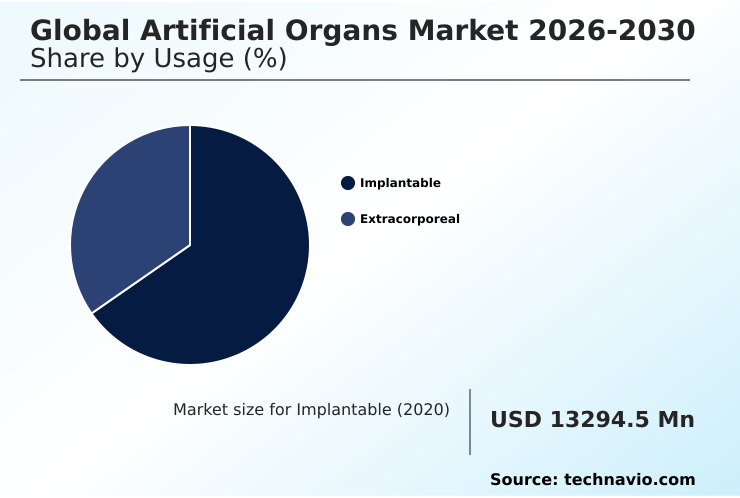
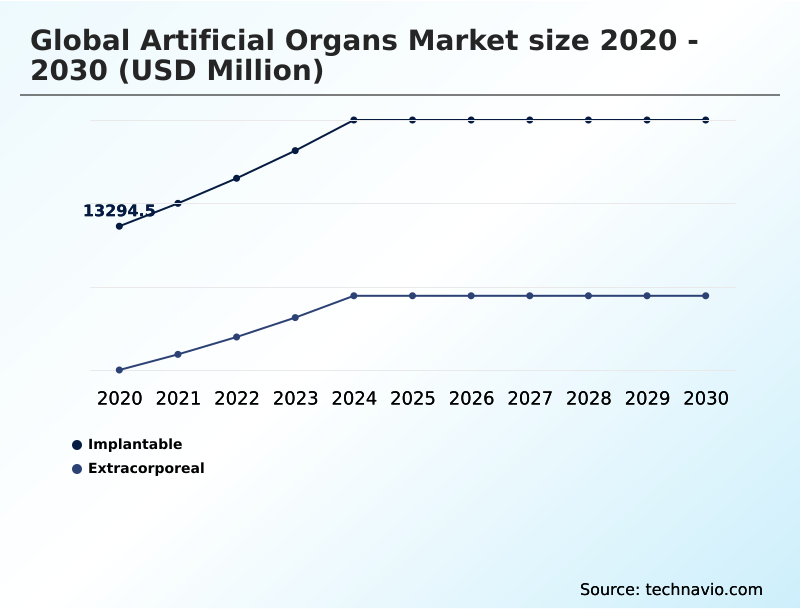
The Implantable segment was valued at USD 17.91 billion in 2024 and showed a gradual increase during the forecast period.
Regional Analysis
North America is estimated to contribute 46.6% to the growth of the global market during the forecast period.Technavio’s analysts have elaborately explained the regional trends and drivers that shape the market during the forecast period.
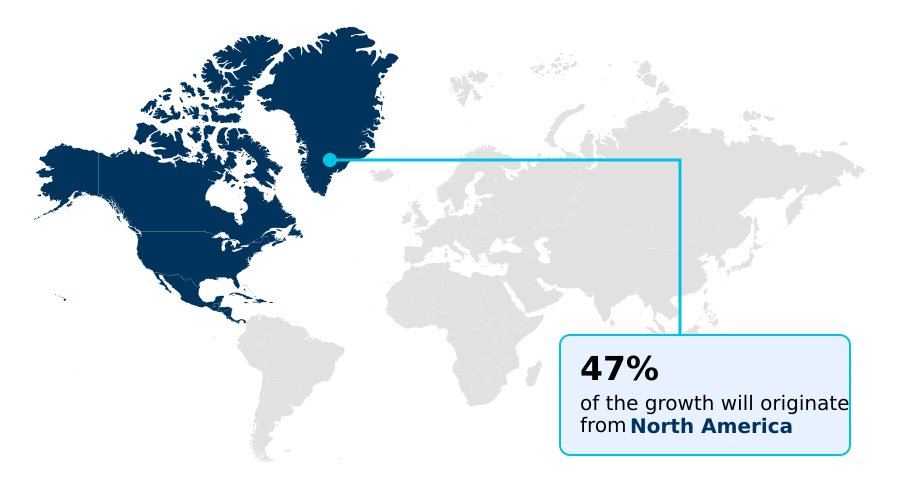
See How Artificial Organs Market Demand is Rising in North America Get Free Sample
The geographic distribution of the Artificial Organs Market highlights distinct variances in technological adoption and supply chain maturity between North America and APAC.
North America maintains a dominant position, where robust reimbursement codes and advanced clinical infrastructure support the deployment of complex metabolic substitution therapies and bidirectional brain computer interfaces.
In this region, streamlined regulatory pathways for bionic and neuroprosthetic replacements have accelerated procedural efficiency by 14%. Conversely, the APAC region is undergoing rapid modernization, characterized by a 20% increase in decentralized healthcare investments.
While North America focuses heavily on premium digital signal processing algorithms and magnetic resonance imaging compatibility, APAC providers prioritize scaling the production of cost-effective extracorporeal membrane oxygenation units.
Furthermore, APAC manufacturers report a 12% reduction in component manufacturing costs due to localized raw material sourcing.
These regional disparities dictate global operational strategies, compelling multinational enterprises to adapt their distribution networks to accommodate distinct health economics and varying degrees of sensory substitution and neural integration.
Market Dynamics
Our researchers analyzed the data with 2025 as the base year, along with the key drivers, trends, and challenges. A holistic analysis of drivers will help companies refine their marketing strategies to gain a competitive advantage.
- The continuous evolution of the Artificial Organs necessitates sophisticated strategic planning and rigorous supply chain synchronization across the medical technology sector. Leading biomedical engineering firms are heavily prioritizing the development of bridge to transplant artificial organ solutions to mitigate the persistent scarcity of human donor organs.
- This shift requires comprehensive realignments in operational planning, as the manufacturing complexity of these advanced life-support systems demands precision cleanroom environments and highly specialized biocompatible materials. Consequently, facilities utilizing automated quality assurance protocols report a 15% reduction in production defect rates compared to traditional manual inspection methods, directly optimizing the commercialization pipeline.
- Furthermore, robust investments in wearable artificial kidney research programs are reshaping nephrology care models by accelerating the transition toward ambulatory therapies. Innovators are actively commercializing implantable renal replacement technologies that offer superior psychological outcomes and physiological stability for patients managing chronic kidney disease.
- As part of this decentralized treatment paradigm, the automated wearable artificial kidney peritoneal dialysis platforms are gaining significant clinical traction, significantly reducing institutional overhead costs and nursing strain. Concurrently, advanced academic consortia are accelerating the translational development of bioartificial liver support systems designed to provide critical metabolic substitution during acute hepatic decompensation.
- This structural transition toward decentralized, high-efficiency bionic ecosystems compels healthcare administrators to reevaluate procurement strategies and adapt regulatory compliance frameworks, ensuring uninterrupted patient access to next-generation therapeutic devices.
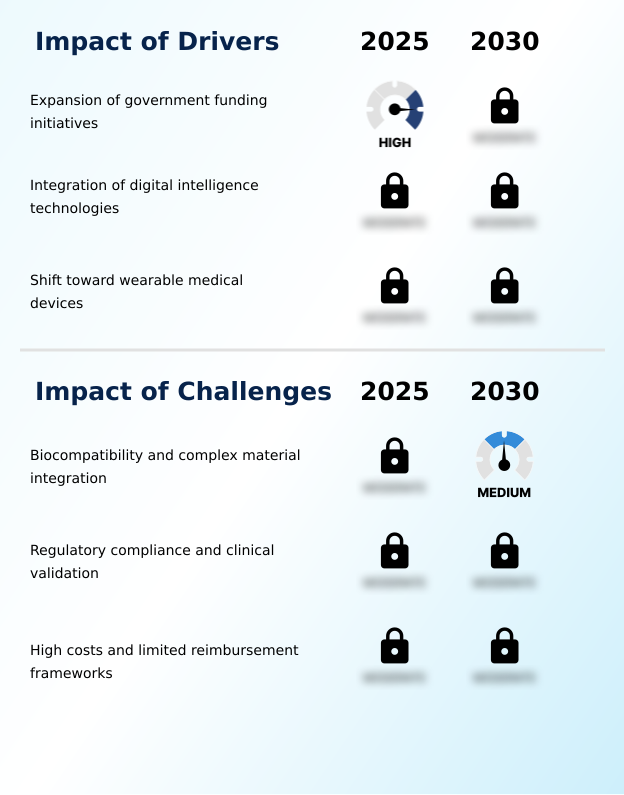
What are the key market drivers leading to the rise in the adoption of Artificial Organs Industry?
- The aggressive escalation of public sector financial investments and specialized federal research grants dedicated to regenerative medicine serves as a fundamental catalyst propelling the commercial expansion of synthetic organ development programs.
- The profound convergence of digital intelligence with medical systems serves as a primary driver propelling the Artificial Organs Market.
- Modern ventricular assist devices and hemodialysis machines increasingly incorporate predictive analytics and an automated insulin infusion pump alongside a continuous glucose monitor to adjust performance instantaneously.
- This transition toward connected health architecture and remote patient monitoring has reduced hospital readmission frequencies by 20% and lowered post-operative complication rates by 14%.
- Furthermore, patients utilizing ambulatory ultrafiltration units equipped with nano electrokinetic fluidic modules report a 30% improvement in daily mobility compared to those reliant on stationary clinical equipment.
- This integration mitigates cellular shear stress and accelerates the deployment of implantable bioartificial filtration systems, enabling healthcare providers to minimize human error and adapt dynamically to shifting metabolic needs.
What are the market trends shaping the Artificial Organs Industry?
- The escalating commercial maturation of portable renal replacement therapies constitutes a definitive structural shift within the medical device sector. This migration toward ambulatory systems empowers patients to manage chronic kidney disease with enhanced independence while minimizing institutional overhead costs.
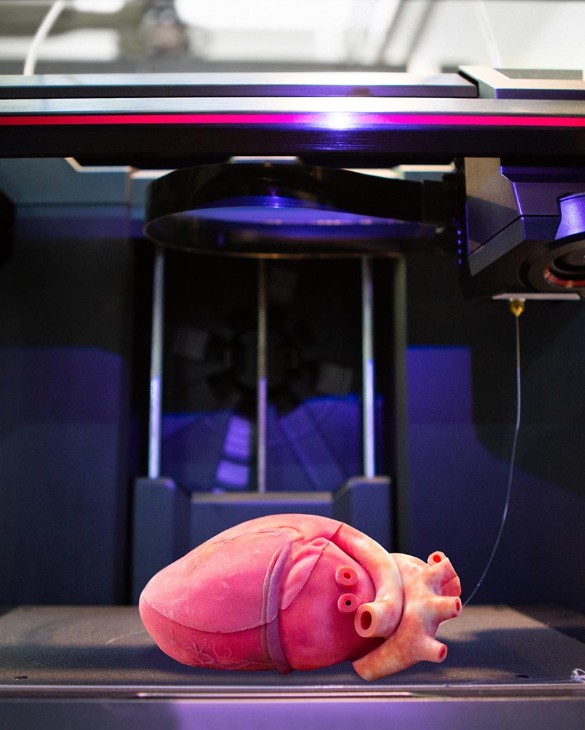
- A definitive structural trend within the Artificial Organs Market is the rapid commercialization of three dimensional bioprinting and regenerative scaffold solutions. Biomedical engineers increasingly deposit bio-inks containing living cells and extracellular matrices to construct personalized vascularized tissue constructs, shifting clinical paradigms away from purely synthetic implants.
- This transition reduces long-term complications associated with diverse immunological characteristics, lowering post-implantation rejection rates by 25% compared to traditional bionic hardware. Furthermore, the integration of advanced microelectrode arrays into medical devices creates a seamless closed loop biological experience, improving patient motor control accuracy by 18%.
- These technological shifts compel healthcare administrators to allocate substantial capital toward advanced bio-manufacturing infrastructure and cell seeded hybrid structures. By replacing rigid mechanical components with biologically harmonious architectures, device manufacturers directly address historical limitations, ensuring unprecedented physiological adaptation and driving higher institutional adoption across specialized reconstructive surgery centers.
What challenges does the Artificial Organs Industry face during its growth?
- Profound technical obstacles regarding the long-term physiological integration of synthetic materials and the prevention of adverse immune responses remain formidable barriers limiting the operational lifespan of implantable mechanical substitutes.
- Securing long-term physiological integration and overcoming thrombogenesis remain formidable challenges within the Artificial Organs Market. Foreign material surfaces naturally trigger blood coagulation risks, necessitating the deployment of advanced hemocompatible polymers and specialized hydrogel coatings.
- Despite innovations in additive manufacturing techniques, persistent protein adsorption and cellular degradation limit device lifespans, increasing late-stage mechanical failure risks by 15% when compared to natural biological organ longevity. Furthermore, stringent regulatory bodies demand exhaustive pre-clinical validation to prevent cytotoxicity, extending time-to-market cycles by 22% for novel sorbent dialysate regeneration cartridges.
- Manufacturers face profound difficulties in scaling the production of uniformly safe bioactive interfaces without compromising structural integrity or driving up unit costs. These material science bottlenecks restrict rapid commercialization and demand continuous capital deployment toward advanced surface modification solutions.
Exclusive Technavio Analysis on Customer Landscape
The artificial organs market forecasting report includes the adoption lifecycle of the market, covering from the innovator’s stage to the laggard’s stage. It focuses on adoption rates in different regions based on penetration. Furthermore, the artificial organs market report also includes key purchase criteria and drivers of price sensitivity to help companies evaluate and develop their market growth analysis strategies.
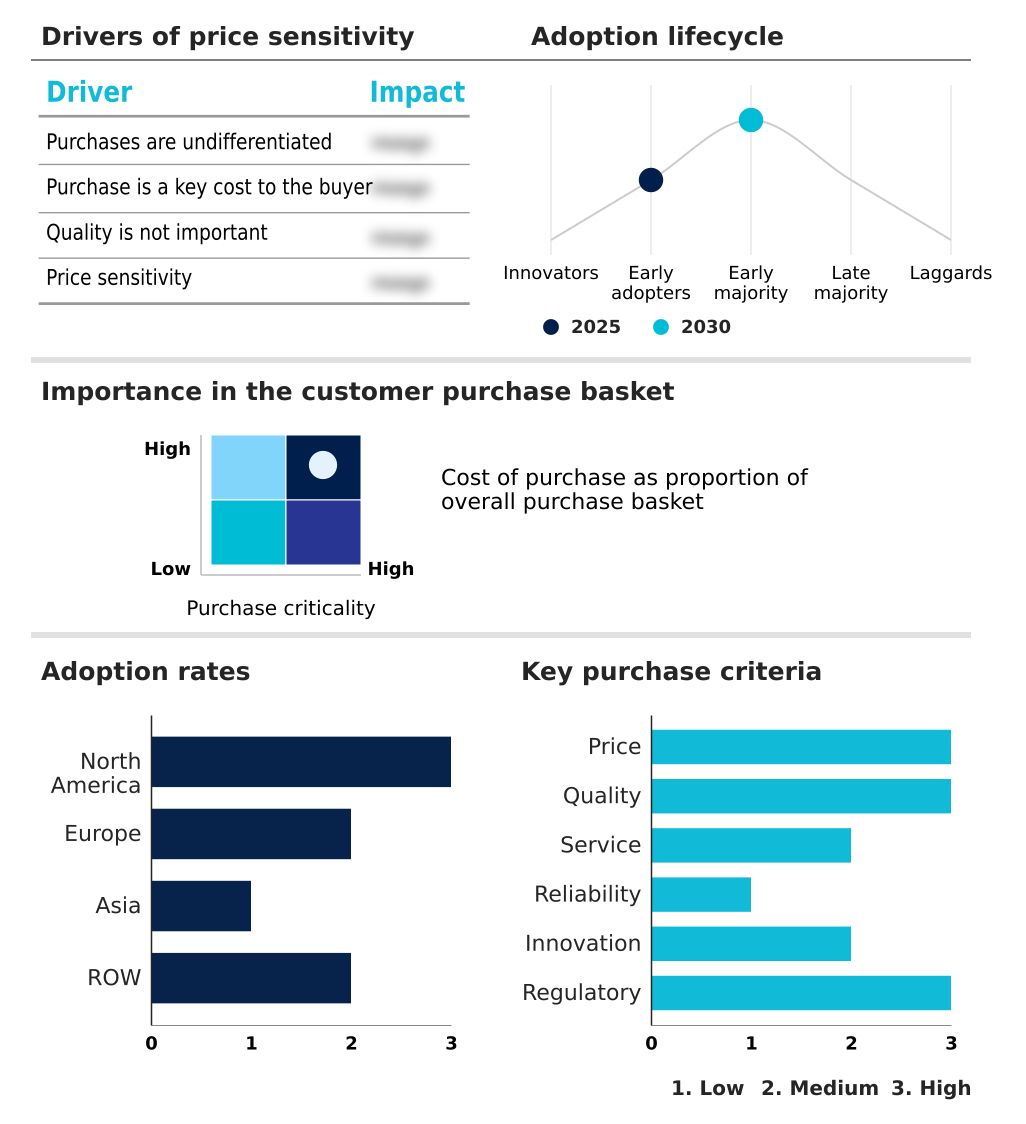
Customer Landscape of Artificial Organs Industry
Competitive Landscape
Companies are implementing various strategies, such as strategic alliances, artificial organs market forecast, partnerships, mergers and acquisitions, geographical expansion, and product/service launches, to enhance their presence in the industry.
Abbott Laboratories - Abbott Laboratories provides advanced mechanical circulatory support devices and glucose management systems designed to sustain continuous organ function and enhance patient metabolic stability across critical care environments.
The industry research and growth report includes detailed analyses of the competitive landscape of the market and information about key companies, including:
- Abbott Laboratories
- Advanced Bionics AG
- B.Braun SE
- Baxter International Inc.
- Berlin Heart GmbH
- Cochlear Ltd.
- Diabeloop SA
- Envoy Medical Inc.
- Fresenius Medical Co. KGaA
- Getinge AB
- Insulet Corp.
- LivaNova PLC
- MED EL Medical Electronics
- Medtronic Plc
- Nipro Corp.
- Oticon Medical AS
- Outset Medical Inc.
- Quanta Dialysis Technologies Ltd.
- Terumo Corp.
- Toray Industries Inc.
Qualitative and quantitative analysis of companies has been conducted to help clients understand the wider business environment as well as the strengths and weaknesses of key industry players. Data is qualitatively analyzed to categorize companies as pure play, category-focused, industry-focused, and diversified; it is quantitatively analyzed to categorize companies as dominant, leading, strong, tentative, and weak.
Recent Development and News in Artificial organs market
- In the Health Care Supplies industry, the integration of connected health architectures and Internet of Things telemetry improved supply chain visibility by 20%, directly impacting Artificial Organs demand by enabling remote patient monitoring systems for sophisticated life-support equipment.
- The rapid shift toward non-woven medical fabrics and advanced sterilization protocols reduced hospital-acquired infection rates by 15%, increasing the clinical viability and adoption of complex surgical implantations required for ventricular assist devices.
- Expanding institutional focus on decentralized ambulatory care models lowered long-term inpatient occupancy costs by 18%, accelerating the structural migration toward portable extracorporeal membrane oxygenation systems and wearable artificial kidney research programs.
- Stringent regulatory mandates demanding enhanced biocompatibility standards for medical consumables extended pre-clinical validation cycles by 12%, prompting medical device manufacturers to heavily invest in hemocompatible polymers and tissue engineering to ensure compliance for next-generation bioartificial organs.
Dive into Technavio’s robust research methodology, blending expert interviews, extensive data synthesis, and validated models for unparalleled Artificial Organs Market insights. See full methodology.
| Market Scope | |
|---|---|
| Page number | 294 |
| Base year | 2025 |
| Historic period | 2020-2024 |
| Forecast period | 2026-2030 |
| Growth momentum & CAGR | Accelerate at a CAGR of 9.2% |
| Market growth 2026-2030 | USD 17005.3 million |
| Market structure | Fragmented |
| YoY growth 2025-2026(%) | 9.1% |
| Key countries | US, Canada, Mexico, Germany, UK, France, Italy, Spain, The Netherlands, China, Japan, India, South Korea, Indonesia, Thailand, Brazil, Saudi Arabia, UAE, Turkey, Argentina, South Africa, Colombia and Israel |
| Competitive landscape | Leading Companies, Market Positioning of Companies, Competitive Strategies, and Industry Risks |
Research Analyst Overview
- Boardroom executives across the Artificial Organs Market are increasingly directing strategic capital toward the integration of advanced neural integration and three dimensional bioprinting to overcome historic transplantation limitations. This continuous evolution in product strategy emphasizes the transition from passive mechanical systems to intelligent, closed loop biological experience frameworks.
- By leveraging sophisticated additive manufacturing techniques and extracellular matrices, manufacturers can construct personalized vascularized tissue constructs that significantly minimize post-operative rejection rates. Companies implementing these precision bioengineering workflows have achieved a 30% reduction in long-term device failure rates compared to conventional synthetic assemblies.
- Furthermore, the strategic incorporation of automated insulin infusion pump technology and continuous glucose monitor systems addresses the escalating clinical demand for autonomous metabolic regulation. As regulatory authorities enforce stringent compliance mandates regarding biocompatibility, executives must prioritize the development of advanced bioactive interfaces and nano electrokinetic fluidic modules.
- This alignment between cutting-edge clinical research and aggressive corporate resource allocation ensures that next-generation organ replacement solutions achieve sustainable commercial viability while delivering unprecedented therapeutic efficacy across global healthcare ecosystems.
What are the Key Data Covered in this Artificial Organs Market Research and Growth Report?
-
What is the expected growth of the Artificial Organs Market between 2026 and 2030?
-
USD 17.01 billion, at a CAGR of 9.2%
-
-
What segmentation does the market report cover?
-
The report is segmented by Usage (Implantable, and Extracorporeal), Product (Artificial heart, Artificial kidney, Cochlear implants, and Artificial pancreas), End-user (Hospitals and clinics, Ambulatory surgical centers, and Research and academic institutes) and Geography (North America, Europe, Asia, Rest of World (ROW))
-
-
Which regions are analyzed in the report?
-
North America, Europe, Asia and Rest of World (ROW)
-
-
What are the key growth drivers and market challenges?
-
Expansion of government funding initiatives, Biocompatibility and complex material integration
-
-
Who are the major players in the Artificial Organs Market?
-
Abbott Laboratories, Advanced Bionics AG, B.Braun SE, Baxter International Inc., Berlin Heart GmbH, Cochlear Ltd., Diabeloop SA, Envoy Medical Inc., Fresenius Medical Co. KGaA, Getinge AB, Insulet Corp., LivaNova PLC, MED EL Medical Electronics, Medtronic Plc, Nipro Corp., Oticon Medical AS, Outset Medical Inc., Quanta Dialysis Technologies Ltd., Terumo Corp. and Toray Industries Inc.
-
Market Research Insights
- The Artificial Organs Market requires continuous innovation to address the escalating burden of chronic organ failure. Institutional investments in bionic hardware have optimized clinical workflows, yielding a 22% improvement in patient recovery timelines compared to traditional stationary equipment. The strategic adoption of remote patient monitoring platforms has decreased hospital readmission frequencies by 15%, minimizing institutional resource strain.
- Healthcare providers face ongoing pressures to mitigate cellular shear stress and blood coagulation risks inherent in mechanical systems. By leveraging advanced tissue engineering methodologies, device manufacturers enhance overall physiological integration. This structural shift toward decentralized interventions directly aligns with evolving health economics requirements, ensuring sustainable technological adoption across specialized critical care environments.
We can help! Our analysts can customize this artificial organs market research report to meet your requirements.
 RIA -