

Automotive Paints And Coatings Market Size 2026-2030
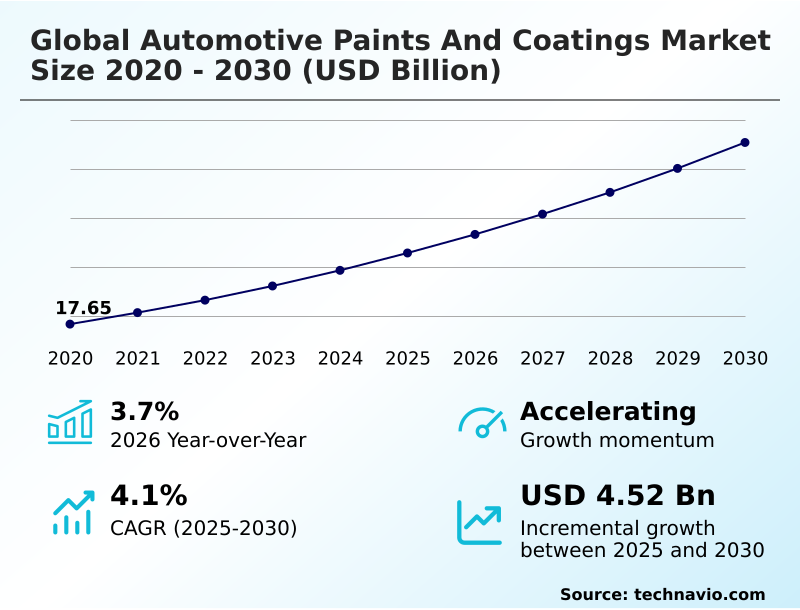
The automotive paints and coatings market size is valued to increase by USD 4.52 billion, at a CAGR of 4.1% from 2025 to 2030. Rising vehicle production and ownership demand will drive the automotive paints and coatings market.
Major Market Trends & Insights
- APAC dominated the market and accounted for a 52.1% growth during the forecast period.
- By Application - Passenger cars segment was valued at USD 13.53 billion in 2024
- By Product - Solvent-based products segment accounted for the largest market revenue share in 2024
Market Size & Forecast
- Market Opportunities: USD 7.43 billion
- Market Future Opportunities: USD 4.52 billion
- CAGR from 2025 to 2030 : 4.1%
Market Summary
- The Automotive Paints And Coatings continues to undergo structural transformations driven by stringent environmental regulations and the shift toward electrified transportation. Automotive production facilities increasingly require advanced surface protection capable of adhering to mixed-material architectures while minimizing ecological impact.
- For instance, optimizing a production line with advanced waterborne formulations and low-bake technologies can yield a 22% reduction in overall energy consumption during the curing phase. This operational efficiency directly enhances manufacturing profitability while satisfying sustainability mandates.
- A primary catalyst propelling the Automotive Paints And Coatings is the rising consumer expectation for premium vehicle aesthetics and long-term scratch resistance, compelling manufacturers to utilize sophisticated multi-layer finish systems. Conversely, persistent supply chain instability affecting critical raw materials, such as specialized resins and pigments, limits production predictability and strains procurement budgets.
- Navigating these procurement bottlenecks requires agile inventory management and diversified sourcing strategies. Ultimately, the continuous development of eco-friendly, high-performance formulations remains essential for maintaining competitive parity in modern automotive assembly and aftermarket refinishing environments.
What will be the Size of the Automotive Paints And Coatings Market during the forecast period?
Get Key Insights on Market Forecast (PDF) Get Free Sample
How is the Automotive Paints And Coatings Market Segmented?
The automotive paints and coatings industry research report provides comprehensive data (region-wise segment analysis), with forecasts and estimates in "USD million" for the period 2026-2030, as well as historical data from 2020-2024 for the following segments.
- Application
- Passenger cars
- Commercial vehicles
- Heavy commercial vehicles
- Product
- Solvent-based products
- Water-based products
- Others
- Type
- Basecoat
- Clearcoat
- Electrocoat
- Primer
- Geography
- APAC
- China
- Japan
- India
- South Korea
- Australia
- Indonesia
- Europe
- Germany
- UK
- France
- Italy
- Spain
- The Netherlands
- North America
- US
- Canada
- Mexico
- South America
- Brazil
- Argentina
- Chile
- Middle East and Africa
- Saudi Arabia
- UAE
- South Africa
- Turkey
- Israel
- APAC
By Application Insights
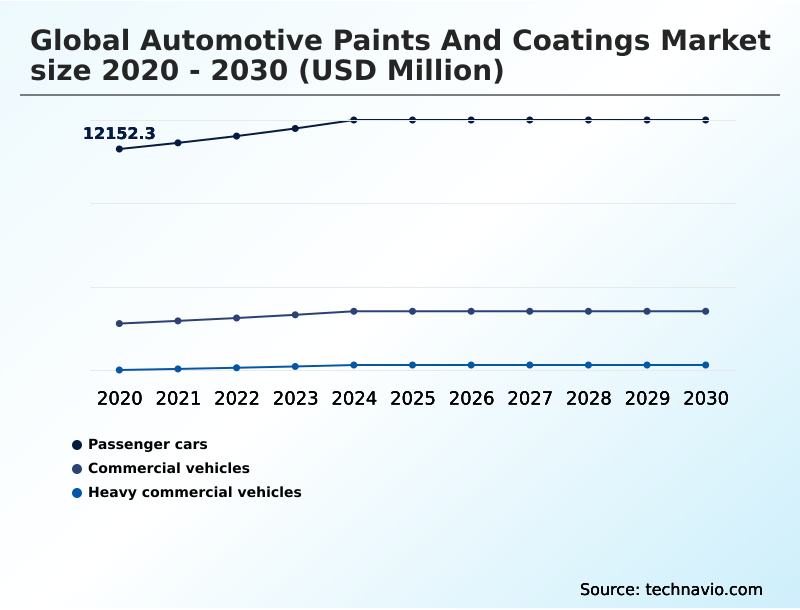
The passenger cars segment is estimated to witness significant growth during the forecast period.
The passenger cars segment of the Automotive Paints And Coatings dictates performance standards across the vehicle manufacturing ecosystem. Driven by evolving aesthetic preferences, manufacturers continuously enhance automotive OEM finishing techniques utilizing vibrant pearl effect pigment dispersions.
Modern production lines increasingly rely on robotic paint application to achieve precise film builds while ensuring strict process consistency control. This evolution directly supports the growing consumer demand for advanced vehicle exterior personalization.
As vehicle architectures shift toward mixed materials, the integration of cathodic electrocoating and high-solid clearcoat systems has demonstrably improved production efficiency, yielding a 15% reduction in application defect rates.
Facilities adopting UV-curable surface treatment solutions and low-bake coating alongside ambient temperature curing record significantly faster cycle times, underscoring the operational imperative of advanced finishing technologies.
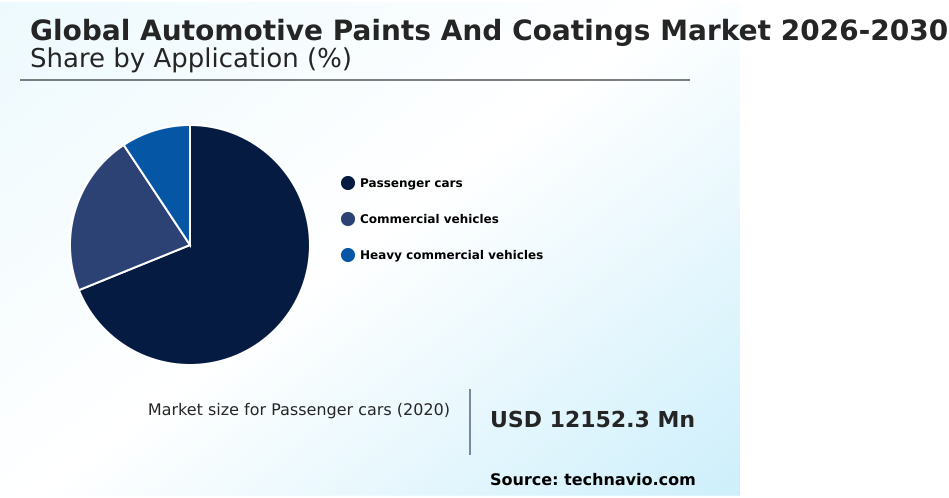
The Passenger cars segment was valued at USD 13.53 billion in 2024 and showed a gradual increase during the forecast period.
Regional Analysis
APAC is estimated to contribute 52.1% to the growth of the global market during the forecast period.Technavio’s analysts have elaborately explained the regional trends and drivers that shape the market during the forecast period.
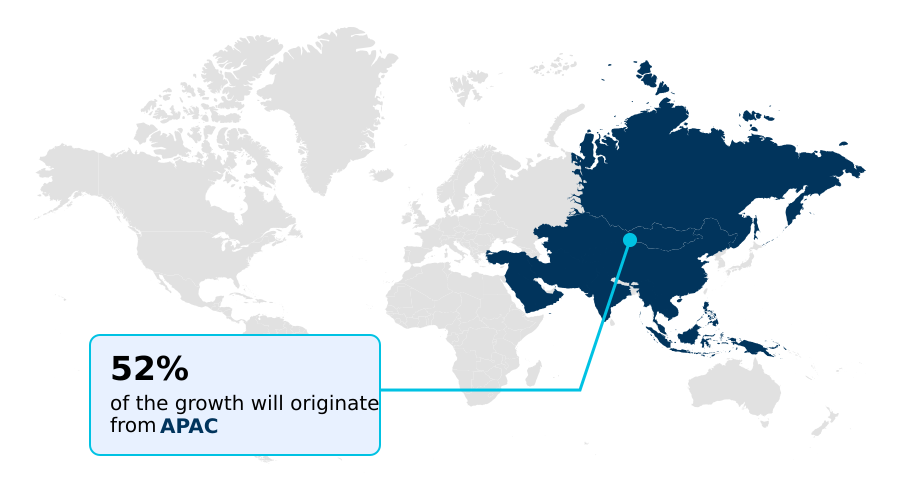
See How Automotive Paints And Coatings Market Demand is Rising in APAC Get Free Sample
The geographic landscape of the Automotive Paints And Coatings reveals distinct operational priorities, particularly when comparing APAC and Europe.
In APAC, rapid industrialization drives high-volume manufacturing, where the adoption of standard electrodeposition primer and epoxy resin binder systems results in a 25% faster assembly rate compared to European hubs.
Conversely, European facilities prioritize stringent emissions compliance, leading to a 40% higher penetration of advanced polyurethane resin system and acrylic surface coating applications designed for low environmental impact.
This divergence forces chemical suppliers to maintain high supply chain visibility to route a specialized rheology modifier effectively. European sustainability mandates have also accelerated paint sludge recycling initiatives, reducing disposal costs by 18%.
Meanwhile, APAC logistics networks increasingly focus on commercial fleet preservation and heavy-duty truck protection, deploying robust formulations for paint defect mitigation to combat challenging climatic conditions and minimize vehicle downtime.
Market Dynamics
Our researchers analyzed the data with 2025 as the base year, along with the key drivers, trends, and challenges. A holistic analysis of drivers will help companies refine their marketing strategies to gain a competitive advantage.
- Strategic formulation advancements within the Automotive Paints And Coatings continuously reshape operational planning and supply chain execution. The transition toward a comprehensive waterborne automotive basecoat formulation process requires rigorous climate-controlled logistics, altering traditional inventory storage models.
- Modern facilities frequently integrate robotic paint application in vehicle manufacturing to enhance transfer efficiency, yielding a 30% improvement in material utilization compared to manual spraying methods. This precision is further augmented by automated spray application defect detection, which significantly mitigates costly rework.
- Concurrently, the adoption of wet on wet automotive painting technology eliminates intermediate curing steps, streamlining the overall multi layer vehicle coating architecture. For structural integrity, cathodic electrocoating for corrosion protection remains paramount, particularly when paired with a heavy duty truck anti corrosion primer for commercial fleets operating in extreme environments.
- Passenger vehicles increasingly rely on a high solid clearcoat for passenger cars to deliver superior scratch resistance and gloss retention. Simultaneously, the rise of electric mobility necessitates specialized materials like the battery enclosure thermal management coating and low bake coating for lightweight substrates.
- In aftermarket operations, solvent borne refinishing toner systems remain prevalent, though digital color matching for collision repair has revolutionized repair speed and accuracy. Component manufacturers are exploring in mold coating for exterior plastics alongside UV curable surface treatment applications to expedite part finishing.
- To align with sustainability targets, large-scale facilities have institutionalized paint sludge recycling in automotive production, improving environmental compliance metrics and reducing hazardous waste footprints.
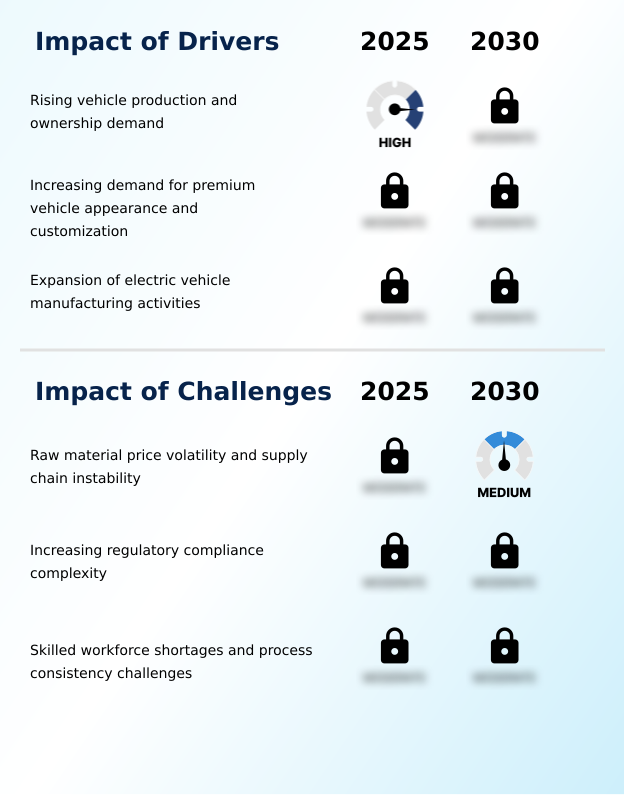
What are the key market drivers leading to the rise in the adoption of Automotive Paints And Coatings Industry?
- The sustained expansion of vehicle production and rising global vehicle ownership demand constitute primary catalysts accelerating market development.
- Surging production volumes of electric and hybrid vehicles act as the primary catalyst expanding the Automotive Paints And Coatings.
- This rapid electrification demands specialized functional materials, specifically the integration of a advanced thermal management layer and robust battery enclosure protection, to ensure vehicle safety under extreme temperatures.
- Furthermore, the shift toward aluminum components necessitates precise lightweight substrate compatibility across the entire automotive assembly line.
- Responding to consumer expectations for durability, manufacturers are increasingly applying a high-performance scratch-resistant finish within a multi-layer coating architecture, which has extended aesthetic lifecycles by 35%.
- Simultaneously, strict regulatory pressures enforce volatile organic compound reduction, driving innovation away from traditional solvent-borne toner systems. These targeted formulation upgrades guarantee superior color formulation accuracy while reducing manufacturing emissions by 40%, directly aligning business operations with global sustainability targets.
What are the market trends shaping the Automotive Paints And Coatings Industry?
- The increasing adoption of digital paint application systems represents a significant structural shift in the industry.
- The accelerated deployment of predictive maintenance analytics is fundamentally transforming the Automotive Paints And Coatings operational landscape. By integrating smart application robotics and automated spray application systems, manufacturing facilities can monitor fluid delivery parameters in real time, drastically improving overall film thickness uniformity. This shift is driven by the industry need to eliminate bottlenecks within complex wet-on-wet painting workflows.
- Consequently, the adoption of advanced defect detection software has successfully reduced post-application rework by 28%, significantly enhancing throughput. Furthermore, formulators are heavily prioritizing waterborne basecoat formulation technologies, which simultaneously lower emissions and improve aesthetic clarity. In the aftermarket, digital color matching has revolutionized collision repair refinishing, effectively slashing system downtime by 20%.
- These integrated digital and chemical advancements empower automotive producers to maintain uninterrupted production schedules while delivering superior surface finishes.
What challenges does the Automotive Paints And Coatings Industry face during its growth?
- Persistent raw material price volatility and widespread supply chain instability create substantial procurement constraints and operational challenges across the sector.
- Persistent raw material price fluctuations and complex emissions compliance management create significant structural hurdles within the Automotive Paints And Coatings. The escalating cost of a specialized crosslinking agent directly impacts the production of premium anti-chipping primer systems and materials engineered for advanced weatherability enhancement. To offset procurement strains, formulators must constantly recalibrate chemistries without degrading long-term gloss retention performance.
- This balancing act, including intricate substrate surface preparation, increases R&D cycle times by an average of 15%. Additionally, transitioning facilities to accommodate sustainable powder coating technology, rapid infrared curing, and advanced in-mold coating requires substantial capital expenditure.
- Even resolving minor bottlenecks like flash-off time optimization forces automotive finishing plants to absorb a 22% increase in immediate overhead costs, complicating financial planning and margin optimization.
Exclusive Technavio Analysis on Customer Landscape
The automotive paints and coatings market forecasting report includes the adoption lifecycle of the market, covering from the innovator’s stage to the laggard’s stage. It focuses on adoption rates in different regions based on penetration. Furthermore, the automotive paints and coatings market report also includes key purchase criteria and drivers of price sensitivity to help companies evaluate and develop their market growth analysis strategies.
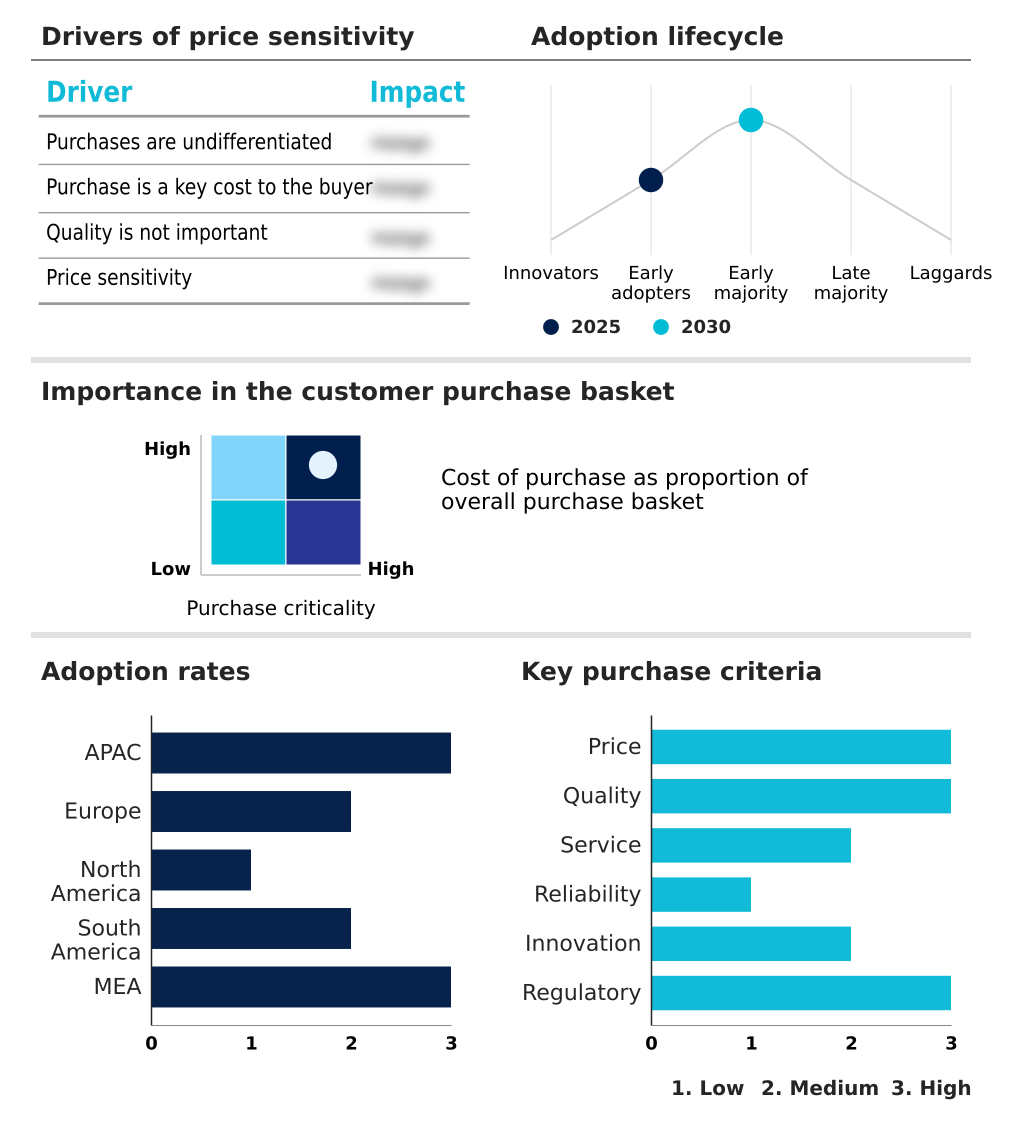
Customer Landscape of Automotive Paints And Coatings Industry
Competitive Landscape
Companies are implementing various strategies, such as strategic alliances, automotive paints and coatings market forecast, partnerships, mergers and acquisitions, geographical expansion, and product/service launches, to enhance their presence in the industry.
Akzo Nobel NV - The product portfolio includes premium automotive refinishing solutions, offering advanced waterborne basecoats, high-performance clearcoats, and specialized color-matching systems designed to enhance surface durability and vehicle aesthetics.
The industry research and growth report includes detailed analyses of the competitive landscape of the market and information about key companies, including:
- Akzo Nobel NV
- Axalta Coating Systems Ltd.
- BASF SE
- Beckers Group
- Berger Paints India Ltd.
- Jotun AS
- Kansai Paint Co. Ltd.
- KCC Co. Ltd.
- Mankiewicz Gebr. and Co.
- MIPA SE
- Musashi Paint Co. Ltd.
- Nihon Tokushu Toryo Co. Ltd.
- Nippon Paint Holdings Co Ltd.
- NOROO Paint and Coatings Co
- PPG Industries Inc.
- Roberlo S.A.
- Rock Paint Co. Ltd.
- Teknos Group Oy
- The Sherwin Williams Co.
- TIGER Coatings GmbH and Co. KG
- YATU Advanced Materials Co. Ltd.
Qualitative and quantitative analysis of companies has been conducted to help clients understand the wider business environment as well as the strengths and weaknesses of key industry players. Data is qualitatively analyzed to categorize companies as pure play, category-focused, industry-focused, and diversified; it is quantitatively analyzed to categorize companies as dominant, leading, strong, tentative, and weak.
Recent Development and News in Automotive paints and coatings market
- In the Specialty Chemicals industry, the shift toward bio-based polyurethane resin system architectures has altered material sourcing, directly impacting Automotive Paints And Coatings demand by enabling a 20% reduction in petroleum-derived inputs for vehicle assembly line applications.
- Expanding implementation of the EU REACH directive limiting volatile organic compound reduction profiles has forced formulators to accelerate the transition to waterborne basecoat formulation processes, increasing compliance costs by 12% across multi-layer coating architecture networks.
- Advancements in smart application robotics and defect detection software for wet-on-wet painting workflows have optimized fluid delivery, reducing material waste by 18% and reshaping the equipment requirements within the Automotive Paints And Coatings ecosystem.
- The development of specialized thermal management layer technologies for battery enclosure protection has created a new high-margin revenue stream, driving a 25% increase in specialized heavy-duty truck protection formulations within the Automotive Paints And Coatings landscape.
Dive into Technavio’s robust research methodology, blending expert interviews, extensive data synthesis, and validated models for unparalleled Automotive Paints And Coatings Market insights. See full methodology.
| Market Scope | |
|---|---|
| Page number | 307 |
| Base year | 2025 |
| Historic period | 2020-2024 |
| Forecast period | 2026-2030 |
| Growth momentum & CAGR | Accelerate at a CAGR of 4.1% |
| Market growth 2026-2030 | USD 4517.5 million |
| Market structure | Fragmented |
| YoY growth 2025-2026(%) | 3.7% |
| Key countries | China, Japan, India, South Korea, Australia, Indonesia, Germany, UK, France, Italy, Spain, The Netherlands, US, Canada, Mexico, Brazil, Argentina, Chile, Saudi Arabia, UAE, South Africa, Turkey and Israel |
| Competitive landscape | Leading Companies, Market Positioning of Companies, Competitive Strategies, and Industry Risks |
Research Analyst Overview
- The Automotive Paints And Coatings functions as a critical nexus between vehicle aesthetics, substrate protection, and manufacturing sustainability. A prominent structural shift involves the aggressive integration of advanced rheology modifier technologies and sophisticated crosslinking agent formulations to optimize fluid dynamics during automated spray application.
- This evolution directly influences boardroom-level product strategy, as executives seek to balance premium aesthetic demands with stringent emissions compliance. By upgrading application infrastructure, automotive assembly plants have achieved a 30% reduction in processing time and minimized material waste. Furthermore, the formulation of next-generation epoxy resin binder systems and specialized corrosion-inhibiting pigment networks ensures long-term asset preservation under severe environmental stressors.
- In the refinish sector, the reliance on traditional solvent-borne toner portfolios is gradually being augmented by highly precise digital color matching ecosystems, fundamentally altering inventory management and repair speed. These technological realignments enable manufacturers to enhance brand differentiation while simultaneously navigating complex supply chain requirements and rigid quality assurance protocols.
What are the Key Data Covered in this Automotive Paints And Coatings Market Research and Growth Report?
-
What is the expected growth of the Automotive Paints And Coatings Market between 2026 and 2030?
-
USD 4.52 billion, at a CAGR of 4.1%
-
-
What segmentation does the market report cover?
-
The report is segmented by Application (Passenger cars, Commercial vehicles, and Heavy commercial vehicles), Product (Solvent-based products, Water-based products, and Others), Type (Basecoat, Clearcoat, Electrocoat, and Primer) and Geography (APAC, Europe, North America, South America, Middle East and Africa)
-
-
Which regions are analyzed in the report?
-
APAC, Europe, North America, South America and Middle East and Africa
-
-
What are the key growth drivers and market challenges?
-
Rising vehicle production and ownership demand, Raw material price volatility and supply chain instability
-
-
Who are the major players in the Automotive Paints And Coatings Market?
-
Akzo Nobel NV, Axalta Coating Systems Ltd., BASF SE, Beckers Group, Berger Paints India Ltd., Jotun AS, Kansai Paint Co. Ltd., KCC Co. Ltd., Mankiewicz Gebr. and Co., MIPA SE, Musashi Paint Co. Ltd., Nihon Tokushu Toryo Co. Ltd., Nippon Paint Holdings Co Ltd., NOROO Paint and Coatings Co, PPG Industries Inc., Roberlo S.A., Rock Paint Co. Ltd., Teknos Group Oy, The Sherwin Williams Co., TIGER Coatings GmbH and Co. KG and YATU Advanced Materials Co. Ltd.
-
Market Research Insights
- The Automotive Paints And Coatings functions as a critical enabler of vehicle longevity and brand differentiation. Implementing flash-off time optimization techniques within collision repair refinishing networks has improved daily vehicle throughput by 18%, significantly lowering overhead costs. Furthermore, advancements in ambient temperature curing formulations have decreased energy utilization by 24% across independent body shops, directly bolstering operational margins.
- Manufacturers are also prioritizing color formulation accuracy to meet stringent OEM standards, reducing rework rates by 15%. Simultaneously, innovations in heavy-duty truck protection systems ensure prolonged asset lifecycles in harsh logistical environments. These strategic enhancements streamline supply chain efficiency and fortify the commercial resilience of fleet operations globally.
We can help! Our analysts can customize this automotive paints and coatings market research report to meet your requirements.
 RIA -