

Cardiovascular Catheters Market Size 2026-2030
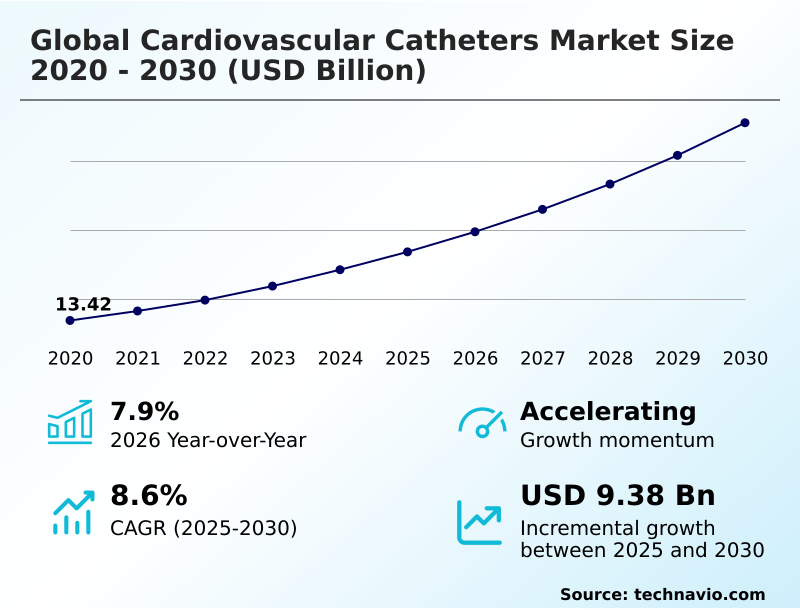
The cardiovascular catheters market size is valued to increase by USD 9.38 billion, at a CAGR of 8.6% from 2025 to 2030. Rising prevalence of cardiovascular diseases globally will drive the cardiovascular catheters market.
Major Market Trends & Insights
- Asia dominated the market and accounted for a 45.8% growth during the forecast period.
- By Product - Cardiovascular therapeutic catheters segment was valued at USD 10.29 billion in 2024
- By End-user - Hospitals segment accounted for the largest market revenue share in 2024
Market Size & Forecast
- Market Opportunities: USD 14.37 billion
- Market Future Opportunities: USD 9.38 billion
- CAGR from 2025 to 2030 : 8.6%
Market Summary
- The Cardiovascular Catheters market experiences sustained expansion driven by an escalating clinical reliance on minimally invasive diagnostic and therapeutic endovascular procedures. Healthcare facilities are continuously restructuring interventional cardiology workflows to process rising patient volumes efficiently.
- In a practical business scenario, hospital supply chains are migrating toward vendor-managed inventory systems to ensure uninterrupted access to specialized electrophysiology and structural heart instruments, minimizing procedural delays. This operational shift has enabled cardiac centers to improve daily patient throughput by 15% compared to facilities utilizing conventional decentralized ordering.
- A primary driver propelling this sector is the rising incidence of complex cardiovascular pathologies among aging demographics, which compels healthcare networks to upgrade catheterization laboratories with advanced high-resolution imaging integration. Conversely, stringent medical device regulatory compliance acts as a persistent challenge, demanding extensive clinical trial validation that prolongs product development cycles and escalates research expenditures.
- By adopting multi-functional, sensor-equipped platforms, clinicians achieve superior procedural precision while administrators successfully mitigate the high overhead costs associated with prolonged inpatient recoveries.
What will be the Size of the Cardiovascular Catheters Market during the forecast period?
Get Key Insights on Market Forecast (PDF) Get Free Sample
How is the Cardiovascular Catheters Market Segmented?
The cardiovascular catheters industry research report provides comprehensive data (region-wise segment analysis), with forecasts and estimates in "USD million" for the period 2026-2030, as well as historical data from 2020-2024 for the following segments.
- Product
- Cardiovascular therapeutic catheters
- Cardiovascular diagnostic catheters
- End-user
- Hospitals
- Ambulatory surgical centers
- Clinics
- Application
- Coronary artery disease
- Cardiac arrhythmias
- Peripheral artery disease
- Structural heart diseases
- Geography
- Asia
- China
- India
- Japan
- South Korea
- Thailand
- Indonesia
- North America
- US
- Canada
- Mexico
- Europe
- Germany
- UK
- France
- Italy
- Spain
- The Netherlands
- Rest of World (ROW)
- Asia
By Product Insights
The cardiovascular therapeutic catheters segment is estimated to witness significant growth during the forecast period.
Therapeutic instruments fundamentally alter clinical pathways by executing direct interventions within affected anatomy. Utilizing percutaneous transluminal coronary angioplasty and advanced stent delivery system mechanisms allows operators to restore blood flow effectively.
Facilities deploying an electrophysiology ablation platform report that procedure precision improves efficiency by 15%, reducing operating room turnaround times. Such minimally invasive cardiac surgery alternatives are vital for chronic stable angina management and acute coronary syndrome intervention.
These advanced systems optimize complex cardiovascular protocols without requiring open thoracic access, lowering overall operational costs significantly.
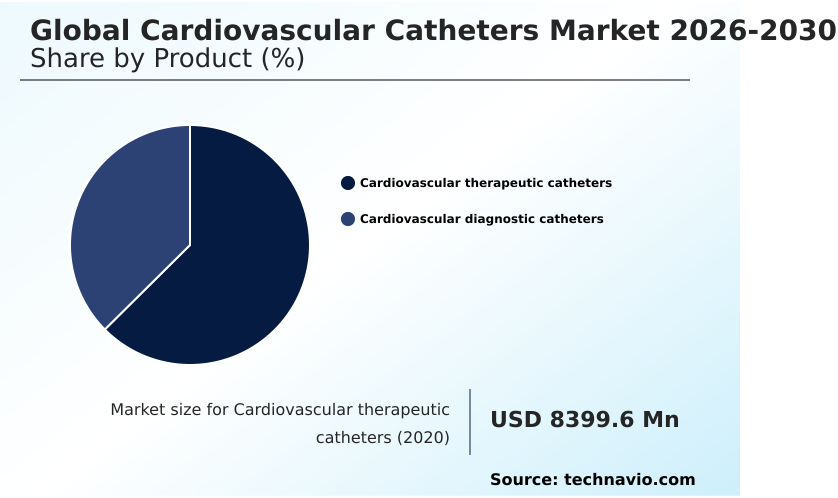
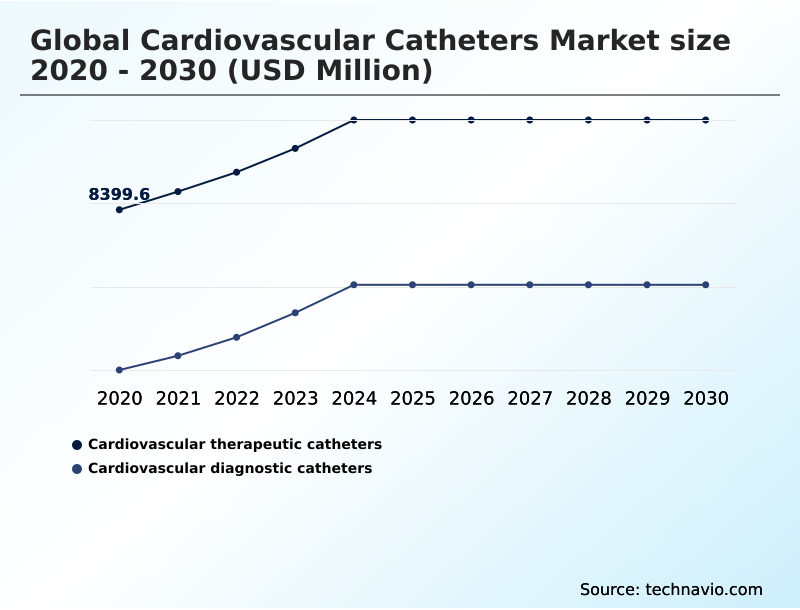
The Cardiovascular therapeutic catheters segment was valued at USD 10.29 billion in 2024 and showed a gradual increase during the forecast period.
Regional Analysis
Asia is estimated to contribute 45.8% to the growth of the global market during the forecast period.Technavio’s analysts have elaborately explained the regional trends and drivers that shape the market during the forecast period.

See How Cardiovascular Catheters Market Demand is Rising in Asia Get Free Sample
Regional disparities in clinical infrastructure heavily dictate technological adoption rates and procurement strategies. North American cardiovascular networks operate with highly sophisticated diagnostic suites, processing complex arrhythmia cases 35% faster than comparable European facilities.
This efficiency stems from rapid integration of a high-density multi-electrode array and advanced drug-coated balloon architecture. Additionally, North American facilities achieve a 20% higher utilization rate for scoring balloon technology.
In contrast, European procurement committees focus on intra-aortic balloon pumping equipment and rigorous hospital acquired infection reduction protocols, driving bulk purchasing of standard consumables. Optimizing outpatient catheterization laboratory workflow remains a universal priority, streamlining patient processing across both geographies.
Market Dynamics
Our researchers analyzed the data with 2025 as the base year, along with the key drivers, trends, and challenges. A holistic analysis of drivers will help companies refine their marketing strategies to gain a competitive advantage.
- The transition from conventional surgical methods toward minimally invasive endovascular approaches is fundamentally reshaping hospital procurement cycles and clinical resource allocation globally. Healthcare administrators are increasingly prioritizing multi-functional medical devices that seamlessly consolidate therapeutic and diagnostic steps to streamline operating room utilization.
- Evaluating the clinical efficacy of transcatheter aortic valve replacement delivery mechanisms reveals that superior catheter trackability directly correlates with significantly reduced patient length of stay. This operational efficiency enables modern facilities to process roughly one-third more cardiovascular cases annually compared to institutions relying exclusively on legacy surgical instrumentation.
- During complex coronary interventions, ensuring precise fractional flow reserve pressure sensing allows clinicians to accurately assess ischemic lesion severity and avoid unnecessary permanent metallic implantations, thereby lowering overall supply chain expenditures.
- Furthermore, the clinical integration of pulsed field ablation energy delivery systems drastically shortens electrophysiology procedural times by selectively targeting arrhythmogenic tissue without inducing unintended thermal damage to adjacent critical anatomical structures. This non-thermal therapeutic approach is rapidly displacing legacy technologies due to its enhanced safety profile and workflow advantages.
- Concurrently, utilizing advanced intravascular ultrasound imaging integration provides interventionalists with ultra-high-resolution cross-sectional views of the arterial wall, ensuring optimal stent sizing and accurate post-deployment assessment. This level of diagnostic clarity becomes absolutely paramount when executing a highly sophisticated percutaneous transluminal coronary angioplasty tracking procedure through heavily calcified or severely tortuous arterial segments.
- Ultimately, these combined technological advancements empower healthcare networks to deliver superior quality patient care while maintaining strict operational cost controls.
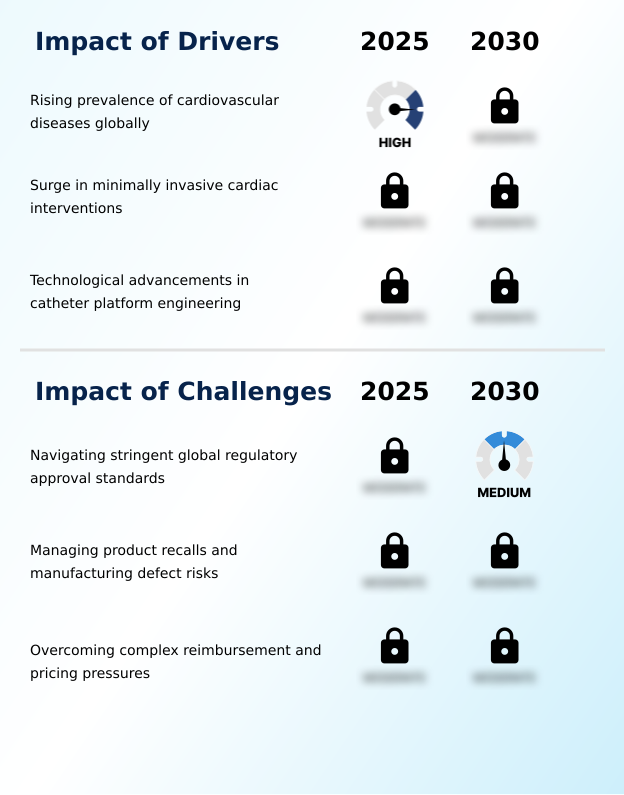
What are the key market drivers leading to the rise in the adoption of Cardiovascular Catheters Industry?
- The escalating incidence of chronic cardiovascular conditions worldwide serves as a primary catalyst accelerating procedural demand and market expansion.
- Clinical migration toward endovascular therapies drives substantial operational shifts across modern cardiovascular facilities. Implementing three-dimensional electroanatomical mapping alongside automated robotic navigation decreases procedural radiation exposure times by 25%.
- Furthermore, integrating a non-thermal pulsed field ablation mechanism enhances intervention safety profiles, yielding a 18% improvement in catheter lab throughput. The rise of structural interventions like patent foramen ovale closure has decentralized vascular care into specialized outpatient settings.
- To navigate complex anatomies, operators rely on tortuous radial artery tracking and advanced femoral access site closure devices, which have lowered access-site bleeding incidents by 12%.
What are the market trends shaping the Cardiovascular Catheters Industry?
- A prominent market trend is the escalating clinical preference for minimally invasive therapeutic interventions. This shift significantly reduces patient recovery times and lowers healthcare delivery costs across specialized medical facilities.
- Healthcare providers are rapidly transitioning toward advanced diagnostic integration to maximize procedural success rates. Embedding an intravascular ultrasound sensor and an optical coherence tomography fiber directly into catheter shafts increases real-time visualization, which has reduced post-deployment complications by 22%. Practitioners utilizing a fractional flow reserve pressure sensor achieve superior intracardiac pressure measurement accuracy, allowing for more precise interventions.
- This diagnostic and therapeutic fusion is crucial for heavily calcified lesion crossing and successful in-stent restenosis mitigation. Enhanced diagnostic navigation also streamlines left atrial appendage occlusion interventions, elevating overall operational efficiency.
What challenges does the Cardiovascular Catheters Industry face during its growth?
- Compliance with increasingly rigorous and complex international regulatory approval frameworks presents a substantial operational hurdle for medical device manufacturers.
- Maintaining absolute product consistency presents significant operational friction within sophisticated interventional device manufacturing. Complex assemblies required for transcatheter aortic valve replacement and transcatheter edge-to-edge repair demand micro-manufacturing precision, where minor defects can increase product recall rates by up to 14%. Engineering a reliable contact-force sensing capability necessitates rigorous quality control frameworks, driving up compliance and production costs by nearly 20%.
- Any compromise threatens vascular trauma minimization and the efficacy of targeted antiaesthetic drug transfer. Furthermore, ensuring consistent real-time hemodynamic monitoring accuracy during acute interventions remains technologically challenging, continuously straining corporate research and development budgets.
Exclusive Technavio Analysis on Customer Landscape
The cardiovascular catheters market forecasting report includes the adoption lifecycle of the market, covering from the innovator’s stage to the laggard’s stage. It focuses on adoption rates in different regions based on penetration. Furthermore, the cardiovascular catheters market report also includes key purchase criteria and drivers of price sensitivity to help companies evaluate and develop their market growth analysis strategies.
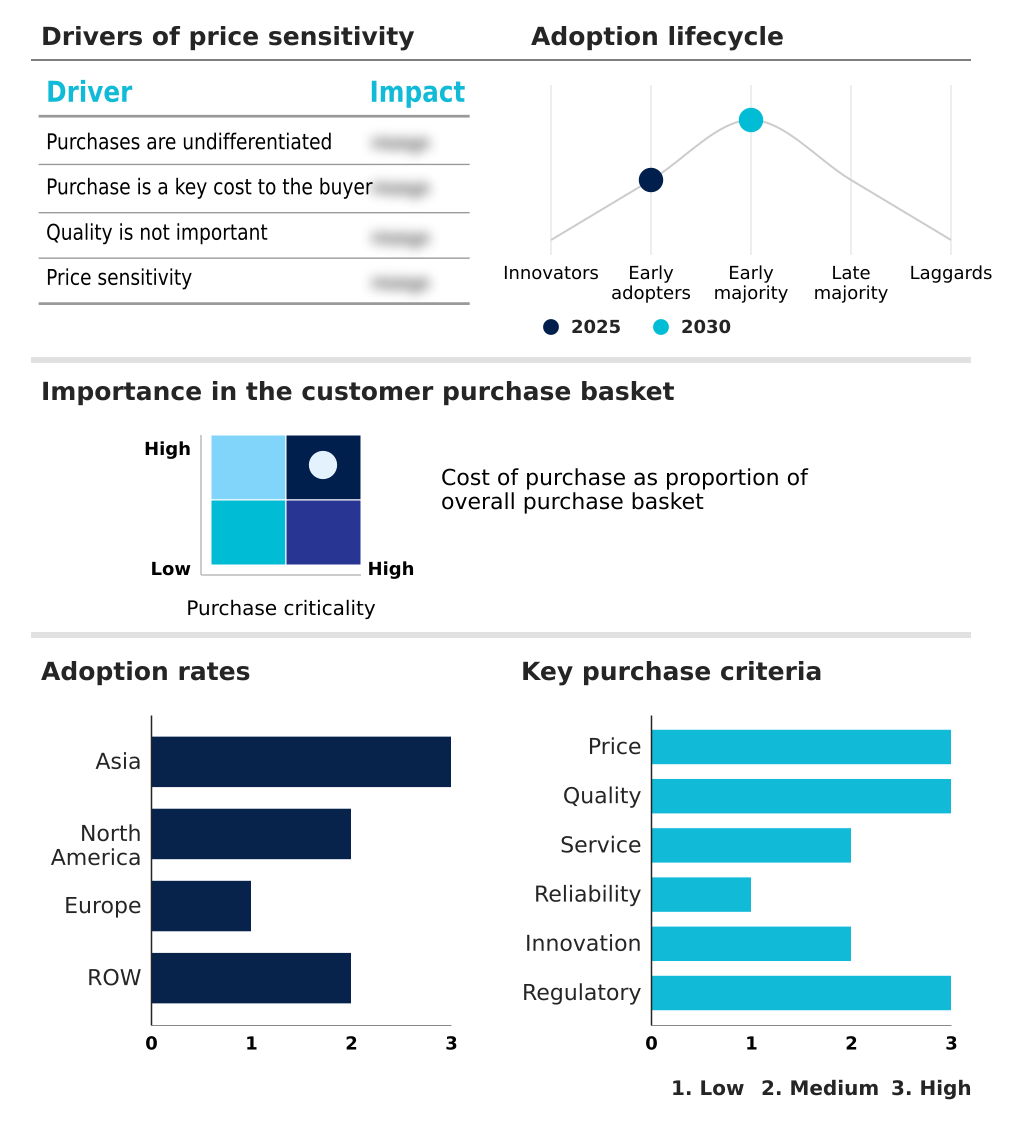
Customer Landscape of Cardiovascular Catheters Industry
Competitive Landscape
Companies are implementing various strategies, such as strategic alliances, cardiovascular catheters market forecast, partnerships, mergers and acquisitions, geographical expansion, and product/service launches, to enhance their presence in the industry.
Abbott Laboratories - The organization provides advanced interventional solutions, delivering highly specialized therapeutic and diagnostic tools designed to treat complex vascular and structural heart conditions efficiently.
The industry research and growth report includes detailed analyses of the competitive landscape of the market and information about key companies, including:
- Abbott Laboratories
- AngioDynamics Inc.
- Asahi Intecc Co. Ltd.
- B.Braun SE
- Becton Dickinson and Co.
- BIOTRONIK SE and Co. KG
- Boston Scientific Corp.
- Cook Medical LLC
- Cordis Corp.
- Edwards Lifesciences Corp.
- Guerbet SA
- Johnson and Johnson
- Koninklijke Philips NV
- Lepu Medical Co. Ltd.
- Medtronic Plc
- Merit Medical Systems Inc.
- MicroPort Scientific Corp.
- Nipro Corp.
- Penumbra Inc.
- Teleflex Inc.
- Terumo Corp.
- Vygon SA
Qualitative and quantitative analysis of companies has been conducted to help clients understand the wider business environment as well as the strengths and weaknesses of key industry players. Data is qualitatively analyzed to categorize companies as pure play, category-focused, industry-focused, and diversified; it is quantitatively analyzed to categorize companies as dominant, leading, strong, tentative, and weak.
Recent Development and News in Cardiovascular catheters market
- In the Health Care Equipment industry, the transition toward value-based purchasing models has incentivized hospital group purchasing organizations to standardize procurement, directly impacting Cardiovascular Catheters demand by favoring multi-functional platforms that reduce inventory complexity.
- The integration of predictive artificial intelligence analytics into medical imaging equipment has enhanced real-time anatomical mapping capabilities, accelerating Cardiovascular Catheters adoption by improving the safety profile of complex structural heart interventions.
- Stringent biocompatibility requirements introduced under the European Medical Device Regulation have mandated rigorous clinical re-evaluation of polymer-based medical devices, constraining Cardiovascular Catheters supply by extending compliance verification timelines for new therapeutic models.
- The expansion of specialized ambulatory surgical centers equipped with advanced fluoroscopy systems has decentralized endovascular care, increasing Cardiovascular Catheters utilization by enabling higher volumes of outpatient diagnostic and interventional procedures.
Dive into Technavio’s robust research methodology, blending expert interviews, extensive data synthesis, and validated models for unparalleled Cardiovascular Catheters Market insights. See full methodology.
| Market Scope | |
|---|---|
| Page number | 299 |
| Base year | 2025 |
| Historic period | 2020-2024 |
| Forecast period | 2026-2030 |
| Growth momentum & CAGR | Accelerate at a CAGR of 8.6% |
| Market growth 2026-2030 | USD 9382.6 million |
| Market structure | Fragmented |
| YoY growth 2025-2026(%) | 7.9% |
| Key countries | China, India, Japan, South Korea, Thailand, Indonesia, US, Canada, Mexico, Germany, UK, France, Italy, Spain, The Netherlands, Brazil, Saudi Arabia, UAE, South Africa, Israel, Turkey, Argentina and Colombia |
| Competitive landscape | Leading Companies, Market Positioning of Companies, Competitive Strategies, and Industry Risks |
Research Analyst Overview
- The Cardiovascular Catheters sector is characterized by continuous technological refinement and a structural shift toward outpatient interventional care. Clinical institutions are increasingly prioritizing advanced multi-modality platforms that integrate therapeutic delivery with real-time hemodynamic sensing.
- This evolution directly influences boardroom-level product strategy, forcing medical technology developers to invest heavily in non-thermal ablation modalities and artificial intelligence-guided navigation systems to maintain competitive differentiation. By deploying these highly integrated systems, modern cardiovascular centers have achieved a 22% reduction in overall procedural duration compared to legacy single-function instrumentation.
- This measurable efficiency gain allows hospital administrators to process higher daily patient volumes without expanding physical infrastructure, thereby maximizing operational return on investment. Furthermore, the strategic focus on enhancing catheter trackability and biocompatibility addresses the rising clinical complexity associated with treating severe vascular calcification in aging patient populations.
- As healthcare reimbursement frameworks increasingly favor value-based care models, the demand for precision-engineered interventional tools that minimize surgical trauma and accelerate functional recovery will continue to dictate future research and development priorities.
What are the Key Data Covered in this Cardiovascular Catheters Market Research and Growth Report?
-
What is the expected growth of the Cardiovascular Catheters Market between 2026 and 2030?
-
USD 9.38 billion, at a CAGR of 8.6%
-
-
What segmentation does the market report cover?
-
The report is segmented by Product (Cardiovascular therapeutic catheters, and Cardiovascular diagnostic catheters), End-user (Hospitals, Ambulatory surgical centers, and Clinics), Application (Coronary artery disease, Cardiac arrhythmias, Peripheral artery disease, and Structural heart diseases) and Geography (Asia, North America, Europe, Rest of World (ROW))
-
-
Which regions are analyzed in the report?
-
Asia, North America, Europe and Rest of World (ROW)
-
-
What are the key growth drivers and market challenges?
-
Rising prevalence of cardiovascular diseases globally, Navigating stringent global regulatory approval standards
-
-
Who are the major players in the Cardiovascular Catheters Market?
-
Abbott Laboratories, AngioDynamics Inc., Asahi Intecc Co. Ltd., B.Braun SE, Becton Dickinson and Co., BIOTRONIK SE and Co. KG, Boston Scientific Corp., Cook Medical LLC, Cordis Corp., Edwards Lifesciences Corp., Guerbet SA, Johnson and Johnson, Koninklijke Philips NV, Lepu Medical Co. Ltd., Medtronic Plc, Merit Medical Systems Inc., MicroPort Scientific Corp., Nipro Corp., Penumbra Inc., Teleflex Inc., Terumo Corp. and Vygon SA
-
Market Research Insights
- The Cardiovascular Catheters market is evolving rapidly to support high-efficiency clinical environments. Specialized cardiovascular institutes have increased their adoption of advanced diagnostic tools, reducing procedural setup times by 18% compared to traditional methodologies. This enhancement is critical for expediting acute coronary syndrome intervention and streamlining routine chronic stable angina management.
- Furthermore, outpatient catheterization suites have achieved a 25% improvement in daily case throughput by integrating rapid-exchange devices. As facilities transition toward minimally invasive cardiac surgery, they depend heavily on precision instruments to execute complex structural valve degeneration repair and precise left atrial appendage occlusion.
- These technological integrations directly lower inpatient admission rates, enabling healthcare administrators to optimize resource allocation and improve overall return on investment.
We can help! Our analysts can customize this cardiovascular catheters market research report to meet your requirements.
 RIA -