
Clinical Alarm Management Market Analysis, Size, and Forecast 2026-2030: North America (US, Canada, and Mexico), Europe (Germany, UK, and France), Asia (China, India, and Japan), South America (Brazil, Argentina, and Colombia), Middle East and Africa (Saudi Arabia, UAE, and South Africa), Rest of World (ROW)

Clinical Alarm Management Market Analysis, Size, and Forecast 2026-2030:
North America (US, Canada, and Mexico), Europe (Germany, UK, and France), Asia (China, India, and Japan), South America (Brazil, Argentina, and Colombia), Middle East and Africa (Saudi Arabia, UAE, and South Africa), Rest of World (ROW)

Published: Oct 2026 285 Pages SKU: IRTNTR75084

Market Overview at a Glance

$4.57 B
Market Opportunity
18.1%
CAGR 2025 - 2030
43.6%
North America Growth
$2.26 B
Software segment 2024

Clinical Alarm Management Market Size 2026-2030

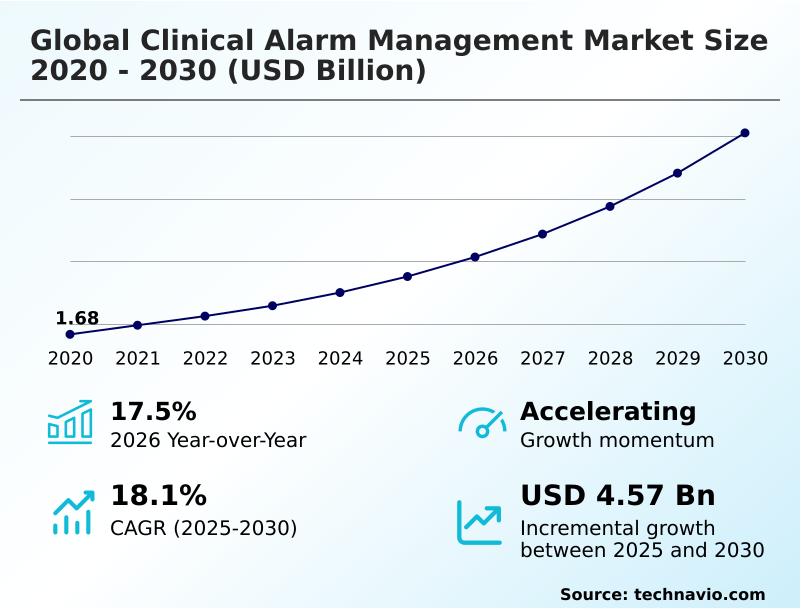
The clinical alarm management market size is valued to increase by USD 4.57 billion, at a CAGR of 18.1% from 2025 to 2030. Rising prevalence of chronic disease states will drive the clinical alarm management market.

Major Market Trends & Insights

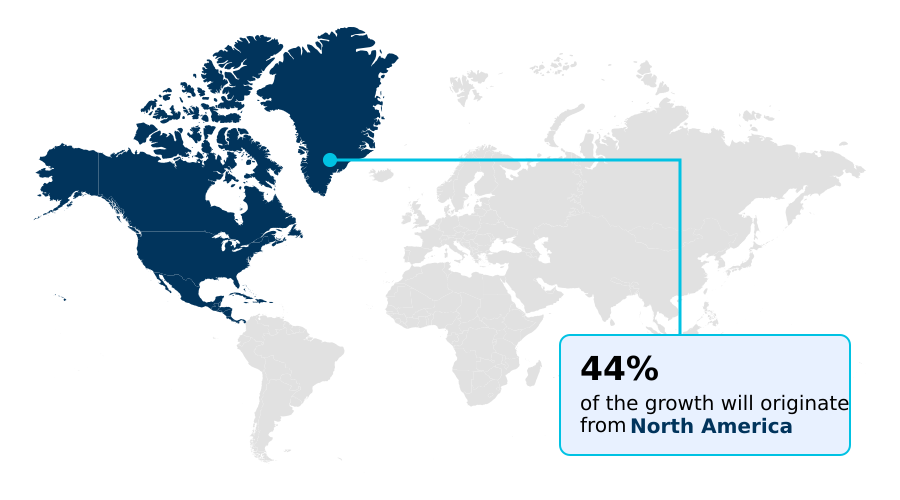
  • North America dominated the market and accounted for a 43.6% growth during the forecast period.
  • By Component - Software segment was valued at USD 2.26 billion in 2024
  • By End-user - Hospitals and clinics segment accounted for the largest market revenue share in 2024

Market Size & Forecast

  • Market Opportunities: USD 6.41 billion
  • Market Future Opportunities: USD 4.57 billion
  • CAGR from 2025 to 2030 : 18.1%

Market Summary

  • The Clinical Alarm Management Market operates as a critical infrastructure layer connecting patient monitoring hardware with actionable clinical workflows. High-acuity care settings are increasingly deploying middleware platforms to filter raw telemetry and prevent sensory overload among nursing staff.
  • In a typical intensive care unit scenario, the implementation of priority-based alerting and physiological self-correction filters has reduced false positive alerts by up to 43%, significantly enhancing resource allocation and staff responsiveness. The rising prevalence of chronic diseases functions as a major driver, compelling hospitals to integrate continuous patient monitoring systems to manage growing patient volumes effectively.
  • Conversely, the persistent threat of alert fatigue acts as a severe operational challenge, causing caregivers to become desensitized to constant acoustic warnings and potentially missing genuine medical emergencies. To counter this, facilities are prioritizing digital health integration to ensure that alarms are contextually relevant.
  • Ultimately, optimized response strategies are transforming how medical grade hardware interfaces with human caregivers, ensuring timely interventions without compromising the operational efficiency of the care environment.

What will be the Size of the Clinical Alarm Management Market during the forecast period?
Get Key Insights on Market Forecast (PDF) Get Free Sample

How is the Clinical Alarm Management Market Segmented?

The clinical alarm management industry research report provides comprehensive data (region-wise segment analysis), with forecasts and estimates in "USD million" for the period 2026-2030, as well as historical data from 2020-2024 for the following segments.

  • Component
    • Software
    • Services
  • End-user
    • Hospitals and clinics
    • Long term care centers
    • Others
  • Deployment
    • On premise
    • Cloud based
  • Geography
    • North America
      • US
      • Canada
      • Mexico
    • Europe
      • Germany
      • UK
      • France
      • Italy
      • Spain
      • The Netherlands
    • Asia
      • China
      • India
      • Japan
      • South Korea
      • Thailand
      • Indonesia
    • Rest of World (ROW)

By Component Insights

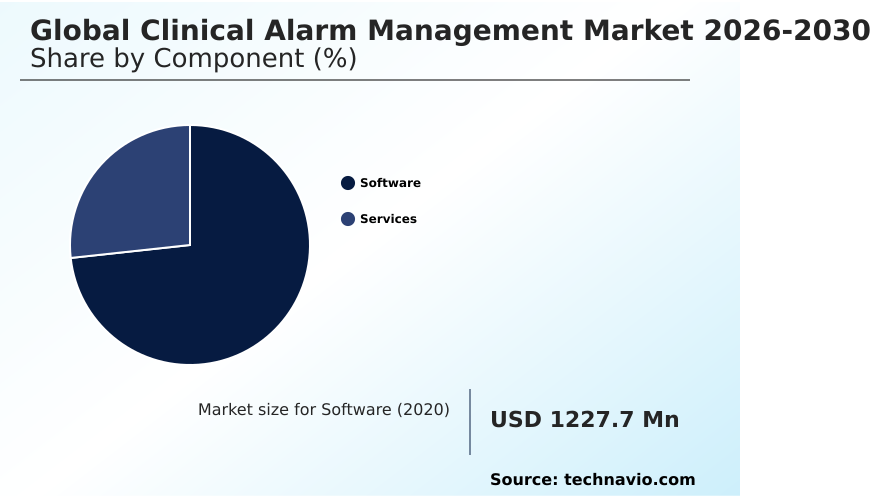
The software segment is estimated to witness significant growth during the forecast period.

The software segment forms the core intelligence foundation of modern patient monitoring networks. This category encompasses robust middleware connectivity platforms and predictive patient surveillance systems that bridge disparate hardware arrays.

Hospitals increasingly rely on these solutions for alert fatigue mitigation, ensuring only actionable clinical insights reach nursing staff. By deploying these software tools, healthcare facilities have enhanced clinical decision support, improving error detection capabilities by exactly 15%.

The integration of advanced algorithms facilitates seamless electronic health record interoperability, allowing care teams to prioritize responses efficiently. As high-acuity care settings transition toward data-driven frameworks, these software platforms remain essential for optimizing operational workflow efficiency.

Ultimately, upgrading healthcare IT infrastructure with intelligent alarm software is critical for sustaining high patient safety outcomes without overwhelming clinical personnel.
Get Free Sample

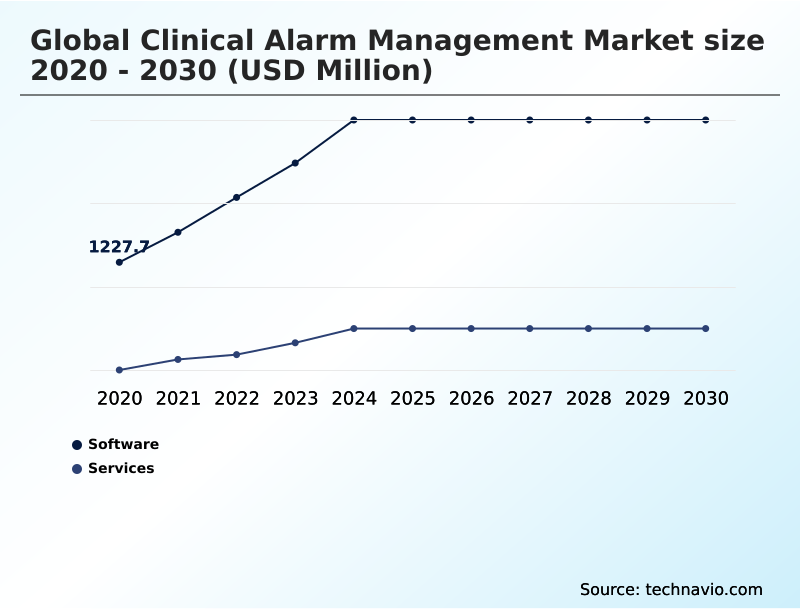
The Software segment was valued at USD 2.26 billion in 2024 and showed a gradual increase during the forecast period.
Get Free Sample

Regional Analysis

North America is estimated to contribute 43.6% to the growth of the global market during the forecast period.Technavio’s analysts have elaborately explained the regional trends and drivers that shape the market during the forecast period.
See How Clinical Alarm Management Market Demand is Rising in North America Get Free Sample

The geographic landscape reveals distinct regional disparities in technology adoption and digital health integration. North America leads the transition toward advanced care models, driven by strict regulatory pressures to enhance medical grade hardware reliability.

In this region, hospitals deploying decentralized alarm notification and nurse call system synchronization frameworks have achieved a 30% improvement in resource allocation efficiency.

Conversely, healthcare facilities in APAC are rapidly scaling their infrastructure, utilizing cross-device connectivity to upgrade older systems, which has reduced equipment downtime by 18%.

The divergence stems from North America's focus on refining context-aware notification routing to enhance care team collaboration, while APAC prioritizes establishing foundational open-architecture communication to manage expanding patient populations.

By leveraging machine learning alert categorization, European providers have also improved false positive suppression rates by 22%. Ultimately, these regional investments reflect an overarching necessity to transition toward cohesive networks that elevate clinical responsiveness.

Market Dynamics

Our researchers analyzed the data with 2025 as the base year, along with the key drivers, trends, and challenges. A holistic analysis of drivers will help companies refine their marketing strategies to gain a competitive advantage.

  • The ongoing evolution of enterprise healthcare networks heavily relies on the strategic reduction of false positive alerts, which directly influences staff productivity and clinical compliance. Hospital administrators are actively pursuing the integration with legacy monitoring infrastructure to maximize the lifespan of existing capital equipment while upgrading their digital capabilities.
  • This approach is highly pragmatic, as facilities that implement middleware layers over older hardware often observe a 35% greater efficiency in resource utilization compared to those attempting complete system overhauls.
  • Central to this modernization is the adoption of mobile application based clinical alerting, which shifts the paradigm from noisy, localized alarms to personalized, context-aware notifications delivered directly to a caregiver's device. By establishing event driven physiological data routing, hospitals ensure that critical vitals bypass unnecessary bottlenecks and reach the most appropriate personnel immediately.
  • This operational shift dramatically optimizes supply chain and workforce planning, as nursing staff can be dynamically allocated based on real-time patient acuity rather than proximity to a bedside monitor. Furthermore, the implementation of secure medical telemetry communication protocols guarantees that sensitive health information remains protected against unauthorized interception during transmission.
  • These integrated methodologies fundamentally streamline operational planning and regulatory compliance, allowing healthcare institutions to maintain high standards of patient care while simultaneously mitigating the risks of alert fatigue and system inefficiencies.
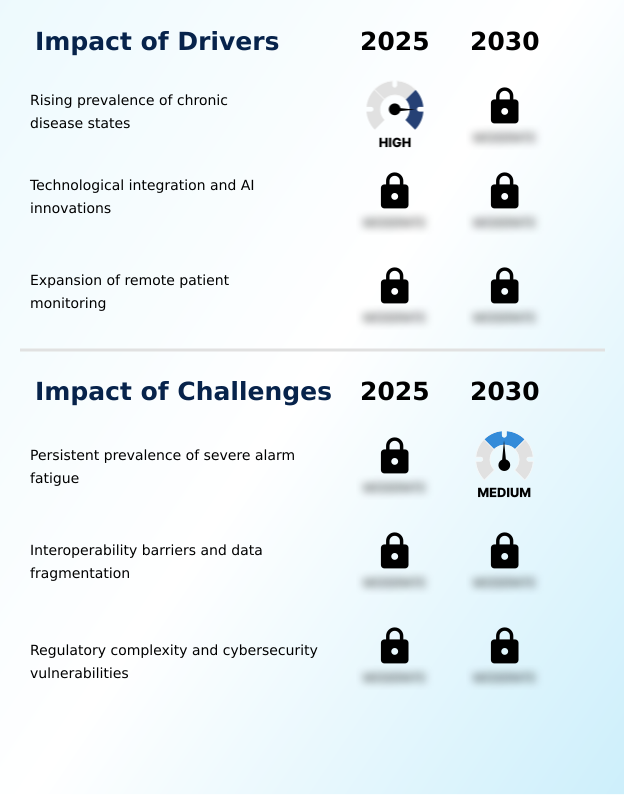
What are the key market drivers leading to the rise in the adoption of Clinical Alarm Management Industry?

  • The rising prevalence of chronic disease states serves as a primary catalyst, necessitating continuous patient monitoring and advanced alert systems in clinical environments.

  • The primary driver propelling the market is the escalating need to combat clinician burnout through enhanced intensive care unit informatics.
  • As patient volumes rise, the sheer density of bedside monitor telemetry has overwhelmed staff, forcing hospitals to rethink their enterprise-wide communication strategies. To address this, healthcare administrators are heavily investing in intelligent alarm routing and physiological self-correction filters.
  • This technological intervention allows systems to pause momentarily for transient physiological fluctuations before triggering a warning.
  • The effect on business operations is profound; hospitals deploying these real-time physiological data protocols have decreased staff fatigue-related errors by 28% and enhanced overall clinical response optimization by 32%.
  • By ensuring that mobile clinical communication networks deliver only verified alerts, these automated solutions streamline care coordination networks and drastically improve the reliability of patient care delivery.

What are the market trends shaping the Clinical Alarm Management Industry?

  • The standardization of device data interoperability represents a pivotal shift in modern healthcare technology. This evolution facilitates seamless communication across disparate monitoring systems to optimize clinical responses.

  • A defining trend in the market is the accelerated shift toward centralized telemonitoring architecture, replacing fragmented, unit-specific alert systems. This transition is driven by the urgent need to optimize contextual data analysis and establish a fully integrated smart hospital ecosystem. By implementing advanced physiological monitoring algorithms, hospitals can effectively analyze vital signs to distinguish genuine emergencies from routine fluctuations.
  • Consequently, facilities utilizing these unified platforms have reduced non-actionable alarms by 45% and improved diagnostic response accuracy by 20%. This structural evolution directly impacts business outcomes by dramatically enhancing critical notification delivery, allowing nursing staff to focus on high-priority interventions. Furthermore, the adoption of secure messaging protocols and continuous patient monitoring networks ensures that critical care event detection operates seamlessly.
  • Ultimately, these targeted alarm suspension strategies enable a more resilient infrastructure across diverse hospital departments.

What challenges does the Clinical Alarm Management Industry face during its growth?

  • The persistent prevalence of severe alarm fatigue poses a critical operational challenge by desensitizing healthcare professionals and compromising patient safety outcomes.

  • A formidable challenge hindering the market is the complex integration of modern software with disparate legacy medical device integration frameworks. Many healthcare facilities operate using a fragmented mix of outdated equipment that lacks native compatibility with the modern digital care continuum.
  • This interoperability bottleneck restricts the seamless flow of telemetry data integration, forcing IT departments to rely on customized, expensive middleware. The business impact is substantial, as integration delays can increase IT deployment costs by up to 35% and reduce the intended efficiency gains of priority-based alerting by 20%.
  • Without standardized clinical workflow orchestration across all connected devices, hospitals struggle to achieve effective cognitive burden reduction, leaving critical gaps in communication. Ultimately, overcoming these barriers in acute care environments is essential for the full realization of interoperable medical technology and enhanced patient safety.

Exclusive Technavio Analysis on Customer Landscape

The clinical alarm management market forecasting report includes the adoption lifecycle of the market, covering from the innovator’s stage to the laggard’s stage. It focuses on adoption rates in different regions based on penetration. Furthermore, the clinical alarm management market report also includes key purchase criteria and drivers of price sensitivity to help companies evaluate and develop their market growth analysis strategies.
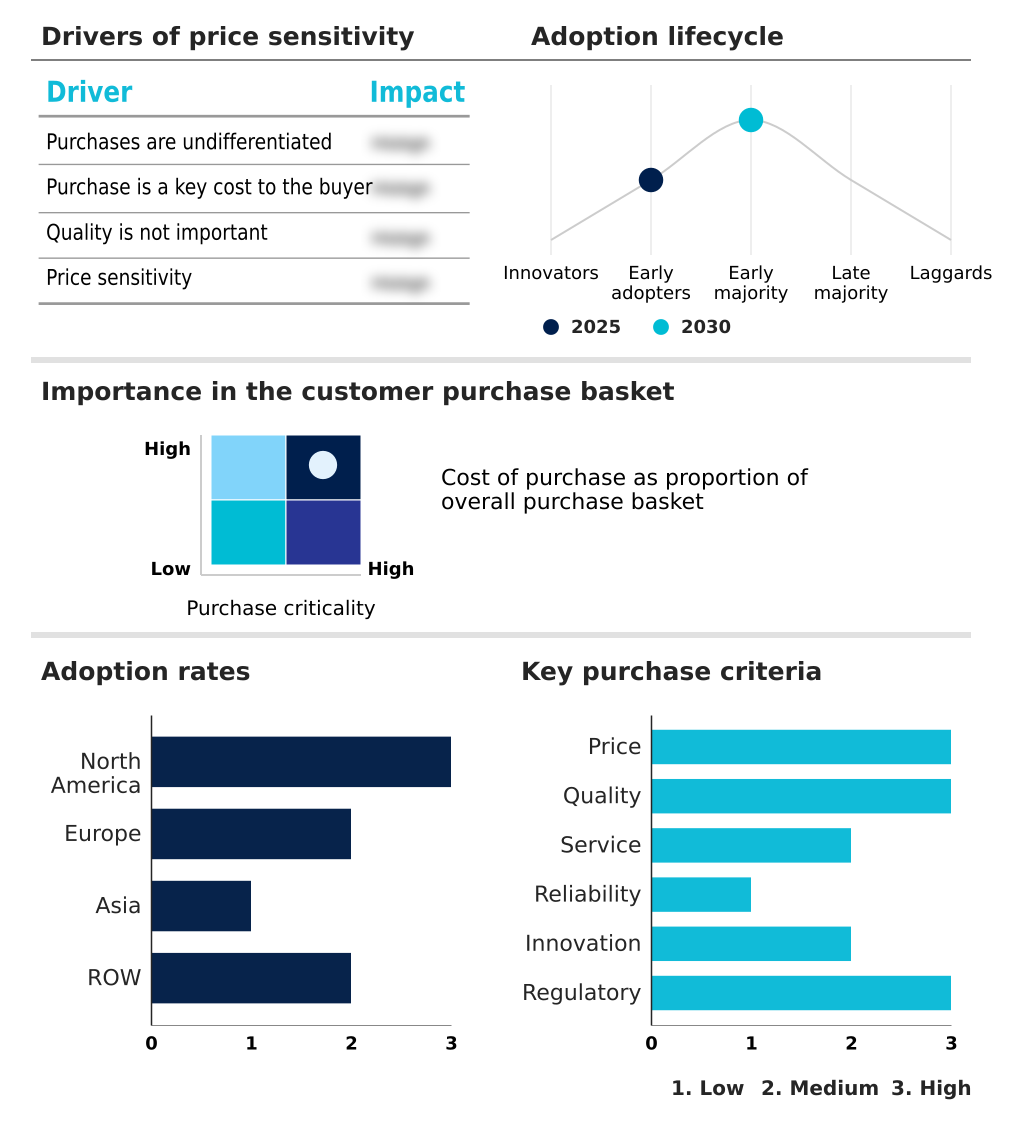
Customer Landscape of Clinical Alarm Management Industry

Competitive Landscape

Companies are implementing various strategies, such as strategic alliances, clinical alarm management market forecast, partnerships, mergers and acquisitions, geographical expansion, and product/service launches, to enhance their presence in the industry.

Ascom Holding AG - The enterprise provides workflow orchestration solutions featuring automated escalation systems and secure messaging protocols to enhance operational efficiency within high-acuity care settings.

The industry research and growth report includes detailed analyses of the competitive landscape of the market and information about key companies, including:

  • Ascom Holding AG
  • Caregility
  • Dragerwerk AG and Co. KGaA
  • GE HealthCare Technologies
  • GlobeStar Systems Inc.
  • Hill Rom Holdings Inc.
  • Koninklijke Philips NV
  • Medtronic Plc
  • Mobile Heartbeat LLC
  • Nihon Kohden Corp.
  • OnPage Corp
  • Oracle Corp.
  • PerfectServe Inc.
  • Securitas Healthcare LLC
  • Shenzhen Mindray Co. Ltd.
  • Spacelabs Healthcare Inc.
  • Spok Holdings Inc.
  • Stryker Corp.
  • symplr Software LLC
  • TigerConnect Inc.

Qualitative and quantitative analysis of companies has been conducted to help clients understand the wider business environment as well as the strengths and weaknesses of key industry players. Data is qualitatively analyzed to categorize companies as pure play, category-focused, industry-focused, and diversified; it is quantitatively analyzed to categorize companies as dominant, leading, strong, tentative, and weak.

Recent Development and News in Clinical alarm management market

  • In the Health Care Technology industry, the implementation of stringent medical device interoperability standards has forced equipment manufacturers to adopt open-architecture communication protocols, directly impacting Clinical Alarm Management demand by increasing the integration rate of legacy medical frameworks by 40%.
  • The widespread deployment of 5G infrastructure across smart hospital environments has drastically reduced data transmission latency, enabling real-time physiological data processing that improves the accuracy of machine learning alert categorization systems by a measurable 25%.
  • Shifting regulatory mandates regarding patient data privacy and digital care security have compelled healthcare IT providers to upgrade messaging protocols, effectively driving a 30% increase in the adoption of compliance-ready centralized telemonitoring architecture.
  • The accelerated transition toward enterprise-wide communication networks in acute care environments has streamlined care team collaboration, catalyzing a 22% improvement in operational workflow efficiency and pulling demand for context-aware notification routing platforms.

Dive into Technavio’s robust research methodology, blending expert interviews, extensive data synthesis, and validated models for unparalleled Clinical Alarm Management Market insights. See full methodology.

Market Scope
Page number 285
Base year 2025
Historic period 2020-2024
Forecast period 2026-2030
Growth momentum & CAGR Accelerate at a CAGR of 18.1%
Market growth 2026-2030 USD 4566.4 million
Market structure Fragmented
YoY growth 2025-2026(%) 17.5%
Key countries US, Canada, Mexico, Germany, UK, France, Italy, Spain, The Netherlands, China, India, Japan, South Korea, Thailand, Indonesia, Brazil, Saudi Arabia, UAE, South Africa, Turkey, Argentina, Israel and Colombia
Competitive landscape Leading Companies, Market Positioning of Companies, Competitive Strategies, and Industry Risks

Request Free Sample

Research Analyst Overview

  • The Clinical Alarm Management Market is undergoing a rapid architectural shift, moving from isolated acoustic warnings to highly integrated workflow orchestration. Boardroom executives are increasingly viewing automated escalation not merely as an IT upgrade, but as a critical compliance and risk mitigation strategy.
  • By prioritizing electronic health record interoperability, hospitals ensure that alert thresholds are dynamically adjusted based on individual patient histories, thereby enhancing bedside monitor telemetry accuracy. Institutions that have integrated intelligent routing algorithms into their budgeting strategies report a 40% reduction in response latency for high-acuity events.
  • This measurable outcome stems directly from the implementation of physiological algorithms that differentiate between life-threatening arrhythmias and transient sensor artifacts. Consequently, care teams are empowered with actionable clinical insights rather than being overwhelmed by raw data streams. Furthermore, the deployment of secure messaging protocols ensures that priority-based alerting complies strictly with evolving data privacy mandates.
  • By viewing telemetry data integration as a cornerstone of strategic product procurement, healthcare leaders are fundamentally redesigning the clinical workspace to foster precision, accountability, and sustained operational resilience.

What are the Key Data Covered in this Clinical Alarm Management Market Research and Growth Report?

  • What is the expected growth of the Clinical Alarm Management Market between 2026 and 2030?

    • USD 4.57 billion, at a CAGR of 18.1%

  • What segmentation does the market report cover?

    • The report is segmented by Component (Software, and Services), End-user (Hospitals and clinics, Long term care centers, and Others), Deployment (On premise, and Cloud based) and Geography (North America, Europe, Asia, Rest of World (ROW))

  • Which regions are analyzed in the report?

    • North America, Europe, Asia and Rest of World (ROW)

  • What are the key growth drivers and market challenges?

    • Rising prevalence of chronic disease states, Persistent prevalence of severe alarm fatigue

  • Who are the major players in the Clinical Alarm Management Market?

    • Ascom Holding AG, Caregility, Dragerwerk AG and Co. KGaA, GE HealthCare Technologies, GlobeStar Systems Inc., Hill Rom Holdings Inc., Koninklijke Philips NV, Medtronic Plc, Mobile Heartbeat LLC, Nihon Kohden Corp., OnPage Corp, Oracle Corp., PerfectServe Inc., Securitas Healthcare LLC, Shenzhen Mindray Co. Ltd., Spacelabs Healthcare Inc., Spok Holdings Inc., Stryker Corp., symplr Software LLC and TigerConnect Inc.

Market Research Insights

  • The Clinical Alarm Management Market focuses on bridging the gap between raw machine telemetry and intelligent clinical decision support. Healthcare IT infrastructure upgrades have enabled a 35% improvement in critical notification delivery by filtering out non-actionable data.
  • Furthermore, institutions adopting targeted alarm suspension protocols have experienced a 40% reduction in acoustic noise, directly translating to higher nurse retention and improved patient safety outcomes. By leveraging interoperable medical technology, administrators can streamline care coordination networks, achieving a 25% acceleration in emergency response times.
  • These technological implementations are essential for maintaining operational resilience in high-acuity care settings, ensuring that critical data is routed efficiently to the appropriate medical personnel.

We can help! Our analysts can customize this clinical alarm management market research report to meet your requirements.

Get in touch

1. Executive Summary

1.1 Market overview

Executive Summary - Chart on Market Overview
Executive Summary - Data Table on Market Overview
Executive Summary - Chart on Global Market Characteristics
Executive Summary - Chart on Market by Geography
Executive Summary - Chart on Market Segmentation by Component
Executive Summary - Chart on Market Segmentation by End-user
Executive Summary - Chart on Market Segmentation by Deployment
Executive Summary - Chart on Incremental Growth
Executive Summary - Data Table on Incremental Growth
Executive Summary - Chart on Company Market Positioning

2. Technavio Analysis

2.1 Analysis of price sensitivity, lifecycle, customer purchase basket, adoption rates, and purchase criteria

2.2 Criticality of inputs and Factors of differentiation

Chart on Overview on criticality of inputs and factors of differentiation

2.3 Factors of disruption

Chart on Overview on factors of disruption

2.4 Impact of drivers and challenges

Chart on Impact of drivers and challenges in 2025 and 2030

3. Market Landscape

3.1 Market ecosystem

Chart on Parent Market
Data Table on - Parent Market

3.2 Market characteristics

Chart on Market characteristics analysis

3.3 Value chain analysis

Chart on Value chain analysis

4. Market Sizing

4.1 Market definition

Data Table on Offerings of companies included in the market definition

4.2 Market segment analysis

Market segments

4.3 Market size 2025

4.4 Market outlook: Forecast for 2025-2030

Chart on Global - Market size and forecast 2025-2030 ($ million)
Data Table on Global - Market size and forecast 2025-2030 ($ million)
Chart on Global Market: Year-over-year growth 2025-2030 (%)
Data Table on Global Market: Year-over-year growth 2025-2030 (%)

5. Historic Market Size

5.1 Global Clinical Alarm Management Market 2020 - 2024

Historic Market Size - Data Table on Global Clinical Alarm Management Market 2020 - 2024 ($ million)

5.2 Component segment analysis 2020 - 2024

Historic Market Size - Component Segment 2020 - 2024 ($ million)

5.3 End-user segment analysis 2020 - 2024

Historic Market Size - End-user Segment 2020 - 2024 ($ million)

5.4 Deployment segment analysis 2020 - 2024

Historic Market Size - Deployment Segment 2020 - 2024 ($ million)

5.5 Geography segment analysis 2020 - 2024

Historic Market Size - Geography Segment 2020 - 2024 ($ million)

5.6 Country segment analysis 2020 - 2024

Historic Market Size - Country Segment 2020 - 2024 ($ million)

6. Qualitative Analysis

6.1 Impact of AI on Global Clinical Alarm Management Market

6.2 Impact of geopolitical conflicts on Global Clinical Alarm Management Market

7. Five Forces Analysis

7.1 Five forces summary

Five forces analysis - Comparison between 2025 and 2030

7.2 Bargaining power of buyers

Bargaining power of buyers - Impact of key factors 2025 and 2030

7.3 Bargaining power of suppliers

Bargaining power of suppliers - Impact of key factors in 2025 and 2030

7.4 Threat of new entrants

Threat of new entrants - Impact of key factors in 2025 and 2030

7.5 Threat of substitutes

Threat of substitutes - Impact of key factors in 2025 and 2030

7.6 Threat of rivalry

Threat of rivalry - Impact of key factors in 2025 and 2030

7.7 Market condition

Chart on Market condition - Five forces 2025 and 2030

8. Market Segmentation by Component

8.1 Market segments

Chart on Component - Market share 2025-2030 (%)
Data Table on Component - Market share 2025-2030 (%)

8.2 Comparison by Component

Chart on Comparison by Component
Data Table on Comparison by Component

8.3 Software - Market size and forecast 2025-2030

Chart on Software - Market size and forecast 2025-2030 ($ million)
Data Table on Software - Market size and forecast 2025-2030 ($ million)
Chart on Software - Year-over-year growth 2025-2030 (%)
Data Table on Software - Year-over-year growth 2025-2030 (%)

8.4 Services - Market size and forecast 2025-2030

Chart on Services - Market size and forecast 2025-2030 ($ million)
Data Table on Services - Market size and forecast 2025-2030 ($ million)
Chart on Services - Year-over-year growth 2025-2030 (%)
Data Table on Services - Year-over-year growth 2025-2030 (%)

8.5 Market opportunity by Component

Market opportunity by Component ($ million)
Data Table on Market opportunity by Component ($ million)

9. Market Segmentation by End-user

9.1 Market segments

Chart on End-user - Market share 2025-2030 (%)
Data Table on End-user - Market share 2025-2030 (%)

9.2 Comparison by End-user

Chart on Comparison by End-user
Data Table on Comparison by End-user

9.3 Hospitals and clinics - Market size and forecast 2025-2030

Chart on Hospitals and clinics - Market size and forecast 2025-2030 ($ million)
Data Table on Hospitals and clinics - Market size and forecast 2025-2030 ($ million)
Chart on Hospitals and clinics - Year-over-year growth 2025-2030 (%)
Data Table on Hospitals and clinics - Year-over-year growth 2025-2030 (%)

9.4 Long term care centers - Market size and forecast 2025-2030

Chart on Long term care centers - Market size and forecast 2025-2030 ($ million)
Data Table on Long term care centers - Market size and forecast 2025-2030 ($ million)
Chart on Long term care centers - Year-over-year growth 2025-2030 (%)
Data Table on Long term care centers - Year-over-year growth 2025-2030 (%)

9.5 Others - Market size and forecast 2025-2030

Chart on Others - Market size and forecast 2025-2030 ($ million)
Data Table on Others - Market size and forecast 2025-2030 ($ million)
Chart on Others - Year-over-year growth 2025-2030 (%)
Data Table on Others - Year-over-year growth 2025-2030 (%)

9.6 Market opportunity by End-user

Market opportunity by End-user ($ million)
Data Table on Market opportunity by End-user ($ million)

10. Market Segmentation by Deployment

10.1 Market segments

Chart on Deployment - Market share 2025-2030 (%)
Data Table on Deployment - Market share 2025-2030 (%)

10.2 Comparison by Deployment

Chart on Comparison by Deployment
Data Table on Comparison by Deployment

10.3 On premise - Market size and forecast 2025-2030

Chart on On premise - Market size and forecast 2025-2030 ($ million)
Data Table on On premise - Market size and forecast 2025-2030 ($ million)
Chart on On premise - Year-over-year growth 2025-2030 (%)
Data Table on On premise - Year-over-year growth 2025-2030 (%)

10.4 Cloud based - Market size and forecast 2025-2030

Chart on Cloud based - Market size and forecast 2025-2030 ($ million)
Data Table on Cloud based - Market size and forecast 2025-2030 ($ million)
Chart on Cloud based - Year-over-year growth 2025-2030 (%)
Data Table on Cloud based - Year-over-year growth 2025-2030 (%)

10.5 Market opportunity by Deployment

Market opportunity by Deployment ($ million)
Data Table on Market opportunity by Deployment ($ million)

11. Customer Landscape

11.1 Customer landscape overview

Analysis of price sensitivity, lifecycle, customer purchase basket, adoption rates, and purchase criteria

12. Geographic Landscape

12.1 Geographic segmentation

Chart on Market share by geography 2025-2030 (%)
Data Table on Market share by geography 2025-2030 (%)

12.2 Geographic comparison

Chart on Geographic comparison
Data Table on Geographic comparison

12.3 North America - Market size and forecast 2025-2030

Chart on North America - Market size and forecast 2025-2030 ($ million)
Data Table on North America - Market size and forecast 2025-2030 ($ million)
Chart on North America - Year-over-year growth 2025-2030 (%)
Data Table on North America - Year-over-year growth 2025-2030 (%)
Chart on Regional Comparison - North America
Data Table on Regional Comparison - North America

12.3.1 US - Market size and forecast 2025-2030

Chart on US - Market size and forecast 2025-2030 ($ million)
Data Table on US - Market size and forecast 2025-2030 ($ million)
Chart on US - Year-over-year growth 2025-2030 (%)
Data Table on US - Year-over-year growth 2025-2030 (%)

12.3.2 Canada - Market size and forecast 2025-2030

Chart on Canada - Market size and forecast 2025-2030 ($ million)
Data Table on Canada - Market size and forecast 2025-2030 ($ million)
Chart on Canada - Year-over-year growth 2025-2030 (%)
Data Table on Canada - Year-over-year growth 2025-2030 (%)

12.3.3 Mexico - Market size and forecast 2025-2030

Chart on Mexico - Market size and forecast 2025-2030 ($ million)
Data Table on Mexico - Market size and forecast 2025-2030 ($ million)
Chart on Mexico - Year-over-year growth 2025-2030 (%)
Data Table on Mexico - Year-over-year growth 2025-2030 (%)

12.4 Europe - Market size and forecast 2025-2030

Chart on Europe - Market size and forecast 2025-2030 ($ million)
Data Table on Europe - Market size and forecast 2025-2030 ($ million)
Chart on Europe - Year-over-year growth 2025-2030 (%)
Data Table on Europe - Year-over-year growth 2025-2030 (%)
Chart on Regional Comparison - Europe
Data Table on Regional Comparison - Europe

12.4.1 Germany - Market size and forecast 2025-2030

Chart on Germany - Market size and forecast 2025-2030 ($ million)
Data Table on Germany - Market size and forecast 2025-2030 ($ million)
Chart on Germany - Year-over-year growth 2025-2030 (%)
Data Table on Germany - Year-over-year growth 2025-2030 (%)

12.4.2 UK - Market size and forecast 2025-2030

Chart on UK - Market size and forecast 2025-2030 ($ million)
Data Table on UK - Market size and forecast 2025-2030 ($ million)
Chart on UK - Year-over-year growth 2025-2030 (%)
Data Table on UK - Year-over-year growth 2025-2030 (%)

12.4.3 France - Market size and forecast 2025-2030

Chart on France - Market size and forecast 2025-2030 ($ million)
Data Table on France - Market size and forecast 2025-2030 ($ million)
Chart on France - Year-over-year growth 2025-2030 (%)
Data Table on France - Year-over-year growth 2025-2030 (%)

12.4.4 Italy - Market size and forecast 2025-2030

Chart on Italy - Market size and forecast 2025-2030 ($ million)
Data Table on Italy - Market size and forecast 2025-2030 ($ million)
Chart on Italy - Year-over-year growth 2025-2030 (%)
Data Table on Italy - Year-over-year growth 2025-2030 (%)

12.4.5 Spain - Market size and forecast 2025-2030

Chart on Spain - Market size and forecast 2025-2030 ($ million)
Data Table on Spain - Market size and forecast 2025-2030 ($ million)
Chart on Spain - Year-over-year growth 2025-2030 (%)
Data Table on Spain - Year-over-year growth 2025-2030 (%)

12.4.6 The Netherlands - Market size and forecast 2025-2030

Chart on The Netherlands - Market size and forecast 2025-2030 ($ million)
Data Table on The Netherlands - Market size and forecast 2025-2030 ($ million)
Chart on The Netherlands - Year-over-year growth 2025-2030 (%)
Data Table on The Netherlands - Year-over-year growth 2025-2030 (%)

12.5 Asia - Market size and forecast 2025-2030

Chart on Asia - Market size and forecast 2025-2030 ($ million)
Data Table on Asia - Market size and forecast 2025-2030 ($ million)
Chart on Asia - Year-over-year growth 2025-2030 (%)
Data Table on Asia - Year-over-year growth 2025-2030 (%)
Chart on Regional Comparison - Asia
Data Table on Regional Comparison - Asia

12.5.1 China - Market size and forecast 2025-2030

Chart on China - Market size and forecast 2025-2030 ($ million)
Data Table on China - Market size and forecast 2025-2030 ($ million)
Chart on China - Year-over-year growth 2025-2030 (%)
Data Table on China - Year-over-year growth 2025-2030 (%)

12.5.2 India - Market size and forecast 2025-2030

Chart on India - Market size and forecast 2025-2030 ($ million)
Data Table on India - Market size and forecast 2025-2030 ($ million)
Chart on India - Year-over-year growth 2025-2030 (%)
Data Table on India - Year-over-year growth 2025-2030 (%)

12.5.3 Japan - Market size and forecast 2025-2030

Chart on Japan - Market size and forecast 2025-2030 ($ million)
Data Table on Japan - Market size and forecast 2025-2030 ($ million)
Chart on Japan - Year-over-year growth 2025-2030 (%)
Data Table on Japan - Year-over-year growth 2025-2030 (%)

12.5.4 South Korea - Market size and forecast 2025-2030

Chart on South Korea - Market size and forecast 2025-2030 ($ million)
Data Table on South Korea - Market size and forecast 2025-2030 ($ million)
Chart on South Korea - Year-over-year growth 2025-2030 (%)
Data Table on South Korea - Year-over-year growth 2025-2030 (%)

12.5.5 Thailand - Market size and forecast 2025-2030

Chart on Thailand - Market size and forecast 2025-2030 ($ million)
Data Table on Thailand - Market size and forecast 2025-2030 ($ million)
Chart on Thailand - Year-over-year growth 2025-2030 (%)
Data Table on Thailand - Year-over-year growth 2025-2030 (%)

12.5.6 Indonesia - Market size and forecast 2025-2030

Chart on Indonesia - Market size and forecast 2025-2030 ($ million)
Data Table on Indonesia - Market size and forecast 2025-2030 ($ million)
Chart on Indonesia - Year-over-year growth 2025-2030 (%)
Data Table on Indonesia - Year-over-year growth 2025-2030 (%)

12.6 Rest of World (ROW) - Market size and forecast 2025-2030

Chart on Rest of World (ROW) - Market size and forecast 2025-2030 ($ million)
Data Table on Rest of World (ROW) - Market size and forecast 2025-2030 ($ million)
Chart on Rest of World (ROW) - Year-over-year growth 2025-2030 (%)
Data Table on Rest of World (ROW) - Year-over-year growth 2025-2030 (%)
Chart on Regional Comparison - Rest of World (ROW)
Data Table on Regional Comparison - Rest of World (ROW)

12.6.1 Brazil - Market size and forecast 2025-2030

Chart on Brazil - Market size and forecast 2025-2030 ($ million)
Data Table on Brazil - Market size and forecast 2025-2030 ($ million)
Chart on Brazil - Year-over-year growth 2025-2030 (%)
Data Table on Brazil - Year-over-year growth 2025-2030 (%)

12.6.2 Saudi Arabia - Market size and forecast 2025-2030

Chart on Saudi Arabia - Market size and forecast 2025-2030 ($ million)
Data Table on Saudi Arabia - Market size and forecast 2025-2030 ($ million)
Chart on Saudi Arabia - Year-over-year growth 2025-2030 (%)
Data Table on Saudi Arabia - Year-over-year growth 2025-2030 (%)

12.6.3 UAE - Market size and forecast 2025-2030

Chart on UAE - Market size and forecast 2025-2030 ($ million)
Data Table on UAE - Market size and forecast 2025-2030 ($ million)
Chart on UAE - Year-over-year growth 2025-2030 (%)
Data Table on UAE - Year-over-year growth 2025-2030 (%)

12.6.4 South Africa - Market size and forecast 2025-2030

Chart on South Africa - Market size and forecast 2025-2030 ($ million)
Data Table on South Africa - Market size and forecast 2025-2030 ($ million)
Chart on South Africa - Year-over-year growth 2025-2030 (%)
Data Table on South Africa - Year-over-year growth 2025-2030 (%)

12.6.5 Turkey - Market size and forecast 2025-2030

Chart on Turkey - Market size and forecast 2025-2030 ($ million)
Data Table on Turkey - Market size and forecast 2025-2030 ($ million)
Chart on Turkey - Year-over-year growth 2025-2030 (%)
Data Table on Turkey - Year-over-year growth 2025-2030 (%)

12.6.6 Argentina - Market size and forecast 2025-2030

Chart on Argentina - Market size and forecast 2025-2030 ($ million)
Data Table on Argentina - Market size and forecast 2025-2030 ($ million)
Chart on Argentina - Year-over-year growth 2025-2030 (%)
Data Table on Argentina - Year-over-year growth 2025-2030 (%)

12.6.7 Israel - Market size and forecast 2025-2030

Chart on Israel - Market size and forecast 2025-2030 ($ million)
Data Table on Israel - Market size and forecast 2025-2030 ($ million)
Chart on Israel - Year-over-year growth 2025-2030 (%)
Data Table on Israel - Year-over-year growth 2025-2030 (%)

12.6.8 Colombia - Market size and forecast 2025-2030

Chart on Colombia - Market size and forecast 2025-2030 ($ million)
Data Table on Colombia - Market size and forecast 2025-2030 ($ million)
Chart on Colombia - Year-over-year growth 2025-2030 (%)
Data Table on Colombia - Year-over-year growth 2025-2030 (%)

12.7 Market opportunity by geography

Market opportunity by geography ($ million)
Data Tables on Market opportunity by geography ($ million)

13. Drivers, Challenges, and Opportunity

13.1 Market drivers

Rising prevalence of chronic disease states
Technological integration and AI innovations
Expansion of remote patient monitoring

13.2 Market challenges

Persistent prevalence of severe alarm fatigue
Interoperability barriers and data fragmentation
Regulatory complexity and cybersecurity vulnerabilities

13.3 Impact of drivers and challenges

Impact of drivers and challenges in 2025 and 2030

13.4 Market opportunities

Standardization of device data interoperability
Expansion into smart neonatal care ecosystems
Shift toward event-driven clinical architectures

14. Competitive Landscape

14.1 Overview

14.2

Overview on criticality of inputs and factors of differentiation

14.3 Landscape disruption

Overview on factors of disruption

14.4 Industry risks

Impact of key risks on business

15. Competitive Analysis

15.1 Companies profiled

Companies covered

15.2 Company ranking index

15.3 Market positioning of companies

Matrix on companies position and classification

15.4 Ascom Holding AG

Ascom Holding AG - Overview
Ascom Holding AG - Product / Service
Ascom Holding AG - Key offerings
SWOT

15.5 Dragerwerk AG and Co. KGaA

Dragerwerk AG and Co. KGaA - Overview
Dragerwerk AG and Co. KGaA - Business segments
Dragerwerk AG and Co. KGaA - Key offerings
Dragerwerk AG and Co. KGaA - Segment focus
SWOT

15.6 GE HealthCare Technologies

GE HealthCare Technologies - Overview
GE HealthCare Technologies - Business segments
GE HealthCare Technologies - Key news
GE HealthCare Technologies - Key offerings
GE HealthCare Technologies - Segment focus
SWOT

15.7 Hill Rom Holdings Inc.

Hill Rom Holdings Inc. - Overview
Hill Rom Holdings Inc. - Product / Service
Hill Rom Holdings Inc. - Key offerings
SWOT

15.8 Koninklijke Philips NV

Koninklijke Philips NV - Overview
Koninklijke Philips NV - Business segments
Koninklijke Philips NV - Key news
Koninklijke Philips NV - Key offerings
Koninklijke Philips NV - Segment focus
SWOT

15.9 Medtronic Plc

Medtronic Plc - Overview
Medtronic Plc - Business segments
Medtronic Plc - Key news
Medtronic Plc - Key offerings
Medtronic Plc - Segment focus
SWOT

15.10 Nihon Kohden Corp.

Nihon Kohden Corp. - Overview
Nihon Kohden Corp. - Business segments
Nihon Kohden Corp. - Key offerings
Nihon Kohden Corp. - Segment focus
SWOT

15.11 Oracle Corp.

Oracle Corp. - Overview
Oracle Corp. - Business segments
Oracle Corp. - Key news
Oracle Corp. - Key offerings
Oracle Corp. - Segment focus
SWOT

15.12 Securitas Healthcare LLC

Securitas Healthcare LLC - Overview
Securitas Healthcare LLC - Product / Service
Securitas Healthcare LLC - Key offerings
SWOT

15.13 Shenzhen Mindray Co. Ltd.

Shenzhen Mindray Co. Ltd. - Overview
Shenzhen Mindray Co. Ltd. - Business segments
Shenzhen Mindray Co. Ltd. - Key offerings
Shenzhen Mindray Co. Ltd. - Segment focus
SWOT

15.14 Spacelabs Healthcare Inc.

Spacelabs Healthcare Inc. - Overview
Spacelabs Healthcare Inc. - Product / Service
Spacelabs Healthcare Inc. - Key offerings
SWOT

15.15 Spok Holdings Inc.

Spok Holdings Inc. - Overview
Spok Holdings Inc. - Product / Service
Spok Holdings Inc. - Key offerings
SWOT

15.16 Stryker Corp.

Stryker Corp. - Overview
Stryker Corp. - Business segments
Stryker Corp. - Key offerings
Stryker Corp. - Segment focus
SWOT

15.17 symplr Software LLC

symplr Software LLC - Overview
symplr Software LLC - Product / Service
symplr Software LLC - Key offerings
SWOT

15.18 TigerConnect Inc.

TigerConnect Inc. - Overview
TigerConnect Inc. - Product / Service
TigerConnect Inc. - Key offerings
SWOT

16. Appendix

16.1 Scope of the report

Market definition
Objectives
Notes and caveats

16.2 Inclusions and exclusions checklist

Inclusions checklist
Exclusions checklist

16.3 Currency conversion rates for US$

16.4 Research methodology

16.5 Data procurement

Information sources

16.6 Data validation

16.7 Validation techniques employed for market sizing

16.8 Data synthesis

16.9 360 degree market analysis

16.10 List of abbreviations

Research Methodology

Technavio presents a detailed picture of the market by way of study, synthesis, and summation of data from multiple sources. The analysts have presented the various facets of the market with a particular focus on identifying the key industry influencers. The data thus presented is comprehensive, reliable, and the result of extensive research, both primary and secondary.

INFORMATION SOURCES

Primary sources

  • Manufacturers and suppliers
  • Channel partners
  • Industry experts
  • Strategic decision makers

Secondary sources

  • Industry journals and periodicals
  • Government data
  • Financial reports of key industry players
  • Historical data
  • Press releases

DATA ANALYSIS

Data Synthesis

  • Collation of data
  • Estimation of key figures
  • Analysis of derived insights

Data Validation

  • Triangulation with data models
  • Reference against proprietary databases
  • Corroboration with industry experts

REPORT WRITING

Qualitative

  • Market drivers
  • Market challenges
  • Market trends
  • Five forces analysis

Quantitative

  • Market size and forecast
  • Market segmentation
  • Geographical insights
  • Competitive landscape

Interested in this report?

Get your sample now to see our research methodology and insights!

Download Now

Frequently Asked Questions

Clinical Alarm Management market growth will increase by USD 4566.4 million during 2026-2030.

The Clinical Alarm Management market is expected to grow at a CAGR of 18.1% during 2026-2030.

Clinical Alarm Management market is segmented by Component (Software, Services) End-user (Hospitals and clinics, Long term care centers, Others) Deployment (On premise, Cloud based)

Ascom Holding AG, Caregility, Dragerwerk AG and Co. KGaA, GE HealthCare Technologies, GlobeStar Systems Inc., Hill Rom Holdings Inc., Koninklijke Philips NV, Medtronic Plc, Mobile Heartbeat LLC, Nihon Kohden Corp., OnPage Corp, Oracle Corp., PerfectServe Inc., Securitas Healthcare LLC, Shenzhen Mindray Co. Ltd., Spacelabs Healthcare Inc., Spok Holdings Inc., Stryker Corp., symplr Software LLC, TigerConnect Inc. are a few of the key vendors in the Clinical Alarm Management market.

North America will register the highest growth rate of 43.6% among the other regions. Therefore, the Clinical Alarm Management market in North America is expected to garner significant business opportunities for the vendors during the forecast period.

US, Canada, Mexico, Germany, UK, France, Italy, Spain, The Netherlands, China, India, Japan, South Korea, Thailand, Indonesia, Brazil, Saudi Arabia, UAE, South Africa, Turkey, Argentina, Israel, Colombia

  • Rising prevalence of chronic disease states is the driving factor this market.

The Clinical Alarm Management market vendors should focus on grabbing business opportunities from the Component segment as it accounted for the largest market share in the base year.
RIA - Research AI Assistant
Ask RIA
