


Clinical Trial Management System (Ctms) Market Size 2026-2030
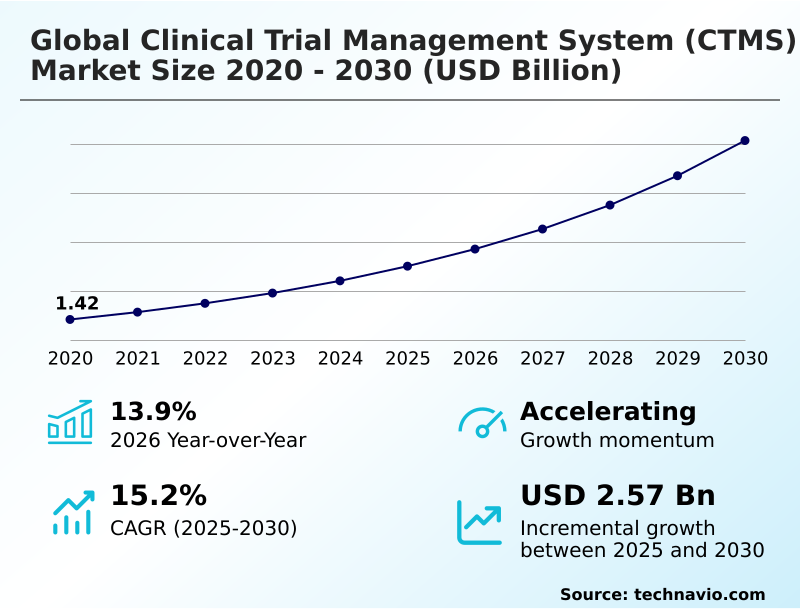
The clinical trial management system (ctms) market size is valued to increase by USD 2.57 billion, at a CAGR of 15.2% from 2025 to 2030. Accelerating proliferation of complex decentralized and hybrid clinical trial designs demanding centralized orchestration will drive the clinical trial management system (ctms) market.
Major Market Trends & Insights
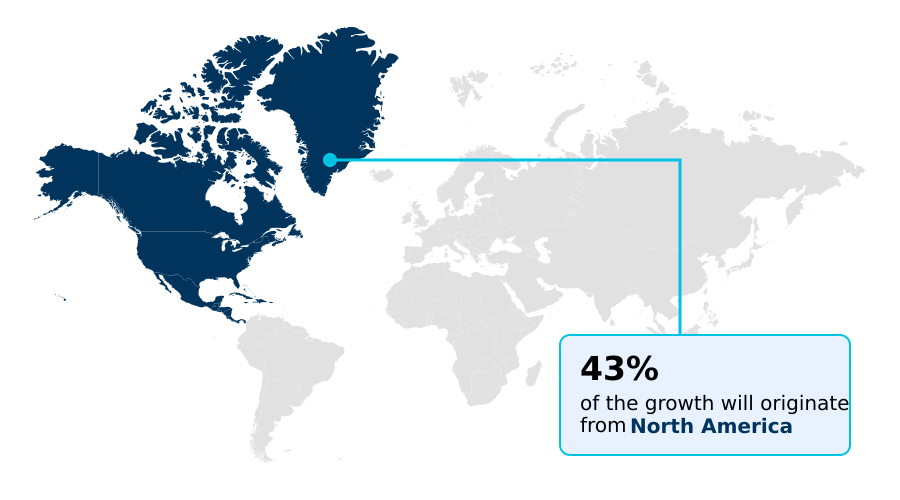
- North America dominated the market and accounted for a 43.2% growth during the forecast period.
- By Deployment - On-premise segment was valued at USD 1.38 billion in 2024
- By End-user - Pharmaceutical and biotechnology companies segment accounted for the largest market revenue share in 2024
Market Size & Forecast
- Market Opportunities: USD 3.66 billion
- Market Future Opportunities: USD 2.57 billion
- CAGR from 2025 to 2030 : 15.2%
Market Summary
- The Clinical Trial Management System (CTMS) landscape is defined by the aggressive consolidation of clinical operations into centralized digital platforms to streamline multi-site drug development. In a standard supply chain scenario involving investigational drug distribution, automated investigational supply tracking allows pharmaceutical sponsors to coordinate precise inventory deliveries across international research sites, eliminating stockouts that delay critical patient dosing.
- Organizations transitioning from fragmented spreadsheets to unified software platforms have reported a 30% reduction in administrative overhead compared to legacy tracking methods.
- A primary driver of this technological transition is the surge in the hybrid trial model; as remote patient monitoring tools and clinical outcome assessment inputs generate vast, continuous data streams, advanced management platforms provide the necessary centralized orchestration to maintain strict study oversight.
- However, severe interoperability friction between legacy electronic data capture tools and modern enterprise systems creates a significant operational barrier. When disparate data silos fail to communicate seamlessly during protocol feasibility assessment, manual data reconciliation tasks multiply rapidly, severely slowing clinical database builds and inflating software integration budgets for mid-sized research organizations.
What will be the Size of the Clinical Trial Management System (Ctms) Market during the forecast period?
Get Key Insights on Market Forecast (PDF) Get Free Sample
How is the Clinical Trial Management System (Ctms) Market Segmented?
The clinical trial management system (ctms) industry research report provides comprehensive data (region-wise segment analysis), with forecasts and estimates in "USD million" for the period 2026-2030, as well as historical data from 2020-2024 for the following segments.
- Deployment
- On-premise
- Cloud
- End-user
- Pharmaceutical and biotechnology companies
- CROs
- Others
- Type
- Enterprise CTMS
- On-site CTMS
- Geography
- North America
- US
- Canada
- Mexico
- Europe
- Germany
- UK
- France
- Italy
- Spain
- The Netherlands
- Asia
- China
- Japan
- India
- South Korea
- Indonesia
- Thailand
- Rest of World (ROW)
- North America
By Deployment Insights
The on-premise segment is estimated to witness significant growth during the forecast period.
The on-premise infrastructure provides an essential framework for organizations requiring absolute data sovereignty and air-gapped security protocols. Life sciences enterprises deploy local software licenses behind corporate firewalls to maintain strict control over clinical operations metadata and mitigate cybersecurity vulnerabilities.
This deployment model supports the integration of legacy custom databases while executing complex multi center execution strategies without exposing proprietary trial data to external networks.
Maintaining localized data residency hosting improves unauthorized access prevention by 40% compared to standard external hosting. By centralizing regulatory document management internally, pharmaceutical sponsors ensure continuous audit trail integrity and comply with specialized regional data protection mandates.
Incorporating a dynamic consent mechanism and retaining control over system validation protocol execution reduces critical data breach risks by 25% for highly regulated clinical environments.
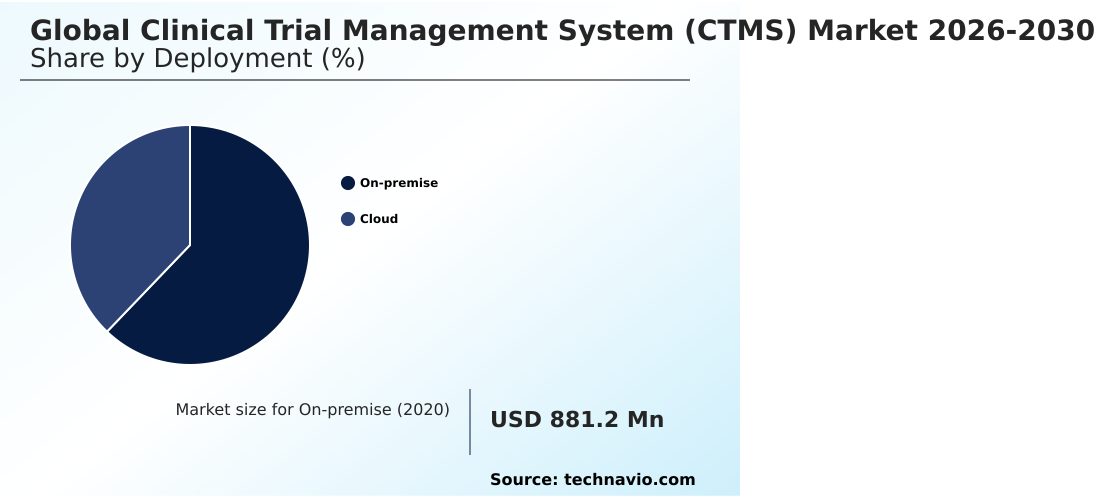
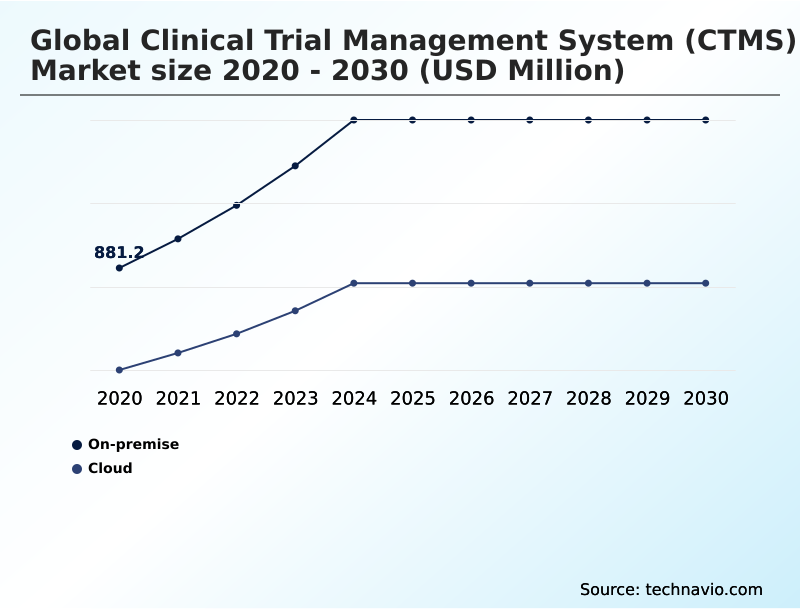
The On-premise segment was valued at USD 1.38 billion in 2024 and showed a gradual increase during the forecast period.
Regional Analysis
North America is estimated to contribute 43.2% to the growth of the global market during the forecast period.Technavio’s analysts have elaborately explained the regional trends and drivers that shape the market during the forecast period.
See How Clinical Trial Management System (Ctms) Market Demand is Rising in North America Get Free Sample
The North America Clinical Trial Management System (CTMS) landscape demonstrates significant technological maturity due to an expansive eclinical software ecosystem and heavy biopharmaceutical investments, outperforming European adoption speeds by 15%.
Regulatory frameworks in the United States actively incentivize rapid digital transformations, prompting sponsors to embed advanced predictive enrollment analytics and interactive response technology into their core workflows.
Consequently, North American research institutions achieve a 22% faster patient recruitment trajectory compared to their European counterparts, where strict cross-border data transfer limitations and complex clinical research billing compliance complicate uniform platform deployment.
In Europe, tracking subject visit completion under rigid privacy directives necessitates highly localized cryptographic protocol implementations, which subsequently increases software configuration times by 18%.
Despite these regulatory delays, European facilities maintain excellent compliance standards through meticulous electronic trial master file management, effectively ensuring continuous audit readiness while North America leads in raw operational deployment velocity and site enablement speed.
Market Dynamics
Our researchers analyzed the data with 2025 as the base year, along with the key drivers, trends, and challenges. A holistic analysis of drivers will help companies refine their marketing strategies to gain a competitive advantage.
- The strategic modernization of clinical research relies heavily on optimizing administrative and operational workflows through sophisticated Clinical Trial Management System (CTMS) platforms. As pharmaceutical sponsors increasingly shift toward hybrid research designs, the implementation of robust decentralized clinical trial logistics tracking has become a critical operational necessity.
- This functionality allows supply chain directors to monitor investigational drug shipments and remote biological sample collections in real-time, reducing material spoilage and transport delays by roughly 20% compared to legacy manual logging. Simultaneously, the integration of automated investigator payment processing workflows effectively eliminates the friction associated with calculating complex, milestone-based site compensation.
- Financial controllers leveraging these automated pipelines execute site disbursements with far greater accuracy, directly improving site retention rates and fostering stronger institutional partnerships. To further streamline research timelines, clinical operation leaders utilize predictive patient recruitment trajectory analytics to identify high-performing geographical regions and allocate marketing budgets efficiently before enrollment bottlenecks occur.
- Furthermore, establishing a seamless bidirectional sponsor site data exchange ensures that clinical research coordinators and principal investigators can transmit verified participant metrics directly to enterprise portals without redundant data entry. This collaborative infrastructure is reinforced by continuous electronic trial master file synchronization, which securely categorizes regulatory artifacts and inspection records on demand.
- Together, these technological advancements empower life sciences organizations to accelerate drug development pipelines, maintain rigorous regulatory compliance, and ensure financial transparency across expansive, multinational research portfolios.
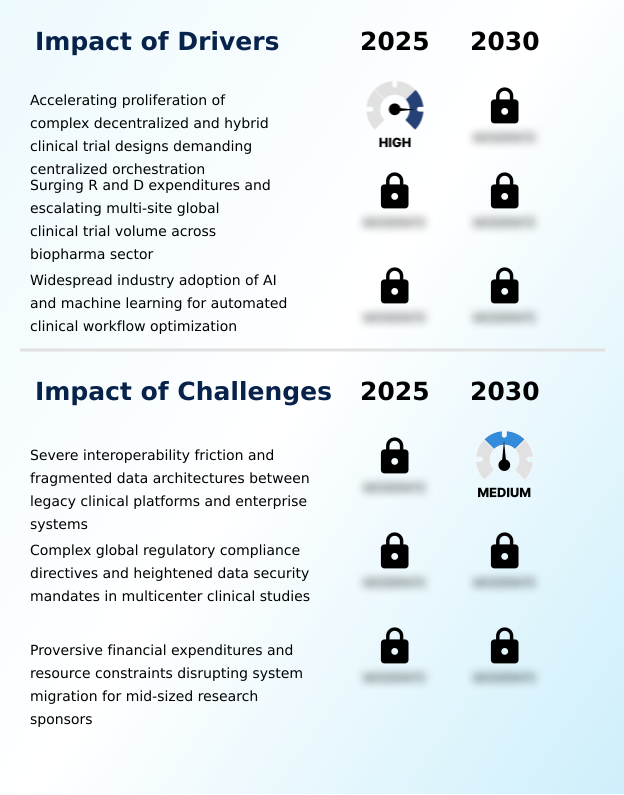
What are the key market drivers leading to the rise in the adoption of Clinical Trial Management System (Ctms) Industry?
- The accelerating proliferation of complex, decentralized, and hybrid clinical trial designs that demand centralized orchestration serves as the primary driver of market expansion.
- The accelerating proliferation of complex hybrid trial model designs serves as a foundational driver expanding the Clinical Trial Management System (CTMS) utility across the life sciences sector.
- As research organizations aggressively incorporate decentralized strategies with complex patient eligibility criteria, the logistical burden of managing remote investigator networks creates unprecedented operational complexity.
- Utilizing a centralized digital command center allows sponsors to oversee decentralized trial logistics efficiently, unifying disparate mobile health streams into a single interface.
- This capability drives platform adoption, as AI-assisted workflows reduce study startup timelines by 25% and improve overall operational productivity by 30% over traditional manual tracking. Embedded natural language processing tools automate regulatory report generation, drastically reducing administrative friction.
- These efficiency gains compel biopharmaceutical executives to upgrade legacy infrastructure, ensuring strict protocol oversight and uninterrupted global trial execution.
What are the market trends shaping the Clinical Trial Management System (Ctms) Industry?
- An accelerating industry transition toward unified, end-to-end cloud platform architectures is systematically replacing disjointed point solutions. This fundamental shift represents a defining market trend optimizing clinical operations.
- The Clinical Trial Management System (CTMS) infrastructure is experiencing a rapid architectural shift as organizations aggressively replace disjointed point solutions with unified, end-to-end cloud platforms. This consolidation is driven by the urgent need to eliminate data silos and accelerate the clinical database build process.
- By centralizing operations within a clinical data studio, pharmaceutical sponsors achieve seamless sponsor site collaboration, allowing vital study metrics and the site monitoring log to populate automatically across all integrated modules. Consequently, unified environments reduce overall system integration costs by 28% and improve data reporting speed by 34% compared to legacy disparate systems.
- This strategic transition directly impacts business efficiency, as executives gain holistic visibility into global trial performance. The integration of advanced wearable biosensor integration further streamlines data collection from distributed patient populations. Ultimately, unified cloud platforms simplify IT governance and enhance portfolio-wide analytics, enabling clinical directors to optimize resource allocation and significantly decrease trial execution delays.
What challenges does the Clinical Trial Management System (Ctms) Industry face during its growth?
- Severe interoperability friction and fragmented data architectures between legacy clinical platforms and enterprise systems present a critical challenge impeding overall industry growth.
- Severe interoperability friction between legacy clinical applications and modern enterprise systems presents a formidable challenge within the Clinical Trial Management System (CTMS) environment. Many research institutions operate fragmented software architectures, making the seamless synchronization of electronic data capture platforms highly difficult.
- Without standardized data protocols for risk based monitoring, study teams are forced to rely on manual data reconciliation, which inflates administrative transcription errors by 22% and extends deployment timelines by roughly 40% compared to natively integrated systems. This technological disconnect directly impacts business operations, as delayed milestone visibility compromises trial planning and budgeting.
- Developing custom application interfaces to link disparate electronic trial master file systems drastically inflates software integration budgets. Consequently, mid-sized organizations often delay digital transformations, struggling to maintain eTMF artifact classification accuracy across siloed trial networks.
Exclusive Technavio Analysis on Customer Landscape
The clinical trial management system (ctms) market forecasting report includes the adoption lifecycle of the market, covering from the innovator’s stage to the laggard’s stage. It focuses on adoption rates in different regions based on penetration. Furthermore, the clinical trial management system (ctms) market report also includes key purchase criteria and drivers of price sensitivity to help companies evaluate and develop their market growth analysis strategies.
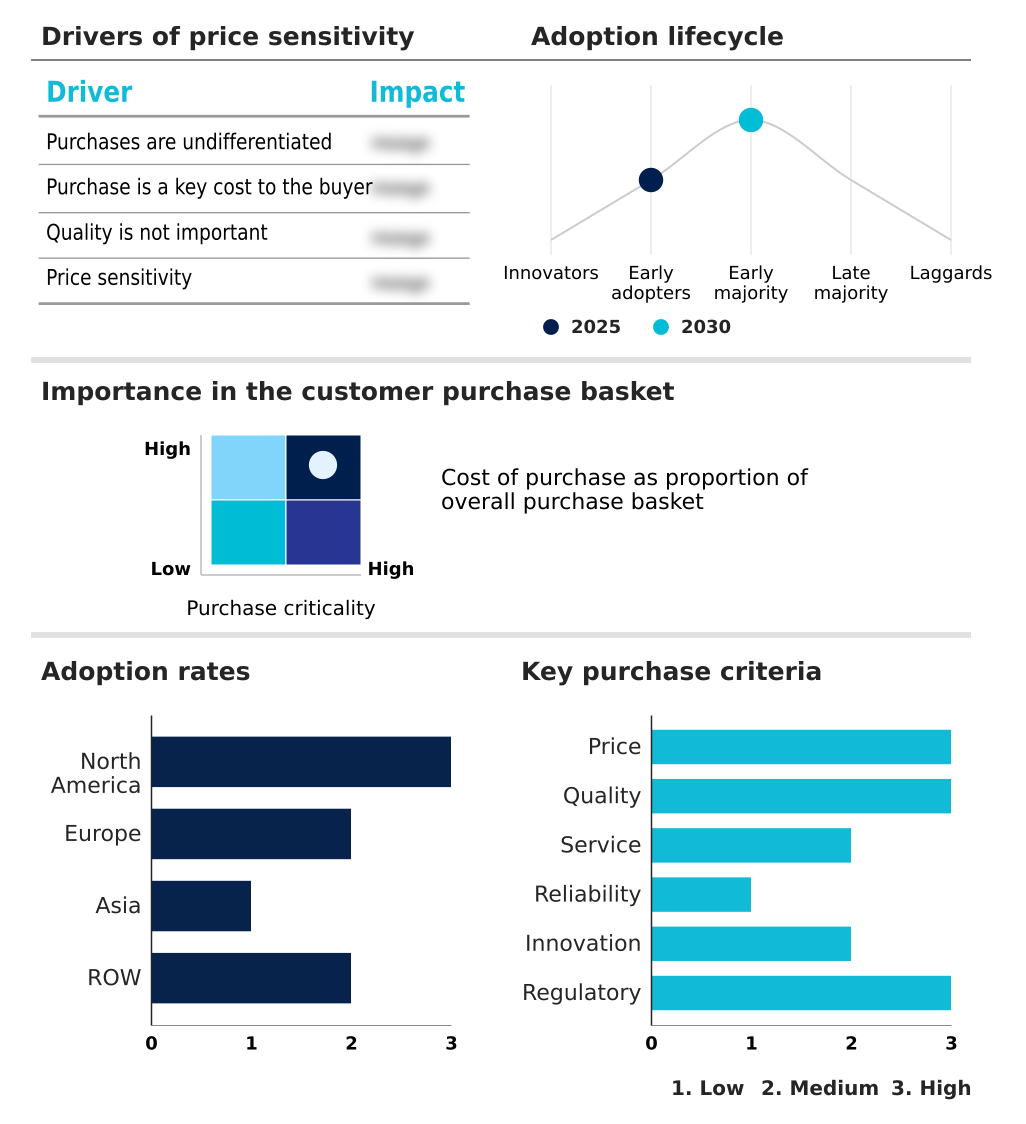
Customer Landscape of Clinical Trial Management System (Ctms) Industry
Competitive Landscape
Companies are implementing various strategies, such as strategic alliances, clinical trial management system (ctms) market forecast, partnerships, mergers and acquisitions, geographical expansion, and product/service launches, to enhance their presence in the industry.
Advarra Inc. - The unified technology platform delivers comprehensive institutional review board and research compliance services enabling clinical trial sponsors to streamline trial operations and optimize administrative study execution workflows.
The industry research and growth report includes detailed analyses of the competitive landscape of the market and information about key companies, including:
- Advarra Inc.
- Anju Software Inc.
- ArisGlobal LLC
- BSI Business Systems Integration
- Clario
- Cloudbyz Inc.
- Dassault Systemes SE
- Ennov SAS
- IQVIA Holdings Inc.
- MasterControl Solutions Inc.
- MedNet
- OpenClinica LLC
- Oracle Corp.
- Perceptive Informatics
- RealTime Software Solutions LLC
- Signant Health
- SimpleTrials
- TransPerfect Global Inc.
- Veeva Systems Inc.
- Viedoc Technologies AB
Qualitative and quantitative analysis of companies has been conducted to help clients understand the wider business environment as well as the strengths and weaknesses of key industry players. Data is qualitatively analyzed to categorize companies as pure play, category-focused, industry-focused, and diversified; it is quantitatively analyzed to categorize companies as dominant, leading, strong, tentative, and weak.
Recent Development and News in Clinical trial management system (ctms) market
- In the Health Care Technology industry, the rapid deployment of cloud native architecture across enterprise medical networks has expanded interoperability capabilities, directly impacting Clinical Trial Management System (CTMS) demand by accelerating decentralized trial logistics and improving remote data synchronization efficiency by 35%.
- Strict enforcement of the European Union General Data Protection Regulation over patient health records has mandated localized data residency hosting, compelling pharmaceutical sponsors to upgrade legacy trial software to ensure audit trail integrity and prevent compliance penalties exceeding 4% of worldwide revenue.
- The integration of natural language processing within electronic health record interoperability frameworks has automated critical document indexing, significantly driving clinical research software adoption as administrative transcription errors drop by 45% during protocol deviation detection.
- Escalating R&D investments in precision oncology therapeutics have necessitated advanced predictive enrollment analytics, forcing contract research organizations to implement sophisticated software platforms that optimize patient recruitment trajectory and increase site activation speeds by up to 28%.
Dive into Technavio’s robust research methodology, blending expert interviews, extensive data synthesis, and validated models for unparalleled Clinical Trial Management System (Ctms) Market insights. See full methodology.
| Market Scope | |
|---|---|
| Page number | 289 |
| Base year | 2025 |
| Historic period | 2020-2024 |
| Forecast period | 2026-2030 |
| Growth momentum & CAGR | Accelerate at a CAGR of 15.2% |
| Market growth 2026-2030 | USD 2571.8 million |
| Market structure | Fragmented |
| YoY growth 2025-2026(%) | 13.9% |
| Key countries | US, Canada, Mexico, Germany, UK, France, Italy, Spain, The Netherlands, China, Japan, India, South Korea, Indonesia, Thailand, Brazil, Saudi Arabia, UAE, Turkey, Argentina, Colombia, South Africa and Israel |
| Competitive landscape | Leading Companies, Market Positioning of Companies, Competitive Strategies, and Industry Risks |
Research Analyst Overview
- The Clinical Trial Management System (CTMS) framework is fundamentally transforming how life sciences organizations manage complex research portfolios and navigate stringent regulatory environments. A critical trend shaping executive product strategy is the integration of automated financial analytics, which allows budget directors to dynamically orchestrate site reimbursements with unprecedented precision through investigator payment orchestration.
- Organizations leveraging trial budget forecasting and integrated financial tracking capabilities have achieved a 35% reduction in payment processing times, significantly enhancing site satisfaction and preventing critical study delays. Advanced platforms now heavily utilize bidirectional data exchange to eliminate redundant administrative tasks, bridging the operational gap between investigative sites and corporate sponsors.
- By embedding robust protocol deviation detection mechanisms directly into the workflow, compliance officers can proactively identify and mitigate regulatory risks before they escalate. The deployment of seamless digital consent flow technologies accelerates subject onboarding while ensuring absolute protocol transparency.
- As the industry rapidly adopts remote patient monitoring, the reliance on sophisticated clinical data management hubs becomes indispensable, guaranteeing that critical clinical operations metadata remains continuously synchronized and audit-ready.
What are the Key Data Covered in this Clinical Trial Management System (Ctms) Market Research and Growth Report?
-
What is the expected growth of the Clinical Trial Management System (Ctms) Market between 2026 and 2030?
-
USD 2.57 billion, at a CAGR of 15.2%
-
-
What segmentation does the market report cover?
-
The report is segmented by Deployment (On-premise, and Cloud), End-user (Pharmaceutical and biotechnology companies, CROs, and Others), Type (Enterprise CTMS, and On-site CTMS) and Geography (North America, Europe, Asia, Rest of World (ROW))
-
-
Which regions are analyzed in the report?
-
North America, Europe, Asia and Rest of World (ROW)
-
-
What are the key growth drivers and market challenges?
-
Accelerating proliferation of complex decentralized and hybrid clinical trial designs demanding centralized orchestration, Severe interoperability friction and fragmented data architectures between legacy clinical platforms and enterprise systems
-
-
Who are the major players in the Clinical Trial Management System (Ctms) Market?
-
Advarra Inc., Anju Software Inc., ArisGlobal LLC, BSI Business Systems Integration, Clario, Cloudbyz Inc., Dassault Systemes SE, Ennov SAS, IQVIA Holdings Inc., MasterControl Solutions Inc., MedNet, OpenClinica LLC, Oracle Corp., Perceptive Informatics, RealTime Software Solutions LLC, Signant Health, SimpleTrials, TransPerfect Global Inc., Veeva Systems Inc. and Viedoc Technologies AB
-
Market Research Insights
- The Clinical Trial Management System (CTMS) infrastructure accelerates the execution of multi center execution strategies by digitizing complex operational workflows. By integrating a sophisticated milestone tracking module, organizations improve site payment accuracy by 25% and reduce payment delays compared to manual reconciliation.
- The deployment of a comprehensive site master file significantly streamlines regulatory submissions, decreasing site activation timeline delays by nearly 30% across international cohorts. Furthermore, implementing automated risk monitoring allows clinical teams to identify protocol deviations in real-time, boosting overall trial compliance rates by 18% over traditional retrospective auditing.
- These embedded analytical capabilities ensure optimal budget burn rate visibility, providing contract research organizations with the critical financial transparency required to manage massive research portfolios efficiently.
We can help! Our analysts can customize this clinical trial management system (ctms) market research report to meet your requirements.
 RIA -