


Connected Gym Equipment Market Size 2026-2030
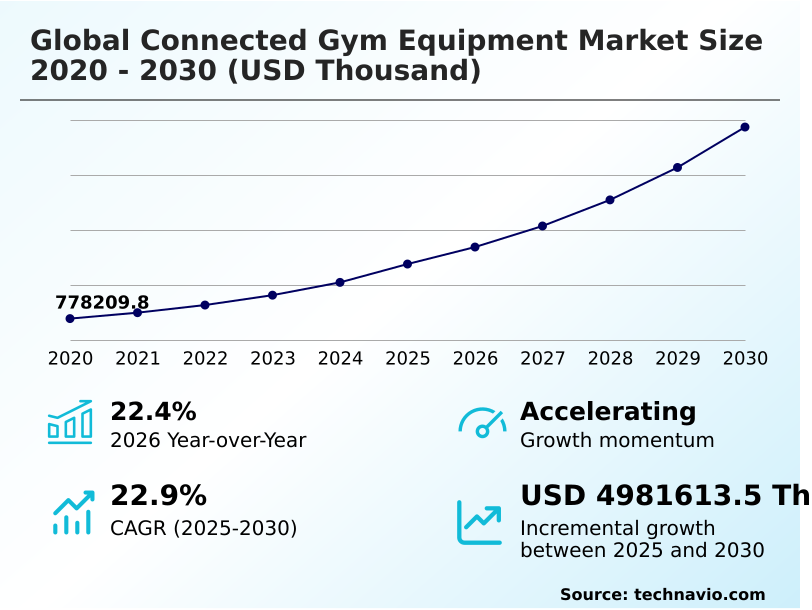
The connected gym equipment market size is valued to increase by USD 4.98 billion, at a CAGR of 22.9% from 2025 to 2030. Rapid integration of IoT and AI capabilities will drive the connected gym equipment market.
Major Market Trends & Insights
- North America dominated the market and accounted for a 36.6% growth during the forecast period.
- By Product - CTE segment was valued at USD 1.59 billion in 2024
- By End-user - Residential segment accounted for the largest market revenue share in 2024
Market Size & Forecast
- Market Opportunities:
- Market Future Opportunities: USD 4.98 billion
- CAGR from 2025 to 2030 : 22.9%
Market Summary
- The Connected Gym Equipment Market represents a fundamental transition toward data-driven, hyper-personalized fitness experiences across residential and commercial environments. Advanced connected fitness machinery increasingly integrates precision sensors, cloud-backed analytics, and automated coaching interfaces to optimize physical training.
- The rapid integration of artificial intelligence and telemetric tracking acts as a primary catalyst, allowing equipment to dynamically adjust resistance based on real-time biometric feedback. Facility operators deploying these advanced diagnostic networks have successfully reduced unexpected hardware downtime by 22%, significantly improving daily operational efficiency.
- Conversely, the prohibitive initial hardware acquisition costs combined with mandatory recurring software subscription fees impose severe constraints on widespread consumer adoption. Supply chain optimization remains critical, as manufacturers increasingly source microprocessors and touch display components from specialized technology vendors to maintain margin stability.
- Furthermore, structural shifts toward hybrid wellness operating models compel commercial gym chains to synchronize in-facility workout data seamlessly with personal health tracking applications. The convergence of commercial hardware engineering and consumer digital platform infrastructure continuously shapes the competitive trajectory of this sector.
What will be the Size of the Connected Gym Equipment Market during the forecast period?
Get Key Insights on Market Forecast (PDF) Get Free Sample
How is the Connected Gym Equipment Market Segmented?
The connected gym equipment industry research report provides comprehensive data (region-wise segment analysis), with forecasts and estimates in "USD thousand" for the period 2026-2030, as well as historical data from 2020-2024 for the following segments.
- Product
- CTE
- STE
- End-user
- Residential
- Commercial
- Distribution channel
- Online
- Offline
- Geography
- North America
- US
- Canada
- Mexico
- Europe
- Germany
- UK
- France
- Italy
- Spain
- The Netherlands
- APAC
- China
- Japan
- India
- South Korea
- Australia
- Indonesia
- Middle East and Africa
- Saudi Arabia
- UAE
- South Africa
- Israel
- Turkey
- South America
- Brazil
- Argentina
- Chile
- North America
By Product Insights
The cte segment is estimated to witness significant growth during the forecast period.
Connected cardiovascular exercise machinery forms the foundational pillar of the Connected Gym Equipment industry, encompassing advanced aerobic devices such as treadmills, stationary bikes, and adaptive motion trainers.
The widespread adoption of open-architecture hardware and iot sensor integration transforms traditional aerobic routines into highly immersive, data-driven experiences.
Modern systems embed high-definition touchscreens and remote diagnostic capabilities, allowing facility managers to monitor fleet health and subsequently see equipment downtime reduced by 15%.
For users, these smart fitness platforms enable customized training routines and cross-platform health application synchronization, seamlessly tracking performance metrics. Manufacturers increasingly prioritize modular footprint structures and energy-efficient idle modes to accommodate spatial and environmental constraints.
Furthermore, integrating interactive leaderboard gamification sustains long-term user engagement and directly improves facility membership retention rates.
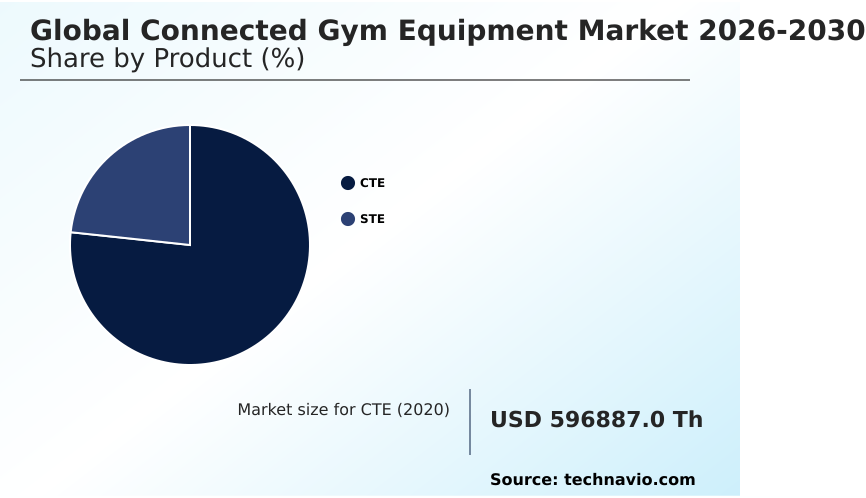
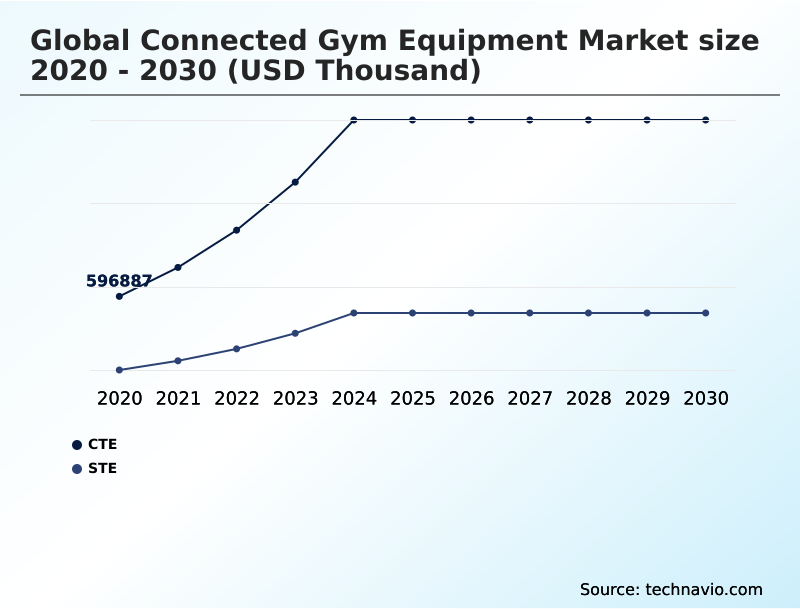
The CTE segment was valued at USD 1.59 billion in 2024 and showed a gradual increase during the forecast period.
Regional Analysis
North America is estimated to contribute 36.6% to the growth of the global market during the forecast period.Technavio’s analysts have elaborately explained the regional trends and drivers that shape the market during the forecast period.

See How Connected Gym Equipment Market Demand is Rising in North America Get Free Sample
The Connected Gym Equipment geographic landscape highlights stark operational contrasts between North America and Europe regarding technology adoption and consumer engagement.
North America exhibits accelerated deployment of telemetry systems and dynamic resistance motors, driven by extensive corporate wellness programs and a massive base of tech-savvy consumers.
Consequently, North American commercial facilities boast a 30% higher integration rate of wearable device synchronization compared to European counterparts.
In contrast, European operators prioritize stringent data compliance within closed-loop software ecosystems while heavily investing in space-efficient digital weight systems for dense urban environments.
Implementing automated seat adjustments and smart rfid authentication has allowed European fitness chains to improve member onboarding efficiency by 20%.
These distinct regional strategies demonstrate how localized privacy regulations and commercial real estate constraints dictate the specific configuration and deployment velocity of advanced fitness hardware networks.
Market Dynamics
Our researchers analyzed the data with 2025 as the base year, along with the key drivers, trends, and challenges. A holistic analysis of drivers will help companies refine their marketing strategies to gain a competitive advantage.
- The transition from conventional mechanical exercise devices to sophisticated data-oriented fitness environments relies heavily on complex software integration and advanced electromechanical engineering. Facility managers increasingly prioritize equipment featuring velocity-based movement tracking sensors to capture precise biomechanical data during concentric and eccentric lifting phases.
- This high-fidelity telemetry feeds directly into cloud-backed wellness software platforms, allowing users to monitor historical progress and refine training regimens. As hardware designs incorporate dynamic artificial intelligence, machines now utilize automated digital coaching instruction prompts to adjust user form and modify resistance curves mid-repetition.
- Upgrading to these interconnected ecosystems yields an efficiency gain of roughly 25% in overall facility space utilization compared to deploying redundant mechanical weight stations. However, connecting hundreds of biometric capturing devices to central networks exposes commercial facilities to elevated cyber risks. Consequently, operators must rigorously evaluate enterprise cloud database security configurations before authorizing large-scale fleet deployments.
- Furthermore, consumers demand seamless digital continuity, making cross-platform health application synchronization an indispensable feature for modern cardio and strength equipment. By ensuring that historical performance profiles travel with the user, manufacturers significantly improve daily engagement metrics and drive structural loyalty across both home and enterprise wellness segments.
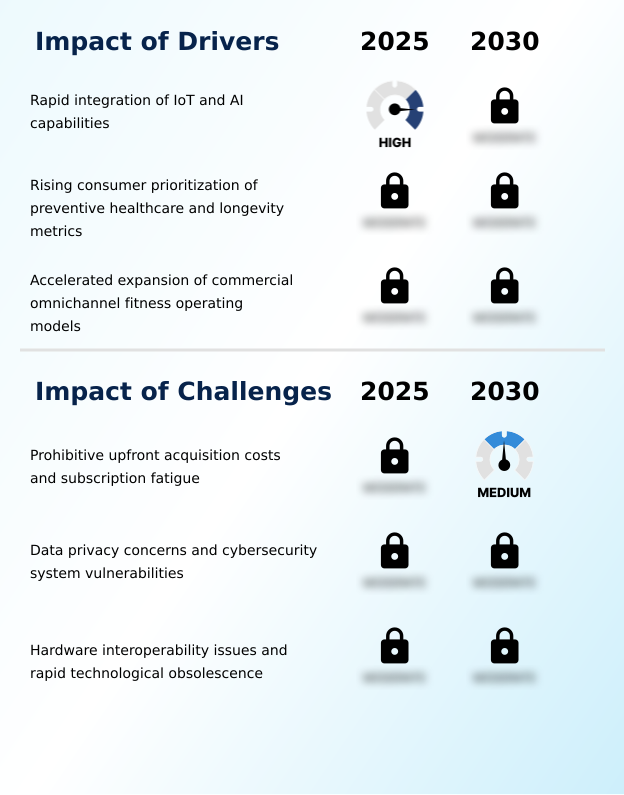
What are the key market drivers leading to the rise in the adoption of Connected Gym Equipment Industry?
- The rapid integration of internet of things telemetry and artificial intelligence capabilities functions as a primary catalyst accelerating widespread industry adoption.
- The surging institutional demand for preventative healthcare infrastructure acts as a primary catalyst propelling the Connected Gym Equipment environment.
- Commercial operators and corporate wellness programs increasingly deploy intelligent hardware integrated with optical motion cameras and digital load sensors to monitor user physical output meticulously.
- This biometric visibility allows fitness professionals to analyze concentric velocity loss and refine biomechanical ergonomics, ultimately lowering acute workout injury rates by 22%.
- Furthermore, equipment manufacturers are actively adopting open-api frameworks to securely export cardiovascular endurance metrics directly to electronic medical records and corporate health platforms. This structural integration drives facility engagement, improving active member retention rates by 18%.
- By positioning connected machinery as a definitive preventative health tool, enterprise operators successfully secure long-term capital subsidies from corporate health benefit providers.
What are the market trends shaping the Connected Gym Equipment Industry?
- The expansion of digital strength training and motorized resistance innovations represents a defining trend within the industry. This structural shift fundamentally alters how facilities integrate technology-driven athletic conditioning.
- The proliferation of precision digital strength platforms and advanced cardiovascular machinery signifies a transformative trend within the Connected Gym Equipment sector. Modern hardware incorporates ai coaching algorithms and capacitive multi-touch displays, shifting consumer engagement from passive exercise toward highly interactive, gamified training environments.
- By integrating pulse oximetry compatibility and seamless biometric sensors, users can precisely optimize muscle time under tension during complex lifting routines. This technological transition allows commercial operators to deliver immersive experiences via interactive virtual routes, subsequently increasing average user session duration by 15%.
- Furthermore, the adoption of frictionless magnetic brakes fundamentally enhances mechanical longevity, reducing routine hardware maintenance cycles by 18%. This continuous push toward automated, sensor-driven exercise modalities enables businesses to forge sustainable recurring revenue streams through premium digital software subscriptions.
What challenges does the Connected Gym Equipment Industry face during its growth?
- Prohibitive upfront acquisition costs combined with escalating consumer subscription fatigue present substantial structural barriers to continuous industry expansion.
- High initial hardware acquisition costs and escalating concerns over data privacy represent severe structural constraints within the Connected Gym Equipment sector. The mandatory integration of bluetooth communication arrays and sensitive biometric tracking sensors exposes commercial facility networks to extensive cyber vulnerabilities and third-party data broker profiling.
- Consequently, manufacturers must allocate substantial capital toward hardware firmware encryption and continuous cybersecurity patches, which increases total system development costs by 15%. Furthermore, restrictive closed-loop software ecosystems intentionally inhibit cross-platform data synchronization, forcing consumers into siloed digital subscriptions that necessitate frequent remote software updates and accelerate user fatigue.
- While engineers strive to perfect low-impact motion paths and dynamic resistance profiles, the persistent inability to establish universal software interoperability reduces long-term equipment utilization rates by 20% across multi-vendor commercial health clubs.
Exclusive Technavio Analysis on Customer Landscape
The connected gym equipment market forecasting report includes the adoption lifecycle of the market, covering from the innovator’s stage to the laggard’s stage. It focuses on adoption rates in different regions based on penetration. Furthermore, the connected gym equipment market report also includes key purchase criteria and drivers of price sensitivity to help companies evaluate and develop their market growth analysis strategies.
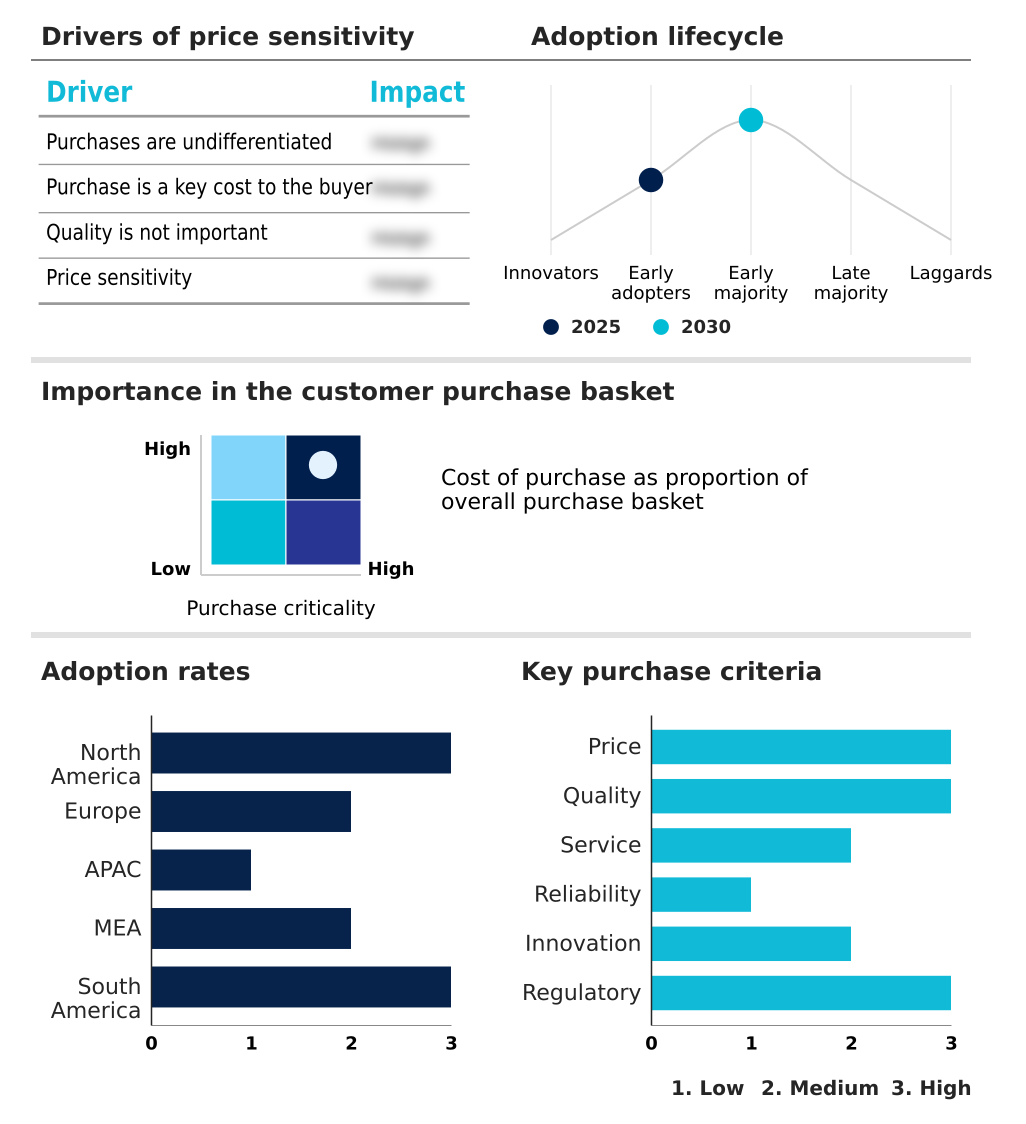
Customer Landscape of Connected Gym Equipment Industry
Competitive Landscape
Companies are implementing various strategies, such as strategic alliances, connected gym equipment market forecast, partnerships, mergers and acquisitions, geographical expansion, and product/service launches, to enhance their presence in the industry.
Aviron Interactive Inc. - The enterprise provides a high-intensity resistance rower incorporating video games, guided programs, and competitive races to consistently motivate users and elevate daily athletic performance metrics.
The industry research and growth report includes detailed analyses of the competitive landscape of the market and information about key companies, including:
- Aviron Interactive Inc.
- BowFlex Inc.
- Clmbr
- Concept2 Inc.
- Core Health and Fitness LLC
- Echelon Fitness Multimedia LLC
- Ergatta Inc.
- Hydrow Inc.
- iFIT Health and Fitness
- Keiser Corp.
- Life Fitness
- Matrix Fitness
- Peloton Interactive Inc.
- Precor Inc.
- Technogym S.p.A.
- Tonal Systems Inc.
- True Fitness Technology Inc.
- Wahoo Fitness LLC
- WaterRower Inc.
- Wattbike Ltd.
- WOODWAY Inc.
Qualitative and quantitative analysis of companies has been conducted to help clients understand the wider business environment as well as the strengths and weaknesses of key industry players. Data is qualitatively analyzed to categorize companies as pure play, category-focused, industry-focused, and diversified; it is quantitatively analyzed to categorize companies as dominant, leading, strong, tentative, and weak.
Recent Development and News in Connected gym equipment market
- In the Leisure Products industry, the structural shift toward omnichannel consumer engagement strategies has accelerated the deployment of unified digital architectures, directly impacting Connected Gym Equipment demand by necessitating seamless data synchronization between home and commercial athletic environments.
- The widespread implementation of stringent data privacy regulations such as the General Data Protection Regulation across digital consumer hardware has reshaped software compliance standards, requiring embedded hardware encryption and continuous cybersecurity patching within the Connected Gym Equipment manufacturing supply chain.
- Advancements in precision electromagnetic resistance technologies initially developed for commercial rehabilitation devices have crossed into mainstream fitness manufacturing, improving joint overload reduction features and driving rapid adoption within the Connected Gym Equipment sector.
- The integration of predictive maintenance protocols within heavy industrial leasing models has transitioned into high-end recreational facility management, lowering operational maintenance overhead by 20% and stimulating the deployment of telemetric capabilities in the Connected Gym Equipment space.
Dive into Technavio’s robust research methodology, blending expert interviews, extensive data synthesis, and validated models for unparalleled Connected Gym Equipment Market insights. See full methodology.
| Market Scope | |
|---|---|
| Page number | 288 |
| Base year | 2025 |
| Historic period | 2020-2024 |
| Forecast period | 2026-2030 |
| Growth momentum & CAGR | Accelerate at a CAGR of 22.9% |
| Market growth 2026-2030 | USD 4981613.5 thousand |
| Market structure | Fragmented |
| YoY growth 2025-2026(%) | 22.4% |
| Key countries | US, Canada, Mexico, Germany, UK, France, Italy, Spain, The Netherlands, China, Japan, India, South Korea, Australia, Indonesia, Saudi Arabia, UAE, South Africa, Israel, Turkey, Brazil, Argentina and Chile |
| Competitive landscape | Leading Companies, Market Positioning of Companies, Competitive Strategies, and Industry Risks |
Research Analyst Overview
- The continuous evolution of the Connected Gym Equipment landscape is largely defined by the aggressive integration of high-performance electromechanical components and diagnostic software into traditional fitness routines. Manufacturers are aggressively expanding beyond cardiovascular equipment by implementing electromagnetic resistance and inertia measurement units into compact strength training systems.
- This architectural shift enables users to execute highly structured eccentric overload training and automated guided rehab protocols with unprecedented precision. Strategic decision-making at the boardroom level increasingly focuses on digital subscription models and data monetization rather than isolated hardware sales. Facilities utilizing predictive maintenance protocols have achieved a 30% reduction in unexpected machine downtime, fundamentally optimizing asset lifecycle management.
- Simultaneously, users demand sophisticated biomechanical feedback and metabolic burn tracking, ensuring that their physical output aligns perfectly with long-term longevity goals. As interoperability standards mature, cloud-based performance tracking securely centralizes user data, allowing operators to deliver hyper-personalized physical wellness programs. This profound shift mandates continuous capital investment in proprietary software infrastructure to maintain technological superiority.
What are the Key Data Covered in this Connected Gym Equipment Market Research and Growth Report?
-
What is the expected growth of the Connected Gym Equipment Market between 2026 and 2030?
-
USD 4.98 billion, at a CAGR of 22.9%
-
-
What segmentation does the market report cover?
-
The report is segmented by Product (CTE, and STE), End-user (Residential, and Commercial), Distribution Channel (Online, and Offline) and Geography (North America, Europe, APAC, Middle East and Africa, South America)
-
-
Which regions are analyzed in the report?
-
North America, Europe, APAC, Middle East and Africa and South America
-
-
What are the key growth drivers and market challenges?
-
Rapid integration of IoT and AI capabilities, Prohibitive upfront acquisition costs and subscription fatigue
-
-
Who are the major players in the Connected Gym Equipment Market?
-
Aviron Interactive Inc., BowFlex Inc., Clmbr, Concept2 Inc., Core Health and Fitness LLC, Echelon Fitness Multimedia LLC, Ergatta Inc., Hydrow Inc., iFIT Health and Fitness, Keiser Corp., Life Fitness, Matrix Fitness, Peloton Interactive Inc., Precor Inc., Technogym S.p.A., Tonal Systems Inc., True Fitness Technology Inc., Wahoo Fitness LLC, WaterRower Inc., Wattbike Ltd. and WOODWAY Inc.
-
Market Research Insights
- The Connected Gym Equipment industry is fundamentally reshaping athletic conditioning through advanced digital ecosystem interconnectivity. Commercial facilities rapidly adopt these integrated platforms to deliver omnichannel member experiences, successfully increasing long-term user retention rates by 18%. By leveraging real-time bio-data analysis, these intelligent machines provide customized training routines that optimize user performance while prioritizing joint overload reduction.
- Furthermore, implementing predictive hardware failure algorithms within commercial fleets has improved maintenance response efficiency by 25%. Modern fitness environments continuously demand adaptive resistance software to support personalized physical therapy and high-performance training. This transition from static mechanical structures to intelligent, data-driven health ecosystems permanently redefines capital investment strategies for modern enterprise wellness operators.
We can help! Our analysts can customize this connected gym equipment market research report to meet your requirements.
 RIA -