



Digital Insurance Market Size 2026-2030
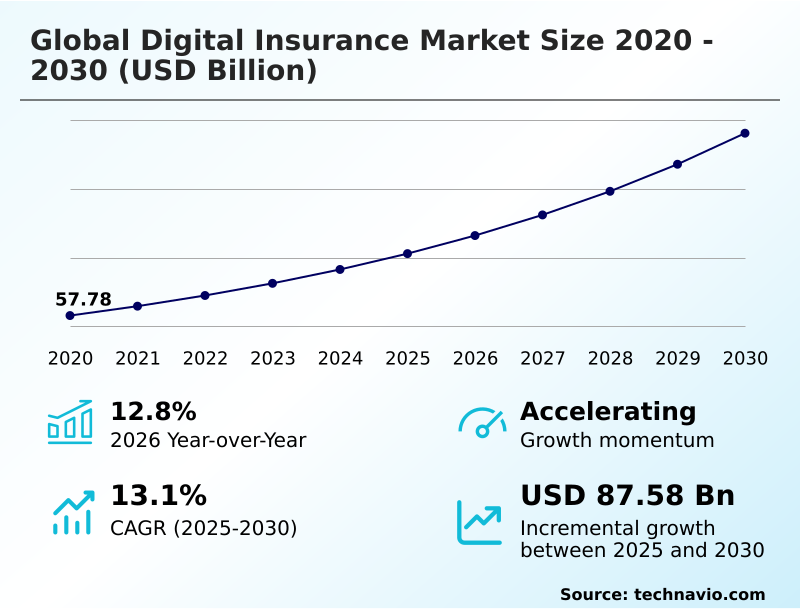
The digital insurance market size is valued to increase by USD 87.58 billion, at a CAGR of 13.1% from 2025 to 2030. Evolving customer expectations and demand for personalization will drive the digital insurance market.
Major Market Trends & Insights
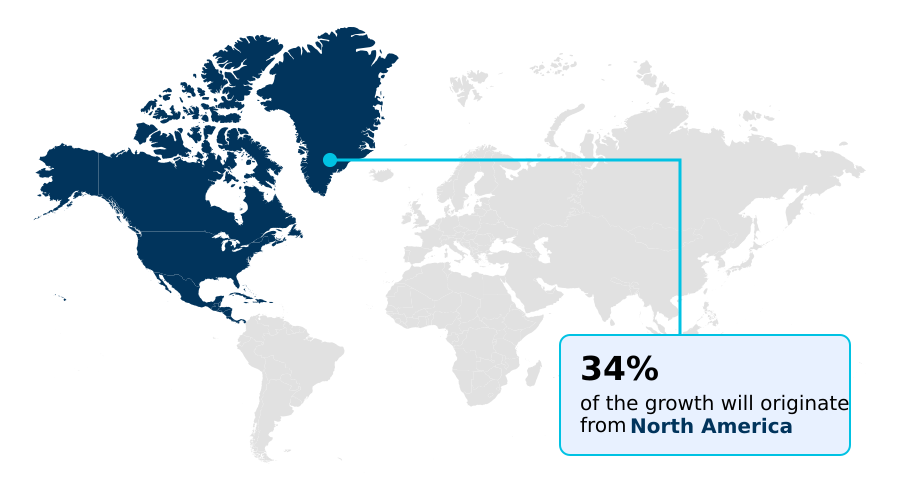
- North America dominated the market and accounted for a 34.5% growth during the forecast period.
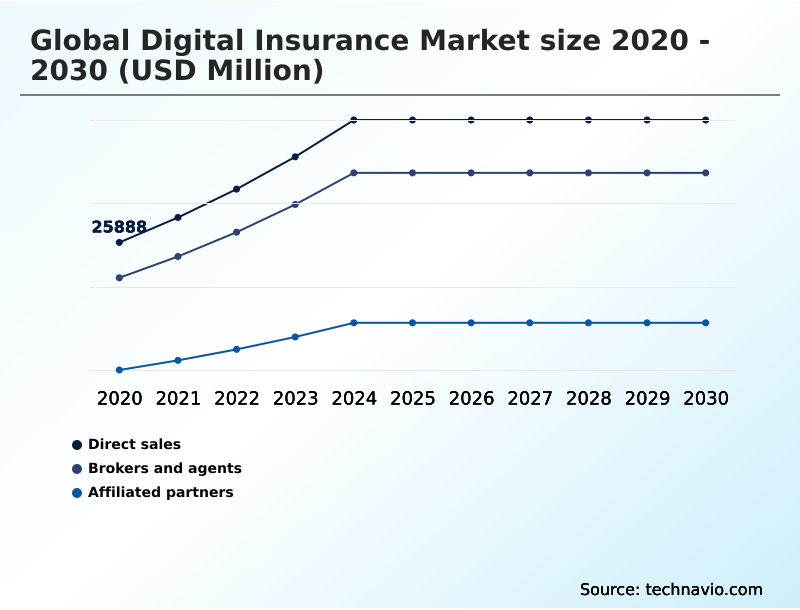
- By Distribution Channel - Direct sales segment was valued at USD 40.84 billion in 2024
- By End-user - Individuals segment accounted for the largest market revenue share in 2024
Market Size & Forecast
- Market Opportunities: USD 132.63 billion
- Market Future Opportunities: USD 87.58 billion
- CAGR from 2025 to 2030 : 13.1%
Market Summary
- The Digital Insurance market represents a profound operational shift from manual, paper-intensive workflows to highly automated, data-centric service models. Companies increasingly adopt robust digital platforms to streamline core functions and deliver seamless consumer experiences.
- For example, in the supply chain of commercial fleet operations, the deployment of telematics sensors allows operators to transmit real-time driving data, enabling dynamic risk evaluation and usage-based pricing models. Consequently, fleets utilizing these interconnected systems record a 20% reduction in premium costs compared to standard static policy frameworks.
- The primary driver of this market is the shifting consumer expectation for hyper-personalized, on-demand coverage, forcing providers to modernize legacy infrastructure to remain competitive. Conversely, the market faces significant structural challenges stemming from complex data privacy regulations. As platforms ingest vast quantities of sensitive behavioral and operational data, vulnerabilities expand, demanding rigorous cybersecurity investments.
- Ultimately, the transition to digital-first insurance models redefines risk mitigation, shifting the industry focus from reactive loss compensation to proactive, continuous risk prevention.
What will be the Size of the Digital Insurance Market during the forecast period?
Get Key Insights on Market Forecast (PDF) Get Free Sample
How is the Digital Insurance Market Segmented?
The digital insurance industry research report provides comprehensive data (region-wise segment analysis), with forecasts and estimates in "USD million" for the period 2026-2030, as well as historical data from 2020-2024 for the following segments.
- Distribution channel
- Direct sales
- Brokers and agents
- Affiliated partners
- End-user
- Individuals
- Businesses
- Type
- Property and casualty
- Health insurance
- Life insurance
- Auto insurance
- Others
- Geography
- North America
- US
- Canada
- Mexico
- Europe
- Germany
- UK
- France
- Italy
- The Netherlands
- Spain
- APAC
- China
- India
- South Korea
- Australia
- Japan
- Indonesia
- South America
- Brazil
- Argentina
- Colombia
- Middle East and Africa
- Saudi Arabia
- UAE
- South Africa
- Israel
- Turkey
- North America
By Distribution Channel Insights
The direct sales segment is estimated to witness significant growth during the forecast period.
The direct sales segment within the Digital Insurance market represents a fundamental structural shift in consumer engagement, circumventing traditional intermediaries to establish immediate policyholder relationships.
This transition is driven by the deployment of a digital underwriting engine and omnichannel integration, which enable providers to control brand messaging and personalize coverage directly.
Consequently, organizations utilizing robust customer behavior analytics achieve a 15% improvement in policy retention rates compared to legacy distribution channels. By harnessing extensive first-party data, companies refine algorithmic pricing and deliver contextual protection offers tailored to individual risk profiles.
This direct-to-consumer approach addresses modern preferences for self-service transparency while reducing administrative overhead. The continuous optimization of mobile policy management and instant quote generation fundamentally reinvents the customer journey and operational efficiency.
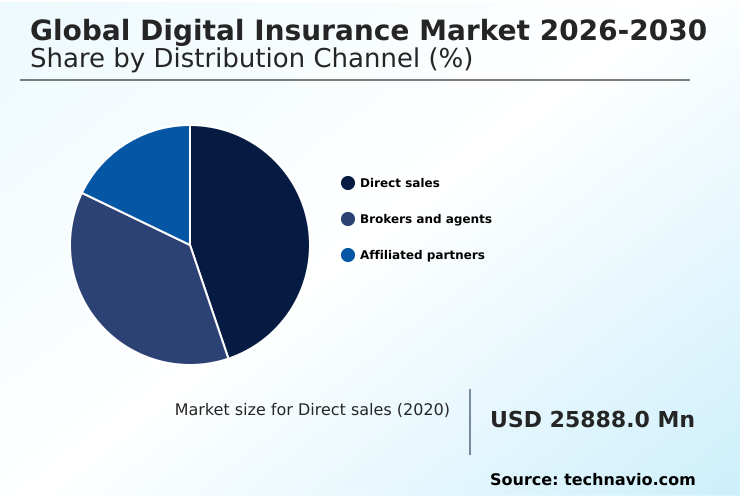
The Direct sales segment was valued at USD 40.84 billion in 2024 and showed a gradual increase during the forecast period.
Regional Analysis
North America is estimated to contribute 34.5% to the growth of the global market during the forecast period.Technavio’s analysts have elaborately explained the regional trends and drivers that shape the market during the forecast period.
See How Digital Insurance Market Demand is Rising in North America Get Free Sample
Regional disparities within the Digital Insurance market are dictated by varying levels of digital infrastructure maturity and regulatory agility.
North America leads the adoption of cloud native infrastructure, achieving a 35% higher integration rate of artificial intelligence powered claims adjudication compared to counterpart markets.
This accelerated deployment stems from established tech ecosystems and high consumer demand for a seamless customer journey. In contrast, APAC is experiencing rapid ecosystem expansion driven by mobile-first populations and digital ecosystem partnerships.
Organizations in APAC utilizing embedded coverage ecosystems report a 28% increase in microinsurance product design uptake, outpacing European markets hindered by fragmented compliance protocols.
The European landscape focuses heavily on data governance frameworks and open banking integration, creating highly secure but slower-to-deploy digital policy administration systems. Consequently, insurers must tailor their legacy system modernization strategies to specific regional technical capabilities and regulatory constraints.
Market Dynamics
Our researchers analyzed the data with 2025 as the base year, along with the key drivers, trends, and challenges. A holistic analysis of drivers will help companies refine their marketing strategies to gain a competitive advantage.
- The evolution of the Digital Insurance market is fundamentally redefining how risk is quantified, managed, and mitigated across diverse business sectors. A critical element of this transformation is the integration of artificial intelligence powered claims adjudication, which replaces labor-intensive manual reviews with rapid, algorithmic evaluations.
- This technological shift allows providers to achieve significantly higher operational efficiency, processing claims 40% faster than traditional administrative workflows. Furthermore, the commercial transportation sector is witnessing a massive overhaul through usage based motor coverage optimization.
- By continuously monitoring driver behavior and fleet performance, operators can align their insurance expenses directly with actual risk exposure, creating a highly efficient operational planning environment. Another major structural change is the proliferation of api enabled embedded distribution channels, which seamlessly integrate contextual insurance offerings directly into third-party retail and service platforms.
- This approach expands market reach without the heavy customer acquisition costs associated with legacy models. Concurrently, established organizations are aggressively pursuing cloud based core system transformation to dismantle operational silos and enhance scalability. This architectural upgrade is essential for supporting advanced, data-heavy applications.
- Consequently, the adoption of telematics driven dynamic risk pricing becomes highly effective, linking real-time behavioral data to instant policy adjustments. These interconnected strategies ensure that the modern insurance ecosystem remains highly responsive, economically resilient, and deeply integrated into the digital economy.
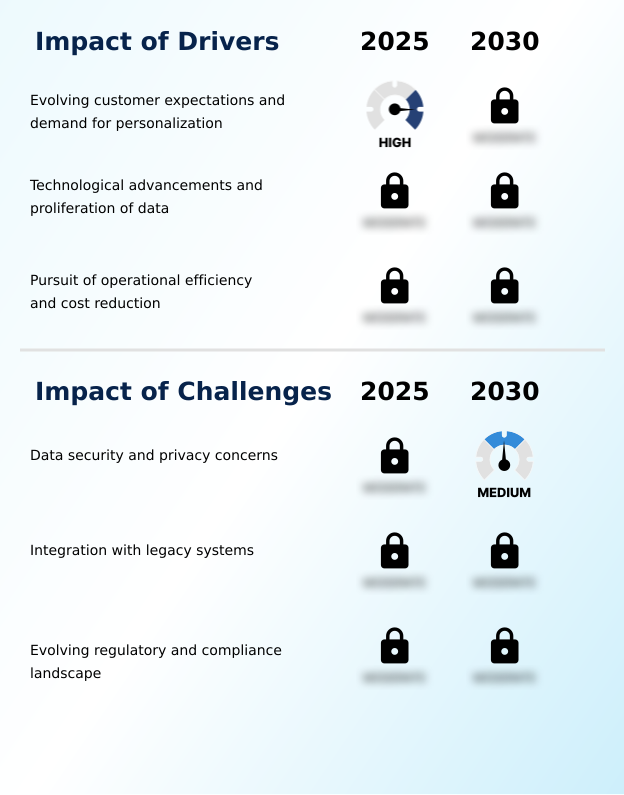
What are the key market drivers leading to the rise in the adoption of Digital Insurance Industry?
- Evolving customer expectations and the increasing demand for personalized solutions serve as the primary drivers propelling market expansion.
- The escalating consumer demand for immediate, transparent services serves as the primary driver propelling the Digital Insurance market.
- The integration of electronic health records and virtual care networks has fundamentally transformed health coverage by providing instantaneous access to critical patient data.
- This accessibility allows providers to implement straight through processing, which has successfully reduced underwriting decision times by 45%. Furthermore, the demand for on demand activation compels organizations to utilize peer to peer networks for decentralized risk pooling.
- By eliminating structural bottlenecks, these digital-first initiatives have enhanced policyholder retention by 20% compared to traditional models. This shift forces legacy institutions to aggressively modernize infrastructure, ensuring that hyper personalized policies are delivered rapidly and accurately.
What are the market trends shaping the Digital Insurance Industry?
- The proliferation of artificial intelligence and hyper-automation represents a defining market trend driving significant operational transformations.
- The widespread adoption of distributed ledger systems represents a transformative trend in the Digital Insurance market, redefining transactional transparency and trust. The strategic deployment of smart contract deployment has revolutionized operational workflows, allowing companies to automate complex settlements without manual intervention.
- This technological shift has increased processing efficiency by 35% and reduced administrative overhead by 22% compared to traditional legacy networks. The transition toward real time risk assessment is heavily supported by the proliferation of the smart home internet of things, enabling providers to continuously monitor property conditions and preemptively address hazards.
- Consequently, businesses leveraging these interconnected networks experience a 15% reduction in total claim severity. This seamless integration of automated damage appraisal technologies ensures that organizations can deploy dynamic pricing models while maintaining strict operational resilience.
What challenges does the Digital Insurance Industry face during its growth?
- Escalating data security threats and complex privacy concerns represent the key challenges restricting industry growth.
- The rapid expansion of the Digital Insurance market is significantly constrained by the complexities of integrating modern digital first onboarding solutions with archaic mainframe architectures. This legacy system modernization requires massive capital expenditure and poses severe operational disruption risks. Consequently, companies attempting partial system upgrades experience a 25% increase in temporary system downtimes compared to cloud-native competitors.
- Additionally, the fragmented nature of global data privacy regulations complicates the deployment of predictive risk modeling and algorithmic pricing mechanisms. Insurers struggle to harmonize cybersecurity protocols across varying jurisdictions, leading to compliance-related operational delays of up to 30%.
- These systemic vulnerabilities force organizations to divert critical resources away from product innovation and toward extensive data governance frameworks to maintain regulatory alignment.
Exclusive Technavio Analysis on Customer Landscape
The digital insurance market forecasting report includes the adoption lifecycle of the market, covering from the innovator’s stage to the laggard’s stage. It focuses on adoption rates in different regions based on penetration. Furthermore, the digital insurance market report also includes key purchase criteria and drivers of price sensitivity to help companies evaluate and develop their market growth analysis strategies.
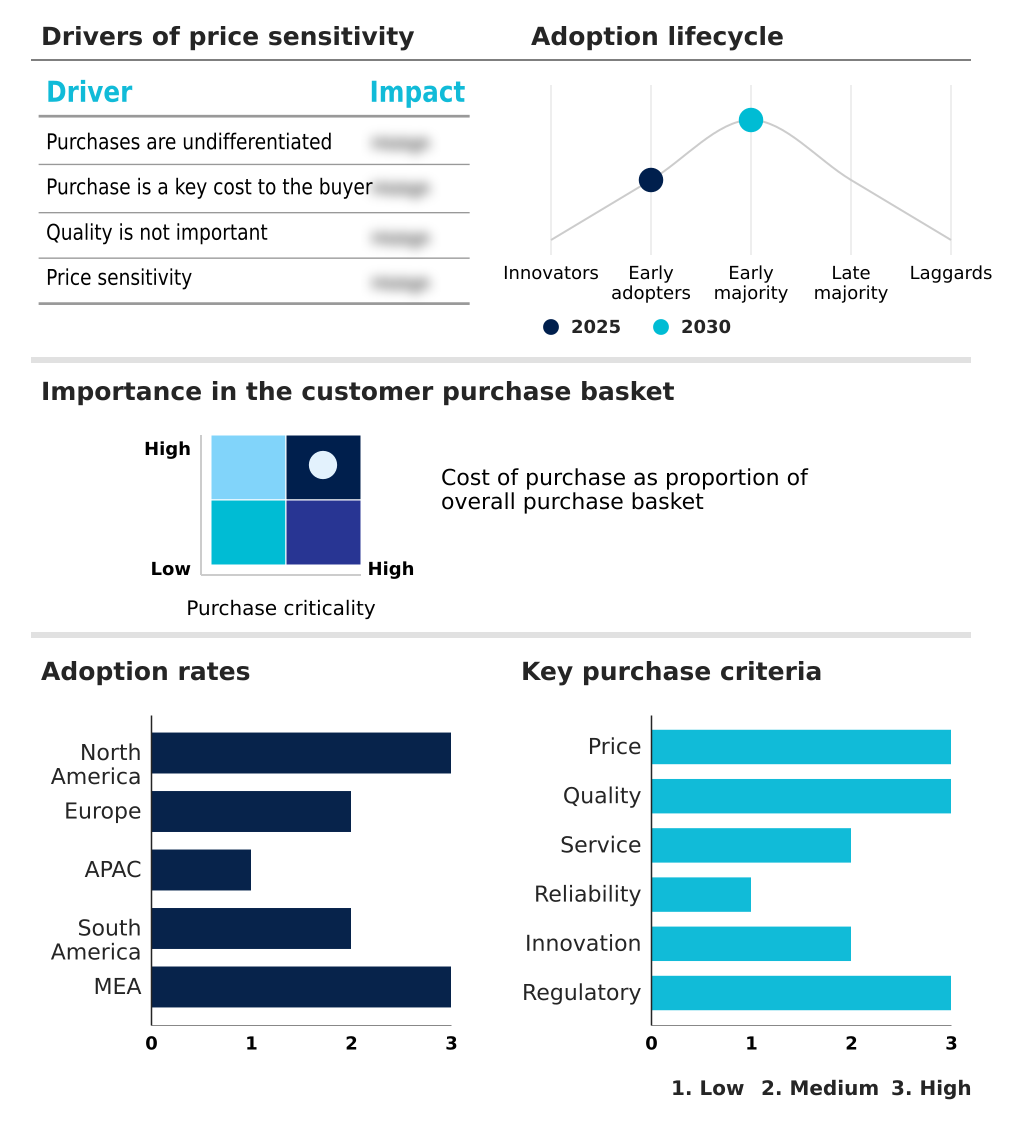
Customer Landscape of Digital Insurance Industry
Competitive Landscape
Companies are implementing various strategies, such as strategic alliances, digital insurance market forecast, partnerships, mergers and acquisitions, geographical expansion, and product/service launches, to enhance their presence in the industry.
ACKO General Insurance Ltd - The enterprise delivers comprehensive digital insurance solutions focusing on streamlined vehicle coverage and accessible online health protection platforms tailored to diverse consumer lifestyle needs.
The industry research and growth report includes detailed analyses of the competitive landscape of the market and information about key companies, including:
- ACKO General Insurance Ltd
- AIA Group Ltd
- Allianz SE
- Assicurazioni Generali S.p.A
- Aviva insurance Ltd.
- AXA Group
- Chubb Ltd.
- ERGO Group AG
- FWD Group Holdings Ltd.
- Go Digit General Insurance Ltd.
- Lemonade Inc.
- Manulife Financial Corp.
- Metlife Inc.
- NEXT Insurance
- Oscar Insurance Corp.
- Ping An Insurance Co.
- Prudential plc
- Yu Life ltd
- ZhongAn Online PandC Insurance
- Zurich Insurance Co. Ltd.
Qualitative and quantitative analysis of companies has been conducted to help clients understand the wider business environment as well as the strengths and weaknesses of key industry players. Data is qualitatively analyzed to categorize companies as pure play, category-focused, industry-focused, and diversified; it is quantitatively analyzed to categorize companies as dominant, leading, strong, tentative, and weak.
Recent Development and News in Digital insurance market
- In the Diversified Support Services industry, the transition toward automated enterprise workflow interoperability has standardized cross-platform data exchange, directly impacting Digital Insurance demand by reducing data silos and enabling faster straight through processing of claims.
- The implementation of the General Data Protection Regulation and similar data privacy regulations has forced support service providers to upgrade compliance architectures, directly impacting Digital Insurance demand by accelerating the adoption of enhanced cybersecurity protocols and data governance frameworks.
- The shift toward cloud-based delivery models in commercial facility management has decentralized operational data storage, directly impacting Digital Insurance demand by creating new attack vectors that require advanced predictive risk modeling and cyber coverage.
- The integration of smart building sensors in industrial maintenance services has generated continuous real-time facility metrics, directly impacting Digital Insurance demand by providing the critical geospatial data evaluation needed for dynamic premium calculation.
Dive into Technavio’s robust research methodology, blending expert interviews, extensive data synthesis, and validated models for unparalleled Digital Insurance Market insights. See full methodology.
| Market Scope | |
|---|---|
| Page number | 307 |
| Base year | 2025 |
| Historic period | 2020-2024 |
| Forecast period | 2026-2030 |
| Growth momentum & CAGR | Accelerate at a CAGR of 13.1% |
| Market growth 2026-2030 | USD 87580.4 million |
| Market structure | Fragmented |
| YoY growth 2025-2026(%) | 12.8% |
| Key countries | US, Canada, Mexico, Germany, UK, France, Italy, The Netherlands, Spain, China, India, South Korea, Australia, Japan, Indonesia, Brazil, Argentina, Colombia, Saudi Arabia, UAE, South Africa, Israel and Turkey |
| Competitive landscape | Leading Companies, Market Positioning of Companies, Competitive Strategies, and Industry Risks |
Research Analyst Overview
- The Digital Insurance market is undergoing a structural paradigm shift, moving from static policy management to intelligent, data-driven operational frameworks. At the boardroom level, the integration of generative ai interfaces has become a central focus for product strategy and compliance alignment. Executives prioritize these technologies to streamline complex administrative workflows and mitigate operational friction.
- Consequently, organizations implementing robotic process automation have achieved a 30% reduction in error rates during initial policy onboarding compared to manual processing methods. The continuous evolution of this market relies heavily on sophisticated machine learning algorithms and biometric identity verification to ensure secure, immediate transactional capabilities.
- As consumer demand for hyper-personalized coverage intensifies, leaders are forced to adopt robust fraud detection systems and continuous behavior monitoring to protect decentralized digital perimeters. This technological transition directly enhances underwriting precision and accelerates service delivery.
- Ultimately, the strategic deployment of advanced analytics empowers organizations to transition from reactive indemnity models toward proactive, predictive risk management, fundamentally altering the competitive landscape.
What are the Key Data Covered in this Digital Insurance Market Research and Growth Report?
-
What is the expected growth of the Digital Insurance Market between 2026 and 2030?
-
USD 87.58 billion, at a CAGR of 13.1%
-
-
What segmentation does the market report cover?
-
The report is segmented by Distribution Channel (Direct sales, Brokers and agents, and Affiliated partners), End-user (Individuals, and Businesses), Type (Property and casualty, Health insurance, Life insurance, Auto insurance, and Others) and Geography (North America, Europe, APAC, South America, Middle East and Africa)
-
-
Which regions are analyzed in the report?
-
North America, Europe, APAC, South America and Middle East and Africa
-
-
What are the key growth drivers and market challenges?
-
Evolving customer expectations and demand for personalization, Data security and privacy concerns
-
-
Who are the major players in the Digital Insurance Market?
-
ACKO General Insurance Ltd, AIA Group Ltd, Allianz SE, Assicurazioni Generali S.p.A, Aviva insurance Ltd., AXA Group, Chubb Ltd., ERGO Group AG, FWD Group Holdings Ltd., Go Digit General Insurance Ltd., Lemonade Inc., Manulife Financial Corp., Metlife Inc., NEXT Insurance, Oscar Insurance Corp., Ping An Insurance Co., Prudential plc, Yu Life ltd, ZhongAn Online PandC Insurance and Zurich Insurance Co. Ltd.
-
Market Research Insights
- The Digital Insurance market is rapidly transitioning toward proactive loss prevention models driven by advanced data analytics. Companies leveraging connected vehicle sensors and wearable fitness trackers have experienced a 25% improvement in risk assessment accuracy. This shift toward a seamless customer journey allows organizations to implement dynamic premium calculation, directly tying individual behavior to customized policy terms.
- Furthermore, the integration of fluidless underwriting process techniques has reduced policy issuance times by 40%, significantly enhancing operational throughput and reducing administrative bottlenecks. These structural upgrades enable insurers to offer highly contextualized products while lowering overhead costs, fundamentally altering the traditional value proposition and establishing more resilient, responsive business operations.
We can help! Our analysts can customize this digital insurance market research report to meet your requirements.
 RIA -

