


Direct Reduced Iron Market Size 2026-2030
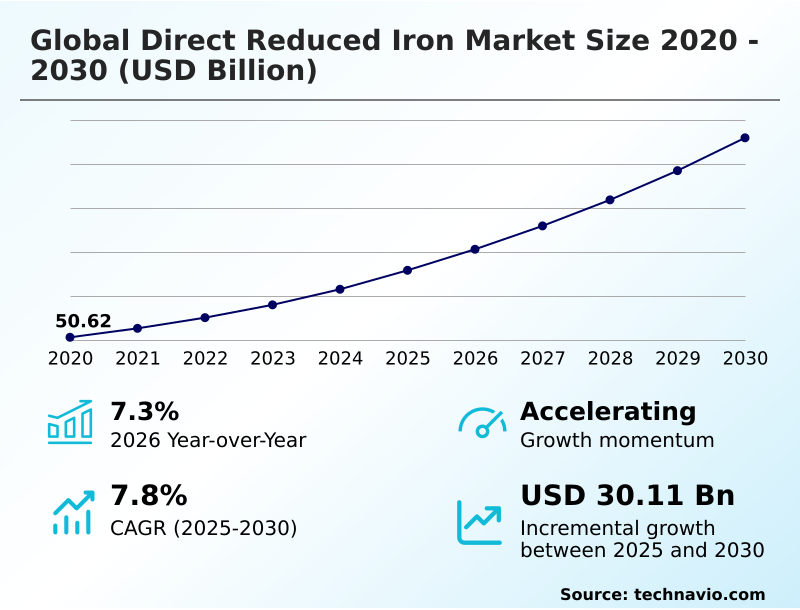
The direct reduced iron market size is valued to increase by USD 30.11 billion, at a CAGR of 7.8% from 2025 to 2030. Increasing global decarbonization mandates and transition to low-carbon steel production will drive the direct reduced iron market.
Major Market Trends & Insights
- APAC dominated the market and accounted for a 60.3% growth during the forecast period.
- By Manufacturing Type - Gas-based reduction segment was valued at USD 39.61 billion in 2024
- By End-user - Mini steel mills segment accounted for the largest market revenue share in 2024
Market Size & Forecast
- Market Opportunities: USD 45.33 billion
- Market Future Opportunities: USD 30.11 billion
- CAGR from 2025 to 2030 : 7.8%
Market Summary
- The Direct Reduced Iron Market demonstrates rapid structural realignment as heavy industry pivots away from traditional, emission-intensive smelting operations. Facilities optimizing their raw material input mix report a 25% reduction in processing downtime when substituting lower-grade scrap with premium direct reduced iron.
- This transition is heavily driven by stringent decarbonization mandates that compel steelmakers to integrate low-emission scrap substitute feedstocks into their supply chains, thereby preserving commercial operating licenses and meeting downstream sustainability targets. However, the market faces a substantial challenge regarding high capital expenditure; retrofitting legacy infrastructure to accommodate advanced shaft furnace technology requires massive upfront investment and complex site reconfiguration.
- In a practical supply chain scenario, operators are upgrading their material handling systems to prevent reoxidation during transit, ensuring the metallic integrity of the feedstock upon delivery. This strategic material substitution not only dilutes residual tramp elements but also enhances overall thermodynamic efficiency in subsequent melting phases, solidifying its critical role in modern metallurgical processing.
What will be the Size of the Direct Reduced Iron Market during the forecast period?
Get Key Insights on Market Forecast (PDF) Get Free Sample
How is the Direct Reduced Iron Market Segmented?
The direct reduced iron industry research report provides comprehensive data (region-wise segment analysis), with forecasts and estimates in "USD million" for the period 2026-2030, as well as historical data from 2020-2024 for the following segments.
- Manufacturing type
- Gas-based reduction
- Coal-based reduction
- End-user
- Mini steel mills
- Integrated steel plants
- Automotive and construction sectors
- Product type
- Cold DRI
- Hot DRI
- Hot briquetted iron
- Geography
- APAC
- India
- China
- Japan
- South Korea
- Australia
- Indonesia
- Middle East and Africa
- Turkey
- Saudi Arabia
- UAE
- South Africa
- Israel
- North America
- US
- Mexico
- Canada
- Europe
- Germany
- Italy
- Spain
- France
- UK
- The Netherlands
- South America
- Argentina
- Brazil
- Colombia
- APAC
By Manufacturing Type Insights
The gas-based reduction segment is estimated to witness significant growth during the forecast period.
Gas-based reduction systems fundamentally define the modern approach to virgin metallic units extraction by leveraging gas reformer technology to strip oxygen from pelletized iron ore. This continuous solid-state reduction process operates at optimal metallization rates, significantly enhancing downstream yield performance optimization.
Facilities transitioning to gas-based methods report a 15% improvement in sensible thermal heat recovery compared to traditional coal alternatives, directly reducing operational energy overhead.
By substituting solid carbonaceous reductants with natural gas, operators achieve stricter chemical purity specifications while streamlining liquid iron output. The integration of fluid bed systems within these architectures further minimizes physical material loss during conversion.
This segmentation shift reflects a strategic pivot toward efficient, scalable frameworks that lower baseline energy consumption and stabilize long-term metallurgical performance across industrial supply chains.
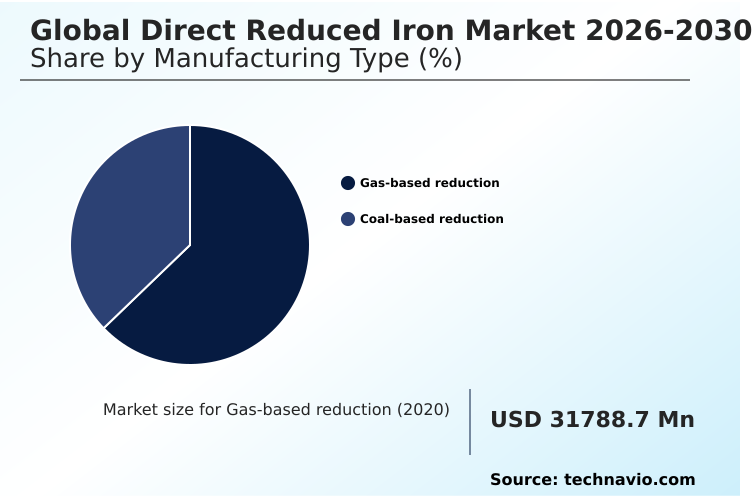
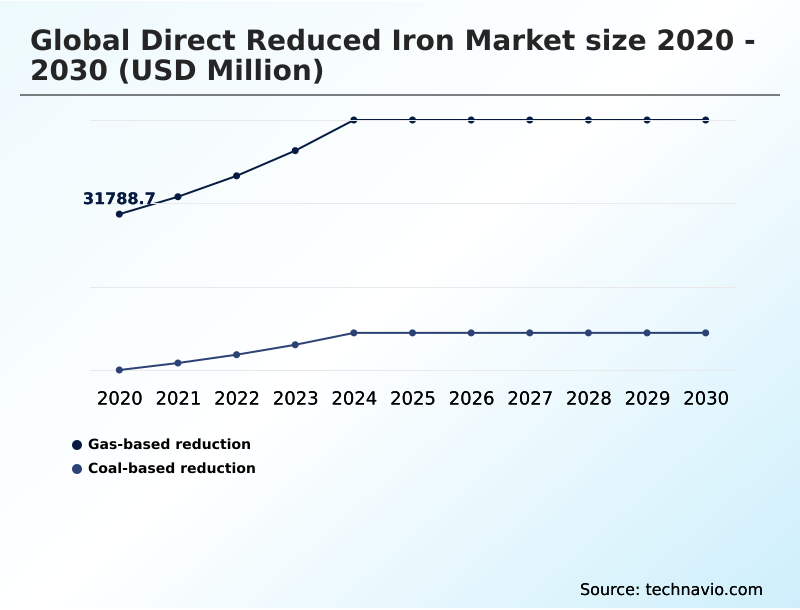
The Gas-based reduction segment was valued at USD 39.61 billion in 2024 and showed a gradual increase during the forecast period.
Regional Analysis
APAC is estimated to contribute 60.3% to the growth of the global market during the forecast period.Technavio’s analysts have elaborately explained the regional trends and drivers that shape the market during the forecast period.
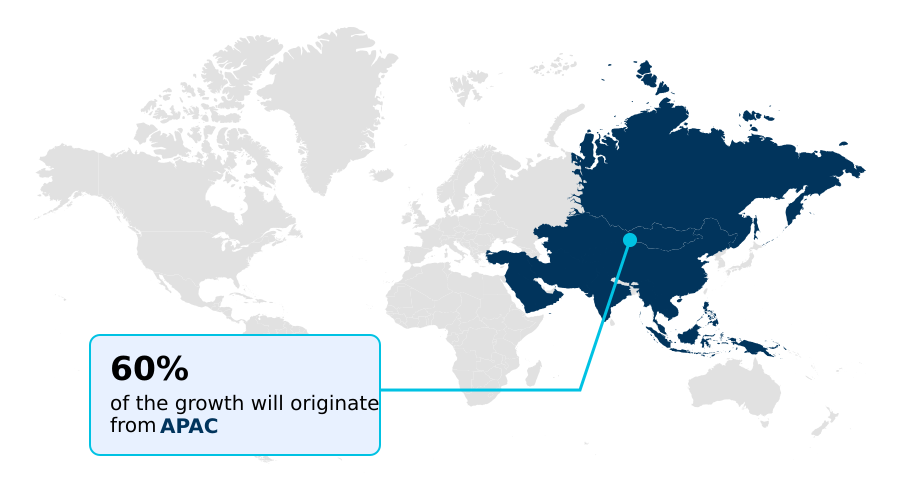
See How Direct Reduced Iron Market Demand is Rising in APAC Get Free Sample
The geographic distribution of virgin metallic production reveals distinct strategic divergences between the Middle East and APAC.
Middle Eastern facilities leverage abundant natural gas reserves to achieve a 30% higher efficiency in gas reformer technology utilization compared to coal-reliant Asian counterparts.
Conversely, operators in APAC process massive volumes of coal-based inputs through rotary kiln processing, where recent retrofits have improved waste heat recovery by 22%, mitigating localized energy costs.
This regional disparity dictates supply chain configurations; Middle Eastern hubs dominate the merchant metallics supply, exporting stabilized cargo via dry bulk handling corridors to offset ferrous scrap impurities in European and Asian electric arc furnaces.
By integrating advanced passivation treatments, these export networks have reduced maritime degradation risks by 15%, ensuring consistent metallurgical performance upon delivery.
These regional adaptations highlight how localized energy economics and raw material access fundamentally shape international trade flow and operational compliance strategies.
Market Dynamics
Our researchers analyzed the data with 2025 as the base year, along with the key drivers, trends, and challenges. A holistic analysis of drivers will help companies refine their marketing strategies to gain a competitive advantage.
- The strategic procurement of high-purity iron inputs fundamentally alters the operational dynamics of modern metallurgical manufacturing. As electric arc furnace tramp element dilution becomes a critical necessity to maintain product integrity, operators are aggressively shifting their sourcing strategies away from variable-grade recycled materials.
- The integration of virgin metallic unit scrap substitution ensures predictable chemical compositions, enabling facilities to achieve a 20% improvement in first-pass yield rates compared to relying solely on post-consumer scrap. This material consistency directly impacts operational planning by stabilizing melting behaviors and reducing the need for corrective secondary refining.
- Simultaneously, the industry is pioneering hydrogen based shaft furnace ironmaking to align with stringent environmental regulations, structurally decoupling primary metal production from fossil fuel dependency. To support these clean technology transitions across decentralized manufacturing hubs, logistics providers are optimizing hot briquetted iron maritime transit stability.
- Advanced stowage and handling protocols ensure that compacted iron products safely cross transcontinental supply lines without moisture degradation or spontaneous oxidation risks. Furthermore, facilities operating legacy infrastructure are deploying gas based direct reduction carbon capture systems to capture and sequester process emissions, extending the viable lifecycle of existing capital assets.
- By mastering these interconnected supply chain and compliance functions, industrial operators ensure continuous raw material availability, mitigate environmental liabilities, and secure long-term operational resilience in an increasingly scrutinized manufacturing environment.
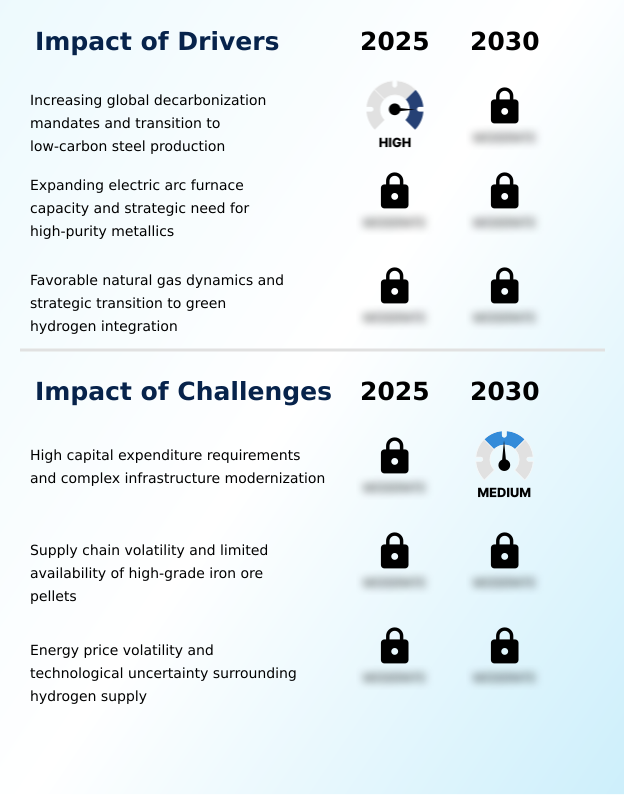
What are the key market drivers leading to the rise in the adoption of Direct Reduced Iron Industry?
- Increasing global decarbonization mandates and the strategic transition to low-carbon steel production serve as the primary catalysts accelerating demand for high-purity metallic feedstocks.
- The escalating enforcement of scope three emissions tracking compels heavy manufacturing sectors to aggressively procure low-carbon metallic inputs.
- By utilizing renewable electricity utilization alongside water electrolysis integration, operators can synthesize clean reducing gases, achieving a 35% reduction in total embedded carbon per ton of output.
- This regulatory pressure drives immediate demand for high-grade electric arc furnace feed, which acts as a pristine diluent for contaminated scrap.
- Facilities leveraging these clean virgin inputs report an 18% improvement in overall yield performance optimization by avoiding metallurgical defects associated with residual tramp elements.
- Consequently, the mandate to align with international climate targets directly accelerates the widespread deployment of shaft furnace technology, ensuring manufacturers maintain their operating licenses while simultaneously lowering long-term environmental compliance expenditures.
What are the market trends shaping the Direct Reduced Iron Industry?
- The vertical integration of iron ore mining majors into downstream metallics production represents a structural shift in raw material supply chains. This strategic consolidation ensures stable feedstock availability while optimizing production margins across the primary metallurgical sector.
- The rapid commercialization of green steel production frameworks marks a structural evolution in industrial manufacturing practices. Facilities are increasingly transitioning toward hydrogen-based reduction methodologies, which fundamentally eliminate reliance on fossil-based carbonaceous reductants. This technological shift enables operators to improve tap-to-tap times by 12% due to more predictable melting characteristics in downstream processing.
- Simultaneously, the integration of advanced pellet beneficiation techniques enhances raw material porosity, driving a 15% increase in base metallization rates during the reduction phase. By minimizing the volume of unreduced oxides, facilities reduce the demand for corrective slag foaming agents by nearly 20%, significantly lowering variable consumable costs.
- This trend reflects a broader strategic imperative where optimizing chemical reaction kinetics directly translates into measurable energy efficiency, cost stabilization, and strict alignment with global sustainability benchmarks across heavy industrial sectors.
What challenges does the Direct Reduced Iron Industry face during its growth?
- High capital expenditure requirements and the complex infrastructure modernization necessary for facility conversion present significant barriers to rapid industrial capacity expansion.
- Scaling sustainable ironmaking infrastructure encounters severe operational constraints due to volatile energy pricing and raw material scarcity. The reliance on specialized direct reduction grade pellets creates persistent supply bottlenecks, driving procurement costs up by 25% compared to standard blast furnace feedstocks.
- Additionally, managing highly reactive process flue gases requires complex safety infrastructure, increasing baseline capital expenditure by nearly 30% for greenfield projects. The necessity for rigorous inert gas purging and specialized maritime transit stabilization protocols further inflates logistics overhead, straining operating margins for merchant exporters.
- Without concurrent advancements in pneumatic hot charging capabilities to preserve sensible thermal heat recovery, facilities suffer a 15% thermal efficiency loss during transfer operations. These compounding structural and logistical hurdles significantly delay widespread capacity expansion, forcing operators to balance aggressive decarbonization goals with immediate financial viability constraints.
Exclusive Technavio Analysis on Customer Landscape
The direct reduced iron market forecasting report includes the adoption lifecycle of the market, covering from the innovator’s stage to the laggard’s stage. It focuses on adoption rates in different regions based on penetration. Furthermore, the direct reduced iron market report also includes key purchase criteria and drivers of price sensitivity to help companies evaluate and develop their market growth analysis strategies.
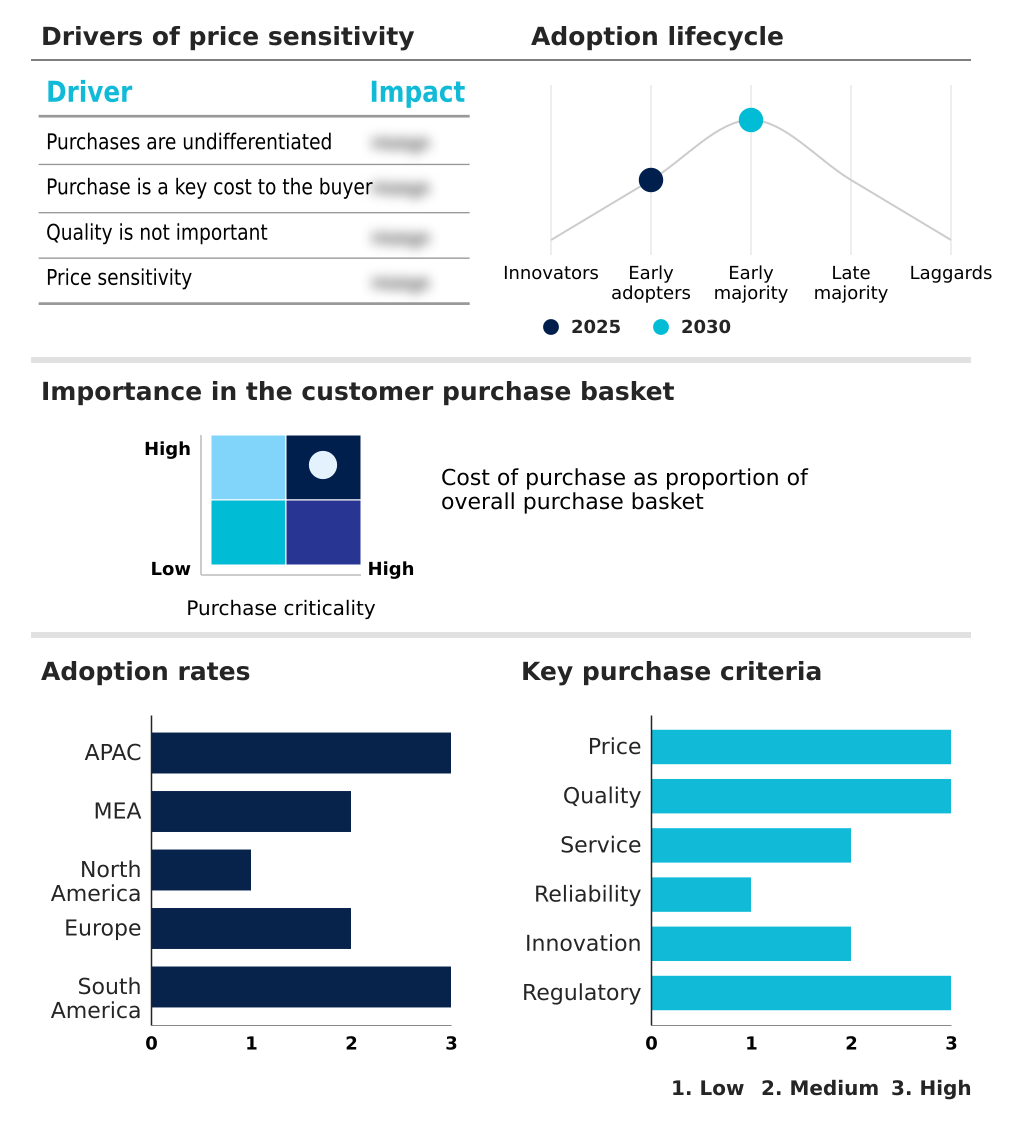
Customer Landscape of Direct Reduced Iron Industry
Competitive Landscape
Companies are implementing various strategies, such as strategic alliances, direct reduced iron market forecast, partnerships, mergers and acquisitions, geographical expansion, and product/service launches, to enhance their presence in the industry.
ArcelorMittal S.A. - The provider delivers premium direct reduced iron and compacted metallic solutions tailored to optimize electric arc furnace efficiency and reduce baseline industrial emissions.
The industry research and growth report includes detailed analyses of the competitive landscape of the market and information about key companies, including:
- ArcelorMittal S.A.
- Bharat Engineering Works Pvt Ltd
- Bihar Foundry and Castings Ltd
- Chaman Metallics Ltd
- Cleveland Cliffs Inc.
- EMSTEEL
- Godawari Power and Ispat Ltd
- Jindal Steel and Power Ltd
- JSC Metalloinvest
- JSW Steel Ltd.
- Lloyds Metals and Energy Ltd.
- Mobarakeh Steel Co
- Nucor Corp.
- Qatar Steel Co
- Rashmi Group
- Salzgitter AG
- Saudi Iron and Steel Co
- Tata Steel Ltd.
- Ternium S.A.
- voestalpine AG
Qualitative and quantitative analysis of companies has been conducted to help clients understand the wider business environment as well as the strengths and weaknesses of key industry players. Data is qualitatively analyzed to categorize companies as pure play, category-focused, industry-focused, and diversified; it is quantitatively analyzed to categorize companies as dominant, leading, strong, tentative, and weak.
Recent Development and News in Direct reduced iron market
- In the Steel industry, the implementation of the European Union carbon border adjustment framework imposed strict financial penalties on high-emission imports, directly impacting Direct Reduced Iron demand by accelerating the adoption of low-carbon ironmaking technologies that reduce carbon footprints by up to 40%.
- The transition toward electric vehicle manufacturing necessitated advanced high-strength sheet metals with strict chemical tolerances, directly impacting Direct Reduced Iron demand by requiring a 25% increase in high-purity metallics to counteract ferrous scrap impurities during electric arc furnace feed processing.
- Stricter industrial emissions trading compliance protocols across APAC compelled integrated facilities to lower coke consumption rates, directly impacting Direct Reduced Iron demand by driving a 30% rise in the utilization of hot briquetted iron as a cleaner burden enricher in primary furnaces.
- The scaling of commercial water electrolysis integration provided steelmakers with scalable green hydrogen supplies, directly impacting Direct Reduced Iron demand by enabling a 20% efficiency gain in hydrogen-based reduction projects designed for fossil-free green steel production.
Dive into Technavio’s robust research methodology, blending expert interviews, extensive data synthesis, and validated models for unparalleled Direct Reduced Iron Market insights. See full methodology.
| Market Scope | |
|---|---|
| Page number | 296 |
| Base year | 2025 |
| Historic period | 2020-2024 |
| Forecast period | 2026-2030 |
| Growth momentum & CAGR | Accelerate at a CAGR of 7.8% |
| Market growth 2026-2030 | USD 30109.4 million |
| Market structure | Fragmented |
| YoY growth 2025-2026(%) | 7.3% |
| Key countries | India, China, Japan, South Korea, Australia, Indonesia, Turkey, Saudi Arabia, UAE, South Africa, Israel, US, Mexico, Canada, Germany, Italy, Spain, France, UK, The Netherlands, Argentina, Brazil and Colombia |
| Competitive landscape | Leading Companies, Market Positioning of Companies, Competitive Strategies, and Industry Risks |
Research Analyst Overview
- The transition toward decarbonized metallurgical processing requires fundamental adjustments to corporate capital allocation and raw material procurement strategies. Decision-makers are increasingly prioritizing investments in syngas optimization and carbon capture integration to future-proof their asset portfolios against tightening environmental regulations.
- By adopting midrex process equivalents, facilities achieve a 25% reduction in baseline processing emissions compared to traditional blast furnace routes, directly lowering compliance costs associated with carbon taxation frameworks. This strategic shift necessitates stable access to direct reduction grade pellets, prompting boardroom executives to forge long-term off-take agreements with global mining conglomerates.
- The utilization of sponge iron compaction ensures safe, long-distance transport of these vital inputs, mitigating supply chain volatility. Furthermore, integrating these high-purity inputs as scrap substitute feedstocks enhances downstream product quality, allowing manufacturers to command premium pricing in specialized automotive and infrastructure markets.
- By aligning technological upgrades with proactive risk management, industrial leaders stabilize operating margins, optimize resource utilization, and secure a competitive advantage in a heavily regulated manufacturing landscape.
What are the Key Data Covered in this Direct Reduced Iron Market Research and Growth Report?
-
What is the expected growth of the Direct Reduced Iron Market between 2026 and 2030?
-
USD 30.11 billion, at a CAGR of 7.8%
-
-
What segmentation does the market report cover?
-
The report is segmented by Manufacturing Type (Gas-based reduction, and Coal-based reduction), End-user (Mini steel mills, Integrated steel plants, and Automotive and construction sectors), Product Type (Cold DRI, Hot DRI, and Hot briquetted iron) and Geography (APAC, Middle East and Africa, North America, Europe, South America)
-
-
Which regions are analyzed in the report?
-
APAC, Middle East and Africa, North America, Europe and South America
-
-
What are the key growth drivers and market challenges?
-
Increasing global decarbonization mandates and transition to low-carbon steel production, High capital expenditure requirements and complex infrastructure modernization
-
-
Who are the major players in the Direct Reduced Iron Market?
-
ArcelorMittal S.A., Bharat Engineering Works Pvt Ltd, Bihar Foundry and Castings Ltd, Chaman Metallics Ltd, Cleveland Cliffs Inc., EMSTEEL, Godawari Power and Ispat Ltd, Jindal Steel and Power Ltd, JSC Metalloinvest, JSW Steel Ltd., Lloyds Metals and Energy Ltd., Mobarakeh Steel Co, Nucor Corp., Qatar Steel Co, Rashmi Group, Salzgitter AG, Saudi Iron and Steel Co, Tata Steel Ltd., Ternium S.A. and voestalpine AG
-
Market Research Insights
- The structural transformation of primary metallurgy relies heavily on advanced metallic inputs to achieve critical emissions trading compliance and stabilize supply chains. Industrial facilities incorporating premium merchant metallics supply observe a 20% reduction in electrode consumption reduction, directly lowering variable melting costs.
- Furthermore, operators leveraging precise chemical purity specifications report a 15% decrease in secondary refining bottlenecks, accelerating overall production cycles. Integrating high-quality virgin iron units also extends furnace refractory linings lifespan by nearly 18%, minimizing maintenance-related operational halts.
- These measurable efficiency gains demonstrate how optimizing feedstock quality inherently improves asset utilization and operational profitability while aligning manufacturing footprints with mandatory environmental performance benchmarks.
We can help! Our analysts can customize this direct reduced iron market research report to meet your requirements.
 RIA -

