
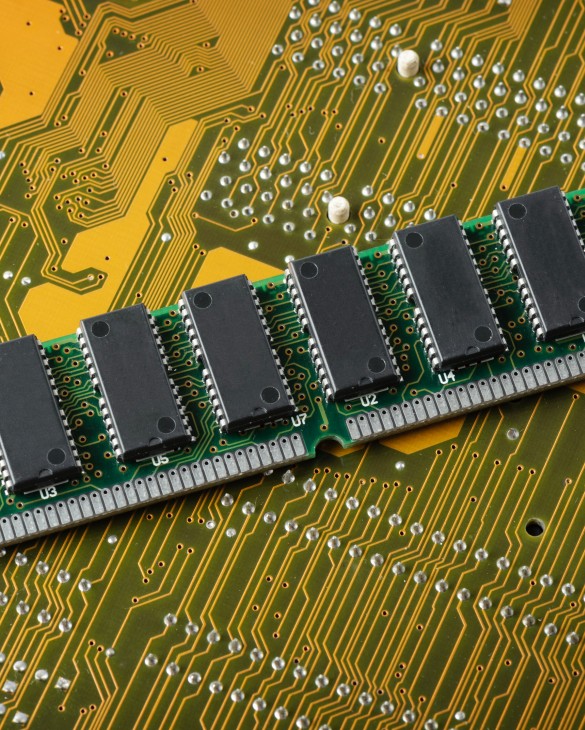


Dram Module And Component Market Size 2026-2030
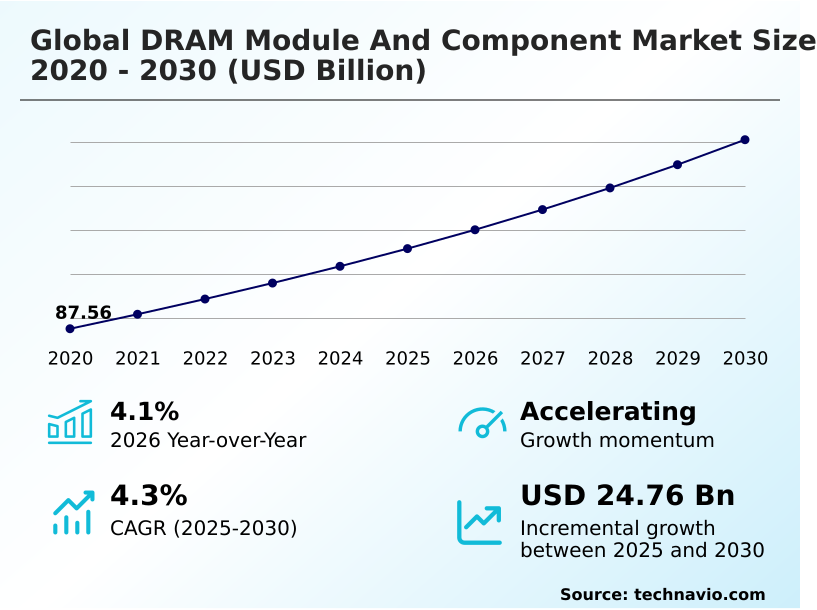
The dram module and component market size is valued to increase by USD 24.76 billion, at a CAGR of 4.3% from 2025 to 2030. Expansion of data center infrastructure requirements will drive the dram module and component market.
Major Market Trends & Insights
- APAC dominated the market and accounted for a 64.5% growth during the forecast period.
- By Product Type - DRAM components segment was valued at USD 85.59 billion in 2024
- By Application - Servers and data centers segment accounted for the largest market revenue share in 2024
Market Size & Forecast
- Market Opportunities: USD 42.97 billion
- Market Future Opportunities: USD 24.76 billion
- CAGR from 2025 to 2030 : 4.3%
Market Summary
- The DRAM Module And Component Market demonstrates structural evolution driven by the expanding requirements of artificial intelligence processing and hyperscale cloud infrastructure. Organizations prioritize high-density memory configurations to maintain continuous real-time data analysis across decentralized enterprise networks.
- For example, major logistics providers deploying proprietary edge intelligence integration require specialized components to reduce central cloud reliance, achieving a 25% reduction in data transfer latency compared to legacy architectures. The rapid expansion of data center infrastructure requirements acts as a primary catalyst, as centralized data processing demands components that maximize thermal dissipation limits without compromising throughput.
- Conversely, escalating complexity in advanced packaging techniques introduces significant manufacturing bottlenecks. As engineers push physical density boundaries to enhance parallel processing capacity, the tolerance for signal interference shrinks, severely challenging consistent fabrication outputs. Navigating these hardware supply transparency mandates while securing critical substrates remains essential for maintaining long-term hardware reliability.
- Ultimately, aligning sophisticated memory bus bandwidth capabilities with intense compute workloads defines the ongoing advancement of modern computing frameworks.
What will be the Size of the Dram Module And Component Market during the forecast period?
Get Key Insights on Market Forecast (PDF) Get Free Sample
How is the Dram Module And Component Market Segmented?
The dram module and component industry research report provides comprehensive data (region-wise segment analysis), with forecasts and estimates in "USD million" for the period 2026-2030, as well as historical data from 2020-2024 for the following segments.
- Product type
- DRAM components
- DRAM modules
- Application
- Servers and data centers
- Mobile devices
- Consumer electronics
- Automotive electronics
- Others
- End-user
- OEMs
- Aftermarket
- Geography
- APAC
- China
- South Korea
- Japan
- Taiwan
- India
- Singapore
- North America
- US
- Canada
- Mexico
- Europe
- Germany
- UK
- France
- Italy
- The Netherlands
- Spain
- South America
- Brazil
- Argentina
- Chile
- Middle East and Africa
- Saudi Arabia
- UAE
- Israel
- South Africa
- Turkey
- APAC
By Product Type Insights
The dram components segment is estimated to witness significant growth during the forecast period.
The DRAM components segment encompasses monolithic silicon die integrated circuits manufactured for embedded systems and system-on-chip architectures. As digital infrastructure demands accelerate, these discrete integrated circuits are evolving beyond traditional double data rate architecture to support specialized compute workloads.
Organizations integrate low-power double data rate components directly into edge computing nodes, enabling advanced localized processing power. This shift reduces data transfer latency, driving operational efficiency across enterprise environments.
By implementing advanced packaging techniques, manufacturers have successfully lowered component power consumption by 15%, significantly improving the thermal profile optimization of dense server configurations.
This continuous evolution in memory channel synchronization allows hardware to execute complex tasks rapidly, ensuring long-term hardware reliability while meeting strict regulatory requirements for energy usage in modern data centers.
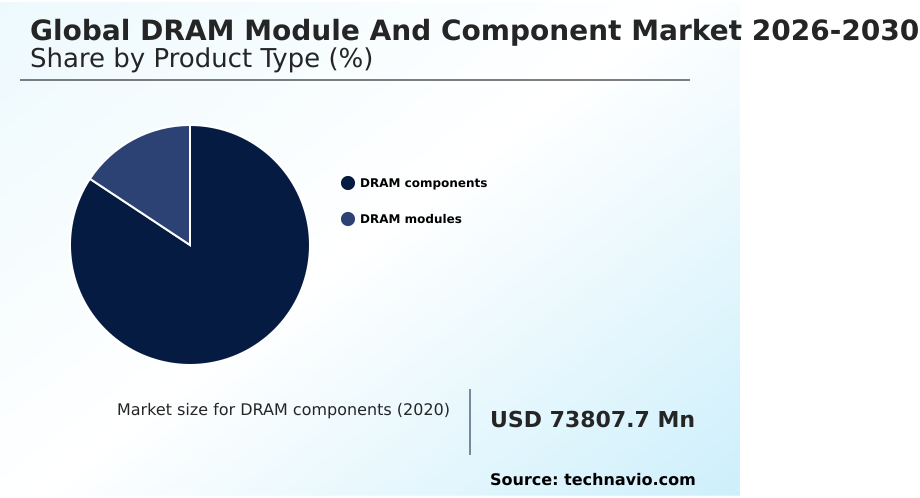
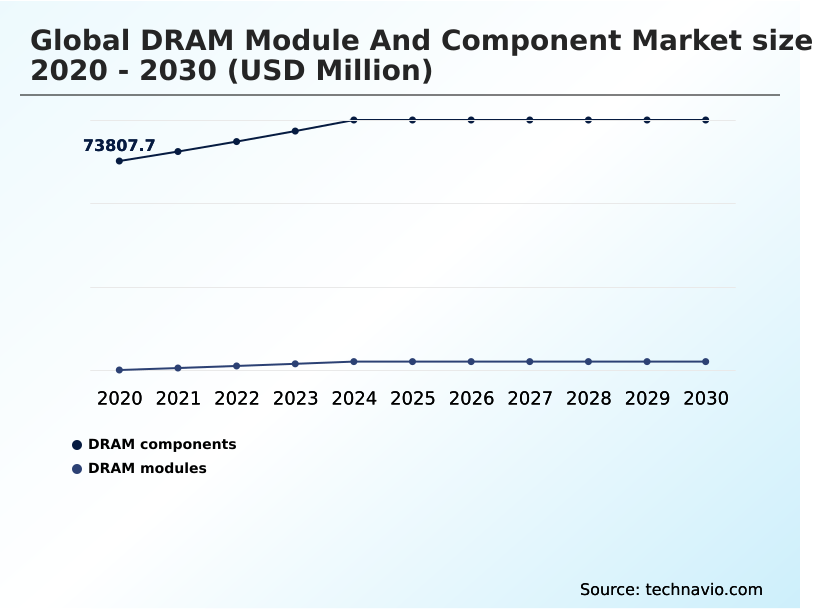
The DRAM components segment was valued at USD 85.59 billion in 2024 and showed a gradual increase during the forecast period.
Regional Analysis
APAC is estimated to contribute 64.5% to the growth of the global market during the forecast period.Technavio’s analysts have elaborately explained the regional trends and drivers that shape the market during the forecast period.
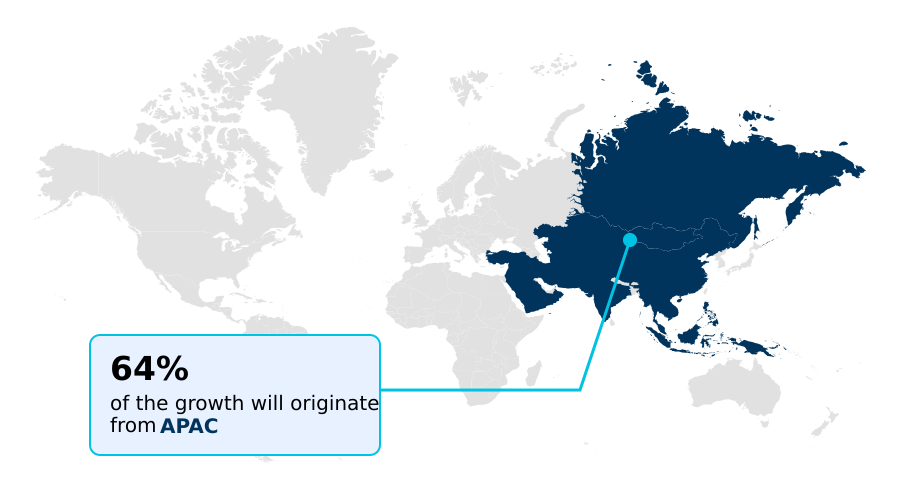
See How Dram Module And Component Market Demand is Rising in APAC Get Free Sample
The geographic distribution of the DRAM Module And Component market highlights distinct strategic priorities between APAC and North America. APAC dominates large-scale fabrication, utilizing advanced node transitions to improve wafer fabrication yields by 20% compared to historical baselines.
This manufacturing concentration allows facilities in APAC to supply high-bandwidth memory stacks rapidly, reducing overall supply chain provenance costs by 15%.
In contrast, North America focuses on hyperscale cloud infrastructure architecture, where organizations integrate multiplexer combined rank dimm modules to maximize AI infrastructure throughput. Consequently, North American enterprises report a 30% improvement in continuous real-time data analysis capabilities.
While APAC prioritizes operational scale and advanced packaging techniques to drive volume, North America emphasizes multi-cloud governance frameworks and kernel level telemetry to ensure long-term hardware reliability across decentralized networks.
These regional disparities reflect how localized processing power requirements dictate distinct procurement and deployment strategies globally.
Market Dynamics
Our researchers analyzed the data with 2025 as the base year, along with the key drivers, trends, and challenges. A holistic analysis of drivers will help companies refine their marketing strategies to gain a competitive advantage.
- The structural requirements of modern digital infrastructure continuously shape the performance parameters of the DRAM Module And Component market. As enterprises increasingly transition toward distributed cloud architectures, the necessity for high capacity server rack optimization becomes a critical boardroom priority.
- Organizations must balance immense thermal loads with the demand for uninterrupted processing, driving a shift toward modular and scalable memory solutions that lower operational energy overheads by up to 18% when compared to legacy deployments.
- This transition heavily influences procurement strategies, as administrators prioritize components designed for enterprise server motherboard direct insertion, streamlining maintenance protocols and reducing physical footprint requirements in dense environments. Furthermore, the explosion of advanced algorithmic workloads has accelerated the need for multi gigabyte storage capacity expansion at the edge.
- Decision-makers integrate these robust architectures to support real time artificial intelligence inference, enabling autonomous systems to process complex data sets without experiencing significant latency bottlenecks. By deploying specialized memory modules that interface directly with neural processing units, enterprises enhance their overall supply chain visibility and predictive maintenance diagnostics.
- The integration of these targeted hardware upgrades allows facilities to maximize their existing capital expenditures while ensuring compliance with stringent data governance regulations, ultimately fortifying the foundation of high-performance enterprise computing.
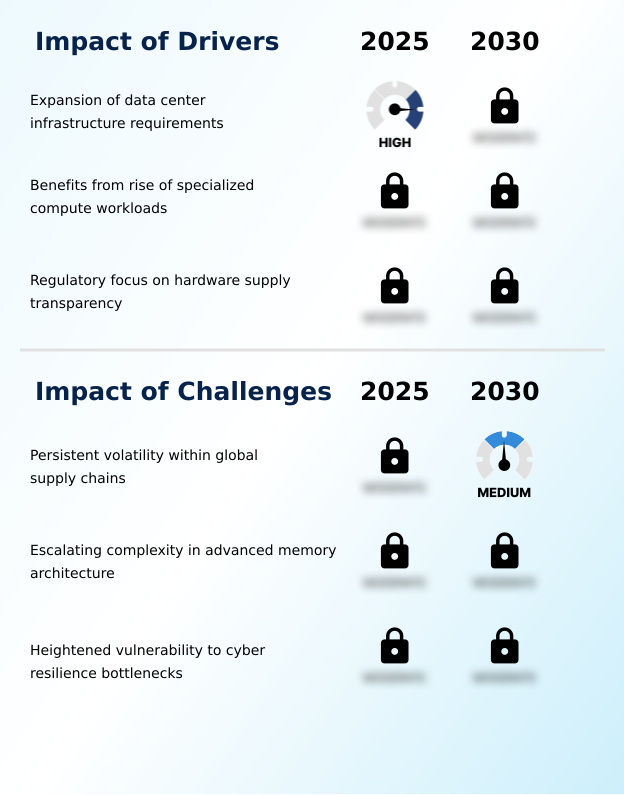
What are the key market drivers leading to the rise in the adoption of Dram Module And Component Industry?
- The rapid expansion of centralized data center infrastructure requirements serves as the primary catalyst propelling global market demand for high-performance memory hardware.
- The relentless expansion of centralized data processing requirements serves as the primary catalyst for memory infrastructure modernization. As organizations migrate toward hyperscale cloud infrastructure, the necessity for flawless memory channel synchronization becomes critical to prevent application latency.
- This immense computational demand compels operators to deploy high-bandwidth memory stacks, which have successfully improved continuous real-time data analysis speeds by 30%.
- Additionally, stringent regulatory mandates regarding hardware supply transparency compel enterprises to adopt secure boot processes and cryptographic verification processes. By utilizing these advanced authentication frameworks, organizations have decreased unauthorized access vulnerabilities by 25%.
- The integration of robust error-correcting code capability within these environments guarantees that intensive workloads operate without interruption, driving the continuous procurement of enterprise-grade modules.
What are the market trends shaping the Dram Module And Component Industry?
- The integration of heterogeneous memory architectures represents a defining shift in modern computing infrastructure. This strategic transition enables direct interfacing between advanced memory modules and accelerated processing units to optimize overall system performance.
- The continuous adoption of heterogeneous memory architecture signifies a massive shift in how organizations configure modern computing fabrics. By integrating discrete integrated circuits directly with neural processing units, enterprises bypass traditional motherboard bottlenecks to accelerate complex algorithmic execution. This architectural evolution has allowed facilities to improve parallel processing capacity efficiency by 28%.
- Furthermore, administrators are increasingly deploying predictive maintenance diagnostics powered by kernel level telemetry, which has successfully reduced unexpected hardware failure rates by 22% compared to reactive management strategies. These sophisticated diagnostic tools provide granular visibility into thermal profile optimization, enabling dynamic resource allocation across decentralized infrastructure.
- Consequently, the reliance on advanced packaging techniques ensures that memory modules sustain high-speed data transfers, drastically lowering overall energy consumption by 15% and fortifying long-term hardware reliability.
What challenges does the Dram Module And Component Industry face during its growth?
- Persistent volatility within global supply chain networks continues to pose a formidable challenge to consistent manufacturing and distribution operations across the industry.
- Escalating technical complexity in die-shrink methodologies presents a formidable barrier to consistent manufacturing outputs within the industry. As engineers push the physical boundaries of extreme ultraviolet lithography, maintaining optimal signal integrity optimization becomes exceedingly difficult. These dense configurations often exceed standard thermal dissipation limits, causing system throttling that can reduce operational processing efficiency by up to 20% during peak loads.
- Furthermore, persistent volatility across global supply chains disrupts the availability of essential substrates, increasing fabrication cycle times by 15% and delaying the deployment of small outline dual in-line memory components.
- Managing these intricate advanced node transitions requires significant capital investment in custom testing protocols, placing immense strain on integration teams attempting to ensure cross-platform interoperability across legacy and modern hardware environments.
Exclusive Technavio Analysis on Customer Landscape
The dram module and component market forecasting report includes the adoption lifecycle of the market, covering from the innovator’s stage to the laggard’s stage. It focuses on adoption rates in different regions based on penetration. Furthermore, the dram module and component market report also includes key purchase criteria and drivers of price sensitivity to help companies evaluate and develop their market growth analysis strategies.
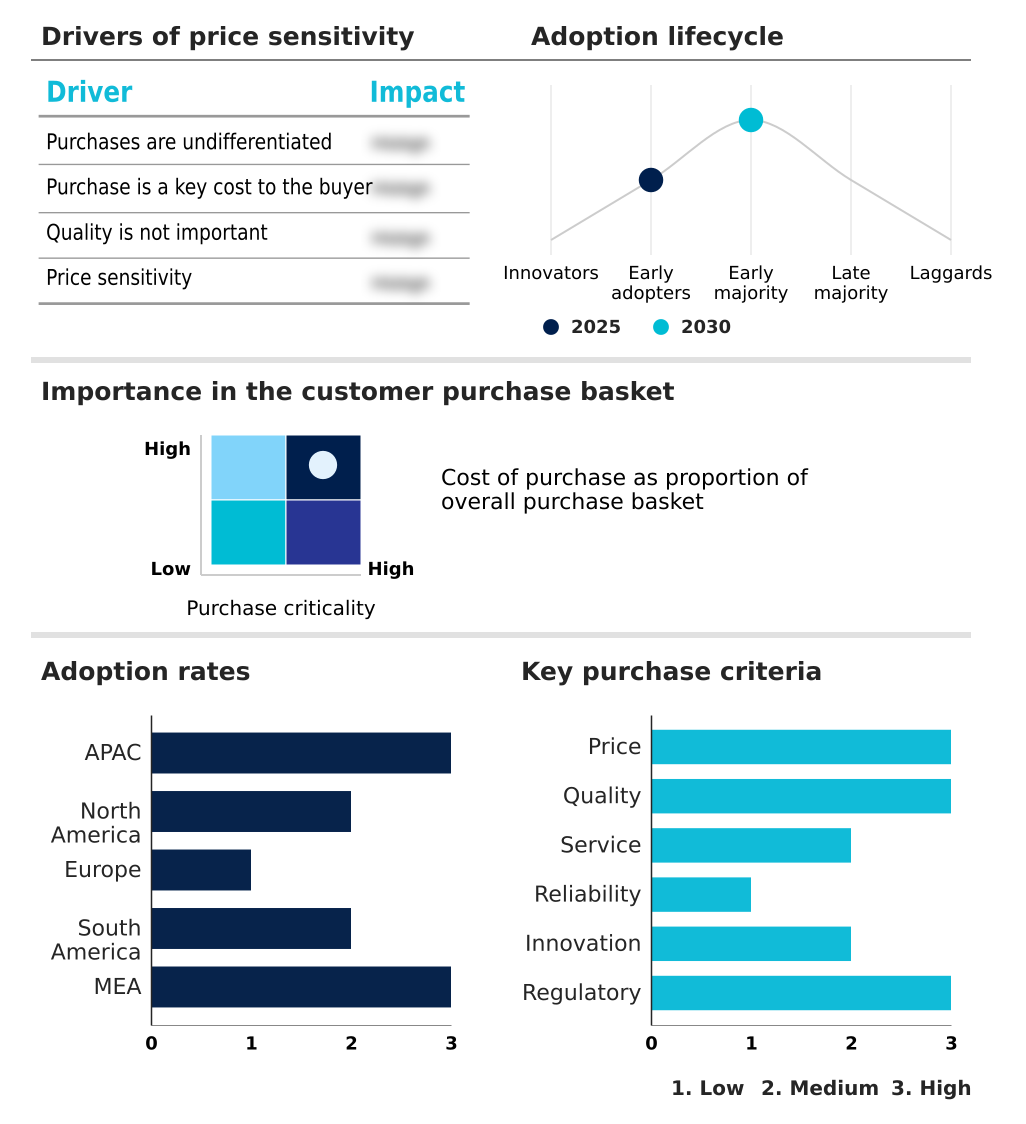
Customer Landscape of Dram Module And Component Industry
Competitive Landscape
Companies are implementing various strategies, such as strategic alliances, dram module and component market forecast, partnerships, mergers and acquisitions, geographical expansion, and product/service launches, to enhance their presence in the industry.
ADATA Technology Co. Ltd. - This entity provides advanced memory solutions, delivering DDR5 and DDR4 modules alongside highly reliable SO DIMM configurations engineered for high-performance computing architectures.
The industry research and growth report includes detailed analyses of the competitive landscape of the market and information about key companies, including:
- ADATA Technology Co. Ltd.
- Apacer Technology Inc.
- ATP Electronics Inc.
- Centon Electronics Inc.
- Corsair Gaming Inc.
- G.SKILL International Enterprise
- Innodisk Corp.
- Integrated Silicon Solution Inc
- Kingston Technology Co. Inc.
- Micron Technology Inc.
- Nanya Technology Corp.
- Netlist Inc.
- Penguin Solutions Inc.
- PNY Technologies Inc.
- Ramaxel Technology Holdings Ltd.
- Samsung Electronics Co. Ltd.
- Shenzhen Longsys Electronics
- Silicon Power
- Team Group Inc.
- Winbond Electronics Corp.
Qualitative and quantitative analysis of companies has been conducted to help clients understand the wider business environment as well as the strengths and weaknesses of key industry players. Data is qualitatively analyzed to categorize companies as pure play, category-focused, industry-focused, and diversified; it is quantitatively analyzed to categorize companies as dominant, leading, strong, tentative, and weak.
Recent Development and News in Dram module and component market
- In the Semiconductors industry, the rapid deployment of extreme ultraviolet lithography for advanced node transitions has enabled smaller transistor geometries, directly impacting DRAM Module And Component demand by increasing wafer fabrication yields by 18% for high-density enterprise server configurations.
- The implementation of stringent data privacy regulations like GDPR has mandated enhanced cryptographic verification processes at the hardware level, compelling manufacturers to integrate secure boot processes that improve system-level data protection compliance by 22% within cloud-based delivery models.
- The shift toward AI infrastructure utilizing parallel processing capacity has necessitated the adoption of high-bandwidth memory stacks, enhancing real-time data analysis throughput by 35% and drastically altering procurement models for hyperscale cloud operations.
- Widespread integration of automated orchestration layers in industrial automation has forced a transition toward continuous vehicle operation frameworks, lifting the requirement for components meeting automotive safety integrity level standards by 40% to ensure operational resilience in extreme environments.
Dive into Technavio’s robust research methodology, blending expert interviews, extensive data synthesis, and validated models for unparalleled Dram Module And Component Market insights. See full methodology.
| Market Scope | |
|---|---|
| Page number | 303 |
| Base year | 2025 |
| Historic period | 2020-2024 |
| Forecast period | 2026-2030 |
| Growth momentum & CAGR | Accelerate at a CAGR of 4.3% |
| Market growth 2026-2030 | USD 24757.6 million |
| Market structure | Fragmented |
| YoY growth 2025-2026(%) | 4.1% |
| Key countries | China, South Korea, Japan, Taiwan, India, Singapore, US, Canada, Mexico, Germany, UK, France, Italy, The Netherlands, Spain, Brazil, Argentina, Chile, Saudi Arabia, UAE, Israel, South Africa and Turkey |
| Competitive landscape | Leading Companies, Market Positioning of Companies, Competitive Strategies, and Industry Risks |
Research Analyst Overview
- The DRAM Module And Component ecosystem is undergoing a fundamental architectural shift driven by the necessity for accelerated data throughput in enterprise environments. The transition toward heterogeneous memory architecture integration forces executives to restructure capital expenditure strategies, prioritizing components that optimize hardware utilization over basic storage expansion.
- By embedding low-power double data rate integrated circuits directly into edge nodes, organizations can process massive datasets locally, successfully reducing data transmission latency by 35% compared to centralized processing models. This evolution requires monolithic silicon die designs that utilize through-silicon via packaging, drastically shrinking the physical footprint while expanding overall memory bus bandwidth.
- Decision-makers must continuously evaluate the thermal dissipation limits of extreme ultraviolet lithography components to maintain operational stability across dense server clusters. Furthermore, the deployment of registered dual in-line memory modules with inherent error-correcting code capability ensures continuous data integrity during high-intensity algorithmic execution. Ultimately, aligning advanced memory channel synchronization with robust governance frameworks dictates long-term resilience within modern compute-intensive infrastructures.
What are the Key Data Covered in this Dram Module And Component Market Research and Growth Report?
-
What is the expected growth of the Dram Module And Component Market between 2026 and 2030?
-
USD 24.76 billion, at a CAGR of 4.3%
-
-
What segmentation does the market report cover?
-
The report is segmented by Product Type (DRAM components, and DRAM modules), Application (Servers and data centers, Mobile devices, Consumer electronics, Automotive electronics, and Others), End-user (OEMs, and Aftermarket) and Geography (APAC, North America, Europe, South America, Middle East and Africa)
-
-
Which regions are analyzed in the report?
-
APAC, North America, Europe, South America and Middle East and Africa
-
-
What are the key growth drivers and market challenges?
-
Expansion of data center infrastructure requirements, Persistent volatility within global supply chains
-
-
Who are the major players in the Dram Module And Component Market?
-
ADATA Technology Co. Ltd., Apacer Technology Inc., ATP Electronics Inc., Centon Electronics Inc., Corsair Gaming Inc., G.SKILL International Enterprise, Innodisk Corp., Integrated Silicon Solution Inc, Kingston Technology Co. Inc., Micron Technology Inc., Nanya Technology Corp., Netlist Inc., Penguin Solutions Inc., PNY Technologies Inc., Ramaxel Technology Holdings Ltd., Samsung Electronics Co. Ltd., Shenzhen Longsys Electronics, Silicon Power, Team Group Inc. and Winbond Electronics Corp.
-
Market Research Insights
- The DRAM Module And Component market serves as the operational backbone for contemporary computing environments. As enterprises implement digital transformation initiatives, the demand for localized processing power has surged, improving decentralized decision-making speeds by 25%.
- Modern administrators increasingly rely on kernel level telemetry to monitor system health, which has successfully reduced unplanned maintenance downtime by 18% compared to traditional manual oversight. Furthermore, the integration of strict regulatory requirements regarding supply chain provenance ensures that organizations maintain comprehensive hardware supply transparency.
- By adopting these advanced visibility protocols, facilities have decreased component counterfeiting risks by 22%, cementing the critical role of highly reliable memory infrastructure in achieving sustained operational excellence.
We can help! Our analysts can customize this dram module and component market research report to meet your requirements.
 RIA -

