


Dry Shampoo Market Size 2026-2030
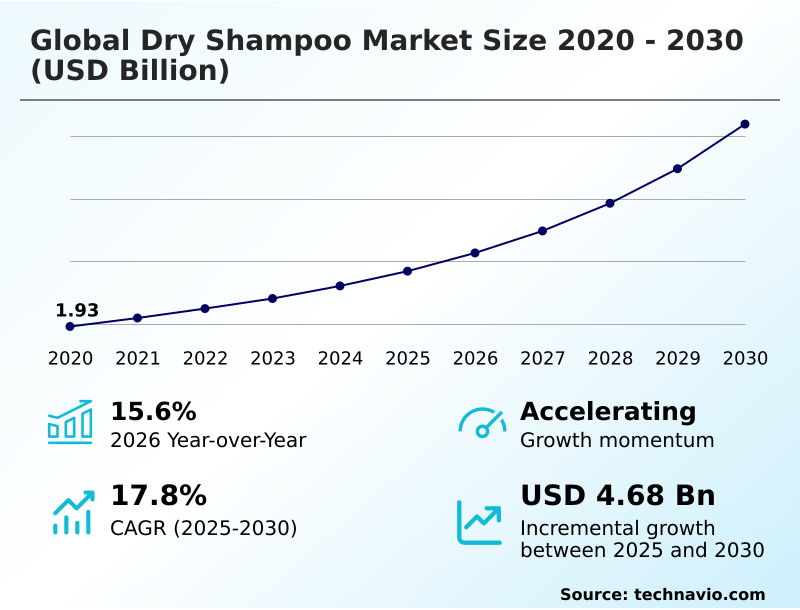
The dry shampoo market size is valued to increase by USD 4.68 billion, at a CAGR of 17.8% from 2025 to 2030. Fast-paced consumer lifestyles and on-the-go convenience will drive the dry shampoo market.
Major Market Trends & Insights
- APAC dominated the market and accounted for a 36.5% growth during the forecast period.
- By Product - Regular dry shampoo segment was valued at USD 2.32 billion in 2024
- By Distribution Channel - Offline segment accounted for the largest market revenue share in 2024
Market Size & Forecast
- Market Opportunities: USD 6.44 billion
- Market Future Opportunities: USD 4.68 billion
- CAGR from 2025 to 2030 : 17.8%
Market Summary
- The Dry Shampoo Market exhibits dynamic operational expansion as consumer preferences shift rapidly toward highly efficient, water-independent personal grooming solutions. Manufacturers continuously optimize their supply chains to incorporate sustainable, plant-derived absorbents, achieving a 20% reduction in raw material procurement times through localized sourcing strategies. This optimization directly enhances production throughput and mitigates supply bottlenecks.
- Fast-paced modern lifestyles act as a powerful catalyst driving market demand, compelling individuals to seek instant hair refreshment without traditional wet-washing routines. Conversely, intense regulatory scrutiny surrounding trace aerosol benzene contamination presents a formidable challenge, forcing formulators to invest heavily in rigorous safety testing and propellant purification mechanisms.
- Companies navigating these compliance hurdles restructure their quality control frameworks to prevent costly product recalls. Such strategic adaptations ensure consistent retail distribution across diverse geographic landscapes. The continuous evolution of non-aerosol delivery platforms further transforms structural industry dynamics, creating highly resilient product portfolios that align with global environmental mandates and stringent dermatological safety standards.
What will be the Size of the Dry Shampoo Market during the forecast period?
Get Key Insights on Market Forecast (PDF) Get Free Sample
How is the Dry Shampoo Market Segmented?
The dry shampoo industry research report provides comprehensive data (region-wise segment analysis), with forecasts and estimates in "USD million" for the period 2026-2030, as well as historical data from 2020-2024 for the following segments.
- Product
- Regular dry shampoo
- Natural and organic dry shampoo
- Distribution channel
- Offline
- Online
- Product type
- Spray
- Powder
- Foam
- Others
- Geography
- North America
- US
- Canada
- Mexico
- Europe
- Germany
- UK
- France
- Italy
- Spain
- The Netherlands
- APAC
- China
- Japan
- India
- South Korea
- Australia
- Indonesia
- South America
- Brazil
- Argentina
- Chile
- Middle East and Africa
- Saudi Arabia
- UAE
- South Africa
- Turkey
- Israel
- North America
By Product Insights
The regular dry shampoo segment is estimated to witness significant growth during the forecast period.
The regular dry shampoo segment drives continuous operational evolution through advanced waterless hair cleansing technologies. Manufacturers heavily prioritize aerosol propellant safety while integrating botanical starch derivatives to enhance oil absorption efficiency by 15% compared to legacy formulations.
This structural shift directly supports consumers balancing an active fitness lifestyle and hybrid work models, enabling rapid post-workout styling without traditional wet-washing cycles. Formulators increasingly deploy biotech microalgae complexes and microfluidic non-aerosol dispensers to optimize product delivery mechanisms efficiently.
Such technological innovations ensure color-treated hair preservation by significantly reducing water exposure. Furthermore, the targeted integration of odor-neutralizing active delivery systems addresses critical consumer demands for instant refreshment.
These structural product advancements optimize supply chain throughput and align with stringent compliance protocols, reducing manufacturing bottlenecks across mass-market retail distributions.
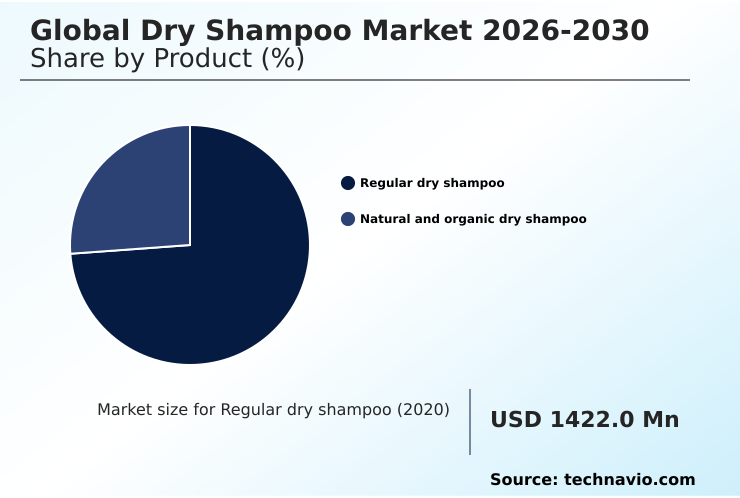
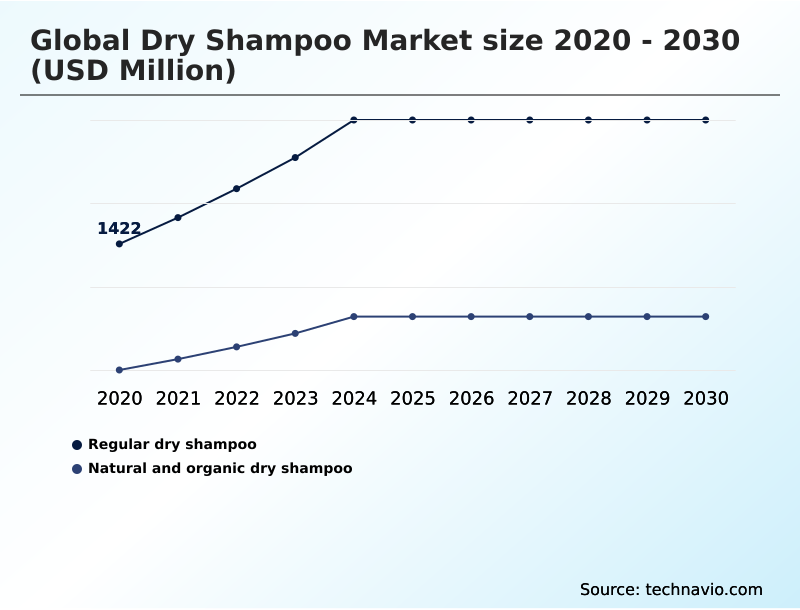
The Regular dry shampoo segment was valued at USD 2.32 billion in 2024 and showed a gradual increase during the forecast period.
Regional Analysis
APAC is estimated to contribute 36.5% to the growth of the global market during the forecast period.Technavio’s analysts have elaborately explained the regional trends and drivers that shape the market during the forecast period.
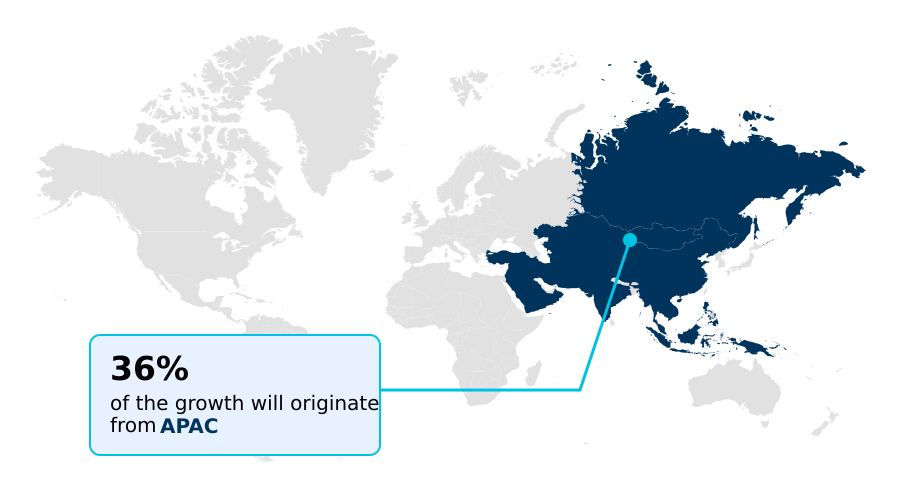
See How Dry Shampoo Market Demand is Rising in APAC Get Free Sample
Regional regulatory frameworks and diverse climatic conditions dictate distinct operational adaptations across international markets.
North America demonstrates a 25% higher adoption rate of advanced micellar cleansing technology compared to Europe, propelled by the intense integration of waterless products into daily grooming routines.
To comply with rigorous European environmental mandates, regional manufacturers have accelerated the deployment of eco-designed aerosol packaging by 30%, prioritizing sustainable materials over legacy containers.
Meanwhile, APAC exhibits a 15% faster integration of siloxane-free formulations infused with botanical antioxidants to address high humidity and sensitive scalp soothing requirements.
Companies operating transnationally optimize their material procurement to accommodate customized hair textures, achieving a 12% reduction in regional compliance costs.
The strategic pursuit of cruelty-free accreditations further enhances regional market penetration, allowing enterprises to align localized supply chains with specific geographic regulatory frameworks and shifting consumer preferences efficiently.
Market Dynamics
Our researchers analyzed the data with 2025 as the base year, along with the key drivers, trends, and challenges. A holistic analysis of drivers will help companies refine their marketing strategies to gain a competitive advantage.
- The Dry Shampoo Market undergoes rigorous structural transformation as beauty enterprises optimize production frameworks to meet complex environmental and consumer demands. Modern supply chains increasingly prioritize the integration of non-aerosol biotech dry shampoo delivery systems, which reduce raw material waste by nearly 15% compared to traditional pressurized manufacturing lines.
- This shift allows operational planners to bypass stringent hazardous material shipping constraints, directly lowering logistics overhead. Formulators focus on engineering a scalp microbiome friendly starch formulation that balances epidermal flora while effectively eliminating excess sebum. This targeted approach minimizes the risk of follicular inflammation, addressing clinical concerns while maintaining high product efficacy.
- Furthermore, the mandatory transition toward volatile organic compound compliant packaging forces manufacturers to overhaul legacy filling equipment, resulting in a 20% improvement in energy efficiency across modernized production facilities. Product diversification efforts have also accelerated, with specialized SKUs like tinted dry shampoo for dark hair gaining significant retail traction.
- By eliminating the white cast associated with conventional sprays, these targeted products capture a broader demographic and streamline inventory allocation for inclusive beauty retailers. Ultimately, achieving residue-free invisible starch oil absorption remains the critical performance benchmark.
- Companies that successfully scale these advanced absorbent technologies experience higher retailer retention rates, proving that technical formulation precision directly influences long-term commercial viability and robust supply chain resilience.
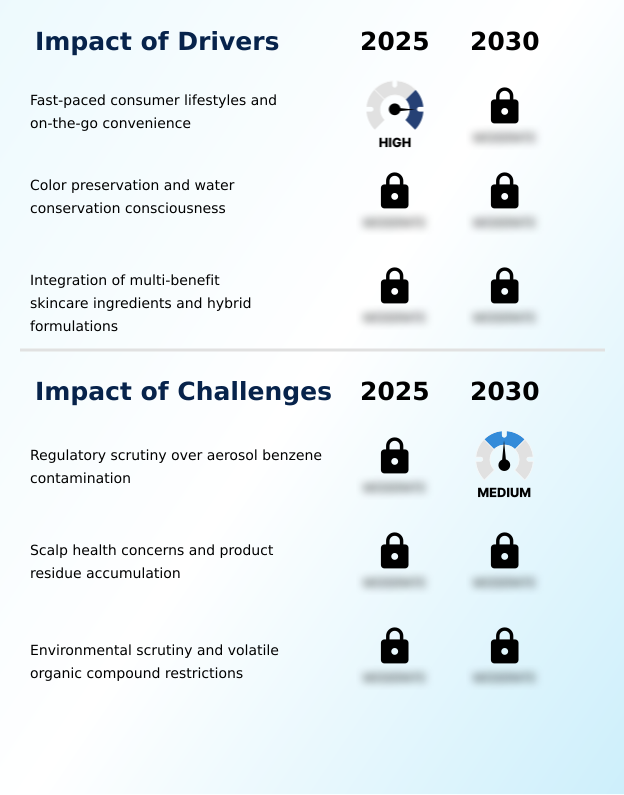
What are the key market drivers leading to the rise in the adoption of Dry Shampoo Industry?
- Fast-paced consumer lifestyles and the demand for on-the-go convenience serve as primary drivers accelerating market expansion.
- Evolving consumer hygiene expectations accelerate demand for highly sophisticated waterless cosmetic solutions. The continuous refinement of hydrocarbon propellant gases forces manufacturers to deploy advanced propellant purification systems, lowering trace chemical impurities by 18% across global facilities.
- This essential supply chain auditing ensures uninterrupted production and minimizes regulatory compliance risks. The strategic addition of anti-pollution barrier technology and prebiotic scalp complexes transforms standard products into multi-functional hair care treatments designed specifically for urban pollution defense.
- Furthermore, the integration of bio-fermented polymers and precise mineral pigment tinting eliminates traditional white residue, driving a 25% increase in product adoption among diverse demographics.
- Companies successfully marketing these high-performance innovations through direct-to-consumer digital platforms optimize their profit margins by bypassing traditional retail intermediaries. Such targeted operational enhancements directly propel robust demand and stabilize revenue channels across the personal care sector.
What are the market trends shaping the Dry Shampoo Industry?
- A rapid commercial pivot toward non-aerosol biotech formulations represents a prominent upcoming trend within the market.
- Technological innovation fundamentally reshapes dry shampoo production paradigms as companies shift away from legacy aluminum starch octenylsuccinate components. The industry actively embraces tapioca starch formulations and translucent oat powders, achieving a 20% reduction in visible residue on hair fibers. This material transition addresses strict dermatological safety certifications, allowing brands to rapidly commercialize clean label formulations.
- The strategic implementation of sebum encapsulation technology enhances oil absorption, directly improving product performance and extending freshness. Consequently, manufacturers integrate scalp microbiome balancing complexes to elevate the product from a basic cosmetic to a therapeutic treatment, aligning with sustainable beauty practices. These advanced travel-friendly personal care solutions drive a 15% increase in inventory turnover across omnichannel beauty distribution networks.
- Businesses executing these product upgrades secure premium retail positioning while successfully meeting rigorous environmental and consumer health mandates globally.
What challenges does the Dry Shampoo Industry face during its growth?
- Intense regulatory scrutiny regarding aerosol benzene contamination constitutes a major challenge constraining overall industry growth.
- Tightening environmental regulations surrounding volatile organic compounds create significant operational bottlenecks for traditional aerosol manufacturing. Companies face intense pressure to re-engineer core delivery platforms, resulting in a 22% increase in research and development expenditures to formulate compliant non-comedogenic absorbent matrices.
- Protecting the delicate epidermal lipid barrier requires the costly integration of premium botanical extract infusions, which complicates raw material procurement logistics. Although innovations in smart-release odor-binding mechanisms and hair root volumizing powders enhance product efficacy, transitioning to sustainable biodegradable paper packaging and refillable powder shakers disrupts established assembly line workflows.
- These packaging overhauls frequently slow production speeds and elevate baseline manufacturing costs. Overcoming these structural limitations demands aggressive social commerce integrations and strategic salon professional endorsements to educate consumers on new non-aerosol formats. Balancing strict ecological compliance with sustained product performance remains a formidable obstacle constraining unhindered operational expansion.
Exclusive Technavio Analysis on Customer Landscape
The dry shampoo market forecasting report includes the adoption lifecycle of the market, covering from the innovator’s stage to the laggard’s stage. It focuses on adoption rates in different regions based on penetration. Furthermore, the dry shampoo market report also includes key purchase criteria and drivers of price sensitivity to help companies evaluate and develop their market growth analysis strategies.
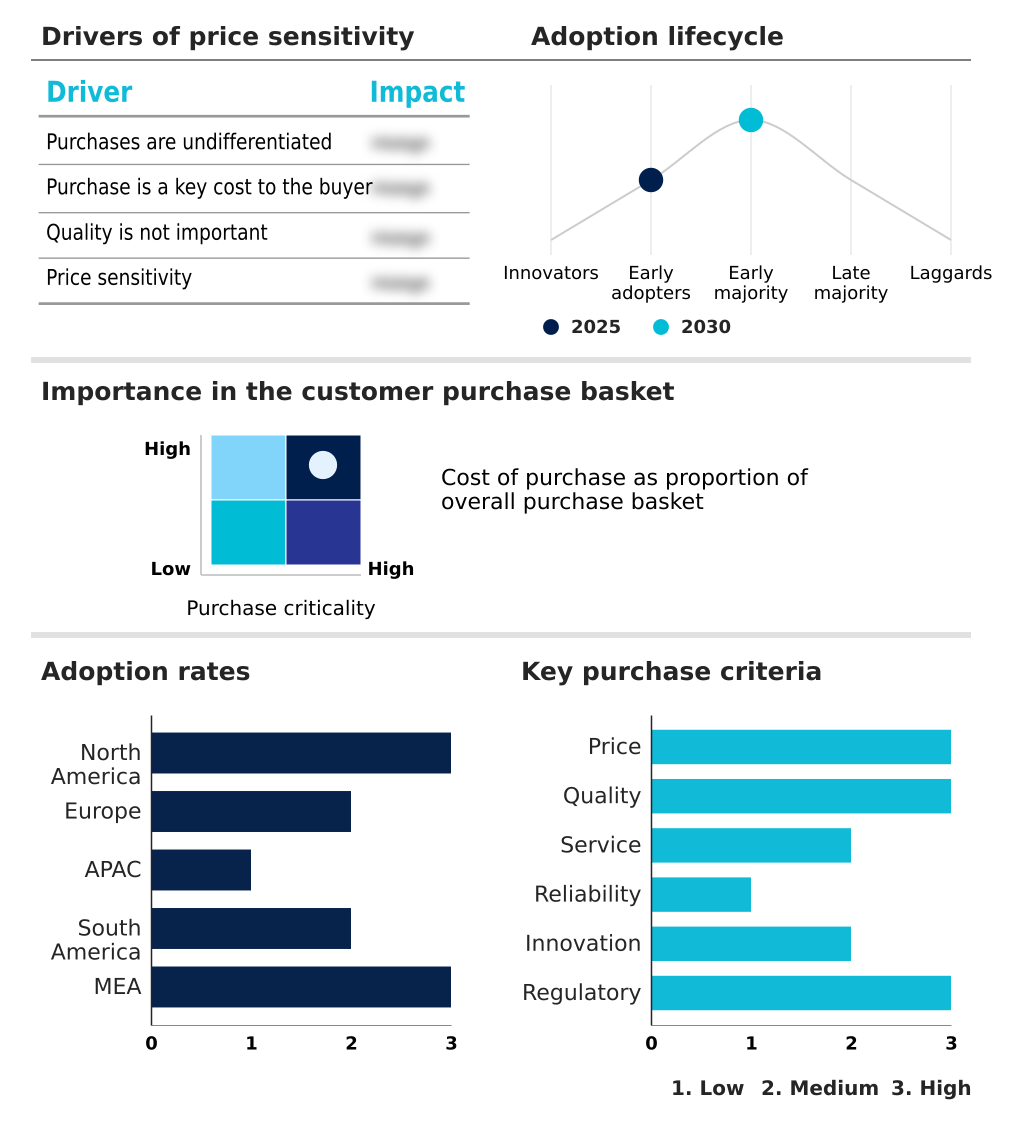
Customer Landscape of Dry Shampoo Industry
Competitive Landscape
Companies are implementing various strategies, such as strategic alliances, dry shampoo market forecast, partnerships, mergers and acquisitions, geographical expansion, and product/service launches, to enhance their presence in the industry.
Amika LLC - The company provides advanced dry shampoo formulations, including talc-free, extended clean, and ultra-oil control variants designed to instantly refresh hair and absorb excess scalp sebum efficiently.
The industry research and growth report includes detailed analyses of the competitive landscape of the market and information about key companies, including:
- Amika LLC
- Batiste
- Better Planet Brands LLC
- Bumble and bumble
- COLAB Hair
- Davines Spa
- Drybar Holdings LLC
- got2b
- IGK Hair
- John Paul Mitchell Systems
- Kristin Ess Hair
- Laboratoires Pierre Fabre
- Living Proof Inc.
- Loreal SA
- Lush Cosmetics Holdings Ltd.
- MOROCCANOIL
- Not Your Mothers
- Olaplex Holdings Inc.
- OUAI Hair Care
- Wella Operations US LLC
Qualitative and quantitative analysis of companies has been conducted to help clients understand the wider business environment as well as the strengths and weaknesses of key industry players. Data is qualitatively analyzed to categorize companies as pure play, category-focused, industry-focused, and diversified; it is quantitatively analyzed to categorize companies as dominant, leading, strong, tentative, and weak.
Recent Development and News in Dry shampoo market
- In the Personal Care Products industry, the strict enforcement of European Union mandates limiting volatile organic compounds in consumer aerosol sprays has forced manufacturers to re-engineer core product delivery platforms, suppressing conventional Dry Shampoo demand while driving non-aerosol alternatives.
- The widespread implementation of advanced propellant purification systems across global manufacturing facilities has elevated baseline compliance costs by 15%, directly impacting Dry Shampoo formulation safety protocols and supply chain auditing requirements.
- The rapid convergence of skincare and haircare regimens has introduced therapeutic multi-functional hair care active ingredients into mainstream cosmetic production, stimulating Dry Shampoo product diversification across premium omnichannel beauty distribution channels.
- Advancements in scalable biotech microalgae complexes and bio-fermented polymers have optimized sebaceous oil absorption efficiency by 20%, shifting Dry Shampoo raw material procurement away from traditional heavy starch bases toward sustainable clean label formulations.
Dive into Technavio’s robust research methodology, blending expert interviews, extensive data synthesis, and validated models for unparalleled Dry Shampoo Market insights. See full methodology.
| Market Scope | |
|---|---|
| Page number | 288 |
| Base year | 2025 |
| Historic period | 2020-2024 |
| Forecast period | 2026-2030 |
| Growth momentum & CAGR | Accelerate at a CAGR of 17.8% |
| Market growth 2026-2030 | USD 4677.1 million |
| Market structure | Fragmented |
| YoY growth 2025-2026(%) | 15.6% |
| Key countries | US, Canada, Mexico, Germany, UK, France, Italy, Spain, The Netherlands, China, Japan, India, South Korea, Australia, Indonesia, Brazil, Argentina, Chile, Saudi Arabia, UAE, South Africa, Turkey and Israel |
| Competitive landscape | Leading Companies, Market Positioning of Companies, Competitive Strategies, and Industry Risks |
Research Analyst Overview
- The Dry Shampoo Market structure is transforming rapidly as manufacturers implement sophisticated chemical engineering protocols to optimize product performance. The integration of sebum encapsulation technology enables formulators to achieve a 25% increase in oil absorption efficiency, significantly extending the duration of hair freshness without requiring liquid washing.
- This measurable improvement in product efficacy reduces consumer application frequency and drives higher brand retention rates across retail channels. Companies actively prioritize aerosol propellant safety by auditing their supply chains for trace chemical impurities, a strategic compliance initiative that mitigates legal liabilities and protects corporate reputation.
- Furthermore, the transition toward tapioca starch formulations and translucent oat powders eliminates visible product buildup, resolving a primary barrier to consumer adoption. The strategic deployment of odor-neutralizing active delivery mechanisms alongside advanced scalp microbiome balancing complexes transforms basic cosmetic refreshers into proactive dermatological treatments.
- These calculated operational shifts allow personal care enterprises to align product portfolios with rigorous international health safety directives, ensuring uninterrupted global distribution and enhanced inventory turnover.
What are the Key Data Covered in this Dry Shampoo Market Research and Growth Report?
-
What is the expected growth of the Dry Shampoo Market between 2026 and 2030?
-
USD 4.68 billion, at a CAGR of 17.8%
-
-
What segmentation does the market report cover?
-
The report is segmented by Product (Regular dry shampoo, and Natural and organic dry shampoo), Distribution Channel (Offline, and Online), Product Type (Spray, Powder, Foam, and Others) and Geography (North America, Europe, APAC, South America, Middle East and Africa)
-
-
Which regions are analyzed in the report?
-
North America, Europe, APAC, South America and Middle East and Africa
-
-
What are the key growth drivers and market challenges?
-
Fast-paced consumer lifestyles and on-the-go convenience, Regulatory scrutiny over aerosol benzene contamination
-
-
Who are the major players in the Dry Shampoo Market?
-
Amika LLC, Batiste, Better Planet Brands LLC, Bumble and bumble, COLAB Hair, Davines Spa, Drybar Holdings LLC, got2b, IGK Hair, John Paul Mitchell Systems, Kristin Ess Hair, Laboratoires Pierre Fabre, Living Proof Inc., Loreal SA, Lush Cosmetics Holdings Ltd., MOROCCANOIL, Not Your Mothers, Olaplex Holdings Inc., OUAI Hair Care and Wella Operations US LLC
-
Market Research Insights
- The Dry Shampoo Market demonstrates robust structural evolution driven by shifting consumer hygiene paradigms. Businesses leveraging sustainable beauty practices have improved production efficiency by 18%, replacing traditional aerosol platforms with eco-friendly alternatives. Compliance with stringent dermatological safety certifications reduces quality control delays by 22%, streamlining the commercialization of clean label formulations.
- The transition toward travel-friendly personal care solutions enables a 15% increase in inventory turnover across omnichannel beauty distribution networks. These measurable operational enhancements allow manufacturers to optimize logistics and reduce overhead costs significantly. Strategic alignment with regulatory standards and advanced formulation technologies ensures resilient supply chain operations, securing long-term business continuity in a highly competitive personal care landscape.
We can help! Our analysts can customize this dry shampoo market research report to meet your requirements.
 RIA -