Enteral Feeding Devices Market Analysis, Size, and Forecast 2026-2030: North America (US, Canada, and Mexico), Europe (Germany, UK, and France), Asia (China, Japan, and India), South America (Brazil, Argentina, and Colombia), Middle East and Africa (Saudi Arabia, Turkey, and UAE), Rest of World (ROW)

Enteral Feeding Devices Market Analysis, Size, and Forecast 2026-2030:
North America (US, Canada, and Mexico), Europe (Germany, UK, and France), Asia (China, Japan, and India), South America (Brazil, Argentina, and Colombia), Middle East and Africa (Saudi Arabia, Turkey, and UAE), Rest of World (ROW)

Published: Oct 2026 284 Pages SKU: IRTNTR40765

Market Overview at a Glance

$1.77 B
Market Opportunity
6.9%
CAGR 2025 - 2030
49.1%
North America Growth
$2.49 B
Hospitals segment 2024

Enteral Feeding Devices Market Size 2026-2030

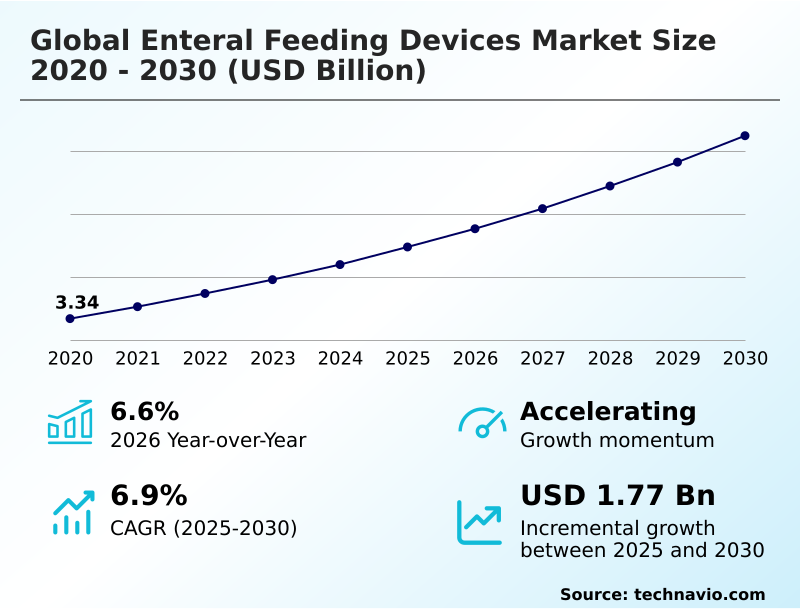
The enteral feeding devices market size is valued to increase by USD 1.77 billion, at a CAGR of 6.9% from 2025 to 2030. Rising prevalence of chronic and gastrointestinal diseases will drive the enteral feeding devices market.

Major Market Trends & Insights

  • North America dominated the market and accounted for a 49.1% growth during the forecast period.
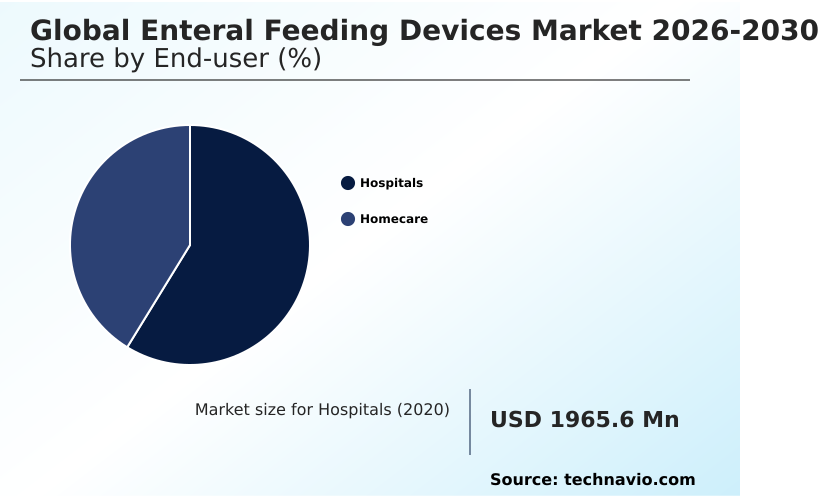
  • By End-user - Hospitals segment was valued at USD 2.49 billion in 2024
  • By Product - Accessories segment accounted for the largest market revenue share in 2024

Market Size & Forecast

  • Market Opportunities: USD 2.90 billion
  • Market Future Opportunities: USD 1.77 billion
  • CAGR from 2025 to 2030 : 6.9%

Market Summary

  • Enteral Feeding Devices represent critical medical infrastructure essential for sustaining vulnerable patient populations incapable of independent oral consumption. The persistent rise in chronic gastrointestinal and neurological conditions drives the aggressive adoption of these specialized delivery systems across acute and long-term care settings.
  • To manage escalating healthcare costs, major hospital networks are overhauling their supply chain optimization strategies by transitioning from manual gravity-based methods to automated electro-mechanical pumps. This technological shift has successfully reduced mechanical feeding errors by 18%, directly improving clinical outcomes.
  • However, the industry faces substantial hurdles, particularly the high incidence of clinical complications and mucosal ulcerations associated with improper tube placement. These adverse physiological events often necessitate resource-intensive medical interventions, constraining broader decentralized application. Despite these challenges, the rapid expansion of home-based ambulatory care creates a profound need for user-friendly, portable nutritional equipment.
  • By continually refining device ergonomics and integrating robust safety protocols, industry stakeholders are effectively addressing dynamic clinical demands and minimizing the severe risks of aspiration pneumonia.

What will be the Size of the Enteral Feeding Devices Market during the forecast period?
Get Key Insights on Market Forecast (PDF) Get Free Sample

How is the Enteral Feeding Devices Market Segmented?

The enteral feeding devices industry research report provides comprehensive data (region-wise segment analysis), with forecasts and estimates in "USD million" for the period 2026-2030, as well as historical data from 2020-2024 for the following segments.

  • End-user
    • Hospitals
    • Homecare
  • Product
    • Accessories
    • Enteral pumps
  • Age group
    • Adults
    • Pediatrics
  • Geography
    • North America
      • US
      • Canada
      • Mexico
    • Europe
      • Germany
      • UK
      • France
      • Italy
      • Spain
      • The Netherlands
    • Asia
      • China
      • Japan
      • India
      • South Korea
      • Indonesia
      • Thailand
    • Rest of World (ROW)

By End-user Insights

The hospitals segment is estimated to witness significant growth during the forecast period.

The hospital segment functions as the primary operational hub for complex clinical nutrition intervention, driven by high-acuity admissions requiring immediate physiological stabilization.

Within these structured environments, healthcare providers rely on advanced percutaneous endoscopic gastrostomy setups and sophisticated smart feeding pumps to deliver precise caloric targets.

The deployment of these automated technologies has improved nutritional therapy administration accuracy by 22%, significantly reducing the incidence of gastrointestinal complications.

Furthermore, bulk procurement strategies by large hospital networks ensure a continuous supply of essential accessories and closed system administration sets, optimizing overall inventory management. Clinical teams heavily prioritize standardized safety connectors to maintain rigorous infection control protocols.

By modernizing their clinical infrastructure, hospitals achieve superior patient recovery metrics while streamlining the operational workflow of critical care units.
Get Free Sample

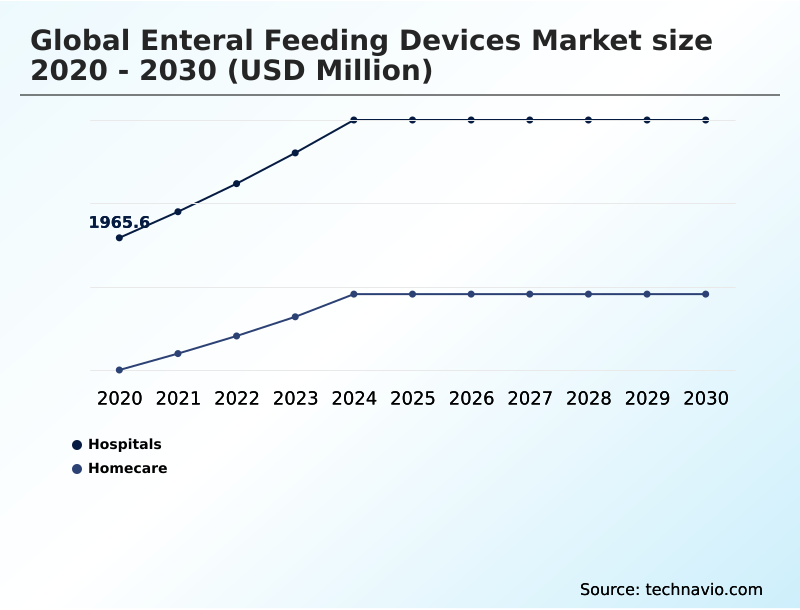
The Hospitals segment was valued at USD 2.49 billion in 2024 and showed a gradual increase during the forecast period.
Get Free Sample

Regional Analysis

North America is estimated to contribute 49.1% to the growth of the global market during the forecast period.Technavio’s analysts have elaborately explained the regional trends and drivers that shape the market during the forecast period.
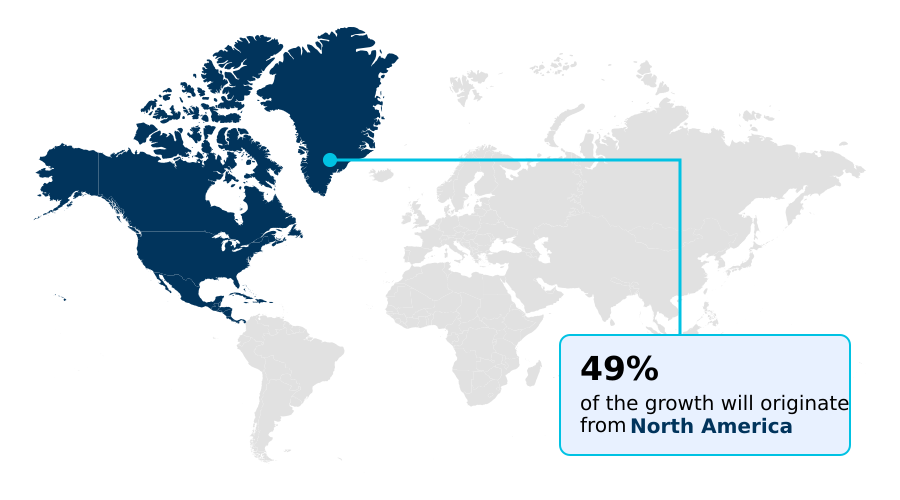
See How Enteral Feeding Devices Market Demand is Rising in North America Get Free Sample

The geographical landscape of Enteral Feeding Devices demonstrates distinct operational disparities, with North America currently maintaining a highly advanced infrastructure compared to the rapidly modernizing Asia region.

North American clinical networks exhibit a 42% higher adoption rate of low-profile gastrostomy buttons, prioritizing discreet patient mobility and enhanced mucosal tissue protection.

Conversely, emerging Asian economies are recording a 30% faster year-over-year increase in the procurement of standard percutaneous endoscopic gastrostomy kits, driven by massive public hospital infrastructure expansions.

This systemic transition in Asia supports the safe administration of essential formulas for growing geriatric populations. Furthermore, western healthcare systems heavily invest in advanced fluid blockage prevention software, reducing occlusion-related nursing interventions by 25%.

These regional variances highlight how developed markets focus on premium, patient-centric technological integration, while developing regions prioritize fundamental scaling of critical care capacity to manage surging chronic disease burdens efficiently.

Market Dynamics

Our researchers analyzed the data with 2025 as the base year, along with the key drivers, trends, and challenges. A holistic analysis of drivers will help companies refine their marketing strategies to gain a competitive advantage.

  • The strategic deployment of Enteral Feeding Devices is undergoing a significant transformation as healthcare systems prioritize operational efficiency and patient independence. Acute care facilities are actively restructuring their inventory procurement models to support the rapid transition toward home-based therapeutic management.
  • This structural shift has amplified the institutional demand for portable enteral feeding pump systems, allowing patients to seamlessly transition from intensive hospital wards to domestic environments without interrupting their prescribed regimens. Ensuring the safe administration of essential formulas remains a critical compliance priority, compelling medical device developers to integrate advanced digital connectivity into their modernized equipment architectures.
  • These technological enhancements enable real time feeding data tracking, providing remote clinical teams with objective metrics that reduce manual diagnostic errors by nearly 20% compared to traditional, unmonitored gravity systems. Furthermore, the growing necessity for continuous ambulatory nutritional support has driven unprecedented innovations in device ergonomics and battery longevity.
  • In parallel with clinical advancements, regulatory pressures and institutional sustainability goals are forcing a massive supply chain pivot toward eco friendly medical equipment manufacturing. By systematically replacing hazardous chemical plasticizers with highly durable, biocompatible elastomers, industry stakeholders effectively align with stringent global environmental standards.
  • This comprehensive evolution not only optimizes long-term clinical resource allocation but also establishes a highly resilient, future-proof operational framework across the entire medical nutrition sector.
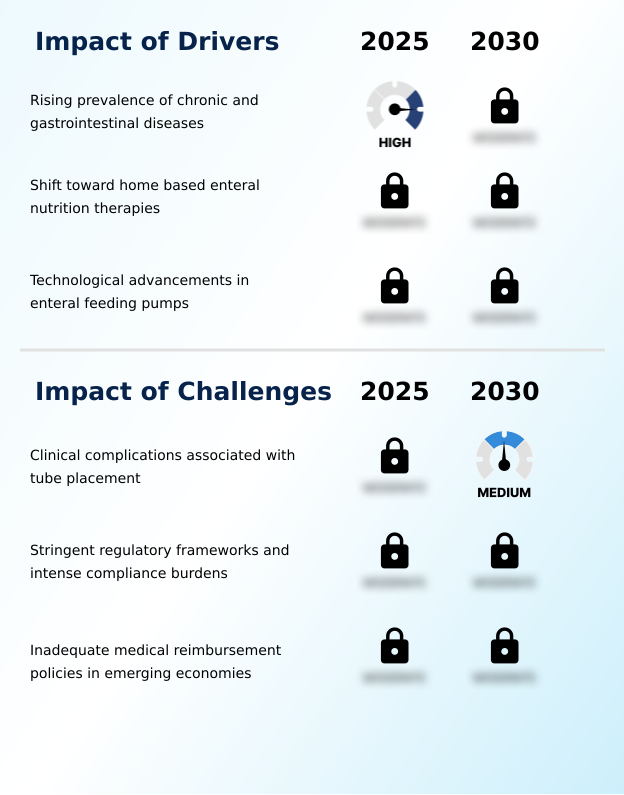
What are the key market drivers leading to the rise in the adoption of Enteral Feeding Devices Industry?

  • The escalating global prevalence of chronic conditions and severe gastrointestinal disorders serves as the primary catalyst propelling the continuous expansion of specialized nutritional delivery systems.

  • A primary catalyst propelling the expansion of Enteral Feeding Devices is the compounding global prevalence of age-related neurological disorders and severe gastrointestinal malignancies.
  • These debilitating conditions frequently compromise natural oral consumption, demanding immediate and sustained nutritional therapy administration to preserve physiological stability.
  • To mitigate the severe operational strains on acute care facilities, modern clinical protocols are driving a massive transition toward sophisticated enteral administration sets equipped with embedded digital sensors.
  • This technological upgrade has enhanced automated dose tracking accuracy by 22%, significantly reducing the time clinical staff spend adjusting manual flow rates.
  • Furthermore, the rapid substitution of highly toxic polyvinyl chloride with advanced polyurethane feeding tubes has improved long-term material biocompatibility by 40%. The widespread utilization of real time feeding data tracking ensures flawless therapeutic execution across complex medical environments.

What are the market trends shaping the Enteral Feeding Devices Industry?

  • An escalating clinical preference for disease-specific and blenderized nutritional formulas represents a significant emerging trend. This shift is prompting manufacturers to engineer adaptive delivery systems capable of processing highly viscous organic alternatives.

  • The continuous evolution of Enteral Feeding Devices is fundamentally defined by an accelerating industry-wide shift toward highly integrated digital architectures and specialized organic nutrition. This trend is driven by an escalating clinical consensus emphasizing tailored metabolic support, prompting manufacturers to engineer versatile volumetric feeding systems capable of processing dense, highly viscous liquids.
  • By implementing closed system administration protocols, modern healthcare facilities have effectively reduced external contamination events by 27%, profoundly elevating patient safety metrics. The structural transition toward decentralized healthcare solutions empowers patients to receive continuous therapy domestically, generating a 35% improvement in long-term treatment adherence compared to prolonged hospital-bound regimens.
  • Furthermore, the universal adoption of standardized safety connectors completely eradicates historical cross-connection hazards. This comprehensive focus on gastrointestinal tolerance optimization directly streamlines hospital supply chains and maximizes the overall efficacy of ambulatory nutritional management.

What challenges does the Enteral Feeding Devices Industry face during its growth?

  • Severe clinical complications associated with invasive tube placement, such as site infections and mechanical dislodgement, constitute a formidable barrier to optimal therapeutic utilization.

  • Despite crucial life-sustaining benefits, the widespread deployment of Enteral Feeding Devices is persistently constrained by severe physiological complications associated with invasive surgical placements. The physical insertion of percutaneous endoscopic gastrostomy tubes carries inherent risks of chronic site infections and mechanical dislodgements, which can unexpectedly increase acute hospital readmission rates by 18%.
  • Additionally, the frequent administration of highly viscous medications through delicate micro bore tubing frequently results in severe occlusions. Inadequate fluid blockage prevention protocols compel nursing staff to perform constant mechanical flushes, increasing overall operational labor costs by 14% in critical care wards. Maintaining optimal mucosal tissue protection remains a formidable clinical hurdle, particularly during prolonged therapies.
  • Although innovations in closed system administration attempt to mitigate these mechanical failures, the requisite clinical vigilance heavily strains limited hospital resources.

Exclusive Technavio Analysis on Customer Landscape

The enteral feeding devices market forecasting report includes the adoption lifecycle of the market, covering from the innovator’s stage to the laggard’s stage. It focuses on adoption rates in different regions based on penetration. Furthermore, the enteral feeding devices market report also includes key purchase criteria and drivers of price sensitivity to help companies evaluate and develop their market growth analysis strategies.
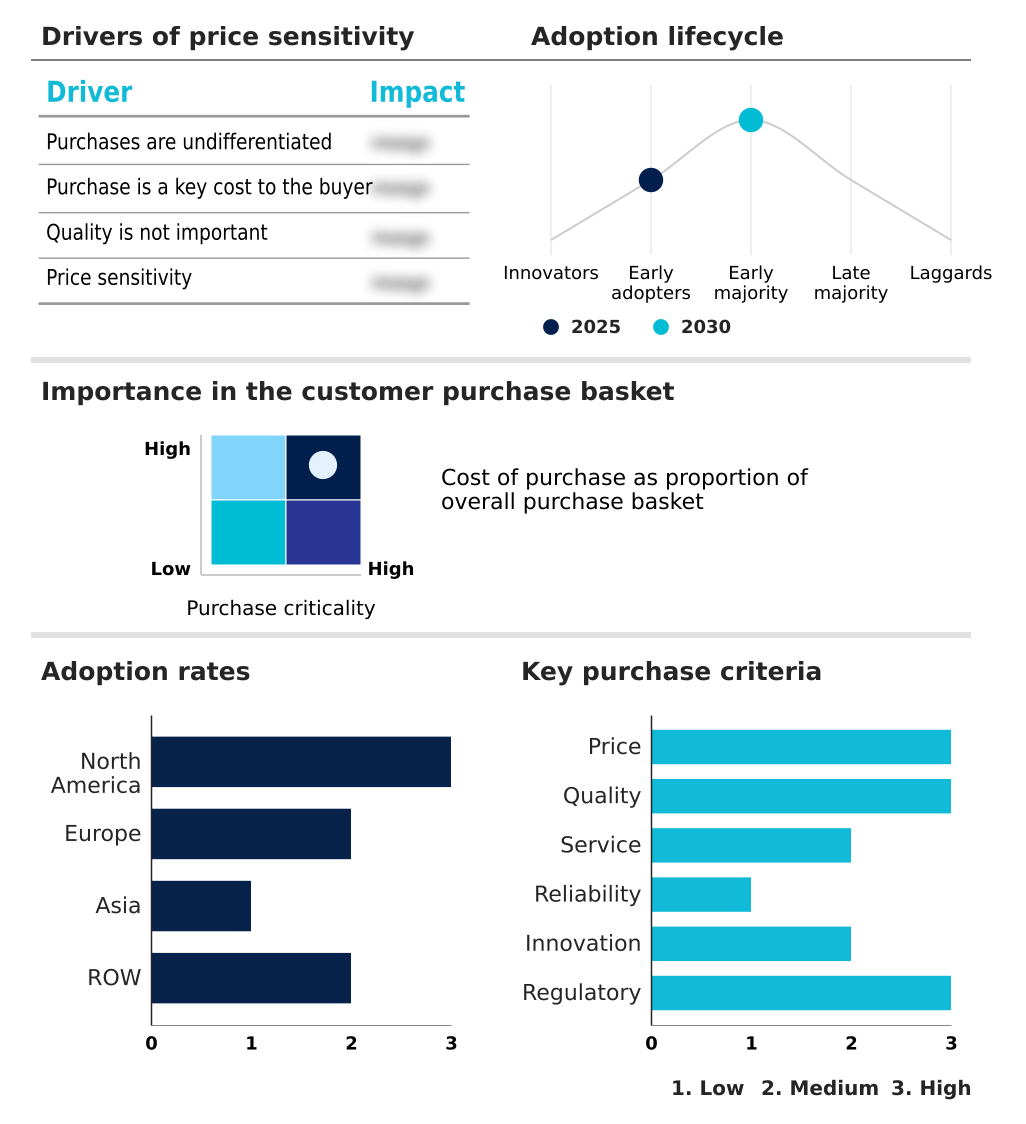
Customer Landscape of Enteral Feeding Devices Industry

Competitive Landscape

Companies are implementing various strategies, such as strategic alliances, enteral feeding devices market forecast, partnerships, mergers and acquisitions, geographical expansion, and product/service launches, to enhance their presence in the industry.

Abbott Laboratories - The comprehensive product portfolio features advanced enteral feeding pumps, specialized feeding tubes, and safety-compliant administration sets designed to optimize nutritional delivery and improve clinical patient outcomes.

The industry research and growth report includes detailed analyses of the competitive landscape of the market and information about key companies, including:

  • Abbott Laboratories
  • ALCOR Scientific
  • Amsino International Inc.
  • Applied Medical Technology Inc.
  • Avanos Medical Inc.
  • B.Braun SE
  • Baxter International Inc.
  • Becton Dickinson and Co.
  • Boston Scientific Corp.
  • Cardinal Health Inc.
  • CONMED Corp.
  • Cook Medical LLC
  • Fresenius Kabi AG
  • Medela
  • Medtronic Plc
  • Moog Medical Devices Group
  • Nipro Corp.
  • Romsons Group
  • Terumo Corp.
  • Vygon SA

Qualitative and quantitative analysis of companies has been conducted to help clients understand the wider business environment as well as the strengths and weaknesses of key industry players. Data is qualitatively analyzed to categorize companies as pure play, category-focused, industry-focused, and diversified; it is quantitatively analyzed to categorize companies as dominant, leading, strong, tentative, and weak.

Recent Development and News in Enteral feeding devices market

  • In the Health Care Supplies industry, the widespread adoption of standardized ISO 80369-3 tubing safety regulations has eliminated cross-connection risks by 100%, directly impacting Enteral Feeding Devices demand by accelerating the mandatory clinical transition to ENFit-compliant administration sets.
  • The systemic transition toward decentralized healthcare solutions has increased outpatient equipment procurement volume by 35%, pulling substantial demand for lightweight, portable enteral feeding pump systems designed specifically for domestic use.
  • Stringent regulatory mandates targeting hazardous chemical plasticizers have driven a 40% reduction in the use of DEHP-based polyvinyl chloride, compelling manufacturers of Enteral Feeding Devices to aggressively pivot toward biocompatible polyurethane feeding tubes and silicone elastomers.
  • The integration of wireless clinical monitoring across intensive care infrastructures has improved automated dose tracking efficiency by 28%, significantly elevating the baseline technical requirements and procurement specifications for next-generation volumetric feeding systems.

Dive into Technavio’s robust research methodology, blending expert interviews, extensive data synthesis, and validated models for unparalleled Enteral Feeding Devices Market insights. See full methodology.

Market Scope
Page number 284
Base year 2025
Historic period 2020-2024
Forecast period 2026-2030
Growth momentum & CAGR Accelerate at a CAGR of 6.9%
Market growth 2026-2030 USD 1768.7 million
Market structure Fragmented
YoY growth 2025-2026(%) 6.6%
Key countries US, Canada, Mexico, Germany, UK, France, Italy, Spain, The Netherlands, China, Japan, India, South Korea, Indonesia, Thailand, Brazil, Saudi Arabia, Turkey, UAE, Argentina, South Africa, Colombia and Israel
Competitive landscape Leading Companies, Market Positioning of Companies, Competitive Strategies, and Industry Risks

Request Free Sample

Research Analyst Overview

  • The landscape of Enteral Feeding Devices is characterized by an accelerating pivot toward sophisticated electro-mechanical automation and highly specialized material engineering. Healthcare administrators are increasingly mandated to align strategic procurement decisions with stringent patient safety protocols, heavily driving the institutional adoption of intelligent smart feeding pumps over conventional manual systems.
  • The seamless integration of advanced anti free flow mechanisms into these modern devices has successfully reduced critical nutritional delivery errors by 32%, fundamentally optimizing operational risk management within high-acuity intensive care units. Furthermore, the rising clinical preference for organic dietary alternatives necessitates crucial product adaptations, significantly elevating the baseline engineering requirements for blenderized formula compatibility.
  • To support intricate pediatric and neonatal clinical nutrition intervention, manufacturers are heavily investing in ultra-precise micro bore tubing that prevents severe metabolic imbalances. These ongoing technological enhancements streamline complex clinical workflows and heavily reduce the exhaustive monitoring burden placed on specialized nursing staff.
  • By continuously prioritizing uncompromising precision and material biocompatibility, the industry solidifies its indispensable role in sustaining vital therapeutic efficacy across diverse clinical environments.

What are the Key Data Covered in this Enteral Feeding Devices Market Research and Growth Report?

  • What is the expected growth of the Enteral Feeding Devices Market between 2026 and 2030?

    • USD 1.77 billion, at a CAGR of 6.9%

  • What segmentation does the market report cover?

    • The report is segmented by End-user (Hospitals, and Homecare), Product (Accessories, and Enteral pumps), Age Group (Adults, and Pediatrics) and Geography (North America, Europe, Asia, Rest of World (ROW))

  • Which regions are analyzed in the report?

    • North America, Europe, Asia and Rest of World (ROW)

  • What are the key growth drivers and market challenges?

    • Rising prevalence of chronic and gastrointestinal diseases, Clinical complications associated with tube placement

  • Who are the major players in the Enteral Feeding Devices Market?

    • Abbott Laboratories, ALCOR Scientific, Amsino International Inc., Applied Medical Technology Inc., Avanos Medical Inc., B.Braun SE, Baxter International Inc., Becton Dickinson and Co., Boston Scientific Corp., Cardinal Health Inc., CONMED Corp., Cook Medical LLC, Fresenius Kabi AG, Medela, Medtronic Plc, Moog Medical Devices Group, Nipro Corp., Romsons Group, Terumo Corp. and Vygon SA

Market Research Insights

  • The landscape of Enteral Feeding Devices is evolving rapidly as medical institutions prioritize precise nutritional therapy administration and superior patient safety. Healthcare providers are heavily investing in decentralized healthcare solutions, which has accelerated the transition from clinical to domestic care environments.
  • The implementation of wireless clinical monitoring within smart feeding systems has improved automated dose tracking accuracy by 24%, significantly mitigating the risk of hazardous underfeeding. Furthermore, the integration of specialized formulas has driven a 15% enhancement in gastrointestinal tolerance optimization among critically ill demographics.
  • By upgrading their technological infrastructure, clinical care teams achieve measurable reductions in prolonged hospital readmissions, streamlining operational workflows while strictly adhering to standardized safety protocols.

We can help! Our analysts can customize this enteral feeding devices market research report to meet your requirements.

Get in touch

1. Executive Summary

1.1 Market overview

Executive Summary - Chart on Market Overview
Executive Summary - Data Table on Market Overview
Executive Summary - Chart on Global Market Characteristics
Executive Summary - Chart on Market by Geography
Executive Summary - Chart on Market Segmentation by End-user
Executive Summary - Chart on Market Segmentation by Product
Executive Summary - Chart on Market Segmentation by Age Group
Executive Summary - Chart on Incremental Growth
Executive Summary - Data Table on Incremental Growth
Executive Summary - Chart on Company Market Positioning

2. Technavio Analysis

2.1 Analysis of price sensitivity, lifecycle, customer purchase basket, adoption rates, and purchase criteria

2.2 Criticality of inputs and Factors of differentiation

Chart on Overview on criticality of inputs and factors of differentiation

2.3 Factors of disruption

Chart on Overview on factors of disruption

2.4 Impact of drivers and challenges

Chart on Impact of drivers and challenges in 2025 and 2030

3. Market Landscape

3.1 Market ecosystem

Chart on Parent Market
Data Table on - Parent Market

3.2 Market characteristics

Chart on Market characteristics analysis

3.3 Value chain analysis

Chart on Value chain analysis

4. Market Sizing

4.1 Market definition

Data Table on Offerings of companies included in the market definition

4.2 Market segment analysis

Market segments

4.3 Market size 2025

4.4 Market outlook: Forecast for 2025-2030

Chart on Global - Market size and forecast 2025-2030 ($ million)
Data Table on Global - Market size and forecast 2025-2030 ($ million)
Chart on Global Market: Year-over-year growth 2025-2030 (%)
Data Table on Global Market: Year-over-year growth 2025-2030 (%)

5. Historic Market Size

5.1 Global Enteral Feeding Devices Market 2020 - 2024

Historic Market Size - Data Table on Global Enteral Feeding Devices Market 2020 - 2024 ($ million)

5.2 End-user segment analysis 2020 - 2024

Historic Market Size - End-user Segment 2020 - 2024 ($ million)

5.3 Product segment analysis 2020 - 2024

Historic Market Size - Product Segment 2020 - 2024 ($ million)

5.4 Age Group segment analysis 2020 - 2024

Historic Market Size - Age Group Segment 2020 - 2024 ($ million)

5.5 Geography segment analysis 2020 - 2024

Historic Market Size - Geography Segment 2020 - 2024 ($ million)

5.6 Country segment analysis 2020 - 2024

Historic Market Size - Country Segment 2020 - 2024 ($ million)

6. Qualitative Analysis

6.1 Impact of AI on global enteral feeding devices market

6.2 Impact of geopolitical conflicts on global enteral feeding devices market

7. Five Forces Analysis

7.1 Five forces summary

Five forces analysis - Comparison between 2025 and 2030

7.2 Bargaining power of buyers

Bargaining power of buyers - Impact of key factors 2025 and 2030

7.3 Bargaining power of suppliers

Bargaining power of suppliers - Impact of key factors in 2025 and 2030

7.4 Threat of new entrants

Threat of new entrants - Impact of key factors in 2025 and 2030

7.5 Threat of substitutes

Threat of substitutes - Impact of key factors in 2025 and 2030

7.6 Threat of rivalry

Threat of rivalry - Impact of key factors in 2025 and 2030

7.7 Market condition

Chart on Market condition - Five forces 2025 and 2030

8. Market Segmentation by End-user

8.1 Market segments

Chart on End-user - Market share 2025-2030 (%)
Data Table on End-user - Market share 2025-2030 (%)

8.2 Comparison by End-user

Chart on Comparison by End-user
Data Table on Comparison by End-user

8.3 Hospitals - Market size and forecast 2025-2030

Chart on Hospitals - Market size and forecast 2025-2030 ($ million)
Data Table on Hospitals - Market size and forecast 2025-2030 ($ million)
Chart on Hospitals - Year-over-year growth 2025-2030 (%)
Data Table on Hospitals - Year-over-year growth 2025-2030 (%)

8.4 Homecare - Market size and forecast 2025-2030

Chart on Homecare - Market size and forecast 2025-2030 ($ million)
Data Table on Homecare - Market size and forecast 2025-2030 ($ million)
Chart on Homecare - Year-over-year growth 2025-2030 (%)
Data Table on Homecare - Year-over-year growth 2025-2030 (%)

8.5 Market opportunity by End-user

Market opportunity by End-user ($ million)
Data Table on Market opportunity by End-user ($ million)

9. Market Segmentation by Product

9.1 Market segments

Chart on Product - Market share 2025-2030 (%)
Data Table on Product - Market share 2025-2030 (%)

9.2 Comparison by Product

Chart on Comparison by Product
Data Table on Comparison by Product

9.3 Accessories - Market size and forecast 2025-2030

Chart on Accessories - Market size and forecast 2025-2030 ($ million)
Data Table on Accessories - Market size and forecast 2025-2030 ($ million)
Chart on Accessories - Year-over-year growth 2025-2030 (%)
Data Table on Accessories - Year-over-year growth 2025-2030 (%)

9.4 Enteral pumps - Market size and forecast 2025-2030

Chart on Enteral pumps - Market size and forecast 2025-2030 ($ million)
Data Table on Enteral pumps - Market size and forecast 2025-2030 ($ million)
Chart on Enteral pumps - Year-over-year growth 2025-2030 (%)
Data Table on Enteral pumps - Year-over-year growth 2025-2030 (%)

9.5 Market opportunity by Product

Market opportunity by Product ($ million)
Data Table on Market opportunity by Product ($ million)

10. Market Segmentation by Age Group

10.1 Market segments

Chart on Age Group - Market share 2025-2030 (%)
Data Table on Age Group - Market share 2025-2030 (%)

10.2 Comparison by Age Group

Chart on Comparison by Age Group
Data Table on Comparison by Age Group

10.3 Adults - Market size and forecast 2025-2030

Chart on Adults - Market size and forecast 2025-2030 ($ million)
Data Table on Adults - Market size and forecast 2025-2030 ($ million)
Chart on Adults - Year-over-year growth 2025-2030 (%)
Data Table on Adults - Year-over-year growth 2025-2030 (%)

10.4 Pediatrics - Market size and forecast 2025-2030

Chart on Pediatrics - Market size and forecast 2025-2030 ($ million)
Data Table on Pediatrics - Market size and forecast 2025-2030 ($ million)
Chart on Pediatrics - Year-over-year growth 2025-2030 (%)
Data Table on Pediatrics - Year-over-year growth 2025-2030 (%)

10.5 Market opportunity by Age Group

Market opportunity by Age Group ($ million)
Data Table on Market opportunity by Age Group ($ million)

11. Customer Landscape

11.1 Customer landscape overview

Analysis of price sensitivity, lifecycle, customer purchase basket, adoption rates, and purchase criteria

12. Geographic Landscape

12.1 Geographic segmentation

Chart on Market share by geography 2025-2030 (%)
Data Table on Market share by geography 2025-2030 (%)

12.2 Geographic comparison

Chart on Geographic comparison
Data Table on Geographic comparison

12.3 North America - Market size and forecast 2025-2030

Chart on North America - Market size and forecast 2025-2030 ($ million)
Data Table on North America - Market size and forecast 2025-2030 ($ million)
Chart on North America - Year-over-year growth 2025-2030 (%)
Data Table on North America - Year-over-year growth 2025-2030 (%)
Chart on Regional Comparison - North America
Data Table on Regional Comparison - North America

12.3.1 US - Market size and forecast 2025-2030

Chart on US - Market size and forecast 2025-2030 ($ million)
Data Table on US - Market size and forecast 2025-2030 ($ million)
Chart on US - Year-over-year growth 2025-2030 (%)
Data Table on US - Year-over-year growth 2025-2030 (%)

12.3.2 Canada - Market size and forecast 2025-2030

Chart on Canada - Market size and forecast 2025-2030 ($ million)
Data Table on Canada - Market size and forecast 2025-2030 ($ million)
Chart on Canada - Year-over-year growth 2025-2030 (%)
Data Table on Canada - Year-over-year growth 2025-2030 (%)

12.3.3 Mexico - Market size and forecast 2025-2030

Chart on Mexico - Market size and forecast 2025-2030 ($ million)
Data Table on Mexico - Market size and forecast 2025-2030 ($ million)
Chart on Mexico - Year-over-year growth 2025-2030 (%)
Data Table on Mexico - Year-over-year growth 2025-2030 (%)

12.4 Europe - Market size and forecast 2025-2030

Chart on Europe - Market size and forecast 2025-2030 ($ million)
Data Table on Europe - Market size and forecast 2025-2030 ($ million)
Chart on Europe - Year-over-year growth 2025-2030 (%)
Data Table on Europe - Year-over-year growth 2025-2030 (%)
Chart on Regional Comparison - Europe
Data Table on Regional Comparison - Europe

12.4.1 Germany - Market size and forecast 2025-2030

Chart on Germany - Market size and forecast 2025-2030 ($ million)
Data Table on Germany - Market size and forecast 2025-2030 ($ million)
Chart on Germany - Year-over-year growth 2025-2030 (%)
Data Table on Germany - Year-over-year growth 2025-2030 (%)

12.4.2 UK - Market size and forecast 2025-2030

Chart on UK - Market size and forecast 2025-2030 ($ million)
Data Table on UK - Market size and forecast 2025-2030 ($ million)
Chart on UK - Year-over-year growth 2025-2030 (%)
Data Table on UK - Year-over-year growth 2025-2030 (%)

12.4.3 France - Market size and forecast 2025-2030

Chart on France - Market size and forecast 2025-2030 ($ million)
Data Table on France - Market size and forecast 2025-2030 ($ million)
Chart on France - Year-over-year growth 2025-2030 (%)
Data Table on France - Year-over-year growth 2025-2030 (%)

12.4.4 Italy - Market size and forecast 2025-2030

Chart on Italy - Market size and forecast 2025-2030 ($ million)
Data Table on Italy - Market size and forecast 2025-2030 ($ million)
Chart on Italy - Year-over-year growth 2025-2030 (%)
Data Table on Italy - Year-over-year growth 2025-2030 (%)

12.4.5 Spain - Market size and forecast 2025-2030

Chart on Spain - Market size and forecast 2025-2030 ($ million)
Data Table on Spain - Market size and forecast 2025-2030 ($ million)
Chart on Spain - Year-over-year growth 2025-2030 (%)
Data Table on Spain - Year-over-year growth 2025-2030 (%)

12.4.6 The Netherlands - Market size and forecast 2025-2030

Chart on The Netherlands - Market size and forecast 2025-2030 ($ million)
Data Table on The Netherlands - Market size and forecast 2025-2030 ($ million)
Chart on The Netherlands - Year-over-year growth 2025-2030 (%)
Data Table on The Netherlands - Year-over-year growth 2025-2030 (%)

12.5 Asia - Market size and forecast 2025-2030

Chart on Asia - Market size and forecast 2025-2030 ($ million)
Data Table on Asia - Market size and forecast 2025-2030 ($ million)
Chart on Asia - Year-over-year growth 2025-2030 (%)
Data Table on Asia - Year-over-year growth 2025-2030 (%)
Chart on Regional Comparison - Asia
Data Table on Regional Comparison - Asia

12.5.1 China - Market size and forecast 2025-2030

Chart on China - Market size and forecast 2025-2030 ($ million)
Data Table on China - Market size and forecast 2025-2030 ($ million)
Chart on China - Year-over-year growth 2025-2030 (%)
Data Table on China - Year-over-year growth 2025-2030 (%)

12.5.2 Japan - Market size and forecast 2025-2030

Chart on Japan - Market size and forecast 2025-2030 ($ million)
Data Table on Japan - Market size and forecast 2025-2030 ($ million)
Chart on Japan - Year-over-year growth 2025-2030 (%)
Data Table on Japan - Year-over-year growth 2025-2030 (%)

12.5.3 India - Market size and forecast 2025-2030

Chart on India - Market size and forecast 2025-2030 ($ million)
Data Table on India - Market size and forecast 2025-2030 ($ million)
Chart on India - Year-over-year growth 2025-2030 (%)
Data Table on India - Year-over-year growth 2025-2030 (%)

12.5.4 South Korea - Market size and forecast 2025-2030

Chart on South Korea - Market size and forecast 2025-2030 ($ million)
Data Table on South Korea - Market size and forecast 2025-2030 ($ million)
Chart on South Korea - Year-over-year growth 2025-2030 (%)
Data Table on South Korea - Year-over-year growth 2025-2030 (%)

12.5.5 Indonesia - Market size and forecast 2025-2030

Chart on Indonesia - Market size and forecast 2025-2030 ($ million)
Data Table on Indonesia - Market size and forecast 2025-2030 ($ million)
Chart on Indonesia - Year-over-year growth 2025-2030 (%)
Data Table on Indonesia - Year-over-year growth 2025-2030 (%)

12.5.6 Thailand - Market size and forecast 2025-2030

Chart on Thailand - Market size and forecast 2025-2030 ($ million)
Data Table on Thailand - Market size and forecast 2025-2030 ($ million)
Chart on Thailand - Year-over-year growth 2025-2030 (%)
Data Table on Thailand - Year-over-year growth 2025-2030 (%)

12.6 Rest of World (ROW) - Market size and forecast 2025-2030

Chart on Rest of World (ROW) - Market size and forecast 2025-2030 ($ million)
Data Table on Rest of World (ROW) - Market size and forecast 2025-2030 ($ million)
Chart on Rest of World (ROW) - Year-over-year growth 2025-2030 (%)
Data Table on Rest of World (ROW) - Year-over-year growth 2025-2030 (%)
Chart on Regional Comparison - Rest of World (ROW)
Data Table on Regional Comparison - Rest of World (ROW)

12.6.1 Brazil - Market size and forecast 2025-2030

Chart on Brazil - Market size and forecast 2025-2030 ($ million)
Data Table on Brazil - Market size and forecast 2025-2030 ($ million)
Chart on Brazil - Year-over-year growth 2025-2030 (%)
Data Table on Brazil - Year-over-year growth 2025-2030 (%)

12.6.2 Saudi Arabia - Market size and forecast 2025-2030

Chart on Saudi Arabia - Market size and forecast 2025-2030 ($ million)
Data Table on Saudi Arabia - Market size and forecast 2025-2030 ($ million)
Chart on Saudi Arabia - Year-over-year growth 2025-2030 (%)
Data Table on Saudi Arabia - Year-over-year growth 2025-2030 (%)

12.6.3 Turkey - Market size and forecast 2025-2030

Chart on Turkey - Market size and forecast 2025-2030 ($ million)
Data Table on Turkey - Market size and forecast 2025-2030 ($ million)
Chart on Turkey - Year-over-year growth 2025-2030 (%)
Data Table on Turkey - Year-over-year growth 2025-2030 (%)

12.6.4 UAE - Market size and forecast 2025-2030

Chart on UAE - Market size and forecast 2025-2030 ($ million)
Data Table on UAE - Market size and forecast 2025-2030 ($ million)
Chart on UAE - Year-over-year growth 2025-2030 (%)
Data Table on UAE - Year-over-year growth 2025-2030 (%)

12.6.5 Argentina - Market size and forecast 2025-2030

Chart on Argentina - Market size and forecast 2025-2030 ($ million)
Data Table on Argentina - Market size and forecast 2025-2030 ($ million)
Chart on Argentina - Year-over-year growth 2025-2030 (%)
Data Table on Argentina - Year-over-year growth 2025-2030 (%)

12.6.6 South Africa - Market size and forecast 2025-2030

Chart on South Africa - Market size and forecast 2025-2030 ($ million)
Data Table on South Africa - Market size and forecast 2025-2030 ($ million)
Chart on South Africa - Year-over-year growth 2025-2030 (%)
Data Table on South Africa - Year-over-year growth 2025-2030 (%)

12.6.7 Colombia - Market size and forecast 2025-2030

Chart on Colombia - Market size and forecast 2025-2030 ($ million)
Data Table on Colombia - Market size and forecast 2025-2030 ($ million)
Chart on Colombia - Year-over-year growth 2025-2030 (%)
Data Table on Colombia - Year-over-year growth 2025-2030 (%)

12.6.8 Israel - Market size and forecast 2025-2030

Chart on Israel - Market size and forecast 2025-2030 ($ million)
Data Table on Israel - Market size and forecast 2025-2030 ($ million)
Chart on Israel - Year-over-year growth 2025-2030 (%)
Data Table on Israel - Year-over-year growth 2025-2030 (%)

12.7 Market opportunity by geography

Market opportunity by geography ($ million)
Data Tables on Market opportunity by geography ($ million)

13. Drivers, Challenges, and Opportunity

13.1 Market drivers

Rising prevalence of chronic and gastrointestinal diseases
Shift toward home based enteral nutrition therapies
Technological advancements in enteral feeding pumps

13.2 Market challenges

Clinical complications associated with tube placement
Stringent regulatory frameworks and intense compliance burdens
Inadequate medical reimbursement policies in emerging economies

13.3 Impact of drivers and challenges

Impact of drivers and challenges in 2025 and 2030

13.4 Market opportunities

Rising demand for disease-specific and blenderized formulas
Rising popularity of low profile gastrostomy buttons
Integration of sustainable practices in device manufacturing

14. Competitive Landscape

14.1 Overview

14.2

Overview on criticality of inputs and factors of differentiation

14.3 Landscape disruption

Overview on factors of disruption

14.4 Industry risks

Impact of key risks on business

15. Competitive Analysis

15.1 Companies profiled

Companies covered

15.2 Company ranking index

15.3 Market positioning of companies

Matrix on companies position and classification

15.4 Abbott Laboratories

Abbott Laboratories - Overview
Abbott Laboratories - Business segments
Abbott Laboratories - Key news
Abbott Laboratories - Key offerings
Abbott Laboratories - Segment focus
SWOT

15.5 Amsino International Inc.

Amsino International Inc. - Overview
Amsino International Inc. - Product / Service
Amsino International Inc. - Key offerings
SWOT

15.6 Avanos Medical Inc.

Avanos Medical Inc. - Overview
Avanos Medical Inc. - Business segments
Avanos Medical Inc. - Key offerings
Avanos Medical Inc. - Segment focus
SWOT

15.7 B.Braun SE

B.Braun SE - Overview
B.Braun SE - Product / Service
B.Braun SE - Key offerings
SWOT

15.8 Baxter International Inc.

Baxter International Inc. - Overview
Baxter International Inc. - Business segments
Baxter International Inc. - Key news
Baxter International Inc. - Key offerings
Baxter International Inc. - Segment focus
SWOT

15.9 Becton Dickinson and Co.

Becton Dickinson and Co. - Overview
Becton Dickinson and Co. - Business segments
Becton Dickinson and Co. - Key news
Becton Dickinson and Co. - Key offerings
Becton Dickinson and Co. - Segment focus
SWOT

15.10 Boston Scientific Corp.

Boston Scientific Corp. - Overview
Boston Scientific Corp. - Business segments
Boston Scientific Corp. - Key offerings
Boston Scientific Corp. - Segment focus
SWOT

15.11 Cardinal Health Inc.

Cardinal Health Inc. - Overview
Cardinal Health Inc. - Business segments
Cardinal Health Inc. - Key news
Cardinal Health Inc. - Key offerings
Cardinal Health Inc. - Segment focus
SWOT

15.12 CONMED Corp.

CONMED Corp. - Overview
CONMED Corp. - Business segments
CONMED Corp. - Key news
CONMED Corp. - Key offerings
CONMED Corp. - Segment focus
SWOT

15.13 Cook Medical LLC

Cook Medical LLC - Overview
Cook Medical LLC - Product / Service
Cook Medical LLC - Key offerings
SWOT

15.14 Fresenius Kabi AG

Fresenius Kabi AG - Overview
Fresenius Kabi AG - Product / Service
Fresenius Kabi AG - Key offerings
SWOT

15.15 Medtronic Plc

Medtronic Plc - Overview
Medtronic Plc - Business segments
Medtronic Plc - Key news
Medtronic Plc - Key offerings
Medtronic Plc - Segment focus
SWOT

15.16 Nipro Corp.

Nipro Corp. - Overview
Nipro Corp. - Business segments
Nipro Corp. - Key offerings
Nipro Corp. - Segment focus
SWOT

15.17 Terumo Corp.

Terumo Corp. - Overview
Terumo Corp. - Business segments
Terumo Corp. - Key news
Terumo Corp. - Key offerings
Terumo Corp. - Segment focus
SWOT

15.18 Vygon SA

Vygon SA - Overview
Vygon SA - Product / Service
Vygon SA - Key offerings
SWOT

16. Appendix

16.1 Scope of the report

Market definition
Objectives
Notes and caveats

16.2 Inclusions and exclusions checklist

Inclusions checklist
Exclusions checklist

16.3 Currency conversion rates for US$

16.4 Research methodology

16.5 Data procurement

Information sources

16.6 Data validation

16.7 Validation techniques employed for market sizing

16.8 Data synthesis

16.9 360 degree market analysis

16.10 List of abbreviations

Research Methodology

Technavio presents a detailed picture of the market by way of study, synthesis, and summation of data from multiple sources. The analysts have presented the various facets of the market with a particular focus on identifying the key industry influencers. The data thus presented is comprehensive, reliable, and the result of extensive research, both primary and secondary.

INFORMATION SOURCES

Primary sources

  • Manufacturers and suppliers
  • Channel partners
  • Industry experts
  • Strategic decision makers

Secondary sources

  • Industry journals and periodicals
  • Government data
  • Financial reports of key industry players
  • Historical data
  • Press releases

DATA ANALYSIS

Data Synthesis

  • Collation of data
  • Estimation of key figures
  • Analysis of derived insights

Data Validation

  • Triangulation with data models
  • Reference against proprietary databases
  • Corroboration with industry experts

REPORT WRITING

Qualitative

  • Market drivers
  • Market challenges
  • Market trends
  • Five forces analysis

Quantitative

  • Market size and forecast
  • Market segmentation
  • Geographical insights
  • Competitive landscape

Interested in this report?

Get your sample now to see our research methodology and insights!

Download Now

Frequently Asked Questions

Enteral Feeding Devices market growth will increase by USD 1768.7 million during 2026-2030.

The Enteral Feeding Devices market is expected to grow at a CAGR of 6.9% during 2026-2030.

Enteral Feeding Devices market is segmented by End-user (Hospitals, Homecare) Product (Accessories, Enteral pumps) Age group (Adults, Pediatrics)

Abbott Laboratories, ALCOR Scientific, Amsino International Inc., Applied Medical Technology Inc., Avanos Medical Inc., B.Braun SE, Baxter International Inc., Becton Dickinson and Co., Boston Scientific Corp., Cardinal Health Inc., CONMED Corp., Cook Medical LLC, Fresenius Kabi AG, Medela, Medtronic Plc, Moog Medical Devices Group, Nipro Corp., Romsons Group, Terumo Corp., Vygon SA are a few of the key vendors in the Enteral Feeding Devices market.

North America will register the highest growth rate of 49.1% among the other regions. Therefore, the Enteral Feeding Devices market in North America is expected to garner significant business opportunities for the vendors during the forecast period.

US, Canada, Mexico, Germany, UK, France, Italy, Spain, The Netherlands, China, Japan, India, South Korea, Indonesia, Thailand, Brazil, Saudi Arabia, Turkey, UAE, Argentina, South Africa, Colombia, Israel

  • Rising prevalence of chronic and gastrointestinal diseases is the driving factor this market.

The Enteral Feeding Devices market vendors should focus on grabbing business opportunities from the End-user segment as it accounted for the largest market share in the base year.
RIA - Research AI Assistant
Ask RIA
