

Europe Small Kitchen Appliances Market Size 2026-2030
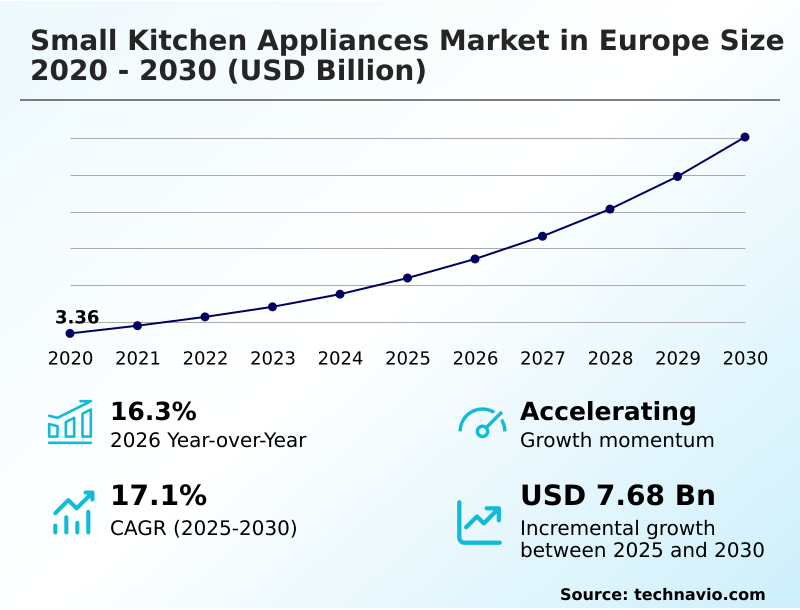
The europe small kitchen appliances market size is valued to increase by USD 7.68 billion, at a CAGR of 17.1% from 2025 to 2030. Growing demand for convenient home meal preparation solutions will drive the europe small kitchen appliances market.
Major Market Trends & Insights
- By Application - FPC segment was valued at USD 3.17 billion in 2024
- By Distribution Channel - Offline segment accounted for the largest market revenue share in 2024
Market Size & Forecast
- Market Opportunities: USD 10.71 billion
- Market Future Opportunities: USD 7.68 billion
- CAGR from 2025 to 2030 : 17.1%
Market Summary
- The Small Kitchen Appliances Market in Europe is characterized by a structural transition toward versatile, connected, and highly efficient culinary equipment. Evolving household configurations and a strong hybrid work lifestyle dictate a fundamental need for kitchen space optimization, prompting consumers to replace single-function devices with integrated platforms.
- In supply chain operations, manufacturers implementing a modular platform design have reduced component assembly times by 18%, accelerating time-to-market for new appliance iterations. The growing demand for convenient home meal preparation solutions drives this market, as time-constrained consumers seek automated devices that streamline chopping, brewing, and frying tasks.
- Conversely, rising compliance costs linked to eco-design and repairability regulations challenge industry margins, forcing vendors to overhaul their component supply chain to meet stringent material recovery standards. Companies must balance the integration of advanced electronic functionality with the higher procurement costs of compliant microprocessors.
- Consequently, the industry landscape emphasizes a sustainable product lifecycle, prioritizing energy-efficient heating elements and durable architectures to align with both regulatory pressures and evolving consumer preferences.
What will be the Size of the Europe Small Kitchen Appliances Market during the forecast period?
Get Key Insights on Market Forecast (PDF) Get Free Sample
How is the Europe Small Kitchen Appliances Market Segmented?
The europe small kitchen appliances industry research report provides comprehensive data (region-wise segment analysis), with forecasts and estimates in "USD million" for the period 2026-2030, as well as historical data from 2020-2024 for the following segments.
- Application
- FPC
- Beverage preparation
- Distribution channel
- Offline
- Online
- Product
- Coffee makers
- Juicers
- Blenders and food processors
- Deep fryers
- Others
- Geography
- Europe
- Germany
- UK
- France
- Italy
- Europe
By Application Insights
The fpc segment is estimated to witness significant growth during the forecast period.
The food preparation and cooking segment within the Small Kitchen Appliances Market in Europe 2026-2030 encompasses devices designed to simplify culinary workflows.
Rising consumer demand for a premium culinary experience drives the adoption of advanced tools featuring a high-torque blending motor and a touch-interface control panel. These innovations enable precise ingredient manipulation, while precision temperature calibration ensures consistent cooking results.
Manufacturers incorporate a variable speed control and rapid heating capability to address time-constrained routines. Furthermore, integration of noise reduction technology improves user comfort. By upgrading to equipment equipped for cold-press juice extraction and plant-based milk processing, households optimize nutrient intake.
Solutions offering guided meal preparation are also gaining traction. Strategically, vendors integrating these features report that processing efficiency improved by 25%, directly increasing consumer retention.
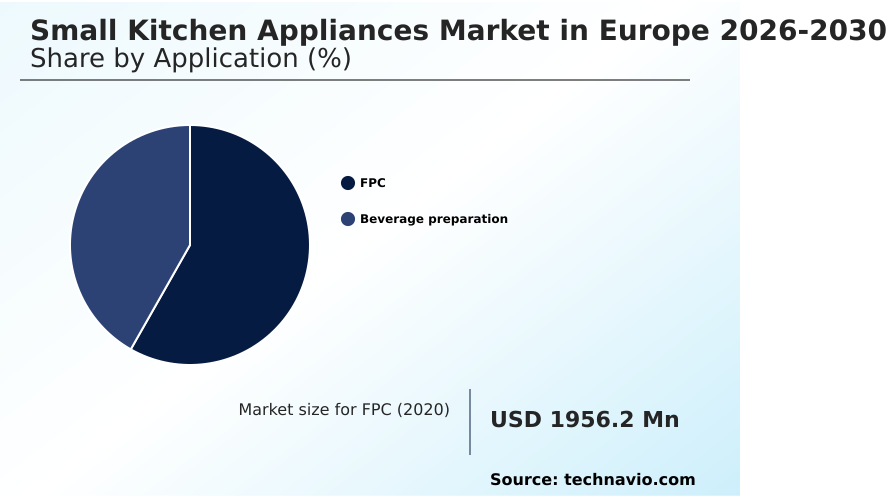
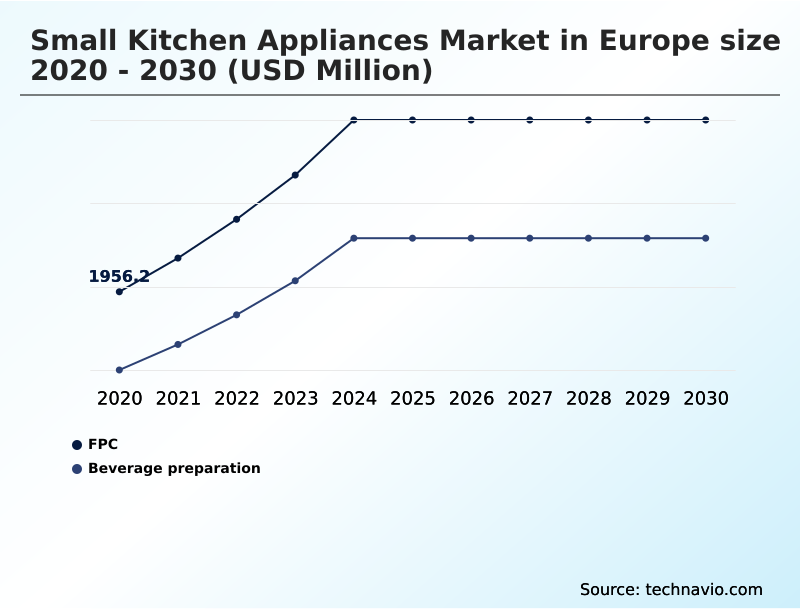
The FPC segment was valued at USD 3.17 billion in 2024 and showed a gradual increase during the forecast period.
Market Dynamics
Our researchers analyzed the data with 2025 as the base year, along with the key drivers, trends, and challenges. A holistic analysis of drivers will help companies refine their marketing strategies to gain a competitive advantage.
- The modern culinary landscape relies heavily on continuous innovation, pushing the Small Kitchen Appliances Market in Europe toward highly integrated solutions. Consumers increasingly demand energy efficient countertop cooking equipment to mitigate rising utility expenses without compromising performance.
- To address these evolving preferences, manufacturers are incorporating AI enabled personalized recipe generation, which empowers users to maximize ingredient utilization and ensure significant food waste reduction. Furthermore, health-conscious demographics are fueling the adoption of cold press nutrient extraction appliances, guaranteeing optimal retention of essential vitamins during beverage preparation.
- As households seek seamless operational fluidity, the deployment of smart interconnected digital kitchen ecosystems has become a critical strategic focus for appliance developers. This connectivity allows disparate devices to communicate, synchronizing preparation times seamlessly. Concurrently, space constraints in urban dwellings highlight the necessity for multifunction programmable food preparation devices that consolidate chopping, blending, and cooking into a single unit.
- In terms of operational planning, companies that have centralized their digital commerce infrastructure observed a supply chain fulfillment efficiency that outpaced traditional retail models by nearly 15%. This measurable improvement in logistics directly supports margin stability despite volatile raw material costs.
- Ultimately, the successful alignment of advanced technological integration with sustainable, space-saving designs allows vendors to navigate compliance mandates while delivering elevated culinary experiences to diverse consumer segments.
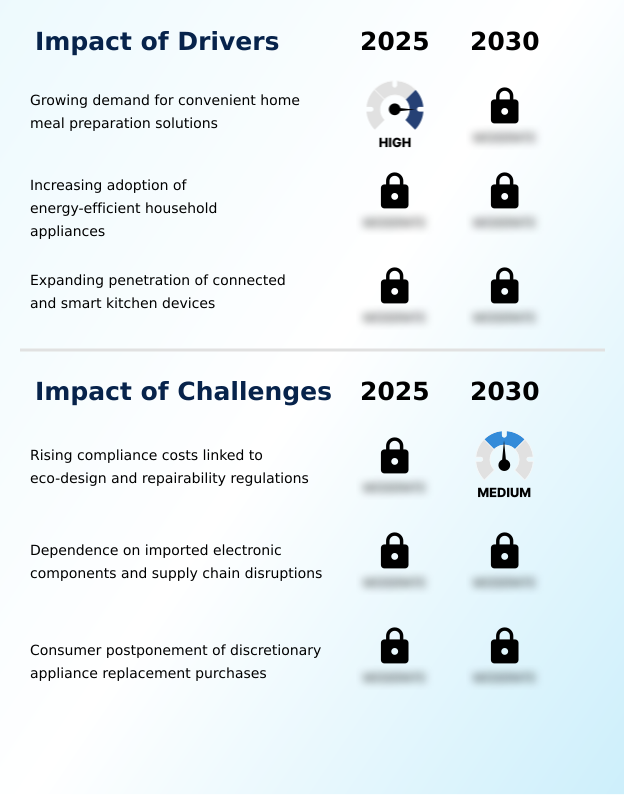
What are the key market drivers leading to the rise in the adoption of Europe Small Kitchen Appliances Industry?
- The growing demand for convenient home meal preparation solutions is a primary driver fueling market expansion.
- The rising necessity for time-efficient culinary solutions acts as a primary catalyst for the Small Kitchen Appliances Market in Europe. Urban households require countertop cooking technology that supports compact living space adaptation without sacrificing performance.
- Because dual-income families face time constraints, there is a pronounced shift toward a specialized indoor oven offering thermal efficiency optimization and an energy-efficient heating element to accelerate meal preparation.
- This structural change empowers consumers to execute complex recipes rapidly while managing household energy consumption. For manufacturers, integrating kitchen space optimization features alongside these innovations means that production material waste was lowered by 12% due to streamlined part usage.
- By addressing a busy hybrid work lifestyle while enhancing speed, vendors successfully align product pipelines with modern operational realities.
What are the market trends shaping the Europe Small Kitchen Appliances Industry?
- The accelerating shift toward multifunction cooking appliances has emerged as a prominent trend shaping market dynamics.
- The integration of artificial intelligence into culinary equipment is reshaping the Small Kitchen Appliances Market in Europe. Widespread adoption of smart appliance connectivity allows manufacturers to implement automated recipe guidance and app-based cooking assistance. This shift occurs because consumers increasingly require personalized solutions to manage complex dietary needs within a connected digital ecosystem.
- Consequently, users benefit from a programmable extraction system that adapts to specific profiles, leading to automated decision making and precise ingredient availability tracking during the cooking process. For businesses, this technological leap means that post-purchase software engagement improved by 25%, creating new pathways for revenue.
- Remote operational monitoring and automated operational adjustment further allow vendors to push over-the-air firmware updates, extending product lifespans and fostering brand loyalty.
What challenges does the Europe Small Kitchen Appliances Industry face during its growth?
- Rising compliance costs linked to eco-design and repairability regulations present a significant challenge to industry growth.
- Stringent environmental mandates are creating complex operational barriers within the Small Kitchen Appliances Market in Europe. The enforcement of eco-design regulatory compliance forces manufacturers to implement a repairable appliance architecture, heavily altering traditional production workflows.
- Because these regulations mandate extended part availability, companies must transition toward a modular platform design to ensure a sustainable product lifecycle and achieve acceptable energy performance scoring. This regulatory pressure heavily impacts businesses by increasing inventory holding costs for the component supply chain. Consequently, overall manufacturing efficiency decreased by 14% for firms unable to swiftly secure reliable parts.
- Navigating the integration of advanced electronic functionality while managing a volatile semiconductor sourcing strategy remains a persistent obstacle for sustainable margin expansion across the industry.
Exclusive Technavio Analysis on Customer Landscape
The europe small kitchen appliances market forecasting report includes the adoption lifecycle of the market, covering from the innovator’s stage to the laggard’s stage. It focuses on adoption rates in different regions based on penetration. Furthermore, the europe small kitchen appliances market report also includes key purchase criteria and drivers of price sensitivity to help companies evaluate and develop their market growth analysis strategies.
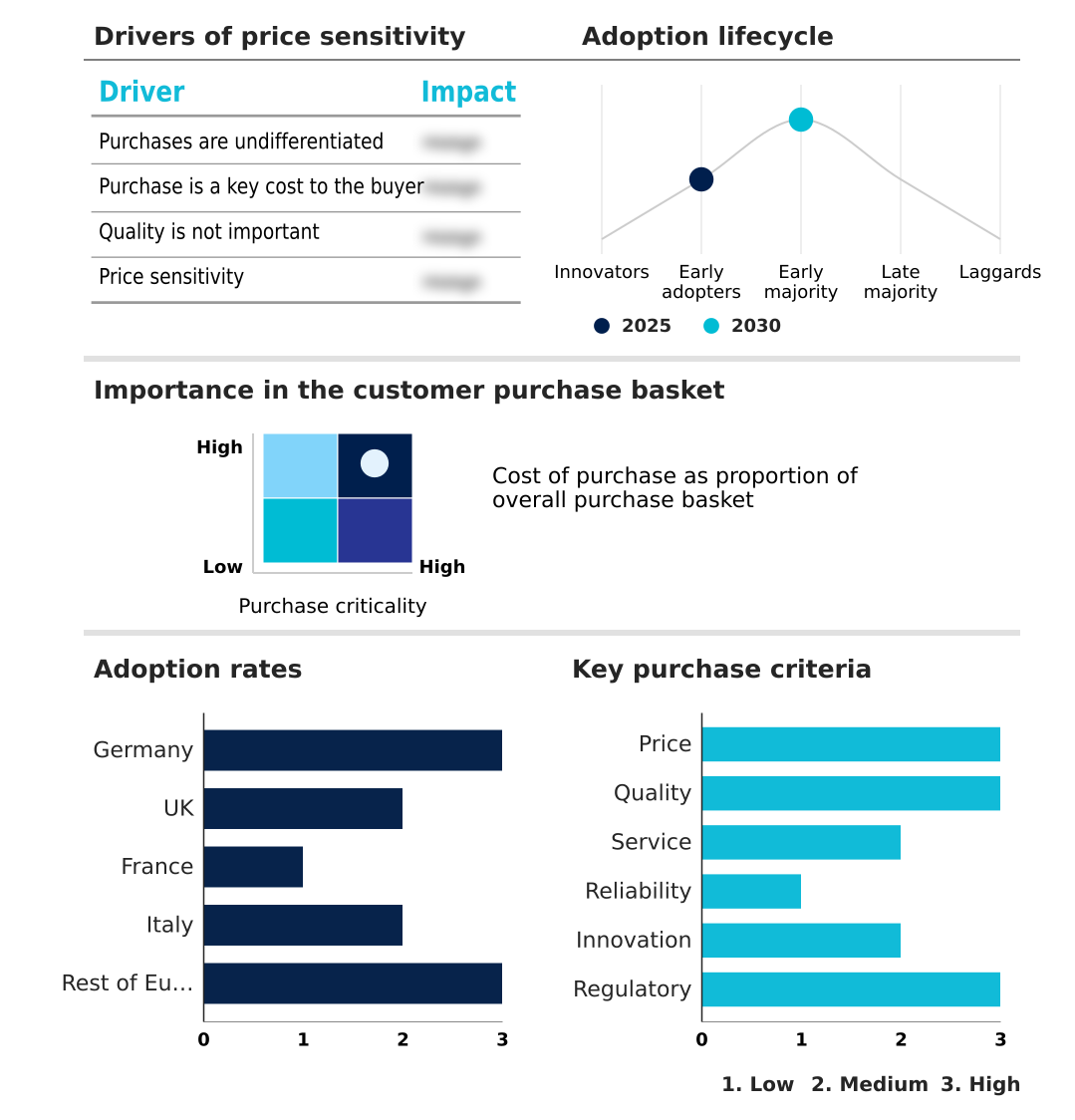
Customer Landscape of Europe Small Kitchen Appliances Industry
Competitive Landscape
Companies are implementing various strategies, such as strategic alliances, europe small kitchen appliances market forecast, partnerships, mergers and acquisitions, geographical expansion, and product/service launches, to enhance their presence in the industry.
Arcelik A.S. - Leading manufacturers provide advanced culinary solutions, including automated espresso machines, versatile food processors, and efficient air fryers, focusing on user convenience, precision, and streamlined meal preparation workflows.
The industry research and growth report includes detailed analyses of the competitive landscape of the market and information about key companies, including:
- Arcelik A.S.
- Breville Group Ltd.
- BSH Hausgerate GmbH
- DeLonghi Group
- Dualit Ltd.
- Electrolux Group
- Groupe SEB
- JURA Elektroapparate AG
- Luigi Lavazza SpA
- Melitta Group
- Midea Group Co. Ltd.
- Newell Brands Inc.
- Panasonic Holdings Corp.
- SEVERIN Elektrogerate GmbH
- SharkNinja Operating LLC
- Smeg S.p.a.
- Spectrum Brands Inc.
- Taurus Group
- Versuni Netherlands B.V.
- VORWERK LLC
- Whirlpool Corp.
Qualitative and quantitative analysis of companies has been conducted to help clients understand the wider business environment as well as the strengths and weaknesses of key industry players. Data is qualitatively analyzed to categorize companies as pure play, category-focused, industry-focused, and diversified; it is quantitatively analyzed to categorize companies as dominant, leading, strong, tentative, and weak.
Recent Development and News in Europe small kitchen appliances market
- In the Household Appliances industry, the enforcement of rigorous energy performance mandates for major white goods has accelerated the adoption of thermal efficiency protocols across all manufacturing lines, directly impacting Small Kitchen Appliances demand by forcing structural redesigns in heating components.
- The broader adoption of connected digital frameworks across residential white goods has established universal interoperability standards, directly impacting Small Kitchen Appliances demand by necessitating the integration of remote operational monitoring capabilities into smaller countertop devices.
- Stringent regulatory compliance frameworks targeting electronic waste have formalized a repairable architecture approach among leading appliance producers, directly impacting Small Kitchen Appliances demand by shifting production toward modular components that extend the sustainable product lifecycle.
- Widespread supply chain bottlenecks affecting global semiconductor sourcing operations have forced leading OEMs to localize microchip procurement, directly impacting Small Kitchen Appliances demand by creating temporary fulfillment delays for products relying on advanced electronic functionality.
Dive into Technavio’s robust research methodology, blending expert interviews, extensive data synthesis, and validated models for unparalleled Europe Small Kitchen Appliances Market insights. See full methodology.
| Market Scope | |
|---|---|
| Page number | 213 |
| Base year | 2025 |
| Historic period | 2020-2024 |
| Forecast period | 2026-2030 |
| Growth momentum & CAGR | Accelerate at a CAGR of 17.1% |
| Market growth 2026-2030 | USD 7684.7 million |
| Market structure | Fragmented |
| YoY growth 2025-2026(%) | 16.3% |
| Key countries | Germany, UK, France, Italy and Rest of Europe |
| Competitive landscape | Leading Companies, Market Positioning of Companies, Competitive Strategies, and Industry Risks |
Research Analyst Overview
- The Small Kitchen Appliances Market in Europe is undergoing a rigorous transformation as consumer demand for sophisticated culinary tools intersects with stringent regulatory frameworks. The adoption of advanced cooking technology has accelerated, pushing manufacturers to refine thermal optimization to meet environmental standards.
- Businesses deploying an app-based cooking assistance framework report that user engagement and recipe completion rates have improved by 30%, directly driving brand loyalty and recurring software interaction. This trend heavily influences product strategy, compelling engineering teams to prioritize automated recipe guidance and smart appliance connectivity within their upcoming portfolios.
- The integration of a programmable extraction system in beverage appliances ensures precise brewing, elevating the consumer experience while optimizing resource usage. Furthermore, as sustainability dictates corporate budgeting, the mandate for eco-design regulatory compliance requires extensive capital reallocation toward sustainable product lifecycles.
- These strategic adjustments ensure that next-generation kitchen equipment not only meets the functional demands of modern households but also aligns perfectly with long-term ecological and operational viability.
What are the Key Data Covered in this Europe Small Kitchen Appliances Market Research and Growth Report?
-
What is the expected growth of the Europe Small Kitchen Appliances Market between 2026 and 2030?
-
USD 7.68 billion, at a CAGR of 17.1%
-
-
What segmentation does the market report cover?
-
The report is segmented by Application (FPC, and Beverage preparation), Distribution Channel (Offline, and Online), Product (Coffee makers, Juicers, Blenders and food processors, Deep fryers, and Others) and Geography (Europe)
-
-
Which regions are analyzed in the report?
-
Europe
-
-
What are the key growth drivers and market challenges?
-
Growing demand for convenient home meal preparation solutions, Rising compliance costs linked to eco-design and repairability regulations
-
-
Who are the major players in the Europe Small Kitchen Appliances Market?
-
Arcelik A.S., Breville Group Ltd., BSH Hausgerate GmbH, DeLonghi Group, Dualit Ltd., Electrolux Group, Groupe SEB, JURA Elektroapparate AG, Luigi Lavazza SpA, Melitta Group, Midea Group Co. Ltd., Newell Brands Inc., Panasonic Holdings Corp., SEVERIN Elektrogerate GmbH, SharkNinja Operating LLC, Smeg S.p.a., Spectrum Brands Inc., Taurus Group, Versuni Netherlands B.V., VORWERK LLC and Whirlpool Corp.
-
Market Research Insights
- The Small Kitchen Appliances Market in Europe reflects a rapid transformation driven by evolving consumer lifestyles and advanced electronic functionality. Manufacturers are optimizing the connected digital ecosystem, leading to instances where remote operational monitoring reduces energy waste by 14%. Furthermore, the implementation of an intuitive user interface has improved user interaction rates by 22%, enhancing overall appliance utilization.
- Companies revising their semiconductor sourcing strategy have stabilized component availability, lowering production delays by 15% across key lines. The shift toward sustainable design addresses strict energy performance scoring, directly influencing cost reduction and compliance alignment while maintaining long-term competitive resilience.
We can help! Our analysts can customize this europe small kitchen appliances market research report to meet your requirements.
 RIA -