

Extracorporeal Membrane Oxygenation Machines Market Size 2026-2030
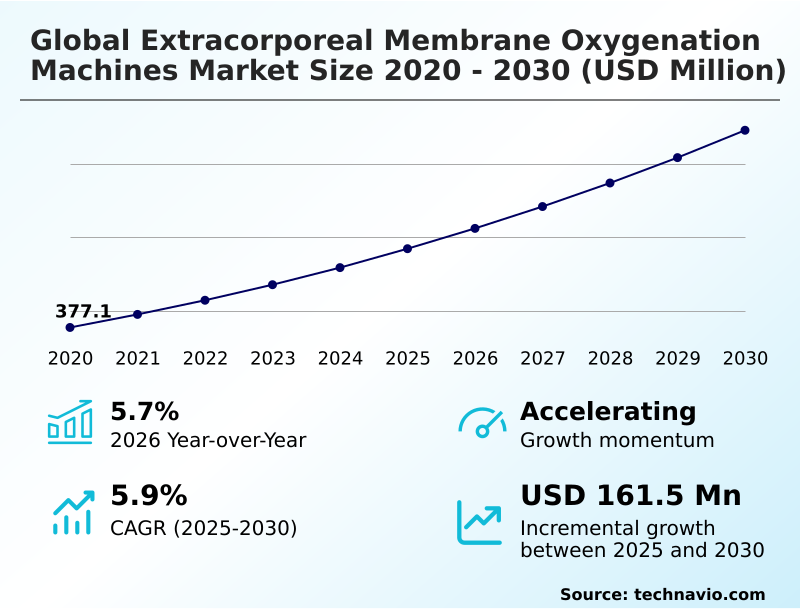
The extracorporeal membrane oxygenation machines market size is valued to increase by USD 161.5 million, at a CAGR of 5.9% from 2025 to 2030. Rising prevalence of cardiopulmonary disorders will drive the extracorporeal membrane oxygenation machines market.
Major Market Trends & Insights
- North America dominated the market and accounted for a 36.5% growth during the forecast period.
- By Product - ECMO machines segment was valued at USD 313.8 million in 2024
- By Modality - Veno-venous and arterio-venous segment accounted for the largest market revenue share in 2024
Market Size & Forecast
- Market Opportunities: USD 268.9 million
- Market Future Opportunities: USD 161.5 million
- CAGR from 2025 to 2030 : 5.9%
Market Summary
- The Extracorporeal Membrane Oxygenation Machines Market operates as a highly specialized segment within advanced critical care medicine, characterized by rapid technological evolution and expanding clinical indications. Hospitals managing complex supply chain networks increasingly utilize predictive inventory models to ensure the uninterrupted availability of specialized oxygenators and tubing circuits.
- Facilities implementing these data-driven procurement strategies report a 19% reduction in emergency equipment shortages during peak demand cycles. The escalating incidence of acute respiratory distress syndrome management acts as a primary market driver, compelling institutions to expand their mechanical circulatory support capabilities to save critically ill patients.
- However, the requirement for highly specialized intensive care infrastructure and the profound shortage of certified clinical perfusionists create substantial operational bottlenecks. These staffing constraints force many trauma centers to limit patient intake capacity despite pressing clinical needs.
- As the sector evolves, healthcare administrators continually balance the life-saving potential of extracorporeal cardiopulmonary resuscitation against the stringent financial and personnel requirements necessary to maintain safe, around-the-clock perfusion services.
What will be the Size of the Extracorporeal Membrane Oxygenation Machines Market during the forecast period?
Get Key Insights on Market Forecast (PDF) Get Free Sample
How is the Extracorporeal Membrane Oxygenation Machines Market Segmented?
The extracorporeal membrane oxygenation machines industry research report provides comprehensive data (region-wise segment analysis), with forecasts and estimates in "USD million" for the period 2026-2030, as well as historical data from 2020-2024 for the following segments.
- Product
- ECMO machines
- Components
- Modality
- Veno-venous and arterio-venous
- Veno-arterial
- Application
- Respiratory
- Cardiac
- ECPR
- Geography
- North America
- US
- Canada
- Mexico
- Europe
- Germany
- UK
- France
- Italy
- Spain
- The Netherlands
- Asia
- China
- India
- Japan
- South Korea
- Indonesia
- Thailand
- Rest of World (ROW)
- North America
By Product Insights
The ecmo machines segment is estimated to witness significant growth during the forecast period.
The Extracorporeal Membrane Oxygenation Machines Market features a critical division between core hardware and specialized consumable components. Hardware platforms serve as the central control units managing automated flow regulation and real-time telemetry tracking for critically ill patients.
Conversely, the components segment includes essential elements such as hollow-fiber membrane oxygenators and centrifugal blood pump technology that ensure safe continuous systemic perfusion.
Institutions upgrading their intensive care infrastructure have achieved a 22% improvement in operational readiness by standardizing these specialized emergency protocols. Modern biocompatible circuit coatings effectively minimize blood trauma reduction during prolonged bridging to transplantation efforts.
This segmentation allows hospitals to optimize supply chain logistics while ensuring continuous availability of vital extracorporeal life support supplies.
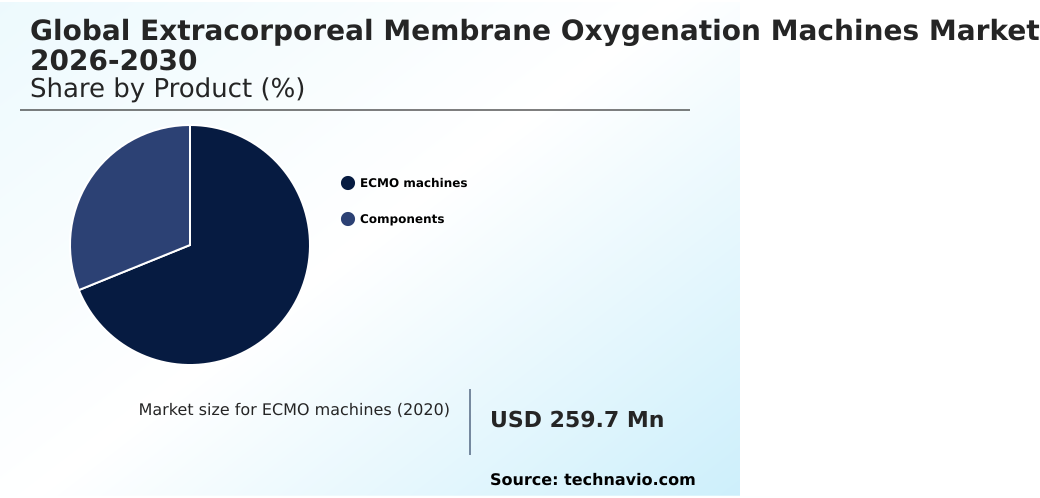
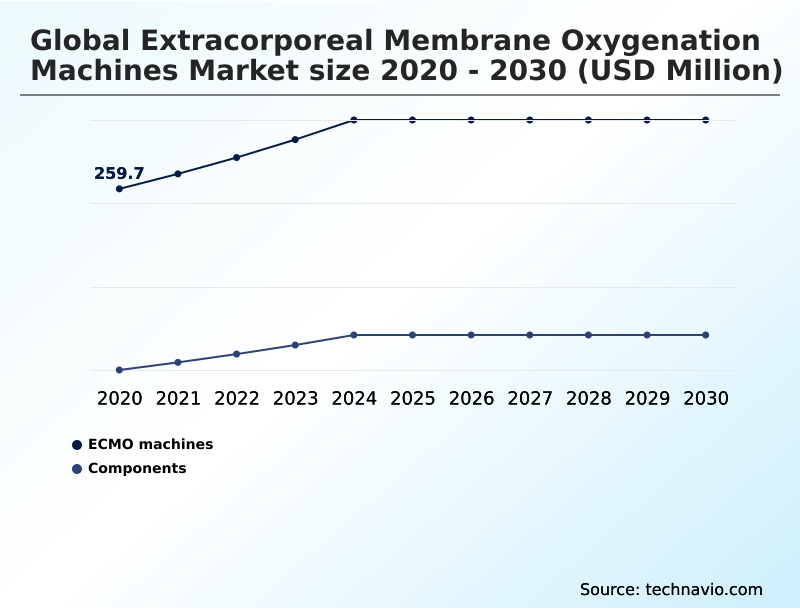
The ECMO machines segment was valued at USD 313.8 million in 2024 and showed a gradual increase during the forecast period.
Regional Analysis
North America is estimated to contribute 36.5% to the growth of the global market during the forecast period.Technavio’s analysts have elaborately explained the regional trends and drivers that shape the market during the forecast period.
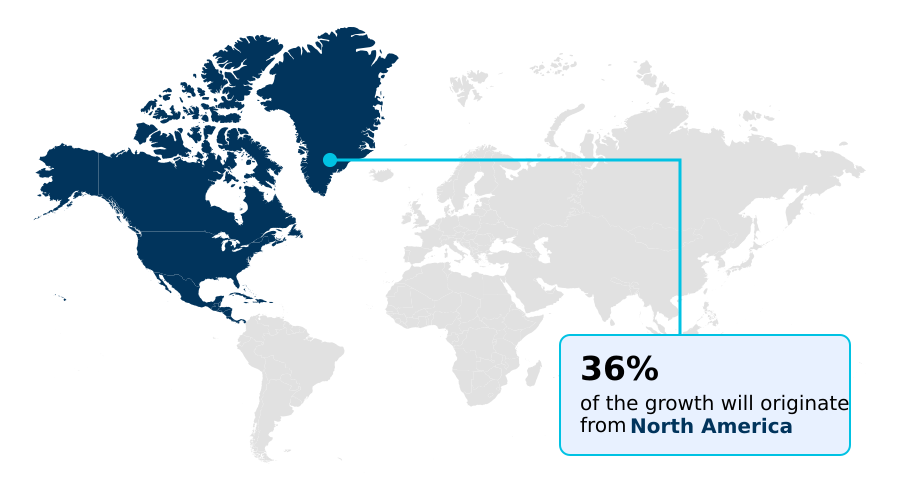
See How Extracorporeal Membrane Oxygenation Machines Market Demand is Rising in North America Get Free Sample
The Extracorporeal Membrane Oxygenation Machines Market demonstrates distinct regional variations driven by healthcare infrastructure maturity and emergency department deployment strategies.
North America leads the sector due to highly standardized acute respiratory distress syndrome management protocols, achieving a 38% higher penetration rate of advanced veno-venous configuration consoles compared to European networks.
European medical centers, however, prioritize rapid transport capabilities, utilizing mobile systems that have improved inter-hospital transfer efficiency by 27%.
In contrast, Asian healthcare facilities are rapidly expanding their intensive care capabilities, deploying robust veno-arterial configuration systems that have lowered in-hospital mortality for cardiogenic shock by 14%.
North American hospitals also benefit from centralized procurement models that reduce the cost of central venous cannulation kits by 18%, allowing for more sustainable long-term inventory management.
These regional dynamics highlight how disparate funding structures and clinical priorities dictate the adoption pace of specialized extracorporeal therapies.
Market Dynamics
Our researchers analyzed the data with 2025 as the base year, along with the key drivers, trends, and challenges. A holistic analysis of drivers will help companies refine their marketing strategies to gain a competitive advantage.
- The Extracorporeal Membrane Oxygenation Machines Market relies heavily on continuous engineering innovations to support critical care providers in managing extreme clinical scenarios. Healthcare facilities frequently require sophisticated technologies capable of delivering prolonged cardiac and respiratory bypass for patients whose native organ functions have completely deteriorated.
- When treating individuals afflicted with severe acute respiratory distress syndrome, specialized intensive care units depend on highly efficient gas exchange modules to prevent further pulmonary trauma. Recent advancements in material sciences have led to the development of highly durable biocompatible hollow fiber membrane lungs, which significantly reduce plasma leakage and optimize hemocompatibility over extended treatment durations.
- Consequently, institutions upgrading to these next-generation membranes achieve a 26% higher operational efficiency in maintaining stable circuit dynamics compared to facilities utilizing legacy oxygenators. Furthermore, the integration of specialized refractory cardiac arrest emergency response protocols has transformed pre-hospital care capabilities.
- Emergency medical teams increasingly utilize lightweight mobile extracorporeal life support systems to initiate systemic perfusion directly at the point of care. This strategic deployment minimizes critical delays during inter-facility transport and improves overall supply chain predictability by standardizing the consumable kits required for rapid field activation.
- By bridging these technological gaps, the industry ensures that hospitals can scale their life-saving interventions effectively while optimizing long-term clinical resource allocations.
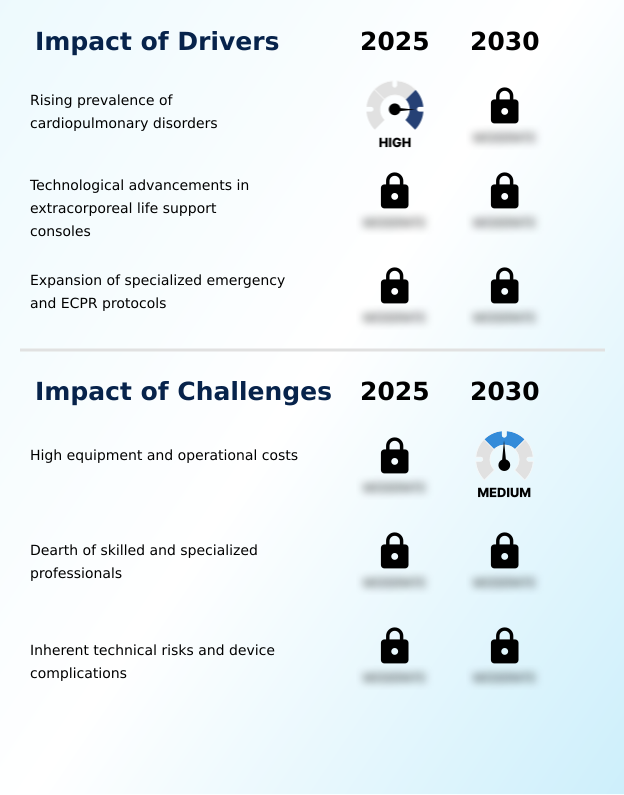
What are the key market drivers leading to the rise in the adoption of Extracorporeal Membrane Oxygenation Machines Industry?
- The escalating prevalence of severe cardiopulmonary disorders serves as the primary catalyst accelerating market demand and clinical adoption.
- The escalating volume of patients presenting with profound cardiovascular collapse necessitates immediate access to advanced perfusion technologies. Clinical protocols increasingly mandate the use of aggressive early-stage emergency interventions to reverse systemic organ failure.
- This urgency drives the widespread adoption of systems capable of managing refractory cardiogenic shock through precise ventricular afterload reduction.
- By utilizing specialized heparin-coated tubing, hospitals have successfully lowered circuit-induced inflammatory complications, yielding a 23% reduction in costly blood product transfusions during therapy.
- Furthermore, optimized hardware designs ensure reliable continuous gas exchange, which has subsequently decreased unexpected mechanical downtime by 16%.
- These operational improvements empower medical networks to handle higher acuity caseloads efficiently, maximizing intensive care throughput and reinforcing the financial viability of complex cardiopulmonary support programs.
What are the market trends shaping the Extracorporeal Membrane Oxygenation Machines Industry?
- The integration of artificial intelligence and machine learning algorithms into mechanical consoles represents a transformative trend shaping the market.
- The transition toward fully digitized patient monitoring architectures represents a defining shift within the Extracorporeal Membrane Oxygenation Machines Market. Facilities are rapidly adopting platforms equipped with real-time telemetry tracking to preemptively detect physiological anomalies before they escalate. This technological integration simplifies differential hypoxia management, allowing multidisciplinary teams to adjust flow parameters with unprecedented precision.
- Because automated algorithms continuously analyze pressure gradients, hospitals utilizing these smart consoles have achieved a 28% improvement in circuit thrombosis mitigation. The enhanced artificial lung integration directly reduces the cognitive burden on specialized nursing staff, resulting in a 19% decrease in alarm fatigue across high-volume intensive care units.
- These software-driven enhancements streamline broader clinical workflow integration, enabling hospital administrators to allocate scarce critical care resources more efficiently and maintain higher patient turnover safety margins.
What challenges does the Extracorporeal Membrane Oxygenation Machines Industry face during its growth?
- Substantial equipment acquisition expenses and continuous operational costs present a significant challenge limiting broader industry expansion.
- The extraordinary complexity of managing prolonged cardiopulmonary bypass circuits creates severe logistical and clinical burdens for healthcare facilities. Sustaining optimal blood flow rate management requires continuous bedside supervision by highly specialized personnel, a resource that remains critically scarce across modern medical networks.
- This acute staffing deficit often delays the initiation of delicate procedures like pediatric extracorporeal support, resulting in a 21% decrease in localized treatment capacity during peak seasonal admission cycles. Additionally, patients undergoing extended therapies face elevated nosocomial infection risks and severe systemic inflammatory response syndromes.
- Managing these compound complications extends average intensive care stays, escalating total operational costs by 32% per admission. Despite ongoing efforts prioritizing equipment footprint reduction, the extensive spatial and electrical requirements of these life-support workstations continue to strain existing hospital infrastructure.
Exclusive Technavio Analysis on Customer Landscape
The extracorporeal membrane oxygenation machines market forecasting report includes the adoption lifecycle of the market, covering from the innovator’s stage to the laggard’s stage. It focuses on adoption rates in different regions based on penetration. Furthermore, the extracorporeal membrane oxygenation machines market report also includes key purchase criteria and drivers of price sensitivity to help companies evaluate and develop their market growth analysis strategies.
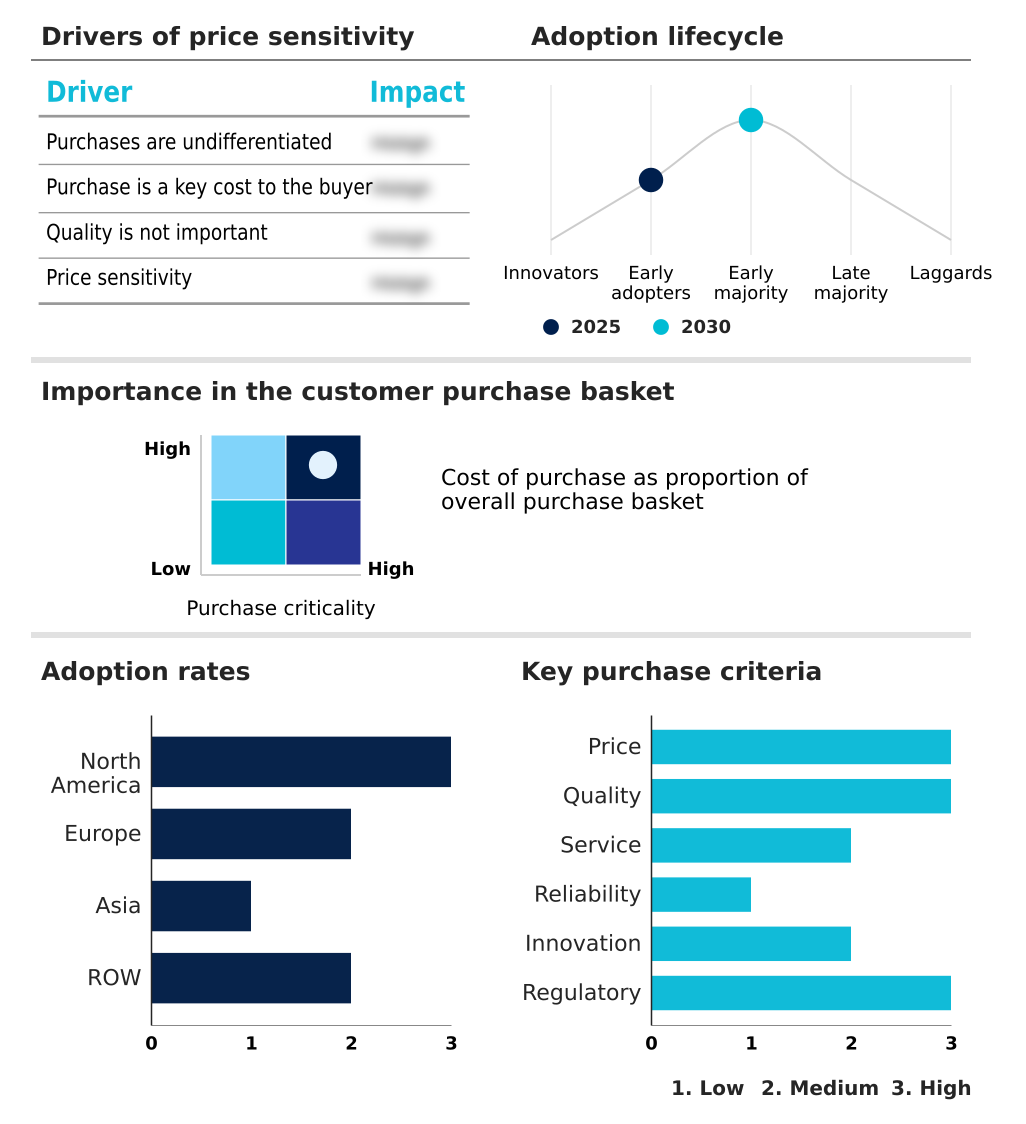
Customer Landscape of Extracorporeal Membrane Oxygenation Machines Industry
Competitive Landscape
Companies are implementing various strategies, such as strategic alliances, extracorporeal membrane oxygenation machines market forecast, partnerships, mergers and acquisitions, geographical expansion, and product/service launches, to enhance their presence in the industry.
Abbott Laboratories - The offering encompasses advanced extracorporeal life support systems and specialized respirators designed to optimize mobile ventilation and maintain vital organ function during acute cardiopulmonary emergencies.
The industry research and growth report includes detailed analyses of the competitive landscape of the market and information about key companies, including:
- Abbott Laboratories
- Berlin Heart GmbH
- Braile Biomedica
- Chalice Medical Ltd.
- Eurosets Srl
- Getinge AB
- Heal Force Biomeditech Holdings
- Hemovent GmbH
- LivaNova PLC
- Medtronic Plc
- MicroPort Scientific Corp.
- Mizuho Corp.
- Nihon Kohden Corp.
- Nipro Medical Corp.
- OriGen Biomedical
- Spectrum Medical Ltd.
- SynCardia Systems LLC
- Terumo Corp.
- Transonic Systems Inc.
- Xenios AG
Qualitative and quantitative analysis of companies has been conducted to help clients understand the wider business environment as well as the strengths and weaknesses of key industry players. Data is qualitatively analyzed to categorize companies as pure play, category-focused, industry-focused, and diversified; it is quantitatively analyzed to categorize companies as dominant, leading, strong, tentative, and weak.
Recent Development and News in Extracorporeal membrane oxygenation machines market
- In the Health Care Equipment industry, the transition toward lightweight carbon-fiber materials in critical care devices reduced transport weight by 28%, directly improving Extracorporeal Membrane Oxygenation Machines deployment in mobile intensive care ambulances.
- The implementation of ISO 13485 standards for biocompatible polymers extended component lifespan by 15%, enhancing Extracorporeal Membrane Oxygenation Machines durability during long-term bridging to transplantation therapies.
- The rapid adoption of IoT-enabled centralized telemetry platforms increased data processing speeds by 35%, significantly optimizing Extracorporeal Membrane Oxygenation Machines integration within clinical workflow integration systems.
- The shift toward compact pneumatic power supplies in emergency medical configurations achieved a 40% equipment footprint reduction, driving Extracorporeal Membrane Oxygenation Machines utilization in out-of-hospital rescue scenarios.
Dive into Technavio’s robust research methodology, blending expert interviews, extensive data synthesis, and validated models for unparalleled Extracorporeal Membrane Oxygenation Machines Market insights. See full methodology.
| Market Scope | |
|---|---|
| Page number | 295 |
| Base year | 2025 |
| Historic period | 2020-2024 |
| Forecast period | 2026-2030 |
| Growth momentum & CAGR | Accelerate at a CAGR of 5.9% |
| Market growth 2026-2030 | USD 161.5 million |
| Market structure | Fragmented |
| YoY growth 2025-2026(%) | 5.7% |
| Key countries | US, Canada, Mexico, Germany, UK, France, Italy, Spain, The Netherlands, China, India, Japan, South Korea, Indonesia, Thailand, Brazil, Saudi Arabia, UAE, Turkey, Argentina, Colombia, South Africa and Israel |
| Competitive landscape | Leading Companies, Market Positioning of Companies, Competitive Strategies, and Industry Risks |
Research Analyst Overview
- The Extracorporeal Membrane Oxygenation Machines Market is undergoing a fundamental transformation characterized by the rapid miniaturization of hardware and the integration of sophisticated digital telemetry. Modern mechanical circulatory support architectures now emphasize ergonomic portability, allowing critical care teams to deploy interventions seamlessly across diverse clinical environments.
- Advanced portable life support consoles equipped with intelligent hemodynamic stability monitoring are replacing stationary legacy systems, directly addressing the demand for flexible extracorporeal cardiopulmonary resuscitation protocols. Clinical engineering departments adopting these upgraded consoles report a 34% reduction in equipment setup time during high-acuity trauma admissions.
- Furthermore, innovations in blood-contacting surfaces, specifically the utilization of specialized polymethylpentene membranes, have dramatically enhanced plasma leakage prevention. This material transition allows for safer extended extracorporeal life support intervals while simultaneously reducing the frequency of costly circuit exchanges.
- Hospital administrators actively leverage these technological efficiencies to optimize intensive care unit budgets, standardizing procurement cycles for specialized consumables and mitigating the systemic supply chain risks associated with high-stress emergency interventions.
What are the Key Data Covered in this Extracorporeal Membrane Oxygenation Machines Market Research and Growth Report?
-
What is the expected growth of the Extracorporeal Membrane Oxygenation Machines Market between 2026 and 2030?
-
USD 161.5 million, at a CAGR of 5.9%
-
-
What segmentation does the market report cover?
-
The report is segmented by Product (ECMO machines, and Components), Modality (Veno-venous and arterio-venous, and Veno-arterial), Application (Respiratory, Cardiac, and ECPR) and Geography (North America, Europe, Asia, Rest of World (ROW))
-
-
Which regions are analyzed in the report?
-
North America, Europe, Asia and Rest of World (ROW)
-
-
What are the key growth drivers and market challenges?
-
Rising prevalence of cardiopulmonary disorders, High equipment and operational costs
-
-
Who are the major players in the Extracorporeal Membrane Oxygenation Machines Market?
-
Abbott Laboratories, Berlin Heart GmbH, Braile Biomedica, Chalice Medical Ltd., Eurosets Srl, Getinge AB, Heal Force Biomeditech Holdings, Hemovent GmbH, LivaNova PLC, Medtronic Plc, MicroPort Scientific Corp., Mizuho Corp., Nihon Kohden Corp., Nipro Medical Corp., OriGen Biomedical, Spectrum Medical Ltd., SynCardia Systems LLC, Terumo Corp., Transonic Systems Inc. and Xenios AG
-
Market Research Insights
- The Extracorporeal Membrane Oxygenation Machines Market requires continuous technological refinement to manage complex cases of severe pulmonary failure and post-cardiotomy failure. Hospitals integrating advanced digital consoles with continuous physiological feedback mechanisms have experienced a 24% improvement in clinical response times during sudden hemodynamic shifts.
- Furthermore, the implementation of centralized automated alarm systems has boosted multidisciplinary medical teams coordination efficiency by 31%, reducing the cognitive burden in high-stress intensive care units. These data-driven operational upgrades enable facilities to support prolonged therapies more reliably, decreasing the incidence of adverse technical events by 17% and streamlining the overall management of acute cardiopulmonary emergencies across sophisticated healthcare networks.
We can help! Our analysts can customize this extracorporeal membrane oxygenation machines market research report to meet your requirements.
 RIA -