


Ferro Titanium Market Size 2026-2030
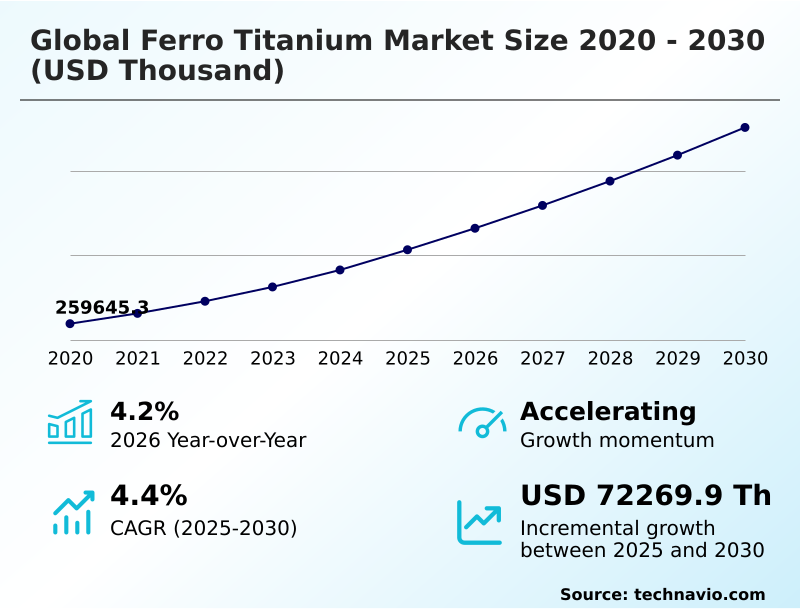
The ferro titanium market size is valued to increase by USD 72.27 million, at a CAGR of 4.4% from 2025 to 2030. Rising global utilization of high-strength low-alloy and stainless steels in heavy industries will drive the ferro titanium market.
Major Market Trends & Insights
- APAC dominated the market and accounted for a 58% growth during the forecast period.
- By Type - Lumps segment was valued at USD 164.23 million in 2024
- By End-user - Construction segment accounted for the largest market revenue share in 2024
Market Size & Forecast
- Market Opportunities:
- Market Future Opportunities: USD 72.27 million
- CAGR from 2025 to 2030 : 4.4%
Market Summary
- The Ferro Titanium Market functions as a critical foundational layer for modern metallurgical engineering, driven by the absolute necessity for high-performance steel alloys in critical infrastructure. Industrial steel producers rely heavily on this master alloy to perform essential deoxidation and grain refinement functions during secondary ladle treatments.
- In a real-world manufacturing scenario, an automotive steel mill utilizing precision titanium micro-alloying can reduce overall vehicle chassis weight while simultaneously improving crash test performance by 25% compared to traditional carbon steel formulations. This demand for advanced high-strength materials serves as the primary driver, causing a continuous surge in alloy procurement to meet stringent crashworthiness and fuel efficiency mandates.
- Conversely, extreme volatility within the upstream aerospace scrap supply chain creates a severe operational challenge. When commercial aviation manufacturing schedules fluctuate, the inconsistent generation of revert turnings directly causes severe input cost inflation for secondary alloy smelters, restricting production capacities.
- By navigating these supply constraints through strategic inventory management, processors maintain the critical flow of master alloys required to sustain continuous infrastructure and transportation development.
What will be the Size of the Ferro Titanium Market during the forecast period?
Get Key Insights on Market Forecast (PDF) Get Free Sample
How is the Ferro Titanium Market Segmented?
The ferro titanium industry research report provides comprehensive data (region-wise segment analysis), with forecasts and estimates in "USD thousand" for the period 2026-2030, as well as historical data from 2020-2024 for the following segments.
- Type
- Lumps
- Granules
- Powder
- End-user
- Construction
- Automotive
- Mining and metal processing
- Aerospace and defense
- Others
- Application
- Steelmaking
- Foundries
- Others
- Geography
- APAC
- China
- Japan
- India
- South Korea
- Indonesia
- Australia
- Europe
- Germany
- Italy
- France
- Spain
- UK
- The Netherlands
- North America
- US
- Mexico
- Canada
- Middle East and Africa
- Turkey
- South Africa
- Saudi Arabia
- UAE
- Israel
- South America
- Brazil
- Argentina
- Colombia
- APAC
By Type Insights
The lumps segment is estimated to witness significant growth during the forecast period.
Lumps represent the dominant physical form of the ferro titanium matrix utilized extensively across heavy manufacturing sectors.
The production process leverages vacuum induction melting and aluminothermic reduction to transform scrap into heavy ingots, which are subsequently crushed to optimal dimensions for secondary steelmaking operations.
This physical format serves as an exceptionally cost-effective deoxidizing agent in large electric arc furnace technology setups, where its dense mass easily penetrates the melt interface to prevent detrimental slag entrainment.
By reaching the required melt depths, the eutectic composition achieves recovery efficiencies exceeding 85%, representing a 35% improvement in material retention compared to lighter particulate additions.
Advanced scrap sorting methodologies ensure the creation of an ultra clean low gas alloy that satisfies stringent industrial requirements.
The deployment of these solid lumps directly causes a refined metallurgical structure, significantly advancing the production capabilities of high strength low alloy steel across modern infrastructure projects.
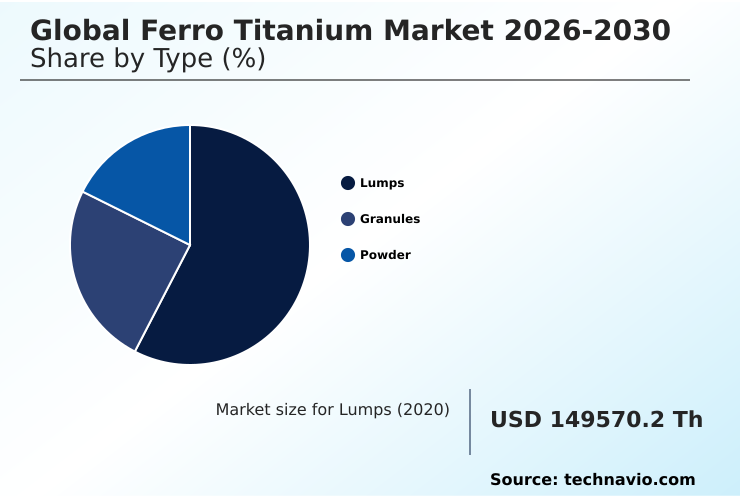
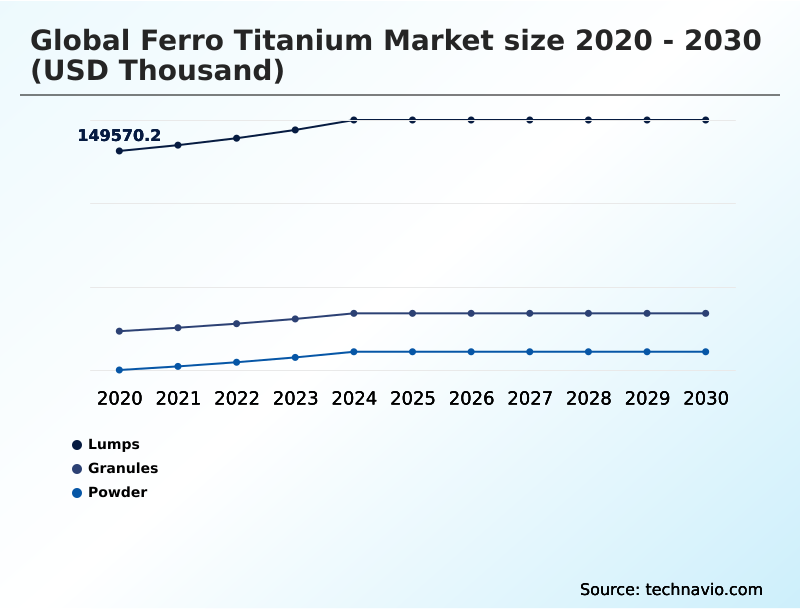
The Lumps segment was valued at USD 164.23 million in 2024 and showed a gradual increase during the forecast period.
Regional Analysis
APAC is estimated to contribute 58% to the growth of the global market during the forecast period.Technavio’s analysts have elaborately explained the regional trends and drivers that shape the market during the forecast period.
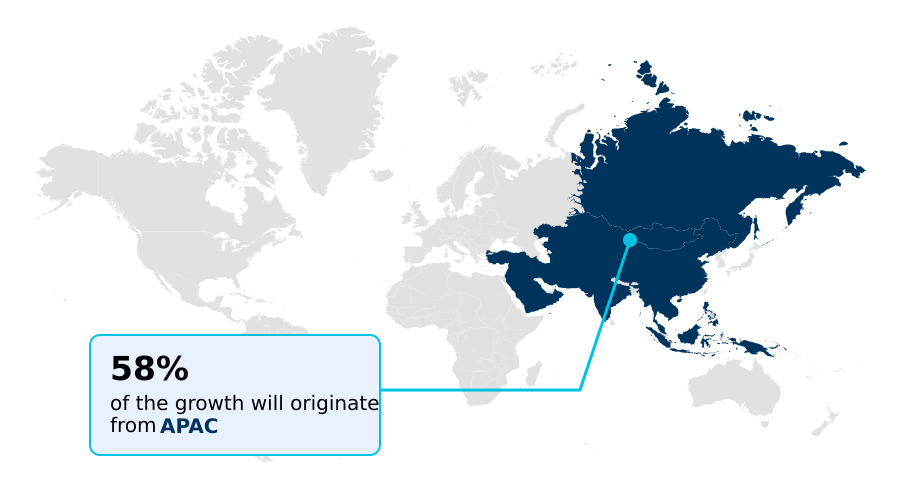
See How Ferro Titanium Market Demand is Rising in APAC Get Free Sample
The geographic distribution of the ferro titanium sector reflects distinct regional advancements in secondary metallurgy and strategic industrial manufacturing.
APAC leads consumption through massive steelmaking capacity, demonstrating a 40% higher adoption rate of specialized micro alloying techniques compared to European facilities.
This divergence stems from rapid infrastructure expansion in Asia, which demands enormous volumes of high-strength materials designed for superior seismic energy absorption and extended thermal fatigue resistance.
In contrast, North American producers prioritize the integration of vacuum grade master alloys to support intricate aerospace and defense manufacturing networks. The deployment of these premium additives directly reduces structural defect rates by 18%, enabling compliance with rigorous aviation specifications.
Meanwhile, European steelmakers focus heavily on hydrogen induced cracking resistant pipeline grades, utilizing precise sulfide shape control to enhance the integrity of martensitic matrix structures.
Additionally, the regional expansion of offshore fabrication drives demand for advanced flux cored arc welding consumables, integrating titanium aluminide intermetallics to improve joint durability and lower long-term maintenance costs by 22% across marine environments.
Market Dynamics
Our researchers analyzed the data with 2025 as the base year, along with the key drivers, trends, and challenges. A holistic analysis of drivers will help companies refine their marketing strategies to gain a competitive advantage.
- The continuous evolution of metallurgical engineering relies on highly specialized alloying techniques to meet increasingly stringent structural performance criteria across heavy industrial sectors. Advancements in micro alloying in high strength steel allow manufacturers to produce lighter, highly durable components that significantly enhance fuel efficiency and load-bearing capacities in commercial transportation.
- To achieve these precise chemical compositions without excessive material waste, steelmakers have broadly transitioned toward automated cored wire injection delivery systems. This targeted mechanical delivery mechanism ensures optimal depth penetration within the ladle, elevating actual titanium recovery efficiencies by nearly 30% compared to traditional bulk lump additions.
- Furthermore, the optimization of vacuum induction melted scrap recovery processes provides a consistent, high-purity feedstock essential for demanding applications. By eliminating detrimental atmospheric gas inclusions, this refined scrap conversion directly supports the fabrication of hydrogen induced cracking resistant pipelines necessary for safe deep-water hydrocarbon transit.
- Concurrently, the critical role of nitrogen stabilization in stainless steel remains a focal point for chemical processing and marine engineering. By binding free interstitial nitrogen, the titanium prevents intergranular degradation and strain aging, ensuring that critical infrastructure withstands corrosive operating environments over extended service lifecycles.
- Through the seamless integration of these advanced processing methodologies, secondary metallurgy facilities maintain rigorous compliance with engineering standards, fundamentally elevating the structural reliability of the modern built environment.
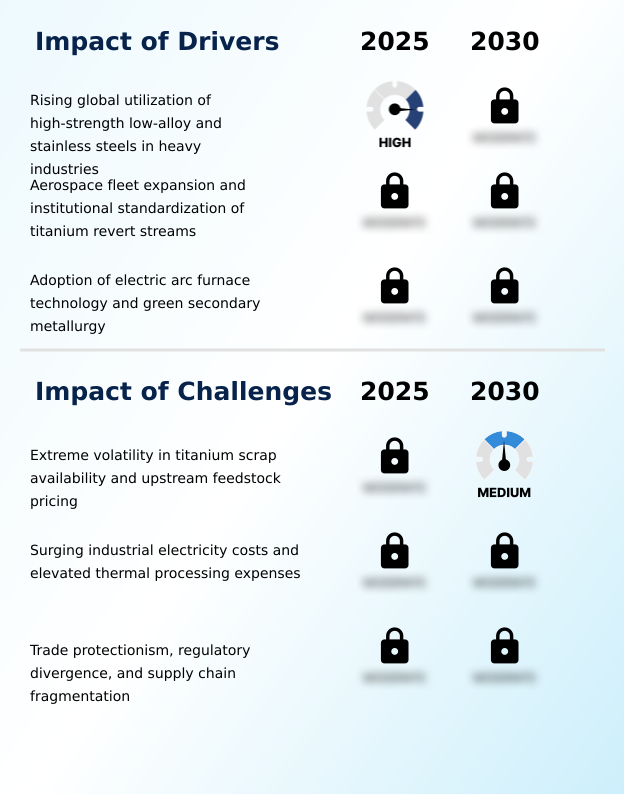
What are the key market drivers leading to the rise in the adoption of Ferro Titanium Industry?
- The escalating utilization of high-strength low-alloy and austenitic stainless steels across heavy infrastructure and automotive manufacturing acts as the primary catalyst propelling market expansion.
- The escalating necessity for advanced structural integrity across modern manufacturing sectors acts as a formidable catalyst for precision metallurgical additives.
- Automotive lightweighting mandates require the widespread production of interstitial free steel, where precise titanium additions serve as an indispensable grain refiner.
- By forming stable titanium carbonitride precipitates, this process restricts austenite growth and produces an exceptionally fine ferrite grain structure, increasing chassis yield strength by 22% while offsetting electric vehicle battery mass.
- Concurrently, the expansion of hydrogen transportation infrastructure and offshore wind platforms demands thick-plate austenitic stainless steel capable of enduring severe environmental stresses. This critical application drives a 30% improvement in material longevity through targeted fracture toughness enhancement.
- Additionally, the systematic recycling of aerospace revert material provides a reliable, high-purity feedstock that sustains this specialized alloy production and stabilizes downstream supply chains.
What are the market trends shaping the Ferro Titanium Industry?
- The metallurgical sector is experiencing a rapid technological transition toward advanced cored wire delivery systems to optimize alloy recovery. This automated injection methodology minimizes atmospheric oxidation and ensures precise chemical stabilization during secondary ladle refining.
- The adoption of precision alloying techniques fundamentally transforms how modern steelmakers optimize chemical compositions across heavy industrial operations. Facilities are rapidly accelerating the implementation of cored wire delivery systems within the ladle metallurgy furnace, moving away from inefficient bulk lump additions.
- This transition, supported by real-time optical emission spectroscopy and advanced dynamic metallurgical modeling, allows operators to achieve exact chemical tolerances, improving overall alloy recovery rates by 28%. By injecting the micro alloying element deep into the melt under controlled argon stirring atmospheres, producers minimize atmospheric oxidation and ensure homogeneous dispersion before the molten metal enters continuous casting units.
- This methodology acts as an exceptionally efficient nitrogen stabilizer, reducing downstream processing defects by 15%. Furthermore, rising geopolitical friction accelerates national critical mineral stockpiling initiatives, compelling suppliers to provide transparent chain of custody documentation to guarantee the resilience and compliance of sovereign supply networks.
What challenges does the Ferro Titanium Industry face during its growth?
- Extreme volatility in upstream titanium scrap availability and unpredictable primary feedstock pricing present significant operational hurdles for secondary alloy producers.
- Severe raw material volatility and escalating thermal processing expenditures present profound structural limitations for secondary alloy manufacturers. The complexities associated with aerospace revert scrap processing require labor-intensive sorting and energy-heavy hydraulic briquetting, which elevate baseline operational overheads by up to 25% during periods of high electricity demand.
- The increasing reliance of primary aerospace melters on advanced electron beam refining and plasma arc remelting systems allows them to retain premium scrap internally, severely starving the merchant market of vital inputs. Consequently, alloy smelters are forced to maintain expensive strategic buffering inventories to ensure uninterrupted production.
- When processors substitute lower-quality scrap to produce a standard thermit grade alloy, they must implement extended vacuum degassing protocols to prevent residual gas contamination. Failure to maintain absolute chemical purity directly compromises the fabrication of powder metallurgy compacts and abrasion resistant steel, ultimately increasing the risk of catastrophic intergranular corrosion in high-stress industrial environments.
Exclusive Technavio Analysis on Customer Landscape
The ferro titanium market forecasting report includes the adoption lifecycle of the market, covering from the innovator’s stage to the laggard’s stage. It focuses on adoption rates in different regions based on penetration. Furthermore, the ferro titanium market report also includes key purchase criteria and drivers of price sensitivity to help companies evaluate and develop their market growth analysis strategies.
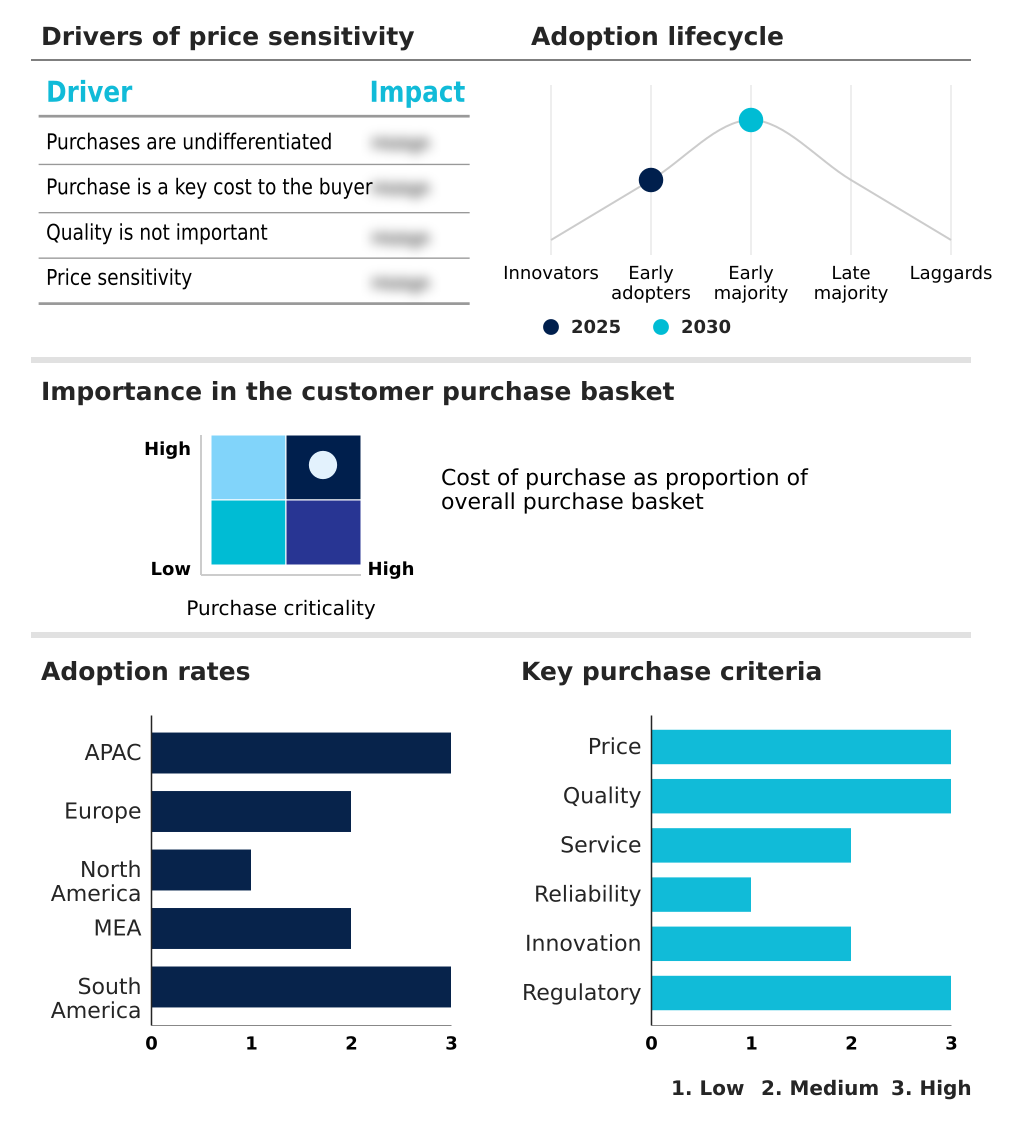
Customer Landscape of Ferro Titanium Industry
Competitive Landscape
Companies are implementing various strategies, such as strategic alliances, ferro titanium market forecast, partnerships, mergers and acquisitions, geographical expansion, and product/service launches, to enhance their presence in the industry.
Advanced Powders and Titanium - The vendor supplies specialized titanium powders engineered for advanced metallurgical applications, delivering precise alloy formulations that optimize structural integrity and enhance refining efficiency across heavy industrial manufacturing operations.
The industry research and growth report includes detailed analyses of the competitive landscape of the market and information about key companies, including:
- Advanced Powders and Titanium
- AIM Alloys LLP
- Bansal Brothers
- CRONIMET Holding GmbH
- Essel Mining and Industries Ltd.
- F.E. Mottram Ltd
- Galt Alloys Inc.
- GfE Gesellschaft fur
- Jayesh Group
- Kushal Ferro Alloys Ltd
- Kymera International
- Luoyang Sunrui Wanji Titanium
- Metalliage Inc.
- OSAKA Titanium Technologies
- SMS Metals Pvt Ltd
- Toho Titanium Co. Ltd.
- Vestek Ltd.
- VSMPO AVISMA Corp.
- Westbrook Resources Ltd.
- Zaporizhzhia Titanium
Qualitative and quantitative analysis of companies has been conducted to help clients understand the wider business environment as well as the strengths and weaknesses of key industry players. Data is qualitatively analyzed to categorize companies as pure play, category-focused, industry-focused, and diversified; it is quantitatively analyzed to categorize companies as dominant, leading, strong, tentative, and weak.
Recent Development and News in Ferro titanium market
- In the Steel industry, the structural transition from blast furnaces to scrap-intensive electric arc furnace infrastructure increases baseline dissolved oxygen levels, directly accelerating Ferro Titanium consumption for rigorous deoxidation protocols.
- The standardization of aerospace revert material recycling protocols eliminates processing ambiguities and contamination liabilities, ensuring a steady and high-purity scrap feedstock stream for secondary alloy converters.
- The implementation of stringent automotive lightweighting mandates compels manufacturers to adopt advanced high-strength steels, structurally driving demand for titanium-based grain refiners that maintain critical yield strength.
- Expanding investments in offshore wind platforms necessitate the production of thick-plate steels exhibiting high fracture toughness, amplifying the utilization of specialized titanium master alloys for superior sulfide shape control.
Dive into Technavio’s robust research methodology, blending expert interviews, extensive data synthesis, and validated models for unparalleled Ferro Titanium Market insights. See full methodology.
| Market Scope | |
|---|---|
| Page number | 306 |
| Base year | 2025 |
| Historic period | 2020-2024 |
| Forecast period | 2026-2030 |
| Growth momentum & CAGR | Accelerate at a CAGR of 4.4% |
| Market growth 2026-2030 | USD 72269.9 thousand |
| Market structure | Fragmented |
| YoY growth 2025-2026(%) | 4.2% |
| Key countries | China, Japan, India, South Korea, Indonesia, Australia, Germany, Italy, France, Spain, UK, The Netherlands, US, Mexico, Canada, Turkey, South Africa, Saudi Arabia, UAE, Israel, Brazil, Argentina and Colombia |
| Competitive landscape | Leading Companies, Market Positioning of Companies, Competitive Strategies, and Industry Risks |
Research Analyst Overview
- The continuous evolution of metallurgical additives fundamentally reshapes how heavy industrial manufacturers approach material strength and regulatory compliance. As engineering specifications for deep-water energy platforms and zero-emission transportation networks become more rigorous, boardrooms are strategically reallocating procurement budgets toward ultra-high-purity master alloys.
- This shift directly influences product strategy, compelling foundries to transition away from standard commodity inputs in favor of traceable, vacuum-processed materials that guarantee structural integrity under extreme stress. By implementing advanced wire injection technologies to deliver these refined alloys, secondary steelmakers have achieved a 25% reduction in costly material oxidation losses compared to legacy bulk feeding methods.
- This operational optimization ensures precise chemical stabilization, eliminating the risk of catastrophic intergranular failure in critical stainless infrastructure. The systemic transition toward precision micro-alloying enables manufacturers to meet stringent sustainability mandates by producing lighter, high-durability components that lower the total carbon footprint of the transportation sector.
- Consequently, the strategic integration of these advanced metallurgical solutions serves as an indispensable mechanism for maintaining operational competitiveness and achieving long-term asset reliability across harsh industrial environments.
What are the Key Data Covered in this Ferro Titanium Market Research and Growth Report?
-
What is the expected growth of the Ferro Titanium Market between 2026 and 2030?
-
USD 72.27 million, at a CAGR of 4.4%
-
-
What segmentation does the market report cover?
-
The report is segmented by Type (Lumps, Granules, and Powder), End-user (Construction, Automotive, Mining and metal processing, Aerospace and defense, and Others), Application (Steelmaking, Foundries, and Others) and Geography (APAC, Europe, North America, Middle East and Africa, South America)
-
-
Which regions are analyzed in the report?
-
APAC, Europe, North America, Middle East and Africa and South America
-
-
What are the key growth drivers and market challenges?
-
Rising global utilization of high-strength low-alloy and stainless steels in heavy industries , Extreme volatility in titanium scrap availability and upstream feedstock pricing
-
-
Who are the major players in the Ferro Titanium Market?
-
Advanced Powders and Titanium, AIM Alloys LLP, Bansal Brothers, CRONIMET Holding GmbH, Essel Mining and Industries Ltd., F.E. Mottram Ltd, Galt Alloys Inc., GfE Gesellschaft fur, Jayesh Group, Kushal Ferro Alloys Ltd, Kymera International, Luoyang Sunrui Wanji Titanium, Metalliage Inc., OSAKA Titanium Technologies, SMS Metals Pvt Ltd, Toho Titanium Co. Ltd., Vestek Ltd., VSMPO AVISMA Corp., Westbrook Resources Ltd. and Zaporizhzhia Titanium
-
Market Research Insights
- The Ferro Titanium Market is undergoing a rapid operational transformation driven by precision metallurgical demands and shifting industrial supply chains. Secondary alloy processors increasingly rely on strategic buffering inventories to navigate feedstock volatility, achieving a 20% improvement in supply continuity compared to legacy just-in-time procurement models.
- The integration of dynamic metallurgical modeling allows automated ladle stations to optimize alloy injection, boosting total material recovery rates by 15% during heavy industrial melting cycles. Furthermore, the rising necessity for national critical mineral stockpiling has prompted sovereign entities to secure domestic material reserves, reducing external supply dependency by up to 30%.
- These systemic shifts ensure that steelmakers maintain access to the essential ultra clean low gas alloy inputs required for advanced infrastructure development.
We can help! Our analysts can customize this ferro titanium market research report to meet your requirements.
 RIA -

