



Flexible Pipes Market Size 2026-2030
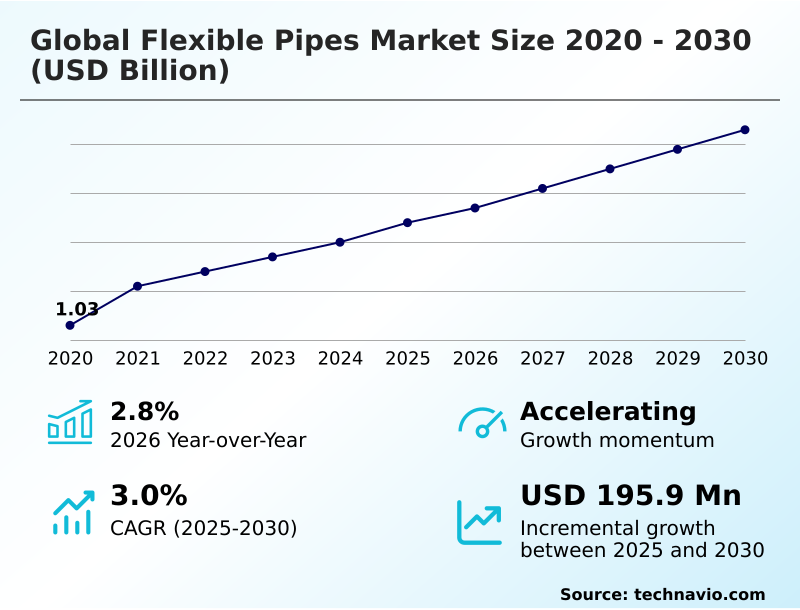
The flexible pipes market size is valued to increase by USD 195.9 million, at a CAGR of 3% from 2025 to 2030. Massive investments in pre salt offshore formations requiring advanced subsea injection infrastructure will drive the flexible pipes market.
Major Market Trends & Insights
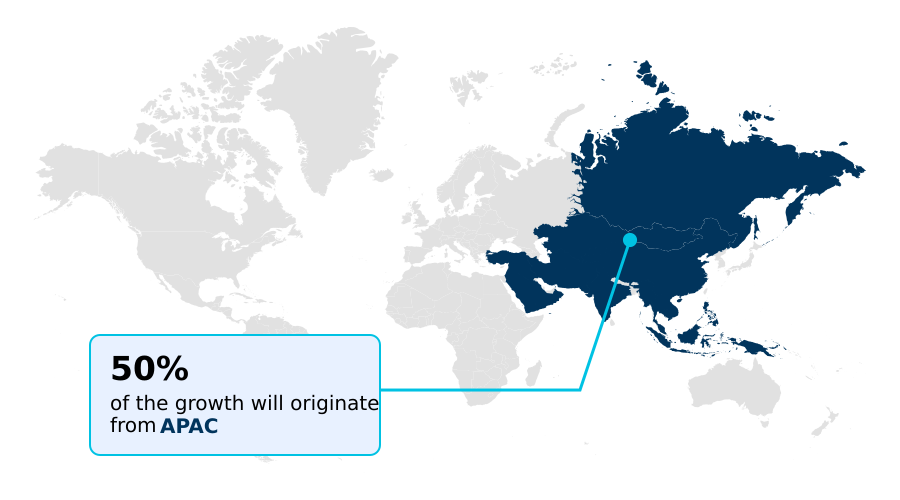
- APAC dominated the market and accounted for a 49.7% growth during the forecast period.
- By Product Type - HDPE segment was valued at USD 923.6 million in 2024
- By Type - Single wall segment accounted for the largest market revenue share in 2024
Market Size & Forecast
- Market Opportunities: USD 397.6 million
- Market Future Opportunities: USD 195.9 million
- CAGR from 2025 to 2030 : 3%
Market Summary
- The Flexible Pipes Market experiences accelerating demand driven by the complex operational requirements of deepwater energy extraction and modern industrial processing networks. Advanced thermoplastic composite pipe architectures are systematically replacing conventional rigid pipelines to endure extreme external hydrostatic pressure resistance and relentless ocean wave motion.
- A major commercial driver is the rapid expansion of subsea tie-back architecture which allows operators to link newly discovered satellite wells directly to existing offshore facilities. This strategy effectively reduces heavy infrastructure fabrication costs and cuts deployment times by up to 20% compared to traditional underwater welding protocols.
- In high-pressure carbon dioxide subsea transport scenarios engineers deploy cross-linked polyethylene liners to establish a resilient internal polymer barrier against aggressive chemical permeation. However operators face significant technical challenges regarding hydrogen embrittlement prevention as severe stress corrosion cracking in high carbon dioxide environments can rapidly compromise helical steel armor layers.
- To mitigate these asset lifecycle risks material scientists are heavily investing in polyamide formulations that prevent premature mechanical failure ensuring that deepwater subsea completion projects maintain uncompromised structural integrity over decades of continuous operation.
What will be the Size of the Flexible Pipes Market during the forecast period?
Get Key Insights on Market Forecast (PDF) Get Free Sample
How is the Flexible Pipes Market Segmented?
The flexible pipes industry research report provides comprehensive data (region-wise segment analysis), with forecasts and estimates in "USD million" for the period 2026-2030, as well as historical data from 2020-2024 for the following segments.
- Product type
- HDPE
- PA
- PVDF
- Others
- Type
- Single wall
- Multi wall
- Double wall
- End-user
- Oil and gas
- Chemical and petrochemicals
- Water treatment plants
- Mining
- Others
- Geography
- APAC
- China
- India
- Japan
- South Korea
- Australia
- Indonesia
- Middle East and Africa
- Saudi Arabia
- UAE
- South Africa
- Israel
- Turkey
- North America
- US
- Canada
- Mexico
- Europe
- Germany
- UK
- France
- The Netherlands
- Italy
- Spain
- South America
- Brazil
- Argentina
- Chile
- APAC
By Product Type Insights
The hdpe segment is estimated to witness significant growth during the forecast period.
The high-density polyethylene resins segment establishes a foundational vertical within the industrial fluid transmission sector characterized by its exceptional strength-to-density ratio and chemical resistance.
Organizations rely on these continuous coiled piping structures to rehabilitate aging municipal utility grids and optimize subsea fluid injection networks.
By minimizing hydraulic friction through smooth internal walls facility operators have decreased long-term pumping energy consumption by 18% compared to legacy concrete conduits.
Modern manufacturing processes now integrate significant percentages of post-consumer recycled polyolefins creating dual-wall corrugated configurations that preserve high crush resistance while reducing structural weight.
This transition allows industrial planners to streamline trenchless horizontal directional drilling operations ensuring that the deployment of structural stress monitoring systems and robust fluid infrastructure aligns with stringent environmental sustainability targets and operational efficiency goals.
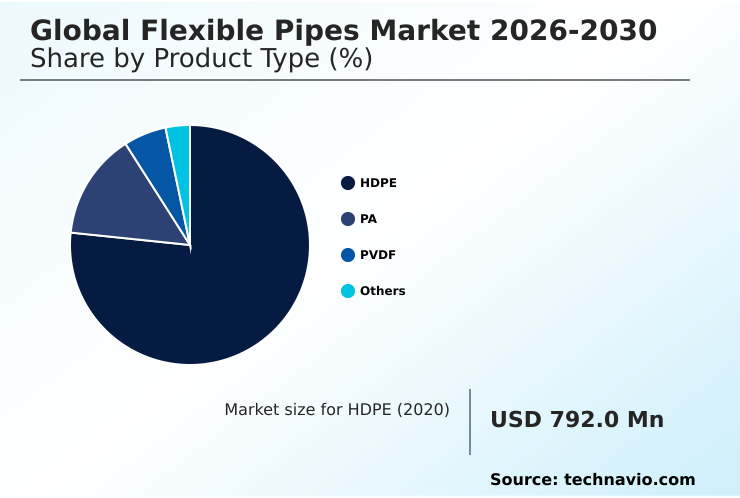
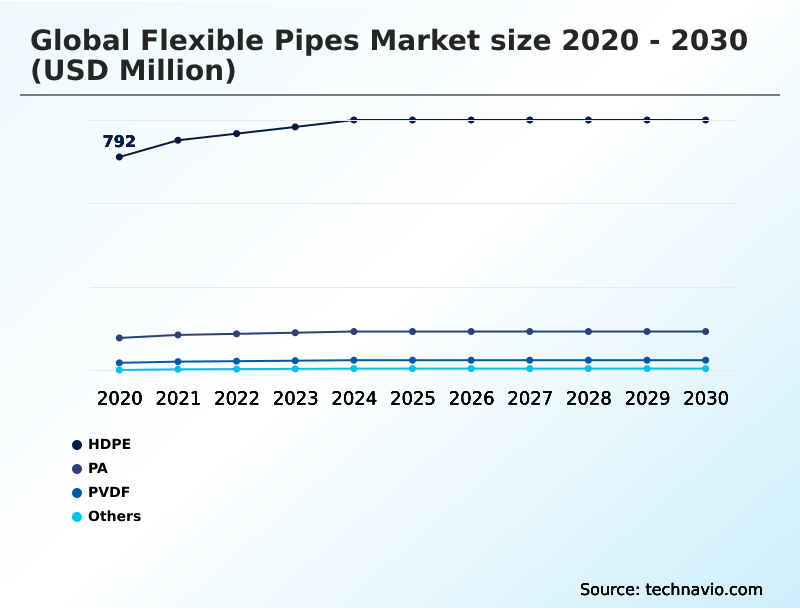
The HDPE segment was valued at USD 923.6 million in 2024 and showed a gradual increase during the forecast period.
Regional Analysis
APAC is estimated to contribute 49.7% to the growth of the global market during the forecast period.Technavio’s analysts have elaborately explained the regional trends and drivers that shape the market during the forecast period.
See How Flexible Pipes Market Demand is Rising in APAC Get Free Sample
Regional adoption of advanced fluid transportation networks diverges significantly based on domestic manufacturing capabilities and local offshore energy mandates.
The market in APAC expands rapidly as nations construct massive deepwater exploration infrastructure to guarantee regional energy security yielding a 14% higher deployment rate of dynamic flexible risers compared to established European basins.
Meanwhile the market in North America prioritizes shale gas extraction and high-pressure hydrocarbon transport leading midstream operators to deploy continuous coiled piping that reduces subsurface installation timelines by 18%.
This strategic shift allows North American facilities to minimize mechanical stress degradation during severe extreme thermal variation.
Conversely operators in APAC focus on deep-sea mineral extraction and complex subsea construction projects heavily utilizing unbonded flexible pipe systems to navigate highly volatile seismic zones.
These differing priorities force global supply chains to adapt delivering customized spoolable composite structures that optimize offshore extraction efficiency while addressing distinct geographic and regulatory engineering parameters.
Market Dynamics
Our researchers analyzed the data with 2025 as the base year, along with the key drivers, trends, and challenges. A holistic analysis of drivers will help companies refine their marketing strategies to gain a competitive advantage.
- The continuous evolution of deepwater energy infrastructure and hazardous fluid processing facilities relies heavily on the strategic implementation of advanced composite materials. As international offshore operators push extraction boundaries into unprecedented marine depths the demand for unbonded thermoplastic composite subsea risers has intensified.
- These highly specialized structures offer superior fatigue resistance compared to traditional rigid steel alternatives optimizing supply chain logistics by enabling faster spoolable deployment from specialized vessels. To support enhanced oil recovery in mature offshore fields deepwater pre-salt offshore fluid reinjection systems are rapidly expanding.
- Operators require robust conduits that can handle extreme internal pressures driving the critical need for high-pressure carbon dioxide subsea transport networks that resist severe acidic permeation. By utilizing these specialized flexible pipelines energy firms achieve a nearly 25% improvement in long-term operational uptime over conventional carbon steel lines.
- Furthermore digital structural health monitoring arrays are now actively embedded within the tensile armor layers of these pipes allowing facility managers to track localized temperature fluctuations and structural tension in real-time thereby shifting operational planning from reactive repairs to predictive maintenance. Concurrently terrestrial industrial sectors are adopting dual-containment hazardous chemical distribution networks to satisfy stringent environmental protection mandates.
- These robust double-wall configurations guarantee absolute zero-leakage fluid transfer providing an essential secondary containment barrier that shields sensitive groundwater tables and manufacturing workspaces from catastrophic chemical spills effectively future-proofing long-term corporate compliance strategies.
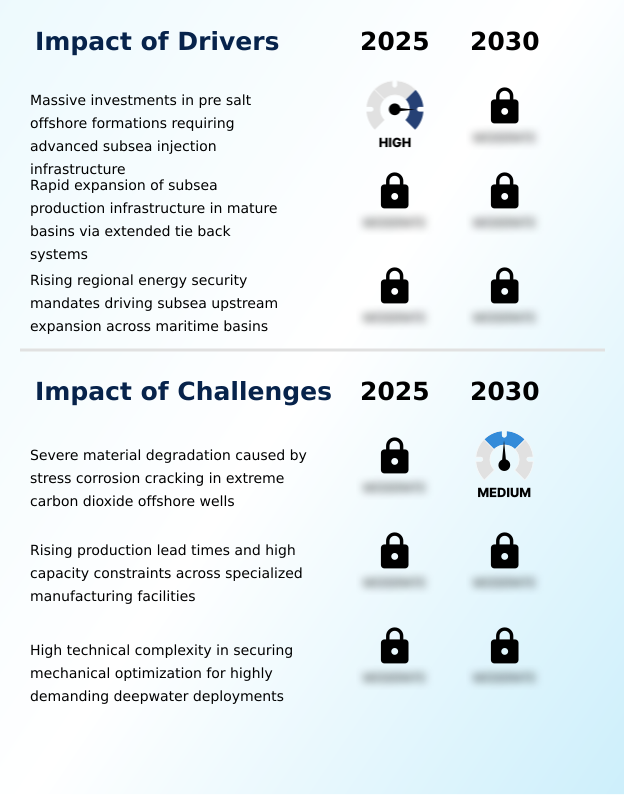
What are the key market drivers leading to the rise in the adoption of Flexible Pipes Industry?
- Massive capital investments directed toward developing deepwater pre-salt offshore formations necessitate highly advanced subsea fluid injection infrastructure serving as the primary catalyst for market expansion.
- The aggressive expansion of subsea tie-back architecture across mature offshore fields serves as a primary catalyst accelerating Flexible Pipes adoption. Energy conglomerates increasingly utilize this strategy because building entirely new floating production platforms is capital-prohibitive in deepwater exploration infrastructure projects.
- By deploying unbonded flexible pipe systems to connect satellite wells to existing facilities operators have slashed offshore flowline installation times by 40% and reduced total project capital expenditures by nearly 15%.
- This rapid deployment capability is essential for maximizing offshore extraction efficiency while navigating complex subsea topographies.
- Consequently the surging demand for robust multi-phase fluid transmission lines engineered with specialized polyamide formulations ensures that deepwater subsea completion initiatives achieve first-oil targets faster and more safely than conventional rigid piping methods.
What are the market trends shaping the Flexible Pipes Industry?
- Strategic corporate vertical integration is emerging as a critical market trend allowing subsea solutions providers to secure direct operational control over specialized marine deployment vessels.
- The commercial adoption of digital intelligence within maritime fluid infrastructure marks a profound technological shift across the Flexible Pipes landscape. Manufacturers are increasingly integrating a smart monitoring array and embedded fiber-optic sensor networks directly into the structural layers of dynamic flexible risers.
- This transition occurs because operators require real-time visibility into localized material stress and temperature fluctuations to prevent catastrophic failures in extreme environments. As a direct result of this digital integration facility managers have reduced subsea diagnostic inspection times by 35% and improved predictive maintenance schedule accuracy by 22%.
- By utilizing these intelligent spoolable composite structures offshore energy platforms significantly optimize asset lifecycle management translating continuous structural data into actionable engineering insights that extend the operational longevity of critical high-pressure hydrocarbon transport systems.
What challenges does the Flexible Pipes Industry face during its growth?
- Severe material degradation induced by stress corrosion cracking within extreme carbon dioxide offshore wells represents a critical operational challenge that significantly impedes industry growth.
- Severe material degradation remains a formidable operational hurdle for the Flexible Pipes sector specifically within extreme carbon dioxide reinjection environments. When high-pressure sour gas transportation permeates the internal polymer barrier it generates a highly acidic localized annulus environment. This corrosive chemical interaction causes rapid hydrogen embrittlement prevention failures within the critical helical steel armor layers resulting in structural collapse.
- Because these unbonded flexible pipe failures force premature infrastructure replacements operators experience a 30% increase in unplanned remediation costs and see overall deepwater extraction profitability lowered by 12%.
- To combat this significant annulus corrosion mitigation challenge material engineers must rapidly innovate advanced polyvinylidene fluoride liner technologies that can guarantee hydrostatic pressure resistance and preserve long-term asset integrity across ultra-deepwater pre-salt offshore formation basins.
Exclusive Technavio Analysis on Customer Landscape
The flexible pipes market forecasting report includes the adoption lifecycle of the market, covering from the innovator’s stage to the laggard’s stage. It focuses on adoption rates in different regions based on penetration. Furthermore, the flexible pipes market report also includes key purchase criteria and drivers of price sensitivity to help companies evaluate and develop their market growth analysis strategies.
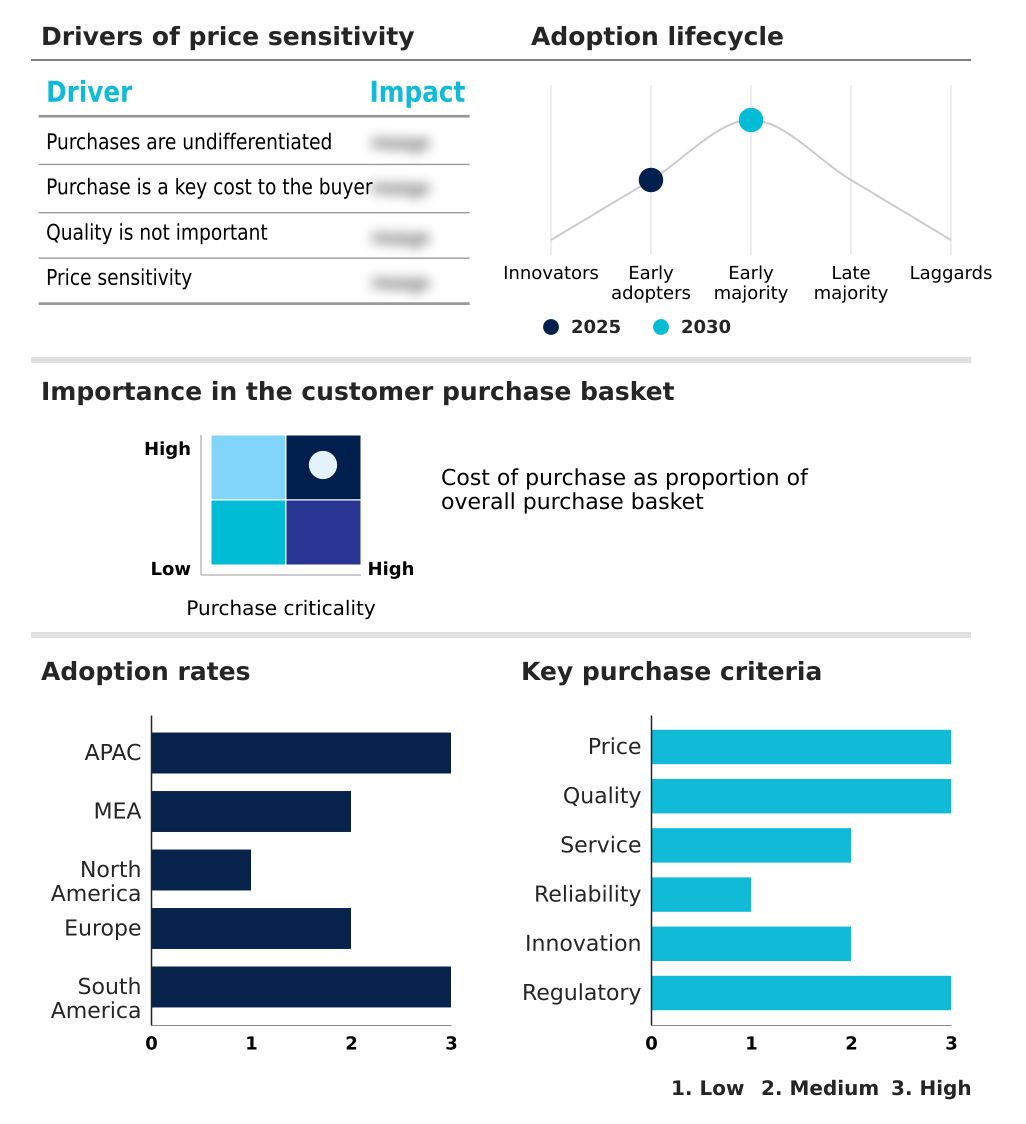
Customer Landscape of Flexible Pipes Industry
Competitive Landscape
Companies are implementing various strategies, such as strategic alliances, flexible pipes market forecast, partnerships, mergers and acquisitions, geographical expansion, and product/service launches, to enhance their presence in the industry.
Advanced Drainage Systems Inc - The organization provides high-performance thermoplastic corrugated pipelines and specialized onsite wastewater structures engineered to optimize commercial water management and agricultural drainage efficiencies without compromising material durability.
The industry research and growth report includes detailed analyses of the competitive landscape of the market and information about key companies, including:
- Advanced Drainage Systems Inc
- Astral Ltd.
- Baker Hughes Co.
- Chevron Phillips Chemical Co.
- Finolex Industries Ltd.
- FlexSteel Pipeline Technologies
- Future Pipe Industries
- Georg Fischer Ltd.
- Hose Master LLC
- Jain Irrigation Systems Ltd.
- Mattr Corp.
- NOV Inc.
- Parker Hannifin Corp.
- Penflex Corp
- REHAU Ltd.
- Senior Plc
- SoluForce B.V.
- TechnipFMC plc
- Trelleborg AB
- Wavin BV
Qualitative and quantitative analysis of companies has been conducted to help clients understand the wider business environment as well as the strengths and weaknesses of key industry players. Data is qualitatively analyzed to categorize companies as pure play, category-focused, industry-focused, and diversified; it is quantitatively analyzed to categorize companies as dominant, leading, strong, tentative, and weak.
Recent Development and News in Flexible pipes market
- In the Building Products industry strict environmental emission leakage standards mandate the adoption of secondary fluid containment structures directly impacting Flexible Pipes demand by accelerating the deployment of dual-wall corrugated configurations for hazardous fluid transport.
- The widespread transition toward automated flow management across smart municipal utilities necessitates advanced conduit networks propelling the integration of embedded fiber-optic sensors within unbonded flexible pipe systems to guarantee real-time integrity monitoring.
- The expansion of deepwater exploration infrastructure utilizing subsea tie-back architecture has shifted sourcing requirements driving offshore operators to procure spoolable composite structures that reduce heavy material lifting requirements on floating production platforms.
- Aggressive industrial chemical conveyance regulations require superior asset lifecycle management leading facility operators to replace legacy carbon steel pipelines with polyvinylidene fluoride liners to achieve a 25% reduction in mechanical stress degradation.
Dive into Technavio’s robust research methodology, blending expert interviews, extensive data synthesis, and validated models for unparalleled Flexible Pipes Market insights. See full methodology.
| Market Scope | |
|---|---|
| Page number | 307 |
| Base year | 2025 |
| Historic period | 2020-2024 |
| Forecast period | 2026-2030 |
| Growth momentum & CAGR | Accelerate at a CAGR of 3% |
| Market growth 2026-2030 | USD 195.9 million |
| Market structure | Fragmented |
| YoY growth 2025-2026(%) | 2.8% |
| Key countries | China, India, Japan, South Korea, Australia, Indonesia, Saudi Arabia, UAE, South Africa, Israel, Turkey, US, Canada, Mexico, Germany, UK, France, The Netherlands, Italy, Spain, Brazil, Argentina and Chile |
| Competitive landscape | Leading Companies, Market Positioning of Companies, Competitive Strategies, and Industry Risks |
Research Analyst Overview
- The Flexible Pipes industry is undergoing a structural transformation as energy operators and chemical processors prioritize advanced composite engineering to ensure resilient multi-phase fluid transmission. Strategic product development focuses heavily on integrating a highly durable polyvinylidene fluoride liner to withstand extreme internal pressures and eliminate annulus corrosion mitigation failures.
- The integration of an embedded fiber-optic sensor directly into the helical steel armor allows facility managers to shift from manual inspections to predictive analytics improving deepwater asset lifecycle management and reducing unanticipated operational downtime by 20%.
- This capacity for continuous structural stress monitoring directly influences boardroom-level compliance and budgeting decisions validating the higher initial capital expenditure of smart unbonded flexible pipe components. Furthermore the deployment of robust polyamide formulations in subsea fluid injection lines effectively combats hydrogen embrittlement prevention in severe pre-salt reservoirs.
- By optimizing offshore flowline installation processes with continuous coiled piping operators streamline complex subsea tie-back architecture significantly enhancing overall deepwater subsea completion efficiency while satisfying rigorous international environmental safety mandates.
What are the Key Data Covered in this Flexible Pipes Market Research and Growth Report?
-
What is the expected growth of the Flexible Pipes Market between 2026 and 2030?
-
USD 195.9 million, at a CAGR of 3%
-
-
What segmentation does the market report cover?
-
The report is segmented by Product Type (HDPE, PA, PVDF, and Others), Type (Single wall, Multi wall, and Double wall), End-user (Oil and gas, Chemical and petrochemicals, Water treatment plants, Mining, and Others) and Geography (APAC, Middle East and Africa, North America, Europe, South America)
-
-
Which regions are analyzed in the report?
-
APAC, Middle East and Africa, North America, Europe and South America
-
-
What are the key growth drivers and market challenges?
-
Massive investments in pre salt offshore formations requiring advanced subsea injection infrastructure, Severe material degradation caused by stress corrosion cracking in extreme carbon dioxide offshore wells
-
-
Who are the major players in the Flexible Pipes Market?
-
Advanced Drainage Systems Inc, Astral Ltd., Baker Hughes Co., Chevron Phillips Chemical Co., Finolex Industries Ltd., FlexSteel Pipeline Technologies, Future Pipe Industries, Georg Fischer Ltd., Hose Master LLC, Jain Irrigation Systems Ltd., Mattr Corp., NOV Inc., Parker Hannifin Corp., Penflex Corp, REHAU Ltd., Senior Plc, SoluForce B.V., TechnipFMC plc, Trelleborg AB and Wavin BV
-
Market Research Insights
- The Flexible Pipes marketplace demonstrates rapid technological evolution as energy conglomerates prioritize resilient multi-layered material design for harsh maritime conditions. By implementing specialized marine deployment vessels to lay spoolable conduits deepwater operators have improved offshore extraction efficiency by 22% compared to conventional rigid pipelay methods.
- The integration of a smart monitoring array directly into the pipeline matrix enhances asset lifecycle management decreasing unexpected subsea wellhead connection failures by 15%. Furthermore upgrading legacy chemical infrastructure with dual-wall corrugated configurations for secondary fluid containment has reduced environmental emission leakage incidents by 28% significantly improving corporate compliance alignment.
- These measurable operational optimizations ensure that advanced industrial fluid transmission networks maintain absolute reliability despite extreme thermal variation and localized material stress.
We can help! Our analysts can customize this flexible pipes market research report to meet your requirements.
 RIA -

