


Glassine Paper Market Size 2026-2030
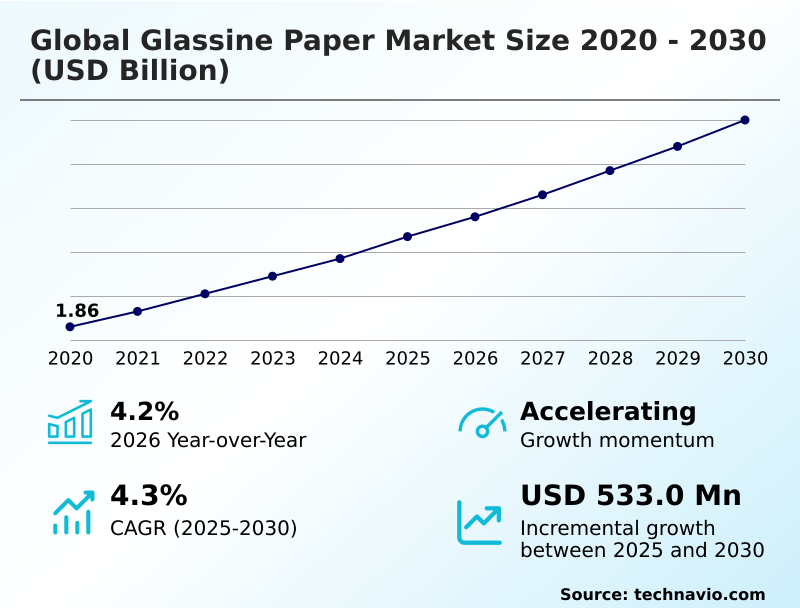
The glassine paper market size is valued to increase by USD 533 million, at a CAGR of 4.3% from 2025 to 2030. Escalating demand for sustainable pressure sensitive labels will drive the glassine paper market.
Major Market Trends & Insights
- APAC dominated the market and accounted for a 44.7% growth during the forecast period.
- By Product Type - Opaque glassine paper segment was valued at USD 1.02 billion in 2024
- By Application - Packaging and wrapping segment accounted for the largest market revenue share in 2024
Market Size & Forecast
- Market Opportunities: USD 941.4 million
- Market Future Opportunities: USD 533 million
- CAGR from 2025 to 2030 : 4.3%
Market Summary
- The Glassine Paper Market demonstrates robust expansion driven by the critical need for sustainable high-density barrier materials across modern automated supply chains. As multinational logistics hubs accelerate processing speeds the demand for pressure-sensitive label constructions utilizing reliable release backing materials has intensified.
- The rigorous supercalendering process aligns cellulose fibers to create a dense substrate capable of withstanding extreme mechanical tension during rotary die-cutting. For example distribution centers implementing these optimized release liners experience a 25% reduction in web breaks compared to standard kraft alternatives significantly elevating overall throughput.
- This operational efficiency is primarily propelled by the phase-out of non-recyclable polymer films which forces consumer goods brands to adopt closed-loop circular packaging. Conversely the market faces structural constraints due to escalating mandates regarding sustainable virgin pulp procurement. The requirement for meticulous geolocation tracking of timber harvests limits supply chain agility and concentrates merchant pulp sourcing.
What will be the Size of the Glassine Paper Market during the forecast period?
Get Key Insights on Market Forecast (PDF) Get Free Sample
How is the Glassine Paper Market Segmented?
The glassine paper industry research report provides comprehensive data (region-wise segment analysis), with forecasts and estimates in "USD million" for the period 2026-2030, as well as historical data from 2020-2024 for the following segments.
- Product type
- Opaque glassine paper
- Printed glassine paper
- Colored glassine paper
- Application
- Packaging and wrapping
- Release liners
- Interleaving paper
- Envelopes and windows
- Type
- In between 40 to 60 GSM
- Below 40 GSM
- Above 60 GSM
- Geography
- APAC
- China
- Japan
- India
- South Korea
- Thailand
- Taiwan
- Europe
- Germany
- France
- Italy
- UK
- Spain
- The Netherlands
- North America
- US
- Canada
- Mexico
- Middle East and Africa
- Saudi Arabia
- South Africa
- UAE
- Egypt
- Turkey
- South America
- Brazil
- Argentina
- Chile
- APAC
By Product Type Insights
The opaque glassine paper segment is estimated to witness significant growth during the forecast period.
Opaque glassine paper functions as a critical high-barrier packaging material engineered specifically for privacy-sensitive enclosure applications. By integrating mineral opacifying agents during the stock preparation phase, manufacturers achieve an effective visual barrier without compromising dimensional stability or barrier properties.
This mechanical formulation maintains inherent lipid penetration resistance while providing structural resistance to curl. The integration of this cellulosic substrate improves automated packaging line error detection by 15% compared to translucent alternatives.
Operations utilizing opaque formulations for confidential document interleaving report a 20% improvement in processing efficiency due to superior print contrast.
As regulatory frameworks increasingly mandate secure enclosures, this mono-material packaging solution replaces plastic-laminated foil barriers, delivering robust containment while ensuring complete compatibility with existing recovery systems.
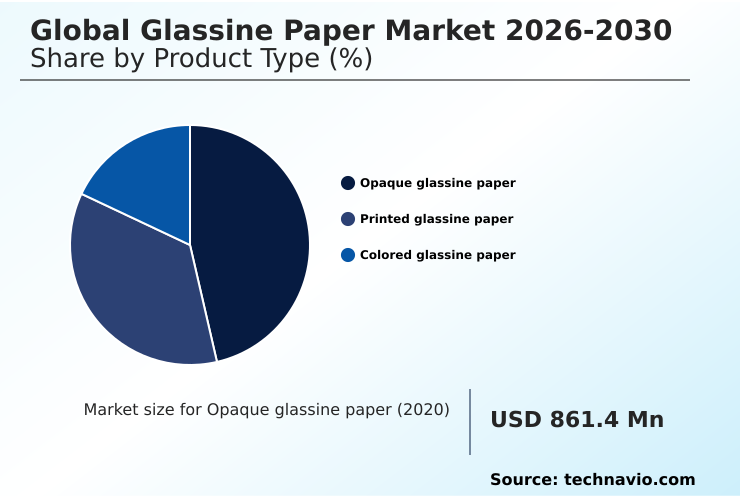
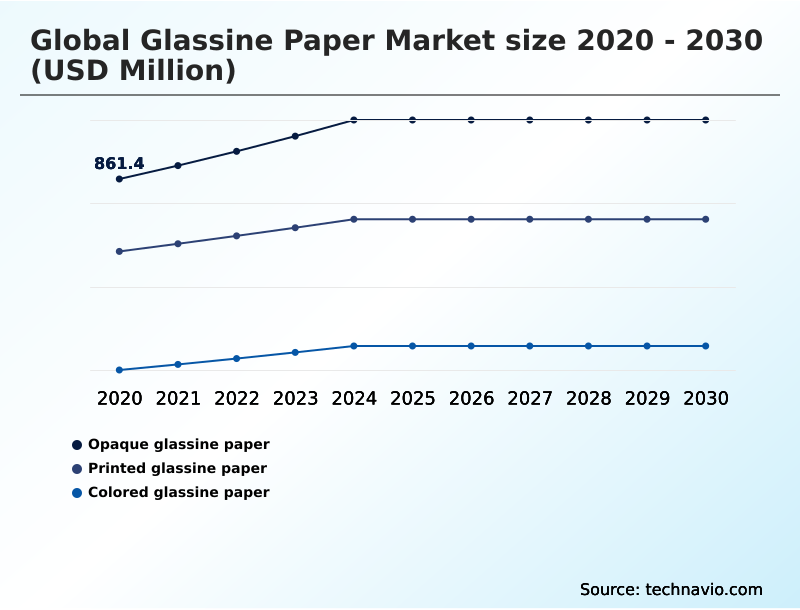
The Opaque glassine paper segment was valued at USD 1.02 billion in 2024 and showed a gradual increase during the forecast period.
Regional Analysis
APAC is estimated to contribute 44.7% to the growth of the global market during the forecast period.Technavio’s analysts have elaborately explained the regional trends and drivers that shape the market during the forecast period.
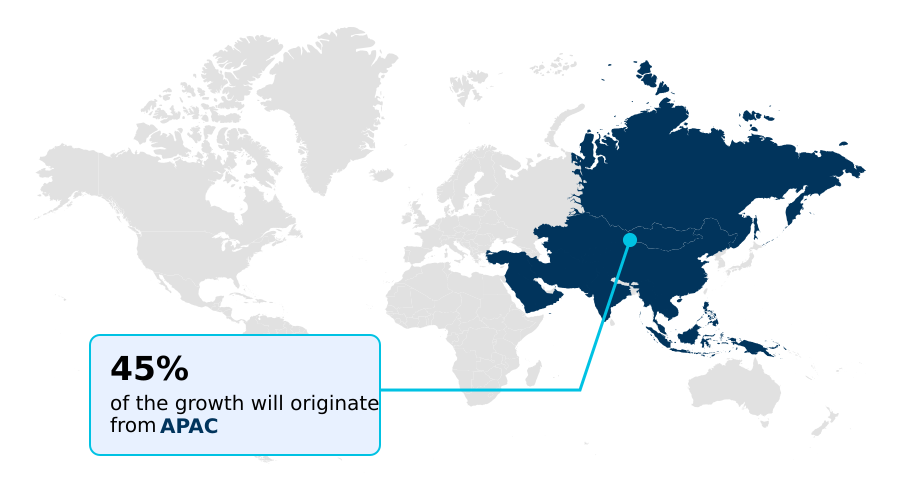
See How Glassine Paper Market Demand is Rising in APAC Get Free Sample
The geographic landscape reveals distinct structural differences between APAC and Europe regarding industrial adoption and mechanical material recovery. APAC functions as the dominant manufacturing hub for cleanroom-grade papers driving massive consumption of release liners for cleanroom manufacturing environments.
Facilities in APAC have expanded automated labeling lines achieving a 28% higher throughput efficiency compared to conventional systems. In contrast Europe prioritizes aggressive regulatory compliance and post-industrial waste management.
European converters leveraging circular collection consortia have successfully reduced secondary packaging disposal costs by 30%. Furthermore strict thermal efficiency mandates in Europe compel mills to optimize energy usage achieving a 15% reduction in baseline energy consumption per processed reel.
While APAC focuses on scaling unbleached kraft pulp utilization the European sector excels in enzymatic de-siliconization infrastructure.
Market Dynamics
Our researchers analyzed the data with 2025 as the base year, along with the key drivers, trends, and challenges. A holistic analysis of drivers will help companies refine their marketing strategies to gain a competitive advantage.
- The operational transition toward sustainable barrier materials necessitates rigorous substrate engineering to meet the exacting standards of high-performance pressure-sensitive labeling across global logistics and retail networks. As international environmental authorities enforce strict prohibitions on synthetic chemicals food processing entities actively accelerate fluorinated barrier treatment substitution.
- By utilizing pure mechanically refined cellulose structures manufacturers achieve inherent lipid resistance without introducing toxic additives seamlessly supporting corporate decarbonization targets. This material transition is deeply interconnected with closed loop circular packaging adoption wherein major label printers and waste management enterprises collaborate to eliminate historical disposal bottlenecks. Historically the presence of cross-linked silicone chemistry complicated municipal recycling efforts.
- However the implementation of dedicated silicone coated backing paper recovery programs has revolutionized post-industrial waste management allowing secondary fibers to be repurposed into specialized building insulation and industrial cellulose products. Facilities participating in these structured recovery ecosystems report a 40% improvement in landfill diversion metrics compared to regions relying on conventional disposal pathways.
- Simultaneously the industry continues to prioritize lightweight low-caliper formulation development to satisfy converter demands for extended reel lengths. By compressing cellulose fibers into thinner cross-sections paper mills optimize automated dispensing intervals significantly reducing freight weight and minimizing machine changeover frequencies.
- This strategic dimensional optimization directly enhances supply chain efficiency empowering multinational brand owners to maintain uninterrupted high-volume packaging workflows while satisfying tightening environmental compliance mandates.
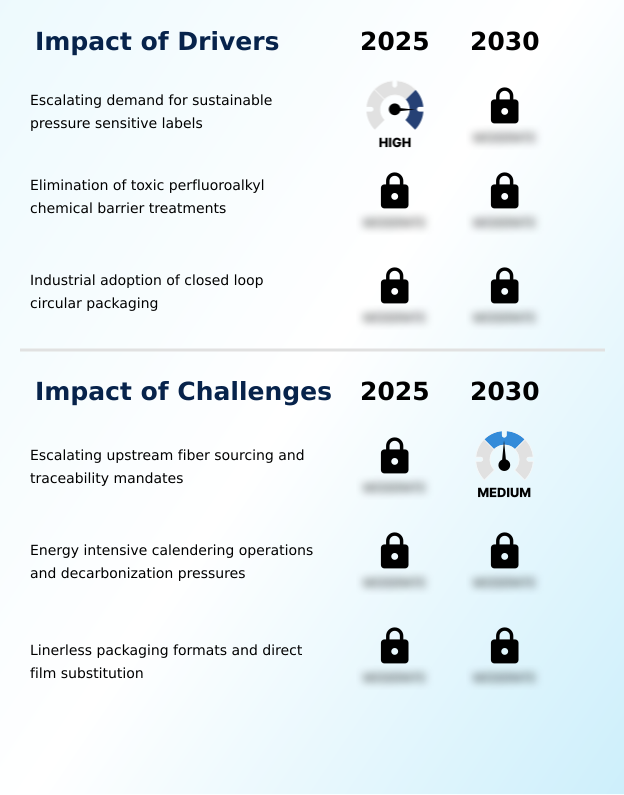
What are the key market drivers leading to the rise in the adoption of Glassine Paper Industry?
- The escalating demand for sustainable pressure-sensitive labels fundamentally propels market growth as logistics and retail supply chains require high-performance release liners that ensure precise automated application.
- The stringent enforcement of environmental prohibitions on synthetic fluorochemicals acts as the primary catalyst driving the extensive integration of mechanical fiber hydration within food-contact applications.
- Regulatory agencies revoking approvals for perfluoroalkyl substances compel packaging converters to achieve grease resistance through intense deflaker refining and mechanical fiber morphology alteration rather than chemical additives.
- Because this high-pressure compaction effectively collapses the cellulose lumen the resulting material natively blocks lipid penetration without compromising repulpability. Food conglomerates implementing these fluoropolymer-free barrier coatings have realized a 30% decrease in environmental compliance auditing time.
- Additionally replacing conventional poly-coated papers with pure mechanical barrier substrates has reduced secondary processing delays by 18% establishing entirely non-toxic compostable packaging supply chains.
What are the market trends shaping the Glassine Paper Industry?
- Substrate downgauging and high-yield calendering advances represent a critical market trend optimizing reel capacities for automated packaging facilities. These engineering improvements allow manufacturers to reduce nominal basis weights without compromising tensile integrity or caliper uniformity.
- The commercial acceleration of surface functionalization represents a transformative trend reshaping barrier packaging capabilities across the retail sector. Consumer packaged goods manufacturers are systematically replacing poly-laminated papers with functionalized substrates treated with advanced biopolymer topcoats.
- This engineering shift occurs because regulatory pressures compel brands to eliminate synthetic window films driving the adoption of fully recyclable alternatives compatible with standard hydrapulping systems and curbside paper recycling. Consequently facilities utilizing aqueous dispersion coatings report a 25% reduction in municipal sorting errors compared to legacy petrochemical laminates.
- Furthermore integrating these optimized barrier substrates has enhanced form-fill-seal efficiency yielding a 20% improvement in heat-sealing speed parameters. The utilization of optical character recognition scanners on these transparent display windows ensures flawless automated logistics tracking.
What challenges does the Glassine Paper Industry face during its growth?
- Escalating upstream fiber sourcing and stringent traceability mandates present a significant challenge restricting raw material availability and increasing operational costs for specialty paper manufacturers.
- Escalating exposure to volatile utility expenditures and strict decarbonization targets presents a profound structural limitation for supercalendering operations. Achieving the requisite surface smoothness and sheet density for uniform cross-linked silicone coating consumes massive quantities of electrical power and high-temperature steam.
- Because legacy paper mills frequently lack integrated energy management software facilities experience severe thermal dissipation and uneven web tension management across wide web formats. When operators prematurely curtail steam application to lower baseline utility consumption the resulting dimensional instability leads to a 25% increase in siliconization failure rates during cold-chain logistics label production.
- Furthermore converting outdated fossil fuel boiler infrastructure to electrified steam generation requires extensive capital allocations resulting in a 20% escalation in overall processing overhead.
Exclusive Technavio Analysis on Customer Landscape
The glassine paper market forecasting report includes the adoption lifecycle of the market, covering from the innovator’s stage to the laggard’s stage. It focuses on adoption rates in different regions based on penetration. Furthermore, the glassine paper market report also includes key purchase criteria and drivers of price sensitivity to help companies evaluate and develop their market growth analysis strategies.
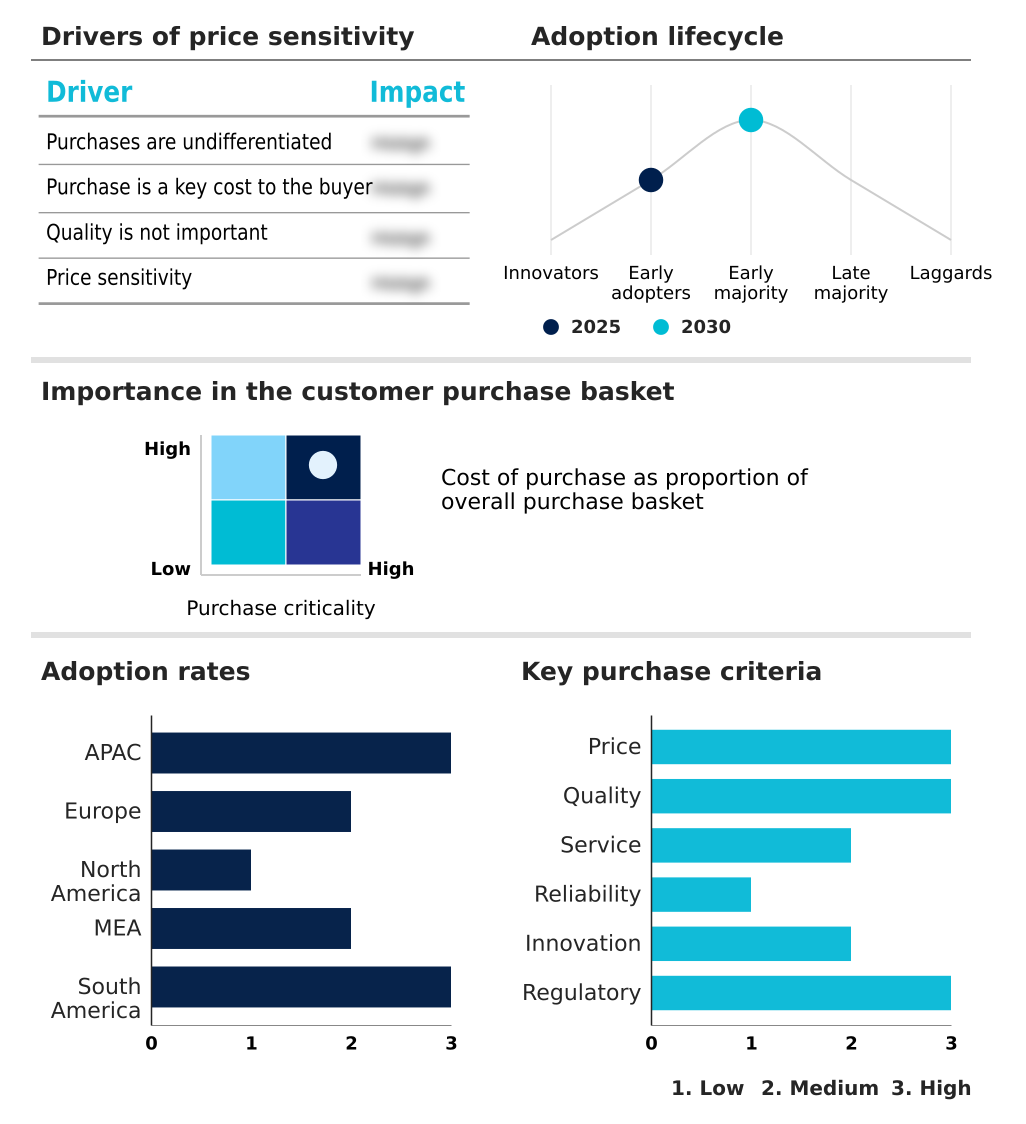
Customer Landscape of Glassine Paper Industry
Competitive Landscape
Companies are implementing various strategies, such as strategic alliances, glassine paper market forecast, partnerships, mergers and acquisitions, geographical expansion, and product/service launches, to enhance their presence in the industry.
Ahlstrom Oyj - The company delivers advanced fiber-based materials specializing in high-performance glassine release papers and supercalendered liners engineered to support sustainable packaging and precision pressure-sensitive adhesive applications globally.
The industry research and growth report includes detailed analyses of the competitive landscape of the market and information about key companies, including:
- Ahlstrom Oyj
- Asia Pulp and Paper APP Sinar
- Billerud AB
- delfortgroup AG
- FEDRIGONI Spa
- Loparex LLC
- Mativ Holdings Inc.
- Mitsubishi Paper Mills Ltd.
- Mondi Plc
- Nippon Paper Industries Co. Ltd.
- Nordic Paper AS
- Oji Holdings Corp.
- Pakka Ltd.
- Pixelle Specialty Solutions LLC
- Prompt Industries Pvt Ltd.
- Pudumjee Paper Products Ltd
- Shree Krishna Paper Mills
- Stora Enso Oyj
- Twin Rivers Paper Co.
- UPM Kymmene Corp.
Qualitative and quantitative analysis of companies has been conducted to help clients understand the wider business environment as well as the strengths and weaknesses of key industry players. Data is qualitatively analyzed to categorize companies as pure play, category-focused, industry-focused, and diversified; it is quantitatively analyzed to categorize companies as dominant, leading, strong, tentative, and weak.
Recent Development and News in Glassine paper market
- In the Paper Products industry the widespread elimination of perfluoroalkyl chemical treatments in food-contact materials directly impacted the Glassine Paper market by accelerating the adoption of high-density cellulose refinement techniques for grease resistance.
- The expansion of extended producer responsibility mandates for packaging waste forced label converters to establish reverse logistics infrastructure stabilizing Glassine Paper demand by validating the recovery of spent release backing materials.
- Stringent geolocation tracking requirements under international deforestation regulations disrupted sustainable virgin pulp procurement heavily impacting Glassine Paper supply chains by consolidating sourcing networks and inflating raw material costs by 15%.
- Advancements in closed-loop process automation optimized supercalendering operations reducing web breaks during thermal transfer printing and driving Glassine Paper basis weight reductions across automated supply chains.
Dive into Technavio’s robust research methodology, blending expert interviews, extensive data synthesis, and validated models for unparalleled Glassine Paper Market insights. See full methodology.
| Market Scope | |
|---|---|
| Page number | 305 |
| Base year | 2025 |
| Historic period | 2020-2024 |
| Forecast period | 2026-2030 |
| Growth momentum & CAGR | Accelerate at a CAGR of 4.3% |
| Market growth 2026-2030 | USD 533.0 million |
| Market structure | Fragmented |
| YoY growth 2025-2026(%) | 4.2% |
| Key countries | China, Japan, India, South Korea, Thailand, Taiwan, Germany, France, Italy, UK, Spain, The Netherlands, US, Canada, Mexico, Saudi Arabia, South Africa, UAE, Egypt, Turkey, Brazil, Argentina and Chile |
| Competitive landscape | Leading Companies, Market Positioning of Companies, Competitive Strategies, and Industry Risks |
Research Analyst Overview
- The continuous evolution of the market is fundamentally driven by the structural displacement of petrochemical films in favor of high-density substrates. As enterprise operations transition toward sustainable models the necessity for flawless caliper uniformity during high-speed converting has become paramount to achieve zero-defect manufacturing.
- Advanced facilities utilizing deflection-compensating rolls have successfully reduced microscopic thickness variations yielding a 35% improvement in die-cutting precision compared to older mechanical techniques. This structural consistency ensures uniform polydimethylsiloxane silicone chemistry cross-linking preventing pinholes while drastically lowering the absorption of costly platinum-cured coatings.
- From a strategic boardroom perspective integrating basis weight downgauging initiatives allows multinational corporations to optimize freight carbon accounting liabilities. The intensive refining required to produce these ultra-dense sheets delivers unparalleled tensile energy absorption ensuring uninterrupted runnability.
What are the Key Data Covered in this Glassine Paper Market Research and Growth Report?
-
What is the expected growth of the Glassine Paper Market between 2026 and 2030?
-
USD 533 million, at a CAGR of 4.3%
-
-
What segmentation does the market report cover?
-
The report is segmented by Product Type (Opaque glassine paper, Printed glassine paper, and Colored glassine paper), Application (Packaging and wrapping, Release liners, Interleaving paper, and Envelopes and windows), Type (In between 40 to 60 GSM, Below 40 GSM, and Above 60 GSM) and Geography (APAC, Europe, North America, Middle East and Africa, South America)
-
-
Which regions are analyzed in the report?
-
APAC, Europe, North America, Middle East and Africa and South America
-
-
What are the key growth drivers and market challenges?
-
Escalating demand for sustainable pressure sensitive labels, Escalating upstream fiber sourcing and traceability mandates
-
-
Who are the major players in the Glassine Paper Market?
-
Ahlstrom Oyj, Asia Pulp and Paper APP Sinar, Billerud AB, delfortgroup AG, FEDRIGONI Spa, Loparex LLC, Mativ Holdings Inc., Mitsubishi Paper Mills Ltd., Mondi Plc, Nippon Paper Industries Co. Ltd., Nordic Paper AS, Oji Holdings Corp., Pakka Ltd., Pixelle Specialty Solutions LLC, Prompt Industries Pvt Ltd., Pudumjee Paper Products Ltd, Shree Krishna Paper Mills, Stora Enso Oyj, Twin Rivers Paper Co. and UPM Kymmene Corp.
-
Market Research Insights
- The Glassine Paper Market operates as a highly specialized material sector characterized by the rapid deployment of sustainable barrier solutions. Packaging facilities integrating advanced backing materials have improved high-speed automated dispensing efficiency by 22% compared to legacy synthetic films. Furthermore the implementation of reverse logistics programs for post-industrial waste liability management has increased secondary material recovery rates by 35%.
- This operational shift aligns with strict extended producer responsibility directives reducing landfill compliance costs by 18%. By facilitating an efficient industrial off-take route into existing municipal repulping operations the market addresses critical environmental mandates while optimizing variable-data tracking workflows across complex retail distribution networks.
We can help! Our analysts can customize this glassine paper market research report to meet your requirements.
 RIA -

