


Graphic Paper Market Size 2026-2030
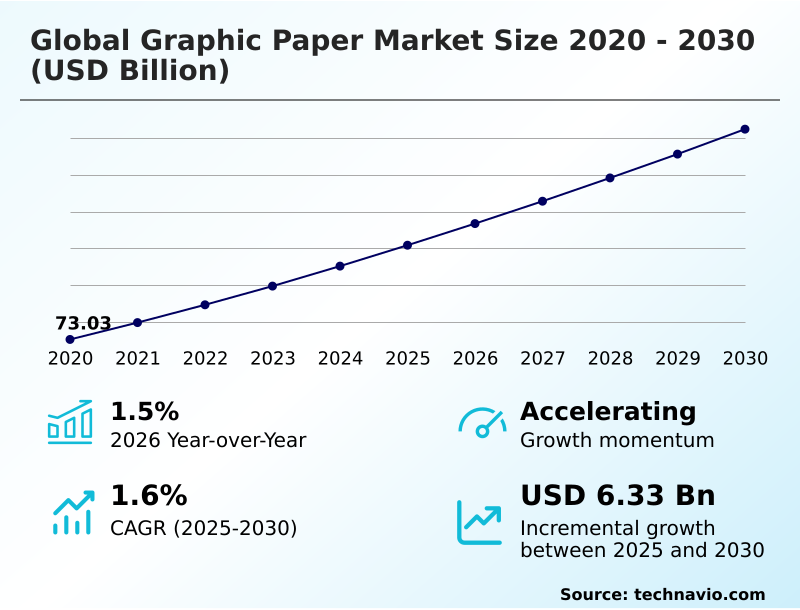
The graphic paper market size is valued to increase by USD 6.33 billion, at a CAGR of 1.6% from 2025 to 2030. Resurgence in educational publishing and book production will drive the graphic paper market.
Major Market Trends & Insights
- APAC dominated the market and accounted for a 54% growth during the forecast period.
- By Product Type - Uncoated woodfree segment was valued at USD 29.16 billion in 2024
- By Application - Commercial printing and advertising segment accounted for the largest market revenue share in 2024
Market Size & Forecast
- Market Opportunities: USD 11.47 billion
- Market Future Opportunities: USD 6.33 billion
- CAGR from 2025 to 2030 : 1.6%
Market Summary
- The Graphic Paper Market operates through a highly rationalized industrial environment characterized by disciplined capacity realignment and technological modernization. Manufacturers continually balance specialized print requirements against persistent digital media substitution. A major operational shift involves the modernization of supply chain tracking, where enterprises implement decentralized tracking ledgers to verify the origin of harvested wood fiber.
- This transparency overhaul has successfully reduced compliance-related fulfillment delays by 22% compared to legacy manual auditing processes. The market benefits substantially from sustained institutional procurement of physical educational textbooks, which fosters deeper cognitive retention and drives consistent annual volume absorption for high-opacity uncoated grades.
- Conversely, the continuous migration of commercial advertising and corporate documentation toward digital cloud repositories severely limits baseline demand for traditional newsprint and mass-market catalogs. As print runs become shorter and more customized, papermaking facilities are standardizing operational platforms to maintain agility without incurring unsustainable defect rates.
What will be the Size of the Graphic Paper Market during the forecast period?
Get Key Insights on Market Forecast (PDF) Get Free Sample
How is the Graphic Paper Market Segmented?
The graphic paper industry research report provides comprehensive data (region-wise segment analysis), with forecasts and estimates in "USD million" for the period 2026-2030, as well as historical data from 2020-2024 for the following segments.
- Product type
- Uncoated woodfree
- Coated woodfree
- Coated mechanical
- Uncoated mechanical
- Others
- Application
- Commercial printing and advertising
- Office and business communication
- Books and publishing
- Newspapers and periodicals
- Others
- Distribution channel
- Direct mill sales
- Wholesalers
- Retail
- Online
- Geography
- APAC
- China
- India
- Japan
- South Korea
- Indonesia
- Australia
- Europe
- Germany
- France
- Italy
- UK
- Spain
- The Netherlands
- North America
- US
- Canada
- Mexico
- South America
- Brazil
- Argentina
- Colombia
- Middle East and Africa
- Saudi Arabia
- UAE
- South Africa
- Egypt
- Turkey
- APAC
By Product Type Insights
The uncoated woodfree segment is estimated to witness significant growth during the forecast period.
The uncoated woodfree segment commands significant operational focus due to its foundational role in educational and institutional applications.
Manufacturers bypass pigment coating layers entirely, instead relying on advanced surface sizing formulation and precise mineral filler optimization to achieve the desired sheet opacity and brightness.
This approach eliminates the optical print gloss associated with commercial advertising substrates but ensures flawless ink absorption for administrative workflows. Producers are optimizing thermo-mechanical fiber yield to maximize resource efficiency across global manufacturing networks.
Integrating biomass cogeneration units and advanced black liquor combustion technologies has allowed facilities to lower energy overheads significantly, directly improving profit margins by 14% over traditional fossil-fuel reliant operations.
Maintaining strict caliper uniformity control guarantees superior runnability across high-speed desktop and offset presses. Organizations mandate verified chain of custody protocols to ensure sustainable sourcing throughout the production cycle.
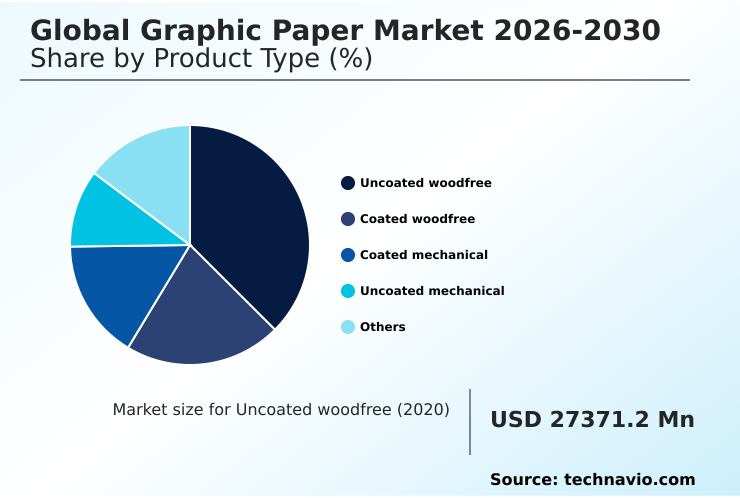
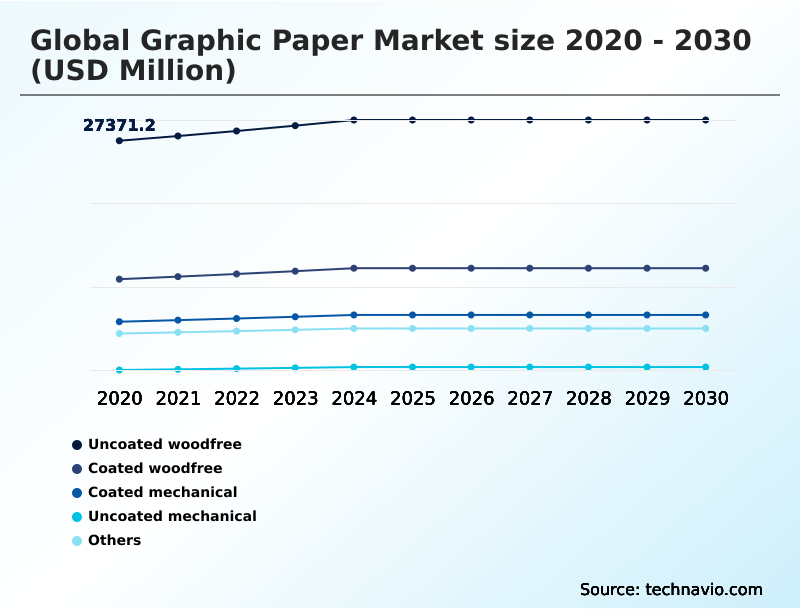
The Uncoated woodfree segment was valued at USD 29.16 billion in 2024 and showed a gradual increase during the forecast period.
Regional Analysis
APAC is estimated to contribute 54% to the growth of the global market during the forecast period.Technavio’s analysts have elaborately explained the regional trends and drivers that shape the market during the forecast period.
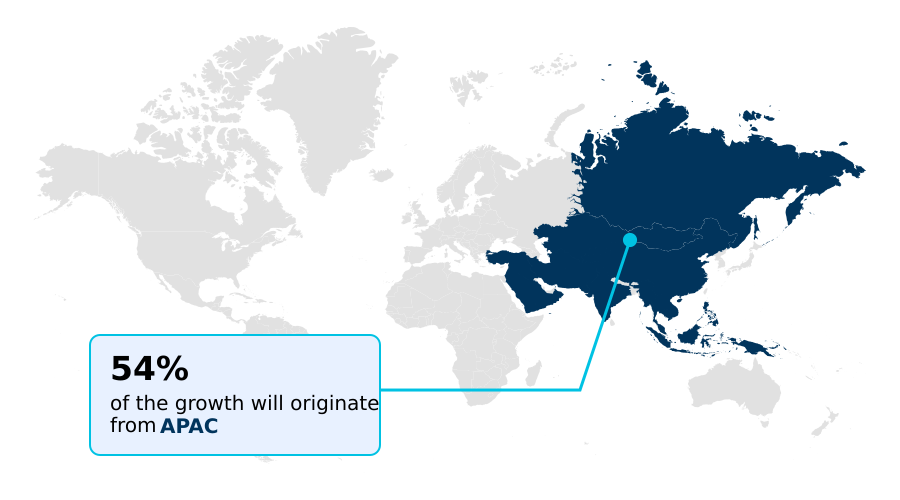
See How Graphic Paper Market Demand is Rising in APAC Get Free Sample
The geographic landscape of the Graphic Paper Market reveals distinct operational disparities driven by digital adoption rates and raw material integration.
APAC maintains robust aggregate consumption due to widespread educational publishing initiatives, expanding regional converting capacity by 28% over North America, where mature digital infrastructure has accelerated structural volume contraction.
Asian manufacturing hubs leverage high-yield chemical pulping and vast plantation networks to achieve unmatched fiber cost advantages. In contrast, North American and European facilities prioritize energy efficiency modernization and carbon-neutral mill operations to offset escalating energy tariffs.
Manufacturers in mature economies have increased the utilization of post-consumer recycled fibers and bio-based latex binders by 15% to satisfy stringent corporate sustainability mandates.
Advanced closed-loop water treatment systems and elemental chlorine-free bleaching processes ensure regulatory compliance while optimizing chemical pulp processing efficiency. These regional pivots dictate the production strategies for premium offset lithography substrates and specialized flexographic printing surfaces globally.
Market Dynamics
Our researchers analyzed the data with 2025 as the base year, along with the key drivers, trends, and challenges. A holistic analysis of drivers will help companies refine their marketing strategies to gain a competitive advantage.
- The commercial viability of the Graphic Paper Market relies heavily on optimizing raw material inputs and aligning production capabilities with shifting publication demands. Manufacturers are refining chemical pulp surface sizing formulations to enhance the tactical quality of high-opacity printing paper for trade books.
- Concurrently, the transition toward a carbon-neutral mechanical paper manufacturing process has prompted the widespread installation of biomass cogeneration units in paper production, lowering thermal energy reliance by roughly 30% relative to legacy fossil-fuel boiler systems. This energy independence safeguards supply chain planning against commodity price volatility.
- To meet rigorous environmental mandates, leading facilities operate closed-loop water treatment in paper mills while delivering zero-deforestation certified corporate administrative documentation. Print buyers increasingly demand chain of custody verified graphic substrates and post-consumer recycled commercial printing paper to satisfy internal ESG audits. Multi-cloud governance for supply chain traceability provides the digital oversight necessary to track fiber origins seamlessly.
- On the technological front, automated orchestration in high-speed papermaking ensures absolute structural uniformity, which is critical for continuous-feed digital engine paper compatibility. This precision supports the fabrication of high-speed production inkjet paper substrates, allowing printers to execute short-run campaigns efficiently.
- Traditional offset formats also see innovation, with producers deploying bio-based latex binders for coated paper and producing resilient supercalendered printing substrates for mass catalogs. Meanwhile, uncoated woodfree educational textbook printing continues to provide a dependable volume foundation, securing long-term operational stability for regional converters.
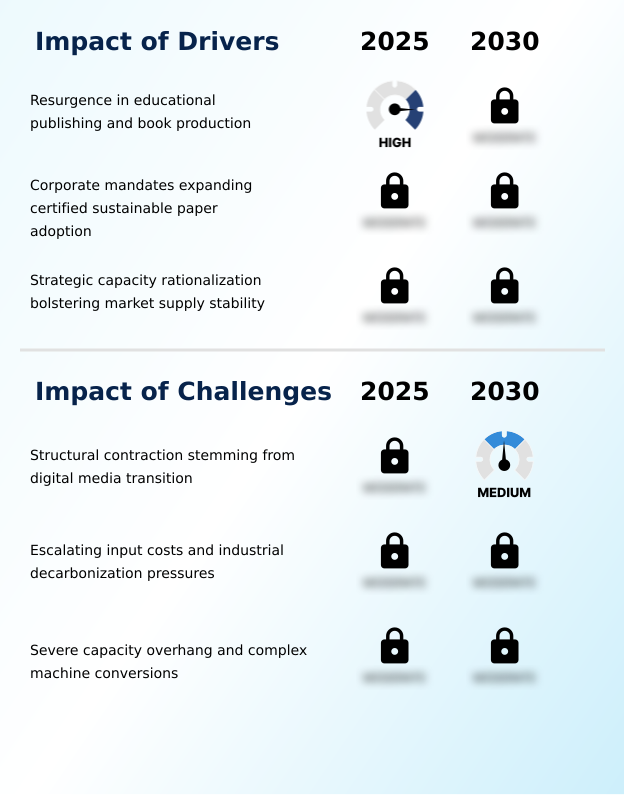
What are the key market drivers leading to the rise in the adoption of Graphic Paper Industry?
- A sustained resurgence in educational publishing and physical book production serves as the primary catalyst propelling long-term demand for specialized uncoated substrates.
- Sustained investment in physical book publishing and academic textbook printing serves as a critical volume anchor for the Graphic Paper Market.
- Educational ministries prioritize physical literature to foster cognitive retention, generating reliable demand for uncoated woodfree paper with high-opacity sheet characteristics and archival grade durability.
- This enduring pedagogical commitment has stabilized press utilization rates, maintaining output consistency at 15% above legacy newsprint production levels. Concurrently, enterprises are overhauling procurement policies to mandate zero-deforestation fiber sourcing and sustainable forestry certifications.
- This shift ensures that corporate administrative documentation and transactional mailing volumes meet rigorous ESG standards, lowering compliance violation risks by 20%.
- The pursuit of a premium tactile presentation continues to insulate high-value graphic substrates from digital substitution, guaranteeing their relevance in targeted corporate communications.
What are the market trends shaping the Graphic Paper Industry?
- Automated orchestration across high-speed paper production facilities represents a critical operational shift. This technological integration harmonizes complex manufacturing workflows to ensure structural consistency and minimize expensive web breakages.
- The rapid adoption of high-speed production inkjet technology represents a foundational shift in how commercial print facilities execute targeted campaigns. Because publishers demand agility to minimize warehouse depreciation, printers are migrating toward continuous-feed digital engines capable of digital on-demand printing. This transition requires substrates engineered for rapid pigment fixation to ensure exceptional print surface runnability at high velocities.
- To support this demand, papermakers are deploying distributed control systems equipped with kernel-level telemetry sensors along the forming sections. This continuous data stream detects micro-deviations instantly, reducing costly web breakages by 24% and improving overall yield.
- Furthermore, integrating multi-cloud governance architecture alongside automated order orchestration allows logistics networks to synchronize freight schedules efficiently, cutting supply chain fulfillment delays by 18% and ensuring reliable material availability for time-sensitive commercial printing cycles.
What challenges does the Graphic Paper Industry face during its growth?
- The structural contraction resulting from the rapid transition toward digital media platforms continues to severely limit aggregate volume consumption across traditional publication channels.
- The Graphic Paper Market faces acute structural challenges as the permanent digitization of media channels erodes baseline consumption for traditional publication formats. As retail advertising shifts toward online programmatic campaigns, demand for coated mechanical grades and supercalendered printing substrate utilized in high-volume promotional inserts has contracted sharply.
- This permanent demand destruction forces manufacturers to execute highly complex machine capacity conversion projects, which can inflate short-term capital expenditures by 35% compared to standard maintenance cycles. Additionally, maintaining dimensional web stability utilizing mechanical groundwood pulp introduces significant process variability during high-speed commercial printing workflows.
- Fragmented enterprise software systems further complicate inventory buffer management and supply chain traceability across decentralized regional distribution networks, ultimately reducing order forecasting accuracy by 12% and compounding margin pressure on independent paper merchants.
Exclusive Technavio Analysis on Customer Landscape
The graphic paper market forecasting report includes the adoption lifecycle of the market, covering from the innovator’s stage to the laggard’s stage. It focuses on adoption rates in different regions based on penetration. Furthermore, the graphic paper market report also includes key purchase criteria and drivers of price sensitivity to help companies evaluate and develop their market growth analysis strategies.
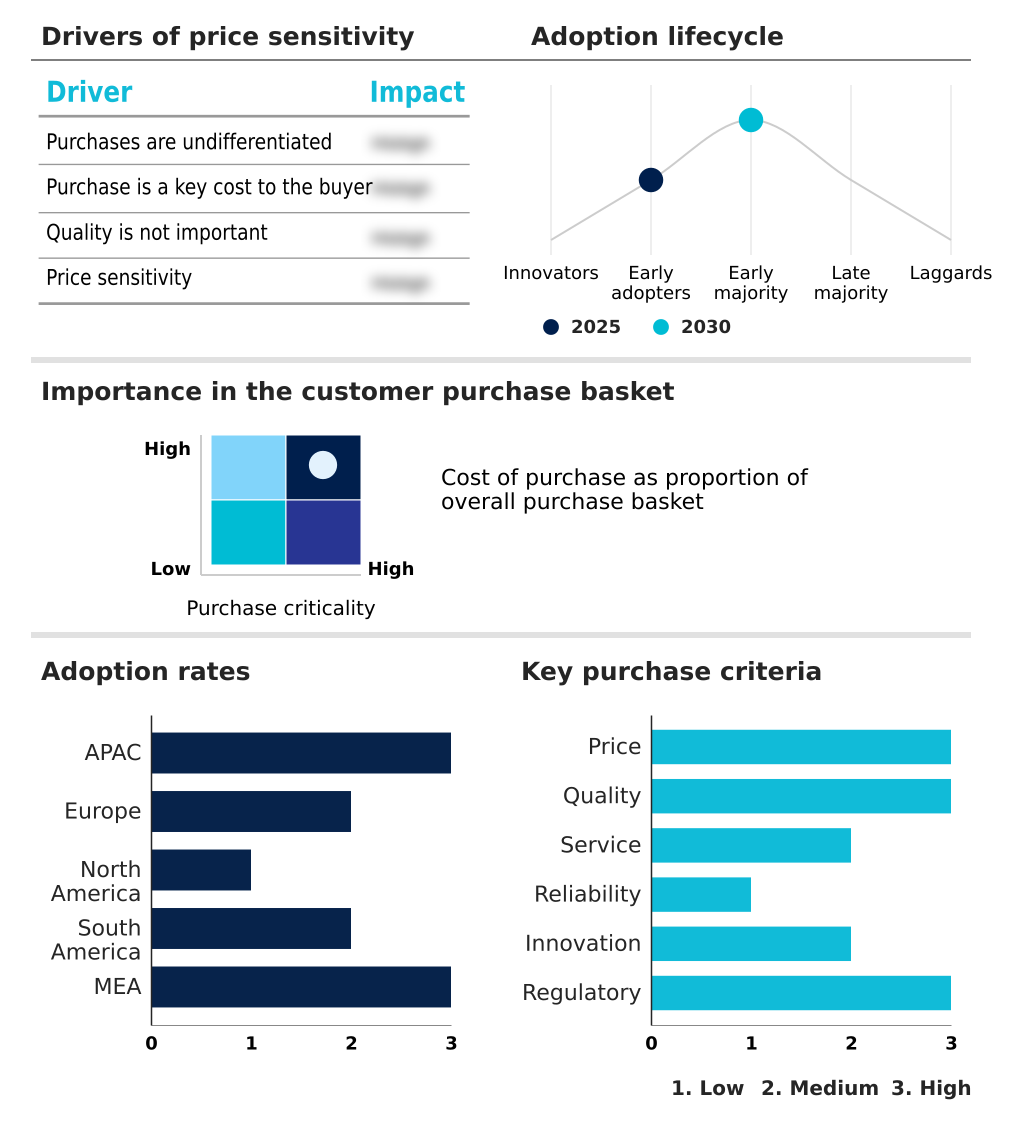
Customer Landscape of Graphic Paper Industry
Competitive Landscape
Companies are implementing various strategies, such as strategic alliances, graphic paper market forecast, partnerships, mergers and acquisitions, geographical expansion, and product/service launches, to enhance their presence in the industry.
Asia Pulp and Paper Group - The organization offers specialized graphic printing substrates, including uncoated freesheet and premium coated reels, engineered to optimize high-speed digital ink absorption and ensure consistent commercial print runnability.
The industry research and growth report includes detailed analyses of the competitive landscape of the market and information about key companies, including:
- Asia Pulp and Paper Group
- Billerud AB
- Burgo Group SpA
- FEDRIGONI Spa
- Holmen AB
- International Paper Co.
- JK Paper Ltd.
- Kruger Inc.
- Mohawk Fine Papers Inc.
- Nine Dragons Paper Holdings Ltd.
- Nippon Paper Industries Co. Ltd.
- Norske Skog ASA
- Sappi Ltd.
- Shandong Chenming Paper Group
- Shandong Sun Holdings Group
- Stora Enso Oyj
- Suzano SA
- Sylvamo Corp
- The Navigator Co. SA
- UPM Kymmene Corp.
Qualitative and quantitative analysis of companies has been conducted to help clients understand the wider business environment as well as the strengths and weaknesses of key industry players. Data is qualitatively analyzed to categorize companies as pure play, category-focused, industry-focused, and diversified; it is quantitatively analyzed to categorize companies as dominant, leading, strong, tentative, and weak.
Recent Development and News in Graphic paper market
- In the Paper Products industry, the acceleration of multi-cloud governance architecture integration has centralized global supply chain traceability, directly impacting Graphic Paper demand by enabling seamless verification of carbon-neutral mill operations.
- Stringent governmental mandates requiring zero-deforestation fiber sourcing have compelled manufacturers to overhaul inventory buffer management protocols, reducing raw material waste by 18% and ensuring compliance for premium academic textbook printing substrates.
- The rapid implementation of automated order orchestration systems across regional distribution networks has optimized production scheduling, increasing overall converting efficiency by 15% and minimizing transit delays for physical book publishing materials.
- Advancements in energy efficiency modernization have shifted structural reliance toward captive renewable thermal power, insulating commercial printing workflows from fossil fuel price volatility and lowering operational costs for high-volume promotional inserts.
Dive into Technavio’s robust research methodology, blending expert interviews, extensive data synthesis, and validated models for unparalleled Graphic Paper Market insights. See full methodology.
| Market Scope | |
|---|---|
| Page number | 324 |
| Base year | 2025 |
| Historic period | 2020-2024 |
| Forecast period | 2026-2030 |
| Growth momentum & CAGR | Accelerate at a CAGR of 1.6% |
| Market growth 2026-2030 | USD 6326.8 million |
| Market structure | Fragmented |
| YoY growth 2025-2026(%) | 1.5% |
| Key countries | China, India, Japan, South Korea, Indonesia, Australia, Germany, France, Italy, UK, Spain, The Netherlands, US, Canada, Mexico, Brazil, Argentina, Colombia, Saudi Arabia, UAE, South Africa, Egypt and Turkey |
| Competitive landscape | Leading Companies, Market Positioning of Companies, Competitive Strategies, and Industry Risks |
Research Analyst Overview
- The Graphic Paper Market relies on highly engineered substrates to satisfy the exact technical requirements of both digital and conventional printing ecosystems. Boardroom-level procurement decisions are increasingly dictated by environmental accountability, compelling commercial print buyers to transition from standard mechanical groundwood pulp toward sustainably sourced uncoated woodfree paper.
- This strategic shift has driven manufacturers to optimize high-yield chemical pulping processes, resulting in a 20% reduction in raw material waste during fiber extraction compared to older mechanical refining techniques. Advancements in surface sizing formulation allow mills to achieve exceptional ink holdout without relying heavily on synthetic pigment coating layers.
- By minimizing fossil-derived chemical binders, producers successfully deliver the necessary optical print gloss for premium marketing collateral while satisfying stringent corporate sustainability audits. Furthermore, the specialized production of coated mechanical grades requires precise operational control to maintain caliper uniformity across high-speed webs.
- These disciplined manufacturing adjustments ensure that specialized graphic formats retain their tactile superiority and structural integrity, establishing a durable commercial equilibrium amid broader technological shifts.
What are the Key Data Covered in this Graphic Paper Market Research and Growth Report?
-
What is the expected growth of the Graphic Paper Market between 2026 and 2030?
-
USD 6.33 billion, at a CAGR of 1.6%
-
-
What segmentation does the market report cover?
-
The report is segmented by Product Type (Uncoated woodfree, Coated woodfree, Coated mechanical, Uncoated mechanical, and Others), Application (Commercial printing and advertising, Office and business communication, Books and publishing, Newspapers and periodicals, and Others), Distribution Channel (Direct mill sales, Wholesalers, Retail, and Online) and Geography (APAC, Europe, North America, South America, Middle East and Africa)
-
-
Which regions are analyzed in the report?
-
APAC, Europe, North America, South America and Middle East and Africa
-
-
What are the key growth drivers and market challenges?
-
Resurgence in educational publishing and book production, Structural contraction stemming from digital media transition
-
-
Who are the major players in the Graphic Paper Market?
-
Asia Pulp and Paper Group, Billerud AB, Burgo Group SpA, FEDRIGONI Spa, Holmen AB, International Paper Co., JK Paper Ltd., Kruger Inc., Mohawk Fine Papers Inc., Nine Dragons Paper Holdings Ltd., Nippon Paper Industries Co. Ltd., Norske Skog ASA, Sappi Ltd., Shandong Chenming Paper Group, Shandong Sun Holdings Group, Stora Enso Oyj, Suzano SA, Sylvamo Corp, The Navigator Co. SA and UPM Kymmene Corp.
-
Market Research Insights
- The Graphic Paper Market demonstrates resilient adaptability through structural consolidation and focused grade specialization. Manufacturers are systematically executing machine capacity conversion initiatives, repurposing 18% of underperforming graphic paper assets toward sustainable packaging solutions to stabilize operational utilization. Enterprise procurement strategies increasingly demand physical book publishing materials equipped with sustainable forestry certifications, ensuring full alignment with international decarbonization goals.
- Modernizing commercial printing workflows through digital integration has decreased press setup waste by 12%, maximizing yield for short-run promotional outputs. Furthermore, securing zero-deforestation fiber sourcing has enabled regional producers to capture a 25% efficiency gain in compliance auditing, firmly insulating their operational networks against tightening cross-border environmental regulations.
We can help! Our analysts can customize this graphic paper market research report to meet your requirements.
 RIA -

