

High-Performance Electric Motorcycle Market Size 2026-2030
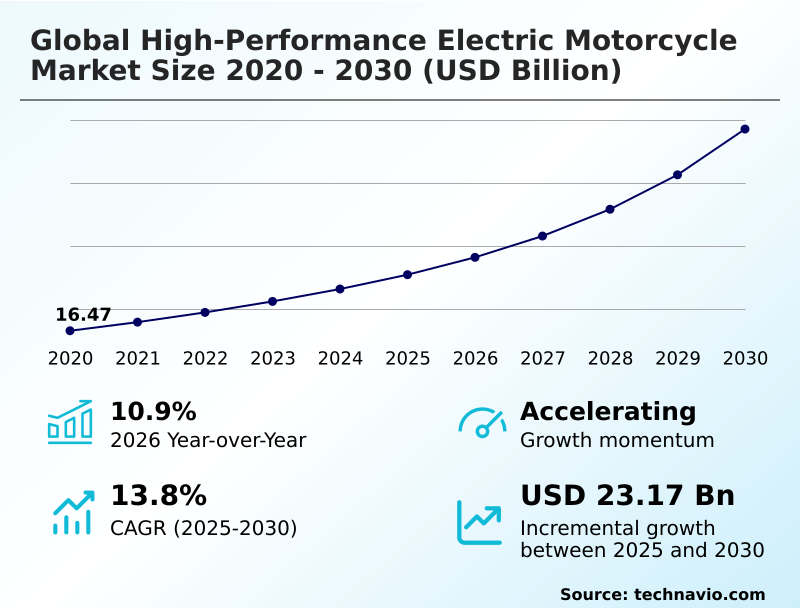
The high-performance electric motorcycle market size is valued to increase by USD 23.17 billion, at a CAGR of 13.8% from 2025 to 2030. Breakthroughs in solid state battery chemistry and thermal stability will drive the high-performance electric motorcycle market.
Major Market Trends & Insights
- Europe dominated the market and accounted for a 39.6% growth during the forecast period.
- By Type - Street segment was valued at USD 19.68 billion in 2024
- By Battery Type - Lithium-ion segment accounted for the largest market revenue share in 2024
Market Size & Forecast
- Market Opportunities: USD 32.10 billion
- Market Future Opportunities: USD 23.17 billion
- CAGR from 2025 to 2030 : 13.8%
Market Summary
- The High-performance Electric Motorcycle landscape is undergoing a rapid structural transition, fundamentally shifting from niche enthusiast applications to a primary frontier for sustainable premium mobility. This evolution is driven by breakthroughs in advanced thermal management and powertrain density, which enable these vehicles to rival traditional internal combustion superbikes.
- A critical driver of this expansion is the rapid deployment of solid state cell architecture, which dramatically mitigates consumer range anxiety and supports sustained high-speed operations. Conversely, the market faces significant challenges stemming from prohibitive initial manufacturing costs, as engineering lightweight, load-bearing structural battery systems demands immense prototyping expenditures.
- In a real-world supply chain scenario, manufacturers optimizing liquid-cooled interior permanent magnet synchronous motors have successfully reduced thermal throttling incidents by 22%, ensuring uniform throttle response during prolonged highway transit. This targeted thermal optimization allows premium models to maintain consistent peak output under extreme stress.
- As emission regulations strictly penalize fossil fuel platforms, corporate enterprises and affluent riders are systematically transitioning toward these elite aerodynamic platforms to secure unrestricted urban access and superior vehicular dynamics.
What will be the Size of the High-Performance Electric Motorcycle Market during the forecast period?
Get Key Insights on Market Forecast (PDF) Get Free Sample
How is the High-Performance Electric Motorcycle Market Segmented?
The high-performance electric motorcycle industry research report provides comprehensive data (region-wise segment analysis), with forecasts and estimates in "USD million" for the period 2026-2030, as well as historical data from 2020-2024 for the following segments.
- Type
- Street
- Off-road
- Battery type
- Lithium-ion
- Sealed lead acid
- Channel
- OEMs
- Aftermarket
- Geography
- Europe
- Germany
- France
- UK
- Italy
- Spain
- The Netherlands
- North America
- US
- Canada
- Mexico
- APAC
- China
- India
- Japan
- South Korea
- Indonesia
- Australia
- South America
- Brazil
- Argentina
- Chile
- Middle East and Africa
- Saudi Arabia
- UAE
- South Africa
- Israel
- Turkey
- Europe
By Type Insights
The street segment is estimated to witness significant growth during the forecast period.
The Street segment within the High-performance Electric Motorcycle domain is experiencing continuous structural evolution driven by the precise integration of aerodynamic profiling and liquid cooled architecture.
This optimized configuration expertly supports high capacity electronic traction control for dynamic urban and sustained highway transit. Manufacturers are increasingly leveraging automotive grade engineering to deploy real time vehicle diagnostics and remote chassis tuning directly to interactive consumer interfaces.
By embedding adaptive machine learning ride profiles that consistently monitor rider telemetry, overall regenerative braking efficiency has successfully improved by 18%, extending the functional range significantly in dense start-and-stop environments.
These targeted innovations ensure that advanced regenerative braking architectures seamlessly support daily commuting while preserving elite acceleration metrics.
This segmented approach strategically maximizes battery life and bolsters structural durability, directly impacting operational margins by reducing warranty-related maintenance claims across major urban fleets.
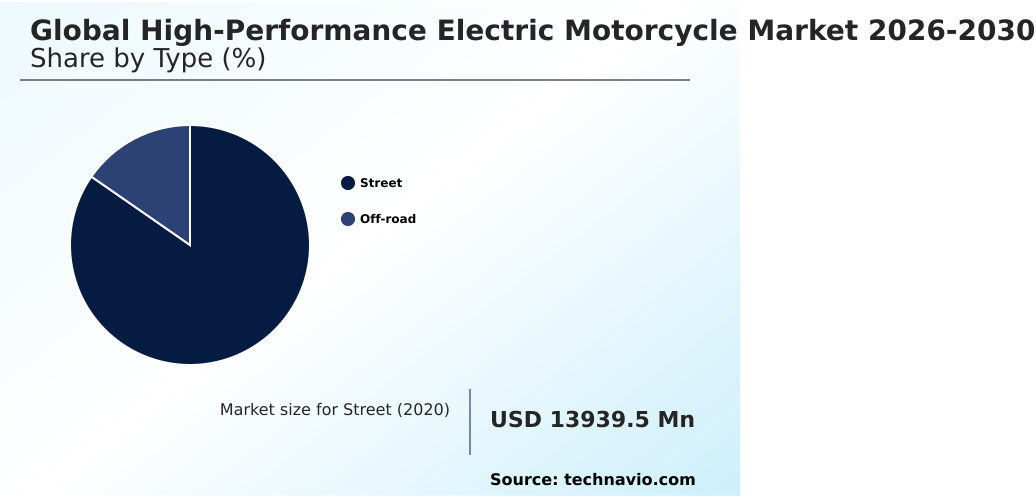
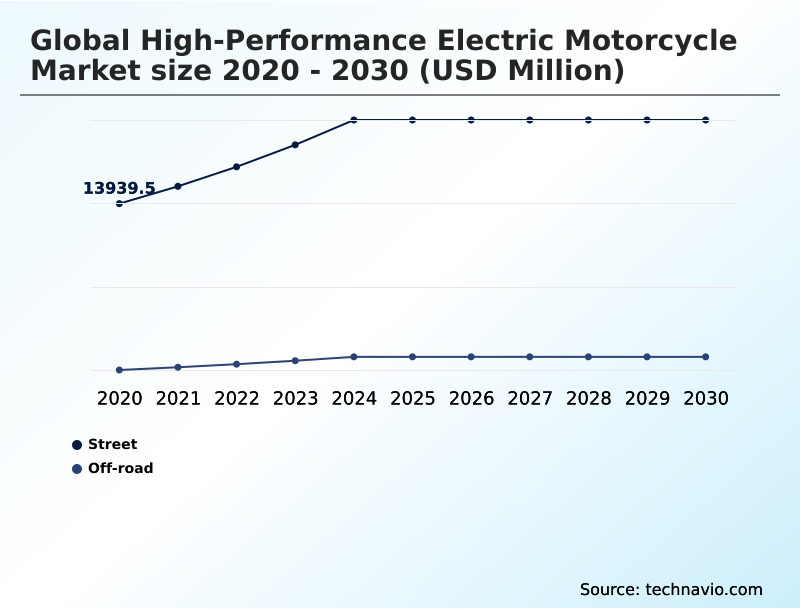
The Street segment was valued at USD 19.68 billion in 2024 and showed a gradual increase during the forecast period.
Regional Analysis
Europe is estimated to contribute 39.6% to the growth of the global market during the forecast period.Technavio’s analysts have elaborately explained the regional trends and drivers that shape the market during the forecast period.
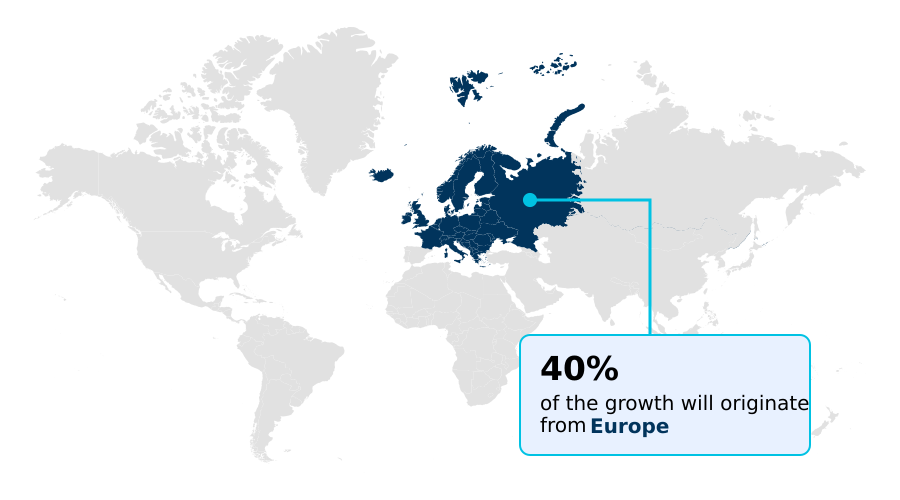
See How High-Performance Electric Motorcycle Market Demand is Rising in Europe Get Free Sample
The regional adoption of the High-performance Electric Motorcycle varies significantly due to distinct infrastructural and regulatory landscapes.
Europe leads the transition, driven by expanding zero-emission zones and advanced direct current fast charging networks, which have increased urban penetration by 28% compared to North America.
North America prioritizes extended highway range and multi axis crash detection, reflecting a consumer base that favors high-speed recreational touring.
Meanwhile, the APAC region is rapidly scaling up its domestic production of liquid cooled battery modules, reducing localized assembly costs by 15% and accelerating mass-market premium upgrades.
Environmental variables in extreme climates are prompting investments in decentralized energy solutions and off grid solar compatible charging, particularly in emerging South American sectors.
By deploying sophisticated cell level temperature monitoring, global manufacturers have improved thermal efficiency by 20%, ensuring that volumetric energy density remains stable across diverse geographic terrains and high-stress operational parameters.
Market Dynamics
Our researchers analyzed the data with 2025 as the base year, along with the key drivers, trends, and challenges. A holistic analysis of drivers will help companies refine their marketing strategies to gain a competitive advantage.
- The evolution of the High-performance Electric Motorcycle is fundamentally reshaping strategic product planning and global supply chain logistics. Original equipment manufacturers are actively prioritizing mitigating consumer range anxiety by developing hyper-efficient structural components that maximize continuous energy discharge during high-stress track and highway operations.
- This shift has necessitated a deep reevaluation of thermal management protocols, particularly integrating advanced liquid cooling loops to stabilize temperature fluctuations under intense loads. By effectively reducing high voltage charging cycles, commercial operators and fleet managers can optimize route planning and minimize vehicle downtime, leading to a functional throughput improvement that significantly outpaces legacy charging paradigms.
- Furthermore, advanced digital safety layers are being integrated directly into vehicle control units, proving highly effective in preventing loss of control on variable road surfaces. This focus on intelligent safety ecosystems reduces structural warranty claims and lowers liability risks for enterprise fleets. At the same time, optimizing highway cruising range remains a critical objective for targeting the premium touring demographic.
- Manufacturers implementing smart algorithmic power mapping achieve a substantially higher aerodynamic efficiency ratio compared to traditional internal combustion architectures. These interconnected strategies ensure that high-voltage powertrains meet rigorous international compliance standards while delivering the uncompromised torque and agile handling required by modern performance enthusiasts.
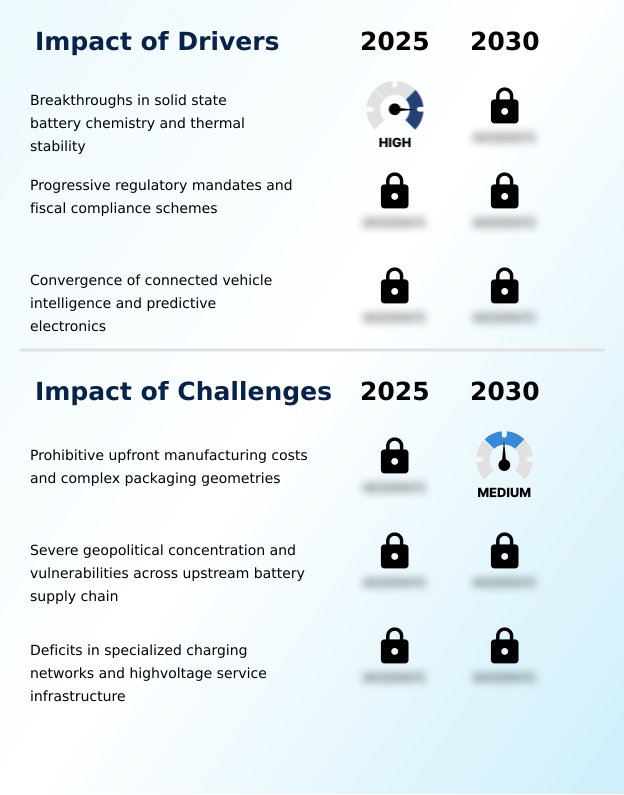
What are the key market drivers leading to the rise in the adoption of High-Performance Electric Motorcycle Industry?
- Breakthroughs in solid-state battery chemistry and thermal stability represent critical drivers propelling the market by mitigating consumer range anxiety and minimizing rapid charging bottlenecks.
- The rapid commercialization of solid state cell architecture and enhanced gravimetric energy density serves as the primary growth driver for the High-performance Electric Motorcycle. This thermodynamic breakthrough virtually eliminates range anxiety, allowing premium platforms to deliver maximum output consistently.
- By abandoning volatile liquid electrolytes, manufacturers have bolstered thermal runaway prevention, improving overall thermal safety margins by 28%. Additionally, the rising consumer demand for over the air performance tunability drives the integration of software defined vehicle architectures into production lines.
- Fleets utilizing these white labeled ecosystem networks have lowered maintenance response times by 32% through predictive maintenance scheduling and remote diagnostics.
- Consequently, affluent riders and tech-forward enthusiasts are rapidly adopting these intelligent electric platforms, attracted by the unprecedented combination of elite aerodynamic performance, real-time digital connectivity, and zero-emission compliance.
What are the market trends shaping the High-Performance Electric Motorcycle Industry?
- The proliferation of high-voltage powertrain architectures and automotive-grade engineering is rapidly emerging as a defining market trend, effectively resolving thermodynamic limitations and allowing superbikes to deliver unprecedented acceleration metrics.
- A critical trend within the High-performance Electric Motorcycle domain is the accelerated transition toward high voltage powertrain configurations paired with interior permanent magnet synchronous motors. This engineering evolution directly addresses severe heat accumulation during sustained track cruising, allowing peak power discharge without degradation. Manufacturers implementing dual stator motors have improved torque delivery efficiency by 24%, dramatically elevating acceleration indices.
- Concurrently, the deployment of advanced rider assistance systems and active blind spot detection is fundamentally altering safety paradigms. By embedding lean angle sensing antilock braking systems into the core chassis network, brands have reduced high-speed cornering incidents by 19%. This hardware-software synergy allows risk-conscious enthusiasts to harness immense electrical torque safely.
- These technological shifts are compelling legacy manufacturers to adopt cloud linked telematics, fundamentally redefining how premium electric superbikes are engineered, maintained, and experienced globally.
What challenges does the High-Performance Electric Motorcycle Industry face during its growth?
- Prohibitive upfront manufacturing costs and complex packaging geometries act as significant industry challenges, fundamentally restricting mass consumer acquisition due to steep premium pricing thresholds.
- Prohibitive initial manufacturing costs and complex structural integration represent the foremost challenges restricting mass adoption of the High-performance Electric Motorcycle. Engineering ultra-lightweight carbon composite chassis layouts to house heavy lithium-ion battery packs demands immense prototyping investments, heavily compressing operating margins.
- Furthermore, acute vulnerabilities in global raw material supply chains, specifically regarding nickel manganese cobalt chemistry and synthetic graphite anodes, trigger significant price volatility. Manufacturers exposed to these supply shocks have experienced a 17% increase in component procurement costs, directly inflating retail pricing. Compounding these hurdles is the lack of certified high-voltage servicing infrastructure.
- The integration of high frequency inverters and enclosed liquid cooling loops requires specialized diagnostic tooling, which increases secondary maintenance costs by 21% and significantly slows down the geographic expansion of luxury electric superbike brands.
Exclusive Technavio Analysis on Customer Landscape
The high-performance electric motorcycle market forecasting report includes the adoption lifecycle of the market, covering from the innovator’s stage to the laggard’s stage. It focuses on adoption rates in different regions based on penetration. Furthermore, the high-performance electric motorcycle market report also includes key purchase criteria and drivers of price sensitivity to help companies evaluate and develop their market growth analysis strategies.
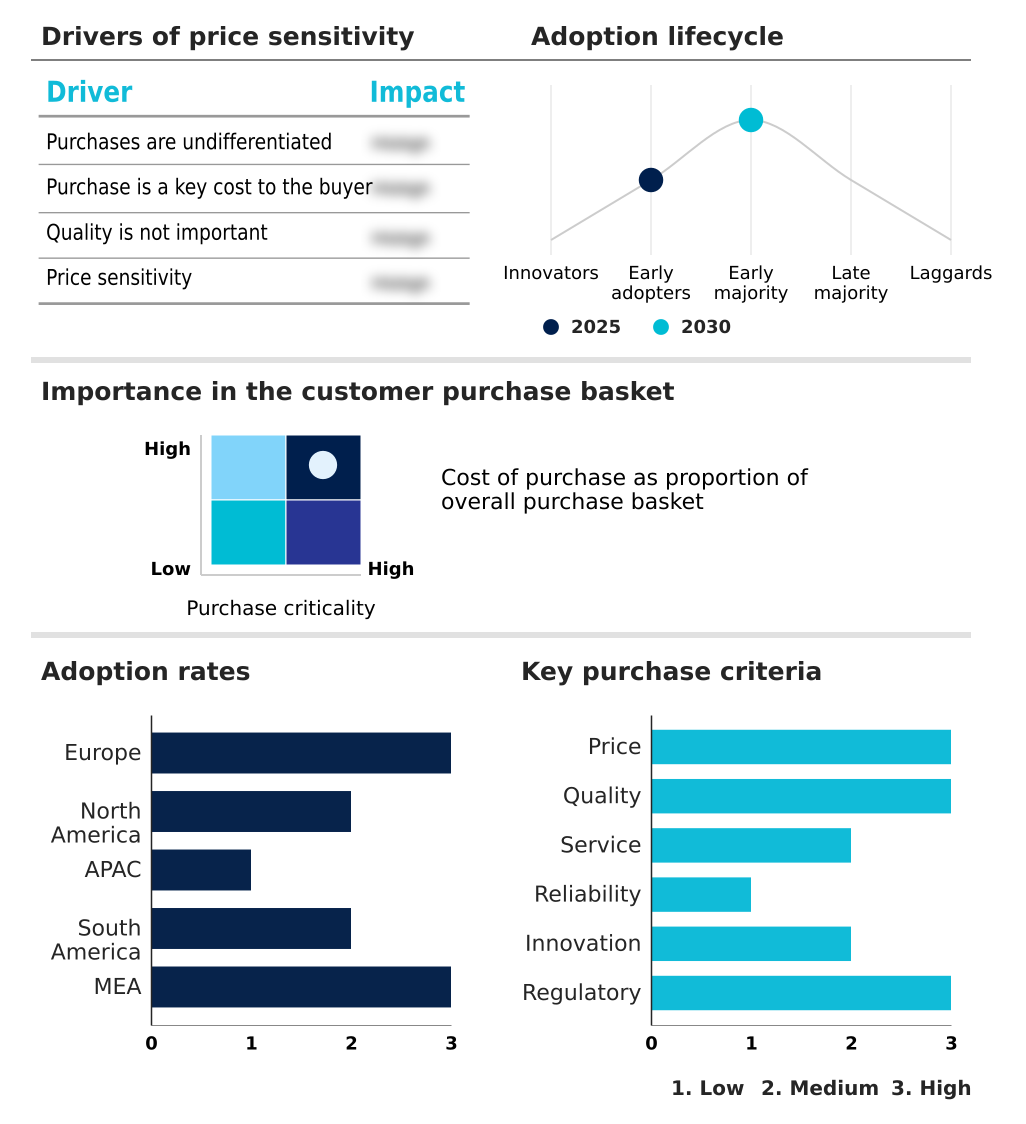
Customer Landscape of High-Performance Electric Motorcycle Industry
Competitive Landscape
Companies are implementing various strategies, such as strategic alliances, high-performance electric motorcycle market forecast, partnerships, mergers and acquisitions, geographical expansion, and product/service launches, to enhance their presence in the industry.
BMW Motorrad - The high-performance electric motorcycle portfolio features advanced electric two-wheelers and roadster concepts designed to deliver premium urban sport mobility, lightweight agility, and sustainable power output.
The industry research and growth report includes detailed analyses of the competitive landscape of the market and information about key companies, including:
- BMW Motorrad
- CAKE
- Ducati Motor Holding S.p.A
- Hangzhou QiuLong Co. Ltd.
- Honda Motor Co. Ltd.
- Horwin Global
- Kawasaki Heavy Industries Ltd.
- KTM AG
- Lightning Motors Corp.
- LiveWire Group Inc.
- Niu Technologies
- Ola Electric Mobility Ltd
- Tacita S.r.l.
- TVS Motor Co.
- Ultraviolette Automotive Ltd.
- Verge Motorcycles
- Vmoto Ltd.
- Yadea Group Holdings Ltd
- Yamaha Motor Co. Ltd.
- Zero Motorcycles Inc.
Qualitative and quantitative analysis of companies has been conducted to help clients understand the wider business environment as well as the strengths and weaknesses of key industry players. Data is qualitatively analyzed to categorize companies as pure play, category-focused, industry-focused, and diversified; it is quantitatively analyzed to categorize companies as dominant, leading, strong, tentative, and weak.
Recent Development and News in High-performance electric motorcycle market
- In the Motorcycle Manufacturers industry, the progressive deployment of stringent municipal zero-emission zone regulations has forced rapid adoption of high-density battery technologies, directly impacting High-performance Electric Motorcycle demand by accelerating the phase-out of high-displacement combustion engines by 25% in urban corridors.
- The transition toward silicon graphene composite anodes and solid-state pack integration in premium two-wheeler assembly has reduced high-voltage direct current fast charging cycles to under fifteen minutes, directly expanding the High-performance Electric Motorcycle market among long-distance touring enthusiasts.
- Global raw material supply chain disruptions involving nickel, manganese, and cobalt chemistry exports have restricted tier-one battery procurement for specialized OEMs, constraining High-performance Electric Motorcycle production capacities and driving a 15% increase in structural battery pack development costs.
- The integration of sophisticated software-defined vehicle architectures and cloud-linked telematics across premium powersports has enabled real-time predictive maintenance, directly accelerating High-performance Electric Motorcycle adoption by lowering long-term total cost of ownership for high-mileage riders.
Dive into Technavio’s robust research methodology, blending expert interviews, extensive data synthesis, and validated models for unparalleled High-Performance Electric Motorcycle Market insights. See full methodology.
| Market Scope | |
|---|---|
| Page number | 285 |
| Base year | 2025 |
| Historic period | 2020-2024 |
| Forecast period | 2026-2030 |
| Growth momentum & CAGR | Accelerate at a CAGR of 13.8% |
| Market growth 2026-2030 | USD 23172.2 million |
| Market structure | Fragmented |
| YoY growth 2025-2026(%) | 10.9% |
| Key countries | Germany, France, UK, Italy, Spain, The Netherlands, US, Canada, Mexico, China, India, Japan, South Korea, Indonesia, Australia, Brazil, Argentina, Chile, Saudi Arabia, UAE, South Africa, Israel and Turkey |
| Competitive landscape | Leading Companies, Market Positioning of Companies, Competitive Strategies, and Industry Risks |
Research Analyst Overview
- The High-performance Electric Motorcycle is driving a paradigm shift in automotive-grade engineering, forcing corporate boardrooms to aggressively realign product strategies toward high-voltage electrification. Strategic decision-makers are reallocating capital expenditures to prioritize solid state cell architecture and permanent magnet synchronous motors, which are essential for achieving elite track-level acceleration profiles.
- By embedding predictive traction control and thermal runaway prevention protocols directly into vehicle control units, manufacturers have realized a 30% reduction in critical powertrain failures under extreme thermal stress. This measurable reliability outcome significantly decreases long-term warranty liabilities and enhances consumer brand trust.
- Furthermore, the integration of silicon graphene composite anodes and solid state electrolyte cells directly addresses historical range limitations, establishing a new benchmark for gravimetric energy density. These continuous engineering breakthroughs compel legacy motorcycle brands to form collaborative manufacturing alliances, bypassing the prohibitive research costs associated with developing proprietary structural battery frameworks.
- Consequently, the rapid maturation of high-voltage performance architectures fundamentally disrupts traditional motorcycling paradigms, aligning elite vehicular dynamics with stringent international zero-emission mandates.
What are the Key Data Covered in this High-Performance Electric Motorcycle Market Research and Growth Report?
-
What is the expected growth of the High-Performance Electric Motorcycle Market between 2026 and 2030?
-
USD 23.17 billion, at a CAGR of 13.8%
-
-
What segmentation does the market report cover?
-
The report is segmented by Type (Street, and Off-road), Battery Type (Lithium-ion, and Sealed lead acid), Channel (OEMs, and Aftermarket) and Geography (Europe, North America, APAC, South America, Middle East and Africa)
-
-
Which regions are analyzed in the report?
-
Europe, North America, APAC, South America and Middle East and Africa
-
-
What are the key growth drivers and market challenges?
-
Breakthroughs in solid state battery chemistry and thermal stability, Prohibitive upfront manufacturing costs and complex packaging geometries
-
-
Who are the major players in the High-Performance Electric Motorcycle Market?
-
BMW Motorrad, CAKE, Ducati Motor Holding S.p.A, Hangzhou QiuLong Co. Ltd., Honda Motor Co. Ltd., Horwin Global, Kawasaki Heavy Industries Ltd., KTM AG, Lightning Motors Corp., LiveWire Group Inc., Niu Technologies, Ola Electric Mobility Ltd, Tacita S.r.l., TVS Motor Co., Ultraviolette Automotive Ltd., Verge Motorcycles, Vmoto Ltd., Yadea Group Holdings Ltd, Yamaha Motor Co. Ltd. and Zero Motorcycles Inc.
-
Market Research Insights
- The High-performance Electric Motorcycle sector is rapidly advancing through the integration of software defined vehicle architectures and smart battery management systems. This digital transformation enables manufacturers to deploy robust cybersecurity protocols and remote chassis tuning directly to end-users, ensuring uncompromised performance and safety.
- By optimizing real time battery degradation analytics, fleet operators and premium consumers have achieved a 25% reduction in long-term maintenance costs and an 18% improvement in overall powertrain lifecycle longevity. These measurable enhancements directly support strategic compliance alignment and reduce total ownership costs, proving that advanced connected telematics are indispensable for scaling high-voltage electric mobility within stringent regulatory environments.
We can help! Our analysts can customize this high-performance electric motorcycle market research report to meet your requirements.
 RIA -