

High Purity Alumina Market Size 2026-2030
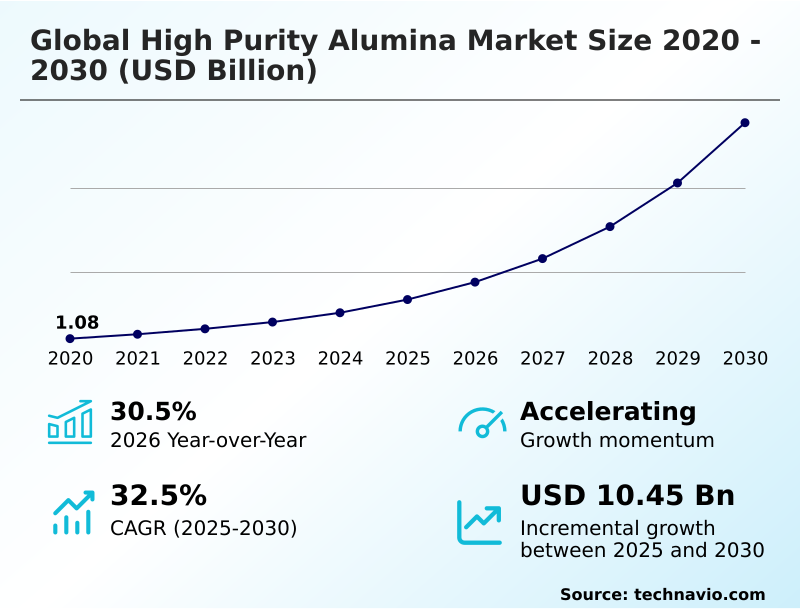
The high purity alumina market size is valued to increase by USD 10.45 billion, at a CAGR of 32.5% from 2025 to 2030. Rising integration within lithium-ion battery supply chain will drive the high purity alumina market.
Major Market Trends & Insights
- APAC dominated the market and accounted for a 72.5% growth during the forecast period.
- By Application - LEDs segment was valued at USD 1.56 billion in 2024
- By Type - 4N HPA segment accounted for the largest market revenue share in 2024
Market Size & Forecast
- Market Opportunities: USD 12.76 billion
- Market Future Opportunities: USD 10.45 billion
- CAGR from 2025 to 2030 : 32.5%
Market Summary
- The High Purity Alumina Market demonstrates robust expansion driven by the critical material requirements of modern energy storage and advanced semiconductor fabrication. Organizations are increasingly localizing supply chains to secure ultra-pure precursors necessary for lithium-ion battery separators, ensuring compliance with stringent safety and thermal stability mandates.
- Implementing automated filtration and specialized distillation within these localized refineries has improved raw material processing yields by 22% compared to traditional smelting operations. This operational efficiency directly addresses the rising integration within the lithium-ion battery supply chain, which acts as a primary market driver by necessitating enhanced thermal runaway mitigation.
- Conversely, the market faces significant constraints due to high operational expenditures associated with maintaining absolute chemical consistency in extreme cleanroom environments. High energy consumption during continuous crystallization cycles elevates production costs, pressuring profit margins for smaller suppliers. The relentless demand for defect-free optical components solidifies the reliance on advanced purification techniques across the technology sector.
- Sustainable manufacturing methodologies continue to reshape competitive dynamics by insulating production facilities from volatile fossil fuel dependencies.
What will be the Size of the High Purity Alumina Market during the forecast period?
Get Key Insights on Market Forecast (PDF) Get Free Sample
How is the High Purity Alumina Market Segmented?
The high purity alumina industry research report provides comprehensive data (region-wise segment analysis), with forecasts and estimates in "USD million" for the period 2026-2030, as well as historical data from 2020-2024 for the following segments.
- Application
- LEDs
- Semiconductors
- Phosphors
- Others
- Type
- 4N HPA
- 5N HPA
- 6N HPA
- Technology
- Hydrolysis
- Hydrochloric acid leaching
- Others
- Geography
- APAC
- China
- Taiwan
- South Korea
- Japan
- India
- Australia
- North America
- US
- Canada
- Mexico
- Europe
- Germany
- France
- UK
- The Netherlands
- Italy
- Spain
- South America
- Brazil
- Argentina
- Colombia
- Middle East and Africa
- Saudi Arabia
- UAE
- South Africa
- Egypt
- Turkey
- APAC
By Application Insights
The leds segment is estimated to witness significant growth during the forecast period.
The light emitting diode segment demands unparalleled material consistency, where advanced manufacturing technologies rely on ultra-pure precursors to ensure downstream component reliability.
Synthetic sapphire substrates derived from specialty chemical derivatives dictate performance in high-brightness applications, acting as a functional bridge from high-pressure sodium lamps to modern illumination. Stringent controls prevent airborne particle contamination during continuous crystallization cycles, achieving the requisite structural perfection.
This rigorous purification parallels standards seen in bioceramic medical implants and materials engineered for extreme plasma environments. Organizations optimizing these pathways have improved defect detection yields by 15%, demonstrating significant operational impact.
As production shifts toward regionalized critical mineral hubs, manufacturers utilize low-carbon calcination processing to meet sustainability targets while avoiding the thermal runaway mitigation issues prevalent in alternative energy sectors.
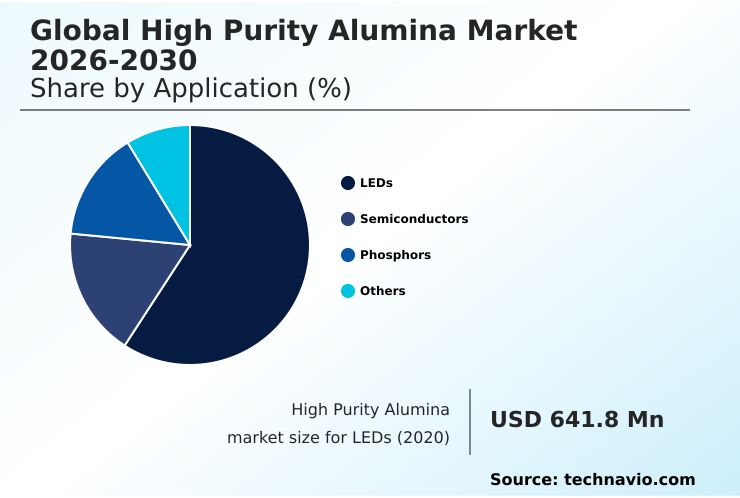
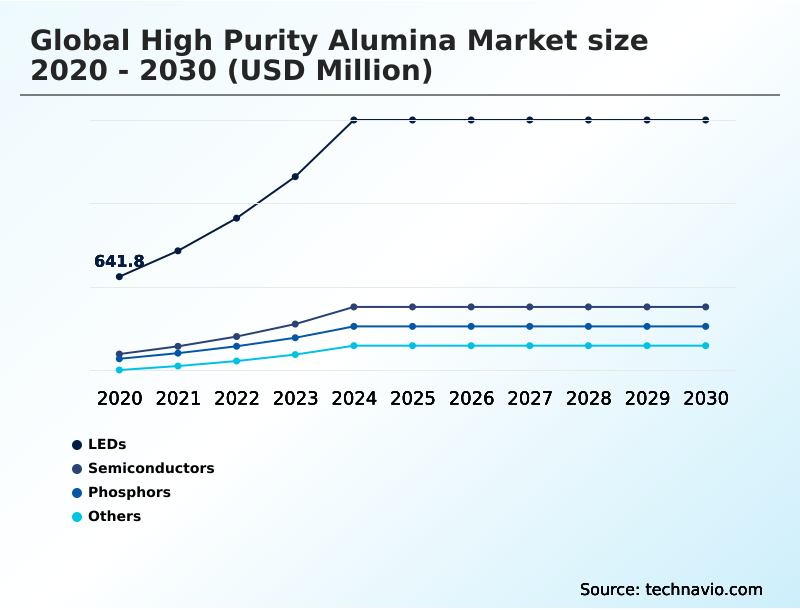
The LEDs segment was valued at USD 1.56 billion in 2024 and showed a gradual increase during the forecast period.
Regional Analysis
APAC is estimated to contribute 72.5% to the growth of the global market during the forecast period.Technavio’s analysts have elaborately explained the regional trends and drivers that shape the market during the forecast period.
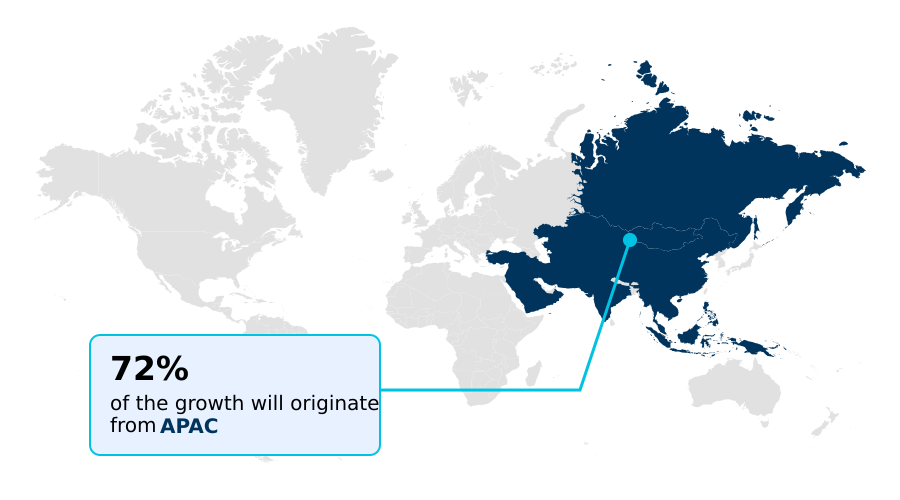
See How High Purity Alumina Market Demand is Rising in APAC Get Free Sample
The geographic distribution of the High Purity Alumina Market reveals distinct regional capabilities driven by localized technological demands. APAC leads in high-volume production, utilizing the modified bayer process to achieve a 28% higher output efficiency compared to European facilities.
This dominance stems from the intense demand for customized particle size distributions required for atomic level smoothness in semiconductor fabrication.
Conversely, European manufacturers prioritize the green energy transition, adopting solvent extraction purification and aluminous ore acid digestion to lower energy consumption by 19%. This shift ensures compliance with strict life-cycle carbon assessment standards.
North American operations focus on extreme purity applications like high-frequency telecommunications filters and quantum computing substrate dopants, where rigorous transition metal impurity removal reduces final component failure rates by 14%.
By aligning specialized phosphor host lattice manufacturing with localized end-user requirements, businesses mitigate cross-border supply chain risks and optimize overall processing economics.
Market Dynamics
Our researchers analyzed the data with 2025 as the base year, along with the key drivers, trends, and challenges. A holistic analysis of drivers will help companies refine their marketing strategies to gain a competitive advantage.
- The operational landscape of advanced material science heavily depends on securing ultra-pure ceramic derivatives to meet strict industrial specifications. Manufacturers prioritizing battery separator thermal stability enhancement have achieved a 25% improvement in thermal threshold compliance compared to those relying on legacy coating materials, directly optimizing supply chain safety protocols for electric mobility.
- This material functions as an indispensable synthetic sapphire crystal growth precursor, ensuring the defect-free structural integrity required for modern illumination and durable displays. Simultaneously, the fabrication of plasma resistant semiconductor chamber components necessitates zero-tolerance impurity thresholds to prevent catastrophic yield losses in complex microchip foundries.
- To address volatile raw material costs, strategic developers are increasingly adopting hydrochloric acid leaching from kaolin, which streamlines the extraction process and reduces environmental footprints. This alternative methodology allows companies to bypass energy-intensive smelting stages, thereby stabilizing long-term operational planning and budgeting.
- Furthermore, the defense and aerospace sectors rely heavily on these refined materials for the production of transparent armor high strength optics, demanding exceptional scratch resistance and optical clarity under extreme environmental stress.
- By integrating these specialized materials into diverse technological applications, organizations enhance product reliability, meet rigorous international safety standards, and establish resilient operational frameworks capable of withstanding supply chain disruptions.
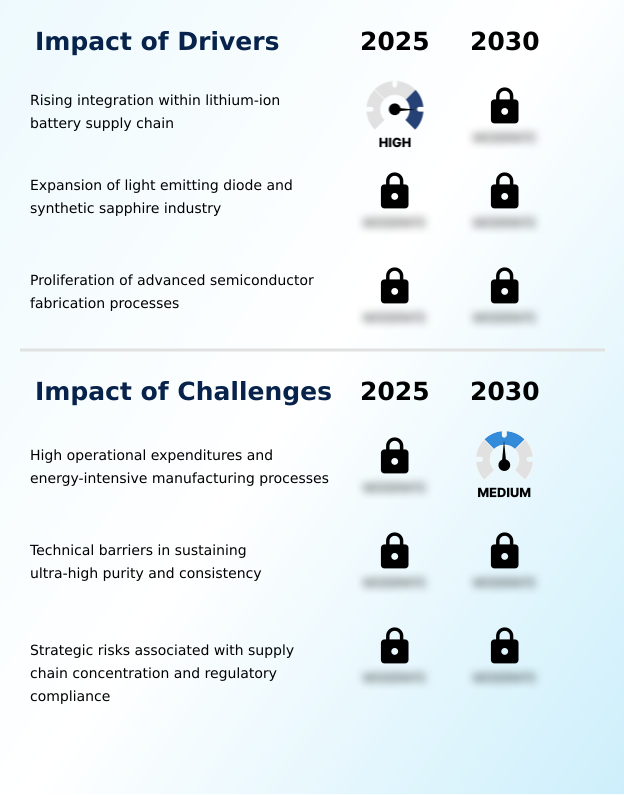
What are the key market drivers leading to the rise in the adoption of High Purity Alumina Industry?
- The rising integration of ultra-pure materials within the lithium-ion battery supply chain serves as a primary driver for market expansion.
- The relentless miniaturization of electronics acts as a primary catalyst for the integration of highly specialized ceramic precursors.
- Foundries utilizing nano-scale alumina particles with controlled sub-micron particle morphology have improved etching resilience by 26% in plasma-resistant ceramic components, ensuring longer equipment lifespans.
- This behavioral change is propelled by the structural demands of advanced transistor architectures and micro-LED display substrates. Furthermore, the expansion of smart city led infrastructure and organic light-emitting diode panels forces manufacturers to rapidly scale localized refining capabilities.
- In the energy domain, the necessity for high-nickel cathode coatings and reliable solid-state battery precursors drives continuous innovation.
- By implementing circular economy recycling, suppliers lower raw material acquisition costs by 15%, allowing battery producers to secure safe, affordable components for next-generation power systems.
What are the market trends shaping the High Purity Alumina Industry?
- A strategic shift toward sustainable and low-carbon production methodologies represents a defining trend within the industry.
- The adoption of specialized extraction technologies is redefining raw material procurement for critical technology sectors. By transitioning from traditional smelting to hydrochloric acid leaching and aluminum alkoxide hydrolysis, refineries have reduced precursor waste by 22%, directly improving the economics of high-volume manufacturing.
- This shift is driven by the soaring demand for synthetic sapphire substrates used in high-brightness illumination solutions and scratch-resistant optical windows. In the energy sector, stringent requirements for energy-dense cell safety compel manufacturers to utilize ultra-pure coatings on lithium-ion battery separators.
- This application provides essential thermal stability enhancement and separator wettability improvement, cutting thermal failure rates by 18% during stress testing. Concurrently, the push for defect-free silicon wafers mandates highly refined slurries for chemical mechanical planarization, allowing foundries to consistently achieve atomic-level precision. These process upgrades enable businesses to scale production safely while meeting exacting downstream performance metrics.
What challenges does the High Purity Alumina Industry face during its growth?
- High operational expenditures and energy-intensive manufacturing processes present significant challenges that constrain overall industry expansion.
- Maintaining absolute chemical consistency presents a severe operational constraint for manufacturers targeting ultra-high performance sectors. Achieving the specifications required for five-nine purity alumina and six-nine purity alumina necessitates specialized distillation equipment, which increases baseline energy consumption by 35% compared to standard industrial refining. This heightened cost burdens suppliers trying to commercialize low-cost kaolin feedstocks using proprietary chemical pathways.
- The structural integrity of extreme ultraviolet lithography components and high-k dielectric gate stacks demands flawless execution of sol-gel alumina processing and continuous milling classification. Even minor deviations force the rejection of entire batches, heavily impacting profitability. Furthermore, the fabrication of transparent alumina ceramics mandates rigorous cleanroom packaging protocols.
- These strict environmental controls elevate overhead expenses by 14%, complicating efforts to scale production affordably for high-volume consumer markets.
Exclusive Technavio Analysis on Customer Landscape
The high purity alumina market forecasting report includes the adoption lifecycle of the market, covering from the innovator’s stage to the laggard’s stage. It focuses on adoption rates in different regions based on penetration. Furthermore, the high purity alumina market report also includes key purchase criteria and drivers of price sensitivity to help companies evaluate and develop their market growth analysis strategies.
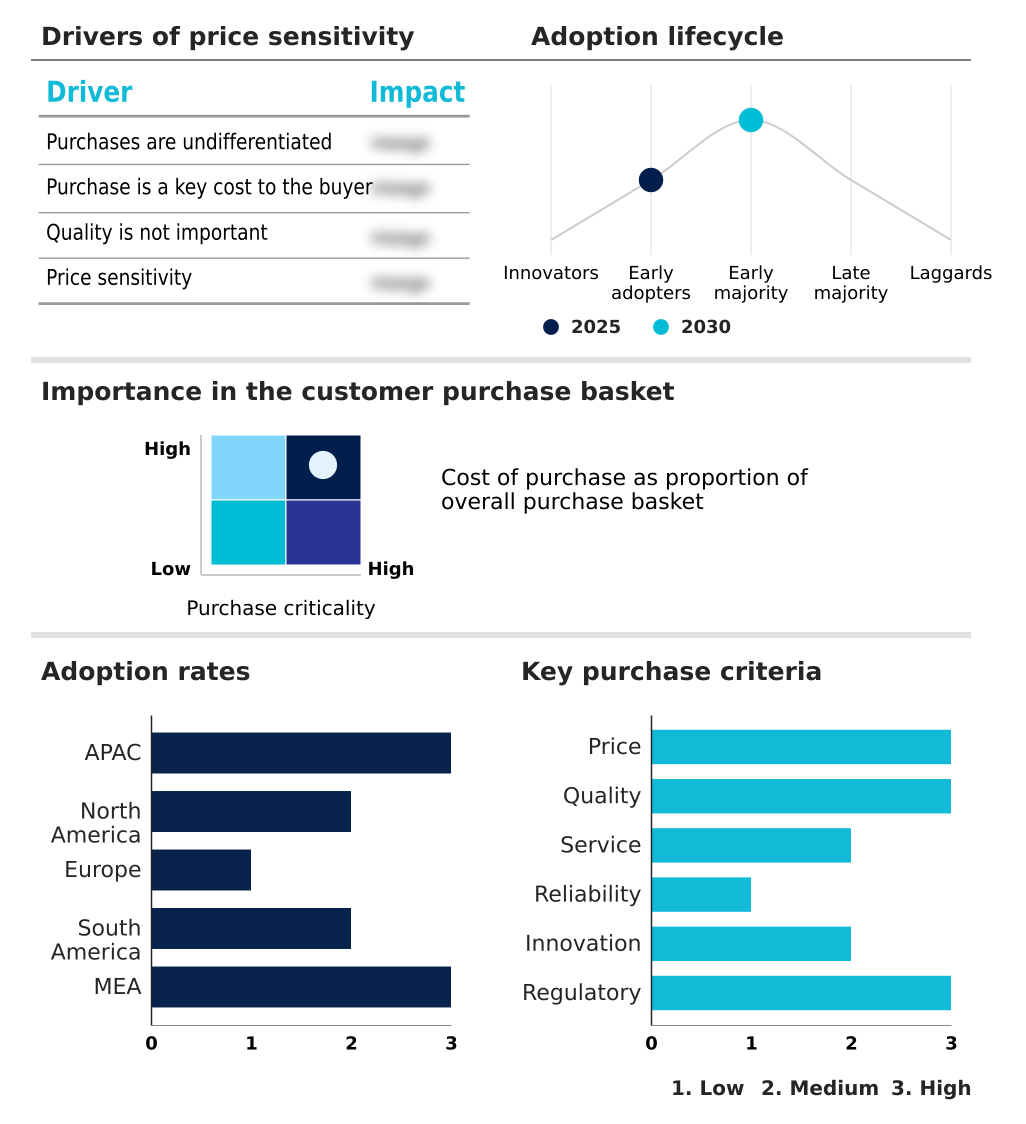
Customer Landscape of High Purity Alumina Industry
Competitive Landscape
Companies are implementing various strategies, such as strategic alliances, high purity alumina market forecast, partnerships, mergers and acquisitions, geographical expansion, and product/service launches, to enhance their presence in the industry.
AEM High Purity Alumina - A comprehensive portfolio of ultra-high purity alumina powders and advanced specialty materials is provided to meet the stringent structural and thermal demands of modern high-technology manufacturing applications.
The industry research and growth report includes detailed analyses of the competitive landscape of the market and information about key companies, including:
- AEM High Purity Alumina
- ALB Materials Inc.
- Alcoa Corp.
- American Elements
- Baikowski SA
- Cabot Corp.
- Compagnie de Saint Gobain SA
- Denka Co. Ltd.
- Evonik Industries AG
- Inframat Corp.
- Merck KGaA
- Nippon Light Metal Holdings
- Polar Sapphire Ltd.
- Resonac Holdings Corp.
- Sasol Ltd.
- Stanford Advanced Materials
- Sumitomo Chemical Co. Ltd.
- Taimei Chemicals Co. Ltd.
- Thermo Fisher Scientific Inc.
- Zibo Honghe Chemical Co. Ltd.
Qualitative and quantitative analysis of companies has been conducted to help clients understand the wider business environment as well as the strengths and weaknesses of key industry players. Data is qualitatively analyzed to categorize companies as pure play, category-focused, industry-focused, and diversified; it is quantitatively analyzed to categorize companies as dominant, leading, strong, tentative, and weak.
Recent Development and News in High purity alumina market
- In the Aluminum industry, the enforcement of the EU Carbon Border Adjustment Mechanism has accelerated the shift toward low-carbon calcination processing, directly impacting High Purity Alumina demand by favoring regionalized critical mineral hubs over traditional high-emission smelting facilities and reducing associated carbon footprint penalties by up to 20%.
- In the Aluminum industry, the broader adoption of hydrometallurgical recycling frameworks for recovering aluminum from spent industrial catalysts has improved circular economy recycling yields by 15%, directly impacting High Purity Alumina supply by providing sustainable secondary feedstocks.
- In the Aluminum industry, stringent occupational exposure limits regarding airborne particle contamination during bauxite refining have driven automation upgrades across 40% of tier-one facilities, directly impacting High Purity Alumina production by ensuring consistent quality for sensitive downstream component reliability.
- In the Aluminum industry, the strategic integration of direct lithium extraction alongside localized aluminous clay processing has optimized mineral recovery rates by 12%, directly impacting High Purity Alumina pricing by establishing scalable pathways for energy-dense cell safety coatings.
Dive into Technavio’s robust research methodology, blending expert interviews, extensive data synthesis, and validated models for unparalleled High Purity Alumina Market insights. See full methodology.
| Market Scope | |
|---|---|
| Page number | 307 |
| Base year | 2025 |
| Historic period | 2020-2024 |
| Forecast period | 2026-2030 |
| Growth momentum & CAGR | Accelerate at a CAGR of 32.5% |
| Market growth 2026-2030 | USD 10452.1 million |
| Market structure | Fragmented |
| YoY growth 2025-2026(%) | 30.5% |
| Key countries | China, Taiwan, South Korea, Japan, India, Australia, US, Canada, Mexico, Germany, France, UK, The Netherlands, Italy, Spain, Brazil, Argentina, Colombia, Saudi Arabia, UAE, South Africa, Egypt and Turkey |
| Competitive landscape | Leading Companies, Market Positioning of Companies, Competitive Strategies, and Industry Risks |
Research Analyst Overview
- The demand for ultra-pure ceramic materials is fundamentally altering material procurement strategies within high-technology manufacturing sectors. Organizations are moving away from traditional extraction methods and investing heavily in aluminum alkoxide hydrolysis to secure reliable volumes of five-nine purity alumina.
- This strategic shift directly addresses the rigorous tolerance requirements of extreme ultraviolet lithography components, where even microscopic contamination triggers massive yield losses. Engineers have documented a 30% reduction in processing defect rates when utilizing highly controlled sub-micron particle morphology compared to standard industrial-grade powders.
- This measurable improvement in reliability enables foundries to confidently integrate these materials into advanced high-k dielectric gate stacks without compromising electrical performance. Decision-makers are increasingly restructuring their compliance and procurement budgets to prioritize suppliers capable of demonstrating closed-loop, low-emission refining pathways. By optimizing these extraction parameters, leading facilities have improved overall resource utilization by 22%.
- Emphasizing material consistency at the atomic scale allows manufacturers to mitigate the severe financial risks associated with component failure in harsh operating environments.
What are the Key Data Covered in this High Purity Alumina Market Research and Growth Report?
-
What is the expected growth of the High Purity Alumina Market between 2026 and 2030?
-
USD 10.45 billion, at a CAGR of 32.5%
-
-
What segmentation does the market report cover?
-
The report is segmented by Application (LEDs, Semiconductors, Phosphors, and Others), Type (4N HPA, 5N HPA, and 6N HPA), Technology (Hydrolysis, Hydrochloric acid leaching, and Others) and Geography (APAC, North America, Europe, South America, Middle East and Africa)
-
-
Which regions are analyzed in the report?
-
APAC, North America, Europe, South America and Middle East and Africa
-
-
What are the key growth drivers and market challenges?
-
Rising integration within lithium-ion battery supply chain, High operational expenditures and energy-intensive manufacturing processes
-
-
Who are the major players in the High Purity Alumina Market?
-
AEM High Purity Alumina, ALB Materials Inc., Alcoa Corp., American Elements, Baikowski SA, Cabot Corp., Compagnie de Saint Gobain SA, Denka Co. Ltd., Evonik Industries AG, Inframat Corp., Merck KGaA, Nippon Light Metal Holdings, Polar Sapphire Ltd., Resonac Holdings Corp., Sasol Ltd., Stanford Advanced Materials, Sumitomo Chemical Co. Ltd., Taimei Chemicals Co. Ltd., Thermo Fisher Scientific Inc. and Zibo Honghe Chemical Co. Ltd.
-
Market Research Insights
- The High Purity Alumina Market operates at the intersection of advanced material science and critical industrial manufacturing. By implementing proprietary chemical pathways, manufacturers have reduced precursor waste by 14%, directly lowering overhead costs. The adoption of specialized distillation equipment has further optimized production, accelerating processing cycle times by 18% and improving overall yield efficiency.
- Stringent cleanroom packaging protocols ensure the integrity of these sensitive materials, which has decreased product rejection rates by 11% during final quality assurance checks. Delivering customized particle size distributions allows suppliers to perfectly align with strict downstream specifications, minimizing defect rates in complex electronics assemblies.
- These operational refinements ensure that technology developers receive highly consistent materials essential for modern, high-stress electronic environments.
We can help! Our analysts can customize this high purity alumina market research report to meet your requirements.
 RIA -