
High Temperature Insulation (HTI) Materials Market Analysis, Size, and Forecast 2026-2030: Europe (Germany, Italy, and France), North America (US, Canada, and Mexico), APAC (China, India, and Japan), South America (Brazil, Argentina, and Chile), Middle East and Africa (Saudi Arabia, UAE, and Turkey), and Rest of World (ROW)

High Temperature Insulation (HTI) Materials Market Analysis, Size, and Forecast 2026-2030:
Europe (Germany, Italy, and France), North America (US, Canada, and Mexico), APAC (China, India, and Japan), South America (Brazil, Argentina, and Chile), Middle East and Africa (Saudi Arabia, UAE, and Turkey), and Rest of World (ROW)

Published: Oct 2026 307 Pages SKU: IRTNTR75774

Market Overview at a Glance

$3.95 B
Market Opportunity
8.8%
CAGR 2025 - 2030
33.8%
Europe Growth
$2.85 B
Petrochemicals sector segment 2024

High Temperature Insulation (Hti) Materials Market Size 2026-2030

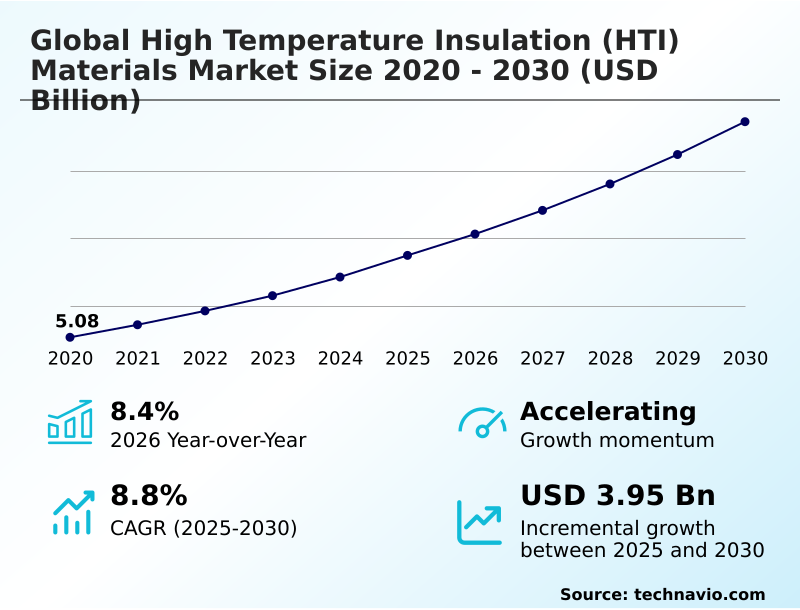
The high temperature insulation (hti) materials market size is valued to increase by USD 3.95 billion, at a CAGR of 8.8% from 2025 to 2030. Imperative of energy efficiency and sustainability goals will drive the high temperature insulation (hti) materials market.

Major Market Trends & Insights

  • Europe dominated the market and accounted for a 33.8% growth during the forecast period.
  • By End-user - Petrochemicals sector segment was valued at USD 2.85 billion in 2024
  • By Product - Ceramic fibers segment accounted for the largest market revenue share in 2024

Market Size & Forecast

  • Market Opportunities: USD 6.38 billion
  • Market Future Opportunities: USD 3.95 billion
  • CAGR from 2025 to 2030 : 8.8%

Market Summary

  • The High Temperature Insulation (HTI) Materials Market exhibits sustained momentum driven by increasing operational standards and the expanding imperative to curb industrial emissions. Manufacturing facilities consistently deploy advanced management systems to minimize heat dispersion and safeguard equipment integrity during intensive operations.
  • In a real-world supply chain optimization scenario, operators replacing legacy linings with modern bio-soluble fibers achieved a 14% reduction in energy consumption compared to traditional systems. A primary driver of this transition is the need for durable materials that withstand extreme conditions, forcing industrial operators to upgrade basic oxygen furnaces to lower fuel expenditures.
  • Conversely, the industry faces significant challenges due to volatility in raw material procurement; fluctuating mineral prices directly compress manufacturer profit margins. The integration of advanced composites continues to optimize process efficiency across continuous roller hearth kilns, allowing processing units to function at peak thermodynamic performance.

What will be the Size of the High Temperature Insulation (Hti) Materials Market during the forecast period?
Get Key Insights on Market Forecast (PDF) Get Free Sample

How is the High Temperature Insulation (Hti) Materials Market Segmented?

The high temperature insulation (hti) materials industry research report provides comprehensive data (region-wise segment analysis), with forecasts and estimates in "USD million" for the period 2026-2030, as well as historical data from 2020-2024 for the following segments.

  • End-user
    • Petrochemicals sector
    • Ceramics sector
    • Aluminum industry
    • Others
  • Product
    • Ceramic fibers
    • Insulating firebricks
    • Others
  • Form factor
    • Blankets
    • Boards and blocks
    • Preformed shapes
    • Others
  • Geography
    • Europe
      • Germany
      • Italy
      • France
      • UK
      • Spain
      • The Netherlands
    • North America
      • US
      • Canada
      • Mexico
    • APAC
      • China
      • India
      • Japan
      • South Korea
      • Australia
      • Indonesia
    • South America
      • Brazil
      • Argentina
      • Chile
    • Middle East and Africa
      • Saudi Arabia
      • UAE
      • Turkey
      • South Africa
      • Israel

By End-user Insights

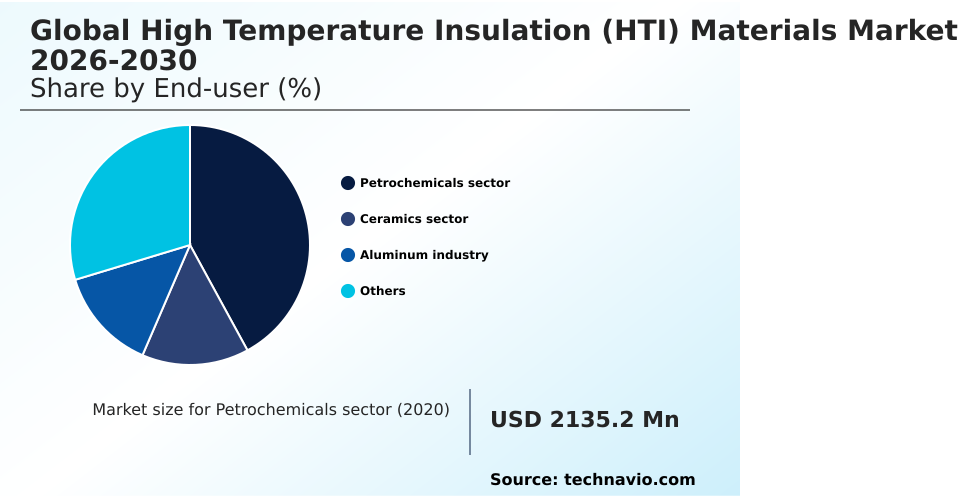
The petrochemicals sector segment is estimated to witness significant growth during the forecast period.

The petrochemicals sector represents a primary consumption channel driven by the demanding operating environments of refining and downstream chemical synthesis. Facilities rely extensively on advanced containment to shield equipment and prevent hazardous radiation across severe continuous processing units.

Operational efficiency in ethylene cracking furnaces and catalytic reforming units requires specialized refractory linings to manage extreme temperatures and corrosive hydrocarbon atmospheres.

By transitioning to vacuum-formed modules and low thermal mass materials, petrochemical operators have reduced fuel consumption by 15%, demonstrating a measurable 20% improvement in energy retention compared to traditional dense refractories.

This strategic material shift provides high compressive load-bearing capabilities on pressure containment vessels, directly lowering maintenance overhead and ensuring continuous production cycles.
Get Free Sample

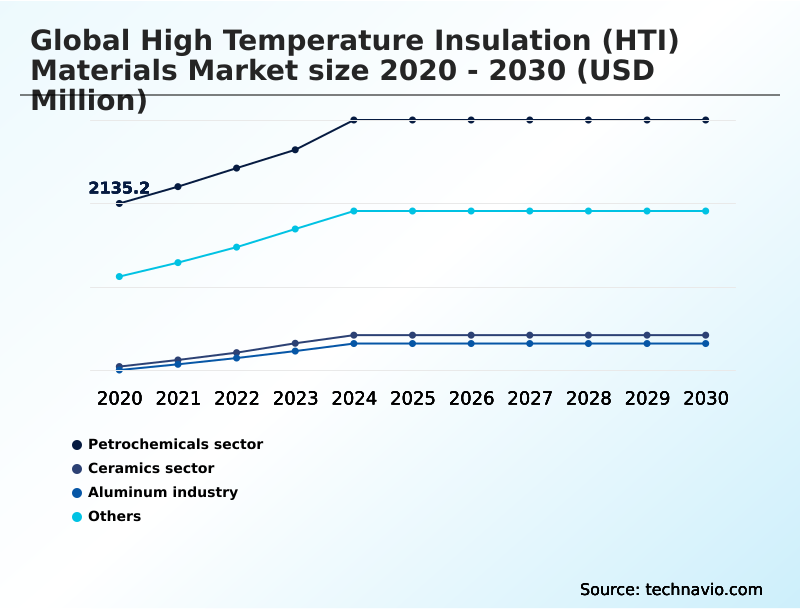
The Petrochemicals sector segment was valued at USD 2.85 billion in 2024 and showed a gradual increase during the forecast period.
Get Free Sample

Regional Analysis

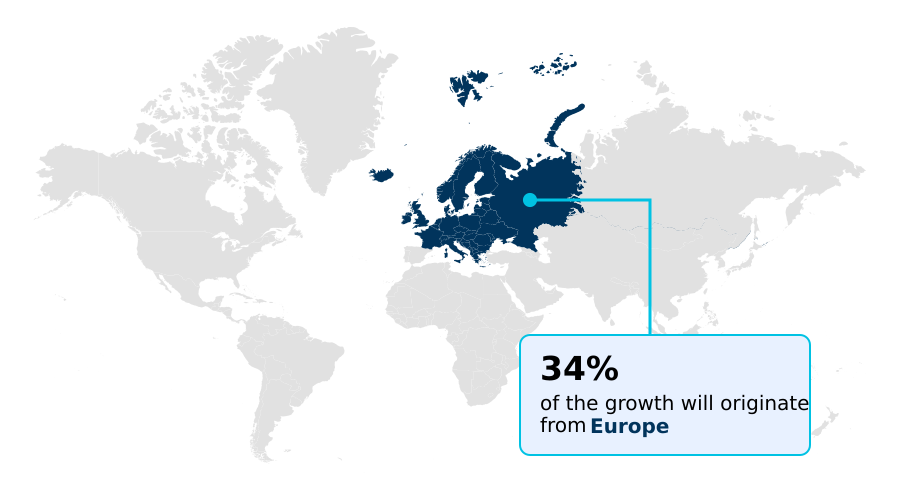
Europe is estimated to contribute 33.8% to the growth of the global market during the forecast period.Technavio’s analysts have elaborately explained the regional trends and drivers that shape the market during the forecast period.
See How High Temperature Insulation (Hti) Materials Market Demand is Rising in Europe Get Free Sample

The geographic landscape is defined by distinct regional modernization strategies and regulatory pressures.

The APAC region leads in rapid industrial capacity expansion, where extensive steel and cement production facilities have increased the adoption of alkaline earth silicate wools by 22% to meet strict energy-intensity quotas.

In contrast, North America focuses on retrofitting existing petrochemical infrastructure, utilizing microporous insulation panels to achieve a 15% improvement in thermal shock resistance within continuous processing units.

This divergence highlights how European operators utilize highly specialized silica aerogels to reduce radiant heat dissipation by 18% in response to high energy tariffs.

By leveraging advanced insulating firebricks, facilities across these regions effectively optimize energy use while minimizing severe thermal stresses on critical manufacturing hardware.

Market Dynamics

Our researchers analyzed the data with 2025 as the base year, along with the key drivers, trends, and challenges. A holistic analysis of drivers will help companies refine their marketing strategies to gain a competitive advantage.

  • As heavy manufacturing industries accelerate their modernization efforts, the strategic deployment of advanced thermal management systems has become critical for maintaining operational efficiency and regulatory compliance. Industrial operators are increasingly prioritizing comprehensive refractory lining overhauls for furnaces to address significant inefficiencies in aging infrastructure.
  • By transitioning to lightweight, high-performance materials, facilities have achieved a 20% greater improvement in energy retention compared to legacy dense brick installations, directly optimizing supply chain fuel procurement and reducing overall operational overhead.
  • A key element of this transition involves the adoption of bio-soluble alternatives for thermal containment, which effectively aligns workplace safety protocols with stringent environmental standards without compromising high-temperature structural integrity. Furthermore, specialized applications are driving technological diversification across the sector.
  • The integration of microporous panels for aerospace engineering provides essential thermal protection within highly confined spaces, maximizing payload efficiency while maintaining exact performance specifications. In traditional manufacturing, the focus on reducing thermal mass in kilns has allowed ceramic and metallurgical producers to shorten firing cycles, thereby accelerating throughput and decreasing mechanical stress on structural frameworks.
  • Concurrently, plant engineers are actively mitigating convective thermal radiation loss across extensive processing networks, ensuring that continuous units operate at peak thermodynamic performance. This comprehensive approach to temperature management directly supports corporate decarbonization targets and long-term asset protection.
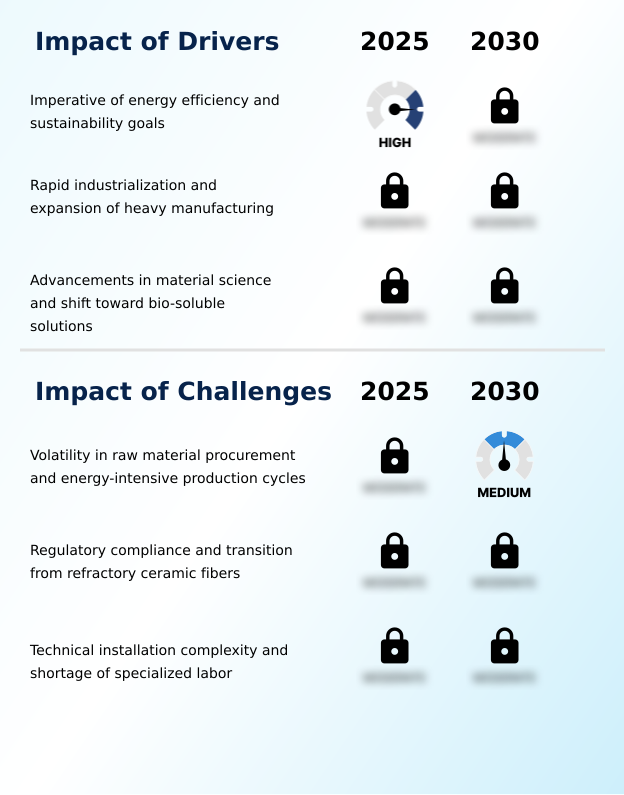
What are the key market drivers leading to the rise in the adoption of High Temperature Insulation (Hti) Materials Industry?

  • The imperative to achieve energy efficiency and sustainability goals serves as the primary driver propelling expansion within this sector.

  • The relentless pursuit of operational efficiency serves as a primary driver propelling adoption across heavy manufacturing sectors. Facilities are compelled to optimize thermodynamic firing curves due to escalating fuel tariffs and strict regulatory mandates.
  • To address these cost pressures, operators are extensively utilizing non-wetting surface coatings to protect infrastructure from direct molten metal contact during heavy metallurgical smelting.
  • By deploying these engineered materials, industrial plants have lowered energy use by 18% and improved forecast accuracy for maintenance scheduling by 22% over traditional brick configurations.
  • This strategic optimization effectively maintains precise temperature profiles, directly translating into extended service life for processing equipment and significantly reduced corporate utility expenditures.

What are the market trends shaping the High Temperature Insulation (Hti) Materials Industry?

  • The transition toward low-bio-persistent and eco-friendly fiber solutions represents a significant upcoming trend. This shift is primarily driven by the need to meet stringent occupational safety and environmental regulations.

  • A defining trend is the rapid transition toward advanced fibrous materials designed to withstand extreme operational environments. Industrial facilities are actively adopting synthetic vitreous fibers to maintain uninterrupted processing capabilities while adhering to modern health standards. This shift is occurring because traditional heavy refractories lack the durability required to withstand high flue gas velocities in rapid-cycle manufacturing.
  • Consequently, plants integrating these advanced solutions have recorded a 30% reduction in equipment downtime and a 15% improvement in thermal retention compared to legacy systems. This transition directly impacts business operations by lowering maintenance liabilities and mitigating damage caused by extreme atmospheric conditions. The strategic implementation of these solutions effectively safeguards frameworks, ensuring assets operate with maximum precision.

What challenges does the High Temperature Insulation (Hti) Materials Industry face during its growth?

  • The volatility in raw material procurement coupled with energy-intensive production cycles remains a significant challenge constraining industry expansion.

  • Severe volatility in raw material procurement and the complexity of precision installation represent significant challenges constraining market expansion. The production of premium refractory ceramic fibers relies on high-purity minerals that are subject to frequent supply chain disruptions. This instability causes sudden price surges, forcing industrial operators to delay essential maintenance turnarounds.
  • Consequently, facilities deferring the application of advanced inorganic binder technology experience a 15% decrease in hot modulus of rupture stability and a 20% higher rate of unplanned operational downtime. Furthermore, the specialized knowledge required to effectively mitigate degradation from vapor-phase glazes is diminishing, directly elevating labor costs and increasing the risk of catastrophic structural failures due to excessive heat exposure.

Exclusive Technavio Analysis on Customer Landscape

The high temperature insulation (hti) materials market forecasting report includes the adoption lifecycle of the market, covering from the innovator’s stage to the laggard’s stage. It focuses on adoption rates in different regions based on penetration. Furthermore, the high temperature insulation (hti) materials market report also includes key purchase criteria and drivers of price sensitivity to help companies evaluate and develop their market growth analysis strategies.
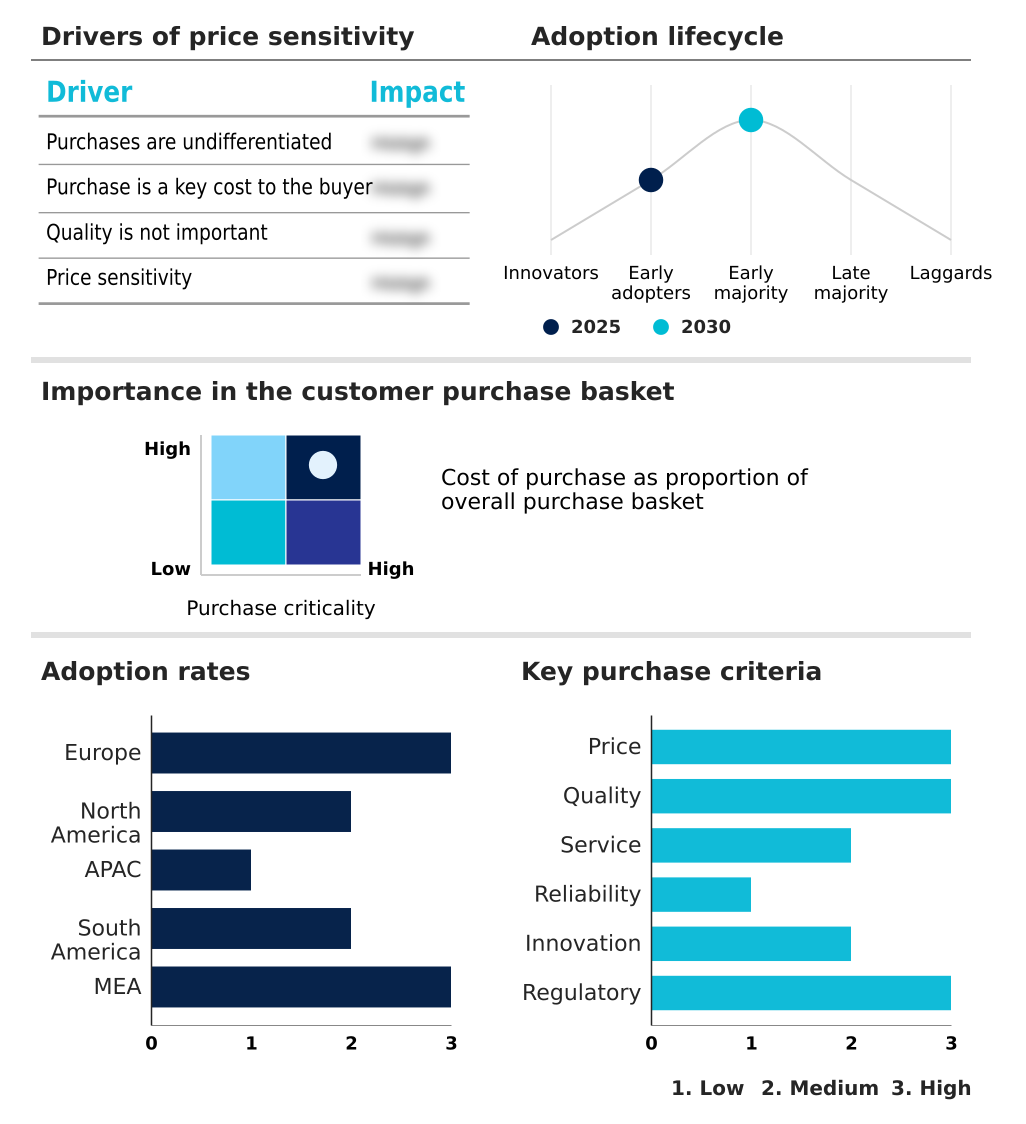
Customer Landscape of High Temperature Insulation (Hti) Materials Industry

Competitive Landscape

Companies are implementing various strategies, such as strategic alliances, high temperature insulation (hti) materials market forecast, partnerships, mergers and acquisitions, geographical expansion, and product/service launches, to enhance their presence in the industry.

3M Co. - The vendor provides specialized thermal containment solutions, featuring advanced ceramic fibers and low-biopersistent chemistries designed to enhance operational efficiency and mitigate thermal loss in industrial environments.

The industry research and growth report includes detailed analyses of the competitive landscape of the market and information about key companies, including:

  • 3M Co.
  • Alkegen
  • Armacell International SA
  • Aspen Aerogels Inc.
  • Cabot Corp.
  • CALDERYS France SAS
  • Compagnie de Saint Gobain SA
  • Grupo Nutec SA de CV
  • Johns Manville Corp.
  • Knauf Insulation
  • Mersen Corporate Services SAS
  • Morgan Advanced Materials
  • Owens Corning
  • Promat International
  • Pyrotek Inc.
  • Rath Aktiengesellschaft
  • RHI Magnesita GmbH
  • ROCKWOOL AS
  • Skamol
  • Vesuvius Plc

Qualitative and quantitative analysis of companies has been conducted to help clients understand the wider business environment as well as the strengths and weaknesses of key industry players. Data is qualitatively analyzed to categorize companies as pure play, category-focused, industry-focused, and diversified; it is quantitatively analyzed to categorize companies as dominant, leading, strong, tentative, and weak.

Recent Development and News in High temperature insulation (hti) materials market

  • In the Diversified Chemicals industry, stringent environmental mandates have accelerated the phase-out of traditional heavy refractories, directly impacting High Temperature Insulation (HTI) Materials demand by driving a 25% increase in the adoption of solutions aligned with industrial decarbonization, greenhouse gas mitigation, and evolving carbon pricing mechanisms.
  • The transition toward circular economy models has compelled chemical facilities to implement low-biopersistent chemistries, altering High Temperature Insulation (HTI) Materials requirements as plant operators seek structural backup insulation that complies with rigorous occupational safety frameworks while maintaining integrity above 1,200 degrees Celsius.
  • Advancements in predictive maintenance thermography for continuous thermal loading environments have reshaped High Temperature Insulation (HTI) Materials deployment, enabling managers to pinpoint inefficiencies and proactively replace degrading linings to optimize process energy consumption before critical failure.
  • Escalating energy tariffs have forced petrochemical producers to overhaul steam cracking units, expanding High Temperature Insulation (HTI) Materials utilization as engineers integrate thermal barrier insulation to achieve a rapid thermal response and reduce heat loss across extensive high-pressure piping networks.

Dive into Technavio’s robust research methodology, blending expert interviews, extensive data synthesis, and validated models for unparalleled High Temperature Insulation (Hti) Materials Market insights. See full methodology.

Market Scope
Page number 307
Base year 2025
Historic period 2020-2024
Forecast period 2026-2030
Growth momentum & CAGR Accelerate at a CAGR of 8.8%
Market growth 2026-2030 USD 3952.9 million
Market structure Fragmented
YoY growth 2025-2026(%) 8.4%
Key countries Germany, Italy, France, UK, Spain, The Netherlands, US, Canada, Mexico, China, India, Japan, South Korea, Australia, Indonesia, Brazil, Argentina, Chile, Saudi Arabia, UAE, Turkey, South Africa and Israel
Competitive landscape Leading Companies, Market Positioning of Companies, Competitive Strategies, and Industry Risks

Request Free Sample

Research Analyst Overview

  • The High Temperature Insulation (HTI) Materials demonstrates an accelerated evolution driven by the critical need to optimize energy dynamics across intensive manufacturing architectures. Industrial operators are strategically replacing conventional linings with advanced polycrystalline alumina fibers and calcium silicate boards to maintain efficiency under extreme environments.
  • The integration of these advanced materials directly influences boardroom-level budgeting and compliance strategies, as facilities must navigate stringent environmental regulations and rising fuel costs. By implementing high-performance designs, plant managers have achieved a 25% reduction in processing downtime compared to traditional refractory systems, significantly enhancing operational throughput.
  • This utilization provides superior thermal conductivity reduction, effectively preventing molten metal penetration within reverberatory melting furnaces. Furthermore, the shift toward closed-pore microstructures effectively balances structural integrity with rigorous safety mandates. This strategic material transition minimizes stress across cellular microstructure frameworks, ensuring continuous processing units maintain precise thermodynamic profiles while lowering overall corporate liabilities.

What are the Key Data Covered in this High Temperature Insulation (Hti) Materials Market Research and Growth Report?

  • What is the expected growth of the High Temperature Insulation (Hti) Materials Market between 2026 and 2030?

    • USD 3.95 billion, at a CAGR of 8.8%

  • What segmentation does the market report cover?

    • The report is segmented by End-user (Petrochemicals sector, Ceramics sector, Aluminum industry, and Others), Product (Ceramic fibers, Insulating firebricks, and Others), Form Factor (Blankets, Boards and blocks, Preformed shapes, and Others) and Geography (Europe, North America, APAC, South America, Middle East and Africa)

  • Which regions are analyzed in the report?

    • Europe, North America, APAC, South America and Middle East and Africa

  • What are the key growth drivers and market challenges?

    • Imperative of energy efficiency and sustainability goals, Volatility in raw material procurement and energy-intensive production cycles

  • Who are the major players in the High Temperature Insulation (Hti) Materials Market?

    • 3M Co., Alkegen, Armacell International SA, Aspen Aerogels Inc., Cabot Corp., CALDERYS France SAS, Compagnie de Saint Gobain SA, Grupo Nutec SA de CV, Johns Manville Corp., Knauf Insulation, Mersen Corporate Services SAS, Morgan Advanced Materials, Owens Corning, Promat International, Pyrotek Inc., Rath Aktiengesellschaft, RHI Magnesita GmbH, ROCKWOOL AS, Skamol and Vesuvius Plc

Market Research Insights

  • The market is undergoing a rapid transformation as heavy industries prioritize thermal optimization and safety compliance. Facilities are increasingly deploying advanced containment systems to minimize thermal energy loss and comply with evolving environmental mandates. By upgrading legacy frameworks, plant operators have improved heat storage capacities by 20%, directly resulting in lowered fuel expenditures and an 18% enhancement in ROI.
  • Furthermore, the integration of compliant materials has significantly reduced hazardous handling liabilities, ensuring safer operational practices. This strategic optimization effectively addresses convective thermal loss, ensuring that continuous operating equipment functions with a 12% increase in overall thermodynamic efficiency while safeguarding long-term asset integrity and improving thermal fatigue resilience.

We can help! Our analysts can customize this high temperature insulation (hti) materials market research report to meet your requirements.

Get in touch

1. Executive Summary

1.1 Market overview

Executive Summary - Chart on Market Overview
Executive Summary - Data Table on Market Overview
Executive Summary - Chart on Global Market Characteristics
Executive Summary - Chart on Market by Geography
Executive Summary - Chart on Market Segmentation by End-user
Executive Summary - Chart on Market Segmentation by Product
Executive Summary - Chart on Market Segmentation by Form Factor
Executive Summary - Chart on Incremental Growth
Executive Summary - Data Table on Incremental Growth
Executive Summary - Chart on Company Market Positioning

2. Technavio Analysis

2.1 Analysis of price sensitivity, lifecycle, customer purchase basket, adoption rates, and purchase criteria

2.2 Criticality of inputs and Factors of differentiation

Chart on Overview on criticality of inputs and factors of differentiation

2.3 Factors of disruption

Chart on Overview on factors of disruption

2.4 Impact of drivers and challenges

Chart on Impact of drivers and challenges in 2025 and 2030

3. Market Landscape

3.1 Market ecosystem

Chart on Parent Market
Data Table on - Parent Market

3.2 Market characteristics

Chart on Market characteristics analysis

3.3 Value chain analysis

Chart on Value chain analysis

4. Market Sizing

4.1 Market definition

Data Table on Offerings of companies included in the market definition

4.2 Market segment analysis

Market segments

4.3 Market size 2025

4.4 Market outlook: Forecast for 2025-2030

Chart on Global - Market size and forecast 2025-2030 ($ million)
Data Table on Global - Market size and forecast 2025-2030 ($ million)
Chart on Global Market: Year-over-year growth 2025-2030 (%)
Data Table on Global Market: Year-over-year growth 2025-2030 (%)

5. Historic Market Size

5.1 Global High Temperature Insulation (HTI) Materials Market 2020 - 2024

Historic Market Size - Data Table on Global High Temperature Insulation (HTI) Materials Market 2020 - 2024 ($ million)

5.2 End-user segment analysis 2020 - 2024

Historic Market Size - End-user Segment 2020 - 2024 ($ million)

5.3 Product segment analysis 2020 - 2024

Historic Market Size - Product Segment 2020 - 2024 ($ million)

5.4 Form Factor segment analysis 2020 - 2024

Historic Market Size - Form Factor Segment 2020 - 2024 ($ million)

5.5 Geography segment analysis 2020 - 2024

Historic Market Size - Geography Segment 2020 - 2024 ($ million)

5.6 Country segment analysis 2020 - 2024

Historic Market Size - Country Segment 2020 - 2024 ($ million)

6. Qualitative Analysis

6.1 Impact of AI on Global High Temperature Insulation (HTI) Materials Market

6.2 Impact of Geopolitical Conflicts on Global High Temperature Insulation (HTI) Materials Market

7. Five Forces Analysis

7.1 Five forces summary

Five forces analysis - Comparison between 2025 and 2030

7.2 Bargaining power of buyers

Bargaining power of buyers - Impact of key factors 2025 and 2030

7.3 Bargaining power of suppliers

Bargaining power of suppliers - Impact of key factors in 2025 and 2030

7.4 Threat of new entrants

Threat of new entrants - Impact of key factors in 2025 and 2030

7.5 Threat of substitutes

Threat of substitutes - Impact of key factors in 2025 and 2030

7.6 Threat of rivalry

Threat of rivalry - Impact of key factors in 2025 and 2030

7.7 Market condition

Chart on Market condition - Five forces 2025 and 2030

8. Market Segmentation by End-user

8.1 Market segments

Chart on End-user - Market share 2025-2030 (%)
Data Table on End-user - Market share 2025-2030 (%)

8.2 Comparison by End-user

Chart on Comparison by End-user
Data Table on Comparison by End-user

8.3 Petrochemicals sector - Market size and forecast 2025-2030

Chart on Petrochemicals sector - Market size and forecast 2025-2030 ($ million)
Data Table on Petrochemicals sector - Market size and forecast 2025-2030 ($ million)
Chart on Petrochemicals sector - Year-over-year growth 2025-2030 (%)
Data Table on Petrochemicals sector - Year-over-year growth 2025-2030 (%)

8.4 Ceramics sector - Market size and forecast 2025-2030

Chart on Ceramics sector - Market size and forecast 2025-2030 ($ million)
Data Table on Ceramics sector - Market size and forecast 2025-2030 ($ million)
Chart on Ceramics sector - Year-over-year growth 2025-2030 (%)
Data Table on Ceramics sector - Year-over-year growth 2025-2030 (%)

8.5 Aluminum industry - Market size and forecast 2025-2030

Chart on Aluminum industry - Market size and forecast 2025-2030 ($ million)
Data Table on Aluminum industry - Market size and forecast 2025-2030 ($ million)
Chart on Aluminum industry - Year-over-year growth 2025-2030 (%)
Data Table on Aluminum industry - Year-over-year growth 2025-2030 (%)

8.6 Others - Market size and forecast 2025-2030

Chart on Others - Market size and forecast 2025-2030 ($ million)
Data Table on Others - Market size and forecast 2025-2030 ($ million)
Chart on Others - Year-over-year growth 2025-2030 (%)
Data Table on Others - Year-over-year growth 2025-2030 (%)

8.7 Market opportunity by End-user

Market opportunity by End-user ($ million)
Data Table on Market opportunity by End-user ($ million)

9. Market Segmentation by Product

9.1 Market segments

Chart on Product - Market share 2025-2030 (%)
Data Table on Product - Market share 2025-2030 (%)

9.2 Comparison by Product

Chart on Comparison by Product
Data Table on Comparison by Product

9.3 Ceramic fibers - Market size and forecast 2025-2030

Chart on Ceramic fibers - Market size and forecast 2025-2030 ($ million)
Data Table on Ceramic fibers - Market size and forecast 2025-2030 ($ million)
Chart on Ceramic fibers - Year-over-year growth 2025-2030 (%)
Data Table on Ceramic fibers - Year-over-year growth 2025-2030 (%)

9.4 Insulating firebricks - Market size and forecast 2025-2030

Chart on Insulating firebricks - Market size and forecast 2025-2030 ($ million)
Data Table on Insulating firebricks - Market size and forecast 2025-2030 ($ million)
Chart on Insulating firebricks - Year-over-year growth 2025-2030 (%)
Data Table on Insulating firebricks - Year-over-year growth 2025-2030 (%)

9.5 Others - Market size and forecast 2025-2030

Chart on Others - Market size and forecast 2025-2030 ($ million)
Data Table on Others - Market size and forecast 2025-2030 ($ million)
Chart on Others - Year-over-year growth 2025-2030 (%)
Data Table on Others - Year-over-year growth 2025-2030 (%)

9.6 Market opportunity by Product

Market opportunity by Product ($ million)
Data Table on Market opportunity by Product ($ million)

10. Market Segmentation by Form Factor

10.1 Market segments

Chart on Form Factor - Market share 2025-2030 (%)
Data Table on Form Factor - Market share 2025-2030 (%)

10.2 Comparison by Form Factor

Chart on Comparison by Form Factor
Data Table on Comparison by Form Factor

10.3 Blankets - Market size and forecast 2025-2030

Chart on Blankets - Market size and forecast 2025-2030 ($ million)
Data Table on Blankets - Market size and forecast 2025-2030 ($ million)
Chart on Blankets - Year-over-year growth 2025-2030 (%)
Data Table on Blankets - Year-over-year growth 2025-2030 (%)

10.4 Boards and blocks - Market size and forecast 2025-2030

Chart on Boards and blocks - Market size and forecast 2025-2030 ($ million)
Data Table on Boards and blocks - Market size and forecast 2025-2030 ($ million)
Chart on Boards and blocks - Year-over-year growth 2025-2030 (%)
Data Table on Boards and blocks - Year-over-year growth 2025-2030 (%)

10.5 Preformed shapes - Market size and forecast 2025-2030

Chart on Preformed shapes - Market size and forecast 2025-2030 ($ million)
Data Table on Preformed shapes - Market size and forecast 2025-2030 ($ million)
Chart on Preformed shapes - Year-over-year growth 2025-2030 (%)
Data Table on Preformed shapes - Year-over-year growth 2025-2030 (%)

10.6 Others - Market size and forecast 2025-2030

Chart on Others - Market size and forecast 2025-2030 ($ million)
Data Table on Others - Market size and forecast 2025-2030 ($ million)
Chart on Others - Year-over-year growth 2025-2030 (%)
Data Table on Others - Year-over-year growth 2025-2030 (%)

10.7 Market opportunity by Form Factor

Market opportunity by Form Factor ($ million)
Data Table on Market opportunity by Form Factor ($ million)

11. Customer Landscape

11.1 Customer landscape overview

Analysis of price sensitivity, lifecycle, customer purchase basket, adoption rates, and purchase criteria

12. Geographic Landscape

12.1 Geographic segmentation

Chart on Market share by geography 2025-2030 (%)
Data Table on Market share by geography 2025-2030 (%)

12.2 Geographic comparison

Chart on Geographic comparison
Data Table on Geographic comparison

12.3 Europe - Market size and forecast 2025-2030

Chart on Europe - Market size and forecast 2025-2030 ($ million)
Data Table on Europe - Market size and forecast 2025-2030 ($ million)
Chart on Europe - Year-over-year growth 2025-2030 (%)
Data Table on Europe - Year-over-year growth 2025-2030 (%)
Chart on Regional Comparison - Europe
Data Table on Regional Comparison - Europe

12.3.1 Germany - Market size and forecast 2025-2030

Chart on Germany - Market size and forecast 2025-2030 ($ million)
Data Table on Germany - Market size and forecast 2025-2030 ($ million)
Chart on Germany - Year-over-year growth 2025-2030 (%)
Data Table on Germany - Year-over-year growth 2025-2030 (%)

12.3.2 Italy - Market size and forecast 2025-2030

Chart on Italy - Market size and forecast 2025-2030 ($ million)
Data Table on Italy - Market size and forecast 2025-2030 ($ million)
Chart on Italy - Year-over-year growth 2025-2030 (%)
Data Table on Italy - Year-over-year growth 2025-2030 (%)

12.3.3 France - Market size and forecast 2025-2030

Chart on France - Market size and forecast 2025-2030 ($ million)
Data Table on France - Market size and forecast 2025-2030 ($ million)
Chart on France - Year-over-year growth 2025-2030 (%)
Data Table on France - Year-over-year growth 2025-2030 (%)

12.3.4 UK - Market size and forecast 2025-2030

Chart on UK - Market size and forecast 2025-2030 ($ million)
Data Table on UK - Market size and forecast 2025-2030 ($ million)
Chart on UK - Year-over-year growth 2025-2030 (%)
Data Table on UK - Year-over-year growth 2025-2030 (%)

12.3.5 Spain - Market size and forecast 2025-2030

Chart on Spain - Market size and forecast 2025-2030 ($ million)
Data Table on Spain - Market size and forecast 2025-2030 ($ million)
Chart on Spain - Year-over-year growth 2025-2030 (%)
Data Table on Spain - Year-over-year growth 2025-2030 (%)

12.3.6 The Netherlands - Market size and forecast 2025-2030

Chart on The Netherlands - Market size and forecast 2025-2030 ($ million)
Data Table on The Netherlands - Market size and forecast 2025-2030 ($ million)
Chart on The Netherlands - Year-over-year growth 2025-2030 (%)
Data Table on The Netherlands - Year-over-year growth 2025-2030 (%)

12.4 North America - Market size and forecast 2025-2030

Chart on North America - Market size and forecast 2025-2030 ($ million)
Data Table on North America - Market size and forecast 2025-2030 ($ million)
Chart on North America - Year-over-year growth 2025-2030 (%)
Data Table on North America - Year-over-year growth 2025-2030 (%)
Chart on Regional Comparison - North America
Data Table on Regional Comparison - North America

12.4.1 US - Market size and forecast 2025-2030

Chart on US - Market size and forecast 2025-2030 ($ million)
Data Table on US - Market size and forecast 2025-2030 ($ million)
Chart on US - Year-over-year growth 2025-2030 (%)
Data Table on US - Year-over-year growth 2025-2030 (%)

12.4.2 Canada - Market size and forecast 2025-2030

Chart on Canada - Market size and forecast 2025-2030 ($ million)
Data Table on Canada - Market size and forecast 2025-2030 ($ million)
Chart on Canada - Year-over-year growth 2025-2030 (%)
Data Table on Canada - Year-over-year growth 2025-2030 (%)

12.4.3 Mexico - Market size and forecast 2025-2030

Chart on Mexico - Market size and forecast 2025-2030 ($ million)
Data Table on Mexico - Market size and forecast 2025-2030 ($ million)
Chart on Mexico - Year-over-year growth 2025-2030 (%)
Data Table on Mexico - Year-over-year growth 2025-2030 (%)

12.5 APAC - Market size and forecast 2025-2030

Chart on APAC - Market size and forecast 2025-2030 ($ million)
Data Table on APAC - Market size and forecast 2025-2030 ($ million)
Chart on APAC - Year-over-year growth 2025-2030 (%)
Data Table on APAC - Year-over-year growth 2025-2030 (%)
Chart on Regional Comparison - APAC
Data Table on Regional Comparison - APAC

12.5.1 China - Market size and forecast 2025-2030

Chart on China - Market size and forecast 2025-2030 ($ million)
Data Table on China - Market size and forecast 2025-2030 ($ million)
Chart on China - Year-over-year growth 2025-2030 (%)
Data Table on China - Year-over-year growth 2025-2030 (%)

12.5.2 India - Market size and forecast 2025-2030

Chart on India - Market size and forecast 2025-2030 ($ million)
Data Table on India - Market size and forecast 2025-2030 ($ million)
Chart on India - Year-over-year growth 2025-2030 (%)
Data Table on India - Year-over-year growth 2025-2030 (%)

12.5.3 Japan - Market size and forecast 2025-2030

Chart on Japan - Market size and forecast 2025-2030 ($ million)
Data Table on Japan - Market size and forecast 2025-2030 ($ million)
Chart on Japan - Year-over-year growth 2025-2030 (%)
Data Table on Japan - Year-over-year growth 2025-2030 (%)

12.5.4 South Korea - Market size and forecast 2025-2030

Chart on South Korea - Market size and forecast 2025-2030 ($ million)
Data Table on South Korea - Market size and forecast 2025-2030 ($ million)
Chart on South Korea - Year-over-year growth 2025-2030 (%)
Data Table on South Korea - Year-over-year growth 2025-2030 (%)

12.5.5 Australia - Market size and forecast 2025-2030

Chart on Australia - Market size and forecast 2025-2030 ($ million)
Data Table on Australia - Market size and forecast 2025-2030 ($ million)
Chart on Australia - Year-over-year growth 2025-2030 (%)
Data Table on Australia - Year-over-year growth 2025-2030 (%)

12.5.6 Indonesia - Market size and forecast 2025-2030

Chart on Indonesia - Market size and forecast 2025-2030 ($ million)
Data Table on Indonesia - Market size and forecast 2025-2030 ($ million)
Chart on Indonesia - Year-over-year growth 2025-2030 (%)
Data Table on Indonesia - Year-over-year growth 2025-2030 (%)

12.6 South America - Market size and forecast 2025-2030

Chart on South America - Market size and forecast 2025-2030 ($ million)
Data Table on South America - Market size and forecast 2025-2030 ($ million)
Chart on South America - Year-over-year growth 2025-2030 (%)
Data Table on South America - Year-over-year growth 2025-2030 (%)
Chart on Regional Comparison - South America
Data Table on Regional Comparison - South America

12.6.1 Brazil - Market size and forecast 2025-2030

Chart on Brazil - Market size and forecast 2025-2030 ($ million)
Data Table on Brazil - Market size and forecast 2025-2030 ($ million)
Chart on Brazil - Year-over-year growth 2025-2030 (%)
Data Table on Brazil - Year-over-year growth 2025-2030 (%)

12.6.2 Argentina - Market size and forecast 2025-2030

Chart on Argentina - Market size and forecast 2025-2030 ($ million)
Data Table on Argentina - Market size and forecast 2025-2030 ($ million)
Chart on Argentina - Year-over-year growth 2025-2030 (%)
Data Table on Argentina - Year-over-year growth 2025-2030 (%)

12.6.3 Chile - Market size and forecast 2025-2030

Chart on Chile - Market size and forecast 2025-2030 ($ million)
Data Table on Chile - Market size and forecast 2025-2030 ($ million)
Chart on Chile - Year-over-year growth 2025-2030 (%)
Data Table on Chile - Year-over-year growth 2025-2030 (%)

12.7 Middle East and Africa - Market size and forecast 2025-2030

Chart on Middle East and Africa - Market size and forecast 2025-2030 ($ million)
Data Table on Middle East and Africa - Market size and forecast 2025-2030 ($ million)
Chart on Middle East and Africa - Year-over-year growth 2025-2030 (%)
Data Table on Middle East and Africa - Year-over-year growth 2025-2030 (%)
Chart on Regional Comparison - Middle East and Africa
Data Table on Regional Comparison - Middle East and Africa

12.7.1 Saudi Arabia - Market size and forecast 2025-2030

Chart on Saudi Arabia - Market size and forecast 2025-2030 ($ million)
Data Table on Saudi Arabia - Market size and forecast 2025-2030 ($ million)
Chart on Saudi Arabia - Year-over-year growth 2025-2030 (%)
Data Table on Saudi Arabia - Year-over-year growth 2025-2030 (%)

12.7.2 UAE - Market size and forecast 2025-2030

Chart on UAE - Market size and forecast 2025-2030 ($ million)
Data Table on UAE - Market size and forecast 2025-2030 ($ million)
Chart on UAE - Year-over-year growth 2025-2030 (%)
Data Table on UAE - Year-over-year growth 2025-2030 (%)

12.7.3 Turkey - Market size and forecast 2025-2030

Chart on Turkey - Market size and forecast 2025-2030 ($ million)
Data Table on Turkey - Market size and forecast 2025-2030 ($ million)
Chart on Turkey - Year-over-year growth 2025-2030 (%)
Data Table on Turkey - Year-over-year growth 2025-2030 (%)

12.7.4 South Africa - Market size and forecast 2025-2030

Chart on South Africa - Market size and forecast 2025-2030 ($ million)
Data Table on South Africa - Market size and forecast 2025-2030 ($ million)
Chart on South Africa - Year-over-year growth 2025-2030 (%)
Data Table on South Africa - Year-over-year growth 2025-2030 (%)

12.7.5 Israel - Market size and forecast 2025-2030

Chart on Israel - Market size and forecast 2025-2030 ($ million)
Data Table on Israel - Market size and forecast 2025-2030 ($ million)
Chart on Israel - Year-over-year growth 2025-2030 (%)
Data Table on Israel - Year-over-year growth 2025-2030 (%)

12.8 Market opportunity by geography

Market opportunity by geography ($ million)
Data Tables on Market opportunity by geography ($ million)

13. Drivers, Challenges, and Opportunity

13.1 Market drivers

Imperative of energy efficiency and sustainability goals
Rapid industrialization and expansion of heavy manufacturing
Advancements in material science and shift toward bio-soluble solutions

13.2 Market challenges

Volatility in raw material procurement and energy-intensive production cycles
Regulatory compliance and transition from refractory ceramic fibers
Technical installation complexity and shortage of specialized labor

13.3 Impact of drivers and challenges

Impact of drivers and challenges in 2025 and 2030

13.4 Market opportunities

Transition toward low-bio-persistent and eco-friendly fiber solutions
Proliferation of microporous and aerogel-based insulation technologies
Digitalization and implementation of smart thermal management systems

14. Competitive Landscape

14.1 Overview

14.2

Overview on criticality of inputs and factors of differentiation

14.3 Landscape disruption

Overview on factors of disruption

14.4 Industry risks

Impact of key risks on business

15. Competitive Analysis

15.1 Companies profiled

Companies covered

15.2 Company ranking index

15.3 Market positioning of companies

Matrix on companies position and classification

15.4 3M Co.

3M Co. - Overview
3M Co. - Business segments
3M Co. - Key news
3M Co. - Key offerings
3M Co. - Segment focus
SWOT

15.5 Alkegen

Alkegen - Overview
Alkegen - Product / Service
Alkegen - Key offerings
SWOT

15.6 Armacell International SA

Armacell International SA - Overview
Armacell International SA - Product / Service
Armacell International SA - Key offerings
SWOT

15.7 Cabot Corp.

Cabot Corp. - Overview
Cabot Corp. - Business segments
Cabot Corp. - Key offerings
Cabot Corp. - Segment focus
SWOT

15.8 CALDERYS France SAS

CALDERYS France SAS - Overview
CALDERYS France SAS - Product / Service
CALDERYS France SAS - Key offerings
SWOT

15.9 Compagnie de Saint Gobain SA

Compagnie de Saint Gobain SA - Overview
Compagnie de Saint Gobain SA - Business segments
Compagnie de Saint Gobain SA - Key offerings
Compagnie de Saint Gobain SA - Segment focus
SWOT

15.10 Johns Manville Corp.

Johns Manville Corp. - Overview
Johns Manville Corp. - Product / Service
Johns Manville Corp. - Key offerings
SWOT

15.11 Knauf Insulation

Knauf Insulation - Overview
Knauf Insulation - Product / Service
Knauf Insulation - Key offerings
SWOT

15.12 Mersen Corporate Services SAS

Mersen Corporate Services SAS - Overview
Mersen Corporate Services SAS - Business segments
Mersen Corporate Services SAS - Key offerings
Mersen Corporate Services SAS - Segment focus
SWOT

15.13 Morgan Advanced Materials

Morgan Advanced Materials - Overview
Morgan Advanced Materials - Business segments
Morgan Advanced Materials - Key offerings
Morgan Advanced Materials - Segment focus
SWOT

15.14 Owens Corning

Owens Corning - Overview
Owens Corning - Business segments
Owens Corning - Key offerings
Owens Corning - Segment focus
SWOT

15.15 Rath Aktiengesellschaft

Rath Aktiengesellschaft - Overview
Rath Aktiengesellschaft - Product / Service
Rath Aktiengesellschaft - Key offerings
SWOT

15.16 RHI Magnesita GmbH

RHI Magnesita GmbH - Overview
RHI Magnesita GmbH - Business segments
RHI Magnesita GmbH - Key offerings
RHI Magnesita GmbH - Segment focus
SWOT

15.17 ROCKWOOL AS

ROCKWOOL AS - Overview
ROCKWOOL AS - Business segments
ROCKWOOL AS - Key offerings
ROCKWOOL AS - Segment focus
SWOT

15.18 Vesuvius Plc

Vesuvius Plc - Overview
Vesuvius Plc - Business segments
Vesuvius Plc - Key offerings
Vesuvius Plc - Segment focus
SWOT

16. Appendix

16.1 Scope of the report

Market definition
Objectives
Notes and caveats

16.2 Inclusions and exclusions checklist

Inclusions checklist
Exclusions checklist

16.3 Currency conversion rates for US$

16.4 Research methodology

16.5 Data procurement

Information sources

16.6 Data validation

16.7 Validation techniques employed for market sizing

16.8 Data synthesis

16.9 360 degree market analysis

16.10 List of abbreviations

Research Methodology

Technavio presents a detailed picture of the market by way of study, synthesis, and summation of data from multiple sources. The analysts have presented the various facets of the market with a particular focus on identifying the key industry influencers. The data thus presented is comprehensive, reliable, and the result of extensive research, both primary and secondary.

INFORMATION SOURCES

Primary sources

  • Manufacturers and suppliers
  • Channel partners
  • Industry experts
  • Strategic decision makers

Secondary sources

  • Industry journals and periodicals
  • Government data
  • Financial reports of key industry players
  • Historical data
  • Press releases

DATA ANALYSIS

Data Synthesis

  • Collation of data
  • Estimation of key figures
  • Analysis of derived insights

Data Validation

  • Triangulation with data models
  • Reference against proprietary databases
  • Corroboration with industry experts

REPORT WRITING

Qualitative

  • Market drivers
  • Market challenges
  • Market trends
  • Five forces analysis

Quantitative

  • Market size and forecast
  • Market segmentation
  • Geographical insights
  • Competitive landscape

Interested in this report?

Get your sample now to see our research methodology and insights!

Download Now

Frequently Asked Questions

High Temperature Insulation (Hti) Materials market growth will increase by USD 3952.9 million during 2026-2030.

The High Temperature Insulation (Hti) Materials market is expected to grow at a CAGR of 8.8% during 2026-2030.

High Temperature Insulation (Hti) Materials market is segmented by End-user (Petrochemicals sector, Ceramics sector, Aluminum industry, Others) Product (Ceramic fibers, Insulating firebricks, Others) Form factor (Blankets, Boards and blocks, Preformed shapes, Others)

3M Co., Alkegen, Armacell International SA, Aspen Aerogels Inc., Cabot Corp., CALDERYS France SAS, Compagnie de Saint Gobain SA, Grupo Nutec SA de CV, Johns Manville Corp., Knauf Insulation, Mersen Corporate Services SAS, Morgan Advanced Materials, Owens Corning, Promat International, Pyrotek Inc., Rath Aktiengesellschaft, RHI Magnesita GmbH, ROCKWOOL AS, Skamol, Vesuvius Plc are a few of the key vendors in the High Temperature Insulation (Hti) Materials market.

Europe will register the highest growth rate of 33.8% among the other regions. Therefore, the High Temperature Insulation (Hti) Materials market in Europe is expected to garner significant business opportunities for the vendors during the forecast period.

Germany, Italy, France, UK, Spain, The Netherlands, US, Canada, Mexico, China, India, Japan, South Korea, Australia, Indonesia, Brazil, Argentina, Chile, Saudi Arabia, UAE, Turkey, South Africa, Israel

  • Imperative of energy efficiency and sustainability goals is the driving factor this market.

The High Temperature Insulation (Hti) Materials market vendors should focus on grabbing business opportunities from the End-user segment as it accounted for the largest market share in the base year.
RIA - Research AI Assistant
Ask RIA
