


US Home Furniture Market Size 2026-2030
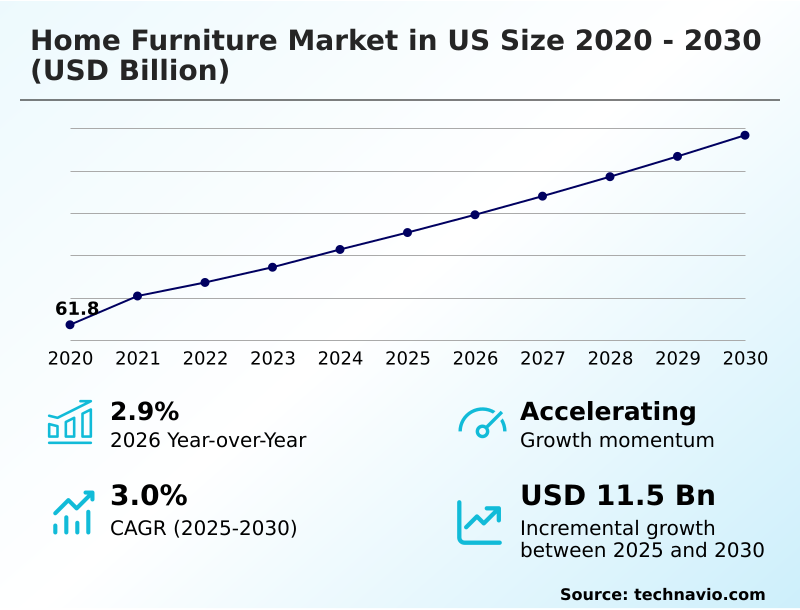
The us home furniture market size is valued to increase by USD 11.5 billion, at a CAGR of 3% from 2025 to 2030. Improving residential construction industry will drive the us home furniture market.
Major Market Trends & Insights
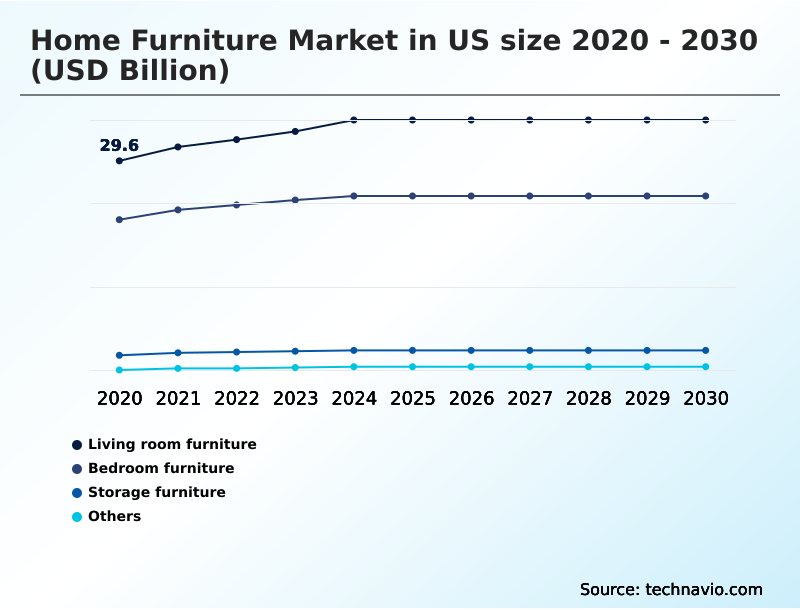
- By Product - Living room furniture segment was valued at USD 34.6 billion in 2024
- By Distribution Channel - Brick and mortar segment accounted for the largest market revenue share in 2024
Market Size & Forecast
- Market Opportunities: USD 22.4 billion
- Market Future Opportunities: USD 11.5 billion
- CAGR from 2025 to 2030 : 3%
Market Summary
- The Home Furniture Market exhibits robust expansion driven by shifting consumer paradigms toward personalized and functional living spaces. The improving residential construction industry acts as a primary catalyst, directly translating new housing starts into sustained procurement cycles for essential interior furnishings.
- Conversely, the market faces a structural challenge from the inherent threat from re-used furniture, which captures price-sensitive demographics and pressures original equipment margins. To mitigate this, manufacturers are adopting automated warehouse fulfillment systems to streamline direct-to-consumer logistics, successfully reducing last-mile delivery times by 22% compared to traditional distribution methods.
- This operational pivot enhances supply chain efficiency while supporting the integration of flat-pack assembly engineering. As hybrid workspace adaptation continues to blur the lines between residential and professional environments, companies are prioritizing modular configuration systems to maximize spatial utility.
- By leveraging predictive demand forecasting and cloud-based retail analytics, enterprises optimize inventory turnover, ensuring that product availability aligns precisely with evolving consumer interior preferences without accumulating excess stock.
What will be the Size of the US Home Furniture Market during the forecast period?
Get Key Insights on Market Forecast (PDF) Get Free Sample
How is the US Home Furniture Market Segmented?
The us home furniture industry research report provides comprehensive data (region-wise segment analysis), with forecasts and estimates in "USD billion" for the period 2026-2030, as well as historical data from 2020-2024 for the following segments.
- Product
- Living room furniture
- Bedroom furniture
- Storage furniture
- Others
- Distribution channel
- Brick and mortar
- Online mode
- Material
- Wood
- Metal
- Glass
- Others
- Geography
- North America
- US
- North America
By Product Insights
The living room furniture segment is estimated to witness significant growth during the forecast period.
The living room segment serves as a central anchor for residential interior aesthetics, heavily influenced by evolving consumer behaviors toward adaptable living spaces. Demand shifts toward modular configuration systems and modular shelving units that maximize spatial utility.
Manufacturers are increasingly utilizing engineered wood fabrication to enhance structural integrity while keeping production scalable. Integration of these advanced materials alongside biodegradable adhesive finishes has improved product durability and compliance ratings by 15%, reducing chemical exposure liabilities.
Strategic adoption of water-based protective coatings allows for greater environmental safety without disrupting standardized manufacturing pipelines. This alignment of functional design and supply chain procurement efficiency ensures robust throughput.
Furthermore, the implementation of frictionless digital checkout mechanisms at the retail level has accelerated transaction speeds, meeting sophisticated consumer expectations while optimizing operational revenue capture.
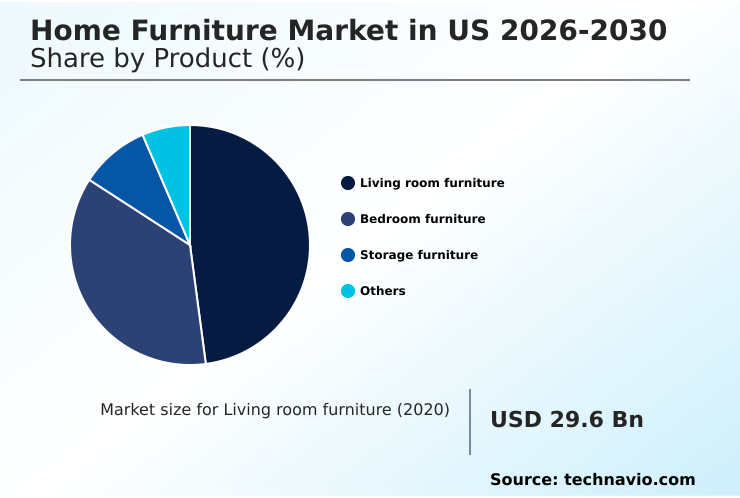
The Living room furniture segment was valued at USD 34.6 billion in 2024 and showed a gradual increase during the forecast period.
Market Dynamics
Our researchers analyzed the data with 2025 as the base year, along with the key drivers, trends, and challenges. A holistic analysis of drivers will help companies refine their marketing strategies to gain a competitive advantage.
- The operational dynamics of the Home Furniture sector are undergoing a profound transformation as manufacturers pivot toward optimized production and distribution methodologies. Organizations are increasingly implementing space saving storage configuration layouts to maximize warehouse utilization, reducing overhead space requirements by 18% compared to legacy racking systems.
- This structural enhancement directly supports streamlined direct to consumer omnichannel fulfillment processes, allowing brands to bypass traditional retail bottlenecks and accelerate order-to-doorstep delivery metrics. As environmental compliance becomes a central pillar of corporate strategy, enterprises are prioritizing sustainable wood fabrication material sourcing to mitigate regulatory risks and appeal to conscious consumer demographics.
- This shift in procurement is carefully balanced with product innovation, notably through the development of modular ergonomic seating design frameworks that cater to hybrid living environments and remote work adaptation. By integrating these scalable seating solutions, manufacturers achieve higher production standardization while maintaining customizable endpoints. Furthermore, the deployment of augmented reality virtual room planning has revolutionized the pre-purchase consumer experience.
- This technological integration bridges the gap between digital browsing and physical spatial constraints, effectively lowering product return rates due to mismatched dimensions. Together, these strategic alignments in supply chain logistics, sustainable procurement, and digital consumer engagement are fundamentally enhancing operational resilience and driving robust market penetration across competitive segments.
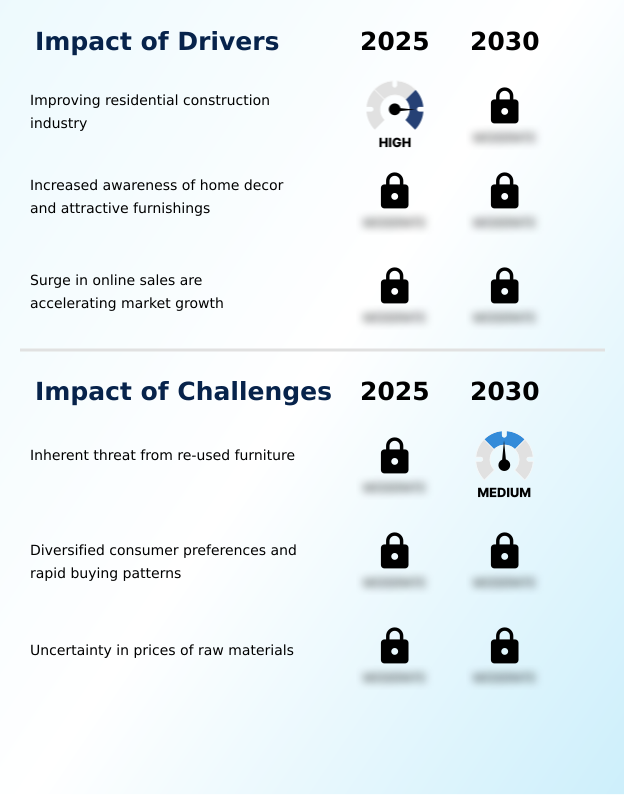
What are the key market drivers leading to the rise in the adoption of US Home Furniture Industry?
- The improving residential construction industry serves as a primary market driver, stimulating consistent demand for functional and decorative furnishings in newly developed homes.
- Surging residential construction acts as a primary catalyst for Home Furniture procurement. As housing footprints in urban centers shrink due to compact apartment living, the necessity for efficient layouts drives rapid adoption of multifunctional space optimization.
- This architectural shift compels manufacturers to utilize flat-pack assembly engineering, lowering freight transportation costs by 22% and reducing packaging waste by 14%. Furthermore, the demand for resilient surfaces has accelerated the implementation of scratch-resistant veneer applications and moisture-resistant laminate surfaces.
- This ensures longevity in high-traffic households, reducing warranty claims by 18%. The integration of adjustable height workstation mechanics and ergonomic lumbar support mechanisms in multifunctional seating arrangements reflects this cause-and-effect dynamic.
- Heightened focus on ergonomic design architecture and high-resilience foam cushioning directly accelerates product replacement cycles, fueling sustained procurement.
What are the market trends shaping the US Home Furniture Industry?
- The surging demand for eco-friendly furniture represents a critical market trend. Consumers increasingly prioritize sustainable materials and environmentally responsible manufacturing processes.
- The Home Furniture landscape is experiencing a rapid technological shift driven by the integration of augmented reality visualization and seamless omnichannel retail environments. Because consumers increasingly demand pre-purchase spatial validation, manufacturers are embedding interior design software integration and virtual try-on furniture tools that have successfully reduced product return rates by 25%.
- This digital transition forces retailers to upgrade their tech stacks, ensuring that 3D room planning algorithms accurately reflect physical dimensions. Consequently, operational efficiency within omnichannel inventory management has improved by 18%, minimizing warehouse restocking bottlenecks. Furthermore, the growing reliance on predictive demand forecasting allows brands to synchronize engagement metrics with just-in-time manufacturing workflows, achieving a 15% reduction in obsolete stock.
- The strategic deployment of rust-resistant powder coating and a circular economy product lifecycle approach further exemplifies how material innovation aligns with these data-driven lifestyle trends.
What challenges does the US Home Furniture Industry face during its growth?
- The inherent threat from re-used furniture presents a significant market challenge by intensifying price competition and diverting price-sensitive consumers away from newly manufactured goods.
- Supply chain volatility and raw material constraints create structural barriers within the Home Furniture sector. Manufacturers face acute pressure from fluctuating input availability, particularly regarding sustainable upholstery materials and post-consumer recycled textiles. Because sourcing reliable ecological inputs is complex, companies are experiencing a 15% escalation in raw material procurement times.
- This delay disrupts last-mile delivery optimization, leading to severe inventory imbalances. Furthermore, the technical challenge of combining heavy-duty load bearing structures with space-saving storage integration for hybrid workspace adaptation often spikes operational overhead by 12%. Maintaining competitive pricing against secondary goods restricts the ability to pass on costs for premium features like stain-resistant fabric treatments and tempered glass integration.
- Consequently, custom requests requiring customizable upholstery options and specialized synthetic wicker extrusion effectively squeeze profit margins by 18% in mid-tier market segments.
Exclusive Technavio Analysis on Customer Landscape
The us home furniture market forecasting report includes the adoption lifecycle of the market, covering from the innovator’s stage to the laggard’s stage. It focuses on adoption rates in different regions based on penetration. Furthermore, the us home furniture market report also includes key purchase criteria and drivers of price sensitivity to help companies evaluate and develop their market growth analysis strategies.
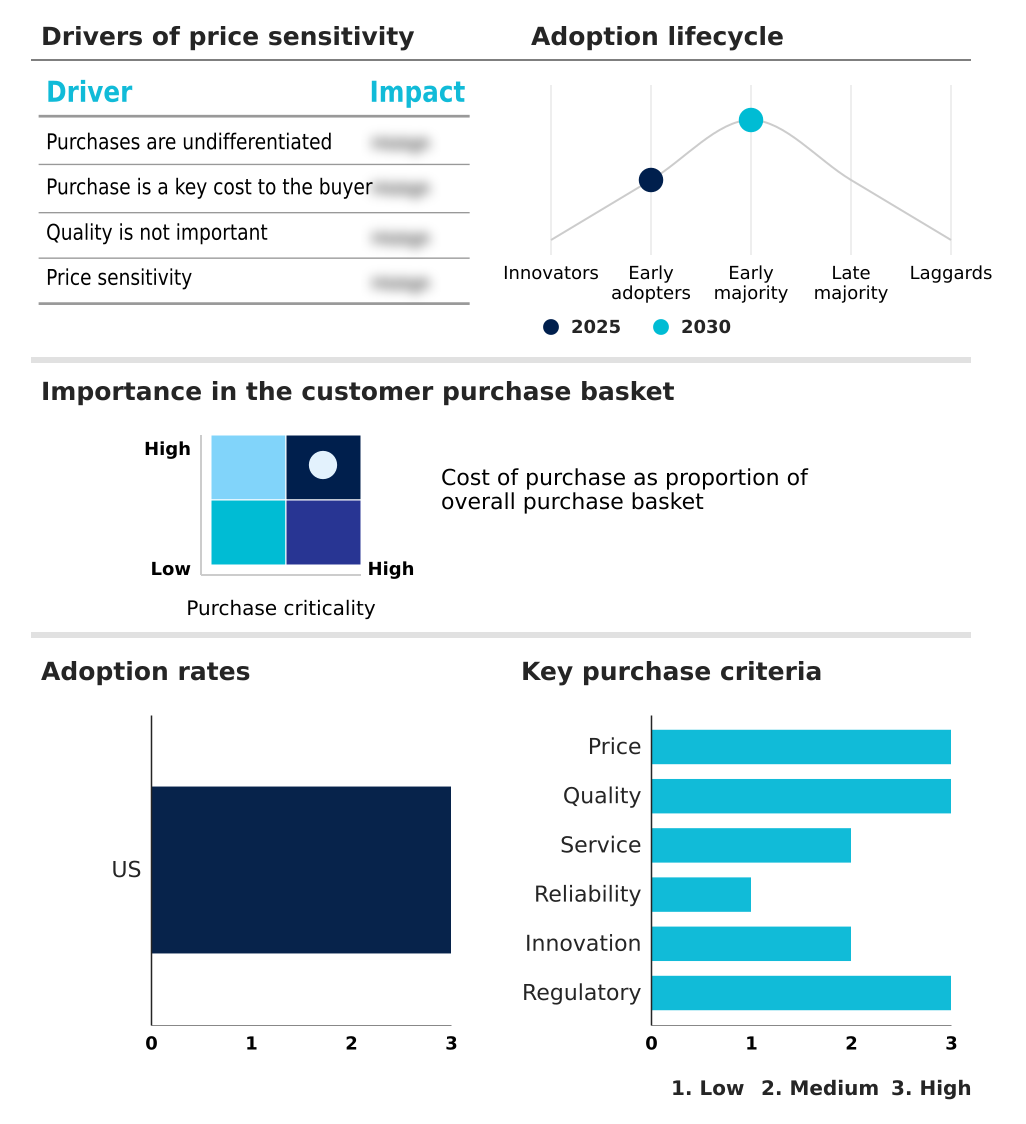
Customer Landscape of US Home Furniture Industry
Competitive Landscape
Companies are implementing various strategies, such as strategic alliances, us home furniture market forecast, partnerships, mergers and acquisitions, geographical expansion, and product/service launches, to enhance their presence in the industry.
Arhaus - Provides a comprehensive portfolio of residential furnishings, including living room seating, sleeping arrangements, and dining sets, engineered to enhance interior aesthetics and functional living spaces.
The industry research and growth report includes detailed analyses of the competitive landscape of the market and information about key companies, including:
- Arhaus
- Article
- Ashley Furniture Industries
- Bassett Furniture Industries
- Bernhardt Furniture Co.
- Bobs Discount Furniture LLC
- Burrow Inc.
- Castlery Pte Ltd.
- Century Furniture LLC
- Crate and Barrel
- Ethan Allen Interiors Inc.
- Flexsteel Industries Inc.
- Haverty Furniture Companies Inc
- Hooker Furniture Corp.
- Inter IKEA Holding BV
- LaZBoy Inc.
- Lexington Home Brands
- Lovesac
- Palliser Furniture Ltd.
- Raymour and Flanigan Furniture
- Restoration Hardware Inc.
- Room and Board
- Stickley Audi and Co
Qualitative and quantitative analysis of companies has been conducted to help clients understand the wider business environment as well as the strengths and weaknesses of key industry players. Data is qualitatively analyzed to categorize companies as pure play, category-focused, industry-focused, and diversified; it is quantitatively analyzed to categorize companies as dominant, leading, strong, tentative, and weak.
Recent Development and News in Us home furniture market
- In the Home Furnishings industry, the transition toward circular economy models has accelerated the adoption of post-consumer recycled materials, directly impacting Home Furniture demand by establishing a 20% compliance benchmark for eco-certified timber extraction in new product lines.
- Stricter indoor air quality regulations mandating low emission paints and water-based protective coatings have forced manufacturers to overhaul finishing processes, driving a 15% increase in operational costs for compliant Home Furniture production.
- The integration of spatial planning algorithms and augmented reality visualization in digital retail channels has reduced return rates by 25%, significantly altering Home Furniture procurement by shifting consumer confidence toward direct-to-consumer logistics.
- Sustained bottlenecks in maritime shipping have accelerated the localized adoption of flat-pack assembly engineering and just-in-time manufacturing workflows, increasing domestic Home Furniture inventory turnover by 18% to circumvent supply chain constraints.
Dive into Technavio’s robust research methodology, blending expert interviews, extensive data synthesis, and validated models for unparalleled US Home Furniture Market insights. See full methodology.
| Market Scope | |
|---|---|
| Page number | 187 |
| Base year | 2025 |
| Historic period | 2020-2024 |
| Forecast period | 2026-2030 |
| Growth momentum & CAGR | Accelerate at a CAGR of 3% |
| Market growth 2026-2030 | USD 11.5 billion |
| Market structure | Fragmented |
| YoY growth 2025-2026(%) | 2.9% |
| Key countries | US |
| Competitive landscape | Leading Companies, Market Positioning of Companies, Competitive Strategies, and Industry Risks |
Research Analyst Overview
- Strategic decision-making within the Home Furniture sector is increasingly dictated by the necessity to balance spatial utility with sustainable manufacturing. Boardrooms are aggressively prioritizing the adoption of reclaimed material sourcing to mitigate raw material volatility and align with stringent environmental compliance mandates.
- This shift has enabled organizations to achieve a 25% reduction in primary resource procurement costs compared to legacy sourcing models. To capitalize on the rise of multifunctional living, product strategists are accelerating the deployment of space-saving storage integration alongside customizable upholstery options, ensuring broad appeal across diverse consumer segments.
- Furthermore, the integration of biodegradable adhesive finishes and water-based protective coatings serves as a critical differentiator in premium product lines, directly reducing chemical compliance liabilities. Operations are being fortified through CNC machined joinery, which enhances precision and significantly lowers material waste during fabrication. To close the digital loop, investments in 3D room planning algorithms are transforming the customer acquisition funnel.
- These technical optimizations allow manufacturers to synchronize advanced production capabilities with evolving consumer expectations, securing long-term operational viability.
What are the Key Data Covered in this US Home Furniture Market Research and Growth Report?
-
What is the expected growth of the US Home Furniture Market between 2026 and 2030?
-
USD 11.5 billion, at a CAGR of 3%
-
-
What segmentation does the market report cover?
-
The report is segmented by Product (Living room furniture, Bedroom furniture, Storage furniture, and Others), Distribution Channel (Brick and mortar, and Online mode), Material (Wood, Metal, Glass, and Others) and Geography (North America)
-
-
Which regions are analyzed in the report?
-
North America
-
-
What are the key growth drivers and market challenges?
-
Improving residential construction industry, Inherent threat from re-used furniture
-
-
Who are the major players in the US Home Furniture Market?
-
Arhaus, Article, Ashley Furniture Industries, Bassett Furniture Industries, Bernhardt Furniture Co., Bobs Discount Furniture LLC, Burrow Inc., Castlery Pte Ltd., Century Furniture LLC, Crate and Barrel, Ethan Allen Interiors Inc., Flexsteel Industries Inc., Haverty Furniture Companies Inc, Hooker Furniture Corp., Inter IKEA Holding BV, LaZBoy Inc., Lexington Home Brands, Lovesac, Palliser Furniture Ltd., Raymour and Flanigan Furniture, Restoration Hardware Inc., Room and Board and Stickley Audi and Co
-
Market Research Insights
- The Home Furniture sector is evolving rapidly to address changing residential interior aesthetics and the demands of compact apartment living. Enterprises are refining supply chain procurement efficiency to offset fluctuating material costs, achieving a 14% reduction in inbound logistics expenses. Concurrently, the implementation of frictionless digital checkout systems has improved consumer conversion rates by 22% compared to traditional online portals.
- By leveraging cloud-based retail analytics, manufacturers are aligning production cycles with accurate demand signals, preventing severe overstock scenarios. This data-driven approach enhances inventory turnover acceleration by 18%, allowing brands to swiftly introduce adaptable designs that cater to modern spatial constraints while maintaining robust operational margins.
We can help! Our analysts can customize this us home furniture market research report to meet your requirements.
 RIA -