


Home Renovation Market Size 2026-2030
The home renovation market size is valued to increase by USD 87.63 billion, at a CAGR of 4.5% from 2025 to 2030. Aging global residential housing infrastructure mandates essential maintenance and systems modernization will drive the home renovation market.
Major Market Trends & Insights
- North America dominated the market and accounted for a 47.9% growth during the forecast period.
- By Type - Professional renovation segment was valued at USD 221.77 billion in 2024
- By Application - Kitchen renovation segment accounted for the largest market revenue share in 2024
Market Size & Forecast
- Market Opportunities: USD 156.07 billion
- Market Future Opportunities: USD 87.63 billion
- CAGR from 2025 to 2030 : 4.5%
Market Summary
- The Home Renovation Market demonstrates resilient structural demand driven by the continuous deterioration of existing housing inventory and evolving functional space requirements. Aging residential properties require mandatory mechanical and architectural overhauls, acting as a primary driver that sustains continuous capital allocation toward essential system modernizations.
- For instance, contractors utilizing intelligent circuit breakers and smart energy management tools during electrical retrofits have improved residential energy efficiency by 22% compared to legacy installations. However, prolonged high interest rates trigger a severe mortgage lock in effect, presenting a substantial challenge by restricting homeowner mobility and forcing households to delay debt-funded discretionary remodeling.
- In response, supply chains are prioritizing direct to consumer building materials and omnichannel click and collect services to streamline contractor procurement and mitigate persistent skilled labor shortages. The strategic deployment of augmented reality visualization tools accelerates project approval cycles and reduces design friction.
- Consequently, the industry continues to pivot from purely aesthetic upgrades toward high-return structural, energy-efficient, and technologically integrated residential transformations.
What will be the Size of the Home Renovation Market during the forecast period?
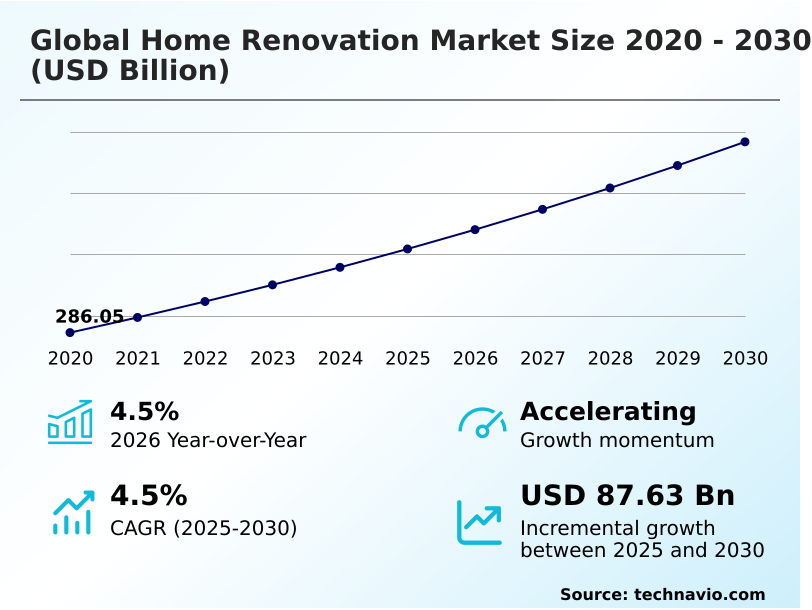
Get Key Insights on Market Forecast (PDF) Get Free Sample
How is the Home Renovation Market Segmented?
The home renovation industry research report provides comprehensive data (region-wise segment analysis), with forecasts and estimates in "USD million" for the period 2026-2030, as well as historical data from 2020-2024 for the following segments.
- Type
- Professional renovation
- Do-it-yourself renovation
- Application
- Kitchen renovation
- Bathroom renovation
- Exterior renovation
- Bedroom renovation
- Others
- End-user
- Residential
- Commercial
- Geography
- North America
- US
- Canada
- Mexico
- Europe
- Germany
- UK
- France
- Italy
- Spain
- The Netherlands
- APAC
- China
- Japan
- India
- South Korea
- Australia
- Indonesia
- Middle East and Africa
- Saudi Arabia
- UAE
- South Africa
- Turkey
- Egypt
- South America
- Brazil
- Argentina
- Chile
- North America
By Type Insights
The professional renovation segment is estimated to witness significant growth during the forecast period.
The professional sector dictates the trajectory of residential capital expenditure, emphasizing complex structural space reconfiguration and custom millwork integration. Specialized firms execute large-scale upgrades requiring licensed expertise.
By leveraging building information modeling software, project managers have improved structural estimation accuracy by 15%, reducing material waste significantly. As aging properties demand stricter decarbonization mandate compliance, households increasingly outsource comprehensive architectural enhancements and universal design modifications to certified professionals.
This segment relies heavily on specialized trade distribution networks to procure commercial-grade components such as high efficiency HVAC installation systems and thermal insulation retrofitting materials.
Ultimately, integrating advanced management workflows with technical craftsmanship, including the use of high strength concrete masonry, elevates long-term property equity while mitigating the operational risks associated with extensive structural modifications.
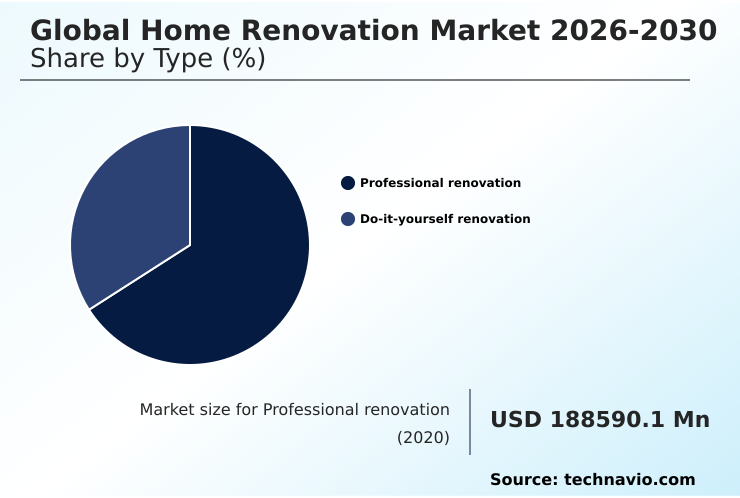
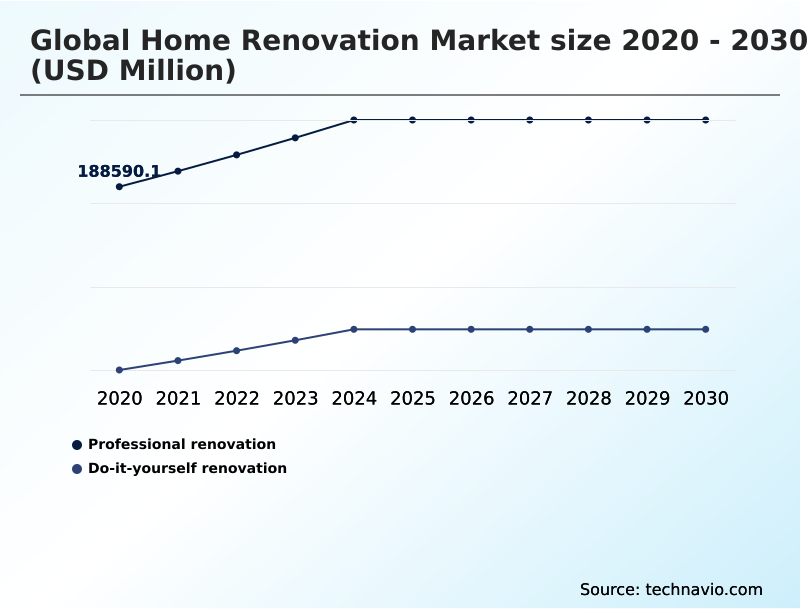
The Professional renovation segment was valued at USD 221.77 billion in 2024 and showed a gradual increase during the forecast period.
Regional Analysis
North America is estimated to contribute 47.9% to the growth of the global market during the forecast period.Technavio’s analysts have elaborately explained the regional trends and drivers that shape the market during the forecast period.
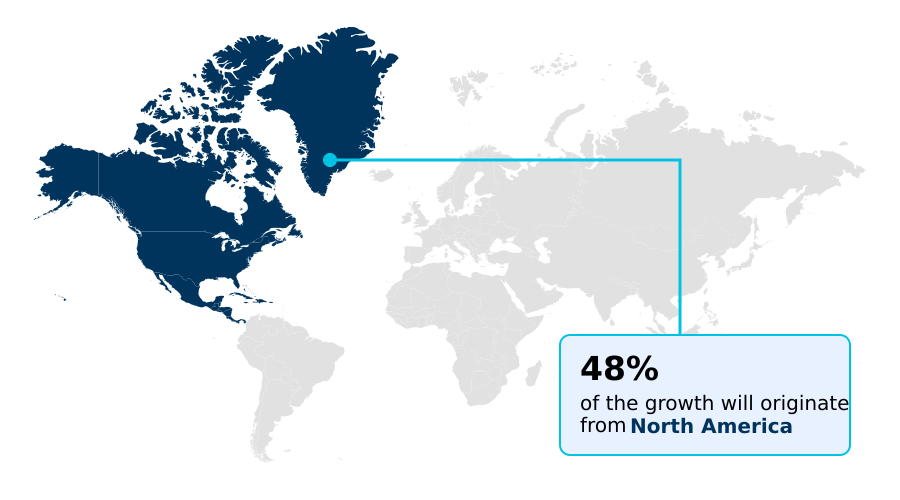
See How Home Renovation Market Demand is Rising in North America Get Free Sample
Regional variations in the remodeling sector are dictated by varying architectural maturity and distinct regulatory frameworks.
North America maintains high residential property valuation due to massive aging housing stocks, where contractors achieve a 15% reduction in project delays by adopting digital project management platforms.
Conversely, Europe is driven by stringent environmental laws, prioritizing energy upgrades like triple pane window installations and cool roof reflectivity systems.
European households allocate heavily toward efficiency, achieving up to 25% lower utility consumption through smart energy management tools and solar inverter monitors.
To navigate geographical demands, material suppliers adapt portfolios by integrating prefabricated modular components tailored to local seismic safety retrofitting requirements.
While North America focuses on expanding square footage through accessory dwelling unit construction, European markets optimize compact spaces, requiring manufacturers to continuously innovate localized, climate resilient exterior materials.
Market Dynamics
Our researchers analyzed the data with 2025 as the base year, along with the key drivers, trends, and challenges. A holistic analysis of drivers will help companies refine their marketing strategies to gain a competitive advantage.
- The operational landscape of structural remodeling is shifting heavily toward technological and environmental modernization, requiring contractors to adopt highly specialized installation techniques. As remote work environments dictate new interior layouts, businesses are witnessing a 30% faster adoption rate of advanced acoustic insulation wall retrofits compared to standard drywall installations, driven by the need to isolate professional workspaces from domestic noise.
- Concurrently, strict municipal building codes mandate rigorous residential energy efficiency compliance upgrades, forcing supply chains to stock higher volumes of regulatory-approved materials. To meet these stringent performance benchmarks, architects increasingly rely on sustainable building materials lifecycle assessment protocols to verify the carbon footprint and durability of selected products before procurement.
- Furthermore, the integration of high performance thermal barrier installations has become critical for optimizing building envelopes, allowing HVAC contractors to reduce residential energy loss more effectively than legacy fiberglass applications. Beyond passive structural improvements, modern consumers demand active technological connectivity, accelerating smart home automation system integration across lighting, security, and climate control networks.
- This shift requires electrical subcontractors to upgrade main panels and install complex low-voltage wiring infrastructures. Ultimately, renovation enterprises that align their procurement and training functions with these advanced energy and automation standards achieve greater operational resilience and secure more lucrative, high-margin remodeling contracts in a highly regulated construction environment.
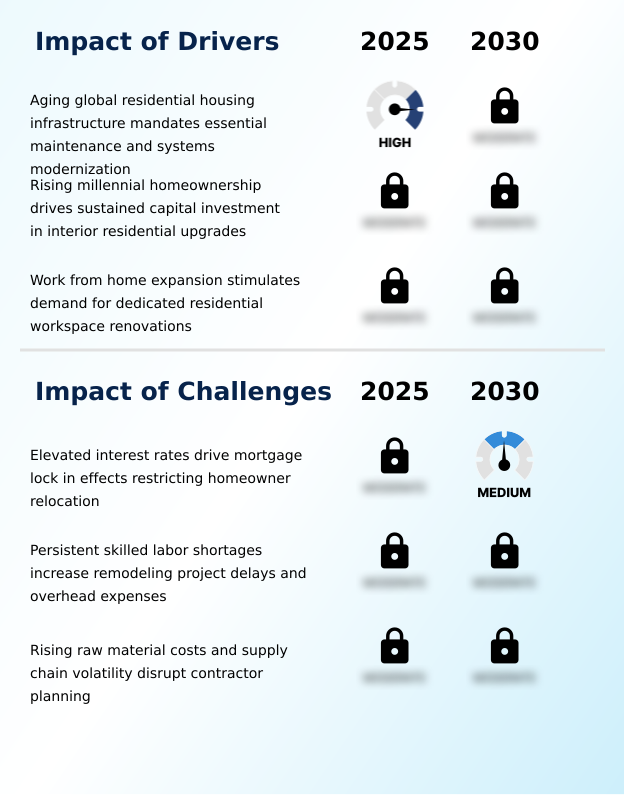
What are the key market drivers leading to the rise in the adoption of Home Renovation Industry?
- The aging residential housing infrastructure mandates essential maintenance and systems modernization, serving as the primary catalyst for sustained structural repair and remodeling investments.
- The continuous deterioration of aging residential structures acts as a mandatory driver compelling extensive property modernizations. As critical infrastructure ages, owners are forced to invest in advanced water management infrastructure and subterranean basement finishing to preserve asset integrity.
- This unavoidable maintenance imperative ensures a resilient baseline demand for contracting services.
- Enterprises utilizing premium exterior materials, such as architectural asphalt shingles and fiber cement siding, have successfully improved building envelope optimization by 20%, mitigating the impact of severe weather events.
- Furthermore, the necessity for heritage architecture preservation in mature urban markets drives specialized demand for eco certified timber products and zero volatile organic compound paints to support indoor air quality enhancements.
- These essential capital deployments, alongside accessibility updates like curbless shower layouts, insulate the remodeling sector from macroeconomic volatility, ensuring steady operational workflows.
What are the market trends shaping the Home Renovation Industry?
- Growing consumer adoption of smart home technology accelerates connected residential remodeling. This technological integration transforms traditional living spaces into highly automated and energy-efficient environments.
- The rapid integration of connected residential ecosystems represents a definitive trend reshaping modern renovation workflows. Homeowners increasingly mandate smart appliance integration and intelligent circuit breakers to optimize domestic energy consumption and enhance convenience. This technological shift requires contractors to upgrade foundational electrical infrastructure.
- Consequently, firms utilizing artificial intelligence cost estimation software have improved bidding accuracy by 25% compared to manual methods, significantly reducing budget overruns. The rising demand for off grid energy solutions and battery storage integration further accelerates this trend. Furthermore, spatial computing deployment streamlines the design of luxury upgrades like thermostatic digital water controls and radiant heated flooring.
- By prioritizing these advanced integrations and embracing circular economy building principles alongside smart climate control systems, renovation enterprises capture higher-margin service contracts and future-proof residential assets.
What challenges does the Home Renovation Industry face during its growth?
- Elevated interest rates drive persistent mortgage lock in effects that restrict homeowner relocation, significantly suppressing large-scale discretionary remodeling projects.
- Persistent macroeconomic pressures and elevated borrowing costs create a pronounced mortgage lock in effect, severely challenging the execution of large-scale residential transformations. As homeowners defer relocation, the financial friction of high interest rates forces a downsizing of discretionary project scopes. Contractors face a volatile operational environment where material price unpredictability jeopardizes margins.
- Supply chain fragmentation exacerbates these constraints, particularly for specialized components like rainwater harvesting infrastructure and thermal window coatings. Businesses implementing omnichannel click and collect services have lowered material holding costs by 15%, yet supply bottlenecks continually delay installations. The acute shortage of specialized labor required for complex tasks, such as acoustic drywall installation and composite wall cladding, inflates overhead expenses.
- Consequently, enterprises are increasingly forced to adopt direct to consumer building materials and leverage augmented reality visualization tools to streamline planning and recalibrate resource allocation strategies.
Exclusive Technavio Analysis on Customer Landscape
The home renovation market forecasting report includes the adoption lifecycle of the market, covering from the innovator’s stage to the laggard’s stage. It focuses on adoption rates in different regions based on penetration. Furthermore, the home renovation market report also includes key purchase criteria and drivers of price sensitivity to help companies evaluate and develop their market growth analysis strategies.
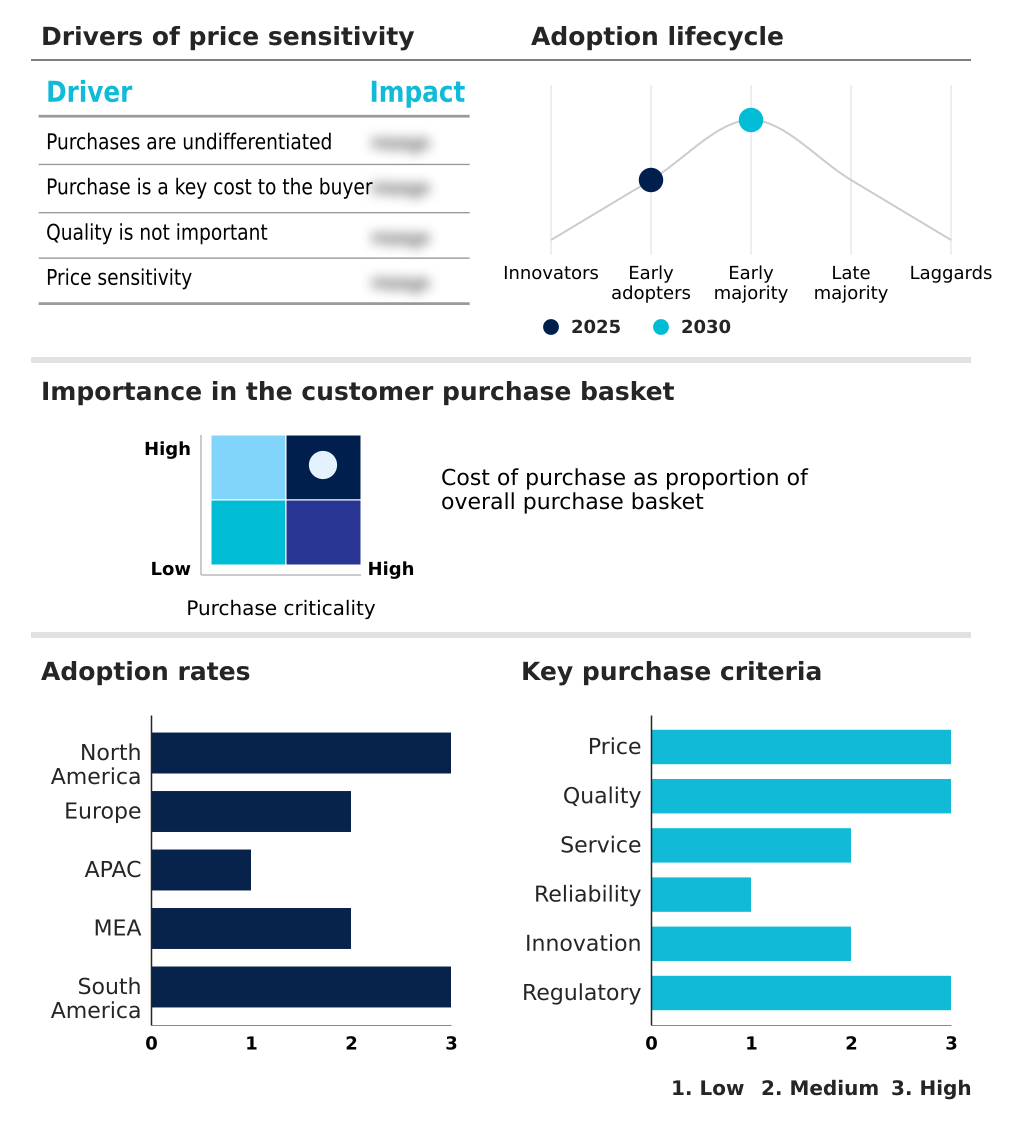
Customer Landscape of Home Renovation Industry
Competitive Landscape
Companies are implementing various strategies, such as strategic alliances, home renovation market forecast, partnerships, mergers and acquisitions, geographical expansion, and product/service launches, to enhance their presence in the industry.
Airoom LLC - Unified architectural design and construction services deliver end-to-end residential transformations, focusing on custom luxury interiors, structural additions, and comprehensive start-to-finish remodeling execution.
The industry research and growth report includes detailed analyses of the competitive landscape of the market and information about key companies, including:
- Airoom LLC
- Archadeck Outdoor Living
- Bath Fitter Franchising Inc.
- Bath Planet LLC
- BOWA
- Case Design Remodeling
- Champion Window and Home Exteriors
- Jackson Design and Remodeling
- Kitchen Magic
- Neil Kelly Inc.
- Normandy Builders
- Power Home Remodeling Group
- Re Bath LLC
- Refresh Renovations
- RockSolid Granit USA Inc.
- Smith and Sons Remodeling
- U.S. Remodeling Group
Qualitative and quantitative analysis of companies has been conducted to help clients understand the wider business environment as well as the strengths and weaknesses of key industry players. Data is qualitatively analyzed to categorize companies as pure play, category-focused, industry-focused, and diversified; it is quantitatively analyzed to categorize companies as dominant, leading, strong, tentative, and weak.
Recent Development and News in Home renovation market
- In the Building Products industry, the widespread adoption of circular economy building principles has accelerated the deployment of sustainable materials, directly impacting Home Renovation demand by increasing the use of recycled composite wall cladding and reducing raw material waste by up to 20%.
- Stricter municipal energy codes have mandated higher thermal performance standards, driving the rapid uptake of triple pane window installations and high performance thermal barrier installations, which enhance building envelope optimization and lower residential HVAC energy consumption by approximately 15%.
- The integration of spatial computing deployment into architectural design processes has revolutionized contractor workflows, enabling augmented reality visualization tools that improve client conversion rates by 25% and streamline the specification of smart appliance integration during kitchen overhauls.
- Supply chain shifts toward localized manufacturing of prefabricated modular components have mitigated logistics disruptions, allowing rapid deployment of accessory dwelling unit construction while decreasing average project installation timelines by nearly 30% across urban residential markets.
Dive into Technavio’s robust research methodology, blending expert interviews, extensive data synthesis, and validated models for unparalleled Home Renovation Market insights. See full methodology.
| Market Scope | |
|---|---|
| Page number | 296 |
| Base year | 2025 |
| Historic period | 2020-2024 |
| Forecast period | 2026-2030 |
| Growth momentum & CAGR | Accelerate at a CAGR of 4.5% |
| Market growth 2026-2030 | USD 87632.1 million |
| Market structure | Fragmented |
| YoY growth 2025-2026(%) | 4.5% |
| Key countries | US, Canada, Mexico, Germany, UK, France, Italy, Spain, The Netherlands, China, Japan, India, South Korea, Australia, Indonesia, Saudi Arabia, UAE, South Africa, Turkey, Egypt, Brazil, Argentina and Chile |
| Competitive landscape | Leading Companies, Market Positioning of Companies, Competitive Strategies, and Industry Risks |
Research Analyst Overview
- The residential remodeling landscape is fundamentally transitioning from aesthetic updates to rigorous structural and energetic transformations. Aging infrastructure necessitates extensive building envelope optimization, prompting a strategic shift toward high-performance materials like architectural asphalt shingles and fiber cement siding.
- Contractors incorporating augmented reality visualization tools during the initial design phase have realized a 30% reduction in client revision cycles, directly improving project turnaround times and operational profitability. As regulatory frameworks tighten, the demand for zero volatile organic compound paints and radiant heated flooring has surged, aligning indoor environments with modern health and efficiency standards.
- Furthermore, plumbing overhauls increasingly specify thermostatic digital water controls and curbless shower layouts to satisfy universal design preferences and water conservation mandates. Strategic procurement decisions at the boardroom level now heavily prioritize these advanced technical inputs to ensure regulatory compliance and secure high-margin project bids.
- Ultimately, enterprises that integrate predictive digital tools with sustainable, high-performance architectural materials maintain a decisive competitive advantage in a complex, structurally demanding construction environment.
What are the Key Data Covered in this Home Renovation Market Research and Growth Report?
-
What is the expected growth of the Home Renovation Market between 2026 and 2030?
-
USD 87.63 billion, at a CAGR of 4.5%
-
-
What segmentation does the market report cover?
-
The report is segmented by Type (Professional renovation, and Do-it-yourself renovation), Application (Kitchen renovation, Bathroom renovation, Exterior renovation, Bedroom renovation, and Others), End-user (Residential, and Commercial) and Geography (North America, Europe, APAC, Middle East and Africa, South America)
-
-
Which regions are analyzed in the report?
-
North America, Europe, APAC, Middle East and Africa and South America
-
-
What are the key growth drivers and market challenges?
-
Aging global residential housing infrastructure mandates essential maintenance and systems modernization, Elevated interest rates drive mortgage lock in effects restricting homeowner relocation
-
-
Who are the major players in the Home Renovation Market?
-
Airoom LLC, Archadeck Outdoor Living, Bath Fitter Franchising Inc., Bath Planet LLC, BOWA, Case Design Remodeling, Champion Window and Home Exteriors, Jackson Design and Remodeling, Kitchen Magic, Neil Kelly Inc., Normandy Builders, Power Home Remodeling Group, Re Bath LLC, Refresh Renovations, RockSolid Granit USA Inc., Smith and Sons Remodeling and U.S. Remodeling Group
-
Market Research Insights
- The remodeling sector is undergoing a profound operational transformation driven by heightened residential property valuation and modernized living requirements. Companies leveraging digital project management platforms have decreased administrative overhead by 18%, significantly enhancing operational margins. Furthermore, the shift toward omnichannel click and collect services has improved material procurement efficiency by 24%, minimizing job site delays caused by supply bottlenecks.
- As aging structures require critical indoor air quality enhancements, contractors focusing on advanced ventilation retrofits achieve a 30% higher client retention rate. By optimizing trade distribution networks and increasing the availability of direct to consumer building materials, renovation enterprises successfully mitigate margin compression and align service delivery with evolving compliance demands.
We can help! Our analysts can customize this home renovation market research report to meet your requirements.
 RIA -