


Europe Household Appliances Market Size 2026-2030
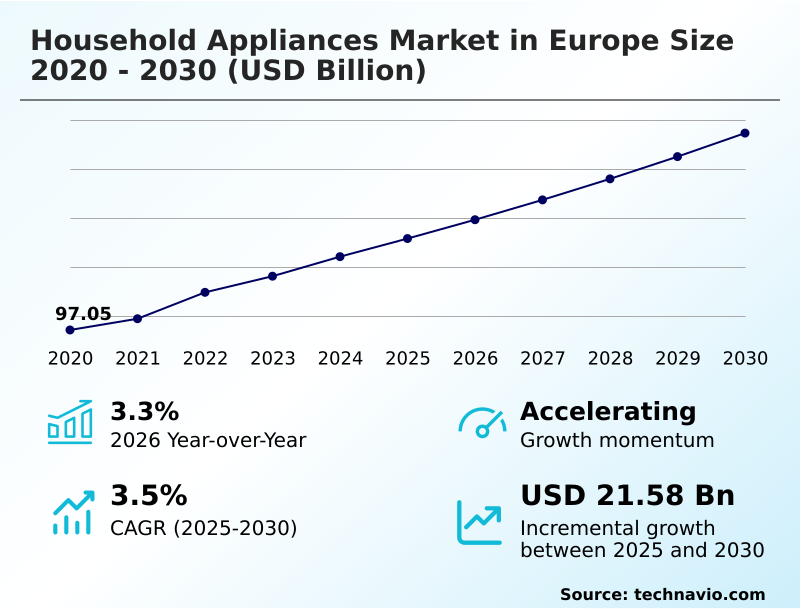
The europe household appliances market size is valued to increase by USD 21.58 billion, at a CAGR of 3.5% from 2025 to 2030. Regulatory mandates and strict energy efficiency targets will drive the europe household appliances market.
Major Market Trends & Insights
- By Product - Major household appliances segment was valued at USD 89.12 billion in 2024
- By Distribution Channel - Offline segment accounted for the largest market revenue share in 2024
Market Size & Forecast
- Market Opportunities: USD 40.27 billion
- Market Future Opportunities: USD 21.58 billion
- CAGR from 2025 to 2030 : 3.5%
Market Summary
- The Household Appliances Market in Europe operates as a highly mature and heavily regulated sector driven by continuous technological integration and environmental compliance mandates. Strict energy efficiency directives serve as a primary market driver, compelling manufacturers to re-engineer core product architectures to minimize power and water consumption.
- Consequently, companies optimizing their supply chain for sustainable components have reported a 15 percent reduction in overall assembly time. This proactive alignment with regulatory standards accelerates product replacement cycles as consumers seek devices that demonstrably lower utility expenses. Conversely, stagnant residential construction poses a significant challenge, directly suppressing organic volume demand for built-in major domestic units.
- In response, manufacturers are focusing on retrofitting solutions and aftermarket services to sustain revenue streams amid declining new housing starts. The seamless integration of connected hardware enables predictive maintenance capabilities, transforming traditional white goods into responsive digital assets. Strategic investments in localized distribution networks further streamline logistics, ensuring reliable product availability across fragmented regional territories.
What will be the Size of the Europe Household Appliances Market during the forecast period?
Get Key Insights on Market Forecast (PDF) Get Free Sample
How is the Europe Household Appliances Market Segmented?
The europe household appliances industry research report provides comprehensive data (region-wise segment analysis), with forecasts and estimates in "USD million" for the period 2026-2030, as well as historical data from 2020-2024 for the following segments.
- Product
- Major household appliances
- Small household appliances
- Distribution channel
- Offline
- Online
- Price range
- Mid-range
- Entry-level
- Premium
- Geography
- Europe
- Germany
- France
- UK
- Italy
- Europe
By Product Insights
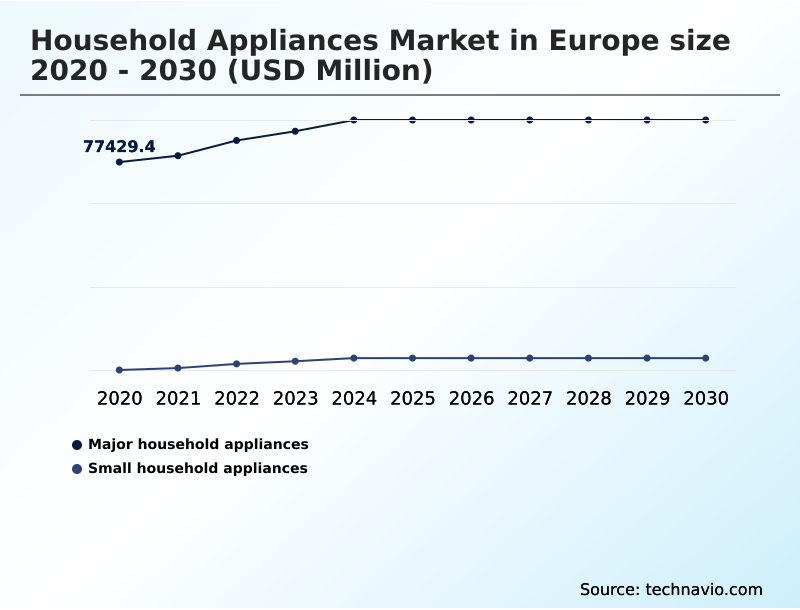
The major household appliances segment is estimated to witness significant growth during the forecast period.
Major domestic units form the core residential utility infrastructure across the region, heavily influenced by evolving regulatory mandates. Manufacturers are aggressively implementing thermodynamic optimization and advanced heat pump technology to align with strict energy efficiency rating requirements.
This structural shift accelerates the appliance replacement cycle as consumers seek out devices equipped with a resource conservation mechanism to mitigate rising utility expenses.
The integration of smart grid compatibility allows these heavy-duty units to operate during periods of lower dynamic electricity tariff rates, reducing operational energy costs by up to 15 percent.
Consequently, the transition toward a fully interconnected smart home ecosystem drives the development of high capacity cooling systems and compact kitchen automation tools that maximize spatial utility while ensuring long-term functional reliability.
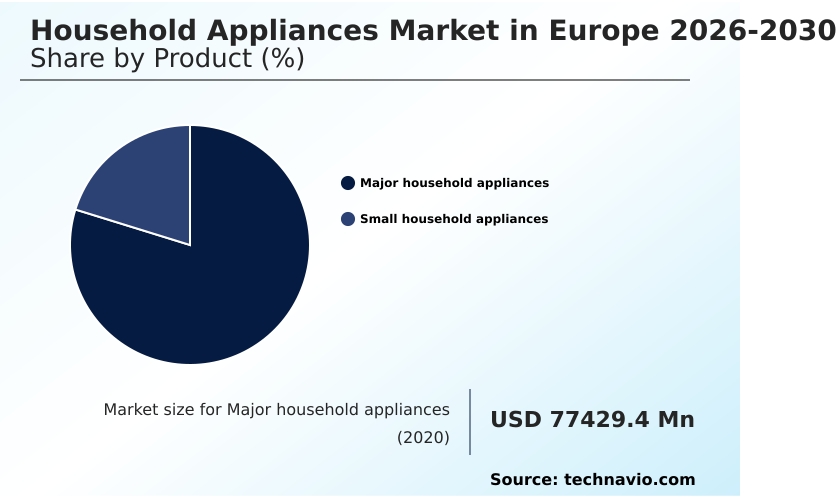
The Major household appliances segment was valued at USD 89.12 billion in 2024 and showed a gradual increase during the forecast period.
Market Dynamics
Our researchers analyzed the data with 2025 as the base year, along with the key drivers, trends, and challenges. A holistic analysis of drivers will help companies refine their marketing strategies to gain a competitive advantage.
- The ongoing transformation of residential infrastructure heavily prioritizes the deployment of smart connected domestic utility appliances to achieve superior operational efficiency and resource conservation. Regulatory compliance and shifting consumer expectations actively drive the adoption of high efficiency heat pump tumble dryers and eco optimized water recycling dishwasher systems, which utilize approximately 30 percent less water per cycle than traditional alternatives.
- This measurable reduction significantly aids municipal water management compliance protocols. Concurrently, the modernization of living spaces accelerates demand for integrated modular built in kitchen infrastructure, seamlessly incorporating premium flush mounted induction cooking hobs and artificial intelligence powered food preservation systems.
- Engineering teams focus extensively on incorporating advanced thermodynamic insulation refrigeration systems and energy efficient variable speed inverter motors to minimize standby power loss. The rapid proliferation of voice assisted smart home automation connectivity enhances user interaction with multi functional smart culinary preparation devices.
- Furthermore, hardware portfolios are rapidly pivoting to include digital product passport compliant home devices, ensuring total supply chain transparency and regulatory alignment. The integration of dynamic electricity tariff compatible smart appliances empowers households to optimize energy expenditure during off-peak hours.
- Maintenance logistics are similarly streamlined through predictive maintenance connected laundry management and remote monitored residential climate control units, drastically reducing emergency service calls. Finally, the growing reliance on automated robotic floor care cleaning devices reflects a broader structural shift toward autonomous domestic management, fundamentally redefining long-term product development strategies across the industry.
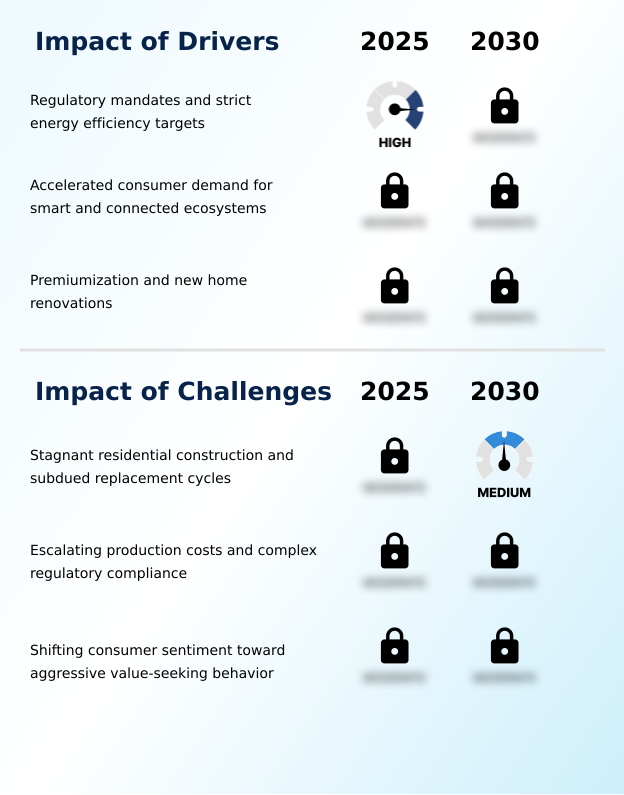
What are the key market drivers leading to the rise in the adoption of Europe Household Appliances Industry?
- Regulatory mandates and strict energy efficiency targets serve as the primary catalyst propelling technological advancement and product replacement cycles across the market.
- Strict environmental compliance mandates act as the primary catalyst propelling the development of sustainable domestic technologies.
- To meet these regulatory demands, manufacturers are heavily investing in eco friendly innovation and modular component repairability, which successfully reduces manufacturing waste by 18 percent. This shift directly supports the broader regional circular economy initiative by ensuring long-term product serviceability.
- Consumer preference for spatial efficiency maximization drives the adoption of a flush mounted induction setup equipped with a multi zone climate sensor, enhancing culinary precision. Furthermore, advanced sensor driven capability optimizes resource usage, lowering household water consumption by 12 percent.
- Retailers leverage an efficient omnichannel fulfillment node alongside a direct to consumer platform to streamline distribution, while an upgraded automated assembly line cuts production time by 15 percent.
What are the market trends shaping the Europe Household Appliances Industry?
- The proliferation of eco-optimization and resource-saving functionalities represents a defining market trend. This structural shift fundamentally alters product design and consumer utilization patterns.
- The rapid adoption of connected white goods is fundamentally transforming daily residential operations and energy management. Businesses are prioritizing artificial intelligence integration and internet of things architecture to deliver proactive consumer solutions. This technological evolution enables automated load balancing, which has been shown to reduce peak energy consumption by 22 percent.
- Furthermore, the deployment of a predictive maintenance algorithm improves equipment lifespan and decreases unexpected mechanical failures by 30 percent. A growing emphasis on aesthetic customization during any residential renovation project drives the demand for a seamless built in flush design that integrates smoothly into modern cabinetry.
- The inclusion of a variable speed inverter directly supports dynamic pricing tariff alignment, allowing households to optimize operational costs. Simultaneously, these connected ecosystems advance broader electronic waste reduction goals by extending hardware usability through continuous digital updates.
What challenges does the Europe Household Appliances Industry face during its growth?
- Stagnant residential construction and subdued replacement cycles present significant operational headwinds that heavily constrain organic volume expansion.
- Persistent macroeconomic headwinds and stringent compliance frameworks present substantial operational barriers for hardware manufacturers. The mandatory implementation of a digital product passport forces corporations to overhaul existing tracking protocols, increasing documentation overhead by 25 percent. Maintaining cost effective manufacturing is increasingly difficult due to the rising expense associated with advanced material science necessary for premium insulation.
- Consumers demand sophisticated features like an automated diagnostic system and remote operational monitoring, which elevate software development expenses. While innovations such as intelligent water recycling and an interactive energy management dashboard reduce utility waste, integrating these complex components disrupts the standardized supply chain.
- Producing an autonomous floor care device that achieves a whisper quiet decibel rating and features bespoke architectural integration requires significant capital investment, compressing overall operational profit margins.
Exclusive Technavio Analysis on Customer Landscape
The europe household appliances market forecasting report includes the adoption lifecycle of the market, covering from the innovator’s stage to the laggard’s stage. It focuses on adoption rates in different regions based on penetration. Furthermore, the europe household appliances market report also includes key purchase criteria and drivers of price sensitivity to help companies evaluate and develop their market growth analysis strategies.
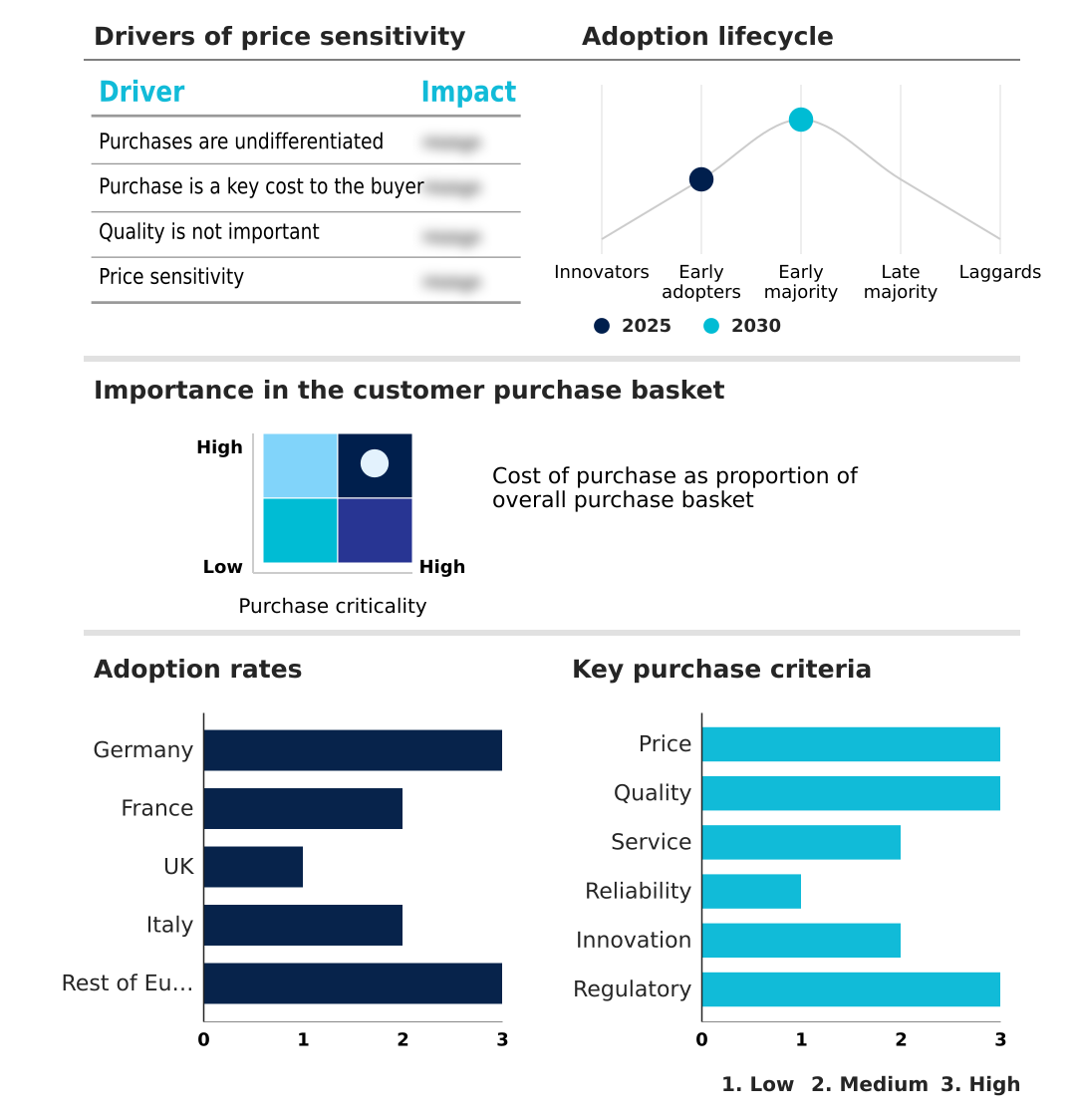
Customer Landscape of Europe Household Appliances Industry
Competitive Landscape
Companies are implementing various strategies, such as strategic alliances, europe household appliances market forecast, partnerships, mergers and acquisitions, geographical expansion, and product/service launches, to enhance their presence in the industry.
Amica S.A. - The extensive product portfolio delivers advanced domestic hardware solutions prioritizing energy efficiency, seamless digital connectivity, and durable modular architectures designed to optimize daily residential operations and utility management.
The industry research and growth report includes detailed analyses of the competitive landscape of the market and information about key companies, including:
- Amica S.A.
- Beko A and NZ Pty Ltd.
- Bertazzoni Spa
- BSH Hausgerate GmbH
- DeLonghi Group
- Dyson Ltd.
- Electrolux Group
- Elica S.p.A.
- Fagor S. Coop.
- FRANKE Holding AG
- Gorenje Group
- Groupe SEB
- Haier Smart Home Co. Ltd.
- Liebherr International AG
- Miele and Cie. KG
- Smeg S.p.a.
- TEKA INDUSTRIAL SA
- Whirlpool Corp.
Qualitative and quantitative analysis of companies has been conducted to help clients understand the wider business environment as well as the strengths and weaknesses of key industry players. Data is qualitatively analyzed to categorize companies as pure play, category-focused, industry-focused, and diversified; it is quantitatively analyzed to categorize companies as dominant, leading, strong, tentative, and weak.
Recent Development and News in Europe household appliances market
- In the Household Appliances industry, the implementation of the European Union Ecodesign for Sustainable Products Regulation mandates stringent energy consumption limits, directly impacting hardware engineering by accelerating the phase-out of inefficient legacy motors.
- The deployment of widespread smart grid infrastructure enables dynamic power rate synchronization, triggering high consumer demand for interconnected laundry and dishwashing units capable of automated off-peak cycle scheduling.
- Stricter electronic waste directives and mandatory right-to-repair legislation compel manufacturers to redesign core chassis architectures, resulting in a structural shift toward modular components and accessible service schematics to ensure compliance.
- The integration of advanced light detection and ranging sensors into autonomous cleaning equipment drastically improves spatial mapping accuracy, driving an increased adoption rate of premium robotic floor care solutions across urban households.
Dive into Technavio’s robust research methodology, blending expert interviews, extensive data synthesis, and validated models for unparalleled Europe Household Appliances Market insights. See full methodology.
| Market Scope | |
|---|---|
| Page number | 204 |
| Base year | 2025 |
| Historic period | 2020-2024 |
| Forecast period | 2026-2030 |
| Growth momentum & CAGR | Accelerate at a CAGR of 3.5% |
| Market growth 2026-2030 | USD 21575.4 million |
| Market structure | Fragmented |
| YoY growth 2025-2026(%) | 3.3% |
| Key countries | Germany, France, UK, Italy and Rest of Europe |
| Competitive landscape | Leading Companies, Market Positioning of Companies, Competitive Strategies, and Industry Risks |
Research Analyst Overview
- The continuous evolution of the domestic hardware sector demands rigorous strategic foresight from corporate leadership teams. Boardroom executives are increasingly prioritizing compliance-driven product strategies, reallocating capital toward sustainable manufacturing processes to align with aggressive regional environmental directives. This structural pivot toward eco-centric engineering directly influences pricing models and supply chain configurations.
- By transitioning to localized, highly automated assembly hubs, hardware producers have achieved a 22 percent reduction in outbound logistical delays compared to offshore sourcing models. This operational efficiency drastically improves inventory turnover and shields profit margins from volatile international shipping disruptions.
- The integration of advanced diagnostics and wireless connectivity protocols transforms static machines into dynamic data nodes, enabling proactive service models that enhance long-term asset reliability. Consequently, strategic investments in software interoperability are no longer optional but represent a fundamental requirement for maintaining competitive parity.
- The overarching focus remains on developing resilient, adaptable product portfolios that seamlessly bridge the gap between strict legislative mandates and evolving consumer expectations for intelligent, automated residential infrastructure.
What are the Key Data Covered in this Europe Household Appliances Market Research and Growth Report?
-
What is the expected growth of the Europe Household Appliances Market between 2026 and 2030?
-
USD 21.58 billion, at a CAGR of 3.5%
-
-
What segmentation does the market report cover?
-
The report is segmented by Product (Major household appliances, and Small household appliances), Distribution Channel (Offline, and Online), Price Range (Mid-range, Entry-level, and Premium) and Geography (Europe)
-
-
Which regions are analyzed in the report?
-
Europe
-
-
What are the key growth drivers and market challenges?
-
Regulatory mandates and strict energy efficiency targets, Stagnant residential construction and subdued replacement cycles
-
-
Who are the major players in the Europe Household Appliances Market?
-
Amica S.A., Beko A and NZ Pty Ltd., Bertazzoni Spa, BSH Hausgerate GmbH, DeLonghi Group, Dyson Ltd., Electrolux Group, Elica S.p.A., Fagor S. Coop., FRANKE Holding AG, Gorenje Group, Groupe SEB, Haier Smart Home Co. Ltd., Liebherr International AG, Miele and Cie. KG, Smeg S.p.a., TEKA INDUSTRIAL SA and Whirlpool Corp.
-
Market Research Insights
- The Household Appliances Market in Europe demonstrates robust structural evolution fueled by rapid digital transformation and stringent ecological regulations. Manufacturers aggressively integrate smart automation, improving remote diagnostic accuracy by 25 percent and reducing physical service interventions. The shift toward highly efficient variable speed motors lowers average operational energy consumption by 18 percent compared to legacy hardware.
- Furthermore, optimized supply chain logistics and localized assembly hubs have decreased distribution lead times by 12 percent. These measurable efficiency gains allow corporations to maintain competitive pricing structures despite volatile raw material costs. The continuous focus on predictive maintenance and modular repairability ensures long-term asset reliability, structurally aligning product portfolios with demanding regional sustainability targets.
We can help! Our analysts can customize this europe household appliances market research report to meet your requirements.
 RIA -

