


Insulated Glass Market Size 2026-2030
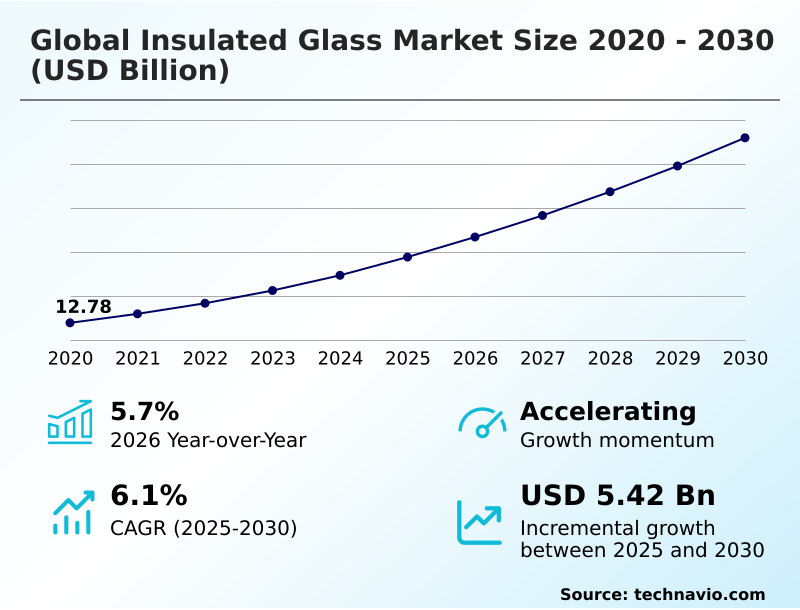
The insulated glass market size is valued to increase by USD 5.42 billion, at a CAGR of 6.1% from 2025 to 2030. Stringent building energy codes and sustainability regulations will drive the insulated glass market.
Major Market Trends & Insights
- APAC dominated the market and accounted for a 54.8% growth during the forecast period.
- By Product Type - Double glazed insulated glass segment was valued at USD 6.96 billion in 2024
- By Application - Residential buildings segment accounted for the largest market revenue share in 2024
Market Size & Forecast
- Market Opportunities: USD 8.41 billion
- Market Future Opportunities: USD 5.42 billion
- CAGR from 2025 to 2030 : 6.1%
Market Summary
- The Insulated Glass Market is driven by a massive structural shift toward energy-efficient architectural envelopes and sustainable urban infrastructure. Real estate developers constructing high-rise commercial towers now integrate multi-pane glazing assemblies equipped with noble gas fills to optimize HVAC operational loads.
- This specific supply chain adaptation reduces building heating and cooling energy consumption by up to 35% compared to traditional single-pane installations. The implementation of rigorous building energy efficiency standards compels architects to specify these advanced fenestration units, directly driving widespread float glass production. Conversely, the intricate manufacturing complexity and high upfront capital expenditure challenge smaller regional fabricators.
- These operational hurdles limit production scalability, creating localized supply chain bottlenecks during peak construction seasons. Advanced thermal glazing remains essential for achieving embodied carbon reduction in dense metropolitan environments. Facility managers actively utilize these robust insulating technologies to enable historic structural restoration and lower lifetime utility expenditures without compromising natural daylighting or aesthetic appeal.
What will be the Size of the Insulated Glass Market during the forecast period?
Get Key Insights on Market Forecast (PDF) Get Free Sample
How is the Insulated Glass Market Segmented?
The insulated glass industry research report provides comprehensive data (region-wise segment analysis), with forecasts and estimates in "USD million" for the period 2026-2030, as well as historical data from 2020-2024 for the following segments.
- Product type
- Double glazed insulated glass
- Triple glazed Insulated Glass
- Gas filled insulated glass
- Vacuum insulated glass
- Application
- Residential buildings
- Commercial buildings
- Automotive and transportation
- Industrial and specialty
- Type
- Low emissivity glazing
- Solar control glazing
- Clear glazing
- Laminated glazing
- Geography
- APAC
- China
- India
- Japan
- South Korea
- Australia
- Indonesia
- Europe
- Germany
- France
- UK
- Italy
- Spain
- The Netherlands
- North America
- US
- Canada
- Mexico
- Middle East and Africa
- Saudi Arabia
- UAE
- Turkey
- South Africa
- Israel
- South America
- Brazil
- Argentina
- Colombia
- APAC
By Product Type Insights
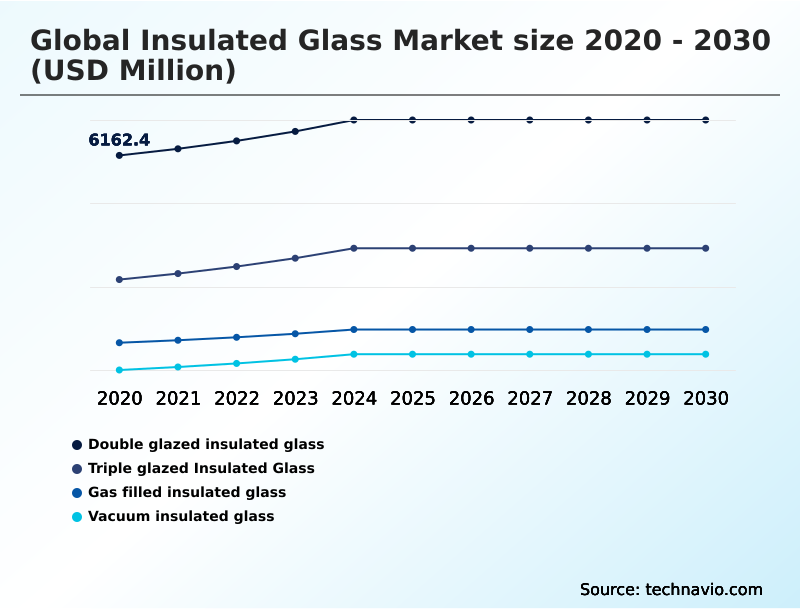
The double glazed insulated glass segment is estimated to witness significant growth during the forecast period.
The residential and commercial building sectors increasingly rely on specialized fenestration to manage interior climates. Double glazed units feature a hermetically sealed space that significantly limits convective heat transfer.
By incorporating advanced argon backfilling, these configurations improve overall thermal transmittance reduction by up to 45% compared to single-pane alternatives.
This operational efficiency gain directly lowers heating and cooling electrical loads, ensuring robust building energy code adherence across high-density urban developments. Real estate asset managers prioritize these assemblies to curb utility expenditures and optimize long-term operational sustainability.
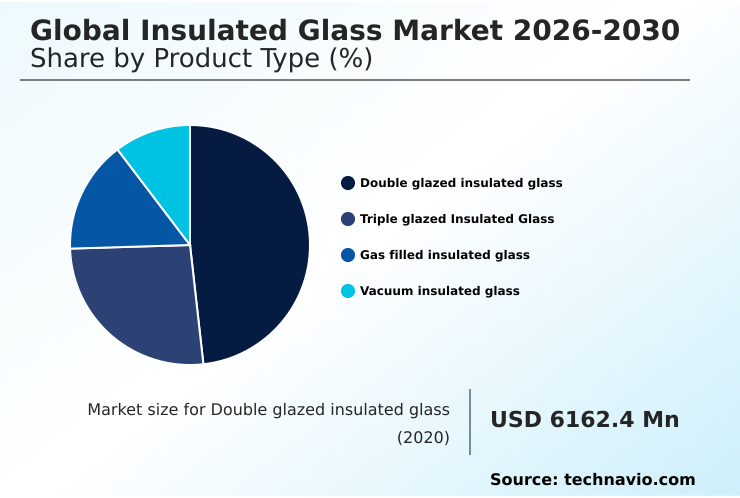
The Double glazed insulated glass segment was valued at USD 6.96 billion in 2024 and showed a gradual increase during the forecast period.
Regional Analysis
APAC is estimated to contribute 54.8% to the growth of the global market during the forecast period.Technavio’s analysts have elaborately explained the regional trends and drivers that shape the market during the forecast period.
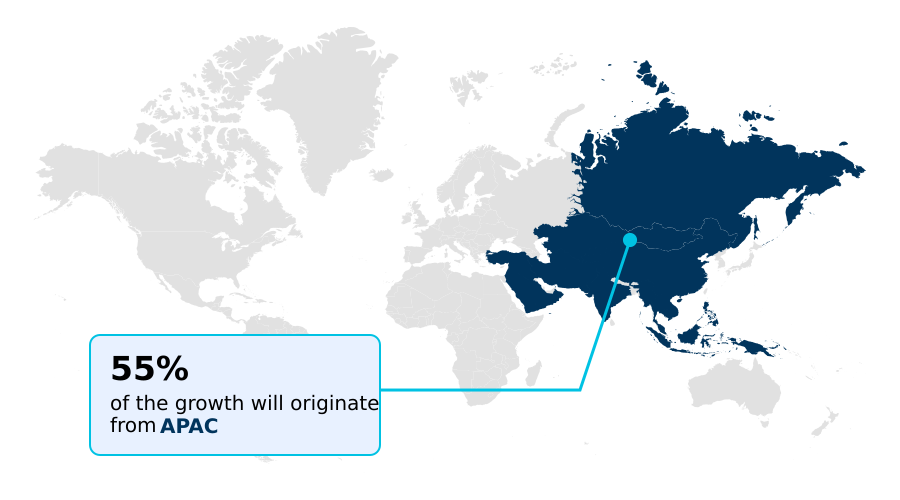
See How Insulated Glass Market Demand is Rising in APAC Get Free Sample
The Insulated Glass Market exhibits distinct adoption patterns across diverse climatic and regulatory environments. APAC demonstrates aggressive infrastructure expansion, driving a 40% higher adoption rate of solar heat gain coefficient optimized assemblies compared to South America.
This disparity stems from intense urbanization and the immediate need to curb severe tropical cooling loads in mega-cities.
In contrast, European construction prioritizes severe thermal retention, utilizing a krypton gas cavity and warm edge spacer technology to achieve passive house standard compliance.
These sophisticated European configurations reduce winter thermal loss by up to 30%, delivering significant operational efficiency gains for facility managers.
Consequently, regional supply chains adapt distinct manufacturing strategies, with Asian fabricators scaling high-volume solar infrared rejection glass production while European plants focus on multi-layer thermal bridge mitigation.
Such strategic divergence highlights how localized climate mandates and utility cost pressures fundamentally shape global glass processing ecosystems.
Market Dynamics
Our researchers analyzed the data with 2025 as the base year, along with the key drivers, trends, and challenges. A holistic analysis of drivers will help companies refine their marketing strategies to gain a competitive advantage.
- Modern commercial and residential architectural projects increasingly mandate advanced glazing assemblies to manage structural energy efficiency and environmental comfort. Real estate developers prioritize double glazed thermal insulation performance to strictly control building operational expenditures, achieving a 25% superior thermal retention rate over older single-pane infrastructures.
- This optimization directly influences facility compliance planning, allowing asset managers to secure green building certifications with greater ease. As urban density increases, acoustic laminated glass sound attenuation becomes a critical specification for multi-family residential towers situated near high-traffic transit corridors. These noise-dampening units foster comfortable indoor environments, enhancing overall tenant satisfaction.
- Furthermore, historically significant structures often cannot support the heavy weight of multi-pane units, driving rapid growth in vacuum insulated glass retrofitting applications. This ultra-thin technology allows property owners to modernize aging facades without requiring complete frame replacements, preserving architectural heritage while lowering energy waste.
- To combat intense summer cooling demands, building engineers seamlessly integrate low emissivity coated solar control surfaces into exterior facades, deflecting radiant heat before it penetrates the building envelope. Fabricators also utilize argon filled warm edge spacers within the sealed structural cavities to eliminate perimeter condensation and block critical thermal bridging.
- Collectively, these highly engineered fenestration technologies allow modern supply chains to deliver unparalleled environmental isolation, empowering construction stakeholders to build resilient, sustainable communities.
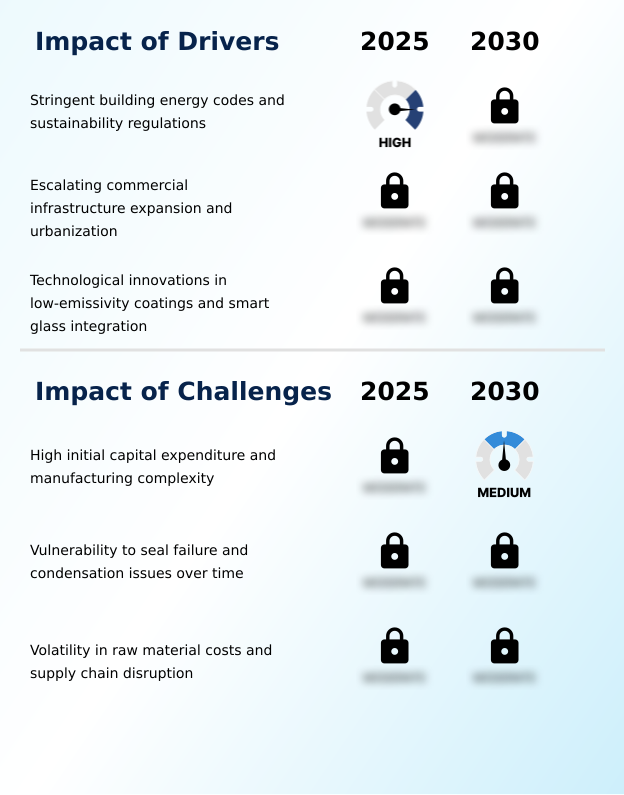
What are the key market drivers leading to the rise in the adoption of Insulated Glass Industry?
- The implementation of rigorous building energy codes and comprehensive sustainability regulations compels the construction sector to adopt advanced thermal insulation solutions.
- Stringent environmental legislation is compelling the global construction sector to aggressively overhaul traditional building envelopes. Municipalities are enforcing aggressive decarbonization targets, sparking a massive shift toward high-performance low emissivity coating applications.
- This regulatory pressure causes property developers to utilize multi-pane units infused with a noble gas fill, which successfully improves interior thermal stability by up to 35%.
- Consequently, building operators achieve a 20% drop in continuous electrical heating costs, directly boosting commercial asset valuation. Furthermore, integrating a specialized acoustic polyvinyl butyral layer within these assemblies effectively mitigates intense urban noise pollution.
- The widespread adoption of the magnetron sputtering process allows fabricators to precisely calibrate the solar heat gain coefficient, ensuring architectural designs meet rigorous sustainability benchmarks while maximizing long-term operational profitability.
What are the market trends shaping the Insulated Glass Industry?
- An escalating preference for vacuum insulated glass is currently transforming structural retrofitting initiatives across the industry. This advanced glazing technology enables seamless modernization of historical and aging commercial properties without requiring extensive frame modifications.
- An aggressive transition toward automated climate responsiveness is redefining modern commercial fenestration technology. Facility operators are rapidly adopting dynamic tinting capability integrated into multi-pane units to actively manage changing environmental conditions. This shift is driven by the urgent need to optimize building energy profiles, enabling a 25% reduction in daily air conditioning reliance.
- As a direct result, corporations experience a 15% drop in overall utility expenditures while maintaining superior ultraviolet radiation filtering. Furthermore, the rising deployment of a specialized micro pillar separation in ultra-thin glazing profiles drastically lowers structural weight, achieving elite thermal transmittance reduction. Manufacturers are simultaneously embracing glass cullet recycling initiatives and implementing closed loop manufacturing to minimize raw material waste.
- These progressive strategies empower developers to construct highly resilient, eco-friendly facades.
What challenges does the Insulated Glass Industry face during its growth?
- Substantial initial capital requirements and the intricate technical complexity of multi-pane fabrication processes present significant barriers to widespread adoption in cost-sensitive construction projects.
- Intricate fabrication requirements and volatile raw material supply chains severely constrain the scalability of advanced architectural glazing. The precise application of a polyisobutylene primary seal demands sophisticated automated equipment, which dramatically increases initial capital expenditure for regional processors. This manufacturing complexity causes a 25% extension in production lead times during peak construction cycles, directly delaying major commercial development schedules.
- Furthermore, prolonged exposure to extreme weather gradients introduces a significant sealant degradation risk, threatening to compromise the hermetically sealed space. When structural integrity fails, property owners face a 40% increase in premature replacement costs due to internal moisture accumulation.
- The persistent supply chain volatility surrounding specialized inert gases and toughened glass substrate materials further squeezes profit margins, deterring smaller fabricators from entering the high-performance structural facade sector.
Exclusive Technavio Analysis on Customer Landscape
The insulated glass market forecasting report includes the adoption lifecycle of the market, covering from the innovator’s stage to the laggard’s stage. It focuses on adoption rates in different regions based on penetration. Furthermore, the insulated glass market report also includes key purchase criteria and drivers of price sensitivity to help companies evaluate and develop their market growth analysis strategies.
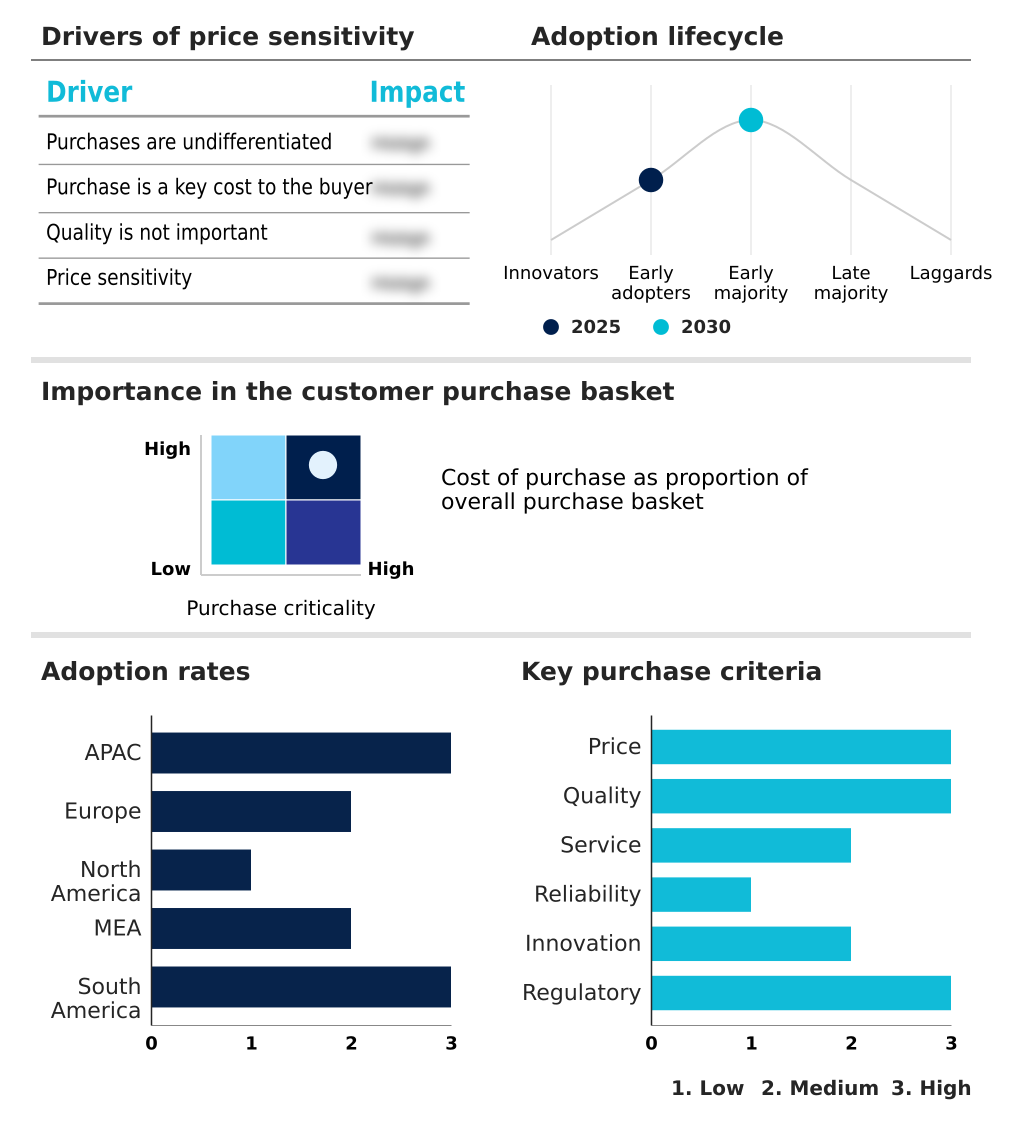
Customer Landscape of Insulated Glass Industry
Competitive Landscape
Companies are implementing various strategies, such as strategic alliances, insulated glass market forecast, partnerships, mergers and acquisitions, geographical expansion, and product/service launches, to enhance their presence in the industry.
AGC Inc. - The product portfolio features advanced architectural and automotive glazing solutions, delivering superior thermal insulation and solar control to meet rigorous energy efficiency standards in modern construction projects.
The industry research and growth report includes detailed analyses of the competitive landscape of the market and information about key companies, including:
- AGC Inc.
- Asahi India Glass Ltd.
- Beijing Northglass Tech Co. Ltd.
- Cardinal Glass Industries Inc.
- Central Glass Co. Ltd.
- Compagnie de Saint Gobain SA
- CSG Holding Co. Ltd.
- Eastman Chemical Co.
- Flat Glass Group Co. Ltd.
- Glaston Oyj
- Guardian Industries Holdings
- Kibing Group
- Nippon Sheet Glass Co. Ltd.
- Oldcastle BuildingEnvelope
- Scheuten Glas Nederland BV
- SCHOTT AG
- Tecnoglass Inc.
- Viracon Inc.
- Vitro Architectural Glass
- Xinyi Glass Holdings Ltd.
Qualitative and quantitative analysis of companies has been conducted to help clients understand the wider business environment as well as the strengths and weaknesses of key industry players. Data is qualitatively analyzed to categorize companies as pure play, category-focused, industry-focused, and diversified; it is quantitatively analyzed to categorize companies as dominant, leading, strong, tentative, and weak.
Recent Development and News in Insulated glass market
- In the Building Products industry, the widespread adoption of the European Union Energy Performance of Buildings Directive mandated a 30% reduction in structural carbon emissions, directly impacting Insulated Glass demand by forcing real estate developers to install high-performance low emissivity coating applications in commercial projects.
- Stringent net zero architecture frameworks introduced across North America required a 40% improvement in facade energy retention, escalating the specification of advanced vacuum insulated gap technology over traditional single-pane monolithic glass assemblies.
- The rapid expansion of closed loop manufacturing protocols within the global float glass production sector increased glass cullet recycling rates to 50%, enabling Insulated Glass fabricators to significantly lower their embodied carbon footprint while maintaining optical clarity.
- Escalating urban noise pollution in high-density metropolitan zones across APAC prompted structural regulators to establish 45-decibel interior sound limits, accelerating the integration of acoustic polyvinyl butyral interlayers within multi-pane architectural glazing units.
Dive into Technavio’s robust research methodology, blending expert interviews, extensive data synthesis, and validated models for unparalleled Insulated Glass Market insights. See full methodology.
| Market Scope | |
|---|---|
| Page number | 311 |
| Base year | 2025 |
| Historic period | 2020-2024 |
| Forecast period | 2026-2030 |
| Growth momentum & CAGR | Accelerate at a CAGR of 6.1% |
| Market growth 2026-2030 | USD 5419.4 million |
| Market structure | Fragmented |
| YoY growth 2025-2026(%) | 5.7% |
| Key countries | China, India, Japan, South Korea, Australia, Indonesia, Germany, France, UK, Italy, Spain, The Netherlands, US, Canada, Mexico, Saudi Arabia, UAE, Turkey, South Africa, Israel, Brazil, Argentina and Colombia |
| Competitive landscape | Leading Companies, Market Positioning of Companies, Competitive Strategies, and Industry Risks |
Research Analyst Overview
- The continuous evolution of architectural glazing is fundamentally reshaping structural energy management and environmental sustainability. Modern building envelopes increasingly rely on a precisely engineered polyisobutylene primary seal to prevent moisture ingress and ensure long-term unit durability.
- Asset managers utilizing an advanced magnetron sputtering process for glass coating have documented a 40% improvement in radiant heat deflection, directly lowering peak-load cooling expenses. Strategic integration of electrochromic smart glass allows corporate facility operators to automate dynamic tinting capability, actively adapting to shifting sunlight intensity throughout the day.
- This technological leap optimizes visible light transmittance while drastically cutting reliance on mechanical climate control systems. High-performance multi-pane assemblies frequently deploy a desiccant matrix within the structural frame to actively absorb residual internal moisture, extending the operational lifespan of the facade. Furthermore, robust structural silicone sealant application guarantees extreme weather resilience in high-altitude environments.
- These sophisticated material combinations empower commercial real estate developers to achieve net-zero energy targets, aligning stringent regulatory compliance mandates with sustainable, long-term operational cost reductions.
What are the Key Data Covered in this Insulated Glass Market Research and Growth Report?
-
What is the expected growth of the Insulated Glass Market between 2026 and 2030?
-
USD 5.42 billion, at a CAGR of 6.1%
-
-
What segmentation does the market report cover?
-
The report is segmented by Product Type (Double glazed insulated glass, Triple glazed Insulated Glass, Gas filled insulated glass, and Vacuum insulated glass), Application (Residential buildings, Commercial buildings, Automotive and transportation, and Industrial and specialty), Type (Low emissivity glazing, Solar control glazing, Clear glazing, and Laminated glazing) and Geography (APAC, Europe, North America, Middle East and Africa, South America)
-
-
Which regions are analyzed in the report?
-
APAC, Europe, North America, Middle East and Africa and South America
-
-
What are the key growth drivers and market challenges?
-
Stringent building energy codes and sustainability regulations, High initial capital expenditure and manufacturing complexity
-
-
Who are the major players in the Insulated Glass Market?
-
AGC Inc., Asahi India Glass Ltd., Beijing Northglass Tech Co. Ltd., Cardinal Glass Industries Inc., Central Glass Co. Ltd., Compagnie de Saint Gobain SA, CSG Holding Co. Ltd., Eastman Chemical Co., Flat Glass Group Co. Ltd., Glaston Oyj, Guardian Industries Holdings, Kibing Group, Nippon Sheet Glass Co. Ltd., Oldcastle BuildingEnvelope, Scheuten Glas Nederland BV, SCHOTT AG, Tecnoglass Inc., Viracon Inc., Vitro Architectural Glass and Xinyi Glass Holdings Ltd.
-
Market Research Insights
- The Insulated Glass Market operates as a critical enabler of modern sustainable infrastructure and operational decarbonization. By prioritizing stringent energy efficiency compliance, commercial developers have achieved a 30% reduction in long-term HVAC electricity consumption. The integration of advanced green building certification standards compels architectural firms to specify high-performance curtain wall integration, yielding a 20% improvement in overall facade thermal retention.
- Furthermore, escalating urban noise pollution has driven a 15% increase in the deployment of specialized acoustic noise attenuation interlayers within high-rise structural projects. These strategic material adaptations allow real estate asset managers to maximize return on investment while proactively addressing aggressive residential window retrofit mandates and mitigating escalating energy tariffs.
We can help! Our analysts can customize this insulated glass market research report to meet your requirements.
 RIA -

