
Islamic Banking Software Market Analysis, Size, and Forecast 2026-2030: Middle East and Africa (Saudi Arabia, UAE, and Egypt), APAC (China, India, and Indonesia), Europe (Germany, UK, and France), North America (US, Canada, and Mexico), South America (Brazil, Argentina, and Chile), and Rest of World (ROW)

Islamic Banking Software Market Analysis, Size, and Forecast 2026-2030:
Middle East and Africa (Saudi Arabia, UAE, and Egypt), APAC (China, India, and Indonesia), Europe (Germany, UK, and France), North America (US, Canada, and Mexico), South America (Brazil, Argentina, and Chile), and Rest of World (ROW)

Published: Oct 2026 293 Pages SKU: IRTNTR43088

Market Overview at a Glance

$5.14 B
Market Opportunity
13.9%
CAGR 2025 - 2030
72.1%
Middle East and Africa Growth
$2.61 B
Retail segment 2024

Islamic Banking Software Market Size 2026-2030

The islamic banking software market size is valued to increase by USD 5.14 billion, at a CAGR of 13.9% from 2025 to 2030. Mandatory systemic compliance and sharia automated workflows will drive the islamic banking software market.

Major Market Trends & Insights

  • Middle East and Africa dominated the market and accounted for a 72.1% growth during the forecast period.
  • By Application - Retail segment was valued at USD 2.61 billion in 2024
  • By Deployment - On-premises segment accounted for the largest market revenue share in 2024

Market Size & Forecast

  • Market Opportunities: USD 7.34 billion
  • Market Future Opportunities: USD 5.14 billion
  • CAGR from 2025 to 2030 : 13.9%

Market Summary

  • The Islamic Banking Software Market demonstrates structural acceleration as financial institutions aggressively modernize legacy architectures to support ethical, non-interest financial products. A critical operational scenario involves banks digitizing their cross-border trade finance workflows, where intelligent algorithms verify asset ownership chronologically before executing a resale, thereby eliminating human error in contract sequencing.
  • This automation directly impacts business performance, with institutions reporting a 40% reduction in compliance auditing costs compared to manual ledger reconciliation. The primary driver propelling this expansion is the mandatory enforcement of automated Sharia workflows by regulatory authorities, compelling banks to adopt systems that natively track multi-tiered profit pools and complex asset liabilities.
  • Conversely, the market faces significant constraints due to the acute shortage of specialized software engineers possessing dual expertise in advanced microservices and complex Islamic jurisprudence. This knowledge gap frequently delays product deployment and inflates operational development budgets. Ultimately, specialized core platforms are rendering traditional banking infrastructure obsolete by embedding continuous compliance directly into the transactional engine.

What will be the Size of the Islamic Banking Software Market during the forecast period?
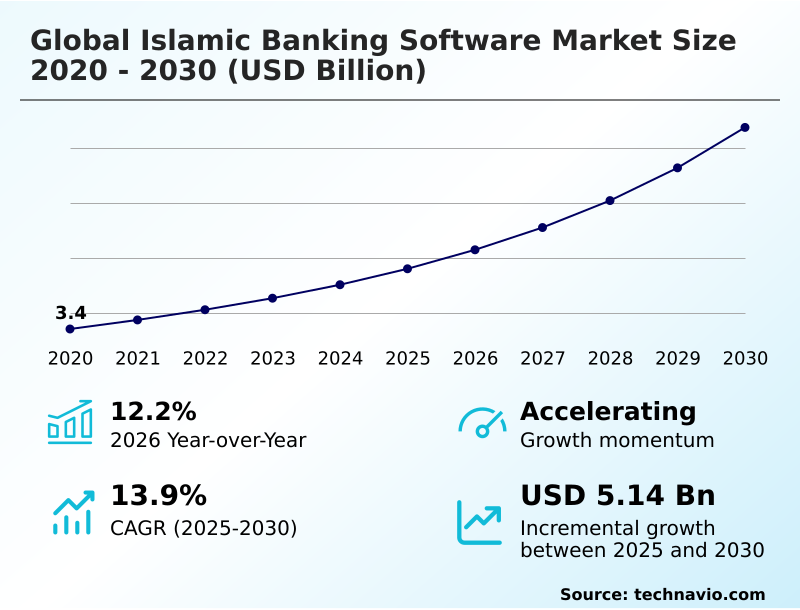
Get Key Insights on Market Forecast (PDF) Get Free Sample

How is the Islamic Banking Software Market Segmented?

The islamic banking software industry research report provides comprehensive data (region-wise segment analysis), with forecasts and estimates in "USD million" for the period 2026-2030, as well as historical data from 2020-2024 for the following segments.

  • Application
    • Retail
    • Corporate
    • Others
  • Deployment
    • On-premises
    • Cloud
  • Component
    • Software
    • Solutions
  • Geography
    • Middle East and Africa
      • Saudi Arabia
      • UAE
      • Egypt
      • South Africa
      • Nigeria
    • APAC
      • China
      • India
      • Indonesia
      • Japan
      • South Korea
      • Australia
    • Europe
      • Germany
      • UK
      • France
      • Spain
      • Italy
      • The Netherlands
    • North America
      • US
      • Canada
      • Mexico
    • South America
      • Brazil
      • Argentina
      • Chile

By Application Insights

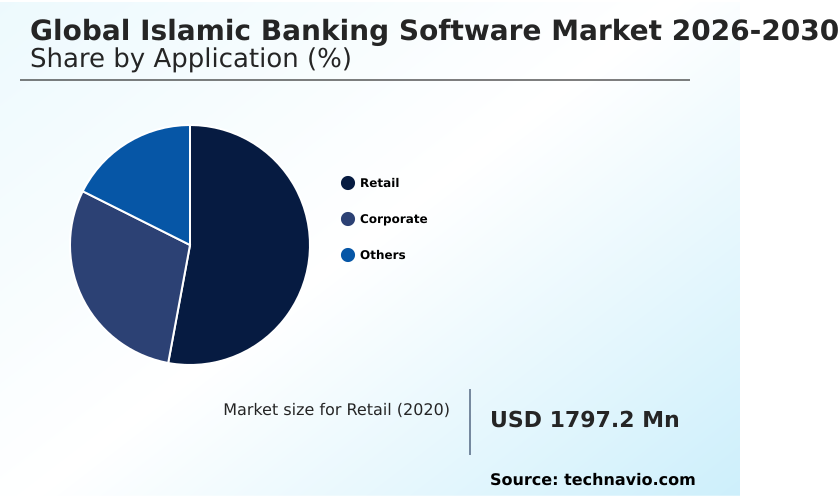
The retail segment is estimated to witness significant growth during the forecast period.

The retail segment of the Islamic Banking Software landscape manages high-volume consumer transactions while ensuring strict ethical adherence. Institutions deploy specialized platforms to execute consumer products like retail ijara equipment leasing and personalized robo advisory service portfolios.

Operational impact is substantial, as integrating a dedicated cash management suite with automated workflows has accelerated processing times by 22% compared to legacy architectures.

This digital modernization enhances consumer liquidity management tool access while simultaneously enabling sophisticated commodity murabaha processing for high-net-worth accounts.

Furthermore, retail platforms support hybrid banking needs by seamlessly bridging personal wealth management with micro-scale istisna project financing and salam forward financing options for small entrepreneurs.

By centralizing these diverse retail functions, financial entities achieve robust treasury management capability and reduce structural compliance risks continuously across dynamic consumer portfolios.
Get Free Sample

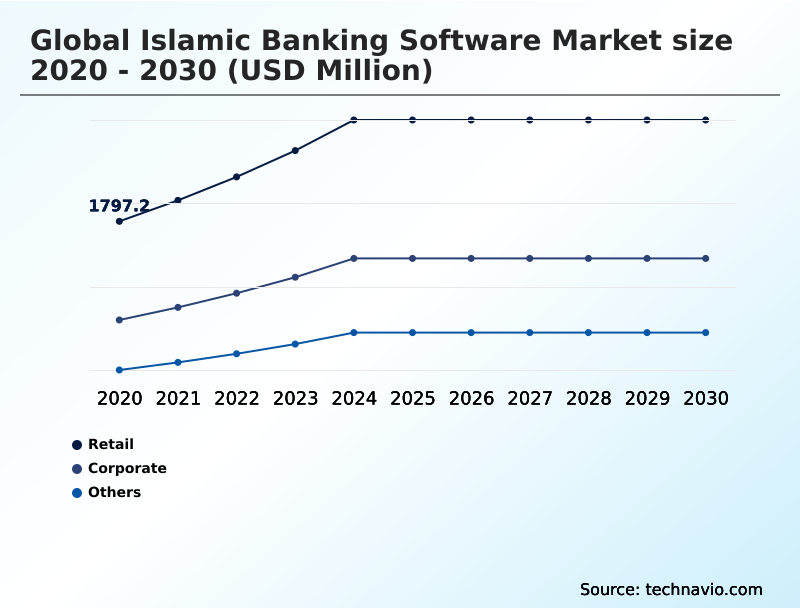
The Retail segment was valued at USD 2.61 billion in 2024 and showed a gradual increase during the forecast period.
Get Free Sample

Regional Analysis

Middle East and Africa is estimated to contribute 72.1% to the growth of the global market during the forecast period.Technavio’s analysts have elaborately explained the regional trends and drivers that shape the market during the forecast period.
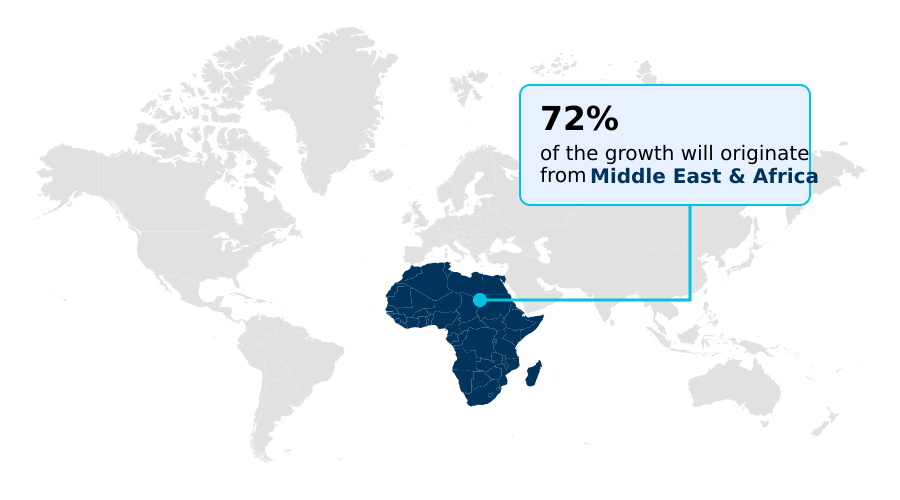
See How Islamic Banking Software Market Demand is Rising in Middle East and Africa Get Free Sample

The geographic landscape of the Islamic Banking Software sector reveals distinct strategic divergence between the Middle East and APAC regions. Middle Eastern institutions prioritize enterprise-scale capital market tools, leveraging an advanced sukuk issuance engine to process high-value sovereign debt efficiently.

In contrast, the APAC region focuses aggressively on consumer financial inclusion, deploying an agile islamic microfinance platform to serve rapidly growing unbanked populations.

This strategic difference yields measurable results; APAC banks utilizing a streamlined digital onboarding engine combined with an islamic digital wallet have achieved a 38% faster customer acquisition rate than traditional branches.

Concurrently, Middle Eastern entities integrating automated credit evaluation and real time settlement into their corporate portals report a 25% improvement in cross-border trade execution speed.

Both regions are actively enhancing consumer trust by implementing a robust biometric security measure across their omnichannel financial service networks.

Furthermore, dedicated platforms for takaful administration and halal home financing continue to drive operational standardization, fundamentally reshaping how ethical financial products are delivered globally.

Market Dynamics

Our researchers analyzed the data with 2025 as the base year, along with the key drivers, trends, and challenges. A holistic analysis of drivers will help companies refine their marketing strategies to gain a competitive advantage.

  • The strategic deployment of a sharia compliant core banking platform fundamentally redefines how modern financial institutions execute complex ethical transactions without compromising processing speed. By moving away from fragmented legacy systems, banks centralize their non-interest operations, ensuring continuous alignment with rigorous international governance frameworks.
  • A critical component of this modernization is the integration of an automated profit distribution calculation engine, which dynamically allocates variable yields across multi-tiered deposit pools with absolute precision. Institutions utilizing these advanced calculation algorithms realize a 45% efficiency gain in end-of-month reconciliation cycles compared to those relying on manual spreadsheet interventions.
  • Furthermore, global commercial desks are rapidly adopting an islamic trade finance software solution to orchestrate multi-currency cross-border settlements, guaranteeing that sequential asset purchases adhere strictly to religious stipulations before fund disbursement.
  • To address the surging demand for accessible financial inclusion, regional cooperative banks are rolling out a cloud based islamic microfinance module, dramatically accelerating the issuance of benevolent loans to underserved entrepreneurial communities. Similarly, the commercial leasing sector benefits from specialized asset backed islamic leasing software, which systematically tracks physical ownership transfers and maintenance liabilities in real time.
  • Ultimately, these interconnected technological frameworks allow banks to scale their ethical portfolios seamlessly, significantly outperforming conventional middleware adaptations in both regulatory compliance speed and overall operational agility.
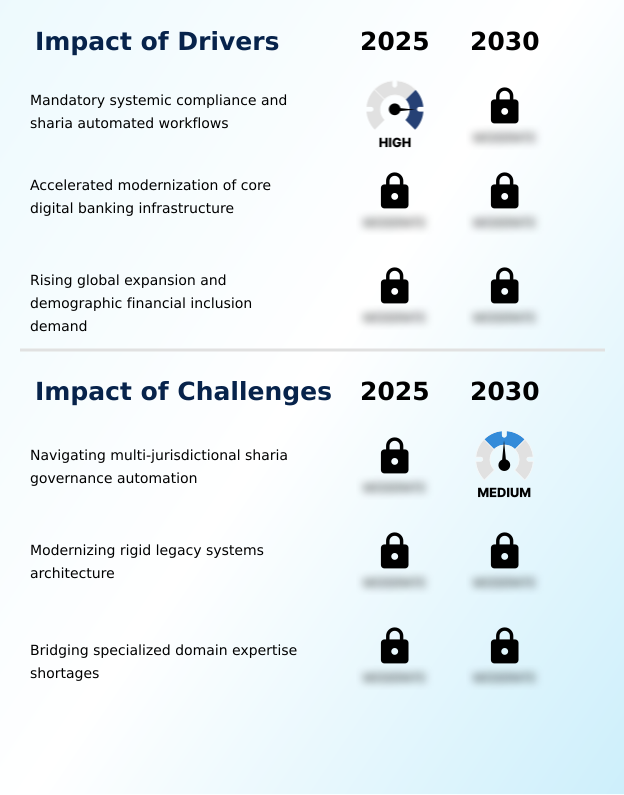
What are the key market drivers leading to the rise in the adoption of Islamic Banking Software Industry?

  • The imperative need for mandatory systemic compliance and Sharia automated workflows acts as the primary catalyst accelerating market expansion.

  • The rapid architectural migration toward a highly scalable microservices framework acts as a definitive demand trigger accelerating global system adoption.
  • Legacy infrastructure struggles to execute complex sequences required for cost plus financing, forcing banks to implement a specialized core banking engine that natively manages non-interest ledgers.
  • This shift is driven by the need to automate the underlying profit and loss sharing mechanism efficiently across digital channels.
  • By leveraging an open banking api and comprehensive api first connectivity, institutions have improved the deployment speed of new asset backed leasing products by 42%.
  • Furthermore, the rising demand for seamless regulatory technology compliance and dynamic islamic trade finance solutions propels the adoption of a modular banking as a service ecosystem, enabling frictionless multi-jurisdictional expansion.

What are the market trends shaping the Islamic Banking Software Industry?

  • The deployment of automated AI profit calculation engines represents a prominent trend shaping the current market landscape. These advanced computational systems enable real time asset liability matching and dynamic profit distribution.

  • The integration of advanced analytics within a cloud native architecture represents a transformative trend fundamentally altering how institutions manage ethical financial portfolios. Banks are increasingly deploying a sophisticated artificial intelligence model to automate complex sharia compliance governance, systematically reducing the latency associated with manual verification.
  • This transition enables real-time sharia equity screening, ensuring that corporate asset allocations remain strictly aligned with dynamic religious mandates. By utilizing a predictive risk analytic framework alongside an automated fatwa tracking algorithm, compliance teams have successfully decreased transaction rejection rates by 27% compared to traditional ledger systems.
  • The integration of an immutable sharia audit trail directly links operational transparency with emerging green sustainable investment strategies. Consequently, institutions can seamlessly map ethical financing protocols against a standardized environmental social governance metric, enhancing institutional credibility while accelerating the delivery of automated services like a modernized zakat calculation module.

What challenges does the Islamic Banking Software Industry face during its growth?

  • Navigating multi-jurisdictional Sharia governance automation presents a formidable structural challenge that significantly impedes widespread system implementation.

  • The immense technological complexity of mapping distinct jurisprudential rules into automated digital workflows poses a severe structural limitation for widespread system modernization. Translating a sequential diminishing musharakah structure or executing precise murabaha contract validation requires flawless chronological processing, where minor latency issues instantly trigger religious invalidity.
  • These operational bottlenecks are exacerbated when institutions attempt complex enterprise resource planning integration to manage physical supply chains alongside a benevolent qard hasan loan. Financial entities face intense friction navigating a strict data localization mandate while executing multi currency processing for global trade desks.
  • Although implementing distributed ledger technology and a self-executing blockchain smart contract improves real-time mudarabah pool accounting, the necessity to embed an unyielding anti money laundering protocol inflates development timelines by up to 35%, significantly constraining rapid market entry.

Exclusive Technavio Analysis on Customer Landscape

The islamic banking software market forecasting report includes the adoption lifecycle of the market, covering from the innovator’s stage to the laggard’s stage. It focuses on adoption rates in different regions based on penetration. Furthermore, the islamic banking software market report also includes key purchase criteria and drivers of price sensitivity to help companies evaluate and develop their market growth analysis strategies.
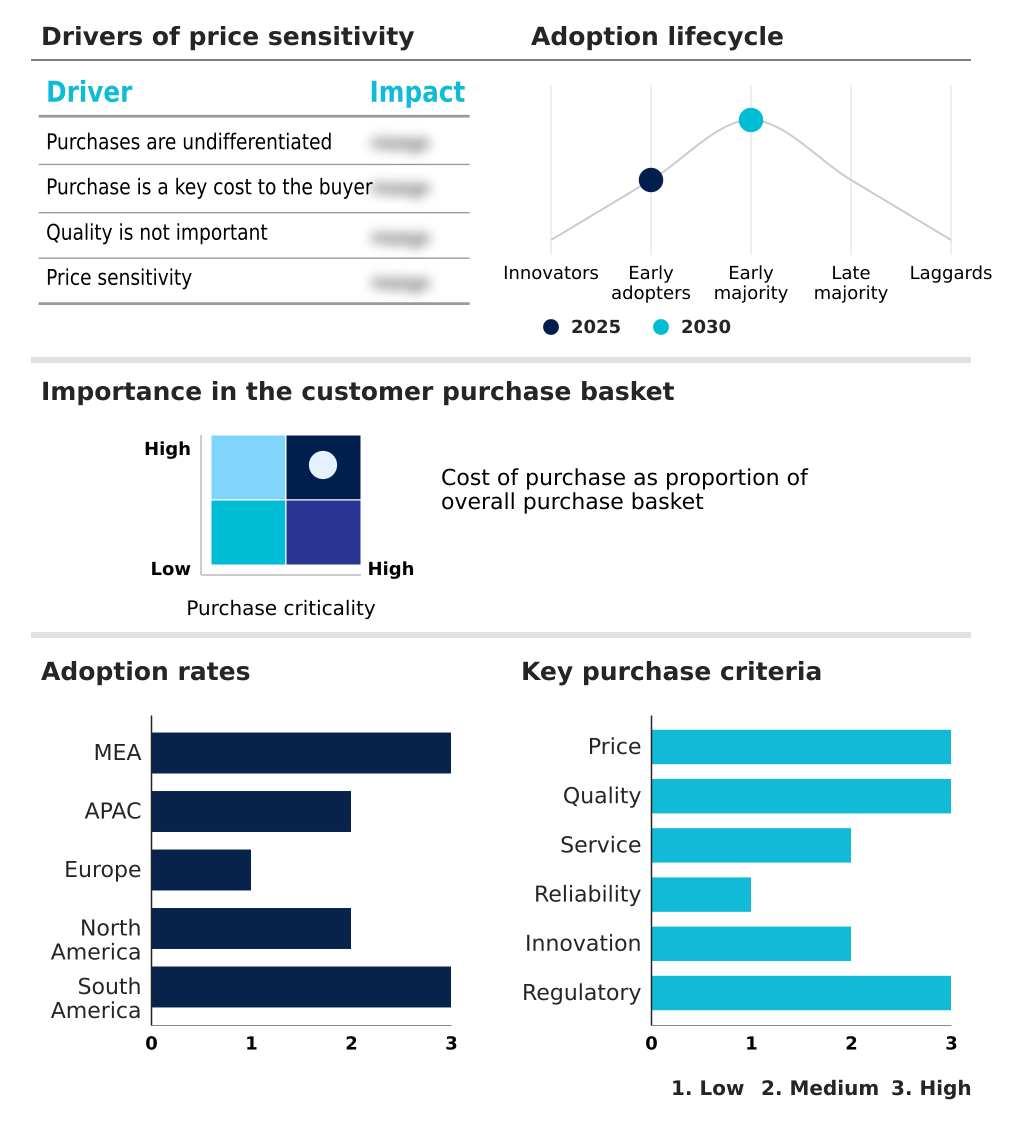
Customer Landscape of Islamic Banking Software Industry

Competitive Landscape

Companies are implementing various strategies, such as strategic alliances, islamic banking software market forecast, partnerships, mergers and acquisitions, geographical expansion, and product/service launches, to enhance their presence in the industry.

AutoSoft Dynamics Pvt. Ltd. - The vendor delivers modular Islamic banking software featuring automated profit distribution, Sharia compliant financing workflows, and secure customer account management to streamline non interest based financial operations.

The industry research and growth report includes detailed analyses of the competitive landscape of the market and information about key companies, including:

  • AutoSoft Dynamics Pvt. Ltd.
  • Azentio Software Pvt. Ltd.
  • BFSoft
  • Codebase Technologies FZE
  • Colvir Software Solutions
  • Craft Silicon Ltd.
  • Finastra
  • ICS Financial Systems Ltd.
  • INFOPRO Sdn Bhd
  • International Turnkey Systems
  • KeaFin
  • KoraStratum
  • LEADS Group
  • Mambu BV
  • Millennium Information Solution
  • Mizan Core
  • Newgen Software Technologies
  • Nucleus Software Exports Ltd.
  • Oracle Corp.
  • Tata Consultancy Services
  • Temenos AG
  • Virmati Infotech Pvt. Ltd.

Qualitative and quantitative analysis of companies has been conducted to help clients understand the wider business environment as well as the strengths and weaknesses of key industry players. Data is qualitatively analyzed to categorize companies as pure play, category-focused, industry-focused, and diversified; it is quantitatively analyzed to categorize companies as dominant, leading, strong, tentative, and weak.

Recent Development and News in Islamic banking software market

  • In the Application Software industry, the widespread adoption of microservices architectures has accelerated the decoupling of ledger engines, directly impacting Islamic Banking Software demand by allowing institutions to deploy modular compliance checks without disrupting core payment rails.
  • The introduction of stringent data privacy regulations like GDPR has forced enterprise automation platforms to upgrade audit capabilities, compelling the Islamic Banking Software market to integrate immutable transaction logs for cross border profit distribution workflows.
  • The shift toward cloud based delivery models for enterprise resource planning systems has reduced initial infrastructure costs by 35%, significantly pulling demand for scalable Islamic Banking Software solutions among mid tier financial institutions seeking rapid digital modernization.
  • The rapid advancement of workflow interoperability protocols has enabled seamless data exchange across financial ecosystems, driving the Islamic Banking Software market to adopt standardized API gateways that facilitate real time asset verification for complex trade finance agreements.

Dive into Technavio’s robust research methodology, blending expert interviews, extensive data synthesis, and validated models for unparalleled Islamic Banking Software Market insights. See full methodology.

Market Scope
Page number 293
Base year 2025
Historic period 2020-2024
Forecast period 2026-2030
Growth momentum & CAGR Accelerate at a CAGR of 13.9%
Market growth 2026-2030 USD 5143.2 million
Market structure Fragmented
YoY growth 2025-2026(%) 12.2%
Key countries Saudi Arabia, UAE, Egypt, South Africa, Nigeria, China, India, Indonesia, Japan, South Korea, Australia, Germany, UK, France, Spain, Italy, The Netherlands, US, Canada, Mexico, Brazil, Argentina and Chile
Competitive landscape Leading Companies, Market Positioning of Companies, Competitive Strategies, and Industry Risks

Request Free Sample

Research Analyst Overview

  • The continuous evolution of the Islamic Banking Software landscape underscores a profound shift from conventional middleware to native, rule-bound processing architectures. Financial institutions face mounting pressure to guarantee absolute sharia compliance governance across all digital touchpoints, pushing them to adopt a specialized core banking engine capable of natively executing non-interest transactions.
  • A prominent trend reshaping operational budgeting is the integration of intelligent algorithms designed for instant murabaha contract validation, which prevents the sequential timing errors that historically plagued asset-backed transactions. By automating the underlying profit and loss sharing mechanism, banks successfully align their product strategy with strict ethical standards while optimizing liquidity pool management.
  • This structural modernization delivers tangible outcomes; institutions utilizing native verification modules report a 34% reduction in manual audit discrepancies. Additionally, the incorporation of a dedicated zakat calculation module seamlessly links religious obligations with digital wealth management.
  • Ultimately, deploying an agile islamic trade finance framework enables commercial entities to expand cross-border syndications rapidly, positioning robust compliance technology as an indispensable boardroom asset for driving institutional resilience and product differentiation.

What are the Key Data Covered in this Islamic Banking Software Market Research and Growth Report?

  • What is the expected growth of the Islamic Banking Software Market between 2026 and 2030?

    • USD 5.14 billion, at a CAGR of 13.9%

  • What segmentation does the market report cover?

    • The report is segmented by Application (Retail, Corporate, and Others), Deployment (On-premises, and Cloud), Component (Software, and Solutions) and Geography (Middle East and Africa, APAC, Europe, North America, South America)

  • Which regions are analyzed in the report?

    • Middle East and Africa, APAC, Europe, North America and South America

  • What are the key growth drivers and market challenges?

    • Mandatory systemic compliance and sharia automated workflows, Navigating multi-jurisdictional sharia governance automation

  • Who are the major players in the Islamic Banking Software Market?

    • AutoSoft Dynamics Pvt. Ltd., Azentio Software Pvt. Ltd., BFSoft, Codebase Technologies FZE, Colvir Software Solutions, Craft Silicon Ltd., Finastra, ICS Financial Systems Ltd., INFOPRO Sdn Bhd, International Turnkey Systems, KeaFin, KoraStratum, LEADS Group, Mambu BV, Millennium Information Solution, Mizan Core, Newgen Software Technologies, Nucleus Software Exports Ltd., Oracle Corp., Tata Consultancy Services, Temenos AG and Virmati Infotech Pvt. Ltd.

Market Research Insights

  • The Islamic Banking Software ecosystem is undergoing rapid technological restructuring as institutions pivot toward scalable cloud native architecture. Financial entities utilizing an open banking api framework experience a 28% increase in cross-channel product adoption, directly enhancing retail customer acquisition.
  • By transitioning to a modular microservices framework, banks have accelerated their time-to-market for new ethical financial instruments by 45% compared to monolithic legacy systems. Furthermore, integrating a specialized artificial intelligence model for real-time risk assessment has improved compliance accuracy by 32%, sharply mitigating the threat of religious invalidity.
  • This structural shift toward banking as a service operational models ensures that financial institutions can deploy customized asset-backed lending tools seamlessly across global digital networks.

We can help! Our analysts can customize this islamic banking software market research report to meet your requirements.

Get in touch

1. Executive Summary

1.1 Market overview

Executive Summary - Chart on Market Overview
Executive Summary - Data Table on Market Overview
Executive Summary - Chart on Global Market Characteristics
Executive Summary - Chart on Market by Geography
Executive Summary - Chart on Market Segmentation by Application
Executive Summary - Chart on Market Segmentation by Deployment
Executive Summary - Chart on Market Segmentation by Component
Executive Summary - Chart on Incremental Growth
Executive Summary - Data Table on Incremental Growth
Executive Summary - Chart on Company Market Positioning

2. Technavio Analysis

2.1 Analysis of price sensitivity, lifecycle, customer purchase basket, adoption rates, and purchase criteria

2.2 Criticality of inputs and Factors of differentiation

Chart on Overview on criticality of inputs and factors of differentiation

2.3 Factors of disruption

Chart on Overview on factors of disruption

2.4 Impact of drivers and challenges

Chart on Impact of drivers and challenges in 2025 and 2030

3. Market Landscape

3.1 Market ecosystem

Chart on Parent Market
Data Table on - Parent Market

3.2 Market characteristics

Chart on Market characteristics analysis

3.3 Value chain analysis

Chart on Value chain analysis

4. Market Sizing

4.1 Market definition

Data Table on Offerings of companies included in the market definition

4.2 Market segment analysis

Market segments

4.3 Market size 2025

4.4 Market outlook: Forecast for 2025-2030

Chart on Global - Market size and forecast 2025-2030 ($ million)
Data Table on Global - Market size and forecast 2025-2030 ($ million)
Chart on Global Market: Year-over-year growth 2025-2030 (%)
Data Table on Global Market: Year-over-year growth 2025-2030 (%)

5. Historic Market Size

5.1 Global Islamic Banking Software Market 2020 - 2024

Historic Market Size - Data Table on Global Islamic Banking Software Market 2020 - 2024 ($ million)

5.2 Application segment analysis 2020 - 2024

Historic Market Size - Application Segment 2020 - 2024 ($ million)

5.3 Deployment segment analysis 2020 - 2024

Historic Market Size - Deployment Segment 2020 - 2024 ($ million)

5.4 Component segment analysis 2020 - 2024

Historic Market Size - Component Segment 2020 - 2024 ($ million)

5.5 Geography segment analysis 2020 - 2024

Historic Market Size - Geography Segment 2020 - 2024 ($ million)

5.6 Country segment analysis 2020 - 2024

Historic Market Size - Country Segment 2020 - 2024 ($ million)

6. Qualitative Analysis

6.1 Impact of AI on Global Islamic Banking Software Market

6.2 Impact of geopolitical conflicts on Global Islamic Banking Software Market

7. Five Forces Analysis

7.1 Five forces summary

Five forces analysis - Comparison between 2025 and 2030

7.2 Bargaining power of buyers

Bargaining power of buyers - Impact of key factors 2025 and 2030

7.3 Bargaining power of suppliers

Bargaining power of suppliers - Impact of key factors in 2025 and 2030

7.4 Threat of new entrants

Threat of new entrants - Impact of key factors in 2025 and 2030

7.5 Threat of substitutes

Threat of substitutes - Impact of key factors in 2025 and 2030

7.6 Threat of rivalry

Threat of rivalry - Impact of key factors in 2025 and 2030

7.7 Market condition

Chart on Market condition - Five forces 2025 and 2030

8. Market Segmentation by Application

8.1 Market segments

Chart on Application - Market share 2025-2030 (%)
Data Table on Application - Market share 2025-2030 (%)

8.2 Comparison by Application

Chart on Comparison by Application
Data Table on Comparison by Application

8.3 Retail - Market size and forecast 2025-2030

Chart on Retail - Market size and forecast 2025-2030 ($ million)
Data Table on Retail - Market size and forecast 2025-2030 ($ million)
Chart on Retail - Year-over-year growth 2025-2030 (%)
Data Table on Retail - Year-over-year growth 2025-2030 (%)

8.4 Corporate - Market size and forecast 2025-2030

Chart on Corporate - Market size and forecast 2025-2030 ($ million)
Data Table on Corporate - Market size and forecast 2025-2030 ($ million)
Chart on Corporate - Year-over-year growth 2025-2030 (%)
Data Table on Corporate - Year-over-year growth 2025-2030 (%)

8.5 Others - Market size and forecast 2025-2030

Chart on Others - Market size and forecast 2025-2030 ($ million)
Data Table on Others - Market size and forecast 2025-2030 ($ million)
Chart on Others - Year-over-year growth 2025-2030 (%)
Data Table on Others - Year-over-year growth 2025-2030 (%)

8.6 Market opportunity by Application

Market opportunity by Application ($ million)
Data Table on Market opportunity by Application ($ million)

9. Market Segmentation by Deployment

9.1 Market segments

Chart on Deployment - Market share 2025-2030 (%)
Data Table on Deployment - Market share 2025-2030 (%)

9.2 Comparison by Deployment

Chart on Comparison by Deployment
Data Table on Comparison by Deployment

9.3 On-premises - Market size and forecast 2025-2030

Chart on On-premises - Market size and forecast 2025-2030 ($ million)
Data Table on On-premises - Market size and forecast 2025-2030 ($ million)
Chart on On-premises - Year-over-year growth 2025-2030 (%)
Data Table on On-premises - Year-over-year growth 2025-2030 (%)

9.4 Cloud - Market size and forecast 2025-2030

Chart on Cloud - Market size and forecast 2025-2030 ($ million)
Data Table on Cloud - Market size and forecast 2025-2030 ($ million)
Chart on Cloud - Year-over-year growth 2025-2030 (%)
Data Table on Cloud - Year-over-year growth 2025-2030 (%)

9.5 Market opportunity by Deployment

Market opportunity by Deployment ($ million)
Data Table on Market opportunity by Deployment ($ million)

10. Market Segmentation by Component

10.1 Market segments

Chart on Component - Market share 2025-2030 (%)
Data Table on Component - Market share 2025-2030 (%)

10.2 Comparison by Component

Chart on Comparison by Component
Data Table on Comparison by Component

10.3 Software - Market size and forecast 2025-2030

Chart on Software - Market size and forecast 2025-2030 ($ million)
Data Table on Software - Market size and forecast 2025-2030 ($ million)
Chart on Software - Year-over-year growth 2025-2030 (%)
Data Table on Software - Year-over-year growth 2025-2030 (%)

10.4 Solutions - Market size and forecast 2025-2030

Chart on Solutions - Market size and forecast 2025-2030 ($ million)
Data Table on Solutions - Market size and forecast 2025-2030 ($ million)
Chart on Solutions - Year-over-year growth 2025-2030 (%)
Data Table on Solutions - Year-over-year growth 2025-2030 (%)

10.5 Market opportunity by Component

Market opportunity by Component ($ million)
Data Table on Market opportunity by Component ($ million)

11. Customer Landscape

11.1 Customer landscape overview

Analysis of price sensitivity, lifecycle, customer purchase basket, adoption rates, and purchase criteria

12. Geographic Landscape

12.1 Geographic segmentation

Chart on Market share by geography 2025-2030 (%)
Data Table on Market share by geography 2025-2030 (%)

12.2 Geographic comparison

Chart on Geographic comparison
Data Table on Geographic comparison

12.3 Middle East and Africa - Market size and forecast 2025-2030

Chart on Middle East and Africa - Market size and forecast 2025-2030 ($ million)
Data Table on Middle East and Africa - Market size and forecast 2025-2030 ($ million)
Chart on Middle East and Africa - Year-over-year growth 2025-2030 (%)
Data Table on Middle East and Africa - Year-over-year growth 2025-2030 (%)
Chart on Regional Comparison - Middle East and Africa
Data Table on Regional Comparison - Middle East and Africa

12.3.1 Saudi Arabia - Market size and forecast 2025-2030

Chart on Saudi Arabia - Market size and forecast 2025-2030 ($ million)
Data Table on Saudi Arabia - Market size and forecast 2025-2030 ($ million)
Chart on Saudi Arabia - Year-over-year growth 2025-2030 (%)
Data Table on Saudi Arabia - Year-over-year growth 2025-2030 (%)

12.3.2 UAE - Market size and forecast 2025-2030

Chart on UAE - Market size and forecast 2025-2030 ($ million)
Data Table on UAE - Market size and forecast 2025-2030 ($ million)
Chart on UAE - Year-over-year growth 2025-2030 (%)
Data Table on UAE - Year-over-year growth 2025-2030 (%)

12.3.3 Egypt - Market size and forecast 2025-2030

Chart on Egypt - Market size and forecast 2025-2030 ($ million)
Data Table on Egypt - Market size and forecast 2025-2030 ($ million)
Chart on Egypt - Year-over-year growth 2025-2030 (%)
Data Table on Egypt - Year-over-year growth 2025-2030 (%)

12.3.4 South Africa - Market size and forecast 2025-2030

Chart on South Africa - Market size and forecast 2025-2030 ($ million)
Data Table on South Africa - Market size and forecast 2025-2030 ($ million)
Chart on South Africa - Year-over-year growth 2025-2030 (%)
Data Table on South Africa - Year-over-year growth 2025-2030 (%)

12.3.5 Nigeria - Market size and forecast 2025-2030

Chart on Nigeria - Market size and forecast 2025-2030 ($ million)
Data Table on Nigeria - Market size and forecast 2025-2030 ($ million)
Chart on Nigeria - Year-over-year growth 2025-2030 (%)
Data Table on Nigeria - Year-over-year growth 2025-2030 (%)

12.4 APAC - Market size and forecast 2025-2030

Chart on APAC - Market size and forecast 2025-2030 ($ million)
Data Table on APAC - Market size and forecast 2025-2030 ($ million)
Chart on APAC - Year-over-year growth 2025-2030 (%)
Data Table on APAC - Year-over-year growth 2025-2030 (%)
Chart on Regional Comparison - APAC
Data Table on Regional Comparison - APAC

12.4.1 China - Market size and forecast 2025-2030

Chart on China - Market size and forecast 2025-2030 ($ million)
Data Table on China - Market size and forecast 2025-2030 ($ million)
Chart on China - Year-over-year growth 2025-2030 (%)
Data Table on China - Year-over-year growth 2025-2030 (%)

12.4.2 India - Market size and forecast 2025-2030

Chart on India - Market size and forecast 2025-2030 ($ million)
Data Table on India - Market size and forecast 2025-2030 ($ million)
Chart on India - Year-over-year growth 2025-2030 (%)
Data Table on India - Year-over-year growth 2025-2030 (%)

12.4.3 Indonesia - Market size and forecast 2025-2030

Chart on Indonesia - Market size and forecast 2025-2030 ($ million)
Data Table on Indonesia - Market size and forecast 2025-2030 ($ million)
Chart on Indonesia - Year-over-year growth 2025-2030 (%)
Data Table on Indonesia - Year-over-year growth 2025-2030 (%)

12.4.4 Japan - Market size and forecast 2025-2030

Chart on Japan - Market size and forecast 2025-2030 ($ million)
Data Table on Japan - Market size and forecast 2025-2030 ($ million)
Chart on Japan - Year-over-year growth 2025-2030 (%)
Data Table on Japan - Year-over-year growth 2025-2030 (%)

12.4.5 South Korea - Market size and forecast 2025-2030

Chart on South Korea - Market size and forecast 2025-2030 ($ million)
Data Table on South Korea - Market size and forecast 2025-2030 ($ million)
Chart on South Korea - Year-over-year growth 2025-2030 (%)
Data Table on South Korea - Year-over-year growth 2025-2030 (%)

12.4.6 Australia - Market size and forecast 2025-2030

Chart on Australia - Market size and forecast 2025-2030 ($ million)
Data Table on Australia - Market size and forecast 2025-2030 ($ million)
Chart on Australia - Year-over-year growth 2025-2030 (%)
Data Table on Australia - Year-over-year growth 2025-2030 (%)

12.5 Europe - Market size and forecast 2025-2030

Chart on Europe - Market size and forecast 2025-2030 ($ million)
Data Table on Europe - Market size and forecast 2025-2030 ($ million)
Chart on Europe - Year-over-year growth 2025-2030 (%)
Data Table on Europe - Year-over-year growth 2025-2030 (%)
Chart on Regional Comparison - Europe
Data Table on Regional Comparison - Europe

12.5.1 Germany - Market size and forecast 2025-2030

Chart on Germany - Market size and forecast 2025-2030 ($ million)
Data Table on Germany - Market size and forecast 2025-2030 ($ million)
Chart on Germany - Year-over-year growth 2025-2030 (%)
Data Table on Germany - Year-over-year growth 2025-2030 (%)

12.5.2 UK - Market size and forecast 2025-2030

Chart on UK - Market size and forecast 2025-2030 ($ million)
Data Table on UK - Market size and forecast 2025-2030 ($ million)
Chart on UK - Year-over-year growth 2025-2030 (%)
Data Table on UK - Year-over-year growth 2025-2030 (%)

12.5.3 France - Market size and forecast 2025-2030

Chart on France - Market size and forecast 2025-2030 ($ million)
Data Table on France - Market size and forecast 2025-2030 ($ million)
Chart on France - Year-over-year growth 2025-2030 (%)
Data Table on France - Year-over-year growth 2025-2030 (%)

12.5.4 Spain - Market size and forecast 2025-2030

Chart on Spain - Market size and forecast 2025-2030 ($ million)
Data Table on Spain - Market size and forecast 2025-2030 ($ million)
Chart on Spain - Year-over-year growth 2025-2030 (%)
Data Table on Spain - Year-over-year growth 2025-2030 (%)

12.5.5 Italy - Market size and forecast 2025-2030

Chart on Italy - Market size and forecast 2025-2030 ($ million)
Data Table on Italy - Market size and forecast 2025-2030 ($ million)
Chart on Italy - Year-over-year growth 2025-2030 (%)
Data Table on Italy - Year-over-year growth 2025-2030 (%)

12.5.6 The Netherlands - Market size and forecast 2025-2030

Chart on The Netherlands - Market size and forecast 2025-2030 ($ million)
Data Table on The Netherlands - Market size and forecast 2025-2030 ($ million)
Chart on The Netherlands - Year-over-year growth 2025-2030 (%)
Data Table on The Netherlands - Year-over-year growth 2025-2030 (%)

12.6 North America - Market size and forecast 2025-2030

Chart on North America - Market size and forecast 2025-2030 ($ million)
Data Table on North America - Market size and forecast 2025-2030 ($ million)
Chart on North America - Year-over-year growth 2025-2030 (%)
Data Table on North America - Year-over-year growth 2025-2030 (%)
Chart on Regional Comparison - North America
Data Table on Regional Comparison - North America

12.6.1 US - Market size and forecast 2025-2030

Chart on US - Market size and forecast 2025-2030 ($ million)
Data Table on US - Market size and forecast 2025-2030 ($ million)
Chart on US - Year-over-year growth 2025-2030 (%)
Data Table on US - Year-over-year growth 2025-2030 (%)

12.6.2 Canada - Market size and forecast 2025-2030

Chart on Canada - Market size and forecast 2025-2030 ($ million)
Data Table on Canada - Market size and forecast 2025-2030 ($ million)
Chart on Canada - Year-over-year growth 2025-2030 (%)
Data Table on Canada - Year-over-year growth 2025-2030 (%)

12.6.3 Mexico - Market size and forecast 2025-2030

Chart on Mexico - Market size and forecast 2025-2030 ($ million)
Data Table on Mexico - Market size and forecast 2025-2030 ($ million)
Chart on Mexico - Year-over-year growth 2025-2030 (%)
Data Table on Mexico - Year-over-year growth 2025-2030 (%)

12.7 South America - Market size and forecast 2025-2030

Chart on South America - Market size and forecast 2025-2030 ($ million)
Data Table on South America - Market size and forecast 2025-2030 ($ million)
Chart on South America - Year-over-year growth 2025-2030 (%)
Data Table on South America - Year-over-year growth 2025-2030 (%)
Chart on Regional Comparison - South America
Data Table on Regional Comparison - South America

12.7.1 Brazil - Market size and forecast 2025-2030

Chart on Brazil - Market size and forecast 2025-2030 ($ million)
Data Table on Brazil - Market size and forecast 2025-2030 ($ million)
Chart on Brazil - Year-over-year growth 2025-2030 (%)
Data Table on Brazil - Year-over-year growth 2025-2030 (%)

12.7.2 Argentina - Market size and forecast 2025-2030

Chart on Argentina - Market size and forecast 2025-2030 ($ million)
Data Table on Argentina - Market size and forecast 2025-2030 ($ million)
Chart on Argentina - Year-over-year growth 2025-2030 (%)
Data Table on Argentina - Year-over-year growth 2025-2030 (%)

12.7.3 Chile - Market size and forecast 2025-2030

Chart on Chile - Market size and forecast 2025-2030 ($ million)
Data Table on Chile - Market size and forecast 2025-2030 ($ million)
Chart on Chile - Year-over-year growth 2025-2030 (%)
Data Table on Chile - Year-over-year growth 2025-2030 (%)

12.8 Market opportunity by geography

Market opportunity by geography ($ million)
Data Tables on Market opportunity by geography ($ million)

13. Drivers, Challenges, and Opportunity

13.1 Market drivers

Mandatory systemic compliance and sharia automated workflows
Accelerated modernization of core digital banking infrastructure
Rising global expansion and demographic financial inclusion demand

13.2 Market challenges

Navigating multi-jurisdictional sharia governance automation
Modernizing rigid legacy systems architecture
Bridging specialized domain expertise shortages

13.3 Impact of drivers and challenges

Impact of drivers and challenges in 2025 and 2030

13.4 Market opportunities

Automated AI profit calculation engines
Green financing and sustainable architecture
Blockchain smart contracts in trade

14. Competitive Landscape

14.1 Overview

14.2

Overview on criticality of inputs and factors of differentiation

14.3 Landscape disruption

Overview on factors of disruption

14.4 Industry risks

Impact of key risks on business

15. Competitive Analysis

15.1 Companies profiled

Companies covered

15.2 Company ranking index

15.3 Market positioning of companies

Matrix on companies position and classification

15.4 AutoSoft Dynamics Pvt. Ltd.

AutoSoft Dynamics Pvt. Ltd. - Overview
AutoSoft Dynamics Pvt. Ltd. - Product / Service
AutoSoft Dynamics Pvt. Ltd. - Key offerings
SWOT

15.5 Azentio Software Pvt. Ltd.

Azentio Software Pvt. Ltd. - Overview
Azentio Software Pvt. Ltd. - Product / Service
Azentio Software Pvt. Ltd. - Key offerings
SWOT

15.6 Colvir Software Solutions

Colvir Software Solutions - Overview
Colvir Software Solutions - Product / Service
Colvir Software Solutions - Key offerings
SWOT

15.7 Craft Silicon Ltd.

Craft Silicon Ltd. - Overview
Craft Silicon Ltd. - Product / Service
Craft Silicon Ltd. - Key offerings
SWOT

15.8 Finastra

Finastra - Overview
Finastra - Product / Service
Finastra - Key offerings
SWOT

15.9 INFOPRO Sdn Bhd

INFOPRO Sdn Bhd - Overview
INFOPRO Sdn Bhd - Product / Service
INFOPRO Sdn Bhd - Key offerings
SWOT

15.10 International Turnkey Systems

International Turnkey Systems - Overview
International Turnkey Systems - Product / Service
International Turnkey Systems - Key offerings
SWOT

15.11 KoraStratum

KoraStratum - Overview
KoraStratum - Product / Service
KoraStratum - Key offerings
SWOT

15.12 LEADS Group

LEADS Group - Overview
LEADS Group - Product / Service
LEADS Group - Key offerings
SWOT

15.13 Newgen Software Technologies

Newgen Software Technologies - Overview
Newgen Software Technologies - Product / Service
Newgen Software Technologies - Key offerings
SWOT

15.14 Nucleus Software Exports Ltd.

Nucleus Software Exports Ltd. - Overview
Nucleus Software Exports Ltd. - Product / Service
Nucleus Software Exports Ltd. - Key offerings
SWOT

15.15 Oracle Corp.

Oracle Corp. - Overview
Oracle Corp. - Business segments
Oracle Corp. - Key news
Oracle Corp. - Key offerings
Oracle Corp. - Segment focus
SWOT

15.16 Tata Consultancy Services

Tata Consultancy Services - Overview
Tata Consultancy Services - Business segments
Tata Consultancy Services - Key news
Tata Consultancy Services - Key offerings
Tata Consultancy Services - Segment focus
SWOT

15.17 Temenos AG

Temenos AG - Overview
Temenos AG - Product / Service
Temenos AG - Key offerings
SWOT

15.18 Virmati Infotech Pvt. Ltd.

Virmati Infotech Pvt. Ltd. - Overview
Virmati Infotech Pvt. Ltd. - Product / Service
Virmati Infotech Pvt. Ltd. - Key offerings
SWOT

16. Appendix

16.1 Scope of the report

Market definition
Objectives
Notes and caveats

16.2 Inclusions and exclusions checklist

Inclusions checklist
Exclusions checklist

16.3 Currency conversion rates for US$

16.4 Research methodology

16.5 Data procurement

Information sources

16.6 Data validation

16.7 Validation techniques employed for market sizing

16.8 Data synthesis

16.9 360 degree market analysis

16.10 List of abbreviations

Research Methodology

Technavio presents a detailed picture of the market by way of study, synthesis, and summation of data from multiple sources. The analysts have presented the various facets of the market with a particular focus on identifying the key industry influencers. The data thus presented is comprehensive, reliable, and the result of extensive research, both primary and secondary.

INFORMATION SOURCES

Primary sources

  • Manufacturers and suppliers
  • Channel partners
  • Industry experts
  • Strategic decision makers

Secondary sources

  • Industry journals and periodicals
  • Government data
  • Financial reports of key industry players
  • Historical data
  • Press releases

DATA ANALYSIS

Data Synthesis

  • Collation of data
  • Estimation of key figures
  • Analysis of derived insights

Data Validation

  • Triangulation with data models
  • Reference against proprietary databases
  • Corroboration with industry experts

REPORT WRITING

Qualitative

  • Market drivers
  • Market challenges
  • Market trends
  • Five forces analysis

Quantitative

  • Market size and forecast
  • Market segmentation
  • Geographical insights
  • Competitive landscape

Interested in this report?

Get your sample now to see our research methodology and insights!

Download Now

Frequently Asked Questions

Islamic Banking Software market growth will increase by USD 5143.2 million during 2026-2030.

The Islamic Banking Software market is expected to grow at a CAGR of 13.9% during 2026-2030.

Islamic Banking Software market is segmented by Application (Retail, Corporate, Others) Deployment (On-premises, Cloud) Component (Software, Solutions)

AutoSoft Dynamics Pvt. Ltd., Azentio Software Pvt. Ltd., BFSoft, Codebase Technologies FZE, Colvir Software Solutions, Craft Silicon Ltd., Finastra, ICS Financial Systems Ltd., INFOPRO Sdn Bhd, International Turnkey Systems, KeaFin, KoraStratum, LEADS Group, Mambu BV, Millennium Information Solution, Mizan Core, Newgen Software Technologies, Nucleus Software Exports Ltd., Oracle Corp., Tata Consultancy Services, Temenos AG, Virmati Infotech Pvt. Ltd. are a few of the key vendors in the Islamic Banking Software market.

Middle East and Africa will register the highest growth rate of 72.1% among the other regions. Therefore, the Islamic Banking Software market in Middle East and Africa is expected to garner significant business opportunities for the vendors during the forecast period.

Saudi Arabia, UAE, Egypt, South Africa, Nigeria, China, India, Indonesia, Japan, South Korea, Australia, Germany, UK, France, Spain, Italy, The Netherlands, US, Canada, Mexico, Brazil, Argentina, Chile

  • Mandatory systemic compliance and sharia automated workflows is the driving factor this market.

The Islamic Banking Software market vendors should focus on grabbing business opportunities from the Application segment as it accounted for the largest market share in the base year.
RIA - Research AI Assistant
Ask RIA
