



Keyboard Instruments Market Size 2026-2030
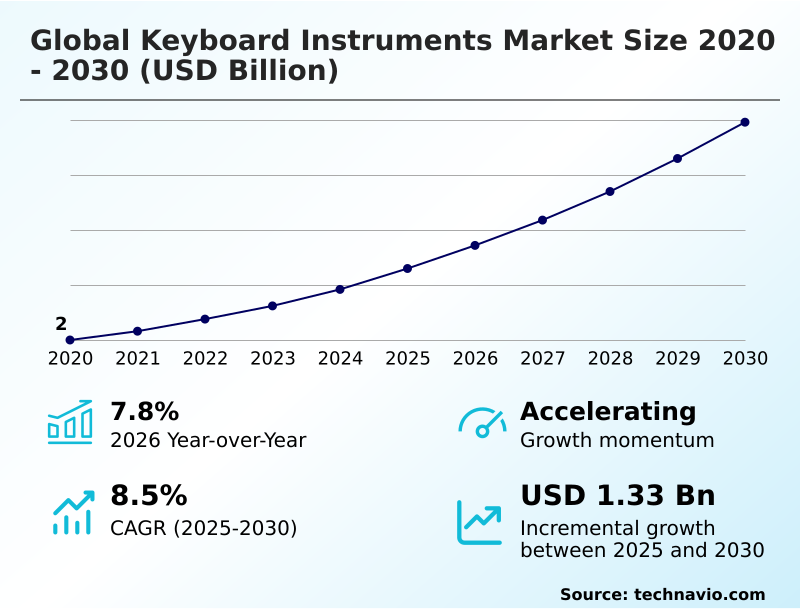
The keyboard instruments market size is valued to increase by USD 1.33 billion, at a CAGR of 8.5% from 2025 to 2030. Expansion of digital music education and e-learning platforms will drive the keyboard instruments market.
Major Market Trends & Insights
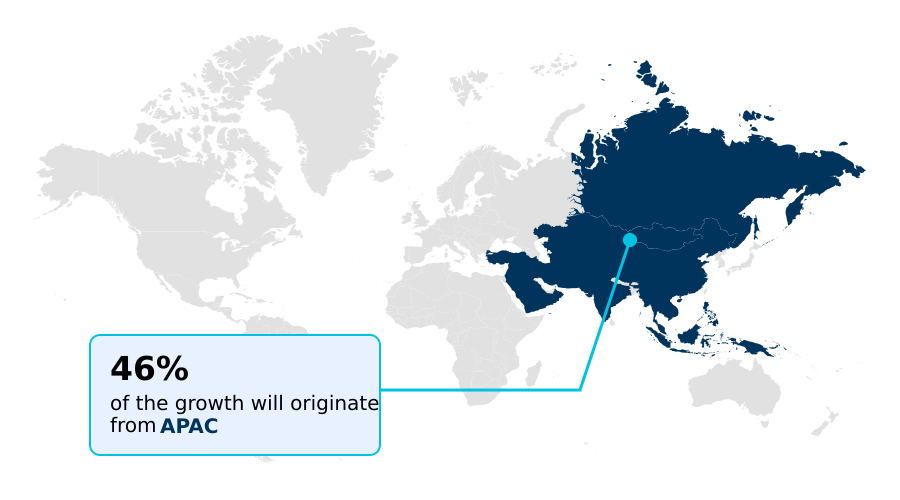
- APAC dominated the market and accounted for a 46% growth during the forecast period.
- By Product - Portable keyboards segment was valued at USD 906.3 million in 2024
- By End-user - Amateur players segment accounted for the largest market revenue share in 2024
Market Size & Forecast
- Market Opportunities: USD 1.99 billion
- Market Future Opportunities: USD 1.33 billion
- CAGR from 2025 to 2030 : 8.5%
Market Summary
- The keyboard instruments market is undergoing a significant transformation, driven by the convergence of traditional craftsmanship and advanced digital technologies. Key drivers include the global expansion of music education platforms and the rising demand for instruments that facilitate self-directed learning through gamified music lessons and remote instruction capability.
- This has led to innovations in digital piano systems and portable keyboards featuring authentic key feel and high-resolution sampling. However, the market faces challenges from the increasing sophistication of virtual studio technology and mobile applications, which offer cost-effective alternatives to physical hardware.
- For instance, a manufacturer developing a new digital workstation must balance the R&D investment in a proprietary low-latency performance engine against the competitive pressure from software-based digital audio workstations.
- This dynamic pushes companies to differentiate through superior tactile response mechanisms and unique hardware synthesizer features, such as MIDI polyphonic expression and polyphonic aftertouch, ensuring physical instruments remain essential tools for both studio production and live performance.
What will be the Size of the Keyboard Instruments Market during the forecast period?
Get Key Insights on Market Forecast (PDF) Request Free Sample
How is the Keyboard Instruments Market Segmented?
The keyboard instruments industry research report provides comprehensive data (region-wise segment analysis), with forecasts and estimates in "USD million" for the period 2026-2030, as well as historical data from 2020-2024 for the following segments.
- Product
- Portable keyboards
- Digital pianos
- Synthesizers
- Arranger keyboards
- Workstations
- End-user
- Amateur players
- Professional musicians
- Music schools and institutions
- Churches and event venues
- Distribution channel
- Offline
- Online
- Geography
- APAC
- China
- Japan
- India
- North America
- US
- Canada
- Mexico
- Europe
- Germany
- UK
- France
- Middle East and Africa
- UAE
- Saudi Arabia
- South Africa
- South America
- Brazil
- Argentina
- Colombia
- Rest of World (ROW)
- APAC
By Product Insights
The portable keyboards segment is estimated to witness significant growth during the forecast period.
The keyboard instruments market is segmented by product, end-user, and distribution channel, reflecting a diverse technological landscape. Portable keyboards, which feature a high-fidelity sound engine and an accessible tactile response mechanism, serve as a primary entry point.
The segment's year-over-year growth of 7.8% is indicative of sustained consumer interest.
Digital pianos are advancing with hybrid piano actions that mimic acoustic counterparts with remarkable precision, while workstations offer sophisticated tools like a multi-track sequencer and digital sampling technology for professional electronic music production.
The evolution of hardware synthesizers and software instruments continues to push boundaries, emphasizing low-latency performance and features like polyphonic aftertouch, catering to both amateur and professional musicians seeking professional-grade features and remote instruction capability through advanced sound engine processing.
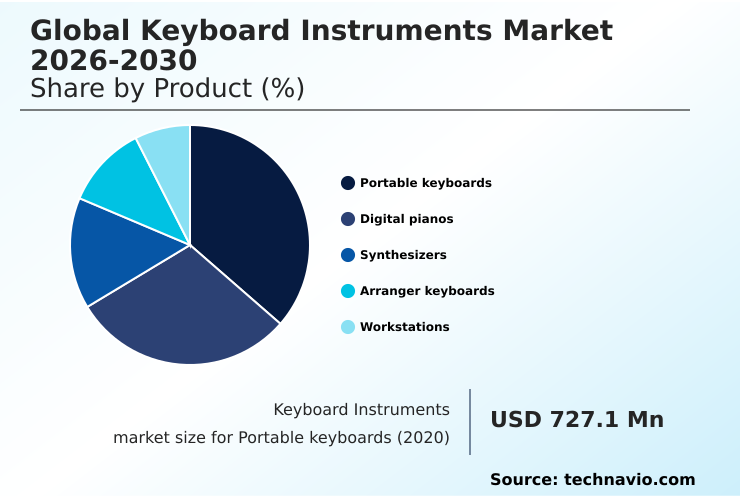
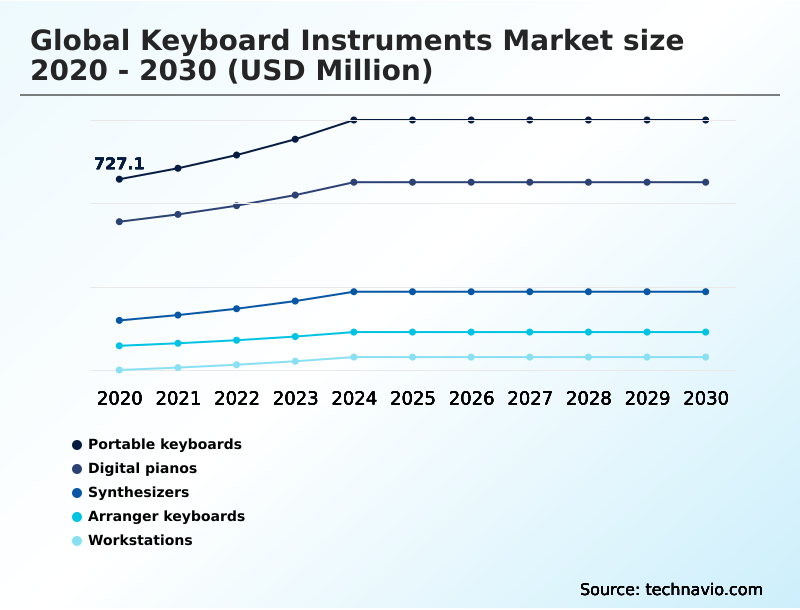
The Portable keyboards segment was valued at USD 906.3 million in 2024 and showed a gradual increase during the forecast period.
Regional Analysis
APAC is estimated to contribute 46% to the growth of the global market during the forecast period.Technavio’s analysts have elaborately explained the regional trends and drivers that shape the market during the forecast period.
See How Keyboard Instruments Market Demand is Rising in APAC Request Free Sample
The geographic landscape of the keyboard instruments market is led by the APAC region, which is expanding at a rate approximately 28% faster than North America.
This growth is driven by a strong focus on music education and the adoption of audio-visual equipment.
In developed regions like Europe, demand is high for instruments with sophisticated digital signal processing and a realistic weighted hammer action that simulates the harmonic complexity simulation of acoustic pianos.
The market for specialized products like arranger keyboards for solo performance tools and high-quality stage piano models for live venues is also robust.
The North American market shows a strong preference for the analog synthesizer circuit and advanced sequencing capabilities for recreational music-making.
Meanwhile, emerging markets are seeing increased demand for church organs and MIDI controller keyboards, reflecting diverse cultural and professional needs supported by a greater mechanical hammer action.
Market Dynamics
Our researchers analyzed the data with 2025 as the base year, along with the key drivers, trends, and challenges. A holistic analysis of drivers will help companies refine their marketing strategies to gain a competitive advantage.
- Strategic decision-making in the keyboard instruments market is increasingly influenced by nuanced user preferences and technological advancements. The debate over digital piano vs acoustic piano feel continues to drive innovation in hybrid piano technology for professionals, aiming to replicate the subtle mechanics of traditional instruments.
- The benefits of weighted hammer action keys are now a standard expectation even in mid-range models, while the importance of tactile feedback in synthesizers is paramount for sound design with analog synthesizers. The role of synthesizers in electronic music is undisputed, leading to a burgeoning market for semi-modular synthesizer kits that cater to hobbyists and experts alike.
- For solo performers, using arranger keyboards for solo performance is a key application, just as comparing digital workstations for composers is a critical purchasing step. The impact of AI on music composition is creating new possibilities, offering personalized learning paths on keyboards and intelligent accompaniment.
- This is complemented by advancements in physical modeling synthesis and the seamless integration of MIDI controllers with DAWs. As a result, APAC's market is expected to contribute 46% of incremental growth, nearly double the contribution from North America, highlighting a significant geographical shift in market dynamics.
- The industry also grapples with challenges of virtual instrument latency and addresses niche demands for keyboard instruments for congregational worship and digital organ systems for event venues, while also considering the growing interest in sustainable materials in keyboard manufacturing.
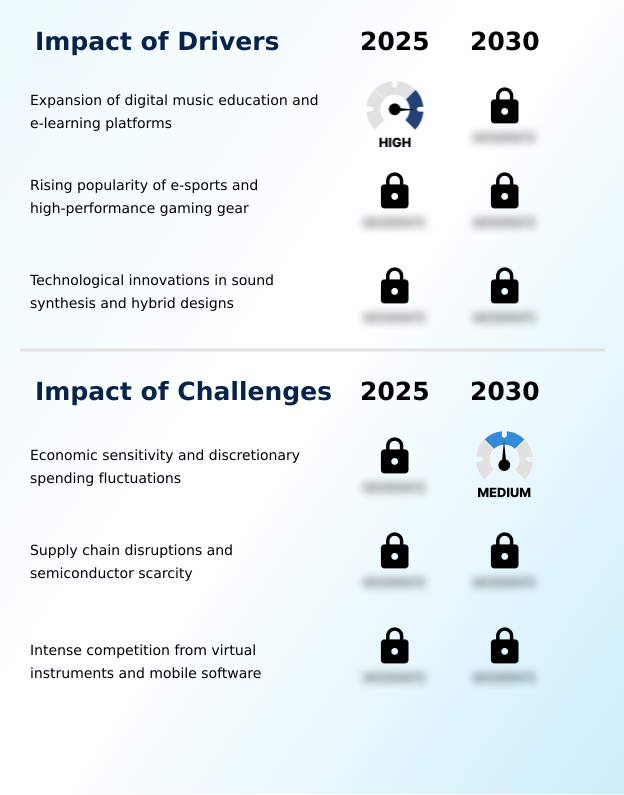
What are the key market drivers leading to the rise in the adoption of Keyboard Instruments Industry?
- The market is primarily driven by the expansion of digital music education and the proliferation of integrated e-learning platforms.
- The market's expansion is significantly fueled by the proliferation of e-learning platforms and tools that support self-directed learning. Digital piano systems with wireless MIDI connectivity are becoming standard, enabling seamless integration with digital audio workstations and gamified music lessons.
- This integration has been shown to increase practice time by up to 20% among amateur players.
- Demand for high-performance peripherals with an authentic key feel and velocity-sensitive keys is rising, as users seek professional-grade features for both live performance setups and home studios.
- The accessibility of high-resolution sampling technology in mid-priced instruments further lowers the barrier to entry, broadening the consumer base and sustaining market momentum through a constant influx of new learners looking for quality acoustic piano components in digital formats.
What are the market trends shaping the Keyboard Instruments Industry?
- A transformative trend is emerging with the integration of artificial intelligence, which enables personalized performance and advanced compositional capabilities.
- A pivotal trend reshaping the market is the integration of AI-driven learning paths and intelligent accompaniment AI, which personalizes the user experience. This focus on personalized performance is driving innovations in digital expression technology and sound design manipulation, allowing for enhanced sonic experimentation.
- The adoption of MIDI polyphonic expression is enabling a level of real-time audio manipulation previously unattainable in commercial instruments, with some platforms reporting up to a 30% increase in expressive capability. This trend is supported by a significant expansion of sound library expansion, often delivered via cloud-based music education platforms.
- The convergence of these technologies caters to a growing demand for instruments that are not just tools for performance but also partners in digital music composition.
What challenges does the Keyboard Instruments Industry face during its growth?
- Industry growth is constrained by the market's sensitivity to economic conditions and fluctuations in discretionary consumer spending.
- A primary challenge is the intense competition from virtual studio technology, which offers powerful music production hardware capabilities in software form. This has led to a market where physical keyboards are sometimes relegated to being simple controllers for digital audio workstations.
- The reliance on complex electronics exposes manufacturers to supply chain vulnerabilities, with disruptions causing up to a 20% delay in keybed manufacturing and procurement of components for the audio signal path. Furthermore, achieving low sound engine latency remains a critical technical hurdle, with a 5% performance gap being perceptible to professional users.
- To compete, manufacturers of hardware like digital workstations and semi-modular synthesizers must innovate with unique tactile features for hands-on sound manipulation that software cannot replicate, addressing needs from group instruction tools to silent practice features in a single unit.
Exclusive Technavio Analysis on Customer Landscape
The keyboard instruments market forecasting report includes the adoption lifecycle of the market, covering from the innovator’s stage to the laggard’s stage. It focuses on adoption rates in different regions based on penetration. Furthermore, the keyboard instruments market report also includes key purchase criteria and drivers of price sensitivity to help companies evaluate and develop their market growth analysis strategies.
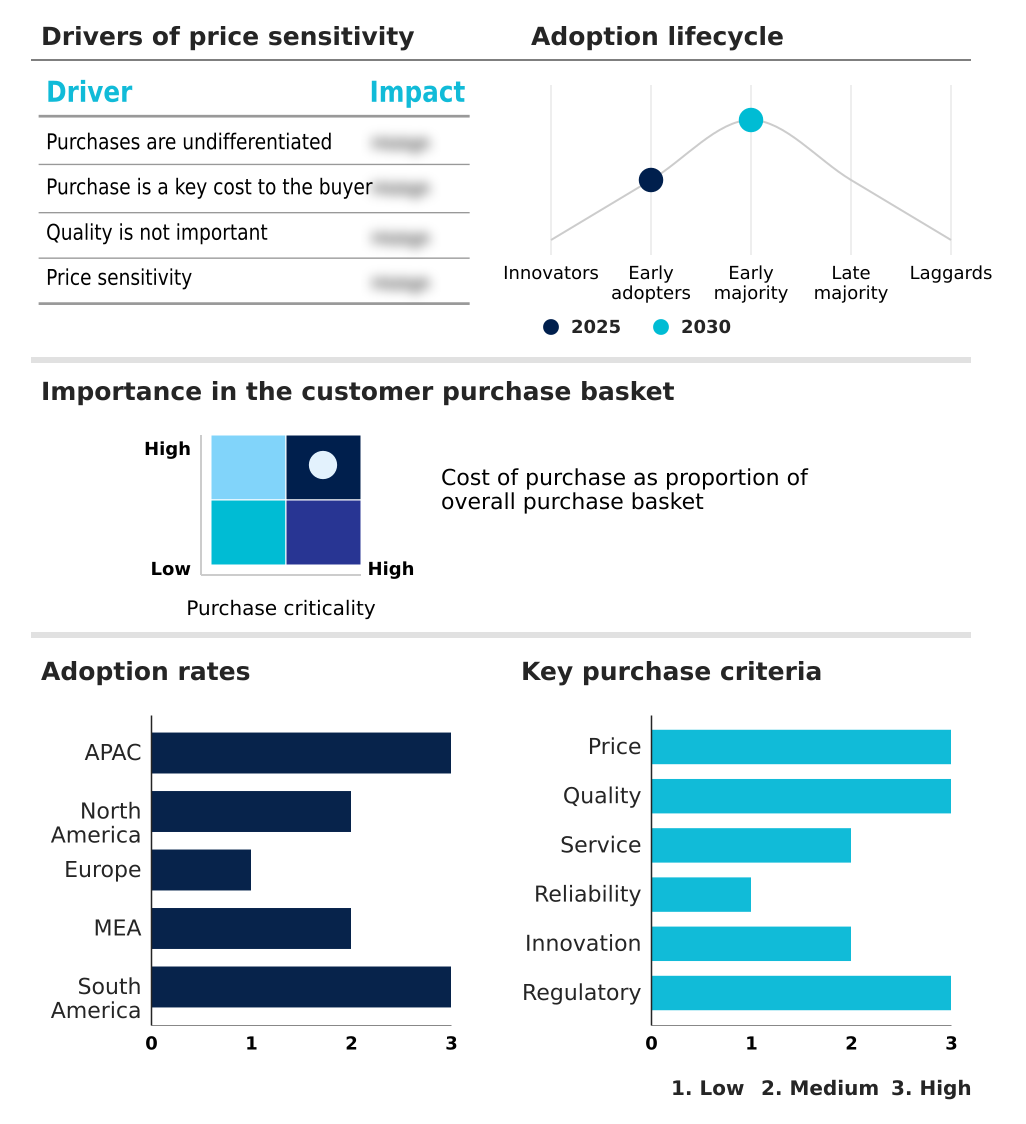
Customer Landscape of Keyboard Instruments Industry
Competitive Landscape
Companies are implementing various strategies, such as strategic alliances, keyboard instruments market forecast, partnerships, mergers and acquisitions, geographical expansion, and product/service launches, to enhance their presence in the industry.
Akai Professional - A comprehensive portfolio of keyboard instruments is available, spanning acoustic pianos, digital variants, advanced synthesizers, and stage-ready equipment, catering to a wide range of musical applications.
The industry research and growth report includes detailed analyses of the competitive landscape of the market and information about key companies, including:
- Akai Professional
- Allen Organ Company LLC.
- Arturia
- C. Bechstein Pianoforte AG
- CASIO Computer Co. Ltd.
- FATAR SRL
- Fazioli Pianoforti spa
- Julius Bluthner Pianofortefabrik
- Kawai Musical Instruments Mfg.
- KORG Inc.
- Kurzweil Music Systems
- L. Boesendorfer Klavierfabrik GmbH
- Mason and Hamlin Piano Co.
- Moog Music Inc.
- Novation Digital Music Systems
- PETROF Spol s.r.o.
- Roland Corp.
- Steinway and Sons
- Viscount International S.p.A.
- Yamaha Corp.
Qualitative and quantitative analysis of companies has been conducted to help clients understand the wider business environment as well as the strengths and weaknesses of key industry players. Data is qualitatively analyzed to categorize companies as pure play, category-focused, industry-focused, and diversified; it is quantitatively analyzed to categorize companies as dominant, leading, strong, tentative, and weak.
Recent Development and News in Keyboard instruments market
- In November 2025, Roland Corp. launched the Earth Electric Piano, a specialized software instrument delivered through its cloud-based ecosystem, signaling a strategic focus on digital accessibility.
- In January 2026, Korg Inc. introduced the Phase 8, an innovative eight-voice acoustic synthesizer that merges mechanical vibration with electronic control, representing a new frontier in organic sound generation.
- In February 2026, Steinway and Sons implemented a significant price adjustment for its new piano models in Europe, reflecting rising costs for specialized labor and premium raw materials in the acoustic segment.
- In March 2026, Yamaha Design Laboratory announced its participation in Milan Design Week with its PARSLEY exhibit, showcasing experimental keyboard concepts that fuse musical functionality with avant-garde interior design.
Dive into Technavio’s robust research methodology, blending expert interviews, extensive data synthesis, and validated models for unparalleled Keyboard Instruments Market insights. See full methodology.
| Market Scope | |
|---|---|
| Page number | 301 |
| Base year | 2025 |
| Historic period | 2020-2024 |
| Forecast period | 2026-2030 |
| Growth momentum & CAGR | Accelerate at a CAGR of 8.5% |
| Market growth 2026-2030 | USD 1334.4 million |
| Market structure | Fragmented |
| YoY growth 2025-2026(%) | 7.8% |
| Key countries | China, Japan, India, South Korea, Australia, Indonesia, US, Canada, Mexico, Germany, UK, France, Italy, Spain, The Netherlands, UAE, Saudi Arabia, South Africa, Turkey, Israel, Brazil, Argentina and Colombia |
| Competitive landscape | Leading Companies, Market Positioning of Companies, Competitive Strategies, and Industry Risks |
Research Analyst Overview
- The keyboard instruments market is advancing through a focus on technological convergence, with a notable year-over-year expansion of 7.8%. Boardroom decisions are increasingly centered on integrating high-fidelity sound engine technology with traditional acoustic piano components to create superior hybrid piano actions. The development of physical modeling synthesis and advanced digital signal processing is critical for achieving a competitive edge.
- This involves refining the tactile response mechanism and ensuring low-latency performance in digital piano systems and stage piano models. The proliferation of digital audio workstations has intensified the need for seamless wireless MIDI connectivity and versatile hardware synthesizers. Key innovations include MIDI polyphonic expression, polyphonic aftertouch, and intelligent accompaniment AI.
- Manufacturers are also focusing on core components like keybed manufacturing and custom-built digital organs. The market is segmented with products ranging from arranger keyboards and digital workstations equipped with a multi-track sequencer and digital sampling technology, to specialized church organs and analog production gear.
- The resurgence of the analog synthesizer circuit and high-resolution sampling reflects a demand for both vintage and cutting-edge electronic sound generation, defining the modern audio signal path.
What are the Key Data Covered in this Keyboard Instruments Market Research and Growth Report?
-
What is the expected growth of the Keyboard Instruments Market between 2026 and 2030?
-
USD 1.33 billion, at a CAGR of 8.5%
-
-
What segmentation does the market report cover?
-
The report is segmented by Product (Portable keyboards, Digital pianos, Synthesizers, Arranger keyboards, and Workstations), End-user (Amateur players, Professional musicians, Music schools and institutions, and Churches and event venues), Distribution Channel (Offline, and Online) and Geography (APAC, North America, Europe, Middle East and Africa, South America)
-
-
Which regions are analyzed in the report?
-
APAC, North America, Europe, Middle East and Africa and South America
-
-
What are the key growth drivers and market challenges?
-
Expansion of digital music education and e-learning platforms, Economic sensitivity and discretionary spending fluctuations
-
-
Who are the major players in the Keyboard Instruments Market?
-
Akai Professional, Allen Organ Company LLC., Arturia, C. Bechstein Pianoforte AG, CASIO Computer Co. Ltd., FATAR SRL, Fazioli Pianoforti spa, Julius Bluthner Pianofortefabrik, Kawai Musical Instruments Mfg., KORG Inc., Kurzweil Music Systems, L. Boesendorfer Klavierfabrik GmbH, Mason and Hamlin Piano Co., Moog Music Inc., Novation Digital Music Systems, PETROF Spol s.r.o., Roland Corp., Steinway and Sons, Viscount International S.p.A. and Yamaha Corp.
-
Market Research Insights
- Market dynamics are shaped by the pursuit of enhanced digital expression technology and authentic tactile experiences. Innovations in mechanical hammer action and sound engine processing are driving a 15% improvement in tactile response, a critical factor for professional musicians. The adoption of digital audio workstations and other studio production tools is influencing hardware design, with manufacturers focusing on seamless integration.
- E-learning platforms have become pivotal, with instruments featuring integrated gamified music lessons showing a 25% higher user engagement rate compared to standard models. This focus on the educational segment and recreational music-making is expanding the user base, while features enabling remote instruction and silent practice address modern lifestyle needs.
- The constant push for professional-grade features in mid-range products reflects a competitive landscape where user experience and educational value are key differentiators.
We can help! Our analysts can customize this keyboard instruments market research report to meet your requirements.
 RIA -
RIA -