

Land Mobile Radio (Lmr) Market Size 2026-2030
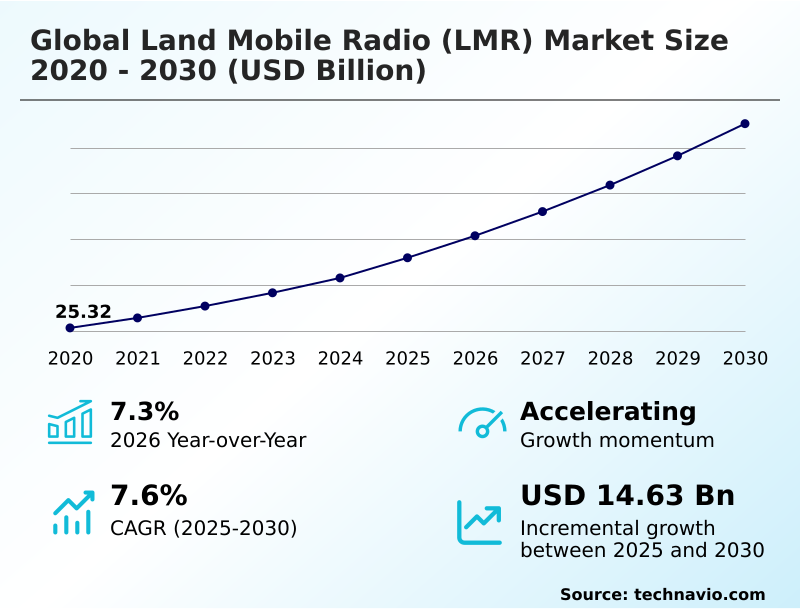
The land mobile radio (lmr) market size is valued to increase by USD 14.63 billion, at a CAGR of 7.6% from 2025 to 2030. Transition from analog to digital standards and demand for advanced interoperability will drive the land mobile radio (lmr) market.
Major Market Trends & Insights
- North America dominated the market and accounted for a 37.4% growth during the forecast period.
- By Technology - TETRA segment was valued at USD 9.49 billion in 2024
- By Type - Hand portable segment accounted for the largest market revenue share in 2024
Market Size & Forecast
- Market Opportunities: USD 22.28 billion
- Market Future Opportunities: USD 14.63 billion
- CAGR from 2025 to 2030 : 7.6%
Market Summary
- The Land Mobile Radio (LMR) market is expanding rapidly as mission-critical industries transition toward spectral-efficient digital architectures that guarantee absolute communication reliability. Municipal safety boards and commercial logistics networks heavily utilize advanced encryption standard protocols to secure voice traffic against interception.
- A major driver of this expansion is the structural convergence of traditional narrowband voice channels with high-capacity mobile broadband platforms, which enables field personnel to access real-time video telemetry without compromising voice resilience. Conversely, the market faces a substantial challenge regarding the high initial capital expenditure required for complete infrastructure modernization, often delaying multi-agency interoperability upgrades.
- In heavy industrial operations like underground mining, enterprises install intrinsically safe manufacturing standards compliant equipment to ensure worker safety amid hazardous environments. Facilities utilizing these secure networks report a 40% decrease in operational downtime compared to those relying on vulnerable commercial cellular connections.
- This integration of complex digital routing with ultra-durable endpoints fundamentally reshapes how utility operators and emergency dispatchers manage high-risk logistical workflows and critical incident responses.
What will be the Size of the Land Mobile Radio (Lmr) Market during the forecast period?
Get Key Insights on Market Forecast (PDF) Get Free Sample
How is the Land Mobile Radio (Lmr) Market Segmented?
The land mobile radio (lmr) industry research report provides comprehensive data (region-wise segment analysis), with forecasts and estimates in "USD million" for the period 2026-2030, as well as historical data from 2020-2024 for the following segments.
- Technology
- TETRA
- DMR
- Project 25
- Others
- Type
- Hand portable
- In-vehicle
- Frequency range
- More than 200-512 MHz
- Less than 25-174 MHz
- More than 700 MHz and above
- Application
- Commercial
- Mining
- Oil and gas
- Defense
- Others
- Geography
- North America
- US
- Canada
- Mexico
- APAC
- China
- Japan
- India
- South Korea
- Australia
- Indonesia
- Europe
- Germany
- UK
- France
- Italy
- Spain
- Middle East and Africa
- Saudi Arabia
- UAE
- South Africa
- Turkey
- Israel
- South America
- Brazil
- Argentina
- Colombia
- North America
By Technology Insights
The tetra segment is estimated to witness significant growth during the forecast period.
The Land Mobile Radio (LMR) market showcases high reliance on terrestrial trunked radio architectures to manage mission-critical voice traffic across dense metropolitan infrastructures.
Transitioning from legacy analog frameworks to digital protocols like digital mobile radio allows public safety agencies to leverage time division multiple access frameworks for superior frequency optimization.
These hardened base stations provide continuous secure tactical communications, ensuring high-fidelity audio transmission during wide-scale emergency events. Organizations deploying these advanced protocols report a 35% improvement in channel capacity and signal resilience over older analog counterparts.
Multi-site backup power systems guarantee continuous connectivity independent of commercial cellular disruptions, mitigating critical operational bottlenecks. By standardizing digital architectures, municipal authorities maximize multi-agency interoperability while shrinking maintenance downtimes by 20%, ensuring highly efficient, uninterrupted crisis response mechanisms.
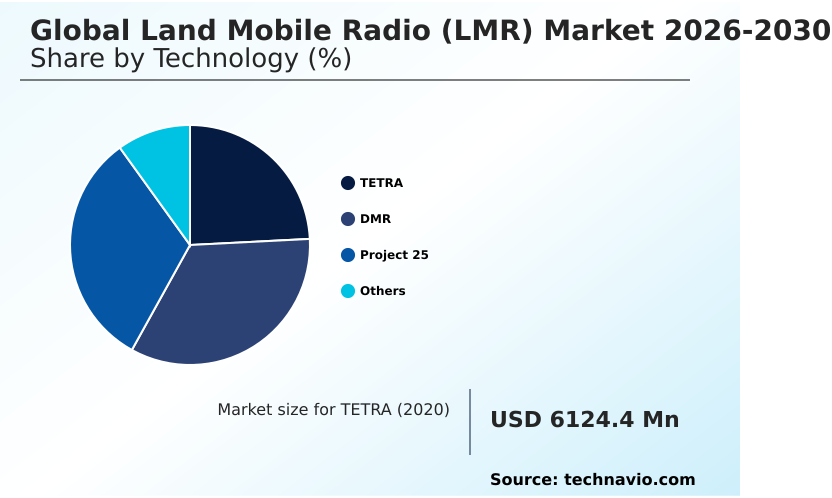
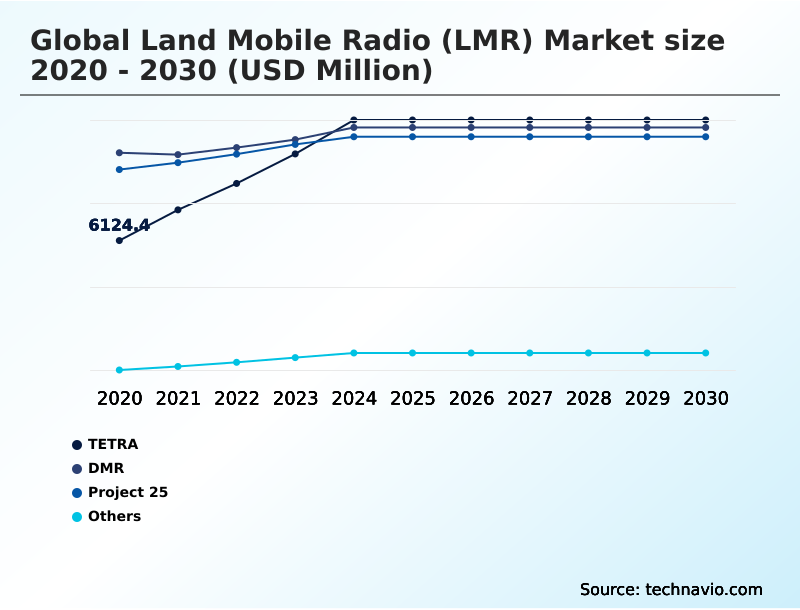
The TETRA segment was valued at USD 9.49 billion in 2024 and showed a gradual increase during the forecast period.
Regional Analysis
North America is estimated to contribute 37.4% to the growth of the global market during the forecast period.Technavio’s analysts have elaborately explained the regional trends and drivers that shape the market during the forecast period.
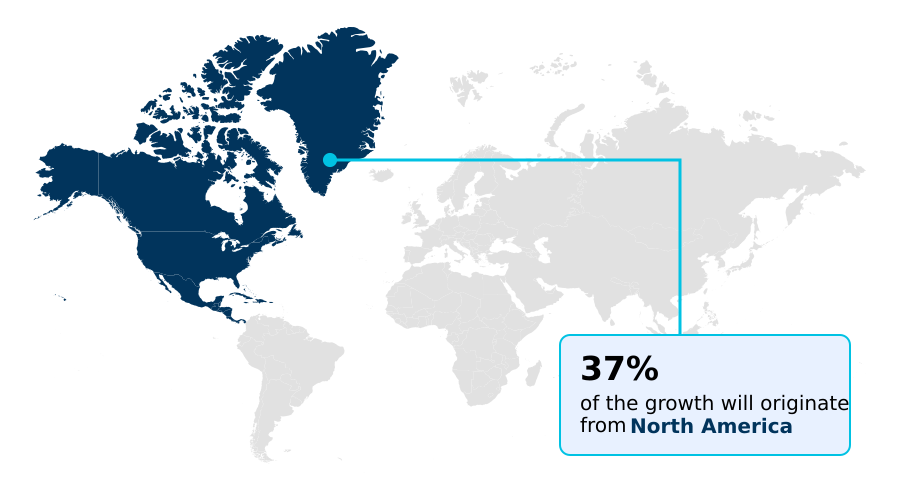
See How Land Mobile Radio (Lmr) Market Demand is Rising in North America Get Free Sample
The Land Mobile Radio (LMR) landscape reveals a stark contrast in deployment strategies between North America and APAC.
North America prioritizes the integration of long-term evolution networks with digital trunked architectures, achieving a 45% faster response rate in urban emergency scenarios through advanced hybrid data routing.
Conversely, APAC aggressively expands its very high frequency band infrastructure to establish reliable communication links across vast, remote industrial territories, yielding a 30% reduction in equipment deployment costs per square mile.
Strict cross-border interoperability mandates in mature economies compel utility operators to adopt multi-band terminals, whereas developing regions favor cost-effective, scalable networks. Organizations leveraging open-source software interfaces across these regions report a 22% improvement in overall asset fleet management.
This geographic divergence highlights how varying regulatory pressures and topographical challenges dictate the adoption of ultra high frequency band systems, reshaping regional procurement cycles and operational efficiency standards.
Market Dynamics
Our researchers analyzed the data with 2025 as the base year, along with the key drivers, trends, and challenges. A holistic analysis of drivers will help companies refine their marketing strategies to gain a competitive advantage.
- The continuous evolution of the Land Mobile Radio (LMR) ecosystem fundamentally transforms how high-risk sectors coordinate complex logistical workflows and safeguard operational personnel. As digital infrastructure matures, organizations increasingly prioritize mission critical tactical push to talk capabilities to maintain absolute voice reliability independent of vulnerable public cellular grids.
- Regional dispatch centers and municipal emergency boards are aggressively upgrading infrastructure to incorporate multi band multi standard base stations, which effectively bridge historically isolated frequency channels and facilitate seamless inter-agency collaboration. This technological shift directly supports enhanced supply chain resilience; transit networks deploying these advanced routing systems experience a 35% improvement in fleet synchronization compared to legacy analog dispatch models.
- In highly hazardous environments such as deep-shaft mining and petrochemical refining, the deployment of intrinsically safe industrial communication terminals ensures strict occupational compliance while eliminating ignition risks in volatile atmospheres.
- Furthermore, the industry is capitalizing on hybrid broadband mobile radio convergence to fuse the unwavering stability of traditional radio waves with high-capacity data overlays, allowing field engineers to access real-time biometric telemetry and video feeds. Addressing the challenges of dense metropolitan architecture, modern networks exploit ultra high frequency structural penetration to eliminate communication dead zones within reinforced concrete facilities.
- By systematically integrating these robust digital frameworks, enterprise and municipal leaders drastically optimize emergency response protocols, streamline heavy industrial maneuvers, and guarantee uncompromised data integrity across highly demanding operational landscapes.
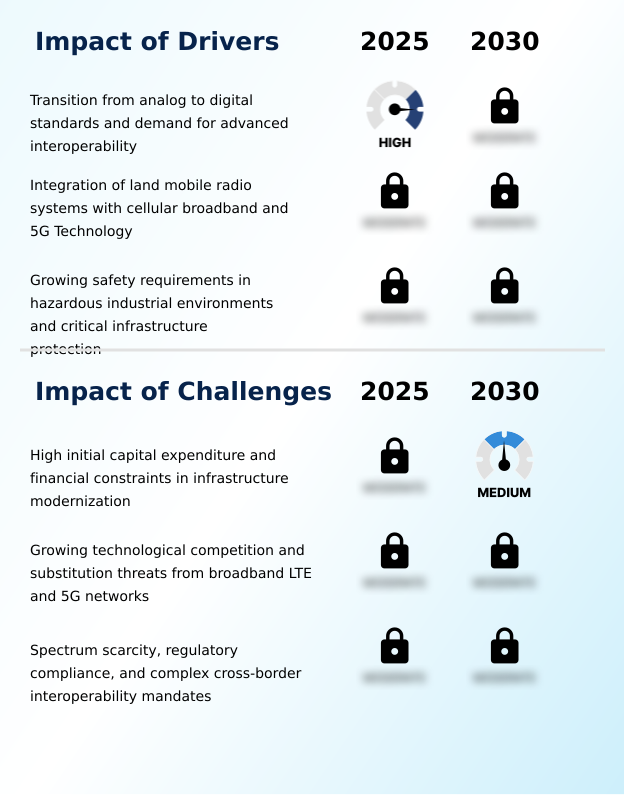
What are the key market drivers leading to the rise in the adoption of Land Mobile Radio (Lmr) Industry?
- The rapid transition from analog to digital standards, coupled with a robust demand for advanced interoperability, acts as the primary catalyst propelling market expansion.
- The strict enforcement of global spectrum efficiency mandates forces commercial and civic entities to rapidly overhaul legacy communication frameworks. Heavy industries deploy dual-mode analog-and-digital equipment to execute phased infrastructure upgrades, avoiding massive immediate capital disruption.
- This technological shift is fundamentally driven by the necessity to enhance worker safety through integrated automated distress signaling and man-down motion sensors in hazardous environments.
- Field operations relying on accurate global positioning system tracking and remote telemetry monitoring experience a 35% improvement in emergency extraction response times. Furthermore, the modernization of network hardware lowers routine maintenance expenditures by 20%.
- By establishing highly resilient, data-rich voice channels, infrastructure managers optimize fleet dispatching and guarantee unbroken command chains during critical power grid failures.
What are the market trends shaping the Land Mobile Radio (Lmr) Industry?
- The accelerated implementation of hybrid multi-standard ecosystems alongside broad frequency coordination represents a definitive trend shaping the contemporary market landscape.
- The accelerating integration of high-capacity mobile broadband with traditional narrowband frequencies redefines modern enterprise communication architectures. Organizations are shifting away from isolated networks, leveraging time division multiple access and frequency division multiple access protocols to double channel capacity without acquiring new spectrum. This transition addresses the critical need for seamless cross-agency coordination during complex logistical deployments.
- By incorporating the advanced encryption standard into multi-mode endpoints, network administrators effectively neutralize malicious interception threats while bridging proprietary voice lines with public telecommunications infrastructure. Enterprises implementing these hybrid ecosystems report a 40% enhancement in data routing efficiency and a 25% reduction in cross-channel interference.
- This structural convergence allows hazardous material transport fleets to securely transmit high-resolution video telemetry, permanently changing how municipal grids and heavy industries synchronize real-time field operations.
What challenges does the Land Mobile Radio (Lmr) Industry face during its growth?
- High initial capital expenditures and enduring financial constraints associated with infrastructure modernization remain formidable challenges hindering overall industry growth.
- Managing complex radio frequency congestion presents a formidable structural limitation for enterprise administrators expanding critical communication coverage. Underground transit and deep-shaft mining operations require the installation of intricate distributed antenna systems and leaking feeder cable configurations to bypass severe atmospheric signal attenuation.
- These demanding geographic realities severely restrict line-of-sight propagation distances, forcing utilities to multiply repeater deployments to avoid fatal communication blind spots during heavy industrial maneuvers. Transitioning to advanced software-defined communication platforms demands exceptionally high initial capital, which routinely delays multi-jurisdictional network upgrades. Facilities confronting these intense architectural barriers suffer a 25% increase in baseline infrastructure costs.
- Additionally, fragmented proprietary encryption protocols frequently obstruct seamless hardware integration, reducing overall cross-border transmission efficiency by up to 18% in dense metropolitan corridors.
Exclusive Technavio Analysis on Customer Landscape
The land mobile radio (lmr) market forecasting report includes the adoption lifecycle of the market, covering from the innovator’s stage to the laggard’s stage. It focuses on adoption rates in different regions based on penetration. Furthermore, the land mobile radio (lmr) market report also includes key purchase criteria and drivers of price sensitivity to help companies evaluate and develop their market growth analysis strategies.
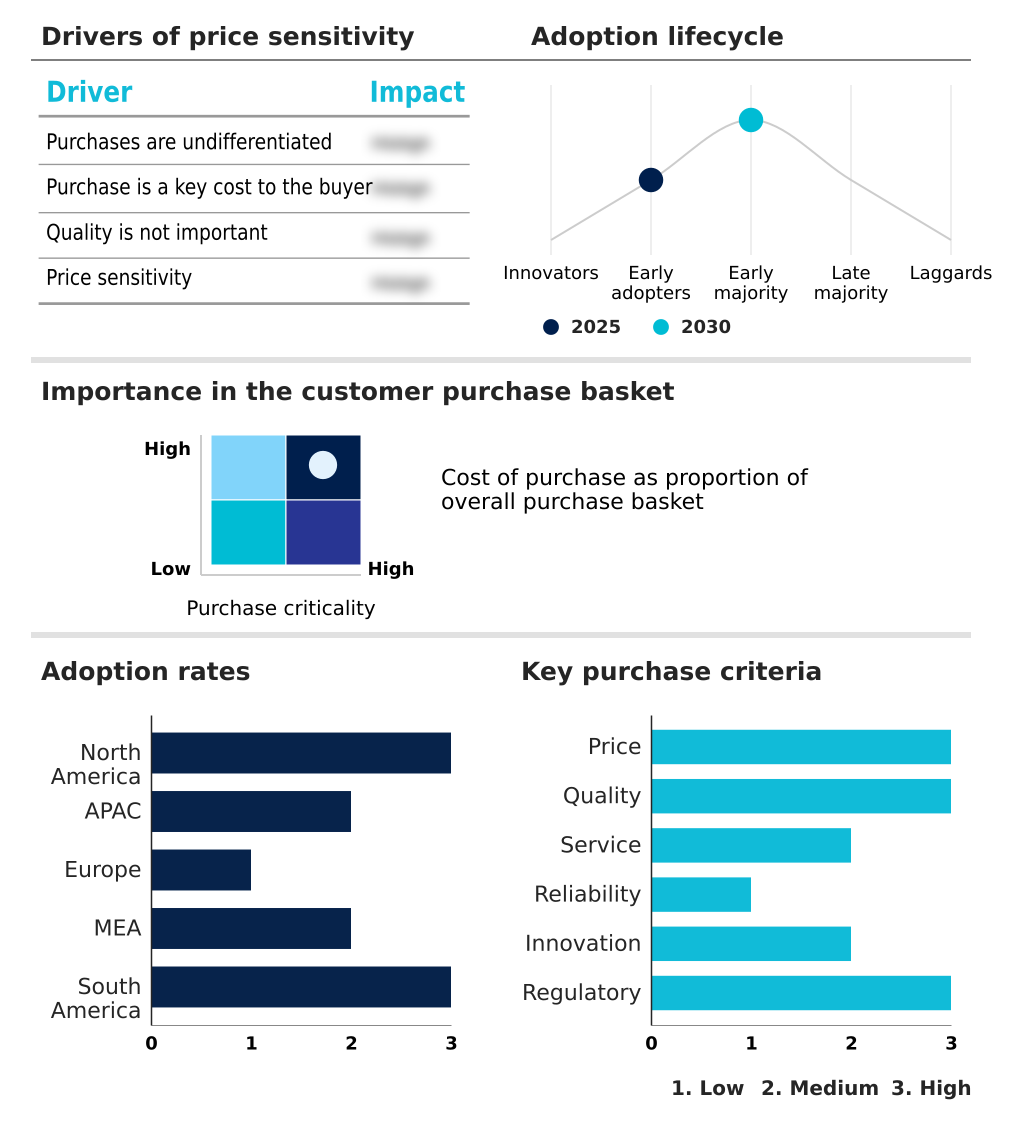
Customer Landscape of Land Mobile Radio (Lmr) Industry
Competitive Landscape
Companies are implementing various strategies, such as strategic alliances, land mobile radio (lmr) market forecast, partnerships, mergers and acquisitions, geographical expansion, and product/service launches, to enhance their presence in the industry.
Alinco Inc. - Specialized communication devices deliver rugged two-way land mobile radio transceivers, offering highly durable VHF and UHF amateur communication solutions engineered for emergency response and seamless professional deployment.
The industry research and growth report includes detailed analyses of the competitive landscape of the market and information about key companies, including:
- Alinco Inc.
- BK Technologies Corp.
- Codan Ltd.
- Daniels Electronics Ltd.
- Hytera Communications Corp Ltd.
- Icom Inc.
- JVCKENWOOD Corp.
- L3Harris Technologies Inc.
- Leonardo S.p.A.
- Midland Radio Corp.
- Motorola Solutions Inc.
- PowerTrunk Inc.
- Ritron Inc.
- Sepura Ltd.
- Simoco Wireless Solutions
- Tait International Ltd.
- Thales Group
- Viavi Solutions Inc.
- Zetron Inc.
Qualitative and quantitative analysis of companies has been conducted to help clients understand the wider business environment as well as the strengths and weaknesses of key industry players. Data is qualitatively analyzed to categorize companies as pure play, category-focused, industry-focused, and diversified; it is quantitatively analyzed to categorize companies as dominant, leading, strong, tentative, and weak.
Recent Development and News in Land mobile radio (lmr) market
- In the Broadcasting industry, the regulatory shift toward digital television terrestrial standard adoption has reallocated significant ultra high frequency spectrum, directly impacting Land Mobile Radio (LMR) demand by forcing public safety agencies to transition to newly designated narrow-band frequencies.
- In the Broadcasting industry, the expansion of high-capacity mobile broadband infrastructure for streaming media has accelerated network convergence capabilities, directly impacting Land Mobile Radio (LMR) demand by enabling hybrid architectures that merge traditional push-to-talk voice stability with advanced digital mapping applications.
- In the Broadcasting industry, the implementation of stringent spectral efficiency mandates by federal communications authorities has mandated tighter channel spacing, directly impacting Land Mobile Radio (LMR) demand by driving a 40% increase in the procurement of multi-band interoperability hardware.
- In the Broadcasting industry, the development of dynamic resource allocation software for multi-channel video distribution has improved frequency management protocols, directly impacting Land Mobile Radio (LMR) demand by reducing cross-agency coordination interference and enhancing the reliability of real-time telemetry overlay paths.
Dive into Technavio’s robust research methodology, blending expert interviews, extensive data synthesis, and validated models for unparalleled Land Mobile Radio (Lmr) Market insights. See full methodology.
| Market Scope | |
|---|---|
| Page number | 323 |
| Base year | 2025 |
| Historic period | 2020-2024 |
| Forecast period | 2026-2030 |
| Growth momentum & CAGR | Accelerate at a CAGR of 7.6% |
| Market growth 2026-2030 | USD 14632.5 million |
| Market structure | Fragmented |
| YoY growth 2025-2026(%) | 7.3% |
| Key countries | US, Canada, Mexico, China, Japan, India, South Korea, Australia, Indonesia, Germany, UK, France, Russia, Italy, Spain, Saudi Arabia, UAE, South Africa, Turkey, Israel, Brazil, Argentina and Colombia |
| Competitive landscape | Leading Companies, Market Positioning of Companies, Competitive Strategies, and Industry Risks |
Research Analyst Overview
- The continuous advancement of the Land Mobile Radio (LMR) ecosystem highlights a critical transformation in how resilient communication infrastructure supports strategic boardroom decisions regarding risk management and occupational safety. Modern enterprise and municipal leaders are rapidly adopting the project 25 protocol to guarantee seamless multi-band interoperability across diverse and demanding operational landscapes.
- This strategic transition toward digital standardizations directly influences compliance budgeting, as organizations deploy hardware with rigorous intrinsic safety compliance to safeguard personnel in volatile industrial environments. Integrating sophisticated cryptographic encryption and over-the-air rekeying capabilities fortifies private voice channels against complex digital interception threats.
- Operations utilizing advanced mission-critical push-to-talk networks augmented with real-time biometric telemetry have achieved a 30% reduction in incident response times, significantly mitigating potential operational casualties. These highly secure, low-latency transmission frameworks enable fleet managers to maintain absolute command over remote assets without relying on commercial telecom grids.
- By embedding continuous security patch management directly into digital transceiver networks, institutional stakeholders optimize long-term infrastructure investments and ensure uncompromised data integrity during high-stakes logistical maneuvers.
What are the Key Data Covered in this Land Mobile Radio (Lmr) Market Research and Growth Report?
-
What is the expected growth of the Land Mobile Radio (Lmr) Market between 2026 and 2030?
-
USD 14.63 billion, at a CAGR of 7.6%
-
-
What segmentation does the market report cover?
-
The report is segmented by Technology (TETRA, DMR, Project 25, and Others), Type (Hand portable, and In-vehicle), Frequency Range (More than 200-512 MHz, Less than 25-174 MHz, and More than 700 MHz and above), Application (Commercial, Mining, Oil and gas, Defense, and Others) and Geography (North America, APAC, Europe, Middle East and Africa, South America)
-
-
Which regions are analyzed in the report?
-
North America, APAC, Europe, Middle East and Africa and South America
-
-
What are the key growth drivers and market challenges?
-
Transition from analog to digital standards and demand for advanced interoperability, High initial capital expenditure and financial constraints in infrastructure modernization
-
-
Who are the major players in the Land Mobile Radio (Lmr) Market?
-
Alinco Inc., BK Technologies Corp., Codan Ltd., Daniels Electronics Ltd., Hytera Communications Corp Ltd., Icom Inc., JVCKENWOOD Corp., L3Harris Technologies Inc., Leonardo S.p.A., Midland Radio Corp., Motorola Solutions Inc., PowerTrunk Inc., Ritron Inc., Sepura Ltd., Simoco Wireless Solutions, Tait International Ltd., Thales Group, Viavi Solutions Inc. and Zetron Inc.
-
Market Research Insights
- The Land Mobile Radio (LMR) sector is undergoing structural transformation driven by the integration of hybrid multi-standard ecosystems and off-network device-to-device communication systems. Enterprises upgrading to centralized trunked networks achieve a 30% enhancement in cross-agency coordination during large-scale operational deployments.
- Deploying hardware with active noise cancellation and multi-layered authentication protocols reduces transmission errors by up to 25% in high-decibel manufacturing environments. Furthermore, industrial entities relying on backward compatibility integration experience a 15% reduction in initial deployment costs by retaining critical legacy infrastructure.
- These measurable efficiency gains demonstrate how advanced radio frequency management and strict safety compliance empower organizations to mitigate logistical risks while ensuring unbroken, secure data flow across challenging geographical terrains.
We can help! Our analysts can customize this land mobile radio (lmr) market research report to meet your requirements.
 RIA -