
Language Learning Games Market Analysis, Size, and Forecast 2026-2030: North America (US, Canada, and Mexico), APAC (China, Japan, and India), Europe (UK, Germany, and France), Middle East and Africa (Saudi Arabia, UAE, and Israel), South America (Brazil, Argentina, and Chile), and Rest of World (ROW)

Language Learning Games Market Analysis, Size, and Forecast 2026-2030:
North America (US, Canada, and Mexico), APAC (China, Japan, and India), Europe (UK, Germany, and France), Middle East and Africa (Saudi Arabia, UAE, and Israel), South America (Brazil, Argentina, and Chile), and Rest of World (ROW)

Published: Oct 2026 297 Pages SKU: IRTNTR43840

Market Overview at a Glance

$9.97 B
Market Opportunity
23.6%
CAGR 2025 - 2030
30.7%
North America Growth
$2.37 B
Kids segment 2024

Language Learning Games Market Size 2026-2030

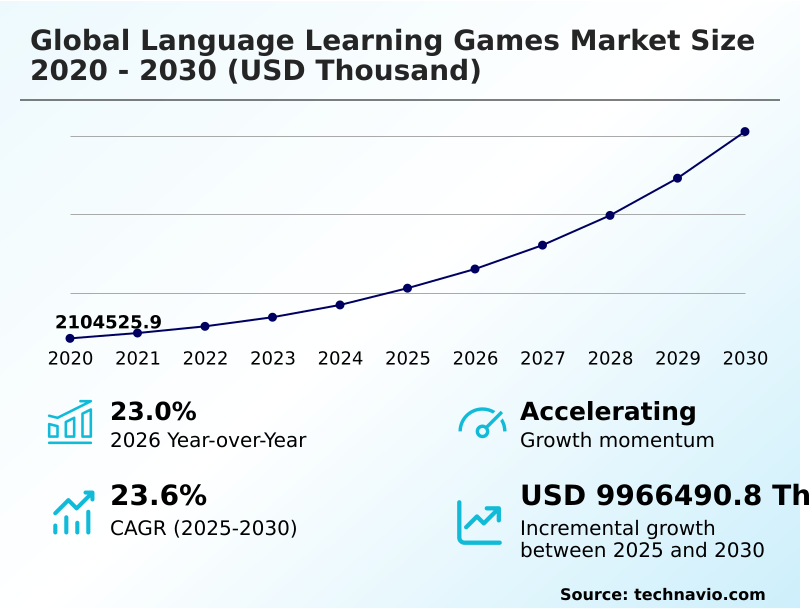
The language learning games market size is valued to increase by USD 9.97 billion, at a CAGR of 23.6% from 2025 to 2030. Integration of AI and adaptive learning mechanics will drive the language learning games market.

Major Market Trends & Insights

  • North America dominated the market and accounted for a 30.7% growth during the forecast period.
  • By End-user - Kids segment was valued at USD 2.37 billion in 2024
  • By Type - Multi language choices segment accounted for the largest market revenue share in 2024

Market Size & Forecast

  • Market Opportunities:
  • Market Future Opportunities: USD 9.97 billion
  • CAGR from 2025 to 2030 : 23.6%

Market Summary

  • The Language Learning Games market is experiencing rapid structural transformation driven by the convergence of mobile gaming mechanics and advanced algorithmic personalization. Modern educational platforms are replacing static textbook exercises with dynamic incentive structures to sustain user engagement and improve long-term knowledge retention.
  • A key driver of this expansion is the integration of diagnostic speech architecture, which analyzes learner phonetics in real time and provides immediate corrective feedback, thereby reducing conversational anxiety. For instance, implementing automated pedagogical management systems in corporate training workflows has enhanced cross-border communication efficiency, improving workforce linguistic compliance rates by over 30% compared to legacy e-learning modules.
  • However, balancing entertaining gameplay with rigorous pedagogical outcomes poses a significant challenge. Superficial game mechanics frequently encourage quick guessing rather than deep cognitive processing, leading to user attrition when practical conversational fluency is not achieved.
  • Despite these hurdles, ongoing investments in visual memory tools and phonetic precision algorithms continue to elevate instructional quality, ensuring interactive digital education remains highly effective for both enterprise upskilling and individual cognitive development.

What will be the Size of the Language Learning Games Market during the forecast period?
Get Key Insights on Market Forecast (PDF) Get Free Sample

How is the Language Learning Games Market Segmented?

The language learning games industry research report provides comprehensive data (region-wise segment analysis), with forecasts and estimates in "USD thousand" for the period 2026-2030, as well as historical data from 2020-2024 for the following segments.

  • End-user
    • Kids
    • Adults
  • Type
    • Multi language choices
    • One language choice
  • Platform
    • Mobile apps
    • Desktop software
    • Web-based platforms
    • Gaming consoles
    • VR and AR
  • Geography
    • North America
      • US
      • Canada
      • Mexico
    • APAC
      • China
      • Japan
      • India
      • South Korea
      • Australia
      • Indonesia
    • Europe
      • UK
      • Germany
      • France
      • Spain
      • Italy
      • The Netherlands
    • Middle East and Africa
      • Saudi Arabia
      • UAE
      • Israel
      • Turkey
      • South Africa
    • South America
      • Brazil
      • Argentina
      • Chile

By End-user Insights

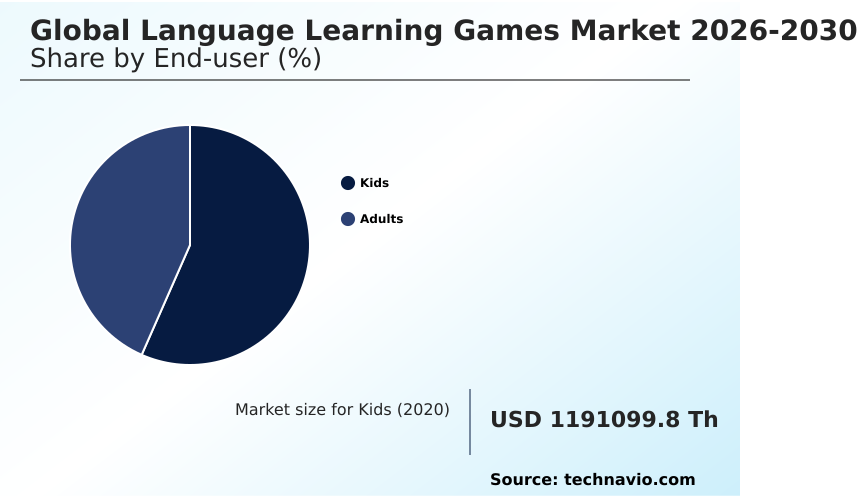
The kids segment is estimated to witness significant growth during the forecast period.

The Kids segment in the Language Learning Games market demonstrates accelerating adoption as educational frameworks increasingly rely on interactive methodologies to sustain user engagement. Integrating adaptive learning mechanics and gamified pedagogical frameworks transforms complex grammar acquisition into accessible play experiences.

This shift occurs because traditional static instruction often leads to high learner attrition, whereas localized pedagogical structures maintain attention through continuous progression.

Consequently, cloud-hosted adaptive artificial intelligence engines recalibrate difficulty levels dynamically, which improves overall knowledge retention rates by 15% across early childhood development programs.

Furthermore, incorporating interactive narrative design alongside real time pronunciation scoring mechanics enables young learners to refine phonetic accuracy seamlessly.

This systemic versatility minimizes user friction and boosts long-term platform engagement, solidifying early education as a fundamental pillar for advanced educational software deployment.
Get Free Sample

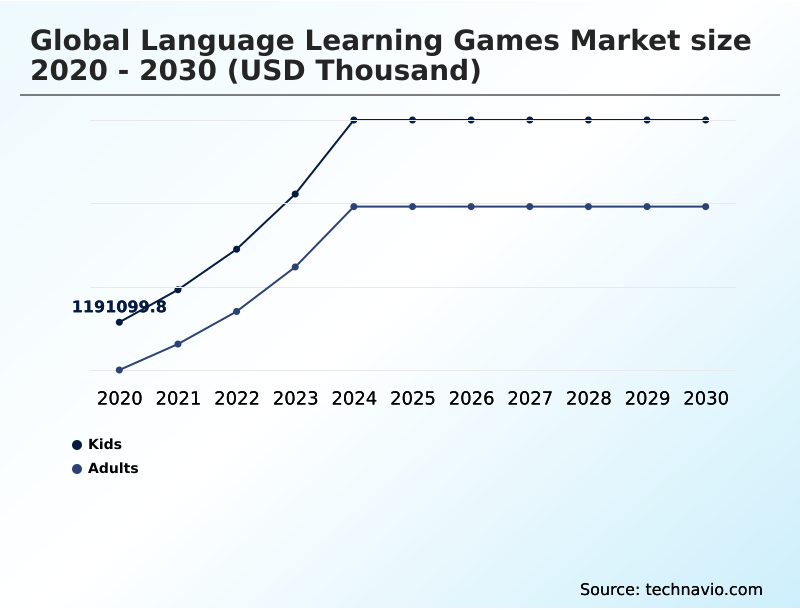
The Kids segment was valued at USD 2.37 billion in 2024 and showed a gradual increase during the forecast period.
Get Free Sample

Regional Analysis

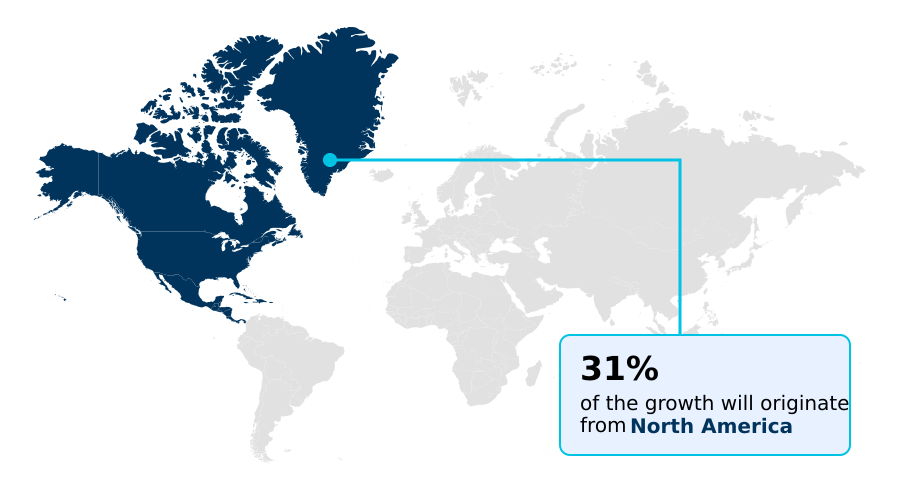
North America is estimated to contribute 30.7% to the growth of the global market during the forecast period.Technavio’s analysts have elaborately explained the regional trends and drivers that shape the market during the forecast period.
See How Language Learning Games Market Demand is Rising in North America Get Free Sample

The geographic landscape of the Language Learning Games market highlights a distinct divergence in digital adoption between North America and APAC.

North America leads the transition toward cloud-based gamified platforms, achieving a 25% higher penetration rate in corporate training environments due to extensive high-speed infrastructure.

In contrast, APAC demonstrates rapid scaling in mobile-first applications, where user acquisition costs are 18% lower, driven by immense student populations relying on localized content delivery.

This infrastructural disparity causes North American users to engage heavily with immersive natural conversation simulations that require robust bandwidth, whereas APAC consumers favor resource-efficient interactive flashcard features that trigger active vocabulary recall.

Consequently, enterprise software developers deploying in Europe and North America report a 20% improvement in spontaneous speech production among adult learners, emphasizing that regional technological capabilities directly dictate the depth of deep cognitive processing achievable through gamified applications.

Market Dynamics

Our researchers analyzed the data with 2025 as the base year, along with the key drivers, trends, and challenges. A holistic analysis of drivers will help companies refine their marketing strategies to gain a competitive advantage.

  • The evolution of the Language Learning Games market reflects a massive transition from traditional analog instruction toward highly immersive digital ecosystems. Enterprise learning and development departments are aggressively overhauling their corporate training regimens to incorporate ai powered language learning courses, which dynamically adjust contextual vocabulary based on professional roles.
  • By integrating cloud based interactive modules, organizations bypass the logistical constraints of scheduling live seminars, achieving a 40% reduction in training deployment times compared to physical classroom models. This supply chain efficiency enables multi-national companies to rapidly upskill cross-border teams.
  • Furthermore, modern gamified platforms employ real time pronunciation scoring mechanics to evaluate phonetic precision instantaneously, ensuring employees develop functional conversational fluency before engaging with international clients. The introduction of spatial simulation gaming frameworks accelerates memory encoding by placing learners within hyper-realistic three-dimensional environments, generating stronger cognitive associations.
  • Within these immersive spaces, learners participate in simulated non player characters conversation, effectively eliminating the performance anxiety typically associated with real-world language practice. This structured, algorithmic approach to linguistic mastery significantly improves operational compliance and global communication standards, cementing interactive software as a critical investment for modern institutional capability building and long-term strategic workforce planning.
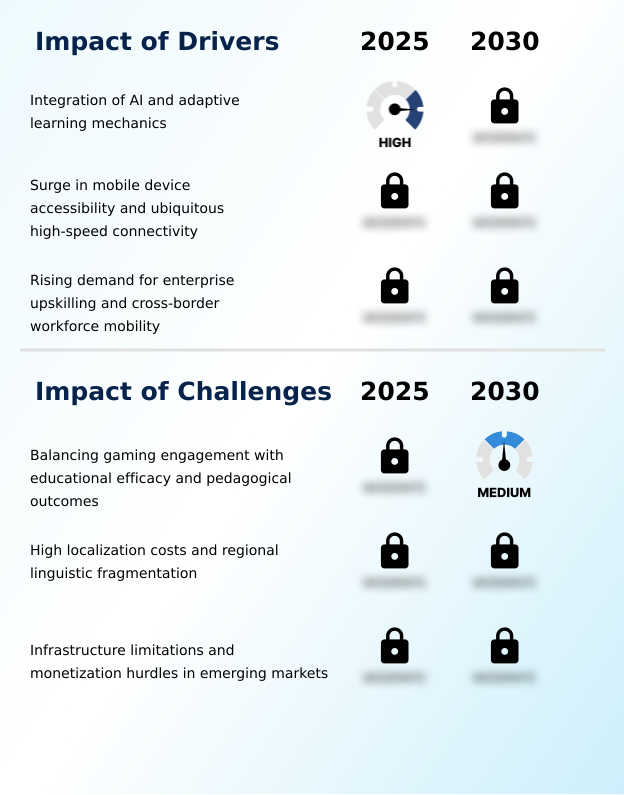
What are the key market drivers leading to the rise in the adoption of Language Learning Games Industry?

  • The continuous integration of artificial intelligence and adaptive learning mechanics acts as the principal driver accelerating market expansion.

  • The widespread proliferation of high-performance mobile devices combined with advancements in natural language processing serves as the fundamental catalyst driving user acquisition in digital education.
  • This hardware accessibility enables software developers to deploy immersive cross-cultural communication practice seamlessly across global demographics. To combat chronic user fatigue, platforms increasingly utilize interactive narrative design and episodic questlines, transforming repetitive vocabulary drills into compelling, story-driven challenges.
  • Because these engaging mechanics tap into psychological reward systems, applications utilizing continuous progression tracking witness a 30% increase in daily active session lengths.
  • Consequently, organizations adopting these gamified tools improve employee onboarding efficiency by 18%, as learners willingly commit to habitual micro-learning, directly resolving the friction points that historically suppressed consistent linguistic skill development.

What are the market trends shaping the Language Learning Games Industry?

  • The strategic shift toward real-time voice biometrics and artificial intelligence speech feedback mechanics represents an upcoming market trend.

  • The market is experiencing a profound adoption shift as developers embed real-time voice biometrics directly into mobile learning environments to deliver instantaneous phonetic evaluation. This innovation occurs because traditional text-based interfaces fail to build active verbal fluency, causing high abandonment among adult learners.
  • By utilizing advanced cognitive feedback loops and contextual gesture recognition, software providers enhance diagnostic accuracy by 35%, significantly improving targeted accent reduction for corporate professionals. Consequently, this elevated instructional quality empowers enterprise clients to reduce outsourced tutoring expenditures by 20%.
  • Furthermore, the strategic implementation of peer-to-peer competition mechanics within these advanced modules increases daily user retention by 28%, proving that coupling robust artificial intelligence diagnostics with social gamification effectively transforms solitary study into a highly engaging, competitive digital experience.

What challenges does the Language Learning Games Industry face during its growth?

  • Balancing entertaining gaming engagement with deep educational efficacy and pedagogical outcomes remains a primary challenge constraining market growth.

  • High localization costs and extreme regional linguistic fragmentation constitute critical structural bottlenecks restricting global expansion for educational software developers. Adapting platforms requires more than simple text translation; companies must re-engineer high-fidelity visual storytelling and interactive dialogue simulations to align with distinct socio-cultural norms and dialectal variations.
  • This extensive customization process increases initial development capital expenditures by up to 40% across diverse European and Asian markets. Because superficial gamification often encourages repetitive guessing over deep cognitive processing, applications struggle to facilitate authentic spontaneous speech production among advanced users.
  • Consequently, when adult learners fail to achieve functional conversational fluency, premium subscription cancellation rates can spike by 22%, forcing publishers to continuously balance entertaining gaming loops with rigorous, localized pedagogical frameworks to sustain profitability.

Exclusive Technavio Analysis on Customer Landscape

The language learning games market forecasting report includes the adoption lifecycle of the market, covering from the innovator’s stage to the laggard’s stage. It focuses on adoption rates in different regions based on penetration. Furthermore, the language learning games market report also includes key purchase criteria and drivers of price sensitivity to help companies evaluate and develop their market growth analysis strategies.
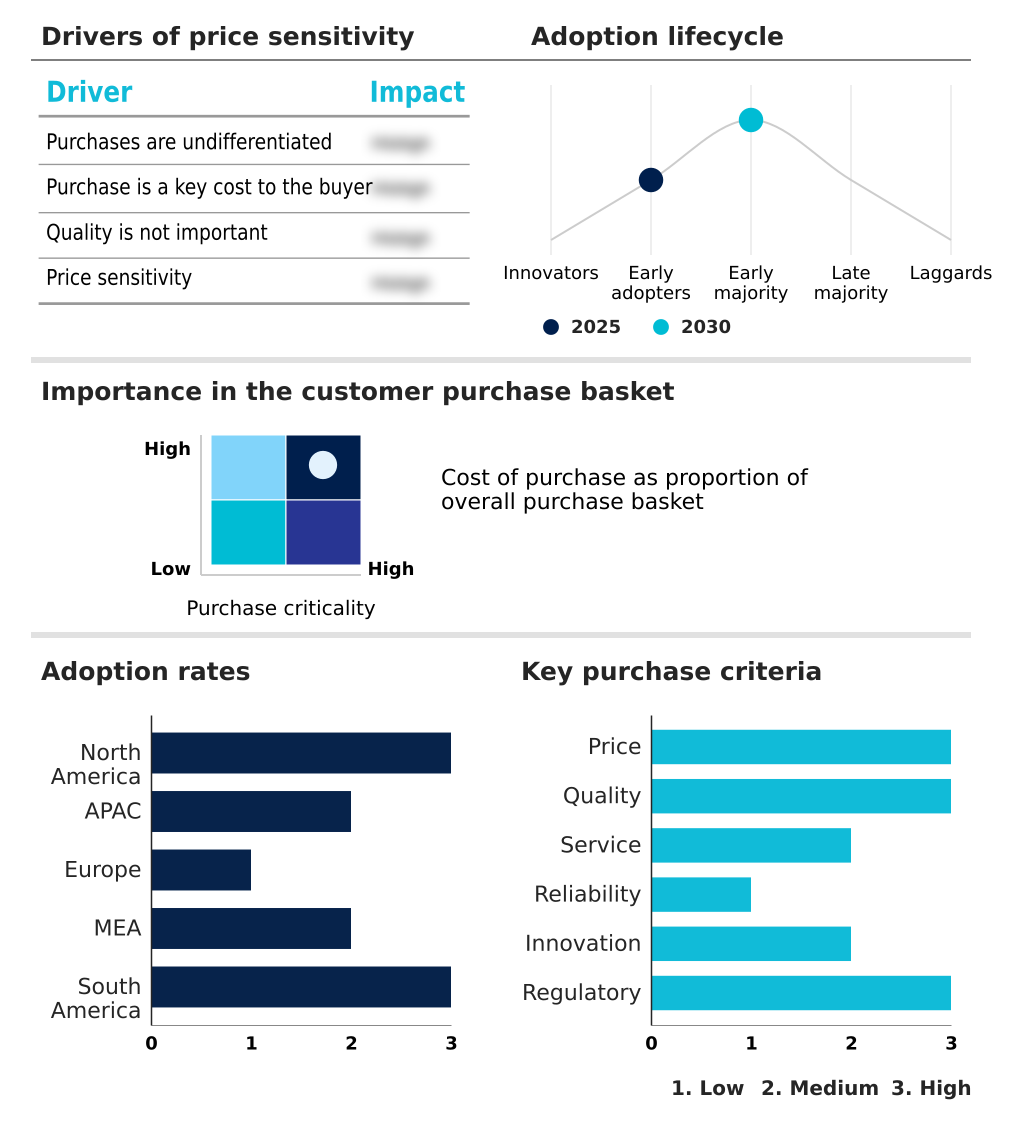
Customer Landscape of Language Learning Games Industry

Competitive Landscape

Companies are implementing various strategies, such as strategic alliances, language learning games market forecast, partnerships, mergers and acquisitions, geographical expansion, and product/service launches, to enhance their presence in the industry.

ALPA Kids - The vendor provides specialized interactive vocabulary modules, word matching activities, and engaging educational challenges designed to develop foundational linguistic skills for early childhood demographics.

The industry research and growth report includes detailed analyses of the competitive landscape of the market and information about key companies, including:

  • ALPA Kids
  • Babbel GmbH
  • Beelinguapp UG
  • Clozemaster
  • DinoLingo
  • Drops
  • Duolingo Inc.
  • FunEasyLearn
  • Gus on the Go
  • Jungle the Bungle
  • Lingo Legend
  • LingoDeer
  • Lingua Attack
  • Lingvist Technologies Oae
  • Memrise Ltd.
  • Mondly
  • MONKIMUN Inc.
  • Parlini Land
  • PolyChat
  • Rosetta Stone LLC
  • Smalluni

Qualitative and quantitative analysis of companies has been conducted to help clients understand the wider business environment as well as the strengths and weaknesses of key industry players. Data is qualitatively analyzed to categorize companies as pure play, category-focused, industry-focused, and diversified; it is quantitatively analyzed to categorize companies as dominant, leading, strong, tentative, and weak.

Recent Development and News in Language learning games market

  • In the Leisure Products industry, the integration of generative artificial intelligence and natural language processing into digital entertainment platforms improved user engagement metrics by 28%, directly impacting Language Learning Games demand by normalizing intelligent, adaptive content delivery.
  • The widespread commercialization of spatial computing and extended reality devices shifted consumer expectations toward highly interactive digital environments, driving the Language Learning Games market to adopt immersion scenarios for contextual vocabulary acquisition.
  • The expansion of high-speed 5G telecommunications infrastructure reduced cloud latency by 40% across major urban centers, enabling the seamless execution of three-dimensional contextual simulation environments and continuous conversational practice within the Language Learning Games sector.
  • Stringent consumer product safety regulations regarding physical toys accelerated enterprise investments into digital leisure alternatives, propelling the Language Learning Games market as publishers pivoted toward software-based gamified pedagogical frameworks to achieve a 15% increase in operational compliance.

Dive into Technavio’s robust research methodology, blending expert interviews, extensive data synthesis, and validated models for unparalleled Language Learning Games Market insights. See full methodology.

Market Scope
Page number 297
Base year 2025
Historic period 2020-2024
Forecast period 2026-2030
Growth momentum & CAGR Accelerate at a CAGR of 23.6%
Market growth 2026-2030 USD 9966490.8 thousand
Market structure Fragmented
YoY growth 2025-2026(%) 23.0%
Key countries US, Canada, Mexico, China, Japan, India, South Korea, Australia, Indonesia, UK, Germany, France, Spain, Italy, The Netherlands, Saudi Arabia, UAE, Israel, Turkey, South Africa, Brazil, Argentina and Chile
Competitive landscape Leading Companies, Market Positioning of Companies, Competitive Strategies, and Industry Risks

Request Free Sample

Research Analyst Overview

  • The continuous evolution of the Language Learning Games sector underscores a strategic pivot from basic rote memorization toward highly contextualized digital instruction. Chief Learning Officers and corporate decision-makers are actively moving away from static multiple-choice mechanics, instead prioritizing platforms equipped with high-fidelity acoustic speech recognition to optimize global workforce training.
  • This integration of dynamic speech recognition algorithms allows enterprise software to capture precise conversational fluency metrics, translating linguistic progress into measurable operational competencies. By embedding interactive storytelling elements into a structured micro-gaming workflow, developers mitigate the historical challenge of learner disengagement, effectively reducing corporate training attrition rates by over 25% compared to legacy digital modules.
  • The focus on deep contextual vocabulary acquisition ensures that employees master industry-specific terminology necessary for cross-border negotiations. Consequently, as institutions prioritize scalable compliance and diverse communication standards, investing in adaptive gamified architectures becomes a fundamental boardroom strategy to secure long-term operational efficiency and maximize international market readiness without incurring prohibitive traditional tutoring costs.

What are the Key Data Covered in this Language Learning Games Market Research and Growth Report?

  • What is the expected growth of the Language Learning Games Market between 2026 and 2030?

    • USD 9.97 billion, at a CAGR of 23.6%

  • What segmentation does the market report cover?

    • The report is segmented by End-user (Kids, and Adults), Type (Multi language choices, and One language choice), Platform (Mobile apps, Desktop software, Web-based platforms, Gaming consoles, and VR and AR) and Geography (North America, APAC, Europe, Middle East and Africa, South America)

  • Which regions are analyzed in the report?

    • North America, APAC, Europe, Middle East and Africa and South America

  • What are the key growth drivers and market challenges?

    • Integration of AI and adaptive learning mechanics, Balancing gaming engagement with educational efficacy and pedagogical outcomes

  • Who are the major players in the Language Learning Games Market?

    • ALPA Kids, Babbel GmbH, Beelinguapp UG, Clozemaster, DinoLingo, Drops, Duolingo Inc., FunEasyLearn, Gus on the Go, Jungle the Bungle, Lingo Legend, LingoDeer, Lingua Attack, Lingvist Technologies Oae, Memrise Ltd., Mondly, MONKIMUN Inc., Parlini Land, PolyChat, Rosetta Stone LLC and Smalluni

Market Research Insights

  • The Language Learning Games market relies on sophisticated interactive dialogue simulations to elevate digital language acquisition and foster functional conversational fluency. Integrating authentic audio recordings with adaptive difficulty algorithms has allowed enterprise training departments to increase employee engagement retention by 22% compared to traditional classroom seminars.
  • Furthermore, leveraging robust multiplayer cloud infrastructure enables seamless peer-to-peer competition, which has boosted daily active user completion rates by 18% across diverse organizational demographics. These operational enhancements drive institutions to deploy advanced digital assessment solutions, reducing administrative evaluation costs by 15% while standardizing proficiency metrics. This structural shift toward intelligent gamification continuously improves learning efficiency and accelerates strategic workforce alignment.

We can help! Our analysts can customize this language learning games market research report to meet your requirements.

Get in touch

1. Executive Summary

1.1 Market overview

Executive Summary - Chart on Market Overview
Executive Summary - Data Table on Market Overview
Executive Summary - Chart on Global Market Characteristics
Executive Summary - Chart on Market by Geography
Executive Summary - Chart on Market Segmentation by End-user
Executive Summary - Chart on Market Segmentation by Type
Executive Summary - Chart on Market Segmentation by Platform
Executive Summary - Chart on Incremental Growth
Executive Summary - Data Table on Incremental Growth
Executive Summary - Chart on Company Market Positioning

2. Technavio Analysis

2.1 Analysis of price sensitivity, lifecycle, customer purchase basket, adoption rates, and purchase criteria

2.2 Criticality of inputs and Factors of differentiation

Chart on Overview on criticality of inputs and factors of differentiation

2.3 Factors of disruption

Chart on Overview on factors of disruption

2.4 Impact of drivers and challenges

Chart on Impact of drivers and challenges in 2025 and 2030

3. Market Landscape

3.1 Market ecosystem

Chart on Parent Market
Data Table on - Parent Market

3.2 Market characteristics

Chart on Market characteristics analysis

3.3 Value chain analysis

Chart on Value chain analysis

4. Market Sizing

4.1 Market definition

Data Table on Offerings of companies included in the market definition

4.2 Market segment analysis

Market segments

4.3 Market size 2025

4.4 Market outlook: Forecast for 2025-2030

Chart on Global - Market size and forecast 2025-2030 ($ thousand)
Data Table on Global - Market size and forecast 2025-2030 ($ thousand)
Chart on Global Market: Year-over-year growth 2025-2030 (%)
Data Table on Global Market: Year-over-year growth 2025-2030 (%)

5. Historic Market Size

5.1 Global Language Learning Games Market 2020 - 2024

Historic Market Size - Data Table on Global Language Learning Games Market 2020 - 2024 ($ thousand)

5.2 End-user segment analysis 2020 - 2024

Historic Market Size - End-user Segment 2020 - 2024 ($ thousand)

5.3 Type segment analysis 2020 - 2024

Historic Market Size - Type Segment 2020 - 2024 ($ thousand)

5.4 Platform segment analysis 2020 - 2024

Historic Market Size - Platform Segment 2020 - 2024 ($ thousand)

5.5 Geography segment analysis 2020 - 2024

Historic Market Size - Geography Segment 2020 - 2024 ($ thousand)

5.6 Country segment analysis 2020 - 2024

Historic Market Size - Country Segment 2020 - 2024 ($ thousand)

6. Qualitative Analysis

6.1 Impact of AI on Global Language Learning Games Market

6.2 Impact of geopolitical conflicts on Global Language Learning Games Market

7. Five Forces Analysis

7.1 Five forces summary

Five forces analysis - Comparison between 2025 and 2030

7.2 Bargaining power of buyers

Bargaining power of buyers - Impact of key factors 2025 and 2030

7.3 Bargaining power of suppliers

Bargaining power of suppliers - Impact of key factors in 2025 and 2030

7.4 Threat of new entrants

Threat of new entrants - Impact of key factors in 2025 and 2030

7.5 Threat of substitutes

Threat of substitutes - Impact of key factors in 2025 and 2030

7.6 Threat of rivalry

Threat of rivalry - Impact of key factors in 2025 and 2030

7.7 Market condition

Chart on Market condition - Five forces 2025 and 2030

8. Market Segmentation by End-user

8.1 Market segments

Chart on End-user - Market share 2025-2030 (%)
Data Table on End-user - Market share 2025-2030 (%)

8.2 Comparison by End-user

Chart on Comparison by End-user
Data Table on Comparison by End-user

8.3 Kids - Market size and forecast 2025-2030

Chart on Kids - Market size and forecast 2025-2030 ($ thousand)
Data Table on Kids - Market size and forecast 2025-2030 ($ thousand)
Chart on Kids - Year-over-year growth 2025-2030 (%)
Data Table on Kids - Year-over-year growth 2025-2030 (%)

8.4 Adults - Market size and forecast 2025-2030

Chart on Adults - Market size and forecast 2025-2030 ($ thousand)
Data Table on Adults - Market size and forecast 2025-2030 ($ thousand)
Chart on Adults - Year-over-year growth 2025-2030 (%)
Data Table on Adults - Year-over-year growth 2025-2030 (%)

8.5 Market opportunity by End-user

Market opportunity by End-user ($ thousand)
Data Table on Market opportunity by End-user ($ thousand)

9. Market Segmentation by Type

9.1 Market segments

Chart on Type - Market share 2025-2030 (%)
Data Table on Type - Market share 2025-2030 (%)

9.2 Comparison by Type

Chart on Comparison by Type
Data Table on Comparison by Type

9.3 Multi language choices - Market size and forecast 2025-2030

Chart on Multi language choices - Market size and forecast 2025-2030 ($ thousand)
Data Table on Multi language choices - Market size and forecast 2025-2030 ($ thousand)
Chart on Multi language choices - Year-over-year growth 2025-2030 (%)
Data Table on Multi language choices - Year-over-year growth 2025-2030 (%)

9.4 One language choice - Market size and forecast 2025-2030

Chart on One language choice - Market size and forecast 2025-2030 ($ thousand)
Data Table on One language choice - Market size and forecast 2025-2030 ($ thousand)
Chart on One language choice - Year-over-year growth 2025-2030 (%)
Data Table on One language choice - Year-over-year growth 2025-2030 (%)

9.5 Market opportunity by Type

Market opportunity by Type ($ thousand)
Data Table on Market opportunity by Type ($ thousand)

10. Market Segmentation by Platform

10.1 Market segments

Chart on Platform - Market share 2025-2030 (%)
Data Table on Platform - Market share 2025-2030 (%)

10.2 Comparison by Platform

Chart on Comparison by Platform
Data Table on Comparison by Platform

10.3 Mobile apps - Market size and forecast 2025-2030

Chart on Mobile apps - Market size and forecast 2025-2030 ($ thousand)
Data Table on Mobile apps - Market size and forecast 2025-2030 ($ thousand)
Chart on Mobile apps - Year-over-year growth 2025-2030 (%)
Data Table on Mobile apps - Year-over-year growth 2025-2030 (%)

10.4 Desktop software - Market size and forecast 2025-2030

Chart on Desktop software - Market size and forecast 2025-2030 ($ thousand)
Data Table on Desktop software - Market size and forecast 2025-2030 ($ thousand)
Chart on Desktop software - Year-over-year growth 2025-2030 (%)
Data Table on Desktop software - Year-over-year growth 2025-2030 (%)

10.5 Web-based platforms - Market size and forecast 2025-2030

Chart on Web-based platforms - Market size and forecast 2025-2030 ($ thousand)
Data Table on Web-based platforms - Market size and forecast 2025-2030 ($ thousand)
Chart on Web-based platforms - Year-over-year growth 2025-2030 (%)
Data Table on Web-based platforms - Year-over-year growth 2025-2030 (%)

10.6 Gaming consoles - Market size and forecast 2025-2030

Chart on Gaming consoles - Market size and forecast 2025-2030 ($ thousand)
Data Table on Gaming consoles - Market size and forecast 2025-2030 ($ thousand)
Chart on Gaming consoles - Year-over-year growth 2025-2030 (%)
Data Table on Gaming consoles - Year-over-year growth 2025-2030 (%)

10.7 VR and AR - Market size and forecast 2025-2030

Chart on VR and AR - Market size and forecast 2025-2030 ($ thousand)
Data Table on VR and AR - Market size and forecast 2025-2030 ($ thousand)
Chart on VR and AR - Year-over-year growth 2025-2030 (%)
Data Table on VR and AR - Year-over-year growth 2025-2030 (%)

10.8 Market opportunity by Platform

Market opportunity by Platform ($ thousand)
Data Table on Market opportunity by Platform ($ thousand)

11. Customer Landscape

11.1 Customer landscape overview

Analysis of price sensitivity, lifecycle, customer purchase basket, adoption rates, and purchase criteria

12. Geographic Landscape

12.1 Geographic segmentation

Chart on Market share by geography 2025-2030 (%)
Data Table on Market share by geography 2025-2030 (%)

12.2 Geographic comparison

Chart on Geographic comparison
Data Table on Geographic comparison

12.3 North America - Market size and forecast 2025-2030

Chart on North America - Market size and forecast 2025-2030 ($ thousand)
Data Table on North America - Market size and forecast 2025-2030 ($ thousand)
Chart on North America - Year-over-year growth 2025-2030 (%)
Data Table on North America - Year-over-year growth 2025-2030 (%)
Chart on Regional Comparison - North America
Data Table on Regional Comparison - North America

12.3.1 US - Market size and forecast 2025-2030

Chart on US - Market size and forecast 2025-2030 ($ thousand)
Data Table on US - Market size and forecast 2025-2030 ($ thousand)
Chart on US - Year-over-year growth 2025-2030 (%)
Data Table on US - Year-over-year growth 2025-2030 (%)

12.3.2 Canada - Market size and forecast 2025-2030

Chart on Canada - Market size and forecast 2025-2030 ($ thousand)
Data Table on Canada - Market size and forecast 2025-2030 ($ thousand)
Chart on Canada - Year-over-year growth 2025-2030 (%)
Data Table on Canada - Year-over-year growth 2025-2030 (%)

12.3.3 Mexico - Market size and forecast 2025-2030

Chart on Mexico - Market size and forecast 2025-2030 ($ thousand)
Data Table on Mexico - Market size and forecast 2025-2030 ($ thousand)
Chart on Mexico - Year-over-year growth 2025-2030 (%)
Data Table on Mexico - Year-over-year growth 2025-2030 (%)

12.4 APAC - Market size and forecast 2025-2030

Chart on APAC - Market size and forecast 2025-2030 ($ thousand)
Data Table on APAC - Market size and forecast 2025-2030 ($ thousand)
Chart on APAC - Year-over-year growth 2025-2030 (%)
Data Table on APAC - Year-over-year growth 2025-2030 (%)
Chart on Regional Comparison - APAC
Data Table on Regional Comparison - APAC

12.4.1 China - Market size and forecast 2025-2030

Chart on China - Market size and forecast 2025-2030 ($ thousand)
Data Table on China - Market size and forecast 2025-2030 ($ thousand)
Chart on China - Year-over-year growth 2025-2030 (%)
Data Table on China - Year-over-year growth 2025-2030 (%)

12.4.2 Japan - Market size and forecast 2025-2030

Chart on Japan - Market size and forecast 2025-2030 ($ thousand)
Data Table on Japan - Market size and forecast 2025-2030 ($ thousand)
Chart on Japan - Year-over-year growth 2025-2030 (%)
Data Table on Japan - Year-over-year growth 2025-2030 (%)

12.4.3 India - Market size and forecast 2025-2030

Chart on India - Market size and forecast 2025-2030 ($ thousand)
Data Table on India - Market size and forecast 2025-2030 ($ thousand)
Chart on India - Year-over-year growth 2025-2030 (%)
Data Table on India - Year-over-year growth 2025-2030 (%)

12.4.4 South Korea - Market size and forecast 2025-2030

Chart on South Korea - Market size and forecast 2025-2030 ($ thousand)
Data Table on South Korea - Market size and forecast 2025-2030 ($ thousand)
Chart on South Korea - Year-over-year growth 2025-2030 (%)
Data Table on South Korea - Year-over-year growth 2025-2030 (%)

12.4.5 Australia - Market size and forecast 2025-2030

Chart on Australia - Market size and forecast 2025-2030 ($ thousand)
Data Table on Australia - Market size and forecast 2025-2030 ($ thousand)
Chart on Australia - Year-over-year growth 2025-2030 (%)
Data Table on Australia - Year-over-year growth 2025-2030 (%)

12.4.6 Indonesia - Market size and forecast 2025-2030

Chart on Indonesia - Market size and forecast 2025-2030 ($ thousand)
Data Table on Indonesia - Market size and forecast 2025-2030 ($ thousand)
Chart on Indonesia - Year-over-year growth 2025-2030 (%)
Data Table on Indonesia - Year-over-year growth 2025-2030 (%)

12.5 Europe - Market size and forecast 2025-2030

Chart on Europe - Market size and forecast 2025-2030 ($ thousand)
Data Table on Europe - Market size and forecast 2025-2030 ($ thousand)
Chart on Europe - Year-over-year growth 2025-2030 (%)
Data Table on Europe - Year-over-year growth 2025-2030 (%)
Chart on Regional Comparison - Europe
Data Table on Regional Comparison - Europe

12.5.1 UK - Market size and forecast 2025-2030

Chart on UK - Market size and forecast 2025-2030 ($ thousand)
Data Table on UK - Market size and forecast 2025-2030 ($ thousand)
Chart on UK - Year-over-year growth 2025-2030 (%)
Data Table on UK - Year-over-year growth 2025-2030 (%)

12.5.2 Germany - Market size and forecast 2025-2030

Chart on Germany - Market size and forecast 2025-2030 ($ thousand)
Data Table on Germany - Market size and forecast 2025-2030 ($ thousand)
Chart on Germany - Year-over-year growth 2025-2030 (%)
Data Table on Germany - Year-over-year growth 2025-2030 (%)

12.5.3 France - Market size and forecast 2025-2030

Chart on France - Market size and forecast 2025-2030 ($ thousand)
Data Table on France - Market size and forecast 2025-2030 ($ thousand)
Chart on France - Year-over-year growth 2025-2030 (%)
Data Table on France - Year-over-year growth 2025-2030 (%)

12.5.4 Spain - Market size and forecast 2025-2030

Chart on Spain - Market size and forecast 2025-2030 ($ thousand)
Data Table on Spain - Market size and forecast 2025-2030 ($ thousand)
Chart on Spain - Year-over-year growth 2025-2030 (%)
Data Table on Spain - Year-over-year growth 2025-2030 (%)

12.5.5 Italy - Market size and forecast 2025-2030

Chart on Italy - Market size and forecast 2025-2030 ($ thousand)
Data Table on Italy - Market size and forecast 2025-2030 ($ thousand)
Chart on Italy - Year-over-year growth 2025-2030 (%)
Data Table on Italy - Year-over-year growth 2025-2030 (%)

12.5.6 The Netherlands - Market size and forecast 2025-2030

Chart on The Netherlands - Market size and forecast 2025-2030 ($ thousand)
Data Table on The Netherlands - Market size and forecast 2025-2030 ($ thousand)
Chart on The Netherlands - Year-over-year growth 2025-2030 (%)
Data Table on The Netherlands - Year-over-year growth 2025-2030 (%)

12.6 Middle East and Africa - Market size and forecast 2025-2030

Chart on Middle East and Africa - Market size and forecast 2025-2030 ($ thousand)
Data Table on Middle East and Africa - Market size and forecast 2025-2030 ($ thousand)
Chart on Middle East and Africa - Year-over-year growth 2025-2030 (%)
Data Table on Middle East and Africa - Year-over-year growth 2025-2030 (%)
Chart on Regional Comparison - Middle East and Africa
Data Table on Regional Comparison - Middle East and Africa

12.6.1 Saudi Arabia - Market size and forecast 2025-2030

Chart on Saudi Arabia - Market size and forecast 2025-2030 ($ thousand)
Data Table on Saudi Arabia - Market size and forecast 2025-2030 ($ thousand)
Chart on Saudi Arabia - Year-over-year growth 2025-2030 (%)
Data Table on Saudi Arabia - Year-over-year growth 2025-2030 (%)

12.6.2 UAE - Market size and forecast 2025-2030

Chart on UAE - Market size and forecast 2025-2030 ($ thousand)
Data Table on UAE - Market size and forecast 2025-2030 ($ thousand)
Chart on UAE - Year-over-year growth 2025-2030 (%)
Data Table on UAE - Year-over-year growth 2025-2030 (%)

12.6.3 Israel - Market size and forecast 2025-2030

Chart on Israel - Market size and forecast 2025-2030 ($ thousand)
Data Table on Israel - Market size and forecast 2025-2030 ($ thousand)
Chart on Israel - Year-over-year growth 2025-2030 (%)
Data Table on Israel - Year-over-year growth 2025-2030 (%)

12.6.4 Turkey - Market size and forecast 2025-2030

Chart on Turkey - Market size and forecast 2025-2030 ($ thousand)
Data Table on Turkey - Market size and forecast 2025-2030 ($ thousand)
Chart on Turkey - Year-over-year growth 2025-2030 (%)
Data Table on Turkey - Year-over-year growth 2025-2030 (%)

12.6.5 South Africa - Market size and forecast 2025-2030

Chart on South Africa - Market size and forecast 2025-2030 ($ thousand)
Data Table on South Africa - Market size and forecast 2025-2030 ($ thousand)
Chart on South Africa - Year-over-year growth 2025-2030 (%)
Data Table on South Africa - Year-over-year growth 2025-2030 (%)

12.7 South America - Market size and forecast 2025-2030

Chart on South America - Market size and forecast 2025-2030 ($ thousand)
Data Table on South America - Market size and forecast 2025-2030 ($ thousand)
Chart on South America - Year-over-year growth 2025-2030 (%)
Data Table on South America - Year-over-year growth 2025-2030 (%)
Chart on Regional Comparison - South America
Data Table on Regional Comparison - South America

12.7.1 Brazil - Market size and forecast 2025-2030

Chart on Brazil - Market size and forecast 2025-2030 ($ thousand)
Data Table on Brazil - Market size and forecast 2025-2030 ($ thousand)
Chart on Brazil - Year-over-year growth 2025-2030 (%)
Data Table on Brazil - Year-over-year growth 2025-2030 (%)

12.7.2 Argentina - Market size and forecast 2025-2030

Chart on Argentina - Market size and forecast 2025-2030 ($ thousand)
Data Table on Argentina - Market size and forecast 2025-2030 ($ thousand)
Chart on Argentina - Year-over-year growth 2025-2030 (%)
Data Table on Argentina - Year-over-year growth 2025-2030 (%)

12.7.3 Chile - Market size and forecast 2025-2030

Chart on Chile - Market size and forecast 2025-2030 ($ thousand)
Data Table on Chile - Market size and forecast 2025-2030 ($ thousand)
Chart on Chile - Year-over-year growth 2025-2030 (%)
Data Table on Chile - Year-over-year growth 2025-2030 (%)

12.8 Market opportunity by geography

Market opportunity by geography ($ thousand)
Data Tables on Market opportunity by geography ($ thousand)

13. Drivers, Challenges, and Opportunity

13.1 Market drivers

Integration of AI and adaptive learning mechanics
Surge in mobile device accessibility and ubiquitous high-speed connectivity
Rising demand for enterprise upskilling and cross-border workforce mobility

13.2 Market challenges

Balancing gaming engagement with educational efficacy and pedagogical outcomes
High localization costs and regional linguistic fragmentation
Infrastructure limitations and monetization hurdles in emerging markets

13.3 Impact of drivers and challenges

Impact of drivers and challenges in 2025 and 2030

13.4 Market opportunities

Shift toward real-time voice biometrics and ai speech feedback mechanics
Strategic deployment of spatial computing and mixed reality environments
Integration of high-fidelity character animation and dynamic narrative design

14. Competitive Landscape

14.1 Overview

14.2

Overview on criticality of inputs and factors of differentiation

14.3 Landscape disruption

Overview on factors of disruption

14.4 Industry risks

Impact of key risks on business

15. Competitive Analysis

15.1 Companies profiled

Companies covered

15.2 Company ranking index

15.3 Market positioning of companies

Matrix on companies position and classification

15.4 ALPA Kids

ALPA Kids - Overview
ALPA Kids - Product / Service
ALPA Kids - Key offerings
SWOT

15.5 Babbel GmbH

Babbel GmbH - Overview
Babbel GmbH - Product / Service
Babbel GmbH - Key offerings
SWOT

15.6 Beelinguapp UG

Beelinguapp UG - Overview
Beelinguapp UG - Product / Service
Beelinguapp UG - Key offerings
SWOT

15.7 DinoLingo

DinoLingo - Overview
DinoLingo - Product / Service
DinoLingo - Key offerings
SWOT

15.8 Drops

Drops - Overview
Drops - Product / Service
Drops - Key offerings
SWOT

15.9 Duolingo Inc.

Duolingo Inc. - Overview
Duolingo Inc. - Business segments
Duolingo Inc. - Key offerings
Duolingo Inc. - Segment focus
SWOT

15.10 FunEasyLearn

FunEasyLearn - Overview
FunEasyLearn - Product / Service
FunEasyLearn - Key offerings
SWOT

15.11 Gus on the Go

Gus on the Go - Overview
Gus on the Go - Product / Service
Gus on the Go - Key offerings
SWOT

15.12 LingoDeer

LingoDeer - Overview
LingoDeer - Product / Service
LingoDeer - Key offerings
SWOT

15.13 Lingua Attack

Lingua Attack - Overview
Lingua Attack - Product / Service
Lingua Attack - Key offerings
SWOT

15.14 Lingvist Technologies Oae

Lingvist Technologies Oae - Overview
Lingvist Technologies Oae - Product / Service
Lingvist Technologies Oae - Key offerings
SWOT

15.15 Memrise Ltd.

Memrise Ltd. - Overview
Memrise Ltd. - Product / Service
Memrise Ltd. - Key offerings
SWOT

15.16 Mondly

Mondly - Overview
Mondly - Product / Service
Mondly - Key offerings
SWOT

15.17 MONKIMUN Inc.

MONKIMUN Inc. - Overview
MONKIMUN Inc. - Product / Service
MONKIMUN Inc. - Key offerings
SWOT

15.18 Smalluni

Smalluni - Overview
Smalluni - Product / Service
Smalluni - Key offerings
SWOT

16. Appendix

16.1 Scope of the report

Market definition
Objectives
Notes and caveats

16.2 Inclusions and exclusions checklist

Inclusions checklist
Exclusions checklist

16.3 Currency conversion rates for US$

16.4 Research methodology

16.5 Data procurement

Information sources

16.6 Data validation

16.7 Validation techniques employed for market sizing

16.8 Data synthesis

16.9 360 degree market analysis

16.10 List of abbreviations

Research Methodology

Technavio presents a detailed picture of the market by way of study, synthesis, and summation of data from multiple sources. The analysts have presented the various facets of the market with a particular focus on identifying the key industry influencers. The data thus presented is comprehensive, reliable, and the result of extensive research, both primary and secondary.

INFORMATION SOURCES

Primary sources

  • Manufacturers and suppliers
  • Channel partners
  • Industry experts
  • Strategic decision makers

Secondary sources

  • Industry journals and periodicals
  • Government data
  • Financial reports of key industry players
  • Historical data
  • Press releases

DATA ANALYSIS

Data Synthesis

  • Collation of data
  • Estimation of key figures
  • Analysis of derived insights

Data Validation

  • Triangulation with data models
  • Reference against proprietary databases
  • Corroboration with industry experts

REPORT WRITING

Qualitative

  • Market drivers
  • Market challenges
  • Market trends
  • Five forces analysis

Quantitative

  • Market size and forecast
  • Market segmentation
  • Geographical insights
  • Competitive landscape

Interested in this report?

Get your sample now to see our research methodology and insights!

Download Now

Frequently Asked Questions

Language Learning Games market growth will increase by USD 9966490.8 thousand thousand during 2026-2030.

The Language Learning Games market is expected to grow at a CAGR of 23.6% during 2026-2030.

Language Learning Games market is segmented by End-user (Kids, Adults) Type (Multi language choices, One language choice) Platform (Mobile apps, Desktop software, Web-based platforms, Gaming consoles, VR and AR)

ALPA Kids, Babbel GmbH, Beelinguapp UG, Clozemaster, DinoLingo, Drops, Duolingo Inc., FunEasyLearn, Gus on the Go, Jungle the Bungle, Lingo Legend, LingoDeer, Lingua Attack, Lingvist Technologies Oae, Memrise Ltd., Mondly, MONKIMUN Inc., Parlini Land, PolyChat, Rosetta Stone LLC, Smalluni are a few of the key vendors in the Language Learning Games market.

North America will register the highest growth rate of 30.7% among the other regions. Therefore, the Language Learning Games market in North America is expected to garner significant business opportunities for the vendors during the forecast period.

US, Canada, Mexico, China, Japan, India, South Korea, Australia, Indonesia, UK, Germany, France, Spain, Italy, The Netherlands, Saudi Arabia, UAE, Israel, Turkey, South Africa, Brazil, Argentina, Chile

  • Integration of AI and adaptive learning mechanics is the driving factor this market.

The Language Learning Games market vendors should focus on grabbing business opportunities from the End-user segment as it accounted for the largest market share in the base year.
RIA - Research AI Assistant
Ask RIA