
Laparoscopic Devices Market Analysis, Size, and Forecast 2026-2030: North America (US, Canada, and Mexico), Europe (Germany, UK, and France), Asia (China, Japan, and India), South America (Brazil, Argentina, and Chile), Middle East and Africa (Saudi Arabia, UAE, and South Africa), Rest of World (ROW)

Laparoscopic Devices Market Analysis, Size, and Forecast 2026-2030:
North America (US, Canada, and Mexico), Europe (Germany, UK, and France), Asia (China, Japan, and India), South America (Brazil, Argentina, and Chile), Middle East and Africa (Saudi Arabia, UAE, and South Africa), Rest of World (ROW)

Published: Oct 2026 301 Pages SKU: IRTNTR43678

Market Overview at a Glance

$5.39 B
Market Opportunity
8%
CAGR 2025 - 2030
33.5%
North America Growth
$8.36 B
Instrument and accessories segment 2024

Laparoscopic Devices Market Size 2026-2030

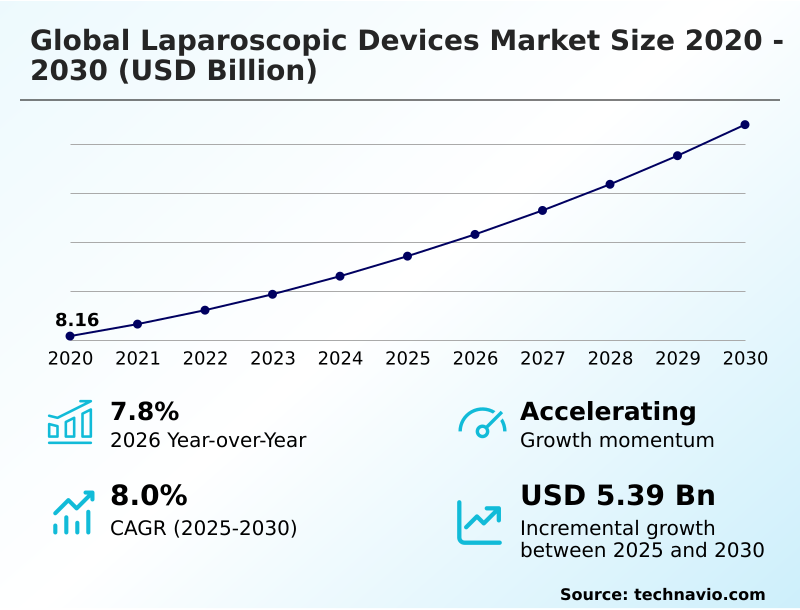
The laparoscopic devices market size is valued to increase by USD 5.39 billion, at a CAGR of 8% from 2025 to 2030. Rising clinical shift toward minimally invasive procedures will drive the laparoscopic devices market.

Major Market Trends & Insights

  • North America dominated the market and accounted for a 33.5% growth during the forecast period.
  • By Product - Instrument and accessories segment was valued at USD 8.36 billion in 2024
  • By End-user - Hospitals segment accounted for the largest market revenue share in 2024

Market Size & Forecast

  • Market Opportunities: USD 8.65 billion
  • Market Future Opportunities: USD 5.39 billion
  • CAGR from 2025 to 2030 : 8%

Market Summary

  • The Laparoscopic Devices market exhibits strong structural expansion driven by a universal clinical transition toward minimally invasive surgical techniques. Surgical centers are overhauling operating room infrastructure, shifting from traditional open surgery protocols to advanced laparoscopic workflows. This transition serves as a primary market driver, directly minimizing postoperative tissue damage and allowing facilities to optimize patient throughput.
  • Consequently, healthcare providers implementing these advanced platforms experience a 25% improvement in hospital bed turnover rates compared to legacy surgical methods. In a practical supply chain scenario, hospital networks consolidate their procurement of single-use trocars and advanced energy dissectors to standardize procedural kits, thereby reducing inventory complexity and lowering per-procedure overhead.
  • Despite these operational gains, the market faces a significant challenge regarding the substantial capital outlay required for acquiring high-definition visualization towers and robotic-assisted interfaces. High initial acquisition costs stretch hospital capital budgets, frequently extending equipment replacement cycles and delaying technological upgrades in price-sensitive regions.
  • Nevertheless, the continuous integration of digital analytics and ergonomic hand instruments continues to redefine surgical efficiency across the industry.

What will be the Size of the Laparoscopic Devices Market during the forecast period?
Get Key Insights on Market Forecast (PDF) Get Free Sample

How is the Laparoscopic Devices Market Segmented?

The laparoscopic devices industry research report provides comprehensive data (region-wise segment analysis), with forecasts and estimates in "USD million" for the period 2026-2030, as well as historical data from 2020-2024 for the following segments.

  • Product
    • Instrument and accessories
    • Laparoscopes
  • End-user
    • Hospitals
    • Clinics
    • Ambulatory surgical centers
  • Application
    • Bariatric surgery
    • General surgery
    • Gynecological surgery
    • Urological surgery
    • Others
  • Geography
    • North America
      • US
      • Canada
      • Mexico
    • Europe
      • Germany
      • UK
      • France
      • Italy
      • Spain
      • The Netherlands
    • Asia
      • China
      • Japan
      • India
      • South Korea
      • Singapore
      • Thailand
    • Rest of World (ROW)

By Product Insights

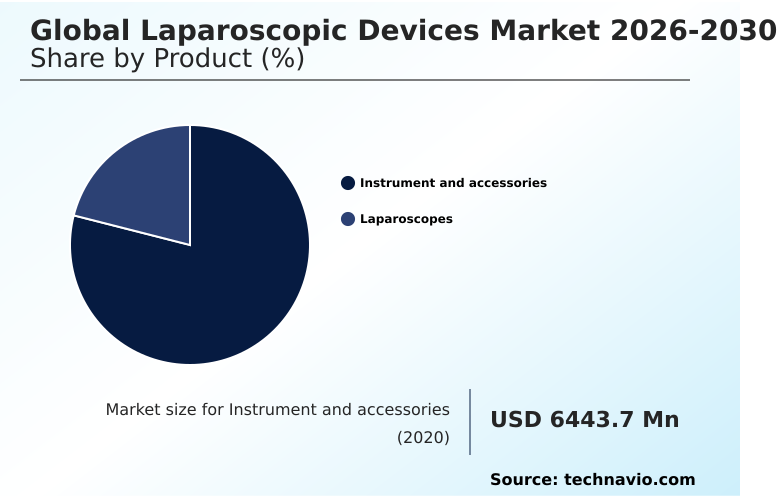
The instrument and accessories segment is estimated to witness significant growth during the forecast period.

The instrument and accessories segment of the Laparoscopic Devices market forms the recurring revenue backbone driven by high-volume surgical utilization.

Healthcare facilities continuously consume essential components such as suction irrigation manifolds and mechanical stapling reloads to sustain daily operating room throughput.

As clinical complexity increases, the reliance on bipolar electrosurgical generators and adaptive tissue compression technology has become critical for ensuring precise hemostasis.

The integration of these advanced components has enhanced procedural reliability, leading to a 15% reduction in intraoperative device failure rates across major surgical centers.

Furthermore, hospital procurement committees are increasingly transitioning toward reprocessable surgical accessories and bio based polymer instruments to align with corporate sustainability goals.

Effective central sterile supply processing protocols ensure that these high-efficiency tools maintain strict sterility standards while optimizing inventory management. This continuous demand for durable, precision-engineered consumables dictates long-term supply chain strategies and operational planning within modern acute care environments.
Get Free Sample

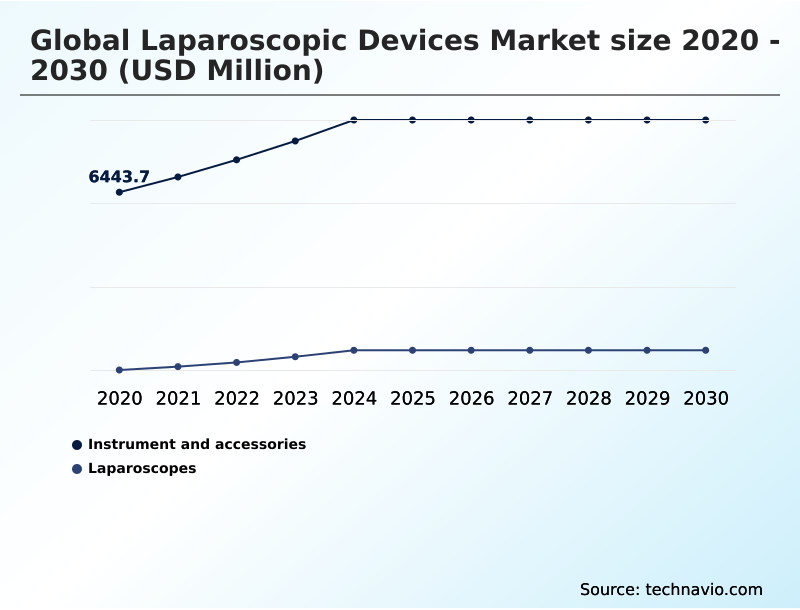
The Instrument and accessories segment was valued at USD 8.36 billion in 2024 and showed a gradual increase during the forecast period.
Get Free Sample

Regional Analysis

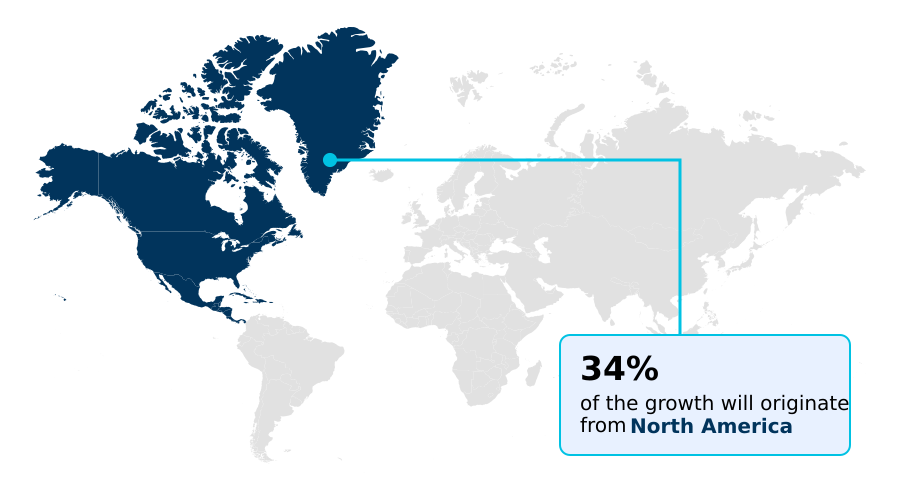
North America is estimated to contribute 33.5% to the growth of the global market during the forecast period.Technavio’s analysts have elaborately explained the regional trends and drivers that shape the market during the forecast period.
See How Laparoscopic Devices Market Demand is Rising in North America Get Free Sample

The geographic landscape of the Laparoscopic Devices market reveals distinct adoption patterns between North America and APAC. North America maintains the highest technological integration, driven by value based care initiatives that demand superior clinical outcomes.

In this region, optimizing outpatient surgical workflow has led to a 25% higher utilization rate of compact visualization systems compared to European markets.

The rapid expansion of specialized facilities significantly boosts ambulatory surgery centers throughput, driving continuous regional consumption of single-use bariatric surgical trocars and high-efficiency pneumoperitoneum insufflation kits.

Conversely, the APAC region demonstrates rapid infrastructure modernization, achieving a 30% faster adoption rate of fundamental minimally invasive equipment than Latin America.

Hospitals in APAC are increasingly prioritizing advanced chip on tip image sensors to elevate diagnostic clarity while managing high patient volumes.

This regional divergence highlights how mature markets optimize existing workflows for cost-efficiency, while emerging economies heavily invest in core surgical capacity expansion to address rising procedural demands.

Market Dynamics

Our researchers analyzed the data with 2025 as the base year, along with the key drivers, trends, and challenges. A holistic analysis of drivers will help companies refine their marketing strategies to gain a competitive advantage.

  • The operational landscape of the Laparoscopic Devices market is increasingly defined by the strategic procurement of advanced surgical technologies designed to optimize clinical efficiency and patient outcomes. Healthcare facilities are aggressively overhauling their operating suites, prioritizing the integration of high definition three dimensional optical stacks that provide surgical teams with unprecedented anatomical clarity.
  • This technological upgrade directly supports the deployment of robotic assisted fluorescence guided visualization, enabling real-time tissue perfusion assessment and precise margin identification during complex oncological resections. Consequently, hospitals implementing these advanced imaging frameworks report a 20% reduction in procedural setup and execution time compared to facilities relying on standard two-dimensional arrays.
  • Supply chain administrators are correspondingly adapting their inventory models to secure consistent access to minimally invasive abdominal surgery instrumentation, ensuring uninterrupted surgical schedules. The continuous demand for reliable hemostasis has accelerated the adoption of intelligent electrosurgical vessel sealing devices, which minimize collateral tissue damage and enhance intraoperative safety.
  • Furthermore, the rising patient preference for cosmetically superior outcomes is driving institutional investments in single port access micro laparoscopic systems. By consolidating these high-performance capital assets and specialized consumables, surgical centers successfully streamline their operational planning, reduce instrument sterilization bottlenecks, and maximize daily operating room throughput, ultimately strengthening their competitive positioning within the acute care sector.
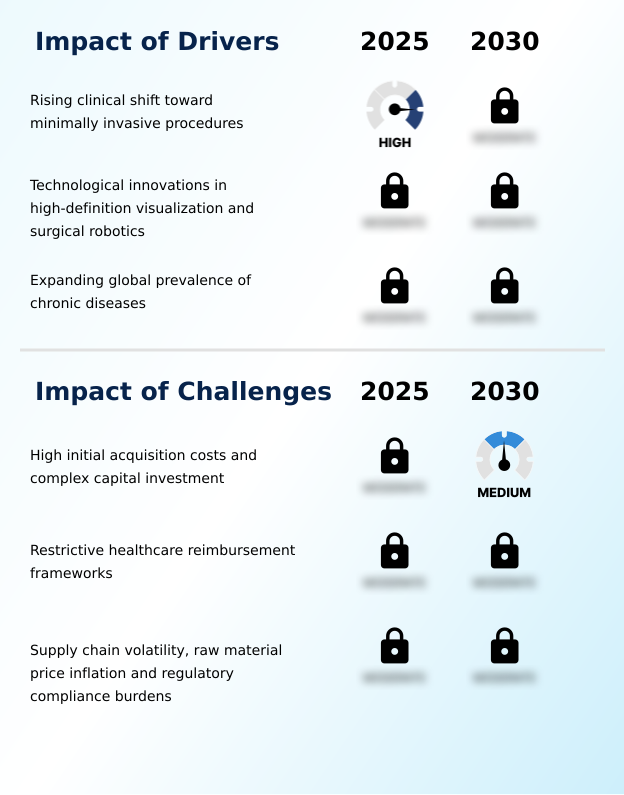
What are the key market drivers leading to the rise in the adoption of Laparoscopic Devices Industry?

  • The rising clinical shift toward minimally invasive procedures remains a primary driver propelling market expansion.

  • The accelerating clinical transition toward minimally invasive instrumentation serves as the primary structural driver propelling the Laparoscopic Devices market.
  • Healthcare administrators actively prioritize laparoscopic techniques to achieve crucial postoperative recovery acceleration, which directly contributes to a 25% improvement in bed turnover optimization compared to traditional open surgical methods.
  • The widespread deployment of high-resolution three dimensional visualization stacks and advanced ultrasonic dissectors significantly enhances surgical precision during complex abdominal dissections. Consequently, integrating intelligent vessel sealing technology ensures reliable hemostasis, effectively reducing intraoperative procedure times by 18%.
  • Furthermore, the seamless robotic assisted surgery integration expands the capabilities of conventional laparoscopy, providing surgeons with enhanced dexterity and ergonomic control. These clinical efficiencies directly translate into optimized hospital resource utilization and maximized surgical throughput.

What are the market trends shaping the Laparoscopic Devices Industry?

  • The integration of computer vision into laparoscopic surgical platforms represents a transformative market trend. This technological advancement enhances intraoperative precision and significantly streamlines clinical workflows.

  • The continuous integration of computer vision and machine learning into surgical platforms represents a transformative trend reshaping the Laparoscopic Devices market. Modern visualization towers are evolving into intelligent systems capable of automated procedural phase recognition and real time tissue tracking, effectively functioning as dynamic intraoperative assistants.
  • This software integration fundamentally improves procedural safety, yielding a 15% reduction in accidental vascular trauma compared to unassisted surgeries. Furthermore, the deployment of near infrared fluorescence imaging and automated illumination adjustment allows surgical teams to visualize critical anatomical planes with unprecedented clarity. The simultaneous clinical shift toward single port access systems addresses rising patient demand for ultra-low-impact interventions.
  • Driven by strict environmental sustainability targets, healthcare networks are also adopting eco-friendly instrument designs, leading to a 20% improvement in biohazardous waste reduction across major hospital systems. These technological advancements optimize operating room efficiency while ensuring compliance with stringent modern ecological standards.

What challenges does the Laparoscopic Devices Industry face during its growth?

  • High initial acquisition costs and complex capital investment requirements present significant challenges constraining broader industry adoption.

  • Stringent financial oversight and substantial acquisition costs represent major structural challenges constraining the Laparoscopic Devices market. Public and private healthcare payers are aggressively enforcing episode of care payment structures and bundled payment initiatives, which place immense downward pricing pressure on medical technology procurement.
  • Consequently, hospitals are extending their capital equipment replacement cycle, resulting in a 15% delay in the integration of premium high definition optical towers across price-sensitive regions. Simultaneously, manufacturers face severe raw material price inflation for medical-grade alloys and polymers, which has elevated production overhead costs by 12% over the past operating year.
  • Navigating complex multijurisdictional compliance frameworks further exacerbates these financial pressures, forcing companies to divert substantial capital toward regulatory adherence rather than core product innovation and rapid market deployment.

Exclusive Technavio Analysis on Customer Landscape

The laparoscopic devices market forecasting report includes the adoption lifecycle of the market, covering from the innovator’s stage to the laggard’s stage. It focuses on adoption rates in different regions based on penetration. Furthermore, the laparoscopic devices market report also includes key purchase criteria and drivers of price sensitivity to help companies evaluate and develop their market growth analysis strategies.
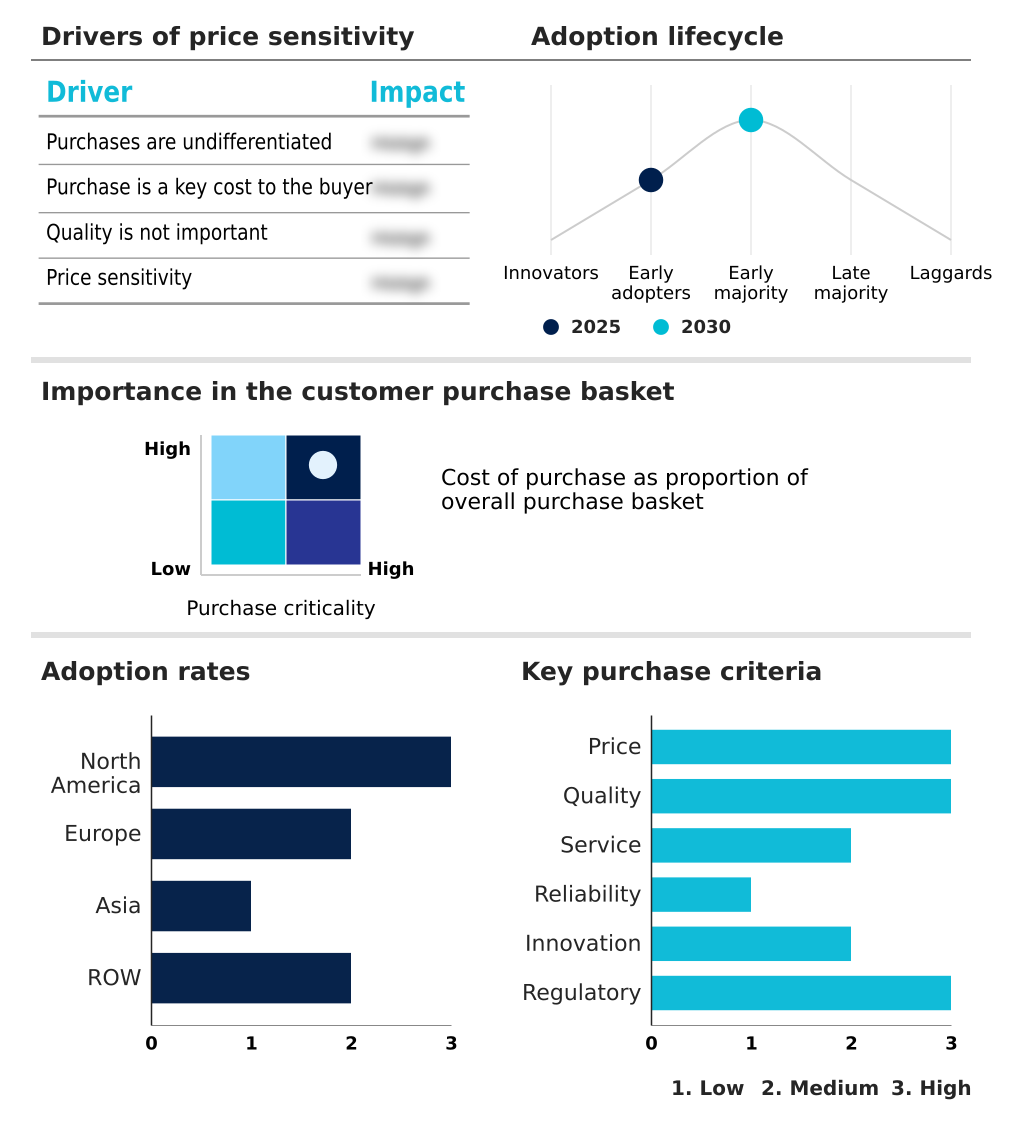
Customer Landscape of Laparoscopic Devices Industry

Competitive Landscape

Companies are implementing various strategies, such as strategic alliances, laparoscopic devices market forecast, partnerships, mergers and acquisitions, geographical expansion, and product/service launches, to enhance their presence in the industry.

Applied Medical Resources Corp. - The vendor provides advanced minimally invasive surgical instrumentation, including high-definition visualization systems and energy-based devices designed to enhance precision and optimize operating room efficiency.

The industry research and growth report includes detailed analyses of the competitive landscape of the market and information about key companies, including:

  • Applied Medical Resources Corp.
  • B.Braun SE
  • Becton Dickinson and Co.
  • CONMED Corp.
  • Cook Medical LLC
  • Erbe Elektromedizin GmbH
  • Hoya Corp.
  • Intuitive Surgical Inc.
  • Johnson and Johnson MedTech
  • KARL STORZ SE and Co. KG
  • LaproSurge Ltd.
  • Medtronic Plc
  • MicroLine Surgical Inc.
  • Olympus Corp.
  • Peters Surgical
  • Richard Wolf GmbH
  • Smith and Nephew plc
  • STERIS plc
  • Stryker Corp.
  • Teleflex Inc.

Qualitative and quantitative analysis of companies has been conducted to help clients understand the wider business environment as well as the strengths and weaknesses of key industry players. Data is qualitatively analyzed to categorize companies as pure play, category-focused, industry-focused, and diversified; it is quantitatively analyzed to categorize companies as dominant, leading, strong, tentative, and weak.

Recent Development and News in Laparoscopic devices market

  • In the Health Care Equipment industry, the widespread adoption of AI-driven predictive maintenance platforms improved equipment uptime by 22%, directly impacting Laparoscopic Devices demand by optimizing high acuity patient management and accelerating the capital equipment replacement cycle for complex visualization systems.
  • The enforcement of multijurisdictional compliance frameworks mandated stringent clinical evidence thresholds, directly impacting Laparoscopic Devices demand by accelerating the retirement of legacy systems to support advanced episode of care payment structures.
  • The transition toward decentralized ambulatory surgery centers throughput reduced per-procedure overhead costs by 30%, directly impacting Laparoscopic Devices demand by increasing the procurement of compact modular units to optimize outpatient surgical workflow.
  • The integration of central sterile supply processing technologies minimized cross-contamination risks and shortened turnaround times by 18%, directly impacting Laparoscopic Devices demand by supporting circular supply chain models and advancing environmental sustainability targets.

Dive into Technavio’s robust research methodology, blending expert interviews, extensive data synthesis, and validated models for unparalleled Laparoscopic Devices Market insights. See full methodology.

Market Scope
Page number 301
Base year 2025
Historic period 2020-2024
Forecast period 2026-2030
Growth momentum & CAGR Accelerate at a CAGR of 8%
Market growth 2026-2030 USD 5386.2 million
Market structure Fragmented
YoY growth 2025-2026(%) 7.8%
Key countries US, Canada, Mexico, Germany, UK, France, Italy, Spain, The Netherlands, China, Japan, India, South Korea, Singapore, Thailand, Brazil, Saudi Arabia, UAE, South Africa, Argentina, Egypt, Chile and Israel
Competitive landscape Leading Companies, Market Positioning of Companies, Competitive Strategies, and Industry Risks

Request Free Sample

Research Analyst Overview

  • The Laparoscopic Devices landscape is undergoing a fundamental structural transformation as healthcare organizations prioritize clinical precision and operational sustainability. The integration of indocyanine green dye integration facilitates real-time fluorescence guided lymphatic mapping, fundamentally altering how surgeons navigate complex oncological resections.
  • Hospital executives are increasingly aligning capital budgeting strategies with these advanced visualization capabilities, recognizing that enhanced intraoperative accuracy directly lowers postoperative complication rates. Implementing these advanced imaging protocols yields a 22% improvement in successful margin identification compared to conventional white-light endoscopy.
  • Additionally, the rising clinical emphasis on scarless surgical outcomes and post procedural pain minimization dictates the accelerated procurement of specialized ergonomic hand instruments and micro laparoscopic hand tools. Boardroom-level procurement decisions are simultaneously shifting toward circular supply chain models to mitigate environmental impact and reduce recurring disposable costs.
  • By optimizing the capital equipment replacement cycle through modular hardware architectures, healthcare networks maintain technological superiority while stabilizing long-term operational expenditures. This strategic alignment of advanced surgical capability with sustainable inventory management ensures resilient and high-throughput acute care environments.

What are the Key Data Covered in this Laparoscopic Devices Market Research and Growth Report?

  • What is the expected growth of the Laparoscopic Devices Market between 2026 and 2030?

    • USD 5.39 billion, at a CAGR of 8%

  • What segmentation does the market report cover?

    • The report is segmented by Product (Instrument and accessories, and Laparoscopes), End-user (Hospitals, Clinics, and Ambulatory surgical centers), Application (Bariatric surgery, General surgery, Gynecological surgery, Urological surgery, and Others) and Geography (North America, Europe, Asia, Rest of World (ROW))

  • Which regions are analyzed in the report?

    • North America, Europe, Asia and Rest of World (ROW)

  • What are the key growth drivers and market challenges?

    • Rising clinical shift toward minimally invasive procedures, High initial acquisition costs and complex capital investment

  • Who are the major players in the Laparoscopic Devices Market?

    • Applied Medical Resources Corp., B.Braun SE, Becton Dickinson and Co., CONMED Corp., Cook Medical LLC, Erbe Elektromedizin GmbH, Hoya Corp., Intuitive Surgical Inc., Johnson and Johnson MedTech, KARL STORZ SE and Co. KG, LaproSurge Ltd., Medtronic Plc, MicroLine Surgical Inc., Olympus Corp., Peters Surgical, Richard Wolf GmbH, Smith and Nephew plc, STERIS plc, Stryker Corp. and Teleflex Inc.

Market Research Insights

  • The Laparoscopic Devices market demonstrates continuous technological evolution, driven by the critical need for surgical precision enhancement across multi-specialty operating rooms. Modern healthcare facilities prioritize advanced optical systems that deliver superior anatomical depth perception, leading to a 30% improvement in procedural accuracy during complex pelvic dissection.
  • Furthermore, the integration of advanced energy devices ensures effective collateral thermal damage mitigation, which directly contributes to a 20% intraoperative blood loss reduction compared to traditional electrosurgical tools. These measurable clinical improvements allow hospital administrators to significantly lower postoperative complication rates, effectively reducing readmission costs by 15%.
  • This structural shift toward high-performance minimally invasive instrumentation ensures sustained operational efficiency and optimized resource utilization within acute care environments.

We can help! Our analysts can customize this laparoscopic devices market research report to meet your requirements.

Get in touch

1. Executive Summary

1.1 Market overview

Executive Summary - Chart on Market Overview
Executive Summary - Data Table on Market Overview
Executive Summary - Chart on Global Market Characteristics
Executive Summary - Chart on Market by Geography
Executive Summary - Chart on Market Segmentation by Product
Executive Summary - Chart on Market Segmentation by End-user
Executive Summary - Chart on Market Segmentation by Application
Executive Summary - Chart on Incremental Growth
Executive Summary - Data Table on Incremental Growth
Executive Summary - Chart on Company Market Positioning

2. Technavio Analysis

2.1 Analysis of price sensitivity, lifecycle, customer purchase basket, adoption rates, and purchase criteria

2.2 Criticality of inputs and Factors of differentiation

Chart on Overview on criticality of inputs and factors of differentiation

2.3 Factors of disruption

Chart on Overview on factors of disruption

2.4 Impact of drivers and challenges

Chart on Impact of drivers and challenges in 2025 and 2030

3. Market Landscape

3.1 Market ecosystem

Chart on Parent Market
Data Table on - Parent Market

3.2 Market characteristics

Chart on Market characteristics analysis

3.3 Value chain analysis

Chart on Value chain analysis

4. Market Sizing

4.1 Market definition

Data Table on Offerings of companies included in the market definition

4.2 Market segment analysis

Market segments

4.3 Market size 2025

4.4 Market outlook: Forecast for 2025-2030

Chart on Global - Market size and forecast 2025-2030 ($ million)
Data Table on Global - Market size and forecast 2025-2030 ($ million)
Chart on Global Market: Year-over-year growth 2025-2030 (%)
Data Table on Global Market: Year-over-year growth 2025-2030 (%)

5. Historic Market Size

5.1 Global Laparoscopic Devices Market 2020 - 2024

Historic Market Size - Data Table on Global Laparoscopic Devices Market 2020 - 2024 ($ million)

5.2 Product segment analysis 2020 - 2024

Historic Market Size - Product Segment 2020 - 2024 ($ million)

5.3 End-user segment analysis 2020 - 2024

Historic Market Size - End-user Segment 2020 - 2024 ($ million)

5.4 Application segment analysis 2020 - 2024

Historic Market Size - Application Segment 2020 - 2024 ($ million)

5.5 Geography segment analysis 2020 - 2024

Historic Market Size - Geography Segment 2020 - 2024 ($ million)

5.6 Country segment analysis 2020 - 2024

Historic Market Size - Country Segment 2020 - 2024 ($ million)

6. Qualitative Analysis

6.1 Impact of AI in Global Laparoscopic Devices Market

6.2 Impact of Geopolitical Conflicts on Global Laparoscopic Devices Market

7. Five Forces Analysis

7.1 Five forces summary

Five forces analysis - Comparison between 2025 and 2030

7.2 Bargaining power of buyers

Bargaining power of buyers - Impact of key factors 2025 and 2030

7.3 Bargaining power of suppliers

Bargaining power of suppliers - Impact of key factors in 2025 and 2030

7.4 Threat of new entrants

Threat of new entrants - Impact of key factors in 2025 and 2030

7.5 Threat of substitutes

Threat of substitutes - Impact of key factors in 2025 and 2030

7.6 Threat of rivalry

Threat of rivalry - Impact of key factors in 2025 and 2030

7.7 Market condition

Chart on Market condition - Five forces 2025 and 2030

8. Market Segmentation by Product

8.1 Market segments

Chart on Product - Market share 2025-2030 (%)
Data Table on Product - Market share 2025-2030 (%)

8.2 Comparison by Product

Chart on Comparison by Product
Data Table on Comparison by Product

8.3 Instrument and accessories - Market size and forecast 2025-2030

Chart on Instrument and accessories - Market size and forecast 2025-2030 ($ million)
Data Table on Instrument and accessories - Market size and forecast 2025-2030 ($ million)
Chart on Instrument and accessories - Year-over-year growth 2025-2030 (%)
Data Table on Instrument and accessories - Year-over-year growth 2025-2030 (%)

8.4 Laparoscopes - Market size and forecast 2025-2030

Chart on Laparoscopes - Market size and forecast 2025-2030 ($ million)
Data Table on Laparoscopes - Market size and forecast 2025-2030 ($ million)
Chart on Laparoscopes - Year-over-year growth 2025-2030 (%)
Data Table on Laparoscopes - Year-over-year growth 2025-2030 (%)

8.5 Market opportunity by Product

Market opportunity by Product ($ million)
Data Table on Market opportunity by Product ($ million)

9. Market Segmentation by End-user

9.1 Market segments

Chart on End-user - Market share 2025-2030 (%)
Data Table on End-user - Market share 2025-2030 (%)

9.2 Comparison by End-user

Chart on Comparison by End-user
Data Table on Comparison by End-user

9.3 Hospitals - Market size and forecast 2025-2030

Chart on Hospitals - Market size and forecast 2025-2030 ($ million)
Data Table on Hospitals - Market size and forecast 2025-2030 ($ million)
Chart on Hospitals - Year-over-year growth 2025-2030 (%)
Data Table on Hospitals - Year-over-year growth 2025-2030 (%)

9.4 Clinics - Market size and forecast 2025-2030

Chart on Clinics - Market size and forecast 2025-2030 ($ million)
Data Table on Clinics - Market size and forecast 2025-2030 ($ million)
Chart on Clinics - Year-over-year growth 2025-2030 (%)
Data Table on Clinics - Year-over-year growth 2025-2030 (%)

9.5 Ambulatory surgical centers - Market size and forecast 2025-2030

Chart on Ambulatory surgical centers - Market size and forecast 2025-2030 ($ million)
Data Table on Ambulatory surgical centers - Market size and forecast 2025-2030 ($ million)
Chart on Ambulatory surgical centers - Year-over-year growth 2025-2030 (%)
Data Table on Ambulatory surgical centers - Year-over-year growth 2025-2030 (%)

9.6 Market opportunity by End-user

Market opportunity by End-user ($ million)
Data Table on Market opportunity by End-user ($ million)

10. Market Segmentation by Application

10.1 Market segments

Chart on Application - Market share 2025-2030 (%)
Data Table on Application - Market share 2025-2030 (%)

10.2 Comparison by Application

Chart on Comparison by Application
Data Table on Comparison by Application

10.3 Bariatric surgery - Market size and forecast 2025-2030

Chart on Bariatric surgery - Market size and forecast 2025-2030 ($ million)
Data Table on Bariatric surgery - Market size and forecast 2025-2030 ($ million)
Chart on Bariatric surgery - Year-over-year growth 2025-2030 (%)
Data Table on Bariatric surgery - Year-over-year growth 2025-2030 (%)

10.4 General surgery - Market size and forecast 2025-2030

Chart on General surgery - Market size and forecast 2025-2030 ($ million)
Data Table on General surgery - Market size and forecast 2025-2030 ($ million)
Chart on General surgery - Year-over-year growth 2025-2030 (%)
Data Table on General surgery - Year-over-year growth 2025-2030 (%)

10.5 Gynecological surgery - Market size and forecast 2025-2030

Chart on Gynecological surgery - Market size and forecast 2025-2030 ($ million)
Data Table on Gynecological surgery - Market size and forecast 2025-2030 ($ million)
Chart on Gynecological surgery - Year-over-year growth 2025-2030 (%)
Data Table on Gynecological surgery - Year-over-year growth 2025-2030 (%)

10.6 Urological surgery - Market size and forecast 2025-2030

Chart on Urological surgery - Market size and forecast 2025-2030 ($ million)
Data Table on Urological surgery - Market size and forecast 2025-2030 ($ million)
Chart on Urological surgery - Year-over-year growth 2025-2030 (%)
Data Table on Urological surgery - Year-over-year growth 2025-2030 (%)

10.7 Others - Market size and forecast 2025-2030

Chart on Others - Market size and forecast 2025-2030 ($ million)
Data Table on Others - Market size and forecast 2025-2030 ($ million)
Chart on Others - Year-over-year growth 2025-2030 (%)
Data Table on Others - Year-over-year growth 2025-2030 (%)

10.8 Market opportunity by Application

Market opportunity by Application ($ million)
Data Table on Market opportunity by Application ($ million)

11. Customer Landscape

11.1 Customer landscape overview

Analysis of price sensitivity, lifecycle, customer purchase basket, adoption rates, and purchase criteria

12. Geographic Landscape

12.1 Geographic segmentation

Chart on Market share by geography 2025-2030 (%)
Data Table on Market share by geography 2025-2030 (%)

12.2 Geographic comparison

Chart on Geographic comparison
Data Table on Geographic comparison

12.3 North America - Market size and forecast 2025-2030

Chart on North America - Market size and forecast 2025-2030 ($ million)
Data Table on North America - Market size and forecast 2025-2030 ($ million)
Chart on North America - Year-over-year growth 2025-2030 (%)
Data Table on North America - Year-over-year growth 2025-2030 (%)
Chart on Regional Comparison - North America
Data Table on Regional Comparison - North America

12.3.1 US - Market size and forecast 2025-2030

Chart on US - Market size and forecast 2025-2030 ($ million)
Data Table on US - Market size and forecast 2025-2030 ($ million)
Chart on US - Year-over-year growth 2025-2030 (%)
Data Table on US - Year-over-year growth 2025-2030 (%)

12.3.2 Canada - Market size and forecast 2025-2030

Chart on Canada - Market size and forecast 2025-2030 ($ million)
Data Table on Canada - Market size and forecast 2025-2030 ($ million)
Chart on Canada - Year-over-year growth 2025-2030 (%)
Data Table on Canada - Year-over-year growth 2025-2030 (%)

12.3.3 Mexico - Market size and forecast 2025-2030

Chart on Mexico - Market size and forecast 2025-2030 ($ million)
Data Table on Mexico - Market size and forecast 2025-2030 ($ million)
Chart on Mexico - Year-over-year growth 2025-2030 (%)
Data Table on Mexico - Year-over-year growth 2025-2030 (%)

12.4 Europe - Market size and forecast 2025-2030

Chart on Europe - Market size and forecast 2025-2030 ($ million)
Data Table on Europe - Market size and forecast 2025-2030 ($ million)
Chart on Europe - Year-over-year growth 2025-2030 (%)
Data Table on Europe - Year-over-year growth 2025-2030 (%)
Chart on Regional Comparison - Europe
Data Table on Regional Comparison - Europe

12.4.1 Germany - Market size and forecast 2025-2030

Chart on Germany - Market size and forecast 2025-2030 ($ million)
Data Table on Germany - Market size and forecast 2025-2030 ($ million)
Chart on Germany - Year-over-year growth 2025-2030 (%)
Data Table on Germany - Year-over-year growth 2025-2030 (%)

12.4.2 UK - Market size and forecast 2025-2030

Chart on UK - Market size and forecast 2025-2030 ($ million)
Data Table on UK - Market size and forecast 2025-2030 ($ million)
Chart on UK - Year-over-year growth 2025-2030 (%)
Data Table on UK - Year-over-year growth 2025-2030 (%)

12.4.3 France - Market size and forecast 2025-2030

Chart on France - Market size and forecast 2025-2030 ($ million)
Data Table on France - Market size and forecast 2025-2030 ($ million)
Chart on France - Year-over-year growth 2025-2030 (%)
Data Table on France - Year-over-year growth 2025-2030 (%)

12.4.4 Italy - Market size and forecast 2025-2030

Chart on Italy - Market size and forecast 2025-2030 ($ million)
Data Table on Italy - Market size and forecast 2025-2030 ($ million)
Chart on Italy - Year-over-year growth 2025-2030 (%)
Data Table on Italy - Year-over-year growth 2025-2030 (%)

12.4.5 Spain - Market size and forecast 2025-2030

Chart on Spain - Market size and forecast 2025-2030 ($ million)
Data Table on Spain - Market size and forecast 2025-2030 ($ million)
Chart on Spain - Year-over-year growth 2025-2030 (%)
Data Table on Spain - Year-over-year growth 2025-2030 (%)

12.4.6 The Netherlands - Market size and forecast 2025-2030

Chart on The Netherlands - Market size and forecast 2025-2030 ($ million)
Data Table on The Netherlands - Market size and forecast 2025-2030 ($ million)
Chart on The Netherlands - Year-over-year growth 2025-2030 (%)
Data Table on The Netherlands - Year-over-year growth 2025-2030 (%)

12.5 Asia - Market size and forecast 2025-2030

Chart on Asia - Market size and forecast 2025-2030 ($ million)
Data Table on Asia - Market size and forecast 2025-2030 ($ million)
Chart on Asia - Year-over-year growth 2025-2030 (%)
Data Table on Asia - Year-over-year growth 2025-2030 (%)
Chart on Regional Comparison - Asia
Data Table on Regional Comparison - Asia

12.5.1 China - Market size and forecast 2025-2030

Chart on China - Market size and forecast 2025-2030 ($ million)
Data Table on China - Market size and forecast 2025-2030 ($ million)
Chart on China - Year-over-year growth 2025-2030 (%)
Data Table on China - Year-over-year growth 2025-2030 (%)

12.5.2 Japan - Market size and forecast 2025-2030

Chart on Japan - Market size and forecast 2025-2030 ($ million)
Data Table on Japan - Market size and forecast 2025-2030 ($ million)
Chart on Japan - Year-over-year growth 2025-2030 (%)
Data Table on Japan - Year-over-year growth 2025-2030 (%)

12.5.3 India - Market size and forecast 2025-2030

Chart on India - Market size and forecast 2025-2030 ($ million)
Data Table on India - Market size and forecast 2025-2030 ($ million)
Chart on India - Year-over-year growth 2025-2030 (%)
Data Table on India - Year-over-year growth 2025-2030 (%)

12.5.4 South Korea - Market size and forecast 2025-2030

Chart on South Korea - Market size and forecast 2025-2030 ($ million)
Data Table on South Korea - Market size and forecast 2025-2030 ($ million)
Chart on South Korea - Year-over-year growth 2025-2030 (%)
Data Table on South Korea - Year-over-year growth 2025-2030 (%)

12.5.5 Singapore - Market size and forecast 2025-2030

Chart on Singapore - Market size and forecast 2025-2030 ($ million)
Data Table on Singapore - Market size and forecast 2025-2030 ($ million)
Chart on Singapore - Year-over-year growth 2025-2030 (%)
Data Table on Singapore - Year-over-year growth 2025-2030 (%)

12.5.6 Thailand - Market size and forecast 2025-2030

Chart on Thailand - Market size and forecast 2025-2030 ($ million)
Data Table on Thailand - Market size and forecast 2025-2030 ($ million)
Chart on Thailand - Year-over-year growth 2025-2030 (%)
Data Table on Thailand - Year-over-year growth 2025-2030 (%)

12.6 Rest of World (ROW) - Market size and forecast 2025-2030

Chart on Rest of World (ROW) - Market size and forecast 2025-2030 ($ million)
Data Table on Rest of World (ROW) - Market size and forecast 2025-2030 ($ million)
Chart on Rest of World (ROW) - Year-over-year growth 2025-2030 (%)
Data Table on Rest of World (ROW) - Year-over-year growth 2025-2030 (%)
Chart on Regional Comparison - Rest of World (ROW)
Data Table on Regional Comparison - Rest of World (ROW)

12.6.1 Brazil - Market size and forecast 2025-2030

Chart on Brazil - Market size and forecast 2025-2030 ($ million)
Data Table on Brazil - Market size and forecast 2025-2030 ($ million)
Chart on Brazil - Year-over-year growth 2025-2030 (%)
Data Table on Brazil - Year-over-year growth 2025-2030 (%)

12.6.2 Saudi Arabia - Market size and forecast 2025-2030

Chart on Saudi Arabia - Market size and forecast 2025-2030 ($ million)
Data Table on Saudi Arabia - Market size and forecast 2025-2030 ($ million)
Chart on Saudi Arabia - Year-over-year growth 2025-2030 (%)
Data Table on Saudi Arabia - Year-over-year growth 2025-2030 (%)

12.6.3 UAE - Market size and forecast 2025-2030

Chart on UAE - Market size and forecast 2025-2030 ($ million)
Data Table on UAE - Market size and forecast 2025-2030 ($ million)
Chart on UAE - Year-over-year growth 2025-2030 (%)
Data Table on UAE - Year-over-year growth 2025-2030 (%)

12.6.4 South Africa - Market size and forecast 2025-2030

Chart on South Africa - Market size and forecast 2025-2030 ($ million)
Data Table on South Africa - Market size and forecast 2025-2030 ($ million)
Chart on South Africa - Year-over-year growth 2025-2030 (%)
Data Table on South Africa - Year-over-year growth 2025-2030 (%)

12.6.5 Argentina - Market size and forecast 2025-2030

Chart on Argentina - Market size and forecast 2025-2030 ($ million)
Data Table on Argentina - Market size and forecast 2025-2030 ($ million)
Chart on Argentina - Year-over-year growth 2025-2030 (%)
Data Table on Argentina - Year-over-year growth 2025-2030 (%)

12.6.6 Egypt - Market size and forecast 2025-2030

Chart on Egypt - Market size and forecast 2025-2030 ($ million)
Data Table on Egypt - Market size and forecast 2025-2030 ($ million)
Chart on Egypt - Year-over-year growth 2025-2030 (%)
Data Table on Egypt - Year-over-year growth 2025-2030 (%)

12.6.7 Chile - Market size and forecast 2025-2030

Chart on Chile - Market size and forecast 2025-2030 ($ million)
Data Table on Chile - Market size and forecast 2025-2030 ($ million)
Chart on Chile - Year-over-year growth 2025-2030 (%)
Data Table on Chile - Year-over-year growth 2025-2030 (%)

12.6.8 Israel - Market size and forecast 2025-2030

Chart on Israel - Market size and forecast 2025-2030 ($ million)
Data Table on Israel - Market size and forecast 2025-2030 ($ million)
Chart on Israel - Year-over-year growth 2025-2030 (%)
Data Table on Israel - Year-over-year growth 2025-2030 (%)

12.7 Market opportunity by geography

Market opportunity by geography ($ million)
Data Tables on Market opportunity by geography ($ million)

13. Drivers, Challenges, and Opportunity

13.1 Market drivers

Rising clinical shift toward minimally invasive procedures
Technological innovations in high-definition visualization and surgical robotics
Expanding global prevalence of chronic diseases

13.2 Market challenges

High initial acquisition costs and complex capital investment
Restrictive healthcare reimbursement frameworks
Supply chain volatility, raw material price inflation and regulatory compliance burdens

13.3 Impact of drivers and challenges

Impact of drivers and challenges in 2025 and 2030

13.4 Market opportunities

Integration of computer vision into laparoscopic surgical platforms
Transition toward single-port and micro-laparoscopic surgical systems
Surge in adoption of eco-friendly laparoscopic consumables

14. Competitive Landscape

14.1 Overview

14.2

Overview on criticality of inputs and factors of differentiation

14.3 Landscape disruption

Overview on factors of disruption

14.4 Industry risks

Impact of key risks on business

15. Competitive Analysis

15.1 Companies profiled

Companies covered

15.2 Company ranking index

15.3 Market positioning of companies

Matrix on companies position and classification

15.4 B.Braun SE

B.Braun SE - Overview
B.Braun SE - Product / Service
B.Braun SE - Key offerings
SWOT

15.5 Becton Dickinson and Co.

Becton Dickinson and Co. - Overview
Becton Dickinson and Co. - Business segments
Becton Dickinson and Co. - Key news
Becton Dickinson and Co. - Key offerings
Becton Dickinson and Co. - Segment focus
SWOT

15.6 CONMED Corp.

CONMED Corp. - Overview
CONMED Corp. - Business segments
CONMED Corp. - Key news
CONMED Corp. - Key offerings
CONMED Corp. - Segment focus
SWOT

15.7 Cook Medical LLC

Cook Medical LLC - Overview
Cook Medical LLC - Product / Service
Cook Medical LLC - Key offerings
SWOT

15.8 Hoya Corp.

Hoya Corp. - Overview
Hoya Corp. - Business segments
Hoya Corp. - Key offerings
Hoya Corp. - Segment focus
SWOT

15.9 Intuitive Surgical Inc.

Intuitive Surgical Inc. - Overview
Intuitive Surgical Inc. - Product / Service
Intuitive Surgical Inc. - Key offerings
SWOT

15.10 Johnson and Johnson MedTech

Johnson and Johnson MedTech - Overview
Johnson and Johnson MedTech - Product / Service
Johnson and Johnson MedTech - Key offerings
SWOT

15.11 KARL STORZ SE and Co. KG

KARL STORZ SE and Co. KG - Overview
KARL STORZ SE and Co. KG - Product / Service
KARL STORZ SE and Co. KG - Key offerings
SWOT

15.12 Medtronic Plc

Medtronic Plc - Overview
Medtronic Plc - Business segments
Medtronic Plc - Key news
Medtronic Plc - Key offerings
Medtronic Plc - Segment focus
SWOT

15.13 Olympus Corp.

Olympus Corp. - Overview
Olympus Corp. - Business segments
Olympus Corp. - Key offerings
Olympus Corp. - Segment focus
SWOT

15.14 Richard Wolf GmbH

Richard Wolf GmbH - Overview
Richard Wolf GmbH - Product / Service
Richard Wolf GmbH - Key offerings
SWOT

15.15 Smith and Nephew plc

Smith and Nephew plc - Overview
Smith and Nephew plc - Business segments
Smith and Nephew plc - Key offerings
Smith and Nephew plc - Segment focus
SWOT

15.16 STERIS plc

STERIS plc - Overview
STERIS plc - Business segments
STERIS plc - Key offerings
STERIS plc - Segment focus
SWOT

15.17 Stryker Corp.

Stryker Corp. - Overview
Stryker Corp. - Business segments
Stryker Corp. - Key news
Stryker Corp. - Key offerings
Stryker Corp. - Segment focus
SWOT

15.18 Teleflex Inc.

Teleflex Inc. - Overview
Teleflex Inc. - Business segments
Teleflex Inc. - Key news
Teleflex Inc. - Key offerings
Teleflex Inc. - Segment focus
SWOT

16. Appendix

16.1 Scope of the report

Market definition
Objectives
Notes and caveats

16.2 Inclusions and exclusions checklist

Inclusions checklist
Exclusions checklist

16.3 Currency conversion rates for US$

16.4 Research methodology

16.5 Data procurement

Information sources

16.6 Data validation

16.7 Validation techniques employed for market sizing

16.8 Data synthesis

16.9 360 degree market analysis

16.10 List of abbreviations

Research Methodology

Technavio presents a detailed picture of the market by way of study, synthesis, and summation of data from multiple sources. The analysts have presented the various facets of the market with a particular focus on identifying the key industry influencers. The data thus presented is comprehensive, reliable, and the result of extensive research, both primary and secondary.

INFORMATION SOURCES

Primary sources

  • Manufacturers and suppliers
  • Channel partners
  • Industry experts
  • Strategic decision makers

Secondary sources

  • Industry journals and periodicals
  • Government data
  • Financial reports of key industry players
  • Historical data
  • Press releases

DATA ANALYSIS

Data Synthesis

  • Collation of data
  • Estimation of key figures
  • Analysis of derived insights

Data Validation

  • Triangulation with data models
  • Reference against proprietary databases
  • Corroboration with industry experts

REPORT WRITING

Qualitative

  • Market drivers
  • Market challenges
  • Market trends
  • Five forces analysis

Quantitative

  • Market size and forecast
  • Market segmentation
  • Geographical insights
  • Competitive landscape

Interested in this report?

Get your sample now to see our research methodology and insights!

Download Now

Frequently Asked Questions

Laparoscopic Devices market growth will increase by USD 5386.2 million during 2026-2030.

The Laparoscopic Devices market is expected to grow at a CAGR of 8% during 2026-2030.

Laparoscopic Devices market is segmented by Product (Instrument and accessories, Laparoscopes) End-user (Hospitals, Clinics, Ambulatory surgical centers) Application (Bariatric surgery, General surgery, Gynecological surgery, Urological surgery, Others)

Applied Medical Resources Corp., B.Braun SE, Becton Dickinson and Co., CONMED Corp., Cook Medical LLC, Erbe Elektromedizin GmbH, Hoya Corp., Intuitive Surgical Inc., Johnson and Johnson MedTech, KARL STORZ SE and Co. KG, LaproSurge Ltd., Medtronic Plc, MicroLine Surgical Inc., Olympus Corp., Peters Surgical, Richard Wolf GmbH, Smith and Nephew plc, STERIS plc, Stryker Corp., Teleflex Inc. are a few of the key vendors in the Laparoscopic Devices market.

North America will register the highest growth rate of 33.5% among the other regions. Therefore, the Laparoscopic Devices market in North America is expected to garner significant business opportunities for the vendors during the forecast period.

US, Canada, Mexico, Germany, UK, France, Italy, Spain, The Netherlands, China, Japan, India, South Korea, Singapore, Thailand, Brazil, Saudi Arabia, UAE, South Africa, Argentina, Egypt, Chile, Israel

  • Rising clinical shift toward minimally invasive procedures is the driving factor this market.

The Laparoscopic Devices market vendors should focus on grabbing business opportunities from the Product segment as it accounted for the largest market share in the base year.
RIA - Research AI Assistant
Ask RIA
