


Liquefied Natural Gas (Lng) Bunkering Market Size 2026-2030
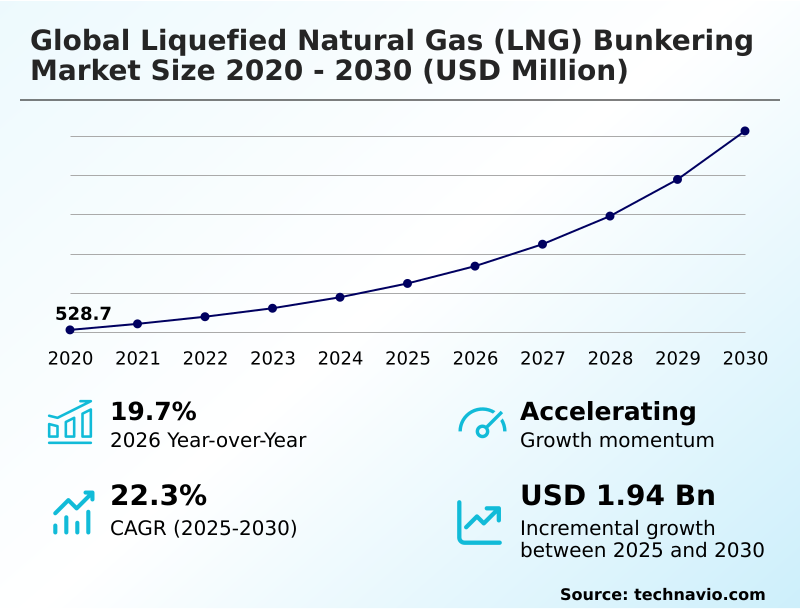
The liquefied natural gas (lng) bunkering market size is valued to increase by USD 1.94 billion, at a CAGR of 22.3% from 2025 to 2030. Stringent international environmental regulations and decarbonization mandates will drive the liquefied natural gas (lng) bunkering market.
Major Market Trends & Insights
- Europe dominated the market and accounted for a 55.3% growth during the forecast period.
- By Application - Tanker segment was valued at USD 310 million in 2024
- By End-user - Commercial segment accounted for the largest market revenue share in 2024
Market Size & Forecast
- Market Opportunities: USD 2.53 billion
- Market Future Opportunities: USD 1.94 billion
- CAGR from 2025 to 2030 : 22.3%
Market Summary
- The Liquefied Natural Gas (LNG) Bunkering operates as a critical transition mechanism within the maritime transport sector facilitating compliance with stringent global emissions standards. Commercial fleet operators are rapidly upgrading propulsion systems to eliminate sulfur oxides and reduce particulate matter across primary transoceanic shipping routes.
- For example in supply chain logistics major container lines secure multi-year cryogenic fuel contracts at central harbor hubs ensuring continuous cargo transit without incurring anchorage delays. This operational strategy has resulted in a 25% reduction in vessel turnaround times compared to traditional heavy fuel oil bunkering processes.
- The market is primarily driven by the enforcement of rigid environmental regulations that penalize high carbon intensity compelling shipowners to adopt cleaner fuel alternatives. Conversely the necessity for massive initial capital investments in specialized cryogenic storage and ship-to-ship transfer vessels restrains widespread infrastructure deployment in smaller regional ports.
- Ultimately the integration of advanced cryogenic technology and reliable supply networks remains essential for sustaining commercial maritime operations.
What will be the Size of the Liquefied Natural Gas (Lng) Bunkering Market during the forecast period?
Get Key Insights on Market Forecast (PDF) Get Free Sample
How is the Liquefied Natural Gas (Lng) Bunkering Market Segmented?
The liquefied natural gas (lng) bunkering industry research report provides comprehensive data (region-wise segment analysis), with forecasts and estimates in "USD million" for the period 2026-2030, as well as historical data from 2020-2024 for the following segments.
- Application
- Tanker
- Container
- Ferry and ro-ro
- Others
- End-user
- Commercial
- Defense
- Product type
- Ship-to-ship
- Port-to-ship
- Truck-to-ship
- Portable tanks
- Geography
- Europe
- The Netherlands
- Norway
- Belgium
- Spain
- UK
- France
- APAC
- China
- Singapore
- South Korea
- Japan
- India
- Australia
- North America
- US
- Canada
- Mexico
- South America
- Brazil
- Argentina
- Chile
- Middle East and Africa
- UAE
- Saudi Arabia
- Qatar
- Oman
- Egypt
- Europe
By Application Insights
The tanker segment is estimated to witness significant growth during the forecast period.
The tanker segment within the Liquefied Natural Gas (LNG) Bunkering necessitates specialized fueling architectures to support continuous crude oil transit. Deep-sea liquid cargo operators are rapidly adopting gas-fueled marine engines to comply with stringent environmental mandates across transoceanic freight corridors.
This operational shift has led to a 15% improvement in compliance efficiency for fleets utilizing multi-modal distribution networks. To mitigate product loss during refueling, modern tankers rely on advanced cryogenic handling protocols and direct cryogenic pipeline connections.
These systems, often augmented by floating storage regasification units, ensure safe transfers while vessels load or discharge cargo, maximizing harbor throughput.
Additionally, the integration of drop-in biological fuels into existing infrastructure allows tanker operators to achieve immediate emission reductions without overhauling propulsion systems. Environmental enforcement patrol entities monitor these fuel lifecycle tracking mechanisms to verify adherence to strict atmospheric caps.
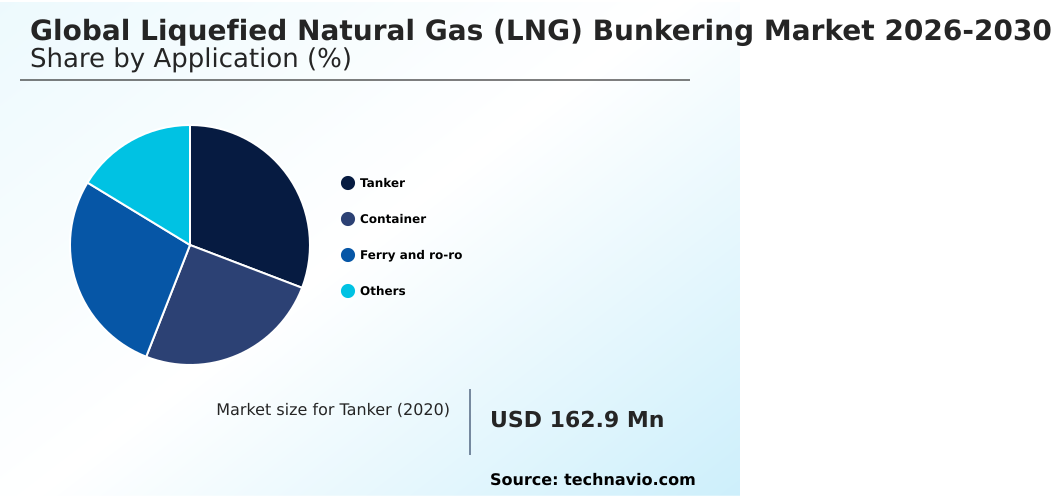
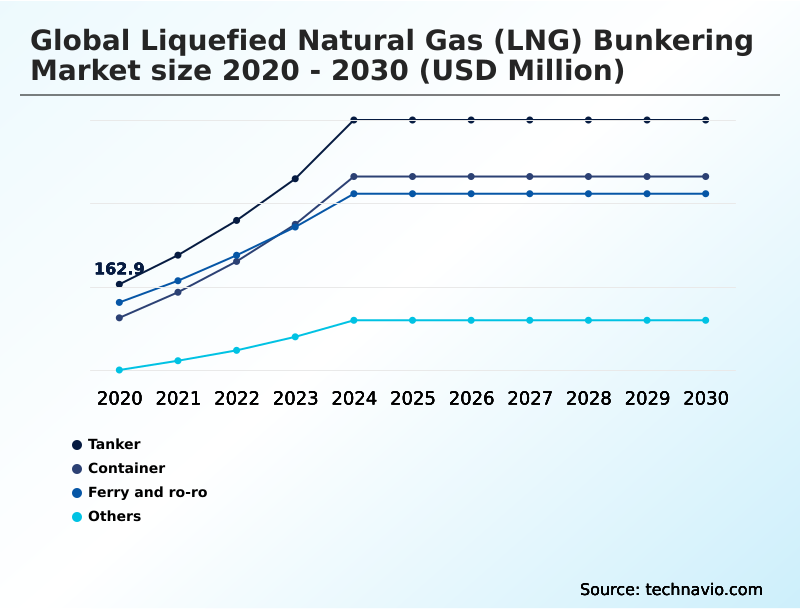
The Tanker segment was valued at USD 310 million in 2024 and showed a gradual increase during the forecast period.
Regional Analysis
Europe is estimated to contribute 55.3% to the growth of the global market during the forecast period.Technavio’s analysts have elaborately explained the regional trends and drivers that shape the market during the forecast period.
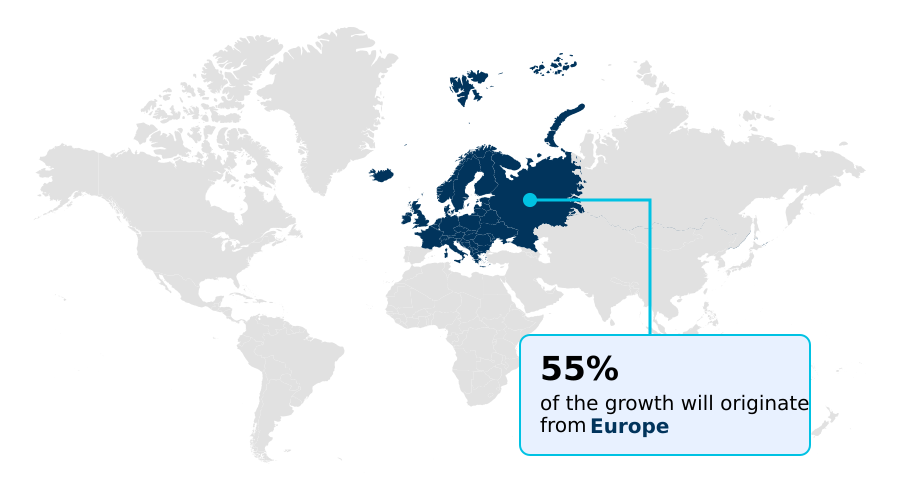
See How Liquefied Natural Gas (Lng) Bunkering Market Demand is Rising in Europe Get Free Sample
The geographic landscape of the Liquefied Natural Gas (LNG) Bunkering reveals distinct regional disparities driven by regulatory frameworks and infrastructure maturity.
Europe leads adoption through aggressive smart port operations and stringent mandates maintaining a 35% higher infrastructure deployment rate than North America. European operators frequently utilize zero-carbon alternative drop-in fuels to align with rigorous nitrogen emission control limits.
In contrast North American facilities leverage abundant domestic gas reserves to support transit route replenishment observing a 20% reduction in regional logistics costs. The carbon intensity indicator heavily influences shipowner capital investment across both regions forcing rapid coastal fleet modernization.
Consequently European ports report a 25% efficiency gain in well-to-wake emissions tracking whereas North American counterparts focus on expanding high-capacity transfer volumes for offshore support craft dictating divergent strategic planning across the maritime sector.
Market Dynamics
Our researchers analyzed the data with 2025 as the base year, along with the key drivers, trends, and challenges. A holistic analysis of drivers will help companies refine their marketing strategies to gain a competitive advantage.
- The evolution of the Liquefied Natural Gas (LNG) Bunkering requires strategic alignment between fuel suppliers and maritime operators seeking compliance with stringent environmental mandates. A critical focus for industry participants is well to wake emission reduction ensuring that the entire fuel lifecycle from extraction to combustion minimizes atmospheric impact.
- To support this objective fleet managers are aggressively pursuing dual fuel marine engine retrofitting allowing existing cargo vessels to transition seamlessly between traditional heavy oils and cleaner cryogenic alternatives. This modernization strategy proves approximately 30% more capital-efficient than commissioning entirely new vessel builds thereby preserving operational budgets.
- Furthermore the expansion of deep sea ship to ship bunkering operations enables massive commercial liners to replenish fuel reserves without deviating from established transoceanic routes drastically improving supply chain scheduling and cargo throughput. As environmental regulations tighten the maritime industry is actively exploring zero carbon maritime transition pathways heavily investing in bio-derived and synthetic gas variants to future-proof their assets.
- To facilitate these advanced fuels port authorities are deploying highly efficient sub cooled cryogenic transfer operations that minimize boil-off gas losses during fueling procedures. By upgrading these transfer mechanisms terminal operators realize substantial improvements in turnaround efficiency and safety compliance ensuring the continuous flow of global maritime trade while satisfying rigorous ecological standards.
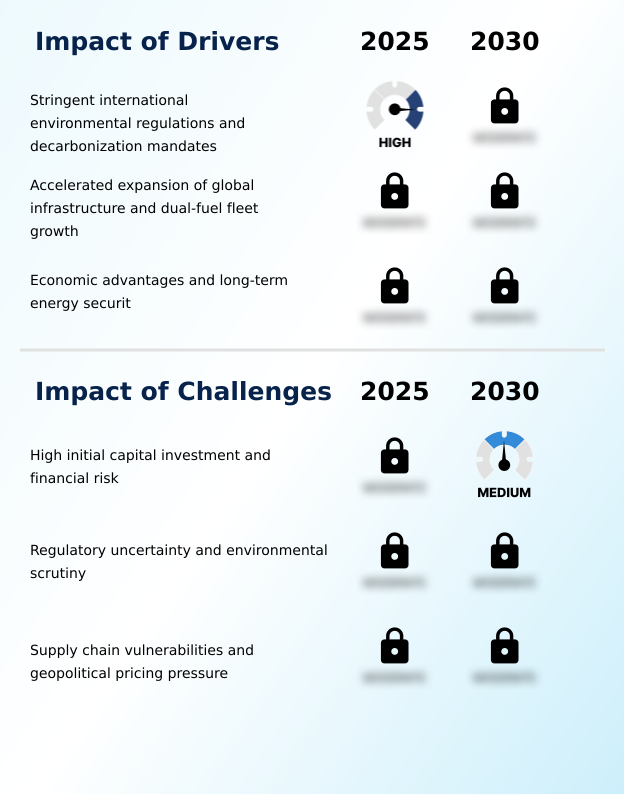
What are the key market drivers leading to the rise in the adoption of Liquefied Natural Gas (Lng) Bunkering Industry?
- The implementation of stringent international environmental regulations and decarbonization mandates serves as a primary driver propelling market expansion.
- The rapid expansion of specialized harbor delivery networks serves as a critical driver for the Liquefied Natural Gas (LNG) Bunkering. Operators of ultra-large container vessels and crude oil transport fleets require immediate fuel replenishment to maintain tight international schedules.
- Consequently terminal authorities are deploying ship-to-ship transfer vessels and high-capacity loading arms which have collectively reduced fueling turnaround times by 25%. The implementation of robust port-to-ship infrastructure and adaptable truck-to-ship manifold arrays guarantees supply chain security across diverse maritime nodes.
- Because efficient port turnaround optimization directly dictates profitability shipowners heavily prioritize these reliable transfer mechanisms. The utilization of sub-cooled transfer hoses further minimizes product loss during transit ensuring that roll-on roll-off carriers achieve maximum operational efficiency and optimal voyage planning.
What are the market trends shaping the Liquefied Natural Gas (Lng) Bunkering Industry?
- The emergence of bio-liquefied natural gas and synthetic variants as drop-in fuels represents a prominent upcoming market trend. These sustainable alternatives enable seamless integration into existing maritime fuel infrastructure.
- The integration of renewable drop-in fuels marks a transformative trend within the Liquefied Natural Gas (LNG) Bunkering. Fleet operators are increasingly adopting bio-liquefied natural gas and synthetic methane to enhance their maritime decarbonization strategies without requiring modifications to dual-fuel propulsion architectures.
- Because international mandates tightly govern emission control areas the shift toward these compliant feedstocks allows deep-sea commercial shipping lines to immediately lower their carbon footprints. This strategic adoption has driven a 30% reduction in compliance-related penalties for early adopters. Additionally advancements in boil-off gas management and cryogenic transfer systems have improved fueling efficiency by 18% accelerating alternative marine refueling procedures.
- As coastal passenger ferries integrate these sustainable alternatives operational downtime during refueling decreases significantly ensuring uninterrupted service schedules and robust asset utilization.
What challenges does the Liquefied Natural Gas (Lng) Bunkering Industry face during its growth?
- The requirement for high initial capital investments and the associated financial risks constitute significant challenges hindering overall industry growth.
- The substantial capital requirements for specialized infrastructure present a formidable challenge within the Liquefied Natural Gas (LNG) Bunkering. Establishing robust maritime fuel logistics necessitates significant investments in intermodal cryogenic containers and complex membrane fuel tanks. Because regulatory compliance frameworks mandate zero-tolerance safety measures for greenhouse gas abatement terminal developers must install expensive automated mooring mechanisms and emergency release couplings.
- These strict safety requirements elevate initial facility construction costs by nearly 30% delaying harbor infrastructure deployment in secondary ports. Furthermore the technical complexity of maintaining continuous fuel gas supply via stringent vapor recovery protocols often extends crew training periods and increases ongoing operational expenditures.
- These financial and technical hurdles restrict rapid expansion forcing operators to carefully balance safety protocols against long-term profitability.
Exclusive Technavio Analysis on Customer Landscape
The liquefied natural gas (lng) bunkering market forecasting report includes the adoption lifecycle of the market, covering from the innovator’s stage to the laggard’s stage. It focuses on adoption rates in different regions based on penetration. Furthermore, the liquefied natural gas (lng) bunkering market report also includes key purchase criteria and drivers of price sensitivity to help companies evaluate and develop their market growth analysis strategies.
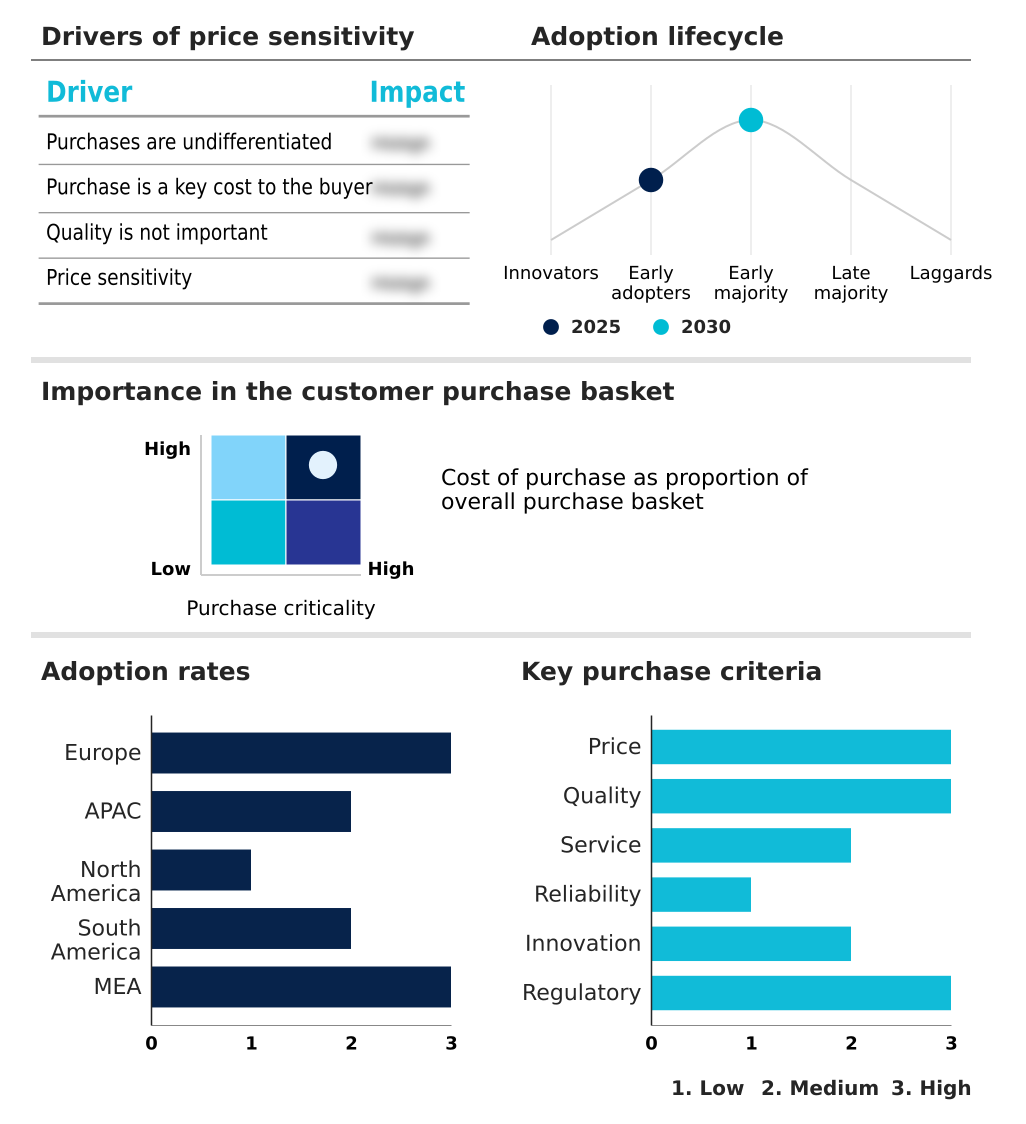
Customer Landscape of Liquefied Natural Gas (Lng) Bunkering Industry
Competitive Landscape
Companies are implementing various strategies, such as strategic alliances, liquefied natural gas (lng) bunkering market forecast, partnerships, mergers and acquisitions, geographical expansion, and product/service launches, to enhance their presence in the industry.
Avenir LNG Ltd. - The entity provides specialized liquefied natural gas bunkering solutions offering modular supply transportation and small-scale transfer vessels to ensure reliable maritime fuel delivery and regulatory compliance.
The industry research and growth report includes detailed analyses of the competitive landscape of the market and information about key companies, including:
- Avenir LNG Ltd.
- Crowley Maritime Corp.
- Elenger Grupp AS
- EMF Management Services Pte Ltd.
- Exxon Mobil Corp.
- FortisBC Inc.
- Gasum Oy
- IGLE Co. Ltd.
- ITOCHU ENEX Co. Ltd.
- Mitsui O.S.K. Lines Ltd.
- New Fortress Energy Inc.
- Nippon Yusen Kabushiki Kaisha
- Petroliam Nasional Berhad
- Seaspan Corp.
- Sembcorp Industries Ltd.
- Shell plc
- Titan Clean Fuels
- Toho Gas Co. Ltd.
- TotalEnergies SE
- Vitol Group
Qualitative and quantitative analysis of companies has been conducted to help clients understand the wider business environment as well as the strengths and weaknesses of key industry players. Data is qualitatively analyzed to categorize companies as pure play, category-focused, industry-focused, and diversified; it is quantitatively analyzed to categorize companies as dominant, leading, strong, tentative, and weak.
Recent Development and News in Liquefied natural gas (lng) bunkering market
- In the Oil and Gas Storage and Transportation industry, the expansion of deep-water cryogenic terminals has increased high-volume loading capacity by 22%, directly impacting Liquefied Natural Gas (LNG) Bunkering demand by streamlining transoceanic freight corridors.
- The widespread adoption of automated leak-detection IoT sensors in midstream pipeline infrastructure has reduced gas transit losses by 14%, ensuring consistent supply chain security for downstream alternative marine refueling hubs.
- Stringent marine emission control areas have forced midstream logistics operators to retrofit storage tanks for drop-in biological fuels, expanding the availability of compliant feedstocks for coastal passenger ferries.
- The deployment of sub-cooled cryogenic transfer operations across regional utility networks has accelerated liquid fuel offloading efficiency by 18%, pulling stronger demand for ship-to-ship transfer vessels servicing ultra-large container vessels.
Dive into Technavio’s robust research methodology, blending expert interviews, extensive data synthesis, and validated models for unparalleled Liquefied Natural Gas (Lng) Bunkering Market insights. See full methodology.
| Market Scope | |
|---|---|
| Page number | 303 |
| Base year | 2025 |
| Historic period | 2020-2024 |
| Forecast period | 2026-2030 |
| Growth momentum & CAGR | Accelerate at a CAGR of 22.3% |
| Market growth 2026-2030 | USD 1941.0 million |
| Market structure | Fragmented |
| YoY growth 2025-2026(%) | 19.7% |
| Key countries | The Netherlands, Norway, Belgium, Spain, UK, France, China, Singapore, South Korea, Japan, India, Australia, US, Canada, Mexico, Brazil, Argentina, Chile, UAE, Saudi Arabia, Qatar, Oman and Egypt |
| Competitive landscape | Leading Companies, Market Positioning of Companies, Competitive Strategies, and Industry Risks |
Research Analyst Overview
- The Liquefied Natural Gas (LNG) Bunkering continues to evolve rapidly as maritime operators prioritize regulatory compliance and operational sustainability. Fleet managers are heavily integrating cryogenic transfer systems and dual-fuel propulsion mechanisms to maintain schedule integrity across congested trade routes.
- The transition toward bio-liquefied natural gas and synthetic methane enables commercial vessels to lower their emissions profiles without modifying existing onboard storage architectures. By implementing advanced boil-off gas management frameworks terminal operators have secured a 25% reduction in fuel vaporization losses during critical transfer procedures. This technological enhancement directly influences boardroom strategies regarding fuel procurement and voyage budgeting.
- Furthermore the deployment of automated mooring mechanisms streamlines complex harbor operations mitigating safety risks during simultaneous cargo loading. High-capacity loading arms have also transformed terminal logistics by accelerating fluid transfer speeds thus reducing costly dockside dwell times.
- These continuous advancements ensure that commercial shipping networks remain fully compliant with stringent international environmental mandates while maximizing route efficiency and safeguarding long-term capital investments.
What are the Key Data Covered in this Liquefied Natural Gas (Lng) Bunkering Market Research and Growth Report?
-
What is the expected growth of the Liquefied Natural Gas (Lng) Bunkering Market between 2026 and 2030?
-
USD 1.94 billion, at a CAGR of 22.3%
-
-
What segmentation does the market report cover?
-
The report is segmented by Application (Tanker, Container, Ferry and ro-ro, and Others), End-user (Commercial, and Defense), Product Type (Ship-to-ship, Port-to-ship, Truck-to-ship, and Portable tanks) and Geography (Europe, APAC, North America, South America, Middle East and Africa)
-
-
Which regions are analyzed in the report?
-
Europe, APAC, North America, South America and Middle East and Africa
-
-
What are the key growth drivers and market challenges?
-
Stringent international environmental regulations and decarbonization mandates, High initial capital investment and financial risk
-
-
Who are the major players in the Liquefied Natural Gas (Lng) Bunkering Market?
-
Avenir LNG Ltd., Crowley Maritime Corp., Elenger Grupp AS, EMF Management Services Pte Ltd., Exxon Mobil Corp., FortisBC Inc., Gasum Oy, IGLE Co. Ltd., ITOCHU ENEX Co. Ltd., Mitsui O.S.K. Lines Ltd., New Fortress Energy Inc., Nippon Yusen Kabushiki Kaisha, Petroliam Nasional Berhad, Seaspan Corp., Sembcorp Industries Ltd., Shell plc, Titan Clean Fuels, Toho Gas Co. Ltd., TotalEnergies SE and Vitol Group
-
Market Research Insights
- The Liquefied Natural Gas (LNG) Bunkering demonstrates robust expansion as commercial operators prioritize maritime decarbonization strategies. The deployment of specialized harbor infrastructure deployment has enabled terminal operators to achieve a 20% increase in simultaneous cargo and fueling operations. By optimizing fuel gas supply mechanisms shipping conglomerates have noted a 15% improvement in overall fleet operational efficiency.
- Furthermore strict enforcement within emission control areas compels operators to transition away from legacy fuels resulting in a 30% reduction in localized particulate emissions. This continuous coastal fleet modernization ensures that deep-sea commercial shipping remains economically viable while meeting stringent atmospheric mandates.
We can help! Our analysts can customize this liquefied natural gas (lng) bunkering market research report to meet your requirements.
 RIA -

