


Luxury Footwear Market Size 2026-2030
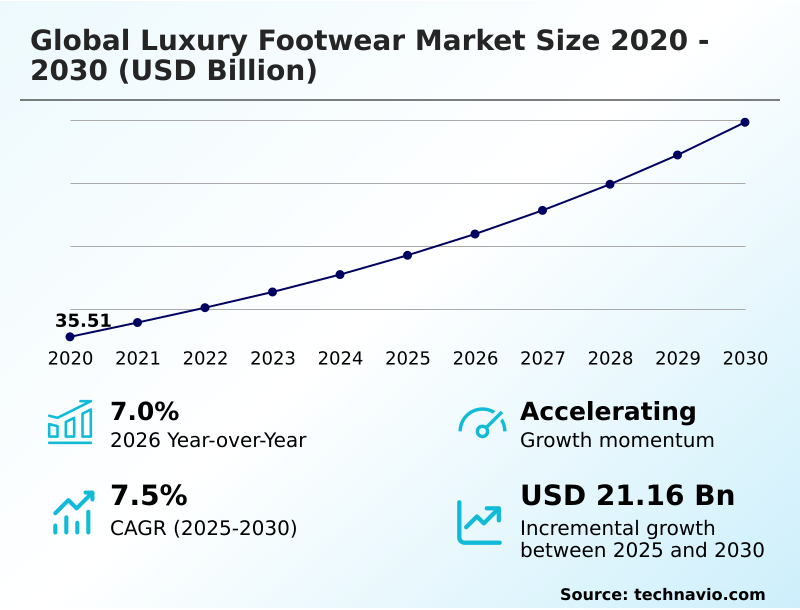
The luxury footwear market size is valued to increase by USD 21.16 billion, at a CAGR of 7.5% from 2025 to 2030. Integration of digital personalization and omnichannel retail strategies will drive the luxury footwear market.
Major Market Trends & Insights
- North America dominated the market and accounted for a 40.9% growth during the forecast period.
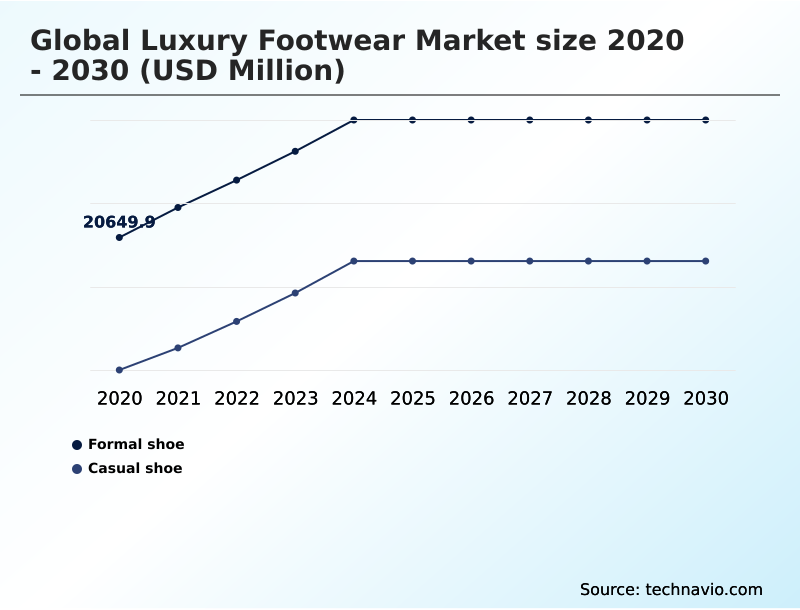
- By Product - Formal shoe segment was valued at USD 25.79 billion in 2024
- By Distribution Channel - Offline segment accounted for the largest market revenue share in 2024
Market Size & Forecast
- Market Opportunities: USD 34.13 billion
- Market Future Opportunities: USD 21.16 billion
- CAGR from 2025 to 2030 : 7.5%
Market Summary
- The luxury footwear market is undergoing a profound transformation, driven by the convergence of heritage craftsmanship, technological innovation, and a significant shift in consumer values. Brands are evolving from purely aesthetic pursuits to a model that incorporates durability, comfort, and environmental responsibility, aligning with the expectations of a discerning global clientele.
- A primary accelerator of this evolution is digital transformation, with the implementation of AI and advanced design software enabling precise trend prediction and waste reduction through optimized production cycles. For instance, a major challenge is navigating extended global logistics, where geopolitical tensions can disrupt the flow of premium raw materials.
- To counter this, firms are leveraging data analytics for better supply chain resilience, enabling them to maintain seasonal inventory cycles and uphold brand prestige.
- Sustainability has also become a cornerstone, with investments in bio-based leather alternatives and circular supply chain practices moving from a niche concern to a critical differentiator demanded by increasingly conscious buyers who value transparency and ethical production.
What will be the Size of the Luxury Footwear Market during the forecast period?
Get Key Insights on Market Forecast (PDF) Get Free Sample
How is the Luxury Footwear Market Segmented?
The luxury footwear industry research report provides comprehensive data (region-wise segment analysis), with forecasts and estimates in "USD million" for the period 2026-2030, as well as historical data from 2020-2024 for the following segments.
- Product
- Formal shoe
- Casual shoe
- Distribution channel
- Offline
- Online
- End-user
- Women
- Men
- Children
- Geography
- North America
- US
- Canada
- Mexico
- APAC
- China
- India
- Japan
- Europe
- Italy
- France
- Germany
- South America
- Brazil
- Argentina
- Colombia
- Middle East and Africa
- UAE
- Saudi Arabia
- South Africa
- Rest of World (ROW)
- North America
By Product Insights
The formal shoe segment is estimated to witness significant growth during the forecast period.
The formal shoe segment represents a cornerstone of the luxury footwear market, characterized by an enduring commitment to artisanal craftsmanship and the use of premium raw materials.
This segment serves as a primary indicator of brand prestige, where the manufacturing of oxfords, loafers, and boots requires exceptional artisanal expertise. Consumers are driven by a desire for timeless elegance and professional credibility.
Brands are responding to shifting needs by integrating ergonomic advancements for enhanced comfort without compromising traditional design aesthetics.
By focusing on factors of differentiation and the criticality of inputs, manufacturers improve material utilization, with some achieving a 15% reduction in waste.
This balance of heritage and innovation, alongside a focus on ethical production and high-touch service, maintains the segment’s status.
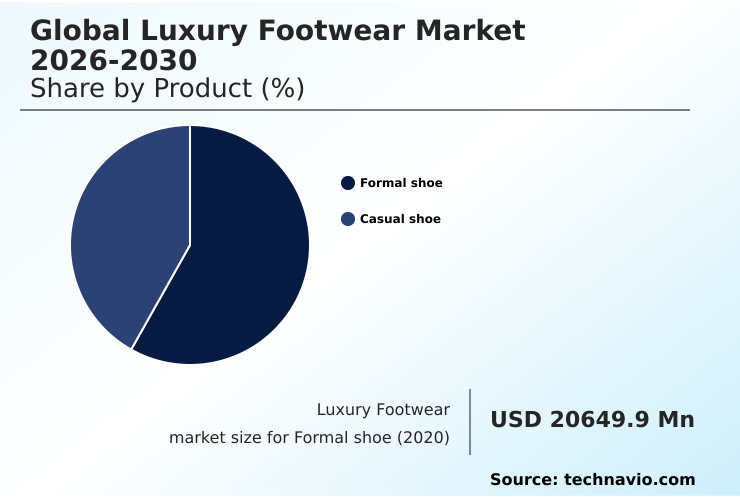
The Formal shoe segment was valued at USD 25.79 billion in 2024 and showed a gradual increase during the forecast period.
Regional Analysis
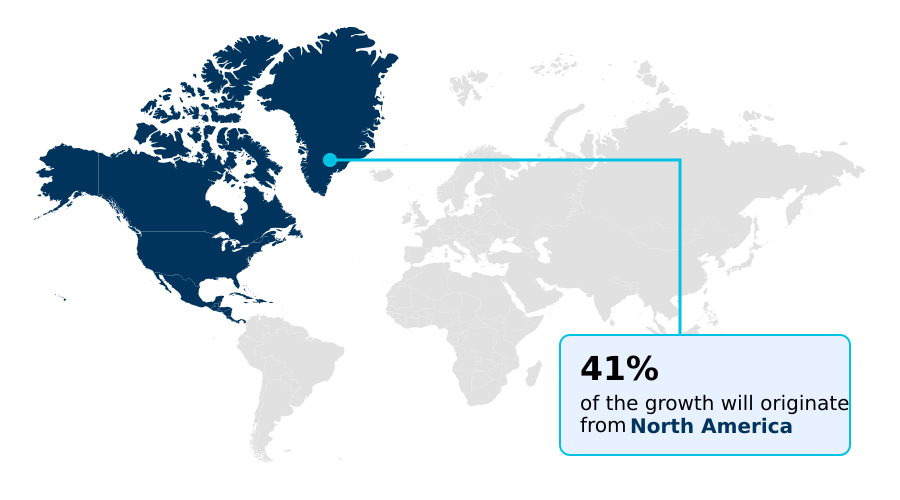
North America is estimated to contribute 40.9% to the growth of the global market during the forecast period.Technavio’s analysts have elaborately explained the regional trends and drivers that shape the market during the forecast period.
See How Luxury Footwear Market Demand is Rising in North America Get Free Sample
The geographic landscape of the luxury footwear market is diverse, with significant opportunities across several key regions.
North America is set to be a major contributor, accounting for nearly 41% of the market's incremental growth, driven by a regional CAGR of 9.5%.
This growth is fueled by a strong appetite for high-end casual footwear and performance athletic wear.
In Europe, which accounts for over 23% of the opportunity, the focus remains on brand heritage narratives and the sensory connection offered by physical retail.
The APAC region presents a substantial 21% of the growth opportunity, led by burgeoning digital retail ecosystems and demand for bespoke fittings.
Across all regions, the integration of advanced algorithmic design, data analytics, and made-to-order services is becoming critical for capturing the discretionary wallet share of high net worth consumers and enhancing social capital.
Market Dynamics
Our researchers analyzed the data with 2025 as the base year, along with the key drivers, trends, and challenges. A holistic analysis of drivers will help companies refine their marketing strategies to gain a competitive advantage.
- The global luxury footwear market is navigating a complex interplay of strategic imperatives, where the impact of digital personalization in luxury footwear is redefining customer engagement. Simultaneously, managing supply chain volatility for high-end fashion goods has become a central operational challenge.
- Firms are increasingly focused on sustainable material science in premium shoe manufacturing to meet both consumer demands and emerging regulatory standards. Effective omnichannel retail strategies for luxury consumer engagement are crucial for creating seamless brand experiences. A core challenge is balancing heritage craftsmanship with modern manufacturing technology to maintain authenticity while improving efficiency.
- The role of augmented reality in bespoke footwear design is expanding, offering new levels of customization. Success also hinges on navigating regulatory compliance for ethical material sourcing and leveraging data analytics for luxury demand forecasting.
- Efficiently optimizing inventory management for seasonal luxury collections is now more critical than ever, with advanced platforms showing a 25% improvement in forecast accuracy compared to legacy systems. This push includes assessing the impact of casualization on formal footwear and integrating circular business models in premium apparel.
- Ultimately, the industry's future lies in its ability to deploy strategies for combating counterfeiting with digital authentication and mastering customer relationship management for high net worth clients.
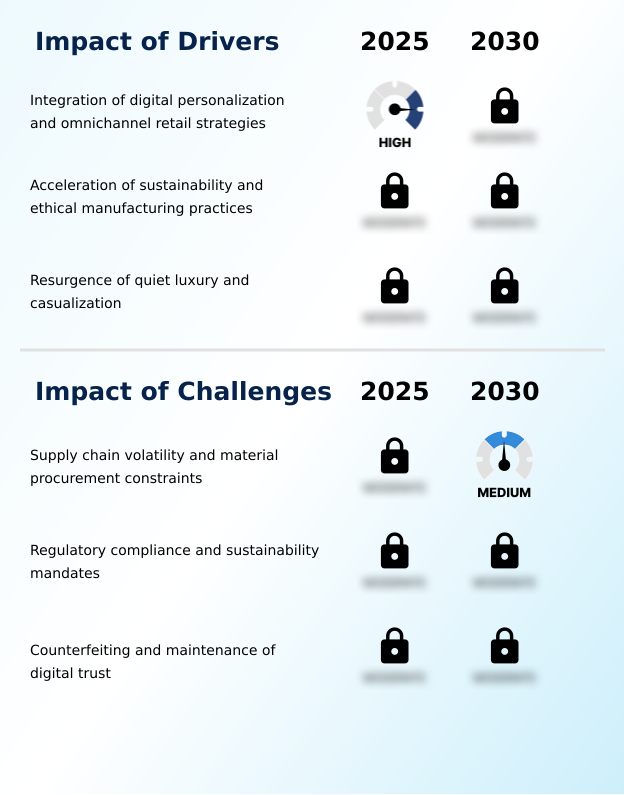
What are the key market drivers leading to the rise in the adoption of Luxury Footwear Industry?
- The integration of digital personalization with sophisticated omnichannel retail strategies is a key driver propelling market growth.
- The integration of digital personalization and sophisticated omnichannel retail strategies is a primary driver of market growth.
- High net worth consumers now expect seamless transitions between physical boutiques and digital shopping environments, pushing brands to leverage data analytics and artificial intelligence.
- By using customer relationship management systems to track purchasing history, brands can create highly targeted marketing campaigns, improving customer retention by 15%. In North America, virtual try-on technology increases conversion rates by up to 30% by reducing purchase uncertainty.
- In Europe, mobile applications offering exclusive access to limited-edition releases maintain an aura of exclusivity while embracing modern convenience.
- This continuous, tailored service deepens the connection between brand and consumer, ensuring luxury footwear brands capture loyalty in a competitive marketplace where personalization is a defining metric of success.
What are the market trends shaping the Luxury Footwear Industry?
- The proliferation of digital personalization and customization is a primary upcoming market trend, enabling brands to offer bespoke experiences at scale as a key differentiator.
- The global luxury footwear market is increasingly shaped by the trend of hyper-personalization, driven by digital tools powered by artificial intelligence and advanced algorithmic design. This shift enables manufacturers to offer bespoke experiences and made-to-order services that cater to unique anatomical and style preferences.
- In North America, the use of virtual reality and mobile scanning technologies is improving fit, which has been shown to reduce product return rates by up to 22%. This technological integration enhances the emotional value of a purchase by placing the consumer at the center of the design process, moving away from mass production toward individual value creation.
- Brands are leveraging these tools to foster deeper connections with clientele, making the ability to execute customization at scale a primary determinant of competitive advantage and reinforcing brand prestige.
What challenges does the Luxury Footwear Industry face during its growth?
- Supply chain volatility and constraints in procuring high-quality raw materials present a key challenge affecting industry growth.
- The global luxury footwear market faces a persistent challenge from supply chain volatility and material procurement constraints. Extended global logistics networks are vulnerable to geopolitical tensions and port congestion, which can delay seasonal inventory cycles and lead to lost sales.
- In Europe, rising energy costs and a scarcity of premium hides directly increase production costs, with some manufacturers reporting a 10-15% rise in input expenses. The inability to predict delivery timelines forces companies to hold excess inventory, tying up capital. The transition toward localized production models is slow, as shifting deep-rooted supply chain dependencies is a significant undertaking.
- This structural weakness requires a fundamental redesign of procurement and distribution to secure reliable supply chains and meet the expectations of affluent consumers, addressing issues from price sensitivity analysis to factors of disruption.
Exclusive Technavio Analysis on Customer Landscape
The luxury footwear market forecasting report includes the adoption lifecycle of the market, covering from the innovator’s stage to the laggard’s stage. It focuses on adoption rates in different regions based on penetration. Furthermore, the luxury footwear market report also includes key purchase criteria and drivers of price sensitivity to help companies evaluate and develop their market growth analysis strategies.
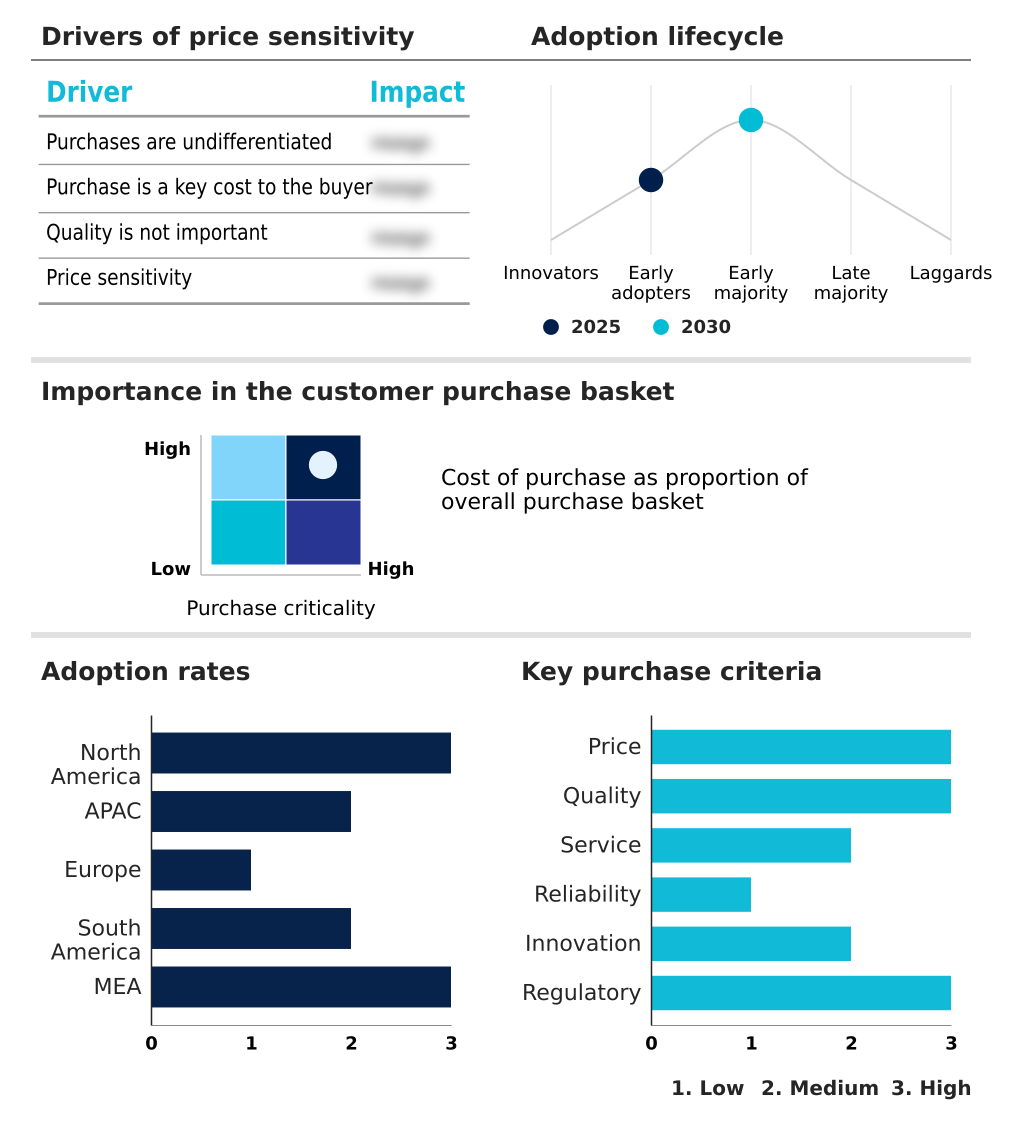
Customer Landscape of Luxury Footwear Industry
Competitive Landscape
Companies are implementing various strategies, such as strategic alliances, luxury footwear market forecast, partnerships, mergers and acquisitions, geographical expansion, and product/service launches, to enhance their presence in the industry.
Bally - The company provides a diverse portfolio of luxury footwear, from high-fashion sneakers to iconic pumps, addressing multiple consumer segments and style preferences.
The industry research and growth report includes detailed analyses of the competitive landscape of the market and information about key companies, including:
- Bally
- Burberry Group Plc
- Capri Holdings Ltd.
- Chanel Ltd.
- Christian Louboutin LLC
- Dolce and Gabbana Srl
- Giorgio Armani SpA
- Giuseppe Zanotti
- Guccio Gucci SpA
- Hermes International SA
- LVMH Moet Hennessy
- Manolo Blahnik International
- Prada SpA
- Roger Vivier
- Salvatore Ferragamo SpA
- Sergio Rossi
- Stuart Weitzman
- Tod S.p.A.
- VALENTINO Spa
Qualitative and quantitative analysis of companies has been conducted to help clients understand the wider business environment as well as the strengths and weaknesses of key industry players. Data is qualitatively analyzed to categorize companies as pure play, category-focused, industry-focused, and diversified; it is quantitatively analyzed to categorize companies as dominant, leading, strong, tentative, and weak.
Recent Development and News in Luxury footwear market
- In April 2025, Louis Vuitton announced its Regeneration 2030 initiative, a comprehensive environmental strategy focused on ecosystem restoration and sustainable manufacturing, as detailed in their annual sustainability report.
- In January 2025, Adidas launched a new footwear collaboration integrating high-fashion aesthetics with performance engineering, signaling a deeper convergence of sportswear and luxury, according to a company press release.
- In February 2025, LVMH showcased new strategies at the World Impact Summit to embed responsible practices into brand desirability, reinforcing its commitment to environmental stewardship, as covered by Bloomberg.
- In November 2024, a new regulatory analysis highlighted a decisive move toward mandatory ESG compliance in major luxury markets, requiring brands to verify sustainability claims with traceable data, as reported by Reuters.
Dive into Technavio’s robust research methodology, blending expert interviews, extensive data synthesis, and validated models for unparalleled Luxury Footwear Market insights. See full methodology.
| Market Scope | |
|---|---|
| Page number | 280 |
| Base year | 2025 |
| Historic period | 2020-2024 |
| Forecast period | 2026-2030 |
| Growth momentum & CAGR | Accelerate at a CAGR of 7.5% |
| Market growth 2026-2030 | USD 21160.3 million |
| Market structure | Fragmented |
| YoY growth 2025-2026(%) | 7.0% |
| Key countries | US, Canada, Mexico, China, India, Japan, South Korea, Australia, Indonesia, Italy, France, Germany, UK, Spain, The Netherlands, Brazil, Argentina, Colombia, UAE, Saudi Arabia, South Africa, Qatar and Egypt |
| Competitive landscape | Leading Companies, Market Positioning of Companies, Competitive Strategies, and Industry Risks |
Research Analyst Overview
- The luxury footwear market is defined by a dynamic interplay between artisanal craftsmanship, technological integration, and evolving consumer values. The adoption of hyper-personalization through advanced algorithmic design and mobile scanning technologies allows for made-to-order services at scale. This is complemented by omnichannel retail strategies that blend immersive digital experiences with high-touch service in experiential retail settings.
- Key operational drivers include sophisticated inventory management and demand forecasting, powered by data analytics and customer relationship management systems. However, the industry contends with significant challenges, including geopolitical tensions, port congestion, and rising energy costs, which disrupt extended global logistics and create scarcity of premium hides.
- In response, there is a strong push toward supply chain resilience, sustainable material sourcing, and the adoption of bio-based leather and circular business models. Firms leveraging traceable supply chains have demonstrated an ability to reduce raw material waste by up to 20%.
- This commitment to ethical production, reinforced by digital authentication and virtual fitting rooms, is essential for maintaining brand prestige.
What are the Key Data Covered in this Luxury Footwear Market Research and Growth Report?
-
What is the expected growth of the Luxury Footwear Market between 2026 and 2030?
-
USD 21.16 billion, at a CAGR of 7.5%
-
-
What segmentation does the market report cover?
-
The report is segmented by Product (Formal shoe, and Casual shoe), Distribution Channel (Offline, and Online), End-user (Women, Men, and Children) and Geography (North America, APAC, Europe, South America, Middle East and Africa)
-
-
Which regions are analyzed in the report?
-
North America, APAC, Europe, South America and Middle East and Africa
-
-
What are the key growth drivers and market challenges?
-
Integration of digital personalization and omnichannel retail strategies, Supply chain volatility and material procurement constraints
-
-
Who are the major players in the Luxury Footwear Market?
-
Bally, Burberry Group Plc, Capri Holdings Ltd., Chanel Ltd., Christian Louboutin LLC, Dolce and Gabbana Srl, Giorgio Armani SpA, Giuseppe Zanotti, Guccio Gucci SpA, Hermes International SA, LVMH Moet Hennessy, Manolo Blahnik International, Prada SpA, Roger Vivier, Salvatore Ferragamo SpA, Sergio Rossi, Stuart Weitzman, Tod S.p.A. and VALENTINO Spa
-
Market Research Insights
- The market's competitive landscape is shaped by the ability of firms to adapt to consumer demographic shifts and maintain operational excellence. The resurgence of quiet luxury and a broader casualization trend are forcing product diversification. Adherence to ethical manufacturing practices is no longer optional, with regulatory compliance mandates becoming stricter.
- Success is increasingly tied to the maintenance of digital trust, especially as counterfeiting threats persist in online channels. For example, brands that effectively communicate their commitment to environmental stewardship see an 18% higher engagement rate with younger consumers.
- Furthermore, implementing robust lifecycle assessment for products can improve brand image perception and support a 10% price premium in certain segments, demonstrating a clear return on investment for sustainability initiatives.
We can help! Our analysts can customize this luxury footwear market research report to meet your requirements.
 RIA -
RIA -