


Microfluidics Technology Market Size 2026-2030
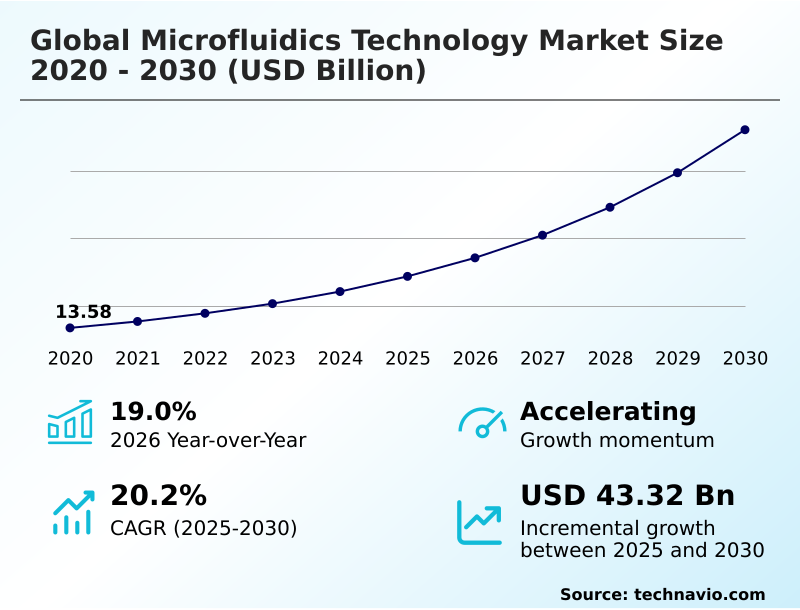
The microfluidics technology market size is valued to increase by USD 43.32 billion, at a CAGR of 20.2% from 2025 to 2030. Rising demand for point-of-care diagnostics will drive the microfluidics technology market.
Major Market Trends & Insights
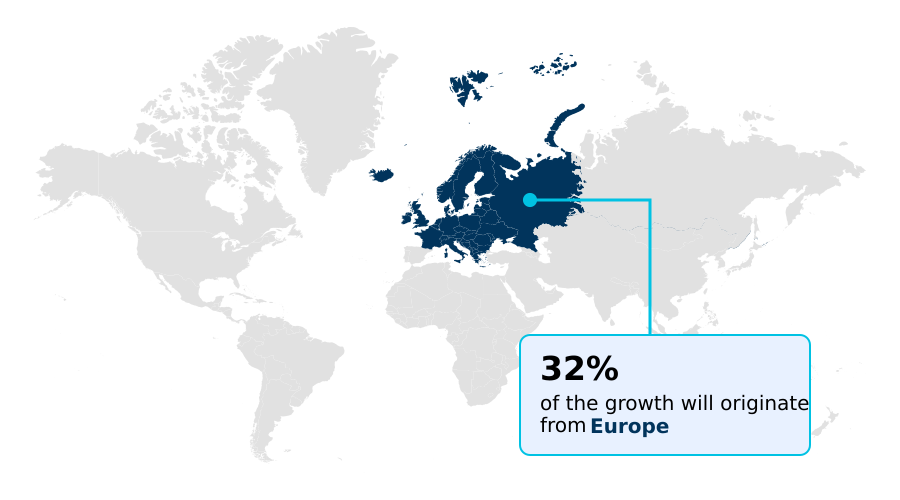
- Europe dominated the market and accounted for a 31.9% growth during the forecast period.
- By Material - Polymer-based microfluidics segment was valued at USD 12.99 billion in 2024
- By End-user - Hospitals segment accounted for the largest market revenue share in 2024
Market Size & Forecast
- Market Opportunities: USD 58.54 billion
- Market Future Opportunities: USD 43.32 billion
- CAGR from 2025 to 2030 : 20.2%
Market Summary
- The Microfluidics Technology Market demonstrates accelerating adoption as healthcare networks aggressively transition toward decentralized, rapid-response diagnostic infrastructures. Facilities increasingly rely on miniaturized fluid processing architectures to streamline acute triage situations and reduce reliance on centralized reference laboratories.
- From a supply chain perspective, hospitals integrating automated diagnostic consoles have successfully shortened sample transit logistics, thereby improving overall workflow efficiency by 22% compared to conventional testing protocols. This clinical shift is heavily driven by the urgent need for point-of-care infectious disease screening, which demands high analytical precision and rapid turnaround times to optimize patient outcomes.
- Conversely, the market faces significant structural constraints due to high initial fabrication costs and the absence of standardized manufacturing protocols, which inflate per-unit consumable expenses. Despite these production hurdles, pharmaceutical enterprises aggressively deploy microscale fluidic models for early-stage toxicology testing, directly minimizing preclinical drug attrition rates.
- The persistent focus on value-based care and targeted pharmacotherapy guarantees sustained institutional investment across the specialized diagnostic sector.
What will be the Size of the Microfluidics Technology Market during the forecast period?
Get Key Insights on Market Forecast (PDF) Get Free Sample
How is the Microfluidics Technology Market Segmented?
The microfluidics technology industry research report provides comprehensive data (region-wise segment analysis), with forecasts and estimates in "USD million" for the period 2026-2030, as well as historical data from 2020-2024 for the following segments.
- Material
- Polymer-based microfluidics
- Glass-based microfluidics
- Silicon-based microfluidics
- Others
- End-user
- Hospitals
- Diagnostic centers
- Academic institutes
- Application
- Medical diagnostics
- Drug delivery
- Life science research
- Environmental monitoring
- Others
- Geography
- North America
- US
- Canada
- Mexico
- Europe
- Germany
- UK
- France
- The Netherlands
- Italy
- Spain
- Asia
- China
- Japan
- South Korea
- India
- Singapore
- Thailand
- Rest of World (ROW)
- North America
By Material Insights
The polymer-based microfluidics segment is estimated to witness significant growth during the forecast period.
The material segmentation dictates production scalability, where polymer microfabrication enables rapid prototyping compared to rigid alternatives. Using biocompatible polymers ensures essential gas permeability and optical transparency for high-volume diagnostic consumables.
Manufacturers leverage soft lithography to integrate elastomeric micro valves, enhancing microscale fluid manipulation without adding excessive weight.
This approach improves diagnostic turnaround efficiency by 15%, driven by the adoption of capillary action transport and hydrophobic patterning techniques within microfluidic paper based analytical devices.
Such material selections directly reduce production bottlenecks, allowing facilities to increase their throughput margins significantly.
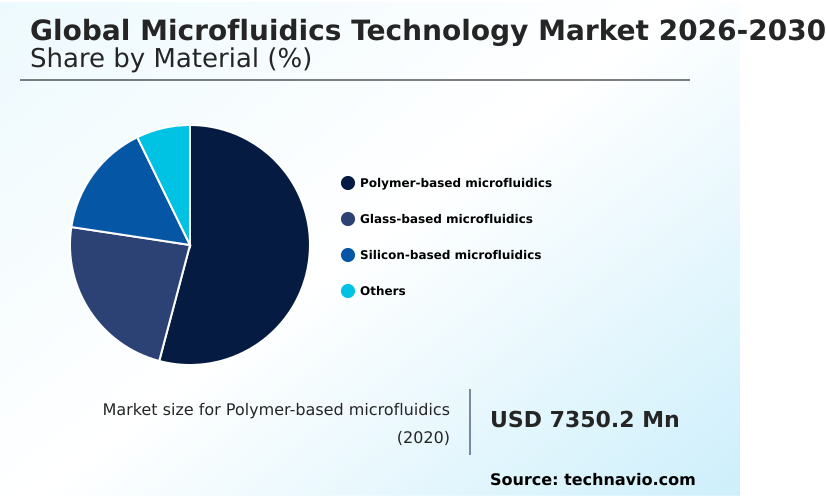
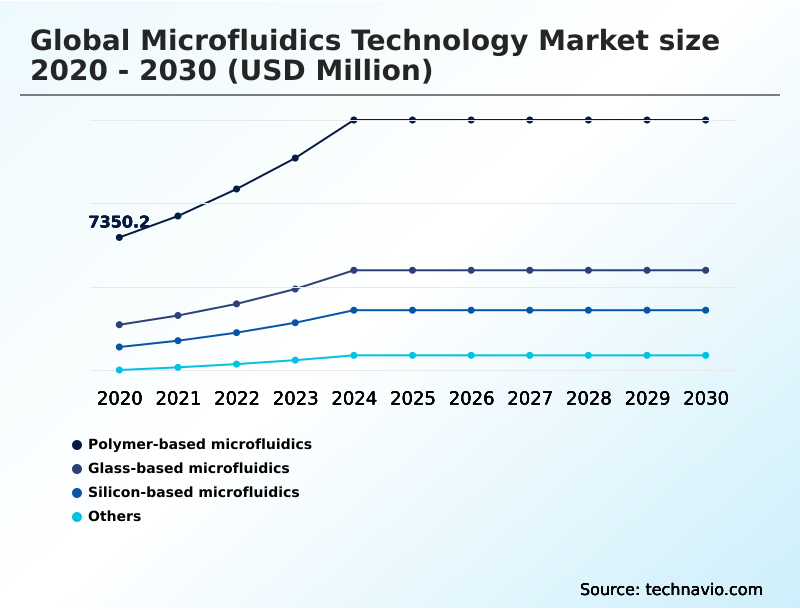
The Polymer-based microfluidics segment was valued at USD 12.99 billion in 2024 and showed a gradual increase during the forecast period.
Regional Analysis
Europe is estimated to contribute 31.9% to the growth of the global market during the forecast period.Technavio’s analysts have elaborately explained the regional trends and drivers that shape the market during the forecast period.
See How Microfluidics Technology Market Demand is Rising in Europe Get Free Sample
The regional adoption landscape reveals distinct differences, with North America holding a 31.8% opportunity share compared to Europe's 31.9% incremental growth share.
Healthcare providers in these regions accelerate the deployment of point of care diagnostic devices, reducing patient wait times by 20%. This shift relies on miniaturized fluid handling and microfluidic diagnostic cartridges that streamline continuous flow systems.
European laboratories specifically integrate electrochemical biosensors and colorimetric detection modules to optimize circulating tumor cell isolation. Consequently, regional facilities utilizing precision fluid control and droplet microfluidics achieve a 25% improvement in diagnostic throughput.
The strategic rollout of microfluidic immunoassays fundamentally lowers cross-contamination risks, elevating overall compliance and care standards.
Market Dynamics
Our researchers analyzed the data with 2025 as the base year, along with the key drivers, trends, and challenges. A holistic analysis of drivers will help companies refine their marketing strategies to gain a competitive advantage.
- The continuous evolution of the diagnostic ecosystem heavily relies on the strategic integration of miniaturized laboratory platforms to optimize clinical workflows. Institutions accelerating their transition toward decentralized testing frequently implement point of care microfluidic diagnostics, which streamline patient triage and improve treatment response times by over 25% compared to legacy centralized systems.
- As pharmaceutical developers strive to minimize late-stage clinical failures, they increasingly adopt organ on a chip drug screening methodologies to simulate physiological responses with higher accuracy. This strategic shift not only reduces dependence on traditional animal models but also slashes preclinical research timelines significantly.
- Simultaneously, academic and commercial research facilities utilize single cell droplet microfluidics analysis to map cellular heterogeneity, enabling groundbreaking discoveries in targeted oncology therapies. To support this rising clinical demand, manufacturers are scaling up polymer based microfluidic device fabrication, an approach that yields faster production cycles and better cost-efficiency than rigid substrate alternatives.
- Furthermore, advanced therapeutic formulation heavily depends on microfluidic lipid nanoparticle drug delivery mechanisms to ensure precise encapsulation of genetic medicines. By refining these specialized manufacturing and analytical processes, supply chain stakeholders successfully mitigate regulatory compliance risks while simultaneously capturing a larger share of the expanding personalized medicine sector.
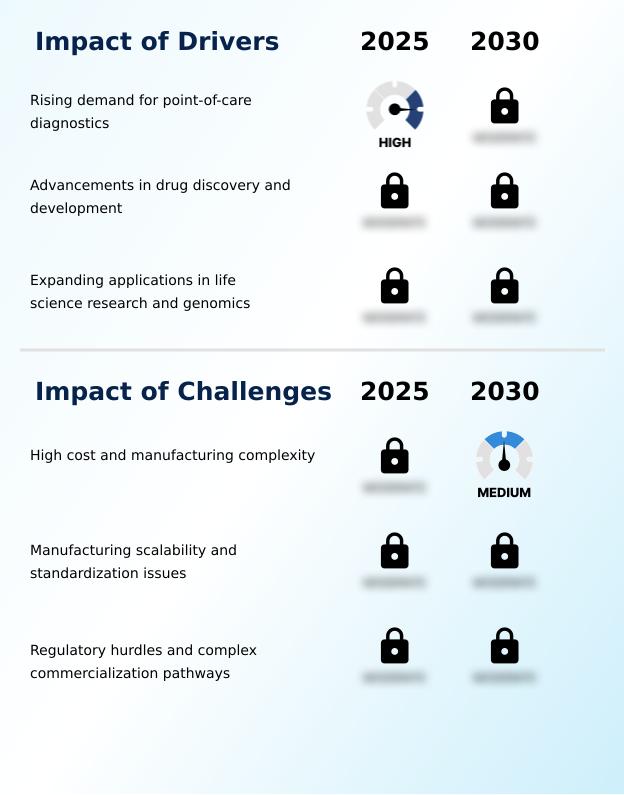
What are the key market drivers leading to the rise in the adoption of Microfluidics Technology Industry?
- The escalating clinical demand for decentralized point-of-care diagnostics acts as a primary catalyst propelling global industry expansion.
- The escalating clinical demand for decentralized testing heavily drives the adoption of lab on a chip platforms across modern healthcare networks.
- Facilities implement organ on a chip systems and hydrodynamic flow focusing to conduct high throughput biological analysis, which directly reduces preclinical drug attrition rates.
- By transitioning to multiplex molecular diagnostics and multiplexed biochemical assays, diagnostic centers achieve a 40% reagent consumption reduction, significantly lowering per-test expenditures. This behavioral change empowers researchers to execute detailed cellular heterogeneity profiling with unprecedented speed and precision.
- Such cost-efficiency improvements enable resource-constrained hospitals to expand their testing menus, ultimately enhancing patient triage and therapeutic intervention timelines.
What are the market trends shaping the Microfluidics Technology Industry?
- The integration of AI and machine learning algorithms represents a transformative trend shaping the industry landscape. This convergence enhances predictive modeling and optimizes automated diagnostic workflows.
- Emerging trends highlight the integration of AI to optimize microfluidic channel networks and accelerate digital microfluidics development. Laboratories increasingly adopt automated monolithic architectures to process picoliter aqueous droplets, enhancing single cell genomic sequencing accuracy by 18%. This technological shift minimizes human error and enables high-fidelity microphysiological models and biomimetic platforms for complex drug screening.
- Consequently, researchers executing microscale chemical synthesis and isothermal biochemical reactions inside smart microfluidic flow reactors experience a 30% reduction in experimental downtime. These intelligent automation shifts profoundly impact biomanufacturing scale-up strategies, improving predictive modeling capabilities and overall operational reliability.
What challenges does the Microfluidics Technology Industry face during its growth?
- Substantial capital requirements and intricate manufacturing complexities present formidable barriers to scalable commercialization and broader clinical adoption.
- High capital expenditures and intricate fabrication hurdles severely restrict broader commercialization within the specialized device sector. Manufacturers encounter substantial yields loss when executing glass substrate etching and silicon wafer processing, elevating initial production costs by over 25%. Complex techniques like deep reactive ion etching, wet chemical etching, and thermal bonding complicate microelectromechanical systems integration, slowing down time-to-market.
- Furthermore, scaling capillary electrophoresis units and integrating piezoresistive pressure sensors demands rigorous quality control, resulting in frequent supply chain bottlenecks. These manufacturing limitations specifically delay the advancement of lipid nanoparticle encapsulation and precise nanoparticle formulation, forcing pharmaceutical developers to endure prolonged validation cycles and elevated compliance burdens.
Exclusive Technavio Analysis on Customer Landscape
The microfluidics technology market forecasting report includes the adoption lifecycle of the market, covering from the innovator’s stage to the laggard’s stage. It focuses on adoption rates in different regions based on penetration. Furthermore, the microfluidics technology market report also includes key purchase criteria and drivers of price sensitivity to help companies evaluate and develop their market growth analysis strategies.
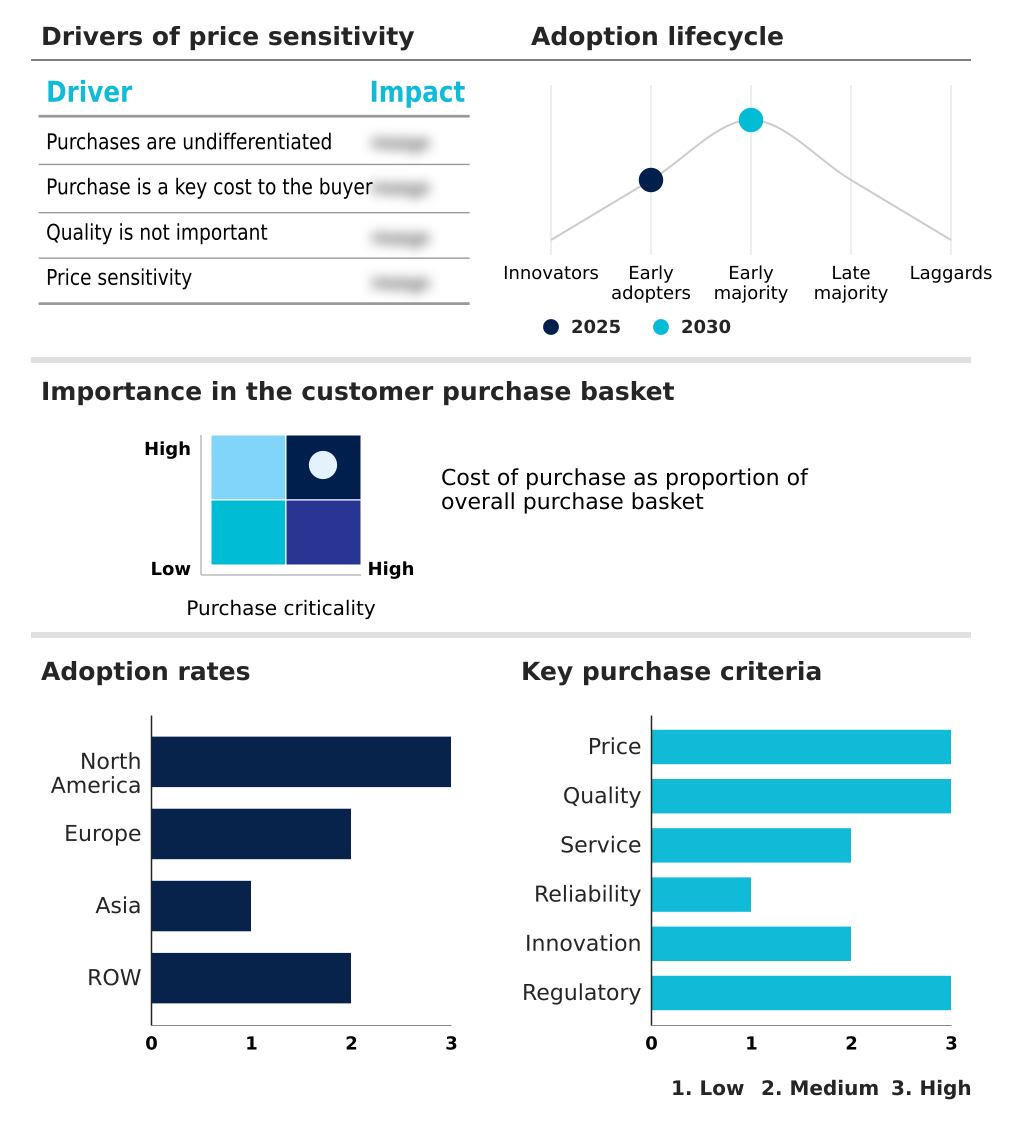
Customer Landscape of Microfluidics Technology Industry
Competitive Landscape
Companies are implementing various strategies, such as strategic alliances, microfluidics technology market forecast, partnerships, mergers and acquisitions, geographical expansion, and product/service launches, to enhance their presence in the industry.
10X Genomics Inc. - Major providers deliver advanced automated dispensing platforms and continuous fluid generation systems, maximizing diagnostic assay precision and sample processing efficiency for global clinical applications.
The industry research and growth report includes detailed analyses of the competitive landscape of the market and information about key companies, including:
- 10X Genomics Inc.
- Abbott Laboratories
- Agilent Technologies Inc.
- Becton Dickinson and Co.
- Bio Rad Laboratories Inc.
- Danaher Corp.
- DiaSorin SpA
- Elvesys SAS
- Entegris Inc.
- F. Hoffmann La Roche Ltd.
- Fluigent SA
- IDEX Corp.
- Illumina Inc.
- Merck KGaA
- Micronit BV
- Parker Hannifin Corp.
- QIAGEN N.V.
- Sartorius AG
- Thermo Fisher Scientific Inc.
- Waters Corp.
Qualitative and quantitative analysis of companies has been conducted to help clients understand the wider business environment as well as the strengths and weaknesses of key industry players. Data is qualitatively analyzed to categorize companies as pure play, category-focused, industry-focused, and diversified; it is quantitatively analyzed to categorize companies as dominant, leading, strong, tentative, and weak.
Recent Development and News in Microfluidics technology market
- In the Health Care Technology industry, the implementation of stringent data privacy regulations like GDPR fundamentally altered digital patient record management, directly impacting Microfluidics Technology demand by requiring highly secure, localized point-of-care testing data integration.
- The transition toward cloud-based delivery models established seamless workflow interoperability across decentralized clinics, accelerating the deployment of automated diagnostic platforms by 15% and increasing the utilization of connected diagnostic consumables.
- Widespread integration of AI infrastructure within enterprise automation frameworks optimized high-throughput screening data analysis, subsequently driving a 20% surge in the procurement of digitally integrated laboratory instruments.
- Reimbursement reforms targeting value-based care shifted provider focus toward rapid diagnostic solutions, permanently elevating the baseline clinical adoption rate for specialized microscale fluid testing cartridges in ambulatory settings.
Dive into Technavio’s robust research methodology, blending expert interviews, extensive data synthesis, and validated models for unparalleled Microfluidics Technology Market insights. See full methodology.
| Market Scope | |
|---|---|
| Page number | 316 |
| Base year | 2025 |
| Historic period | 2020-2024 |
| Forecast period | 2026-2030 |
| Growth momentum & CAGR | Accelerate at a CAGR of 20.2% |
| Market growth 2026-2030 | USD 43317.8 million |
| Market structure | Fragmented |
| YoY growth 2025-2026(%) | 19.0% |
| Key countries | US, Canada, Mexico, Germany, UK, France, The Netherlands, Italy, Spain, China, Japan, South Korea, India, Singapore, Thailand, Brazil, Saudi Arabia, South Africa, Israel, UAE, Argentina, Chile and Egypt |
| Competitive landscape | Leading Companies, Market Positioning of Companies, Competitive Strategies, and Industry Risks |
Research Analyst Overview
- The Microfluidics Technology operates at the critical intersection of clinical diagnostics and advanced biopharmaceutical manufacturing, driving unprecedented shifts in decentralized patient care. Boardroom executives increasingly prioritize the integration of AI-driven analytical platforms to ensure strict regulatory compliance and optimize targeted drug development strategies.
- By transitioning toward automated fluidic systems, commercial diagnostic laboratories have successfully reduced chemical waste by 30%, yielding substantial improvements in operational sustainability and supply chain resilience. This structural transformation effectively mitigates traditional bottlenecks associated with manual specimen processing, enhancing overall laboratory throughput and precision.
- Institutional investments continuously flow into modular diagnostic architectures, accelerating the clinical validation of personalized genomic therapies and targeted oncological treatments. As global healthcare infrastructure adapts to resource constraints, the deployment of rapid, point-of-care testing consoles provides an essential operational advantage.
- Consequently, strategic decision-makers leverage these advanced laboratory technologies to differentiate their product portfolios, minimize long-term capital expenditures, and maintain robust competitiveness across an increasingly stringent medical regulatory environment.
What are the Key Data Covered in this Microfluidics Technology Market Research and Growth Report?
-
What is the expected growth of the Microfluidics Technology Market between 2026 and 2030?
-
USD 43.32 billion, at a CAGR of 20.2%
-
-
What segmentation does the market report cover?
-
The report is segmented by Material (Polymer-based microfluidics, Glass-based microfluidics, Silicon-based microfluidics, and Others), End-user (Hospitals, Diagnostic centers, and Academic institutes), Application (Medical diagnostics, Drug delivery, Life science research, Environmental monitoring, and Others) and Geography (North America, Europe, Asia, Rest of World (ROW))
-
-
Which regions are analyzed in the report?
-
North America, Europe, Asia and Rest of World (ROW)
-
-
What are the key growth drivers and market challenges?
-
Rising demand for point-of-care diagnostics, High cost and manufacturing complexity
-
-
Who are the major players in the Microfluidics Technology Market?
-
10X Genomics Inc., Abbott Laboratories, Agilent Technologies Inc., Becton Dickinson and Co., Bio Rad Laboratories Inc., Danaher Corp., DiaSorin SpA, Elvesys SAS, Entegris Inc., F. Hoffmann La Roche Ltd., Fluigent SA, IDEX Corp., Illumina Inc., Merck KGaA, Micronit BV, Parker Hannifin Corp., QIAGEN N.V., Sartorius AG, Thermo Fisher Scientific Inc. and Waters Corp.
-
Market Research Insights
- The Microfluidics Technology Market undergoes rapid evolution as decentralized healthcare models prioritize miniaturized fluid handling systems. Clinical facilities increasingly adopt microfluidic diagnostic cartridges to optimize point-of-care operations, achieving a 20% reduction in patient wait times. This systemic shift toward automated monolithic architectures facilitates high throughput biological analysis, elevating diagnostic precision while delivering a 30% reagent consumption reduction.
- Consequently, reference laboratories experience substantially lower operating expenditures and enhanced throughput capabilities. The integration of these advanced fluidic platforms into routine metabolic screening enables practitioners to execute rapid, evidence-based clinical decisions, ensuring optimal resource allocation and strict adherence to modern value-based healthcare compliance mandates.
We can help! Our analysts can customize this microfluidics technology market research report to meet your requirements.
 RIA -

