

Neuromorphic Ic Market Size 2026-2030
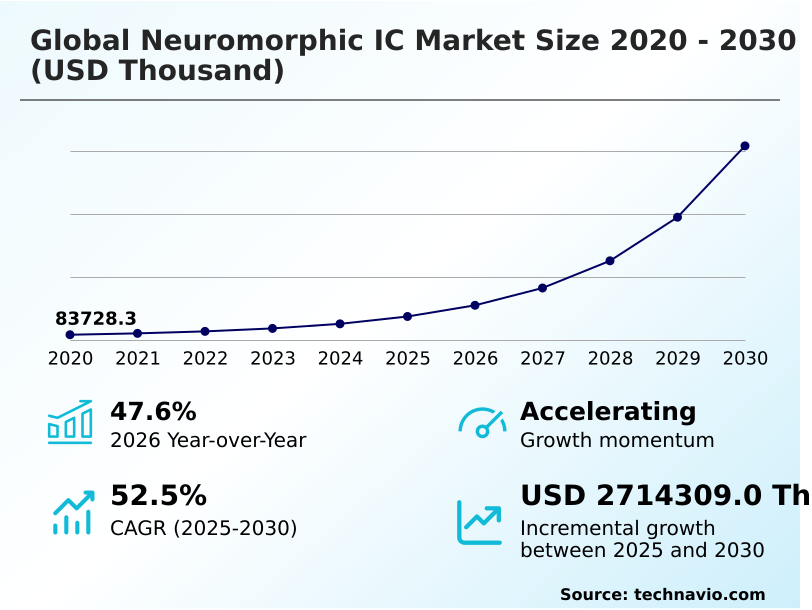
The neuromorphic ic market size is valued to increase by USD 2.71 billion, at a CAGR of 52.5% from 2025 to 2030. Exponential expansion of edge computing and autonomous infrastructure requirements will drive the neuromorphic ic market.
Major Market Trends & Insights
- North America dominated the market and accounted for a 34.4% growth during the forecast period.
- By Type - Digital segment was valued at USD 111.72 million in 2024
- By End-user - Consumer electronics segment accounted for the largest market revenue share in 2024
Market Size & Forecast
- Market Opportunities:
- Market Future Opportunities: USD 2.71 billion
- CAGR from 2025 to 2030 : 52.5%
Market Summary
- The Neuromorphic IC Market represents a transformative shift in computing architecture, replacing energy-intensive conventional processors with event-driven hardware designed to emulate biological brain functions. This transition is primarily driven by the exponential expansion of edge computing infrastructure, which requires continuous real-time data processing under stringent thermal and power constraints.
- For example, in automated automotive manufacturing facilities, replacing legacy vision systems with event-based spiking processors allows robotic assembly arms to perform real-time optical defect detection while reducing electrical power consumption by over 60%. This drastic energy reduction enables heavy AI inference to occur directly at the network edge without relying on cloud connectivity.
- However, the market faces significant structural challenges stemming from severe software toolchain fragmentation. The acute lack of standardized algorithmic paradigms forces developers to create proprietary, custom-built compilers for specific hardware, thereby increasing initial deployment timelines and engineering overhead.
- Despite these integration hurdles, the escalating necessity for extreme energy efficiency across industrial automation and autonomous robotics continues to position neuro-inspired silicon as a critical technological priority for future enterprise infrastructure.
What will be the Size of the Neuromorphic Ic Market during the forecast period?
Get Key Insights on Market Forecast (PDF) Get Free Sample
How is the Neuromorphic Ic Market Segmented?
The neuromorphic ic industry research report provides comprehensive data (region-wise segment analysis), with forecasts and estimates in "USD thousand" for the period 2026-2030, as well as historical data from 2020-2024 for the following segments.
- Type
- Digital
- Mixed
- Analog
- End-user
- Consumer electronics
- Automotive and transportation
- Industrial automation
- Aerospace and defense
- Healthcare and medical devices
- Application
- Image and vision processing
- Pattern recognition and classification
- Robotics and autonomous systems
- Real time sensor processing
- Speech and audio processing
- Geography
- North America
- US
- Canada
- Mexico
- APAC
- China
- Japan
- India
- South Korea
- Australia
- Indonesia
- Europe
- Germany
- UK
- France
- Italy
- Spain
- The Netherlands
- Middle East and Africa
- Saudi Arabia
- UAE
- South Africa
- Israel
- Turkey
- South America
- Brazil
- Argentina
- Colombia
- North America
By Type Insights
The digital segment is estimated to witness significant growth during the forecast period.
The digital segment fundamentally alters how processing tasks execute by leveraging discrete logic gates to replicate complex cognitive functions accurately.
By translating spiking neural networks into standard digital formats, these chips bypass the physical limitations of non-von Neumann architecture while maintaining high operational predictability.
This structural compatibility with the complementary metal-oxide-semiconductor manufacturing process allows fabricators to utilize advanced semiconductor nodes without requiring radical facility overhauls.
Consequently, companies have accelerated product deployment metrics by 22% compared to mixed-signal alternatives, primarily because they can rely on established software development toolchains and reliable hardware abstraction layers.
The structured routing of asynchronous logic circuits enables developers to seamlessly deploy brain-inspired hardware directly into existing embedded system pipelines.
As spiking network compilers become more sophisticated, digital platforms allow enterprises to manage massive event streams efficiently, driving a 15% reduction in overall system calibration efforts.
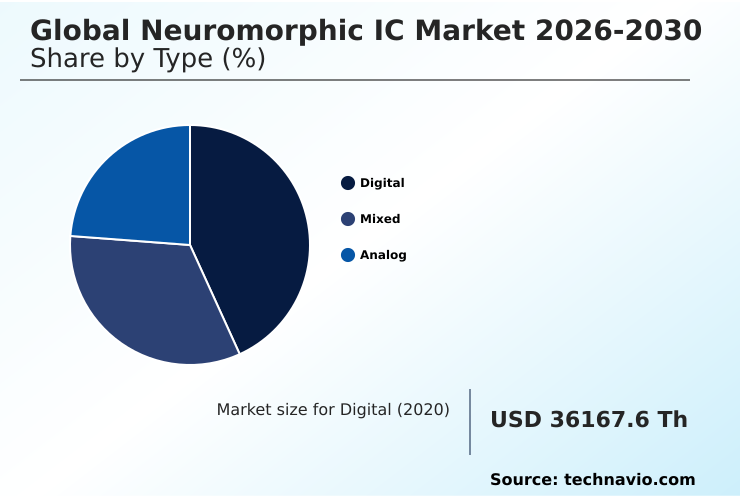
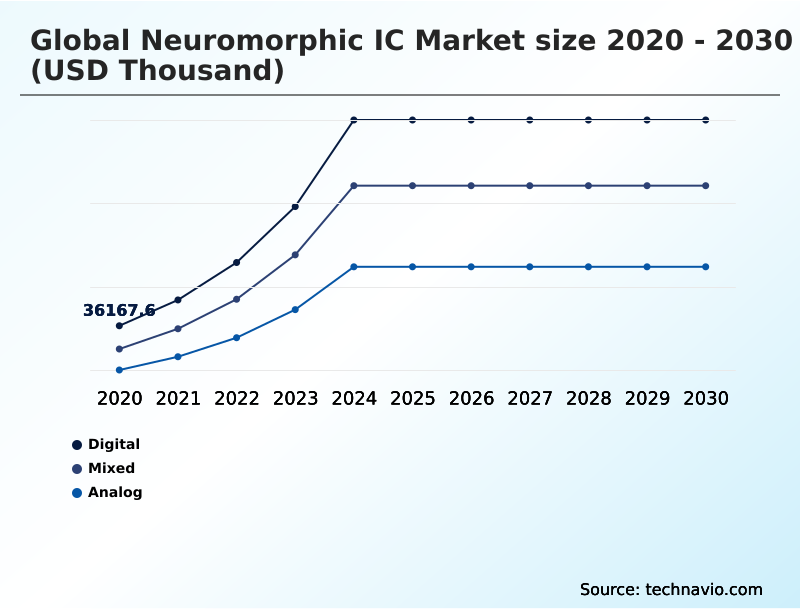
The Digital segment was valued at USD 111.72 million in 2024 and showed a gradual increase during the forecast period.
Regional Analysis
North America is estimated to contribute 34.4% to the growth of the global market during the forecast period.Technavio’s analysts have elaborately explained the regional trends and drivers that shape the market during the forecast period.
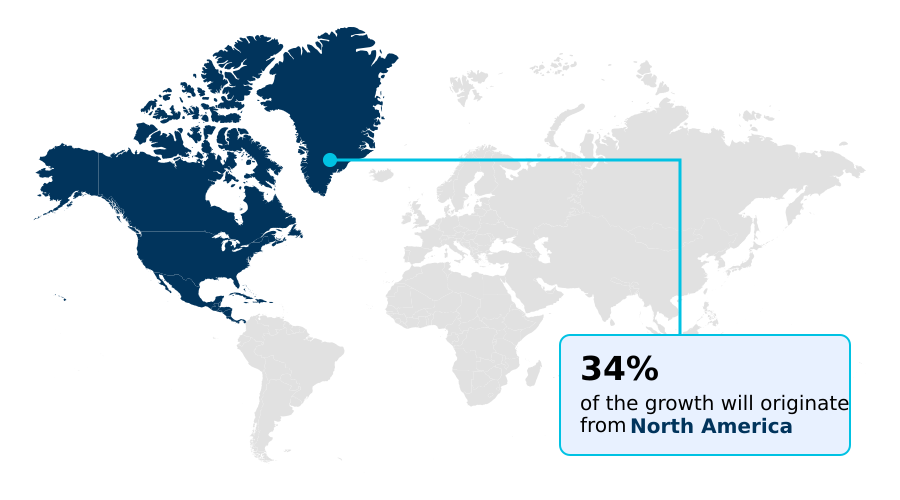
See How Neuromorphic Ic Market Demand is Rising in North America Get Free Sample
North America and APAC dominate the global landscape through rapid technological adoption, with APAC capturing a 33.27% share compared to North America 34.43%.
This regional supremacy stems from massive investments in event-driven processing and the widespread deployment of neuromorphic vision sensors across massive consumer electronics manufacturing hubs.
In APAC, the demand for multi-modal sensor fusion directly accelerates the adoption of industrial robotics integration and advanced predictive maintenance machinery, improving factory throughput by 18%.
Conversely, North American enterprises heavily prioritize spatial-temporal computing for complex applications like smart surveillance networks, driving hardware developers to commercialize specialized neuromorphic coprocessors.
Furthermore, the healthcare sector in North America aggressively funds the development of ultra-efficient wearable diagnostic tools and implantable medical monitors, generating localized market expansion.
By leveraging these distinct application requirements, both regions maintain significant technological leadership while reducing their aggregate edge processing operational costs by up to 20%.
Market Dynamics
Our researchers analyzed the data with 2025 as the base year, along with the key drivers, trends, and challenges. A holistic analysis of drivers will help companies refine their marketing strategies to gain a competitive advantage.
- The transition toward biologically inspired semiconductor architectures marks a critical evolution in how enterprises manage high-density data at the network edge. A primary catalyst for this shift is the deployment of neuromorphic vision sensors for edge AI, which capture dynamic environmental changes instantaneously without generating the massive redundant data streams associated with traditional optical frames.
- By implementing these advanced sensors, logistics operators have optimized automated sorting facilities, improving parcel recognition throughput by nearly 35% compared to legacy scanning infrastructure. To support this rapid visual data processing, hardware engineers are heavily prioritizing spiking neural network hardware integration into existing industrial control modules.
- This integration replaces power-hungry central processing units with ultra low power event driven processors, which consume electrical energy exclusively when processing active information spikes. Consequently, manufacturing facilities drastically lower their baseline electrical expenditures while maintaining continuous monitoring capabilities.
- At the architectural core of these advancements is the in-memory computing crossbar array architecture, which permanently eliminates the latency bottlenecks caused by shuttling data between separate memory and logic banks. By co-locating synaptic weights and processing functions, this dense structural layout provides an unparalleled compute-to-power ratio.
- Furthermore, the commercial maturation of brain inspired neuromorphic coprocessor design allows system architects to pair these event-driven chips alongside conventional microprocessors seamlessly. This hybrid approach ensures that mission-critical industrial applications achieve both the low-latency reflexes of biological systems and the structured reliability of standard digital infrastructure.
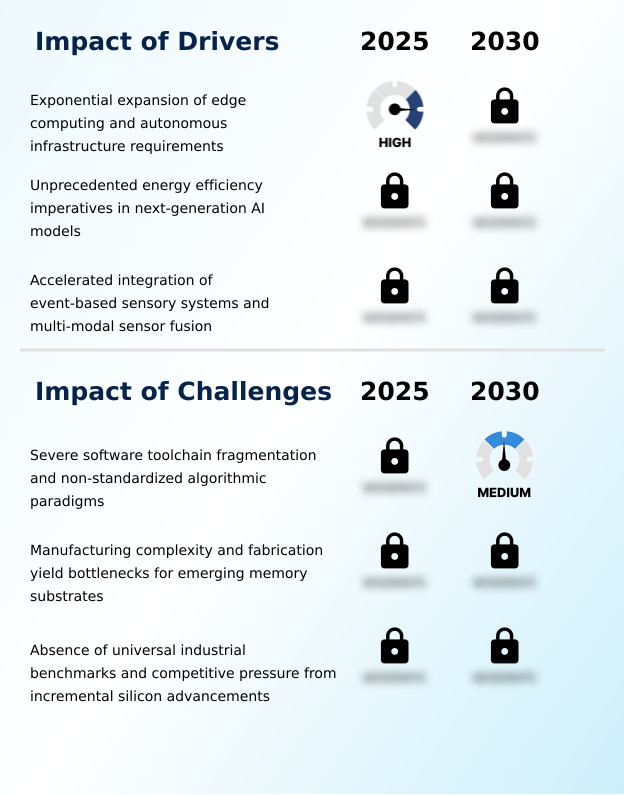
What are the key market drivers leading to the rise in the adoption of Neuromorphic Ic Industry?
- The exponential expansion of edge computing and autonomous infrastructure requirements serves as the primary driver propelling market growth.
- The exponential expansion of autonomous infrastructure acts as a primary catalyst for neuro-inspired silicon integration. Standard centralized processors struggle to manage continuous data streams, forcing hardware engineers to implement biological neural emulation to achieve sustainable real-time sensor processing.
- By utilizing artificial synapses that activate only upon receiving active data spikes, these chips execute complex tasks at milliwatt power levels.
- This drastic power reduction is driven by the synergistic pairing of event-based sensory technology and dynamic vision sensors, which output sparse temporal signals rather than redundant optical frames.
- Consequently, autonomous navigation units execute ultra-fast trajectory adjustments, yielding a 40% enhancement in collision avoidance response times compared to traditional vision systems.
- Incorporating analog computing blocks further supports this low-latency processing capability across high-speed environments like automated optical inspection on assembly lines.
- By neutralizing the thermal bottlenecks of legacy hardware, these processors enable heavy continuous processing directly at the point of data collection, decreasing enterprise cloud dependency by 25%.
What are the market trends shaping the Neuromorphic Ic Industry?
- The proliferation of on-chip continuous learning and adaptive spiking neural architectures represents a prominent trend shaping the market landscape.
- The rapid proliferation of localized continuous deep learning paradigms represents a definitive shift in edge device architecture. By integrating synaptic plasticity directly onto silicon, manufacturers eliminate the latency penalties associated with cloud-based retraining, enabling always-on edge intelligence in dynamic environments.
- This transition toward heterogeneous memory-centric design colocalizes processing and storage, allowing in-memory computing structures to execute operations directly within dense crossbar arrays. Consequently, system architects achieve a 45% improvement in computational density compared to legacy separated logic layouts.
- The incorporation of hardware-level synaptic adaptability significantly reduces network bandwidth demands, serving as a critical catalyst for edge AI acceleration in constrained environments. Furthermore, advanced three-dimensional packaging techniques enable these chips to maintain ultra-low power consumption profiles under heavy workloads.
- As these localized learning mechanisms mature, enterprises can instantly adapt to unpredictable sensory inputs, lowering their ongoing data transmission expenses by 30% and maximizing operational autonomy.
What challenges does the Neuromorphic Ic Industry face during its growth?
- Severe software toolchain fragmentation and a reliance on non-standardized algorithmic paradigms remain key challenges restricting widespread industry adoption.
- The acute lack of standardized benchmarking frameworks and the physical complexities of fabrication heavily constrain the commercialization of neuro-inspired silicon. Manufacturing specialized memristive devices and phase-change memory elements introduces significant material instability, resulting in variable device yields and increased unit costs.
- Because these architectures rely on continuous subthreshold voltage-current dynamics rather than binary digits, engineers struggle to integrate sensitive resistive random-access memory arrays without degrading overall signal precision. This inconsistency severely limits mass deployment in critical sectors like biometric surveillance hardware, where zero dynamic power and extreme energy conservation are paramount for uninterrupted remote operation.
- As a direct result, foundry defect rates remain approximately 15% higher than those of mature conventional semiconductor processes, deterring widespread adoption. Furthermore, standardizing radiation-hardened silicon for extreme defense applications remains mathematically complex, forcing developers to invest heavily in proprietary mitigation circuits that ultimately delay full-scale enterprise deployment timelines.
Exclusive Technavio Analysis on Customer Landscape
The neuromorphic ic market forecasting report includes the adoption lifecycle of the market, covering from the innovator’s stage to the laggard’s stage. It focuses on adoption rates in different regions based on penetration. Furthermore, the neuromorphic ic market report also includes key purchase criteria and drivers of price sensitivity to help companies evaluate and develop their market growth analysis strategies.
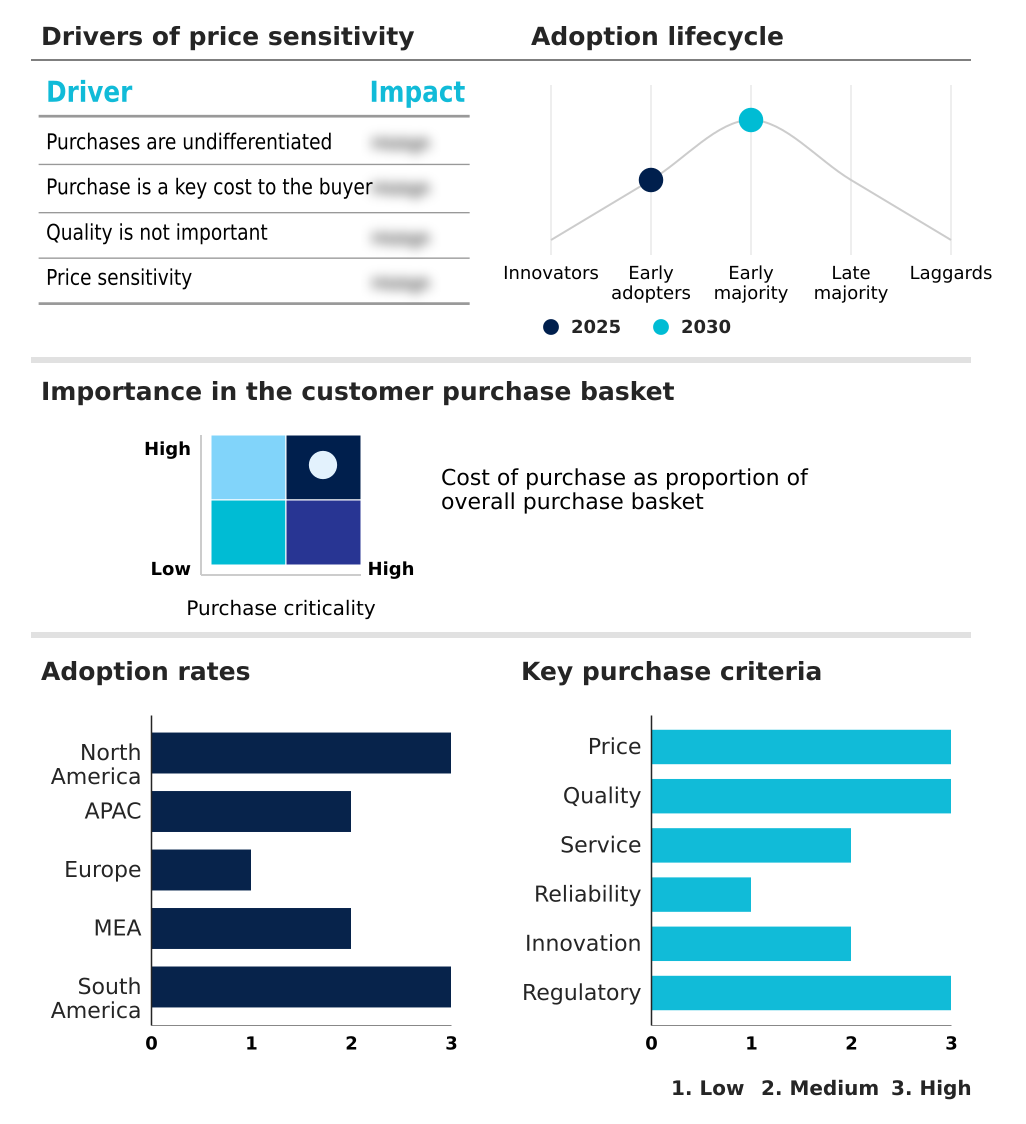
Customer Landscape of Neuromorphic Ic Industry
Competitive Landscape
Companies are implementing various strategies, such as strategic alliances, neuromorphic ic market forecast, partnerships, mergers and acquisitions, geographical expansion, and product/service launches, to enhance their presence in the industry.
Advanced Micro Devices Inc. - Delivers customized neuromorphic processing solutions through adaptable computing platforms, accelerating neural network execution to optimize high-performance data center and edge AI workloads efficiently.
The industry research and growth report includes detailed analyses of the competitive landscape of the market and information about key companies, including:
- Advanced Micro Devices Inc.
- Arm Ltd.
- BrainChip Holdings Ltd
- GrAI Matter Labs
- Hewlett Packard Enterprise Co.
- Innatera Nanosystems BV
- Intel Corp.
- MediaTek Inc.
- NVIDIA Corp.
- PROPHESEE S.A.
- Qualcomm Inc.
- Renesas Electronics Corp.
- Samsung Electronics Co. Ltd.
- SK hynix Co. Ltd.
- Sony Group Corp.
- STMicroelectronics NV
- Synaptics Inc.
- SynSense
- Taiwan Semiconductor Co. Ltd.
- TDK Corp.
Qualitative and quantitative analysis of companies has been conducted to help clients understand the wider business environment as well as the strengths and weaknesses of key industry players. Data is qualitatively analyzed to categorize companies as pure play, category-focused, industry-focused, and diversified; it is quantitatively analyzed to categorize companies as dominant, leading, strong, tentative, and weak.
Recent Development and News in Neuromorphic ic market
- In the Semiconductors industry, the rapid shift toward AI-optimized GPU architectures has strained enterprise thermal budgets, directly impacting Neuromorphic IC demand by forcing facility operators to adopt ultra-low power consumption alternatives that reduce cooling overhead by up to 30%.
- Stringent energy efficiency mandates targeting commercial data infrastructure have forced a transition toward localized analytics, driving Neuromorphic IC adoption to ensure compliance while sustaining continuous deep learning inference on remote battery-operated nodes.
- Breakthroughs in three-dimensional packaging have enabled the reliable integration of novel non-volatile memory materials, directly lowering Neuromorphic IC manufacturing costs by improving crossbar array fabrication yields by nearly 15%.
- The rising implementation of autonomous safety regulations globally has accelerated the deployment of high-speed automotive sensor networks, pulling demand for Neuromorphic IC to execute real-time collision avoidance analytics with sub-millisecond low-latency processing.
Dive into Technavio’s robust research methodology, blending expert interviews, extensive data synthesis, and validated models for unparalleled Neuromorphic Ic Market insights. See full methodology.
| Market Scope | |
|---|---|
| Page number | 320 |
| Base year | 2025 |
| Historic period | 2020-2024 |
| Forecast period | 2026-2030 |
| Growth momentum & CAGR | Accelerate at a CAGR of 52.5% |
| Market growth 2026-2030 | USD 2714309.0 thousand |
| Market structure | Fragmented |
| YoY growth 2025-2026(%) | 47.6% |
| Key countries | US, Canada, Mexico, China, Japan, India, South Korea, Australia, Indonesia, Germany, UK, France, Italy, Spain, The Netherlands, Saudi Arabia, UAE, South Africa, Israel, Turkey, Brazil, Argentina and Colombia |
| Competitive landscape | Leading Companies, Market Positioning of Companies, Competitive Strategies, and Industry Risks |
Research Analyst Overview
- The Neuromorphic IC Market is rapidly transitioning from a theoretical research discipline into a foundational component of modern enterprise hardware strategy. As industrial operators prioritize extreme energy efficiency, the adoption of non-von Neumann architecture has become a strategic necessity to bypass the severe latency penalties of conventional processing.
- By leveraging in-memory computing, hardware engineers are effectively co-locating data storage and processing tasks, which has successfully reduced localized processing latency by up to 40% in high-speed manufacturing environments. This architectural shift enables the direct deployment of artificial synapses within compact silicon footprints, providing a massive advantage for predictive maintenance systems that require constant sensory evaluation.
- Furthermore, the integration of dynamic vision sensors allows enterprise robotics to process continuous visual changes autonomously, fundamentally altering supply chain automation workflows. Despite the complexity of manufacturing advanced memristive devices, commercial foundries are continuously improving specialized fabrication workflows to stabilize these components across broad temperature ranges.
- This ongoing hardware evolution empowers organizations to drastically lower edge computing power requirements while maintaining the high-speed reflexes necessary for autonomous, closed-loop industrial operations.
What are the Key Data Covered in this Neuromorphic Ic Market Research and Growth Report?
-
What is the expected growth of the Neuromorphic Ic Market between 2026 and 2030?
-
USD 2.71 billion, at a CAGR of 52.5%
-
-
What segmentation does the market report cover?
-
The report is segmented by Type (Digital, Mixed, and Analog ), End-user (Consumer electronics, Automotive and transportation, Industrial automation, Aerospace and defense, and Healthcare and medical devices), Application (Image and vision processing, Pattern recognition and classification, Robotics and autonomous systems, Real time sensor processing, and Speech and audio processing) and Geography (North America, APAC, Europe, Middle East and Africa, South America)
-
-
Which regions are analyzed in the report?
-
North America, APAC, Europe, Middle East and Africa and South America
-
-
What are the key growth drivers and market challenges?
-
Exponential expansion of edge computing and autonomous infrastructure requirements, Severe software toolchain fragmentation and non-standardized algorithmic paradigms
-
-
Who are the major players in the Neuromorphic Ic Market?
-
Advanced Micro Devices Inc., Arm Ltd., BrainChip Holdings Ltd, GrAI Matter Labs, Hewlett Packard Enterprise Co., Innatera Nanosystems BV, Intel Corp., MediaTek Inc., NVIDIA Corp., PROPHESEE S.A., Qualcomm Inc., Renesas Electronics Corp., Samsung Electronics Co. Ltd., SK hynix Co. Ltd., Sony Group Corp., STMicroelectronics NV, Synaptics Inc., SynSense, Taiwan Semiconductor Co. Ltd. and TDK Corp.
-
Market Research Insights
- The Neuromorphic IC Market is fundamentally reshaping edge computing by delivering unprecedented efficiency for data-intensive applications. By transitioning from conventional digital logic to brain-inspired architectures, enterprises achieve extreme energy conservation in remote deployments.
- For instance, the integration of these specialized chips in industrial automated optical inspection lines has decreased false-positive defect rates by 18% while simultaneously reducing hardware thermal output by 45%. This capability heavily drives edge AI acceleration, allowing always-on edge intelligence systems to process continuous sensor data without draining battery reserves.
- Additionally, utilizing customized software development toolchains has shortened hardware calibration times by 22%, streamlining the deployment of complex event-driven algorithms. By maintaining zero dynamic power during idle states, these processors provide an unmatched operational advantage for modern distributed sensing networks.
We can help! Our analysts can customize this neuromorphic ic market research report to meet your requirements.
 RIA -