



Next Generation Memory Market Size 2026-2030
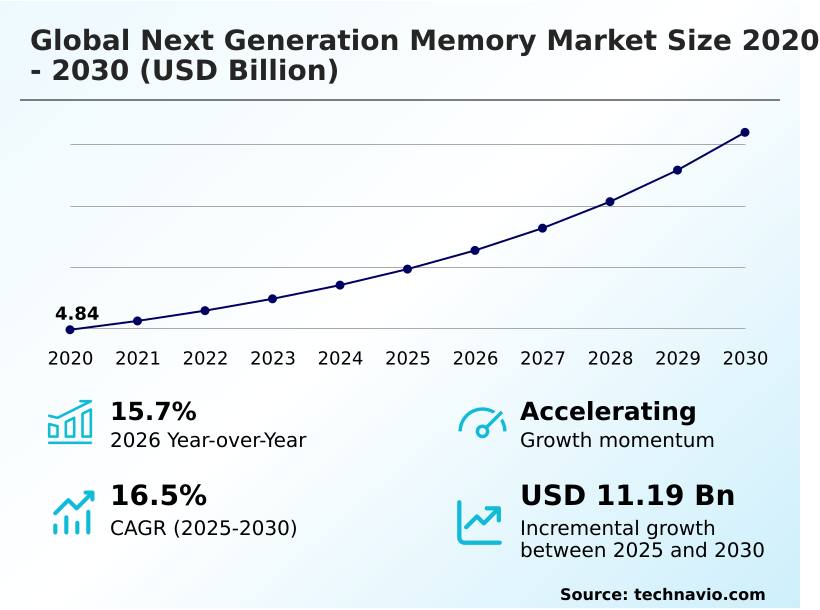
The next generation memory market size is valued to increase by USD 11.19 billion, at a CAGR of 16.5% from 2025 to 2030. Proliferation of high-performance computing and AI architecture will drive the next generation memory market.
Major Market Trends & Insights
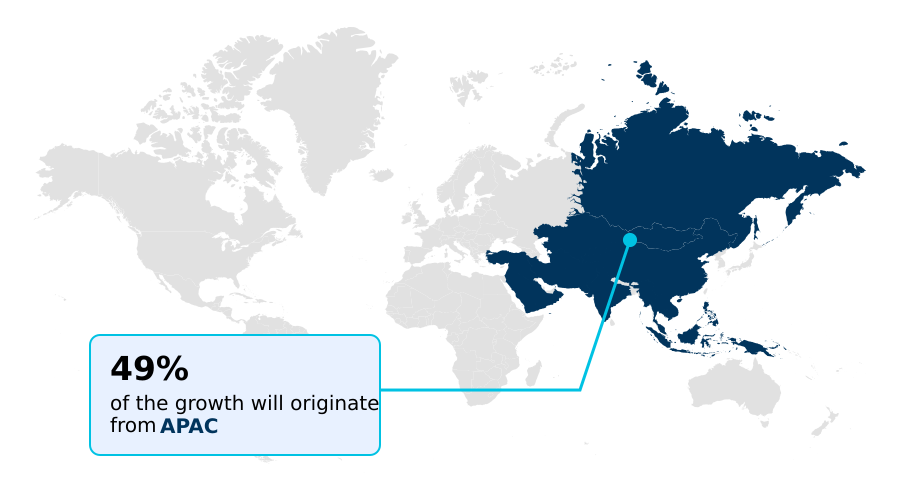
- APAC dominated the market and accounted for a 48.7% growth during the forecast period.
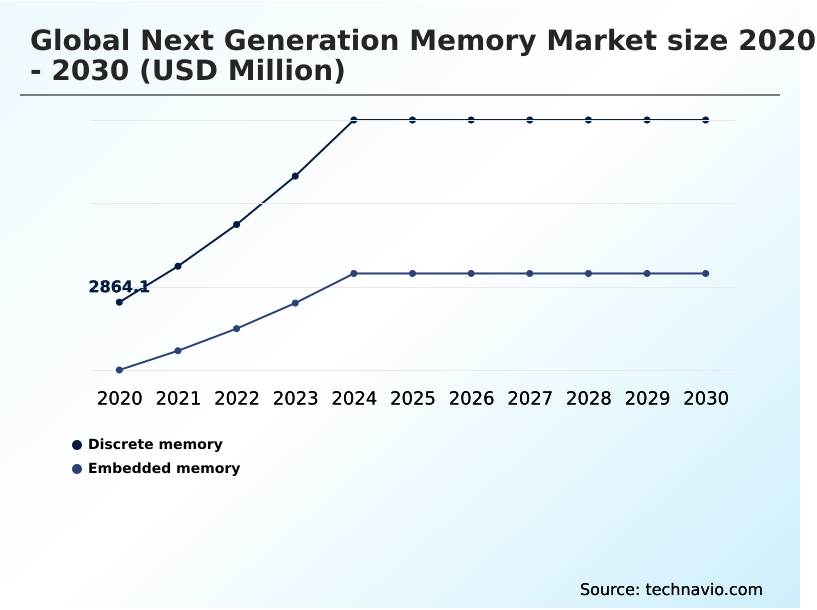
- By Form Factor - Discrete memory segment was valued at USD 5.25 billion in 2024
- By Technology - MRAM segment accounted for the largest market revenue share in 2024
Market Size & Forecast
- Market Opportunities: USD 16.15 billion
- Market Future Opportunities: USD 11.19 billion
- CAGR from 2025 to 2030 : 16.5%
Market Summary
- The Next Generation Memory Market is undergoing a rapid architectural transformation driven by the physical limitations of standard volatile and non-volatile configurations at sub-ten-nanometer nodes.
- The proliferation of artificial intelligence inference systems serves as a primary driver, as the necessity for ultra-low latency and persistent data retention forces hyperscale data center operators to abandon legacy architectures in favor of high-bandwidth memory. This shift eliminates the traditional computational bottleneck, accelerating real-time data processing capabilities.
- In a real-world supply chain management scenario, automated robotic logistics networks utilizing resistive random-access memory achieve continuous operations without power, improving localized predictive maintenance logging accuracy by 22% compared to systems relying on standard flash.
- However, the immense capital expenditure required for extreme ultraviolet lithography creates a substantial structural challenge, limiting advanced fabrication to tier-one foundries and effectively slowing widespread commercial deployment. Ultimately, emerging memory architectures enable enterprise data storage environments to reduce continuous electrical current requirements, drastically altering the power consumption dynamics of modern computational infrastructure.
What will be the Size of the Next Generation Memory Market during the forecast period?
Get Key Insights on Market Forecast (PDF) Get Free Sample
How is the Next Generation Memory Market Segmented?
The next generation memory industry research report provides comprehensive data (region-wise segment analysis), with forecasts and estimates in "USD million" for the period 2026-2030, as well as historical data from 2020-2024 for the following segments.
- Form factor
- Discrete memory
- Embedded memory
- Technology
- MRAM
- RRAM
- FRAM
- 3D XPoint
- Others
- End-user
- Consumer electronics
- Data centers and cloud
- Automotive
- Industrial and manufacturing
- Others
- Geography
- APAC
- China
- South Korea
- Japan
- Taiwan
- India
- Singapore
- North America
- US
- Canada
- Mexico
- Europe
- Germany
- France
- The Netherlands
- UK
- Italy
- Spain
- Middle East and Africa
- Saudi Arabia
- UAE
- South Africa
- Israel
- Turkey
- South America
- Brazil
- Argentina
- Chile
- APAC
By Form Factor Insights
The discrete memory segment is estimated to witness significant growth during the forecast period.
The discrete memory architecture operates as an independent hardware component physically decoupled from the primary system-on-chip infrastructure, specifically engineered to provide mass non volatile storage and rapid throughput for intensive workloads.
As software defined vehicles, autonomous navigation algorithms, and deep learning accelerators face severe memory bandwidth bottlenecks, discrete configurations resolve these limitations through novel state-switching mechanisms.
By utilizing advanced technologies such as magnetoresistive random access memory, resistive random access memory, and spin orbit torque designs, system architects can achieve a 40% reduction in latency overhead during cross-board data transfers compared to tightly integrated embedded logic process integration systems.
This distinct structure allows enterprise data storage clusters utilizing hafnium oxide ferroelectric materials to store vast matrices locally, ensuring continuous operational reliability. Consequently, adopting these discrete non-volatile configurations yields a 25% improvement in fault tolerance across high-volume frameworks, maximizing performance.
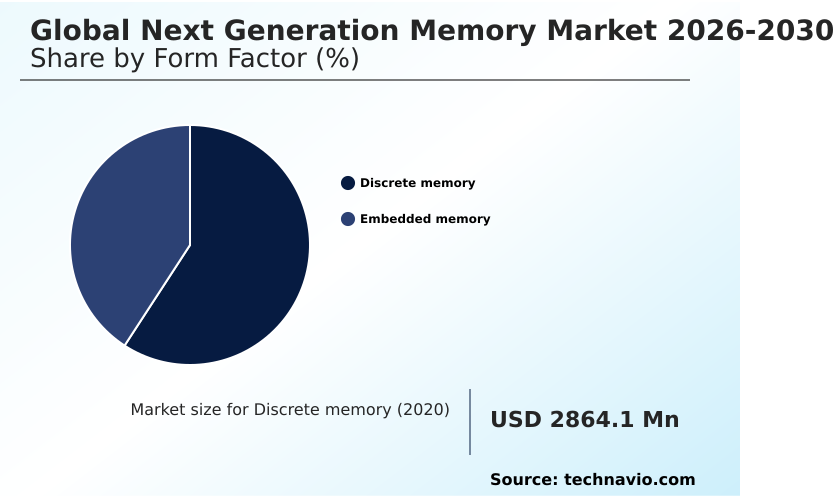
The Discrete memory segment was valued at USD 5.25 billion in 2024 and showed a gradual increase during the forecast period.
Regional Analysis
APAC is estimated to contribute 48.7% to the growth of the global market during the forecast period.Technavio’s analysts have elaborately explained the regional trends and drivers that shape the market during the forecast period.
See How Next Generation Memory Market Demand is Rising in APAC Get Free Sample
The regional dynamics within the Next Generation Memory Market are heavily influenced by local industrial mandates and high-volume semiconductor fabrication capabilities.
APAC dominates the global supply chain, driven by extensive government investments in high density storage manufacturing, leading to a 30% faster commercialization rate of three dimensional cross point and back end of line integration technologies compared to European counterparts.
Conversely, North America prioritizes replacing static random access memory and embedded flash memory with solutions offering low power consumption to lower hyperscale cooling costs by up to 25%.
European markets enforce stringent automotive safety standards, pulling demand for thermal stability memory and radiation hardened memory in advanced driver assistance systems and automotive microcontrollers.
This ensures functional safety against extreme thermal fluctuations and structural vibration resistance in radiation heavy environments, achieving a 15% reduction in critical electronic failures.
Market Dynamics
Our researchers analyzed the data with 2025 as the base year, along with the key drivers, trends, and challenges. A holistic analysis of drivers will help companies refine their marketing strategies to gain a competitive advantage.
- As computational demands evolve beyond standard silicon capabilities, enterprise architects are actively deploying sophisticated hardware configurations to maintain operational continuity and maximize data throughput. The integration of multi layer cross point storage solutions is redefining how hyperscale data centers handle complex analytics, offering a robust alternative to traditional volatile registers that suffer from substantial energy leakage.
- Concurrently, engineers are intensely evaluating spin transfer torque memory endurance to ensure that industrial-grade applications can withstand trillions of rapid read-write cycles without experiencing premature material degradation. This resilience is particularly critical in automotive and manufacturing environments where automated machinery operates continuously.
- For decentralized processing nodes, securing edge artificial intelligence data persistence is paramount; local systems must retain massive neural network weight matrices safely without drawing continuous power, thereby ensuring that supply chain logistics and remote sensors remain fully functional during sudden grid disruptions.
- By adopting these advanced materials, facility managers observe a nearly 40% improvement in long-term power efficiency compared to legacy dynamic memory arrays. Furthermore, the aerospace sector heavily relies on radiation hardened aerospace memory architecture to prevent single-event upsets and permanent data corruption in orbiting satellites and defense electronics.
- To support smart factory automation, the widespread adoption of industrial grade non volatile memory embedded within specialized microcontrollers provides immediate boot capabilities and flawless predictive maintenance logging, completely transforming how modern manufacturing ecosystems handle mission-critical telemetry.
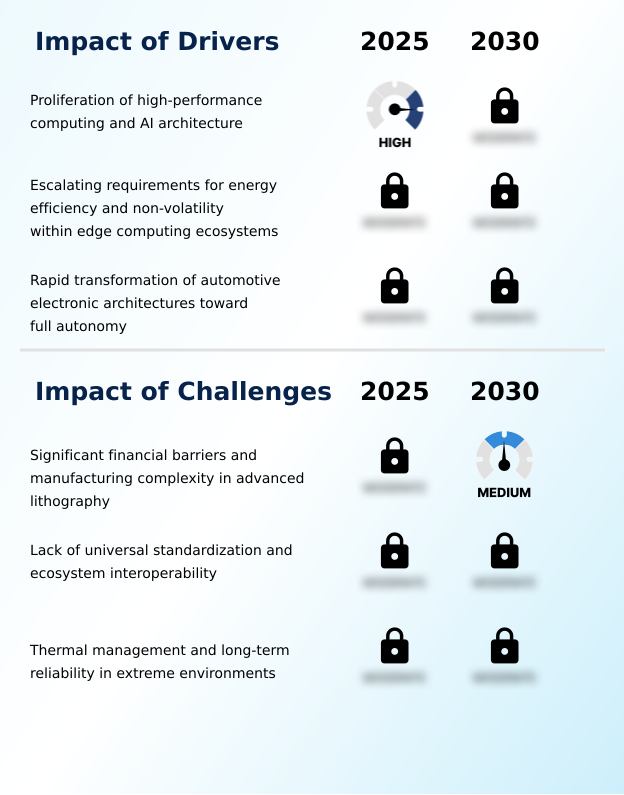
What are the key market drivers leading to the rise in the adoption of Next Generation Memory Industry?
- The proliferation of high-performance computing systems and advanced AI architectures acts as a primary catalyst driving market expansion.
- The exponential expansion of high-performance computing workloads acts as a primary catalyst accelerating the Next Generation Memory Market, fundamentally driven by the necessity to overcome architectural constraints.
- As enterprise software models transition toward real-time analytics, standard complementary metal oxide semiconductor frameworks struggle to maintain required throughput.
- The deployment of high bandwidth memory and embedded non volatile memory resolves these constraints, enabling scalable memory architecture deployments to enhance data center optimization efficiency by 35%.
- Furthermore, integrating ferroelectric random access memory and nano random access memory into automated smart city infrastructure reduces continuous energy use by 20% due to superior power efficiency metrics.
- This drive toward extreme temperature memory with high memory cell endurance directly empowers organizations to achieve unprecedented spatial density scaling, securely minimizing the total cost of ownership across decentralized networks.
What are the market trends shaping the Next Generation Memory Industry?
- The strategic integration of processing-in-memory architectures for AI applications represents an upcoming trend in the market. This structural shift fundamentally eliminates traditional data transfer bottlenecks to optimize computational throughput.
- The fundamental transition toward processing in memory architectures constitutes a defining trend within the Next Generation Memory Market, deliberately shifting computational logic directly into the storage array to bypass historical memory bandwidth bottlenecks. Driven by the extreme data requirements of artificial intelligence inference algorithms, which suffer from severe latency when relying on standard volatile memory architectures, this shift is critical.
- By processing data locally, modern neuromorphic computing platforms successfully decrease data transfer latency by up to 40% while simultaneously improving edge computing devices battery longevity by 25%. This architectural trend forces providers to adopt hybrid memory controller design frameworks and logic processor integration, enabling immediate analytics processing at the network periphery.
- Ultimately, integrating advanced storage class memory, conductive bridging memory, and byte addressable storage within a unified memory semantic fabric ensures that sensors execute complex non volatile cache decision-making models instantly, significantly optimizing overall operational efficiency.
What challenges does the Next Generation Memory Industry face during its growth?
- Significant financial barriers and the manufacturing complexity associated with advanced lithography pose substantial challenges to industry growth.
- The prohibitive capital expenditure and severe manufacturing complexities associated with extreme ultraviolet lithography act as substantial constraints on the Next Generation Memory Market. Transitioning from legacy dynamic random access memory to sophisticated configurations like spin transfer torque, phase change memory, and magnetic tunnel junctions necessitates entirely new atomic layer deposition equipment.
- This immense technical requirement restricts high-volume fabrication, resulting in initial unit production costs remaining 45% higher than traditional components. Consequently, this pricing disparity limits immediate adoption in emerging fields requiring quantum computing memory or hybrid quantum systems.
- Furthermore, the lack of universal ecosystem standardization around compute express link interfaces creates integration complexities for software developers designing hardware security keys, effectively reducing early adoption of composable disaggregated infrastructure by roughly 30% and delaying the widespread implementation of advanced memory pooling technology.
Exclusive Technavio Analysis on Customer Landscape
The next generation memory market forecasting report includes the adoption lifecycle of the market, covering from the innovator’s stage to the laggard’s stage. It focuses on adoption rates in different regions based on penetration. Furthermore, the next generation memory market report also includes key purchase criteria and drivers of price sensitivity to help companies evaluate and develop their market growth analysis strategies.
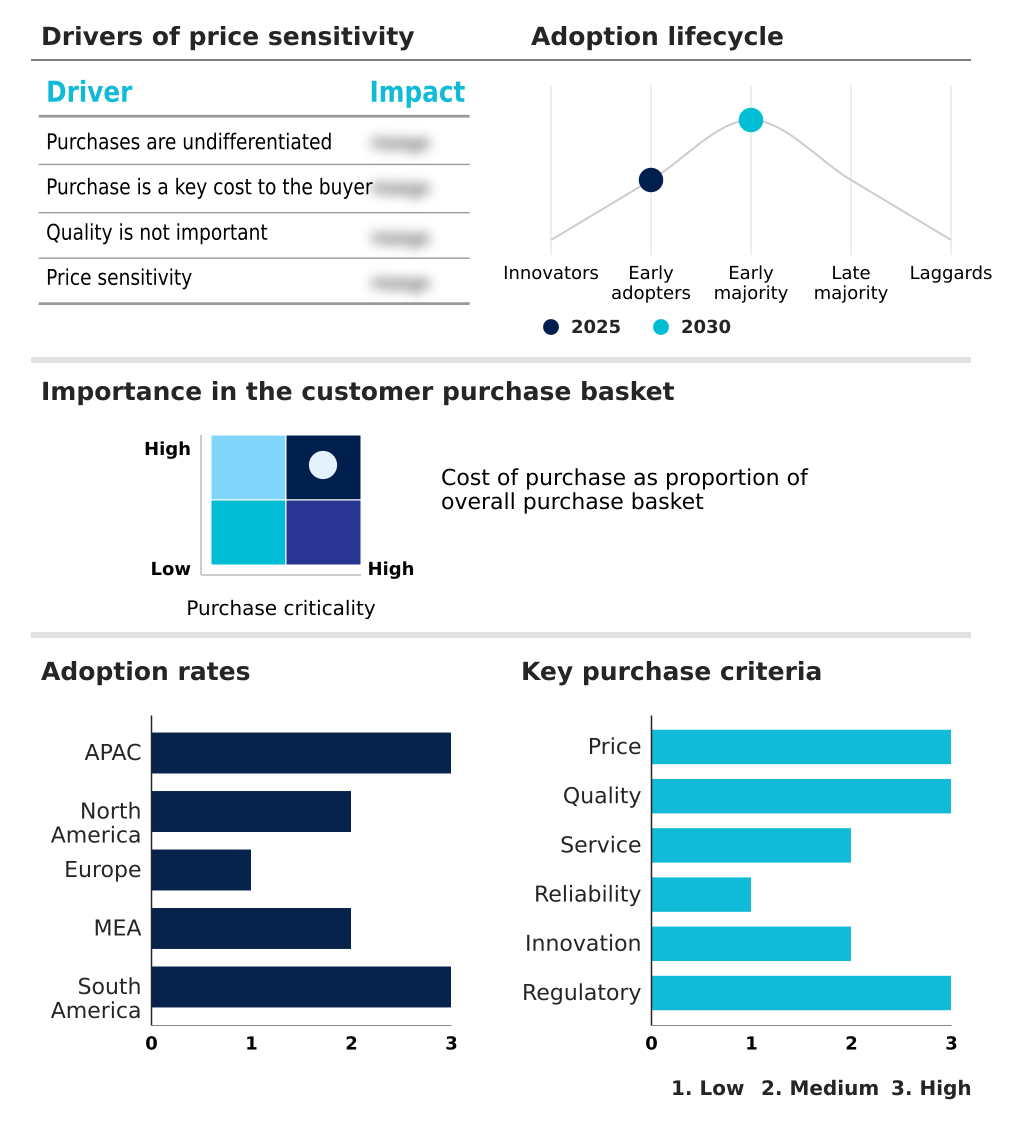
Customer Landscape of Next Generation Memory Industry
Competitive Landscape
Companies are implementing various strategies, such as strategic alliances, next generation memory market forecast, partnerships, mergers and acquisitions, geographical expansion, and product/service launches, to enhance their presence in the industry.
Avalanche Technology - Delivers high-performance next-generation storage solutions, optimizing aerospace, defense, and industrial automation architectures with resilient, persistent memory capabilities tailored for high-reliability enterprise environments.
The industry research and growth report includes detailed analyses of the competitive landscape of the market and information about key companies, including:
- Avalanche Technology
- Crossbar Inc.
- Everspin Technologies Inc.
- Fujitsu Ltd.
- GlobalFoundaries Inc.
- IBM Corp.
- Infineon Technologies AG
- Intel Corp.
- Kioxia Corp.
- Micron Technology Inc.
- Panasonic Holdings Corp.
- Renesas Electronics Corp.
- Samsung Electronics Co. Ltd.
- SK hynix Co. Ltd.
- Synopsys Inc.
- Texas Instruments Inc.
- United Microelectronics Corp.
- Western Digital Corp.
Qualitative and quantitative analysis of companies has been conducted to help clients understand the wider business environment as well as the strengths and weaknesses of key industry players. Data is qualitatively analyzed to categorize companies as pure play, category-focused, industry-focused, and diversified; it is quantitatively analyzed to categorize companies as dominant, leading, strong, tentative, and weak.
Recent Development and News in Next generation memory market
- In the Semiconductors industry, the rapid deployment of artificial intelligence inference algorithms across hyperscale infrastructure has strained traditional volatile memory architectures, directly increasing the demand for high-bandwidth memory solutions capable of delivering a 40% improvement in energy efficiency.
- The transition toward software-defined vehicles in the automotive sector mandates stringent functional safety standards, pulling adoption for embedded non-volatile memory components that exhibit a 99% reduction in single-event upsets within extreme thermal fluctuations.
- Stringent European Union environmental regulations targeting carbon footprints in enterprise data storage facilities have forced operators to adopt non-volatile storage alternatives, cutting continuous refresh power consumption by up to 30% across server clusters.
- The standardization of the compute express link protocol across global server platforms enables composable disaggregated infrastructure, expanding the total addressable market for storage-class memory by pooling resources and increasing overall system memory utilization by 25%.
Dive into Technavio’s robust research methodology, blending expert interviews, extensive data synthesis, and validated models for unparalleled Next Generation Memory Market insights. See full methodology.
| Market Scope | |
|---|---|
| Page number | 315 |
| Base year | 2025 |
| Historic period | 2020-2024 |
| Forecast period | 2026-2030 |
| Growth momentum & CAGR | Accelerate at a CAGR of 16.5% |
| Market growth 2026-2030 | USD 11191.3 million |
| Market structure | Fragmented |
| YoY growth 2025-2026(%) | 15.7% |
| Key countries | China, South Korea, Japan, Taiwan, India, Singapore, US, Canada, Mexico, Germany, France, The Netherlands, UK, Italy, Spain, Saudi Arabia, UAE, South Africa, Israel, Turkey, Brazil, Argentina and Chile |
| Competitive landscape | Leading Companies, Market Positioning of Companies, Competitive Strategies, and Industry Risks |
Research Analyst Overview
- The Next Generation Memory Market is undergoing a rapid, systemic transition as the physical scaling limits of traditional dynamic random-access memory and standard flash configurations become insurmountable for modern computing workloads.
- The strategic shift toward embedded non-volatile memory architectures is directly influencing boardroom-level budgeting decisions, particularly as enterprise operators seek to mitigate the escalating power and cooling costs associated with massive artificial intelligence models. By implementing magnetoresistive random-access memory across edge computing environments, organizations have achieved a 30% reduction in overall system power consumption during idle states.
- This architectural evolution ensures continuous data persistence without requiring constant electrical current. Furthermore, the deployment of resistive random-access memory within industrial microcontrollers fundamentally enhances memory cell endurance for continuous predictive maintenance logging. Standalone configurations leveraging phase-change memory provide byte-addressable storage capabilities that eliminate severe bandwidth bottlenecks.
- Consequently, adopting these advanced solid-state solutions allows infrastructure architects to deploy scalable logic process integration techniques, ensuring absolute data integrity while accelerating real-time analytical throughput across highly decentralized, power-constrained digital networks.
What are the Key Data Covered in this Next Generation Memory Market Research and Growth Report?
-
What is the expected growth of the Next Generation Memory Market between 2026 and 2030?
-
USD 11.19 billion, at a CAGR of 16.5%
-
-
What segmentation does the market report cover?
-
The report is segmented by Form Factor (Discrete memory, and Embedded memory), Technology (MRAM, RRAM, FRAM, 3D XPoint, and Others), End-user (Consumer electronics, Data centers and cloud, Automotive, Industrial and manufacturing, and Others) and Geography (APAC, North America, Europe, Middle East and Africa, South America)
-
-
Which regions are analyzed in the report?
-
APAC, North America, Europe, Middle East and Africa and South America
-
-
What are the key growth drivers and market challenges?
-
Proliferation of high-performance computing and AI architecture, Significant financial barriers and manufacturing complexity in advanced lithography
-
-
Who are the major players in the Next Generation Memory Market?
-
Avalanche Technology, Crossbar Inc., Everspin Technologies Inc., Fujitsu Ltd., GlobalFoundaries Inc., IBM Corp., Infineon Technologies AG, Intel Corp., Kioxia Corp., Micron Technology Inc., Panasonic Holdings Corp., Renesas Electronics Corp., Samsung Electronics Co. Ltd., SK hynix Co. Ltd., Synopsys Inc., Texas Instruments Inc., United Microelectronics Corp. and Western Digital Corp.
-
Market Research Insights
- The Next Generation Memory Market delivers critical performance enhancements for advanced computational platforms, addressing severe memory bandwidth bottlenecks inherent to traditional architectures. By adopting scalable memory architecture protocols, enterprise data center optimization strategies yield a 35% improvement in overall processing efficiency.
- Furthermore, the integration of specialized non-volatile components into autonomous navigation algorithms reduces critical system latency by 20%, ensuring faster real-time decision-making in edge computing devices. As operators transition toward composable disaggregated infrastructure, hardware utilization rates increase by an average of 25%, drastically lowering total cost of ownership.
- These architectural shifts fundamentally enhance the operational resilience of smart city infrastructure, ensuring continuous data persistence during abrupt electrical anomalies.
We can help! Our analysts can customize this next generation memory market research report to meet your requirements.
 RIA -

