


Orthobiologics Market Size 2026-2030
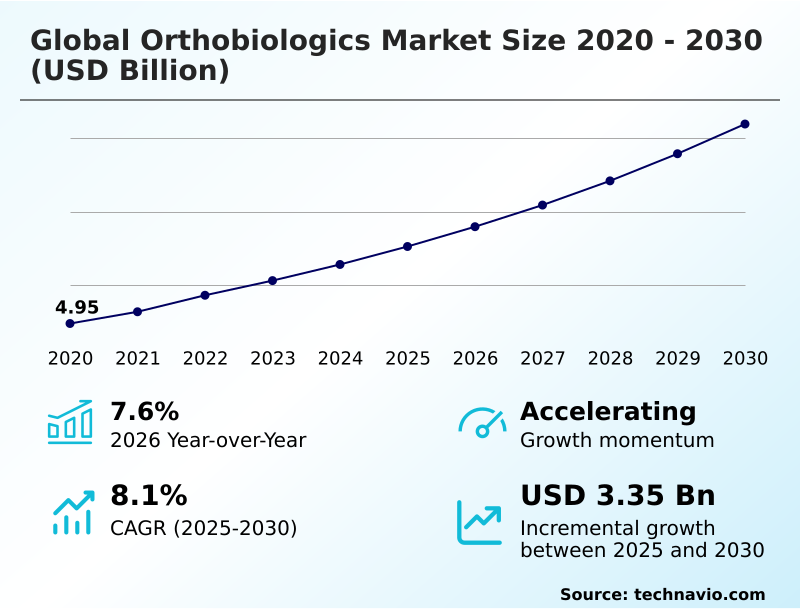
The orthobiologics market size is valued to increase by USD 3.35 billion, at a CAGR of 8.1% from 2025 to 2030. Rising prevalence of musculoskeletal disorders and geriatric demographic shifts will drive the orthobiologics market.
Major Market Trends & Insights
- North America dominated the market and accounted for a 40.9% growth during the forecast period.
- By Application - Spinal fusion segment was valued at USD 3.23 billion in 2024
- By Product - Bone graft substitutes segment accounted for the largest market revenue share in 2024
Market Size & Forecast
- Market Opportunities: USD 5.44 billion
- Market Future Opportunities: USD 3.35 billion
- CAGR from 2025 to 2030 : 8.1%
Market Summary
- The orthobiologics market is rapidly evolving, driven by the dual needs of an aging global population and a growing cohort of active individuals seeking faster recovery from injuries. This sector is moving beyond simple mechanical solutions toward advanced biological interventions designed to work with the body's own healing mechanisms.
- A key dynamic is the shift from autografts to allograft tissue products and synthetic bone graft substitutes, which offer improved safety profiles and operational efficiencies. For instance, in a common business scenario, ambulatory surgery centers are adopting point-of-care cell processing and injectable bone void fillers to streamline surgical workflow integration.
- This approach not only reduces procedure times but also aligns with value-based healthcare models by lowering post-operative complication rates. However, the industry navigates a complex landscape of healthcare reimbursement codes and regulatory approval pathways, requiring continuous investment in clinical trial evidence to validate both efficacy and health economic data.
- The integration of advanced tissue engineering and bioactive materials science continues to open new avenues for chondrocyte regeneration and joint preservation techniques.
What will be the Size of the Orthobiologics Market during the forecast period?
Get Key Insights on Market Forecast (PDF) Get Free Sample
How is the Orthobiologics Market Segmented?
The orthobiologics industry research report provides comprehensive data (region-wise segment analysis), with forecasts and estimates in "USD million" for the period 2026-2030, as well as historical data from 2020-2024 for the following segments.
- Application
- Spinal fusion
- Reconstructive surgery
- Trauma repair
- Others
- Product
- Bone graft substitutes
- Viscosupplementation
- Stem cells
- End-user
- Hospitals
- ASCs
- Orthopedic clinics
- Geography
- North America
- US
- Canada
- Mexico
- Europe
- Germany
- UK
- France
- Asia
- Rest of World (ROW)
- North America
By Application Insights
The spinal fusion segment is estimated to witness significant growth during the forecast period.
The spinal fusion segment is foundational to the orthobiologics market, driven by an aging population and the increasing complexity of spinal procedures.
Demand for advanced biological augmentation strategies is intensifying as surgeons seek to improve patient outcomes and reduce the need for revision surgery.
The adoption of osteoinductive scaffolds and lineage-committed allografts is becoming standard, moving away from traditional autologous cell harvesting to minimize donor site morbidity.
Innovations in bioactive materials science and patient-specific implant design are critical, particularly with the integration of robotic-assisted surgery, which demands predictable and effective biological interfaces.
The market has seen a notable shift towards outpatient care models, where procedural efficiency is paramount, increasing reliance on products that facilitate accelerated rehabilitation protocols. This segment accounts for over 65% of all orthobiologics applications.
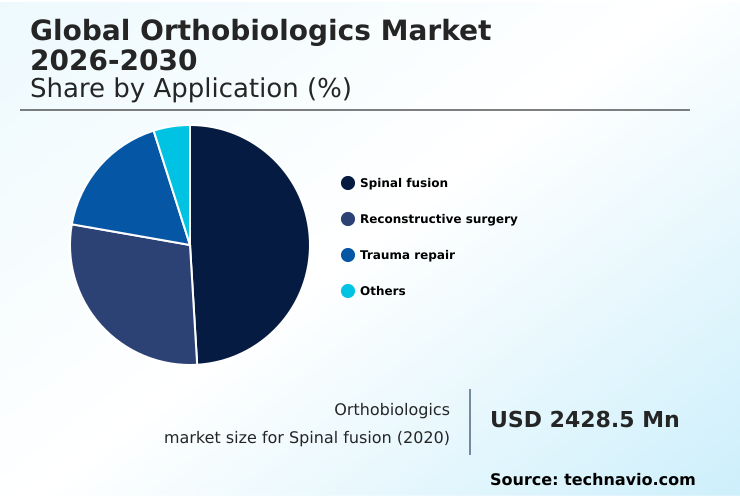
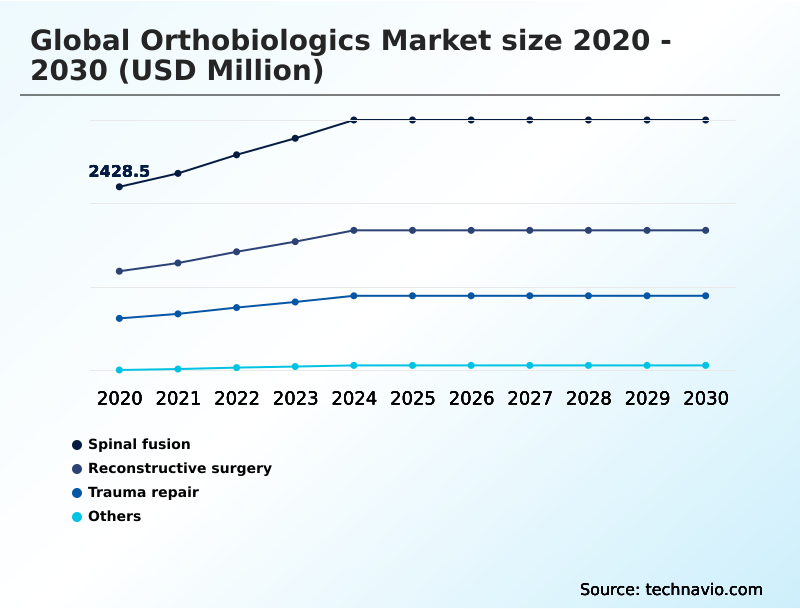
The Spinal fusion segment was valued at USD 3.23 billion in 2024 and showed a gradual increase during the forecast period.
Regional Analysis
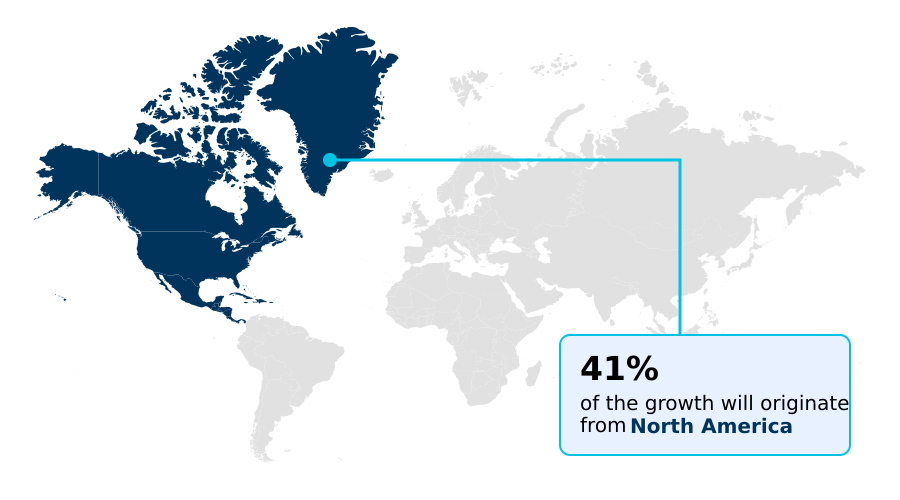
North America is estimated to contribute 40.9% to the growth of the global market during the forecast period.Technavio’s analysts have elaborately explained the regional trends and drivers that shape the market during the forecast period.
See How Orthobiologics Market Demand is Rising in North America Get Free Sample
The global geographic landscape for orthobiologics is led by North America, which is set to capture approximately 41% of the market's incremental growth.
This dominance is sustained by advanced healthcare infrastructure, high procedural volumes, and favorable reimbursement for musculoskeletal disease management. Asia is emerging as the fastest-growing region with a projected CAGR of 8.6%, significantly higher than Europe's 7.7%.
This expansion is fueled by rising healthcare expenditure, an aging population, and increasing access to complex spinal fusion procedures and reconstructive orthopedic surgery.
As the market expands, navigating diverse regulatory approval pathways and establishing sterile product supply chains are critical for penetrating emerging economies.
The focus on aseptic loosening prevention and chronic joint pain management is a universal driver shaping regional strategies and product development, reflecting a global need for more effective orthopedic solutions.
Market Dynamics
Our researchers analyzed the data with 2025 as the base year, along with the key drivers, trends, and challenges. A holistic analysis of drivers will help companies refine their marketing strategies to gain a competitive advantage.
- The strategic direction of the global orthobiologics market 2026-2030 is increasingly defined by sophisticated clinical applications and technological convergence. A central debate involves bioactive allografts versus synthetic bone grafts, with surgeons weighing the inherent biological activity of allografts against the consistency and availability of synthetics.
- The role of orthobiologics in sports medicine continues to expand, driven by the demand for minimally invasive treatments like platelet-rich plasma for soft tissue healing. In parallel, advancements in osteoinductive scaffold technology are enabling more complex reconstructions. Cellular therapy for articular cartilage repair is a key area of research, focused on providing long-term solutions for degenerative joint disease.
- The cost-effectiveness of single-injection viscosupplementation is also under scrutiny by payers, influencing treatment algorithms for osteoarthritis. Navigating the regulatory pathways for cell-based orthobiologics remains a significant hurdle for manufacturers. Furthermore, orthobiologics in minimally invasive spine surgery are becoming standard, enhancing fusion rates and reducing recovery times.
- The use of demineralized bone matrix in complex trauma is critical for managing significant bone defects. The development of injectable bone substitutes for fracture repair offers less invasive options compared to traditional methods.
- The application of stem cell applications in reconstructive surgery and the 3D printing of patient-specific orthobiologics represent the next frontier in personalized medicine, with firms specializing in orthobiologics for ambulatory surgery center procedures seeing adoption rates nearly double those of traditional hospital-focused products. Finally, mitigating bone morphogenetic protein side effects remains a key clinical focus to ensure patient safety.
What are the key market drivers leading to the rise in the adoption of Orthobiologics Industry?
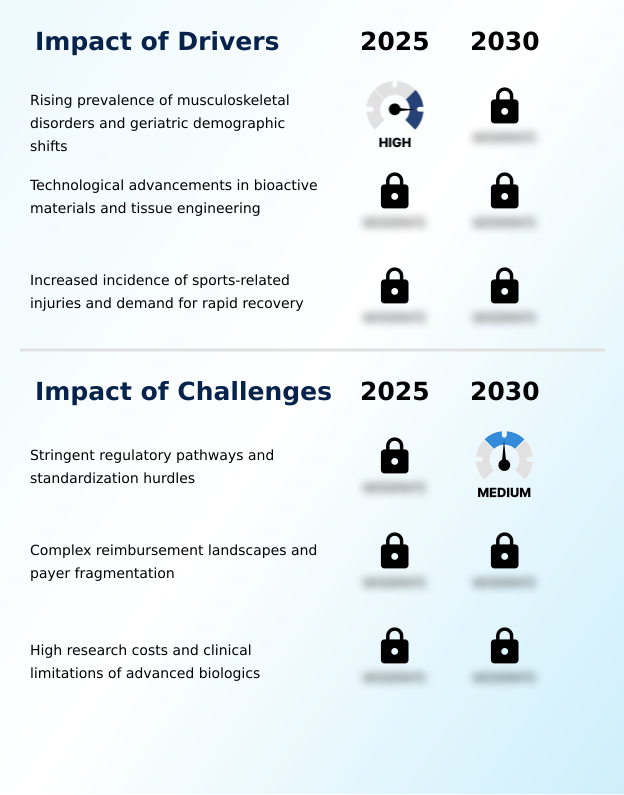
- The rising prevalence of musculoskeletal disorders, combined with significant geriatric demographic shifts, is the key driver of market growth.
- The market's growth is fundamentally driven by the rising prevalence of musculoskeletal conditions, with degenerative disc disease treatment needs increasing by 8% annually in developed nations. This demographic pressure necessitates advancements in sports-related injury recovery and orthopedic trauma management.
- Technological innovation is a powerful secondary driver, particularly in the development of materials that offer superior biocompatibility assessment and load-bearing capacity. These advancements are critical for non-union fracture intervention and focal cartilage defect repair.
- For instance, the use of next-generation biologics has been linked to a 15% improvement in healing times for complex fractures.
- This continuous innovation, coupled with a greater understanding of tissue regeneration mechanisms, ensures that orthobiologics are increasingly integrated into standard surgical protocols for a wide range of orthopedic challenges.
What are the market trends shaping the Orthobiologics Industry?
- The market is undergoing a strategic transition toward advanced bioactive allografts. This shift involves the increasing integration of synthetic materials to enhance surgical outcomes.
- A primary trend in the market is the strategic shift toward advanced allografts and synthetic integration, which are improving procedural efficiency optimization in orthopedic surgery. The adoption of minimally invasive surgical pathways is accelerating, with utilization in ambulatory surgery centers growing 20% faster than in traditional hospitals.
- This is driven by innovations that support accelerated rehabilitation protocols and reduce post-operative complication rates. The development of new biomaterials is also central, with a focus on enhancing the bone healing cascade and modulating the inflammatory response.
- This strategic pivot allows for more predictable clinical outcomes, a crucial factor as the industry aligns with value-based healthcare models that prioritize long-term performance and the avoidance of revision surgeries. This trend is supported by an increase in demand for advanced biologics, which now represent a larger portion of procedural costs.
What challenges does the Orthobiologics Industry face during its growth?
- Stringent regulatory pathways and persistent standardization hurdles present a key challenge to industry growth and innovation.
- The orthobiologics market faces significant challenges, primarily from stringent regulatory landscapes and complex reimbursement frameworks. Obtaining regulatory approval pathways for novel cell-based therapies can take 30% longer than for traditional medical devices, creating substantial barriers to entry and slowing innovation. Furthermore, the lack of standardized healthcare reimbursement codes for many advanced procedures leads to unpredictable revenue cycles for providers.
- This is a key restraint, as the high cost of aseptic processing standards and R&D makes profitability sensitive to reimbursement levels. The market also contends with the clinical challenge of preventing aseptic loosening, which drives up long-term healthcare costs.
- These hurdles require manufacturers to invest heavily in generating compelling clinical and economic evidence to justify adoption and secure favorable payer coverage.
Exclusive Technavio Analysis on Customer Landscape
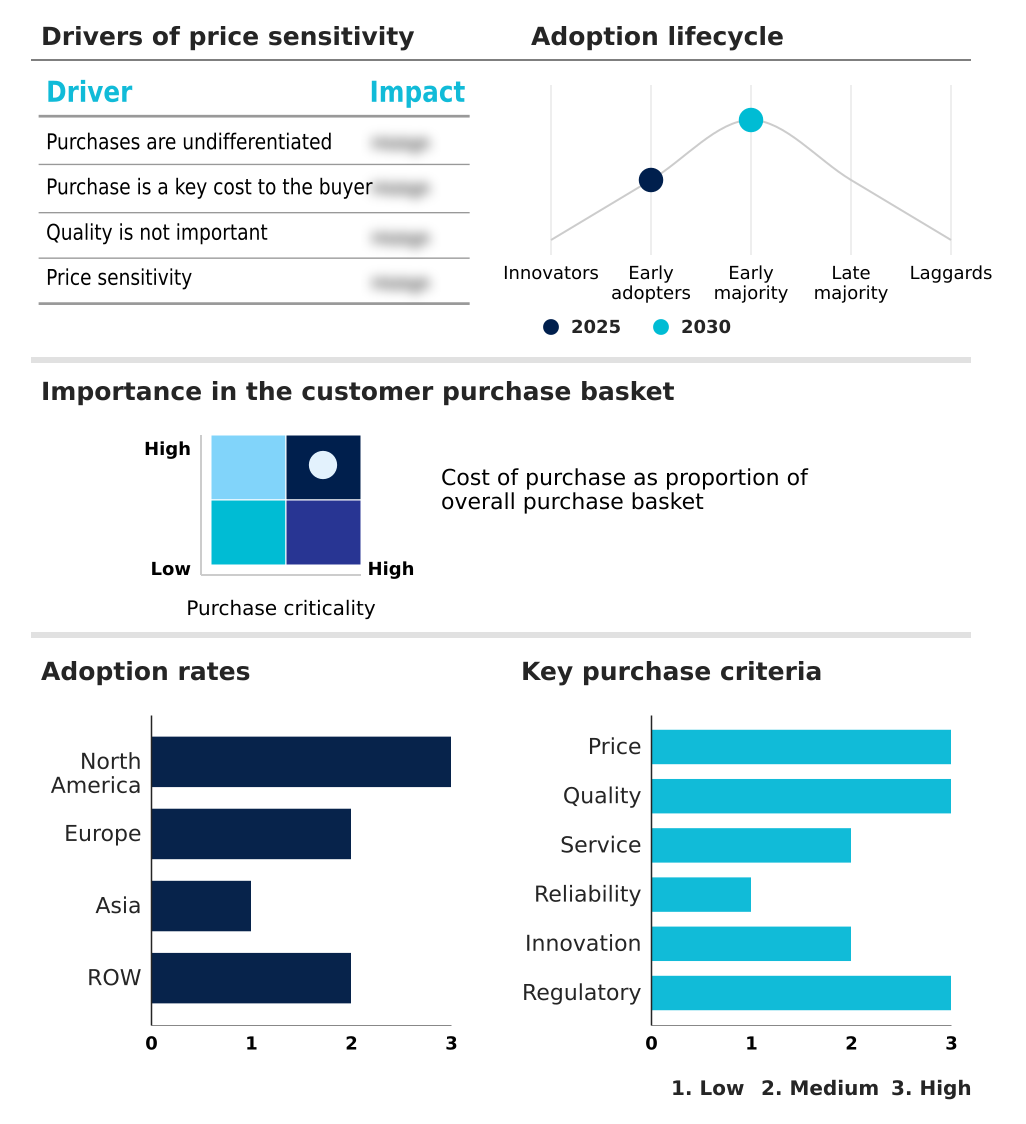
The orthobiologics market forecasting report includes the adoption lifecycle of the market, covering from the innovator’s stage to the laggard’s stage. It focuses on adoption rates in different regions based on penetration. Furthermore, the orthobiologics market report also includes key purchase criteria and drivers of price sensitivity to help companies evaluate and develop their market growth analysis strategies.
Customer Landscape of Orthobiologics Industry
Competitive Landscape
Companies are implementing various strategies, such as strategic alliances, orthobiologics market forecast, partnerships, mergers and acquisitions, geographical expansion, and product/service launches, to enhance their presence in the industry.
AlloSource - Key offerings focus on orthobiologics, including cellular bone matrices and allograft tissue products engineered to enhance musculoskeletal repair and regeneration.
The industry research and growth report includes detailed analyses of the competitive landscape of the market and information about key companies, including:
- AlloSource
- Alphatec Holdings Inc.
- Anika Therapeutics Inc.
- Arthrex Inc.
- Bioventus LLC
- BoneSupport Holding AB
- Globus Medical Inc.
- Integra LifeSciences Corp.
- Johnson and Johnson Services
- Kuros Biosciences AG
- LifeNet Health Inc.
- Medtronic Plc
- MTF Biologics
- Orthofix Medical Inc.
- RTI Surgical Inc.
- Smith and Nephew plc
- Stryker Corp.
- Xtant Medical Holdings Inc.
- Zimmer Biomet Holdings Inc.
Qualitative and quantitative analysis of companies has been conducted to help clients understand the wider business environment as well as the strengths and weaknesses of key industry players. Data is qualitatively analyzed to categorize companies as pure play, category-focused, industry-focused, and diversified; it is quantitatively analyzed to categorize companies as dominant, leading, strong, tentative, and weak.
Recent Development and News in Orthobiologics market
- In January 2025, Stryker Corp. announced the Food and Drug Administration clearance for its new orthobiologic solution, Provenge Bone Graft, designed for complex spinal fusion procedures.
- In January 2025, Zimmer Biomet Holdings Inc. entered a definitive agreement to acquire Paragon 28, expanding its portfolio with specialized foot and ankle orthobiologic solutions.
- In March 2025, Seikagaku Corp. received expanded regulatory clearance for a high-molecular-weight hyaluronic acid formulation to manage joint pain in active individuals.
- In January 2025, the Drexel Innovation Fund invested USD 150,000 in the startup Ultrafix to advance its bone fixation and orthobiologic support solutions through clinical testing.
Dive into Technavio’s robust research methodology, blending expert interviews, extensive data synthesis, and validated models for unparalleled Orthobiologics Market insights. See full methodology.
| Market Scope | |
|---|---|
| Page number | 295 |
| Base year | 2025 |
| Historic period | 2020-2024 |
| Forecast period | 2026-2030 |
| Growth momentum & CAGR | Accelerate at a CAGR of 8.1% |
| Market growth 2026-2030 | USD 3345.2 million |
| Market structure | Fragmented |
| YoY growth 2025-2026(%) | 7.6% |
| Key countries | US, Canada, Mexico, Germany, UK, France, Italy, Spain, Sweden, China, Japan, India, South Korea, Thailand, Indonesia, Brazil, Saudi Arabia, South Africa, Israel, Argentina, Egypt, UAE and Colombia |
| Competitive landscape | Leading Companies, Market Positioning of Companies, Competitive Strategies, and Industry Risks |
Research Analyst Overview
- The orthobiologics market is defined by a rigorous push toward clinical efficacy and technological sophistication. Core to this evolution is the advancement in bioactive materials science and advanced tissue engineering, enabling the development of solutions like osteoinductive scaffolds and cellular bone matrices.
- These innovations are critical in addressing the clinical demand for superior biological augmentation strategies and improved joint preservation techniques. The market has seen a definitive move away from autologous cell harvesting toward allograft tissue products and synthetic bone graft substitutes to improve patient safety and procedural efficiency.
- For boardroom strategy, the most critical consideration is the increasing demand for robust clinical trial evidence to support both regulatory approval and favorable health economic data, a factor that can influence market access more than any other. The adoption of new materials, such as bioactive glass composition and synthetic ceramic scaffolds, for applications in chondrocyte regeneration is a key trend.
- The development of dual-chamber delivery systems and point-of-care cell processing technologies, which have been shown to reduce preparation time by over 30%, reflects the industry's focus on creating user-friendly solutions like injectable bone void fillers that facilitate soft tissue integration and osteogenesis stimulation, ultimately improving the bone remodeling cycle.
What are the Key Data Covered in this Orthobiologics Market Research and Growth Report?
-
What is the expected growth of the Orthobiologics Market between 2026 and 2030?
-
USD 3.35 billion, at a CAGR of 8.1%
-
-
What segmentation does the market report cover?
-
The report is segmented by Application (Spinal fusion, Reconstructive surgery, Trauma repair, and Others), Product (Bone graft substitutes, Viscosupplementation, and Stem cells), End-user (Hospitals, ASCs, and Orthopedic clinics) and Geography (North America, Europe, Asia, Rest of World (ROW))
-
-
Which regions are analyzed in the report?
-
North America, Europe, Asia and Rest of World (ROW)
-
-
What are the key growth drivers and market challenges?
-
Rising prevalence of musculoskeletal disorders and geriatric demographic shifts, Stringent regulatory pathways and standardization hurdles
-
-
Who are the major players in the Orthobiologics Market?
-
AlloSource, Alphatec Holdings Inc., Anika Therapeutics Inc., Arthrex Inc., Bioventus LLC, BoneSupport Holding AB, Globus Medical Inc., Integra LifeSciences Corp., Johnson and Johnson Services, Kuros Biosciences AG, LifeNet Health Inc., Medtronic Plc, MTF Biologics, Orthofix Medical Inc., RTI Surgical Inc., Smith and Nephew plc, Stryker Corp., Xtant Medical Holdings Inc. and Zimmer Biomet Holdings Inc.
-
Market Research Insights
- Market dynamics are increasingly shaped by a focus on measurable outcomes and procedural efficiency optimization. The adoption of minimally invasive surgical pathways has been shown to reduce recovery times by up to 25% compared to traditional open surgeries, a critical factor in the shift toward ambulatory surgery center adoption.
- This trend is supported by data indicating that facilities using advanced orthobiologics report a 15% lower rate of revision surgery, directly impacting value-based healthcare models. Furthermore, the emphasis on donor site morbidity avoidance has driven a significant preference for synthetic and allograft options over autografts.
- This is reflected in procurement patterns, where off-the-shelf biologic solutions now constitute a larger share of a hospital's budget for orthopedic trauma management than five years ago. These shifts underscore the market's trajectory toward solutions that provide both clinical and economic advantages.
We can help! Our analysts can customize this orthobiologics market research report to meet your requirements.
 RIA -
RIA -