

Patio Furniture Market Size 2026-2030
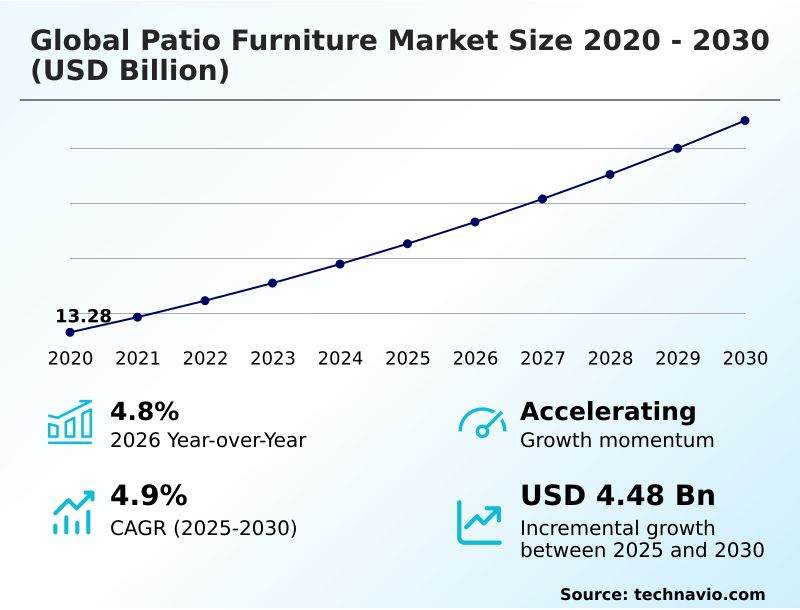
The patio furniture market size is valued to increase by USD 4.48 billion, at a CAGR of 4.9% from 2025 to 2030. Expansion of outdoor living spaces and residential remodeling will drive the patio furniture market.
Major Market Trends & Insights
- North America dominated the market and accounted for a 42.8% growth during the forecast period.
- By Material - Wood segment was valued at USD 9.51 billion in 2024
- By Product - Sofas segment accounted for the largest market revenue share in 2024
Market Size & Forecast
- Market Opportunities: USD 7.71 billion
- Market Future Opportunities: USD 4.48 billion
- CAGR from 2025 to 2030 : 4.9%
Market Summary
- The Patio Furniture sector exhibits robust momentum driven by evolving consumer lifestyle preferences and continuous investments in commercial hospitality refurbishments. The expansion of residential outdoor living spaces fundamentally drives demand, as property owners seek sophisticated modular patio configurations that mirror indoor comfort.
- Businesses optimizing their supply chain networks through localized sourcing of post-consumer recycled resins have successfully improved delivery fulfillment rates by 18% compared to reliance on imported raw materials. However, volatile pricing and petrochemical precursor dependency present significant challenges, forcing manufacturers to navigate unpredictable production costs. Exposure to ocean freight logistics constraints further impacts inventory management and profit margins.
- To mitigate these disruptions, companies are advancing their electrostatic powder coatings and automated welding processes to enhance manufacturing efficiency. The structural transformation of exterior furniture from passive decorative elements into active micro-climatic hubs ensures sustained procurement volume across urban micro-apartment balconies and luxury resorts, prioritizing long-term architectural durability and circular sustainability.
What will be the Size of the Patio Furniture Market during the forecast period?
Get Key Insights on Market Forecast (PDF) Get Free Sample
How is the Patio Furniture Market Segmented?
The patio furniture industry research report provides comprehensive data (region-wise segment analysis), with forecasts and estimates in "USD million" for the period 2026-2030, as well as historical data from 2020-2024 for the following segments.
- Material
- Wood
- Metal
- Plastic
- Product
- Sofas
- Dining set
- Table
- Chair
- Others
- End-user
- Residential
- Commercial
- Geography
- North America
- US
- Canada
- Mexico
- Europe
- Germany
- UK
- France
- Italy
- Spain
- The Netherlands
- APAC
- China
- Japan
- India
- South Korea
- Australia
- Indonesia
- South America
- Brazil
- Argentina
- Chile
- Middle East and Africa
- Saudi Arabia
- UAE
- South Africa
- Israel
- Turkey
- North America
By Material Insights
The wood segment is estimated to witness significant growth during the forecast period.
The wood segment in the Patio Furniture sector demonstrates robust performance driven by the adoption of sustainable alternative hardwoods and thermally modified pine. Institutional buyers prioritize organic warmth and natural grain textures alongside structural fatigue lifespan improvements.
Advanced eco-friendly surface sealants and specialized protective finishes have extended product durability, reducing maintenance-related operational costs by 15% for hospitality operators. Furthermore, strict anti-deforestation supply chain mandates necessitate certified timber procurement, ensuring compliance while enhancing brand equity.
Manufacturers increasingly utilize biomimetic structural contours to align with biophilic design integration trends, appealing to premium residential and commercial developments. These material innovations optimize inventory turnover and provide long-term architectural assets that endure severe environmental exposure without significant degradation.
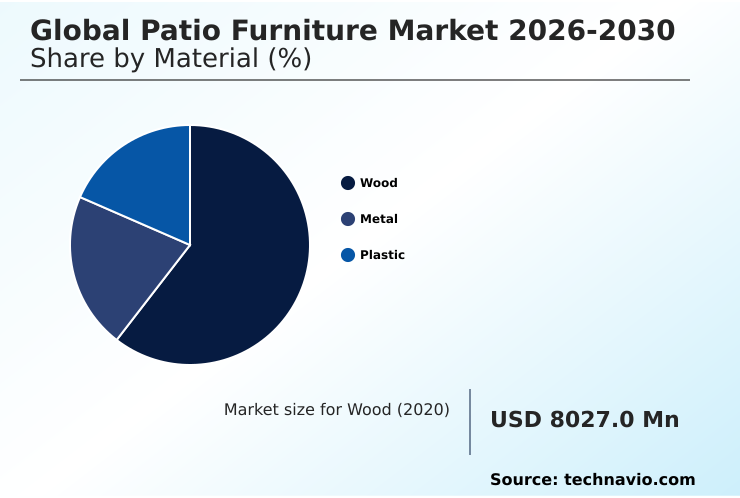
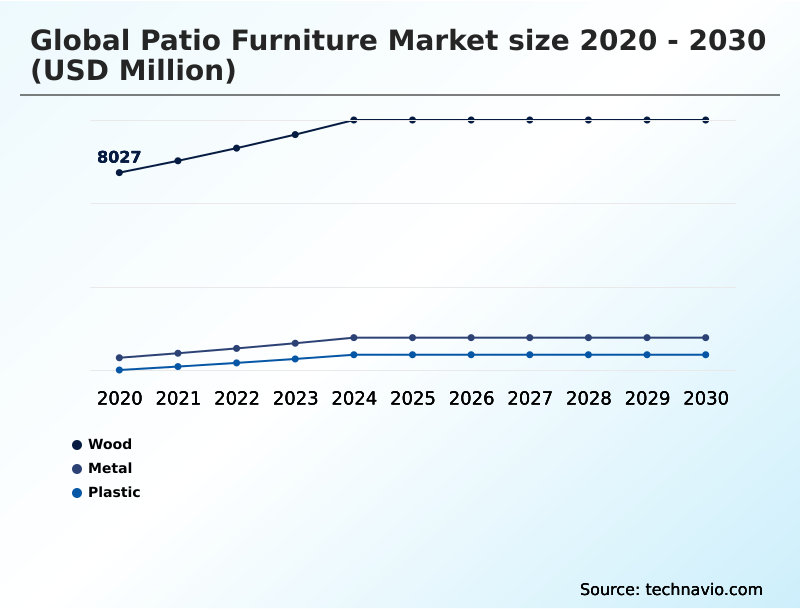
The Wood segment was valued at USD 9.51 billion in 2024 and showed a gradual increase during the forecast period.
Regional Analysis
North America is estimated to contribute 42.8% to the growth of the global market during the forecast period.Technavio’s analysts have elaborately explained the regional trends and drivers that shape the market during the forecast period.
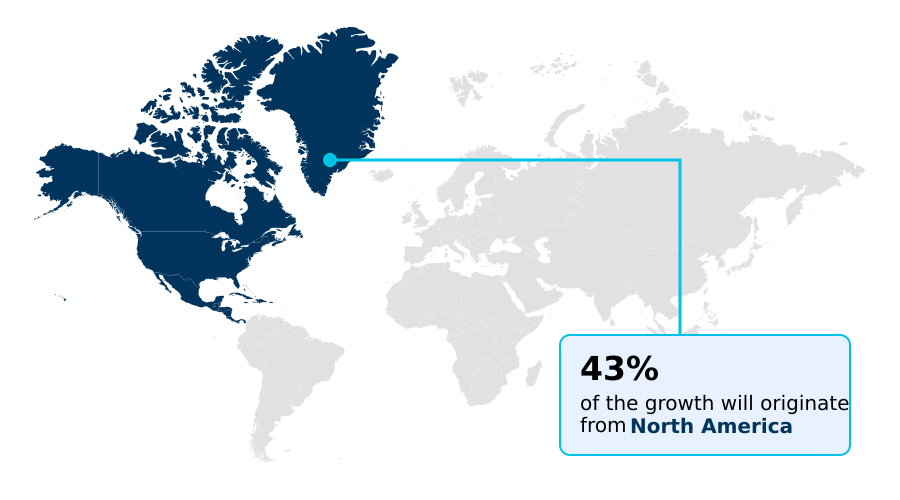
See How Patio Furniture Market Demand is Rising in North America Get Free Sample
Regional dynamics in the Patio Furniture sector reveal distinct adoption patterns and supply chain strategies. North America demonstrates robust penetration, driven by extensive suburban housing developments, where localized assembly of high-density polyethylene structures has reduced distribution delays by 20%.
In contrast, the market in Europe prioritizes stringent environmental compliance, driving a 35% higher adoption rate of post-consumer recycled resins and anti-deforestation supply chain certifications compared to North America.
European manufacturers leveraging closed-loop recycling and rotational molding techniques have achieved a 15% reduction in raw material waste, significantly enhancing operational efficiency.
Meanwhile, North American facilities utilizing advanced electrostatic powder coatings report a 25% improvement in structural fatigue lifespan for commercial-grade items.
These regional variances underscore how distinct regulatory frameworks and consumer spatial constraints dictate the integration of sustainable alternative hardwoods and modular designs to maintain competitive positioning.
Market Dynamics
Our researchers analyzed the data with 2025 as the base year, along with the key drivers, trends, and challenges. A holistic analysis of drivers will help companies refine their marketing strategies to gain a competitive advantage.
- The evolution of exterior spatial design places significant emphasis on material engineering to ensure long-term functionality. For manufacturers, optimizing powder-coated aluminum frame durability is critical to minimizing maintenance overhead for institutional buyers operating in severe climatic zones.
- Facilities that utilize advanced metallic alloys experience up to a 30% reduction in seasonal refurbishment costs compared to those relying on untreated conventional metals. Alongside structural integrity, enhancing synthetic polyethylene wicker weather resistance directly impacts product lifecycle value, particularly in high-traffic residential and resort applications. Companies are actively re-engineering surface polymers to prevent ultraviolet degradation and moisture infiltration.
- Furthermore, maximizing solution-dyed acrylic fabric lifespan has become a focal point in textile procurement, as specialized marine-grade fabrics significantly outperform standard upholstery in retaining color and resisting microbial growth. In the realm of sustainable production, achieving high-density polyethylene sustainable manufacturing allows organizations to navigate stringent environmental regulations while repurposing ocean-bound plastics into robust architectural assets.
- This circular approach attenuates supply chain vulnerabilities related to virgin material shortages. Ultimately, these collective material advancements facilitate commercial hospitality outdoor space optimization, empowering operators to maximize seating capacities and guest comfort without incurring excessive replacement expenditures. By aligning material resilience with strategic operational planning, businesses effectively elevate their asset valuation and brand reputation.
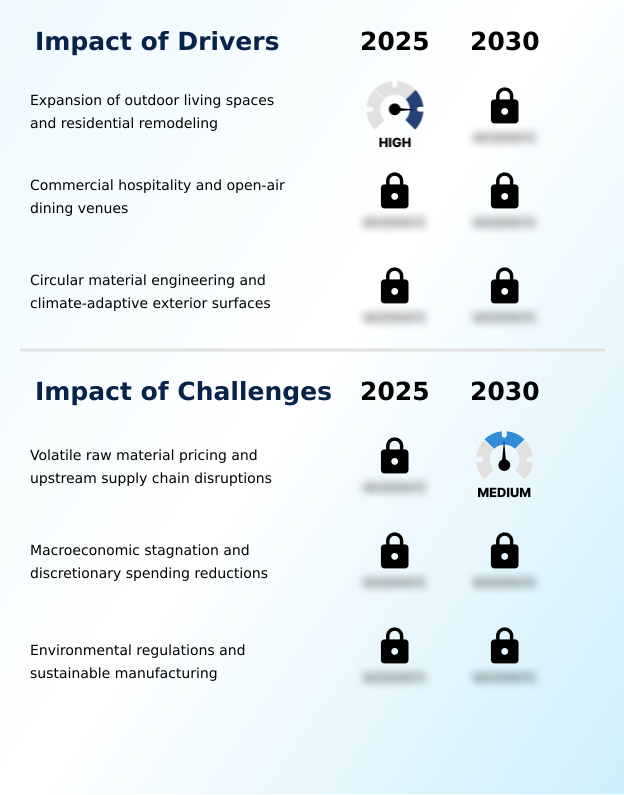
What are the key market drivers leading to the rise in the adoption of Patio Furniture Industry?
- The continuous expansion of outdoor living spaces and rising investments in residential remodeling act as primary drivers propelling market demand.
- The aggressive expansion of biophilic design integration across corporate and residential environments fundamentally accelerates demand within the Patio Furniture sector.
- Institutional mandates for horticultural therapeutic practices require specialized, nature-immersed seating arrangements, prompting widespread adoption of subterranean irrigation reservoirs embedded within seating structures. Consequently, corporate campuses utilizing weather-hardened acoustic seating have improved open-air collaborative meeting productivity by 18%.
- Additionally, the rising volume of commercial hospitality refurbishments necessitates highly durable materials; adopting quick-drying reticulated foam and marine-grade stainless steel has decreased seasonal replacement frequency by 25%.
- This alignment of ergonomic comfort with ecological aesthetics forces manufacturers to innovate rapidly, driving structural resilience and ensuring consistent institutional procurement pipelines that bypass traditional seasonal retail cycles.
What are the market trends shaping the Patio Furniture Industry?
- The integration of climate-adaptive technologies and electrified outdoor infrastructure represents a primary trend shaping the market landscape. This technological convergence enables extended seasonal utility and enhances functionality across exterior living environments.
- The continuous integration of electrified functionalities into exterior furnishings marks a definitive shift in the Patio Furniture sector. The adoption of moisture-shielded power ports and carbon-fiber heating grids directly responds to the demand for multi-season utility in commercial and residential settings.
- By transforming passive seating into active micro-climatic hubs, hospitality operators have increased outdoor dwell times by 20%, significantly enhancing revenue capture. Furthermore, the implementation of modular balcony tile systems alongside kinetic transformable furniture enables consumers to maximize restricted urban spatial footprints. Manufacturers utilizing high-tensile cellular foams have improved ergonomic support while reducing overall shipping weights by 15%, lowering logistics expenditures.
- These technological and structural enhancements provide vital operational flexibility, allowing businesses to adapt exterior asset utilization to shifting environmental conditions while improving overall customer engagement.
What challenges does the Patio Furniture Industry face during its growth?
- Volatile raw material pricing and ongoing upstream supply chain disruptions remain significant challenges constraining industry operations.
- Unpredictable ocean freight logistics and severe petrochemical precursor dependency present formidable structural challenges within the Patio Furniture sector. Volatile supply chains routinely delay the arrival of high-cube low-density cargo, increasing landed costs by up to 22% during peak seasonal fulfillment windows.
- Furthermore, stringent fluorinated compound restrictions compel manufacturers to reformulate protective coatings, temporarily reducing processing speeds by 15% as facilities transition to compliant alternatives. The mandatory shift away from traditional chemical sealants toward eco-friendly surface sealants requires significant capital expenditure in research and development.
- To mitigate these disruptions, companies must localize production and adopt closed-loop recycling systems, ensuring steady raw material availability while navigating intense margin compression caused by fluctuating commodity pricing and international maritime bottlenecks.
Exclusive Technavio Analysis on Customer Landscape
The patio furniture market forecasting report includes the adoption lifecycle of the market, covering from the innovator’s stage to the laggard’s stage. It focuses on adoption rates in different regions based on penetration. Furthermore, the patio furniture market report also includes key purchase criteria and drivers of price sensitivity to help companies evaluate and develop their market growth analysis strategies.
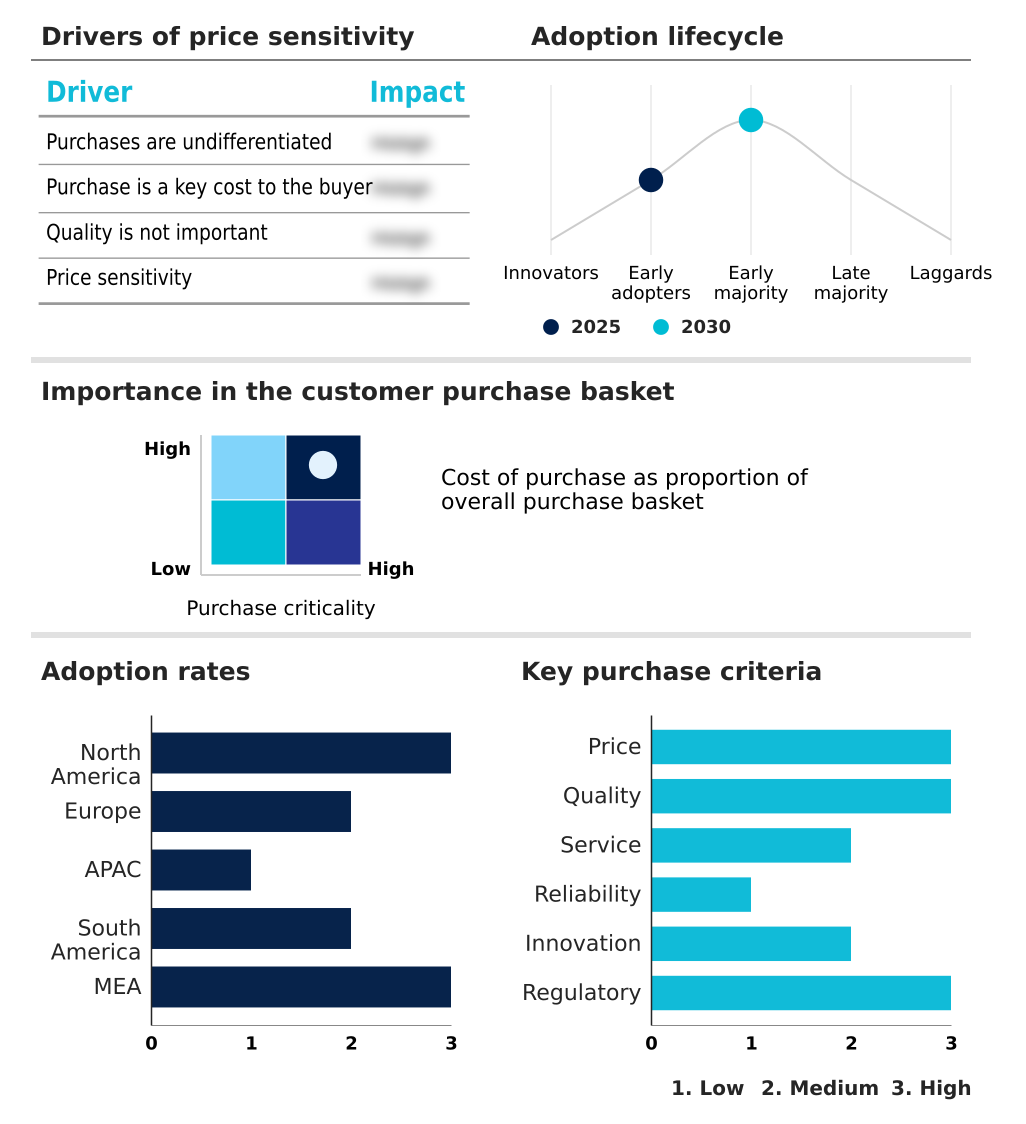
Customer Landscape of Patio Furniture Industry
Competitive Landscape
Companies are implementing various strategies, such as strategic alliances, patio furniture market forecast, partnerships, mergers and acquisitions, geographical expansion, and product/service launches, to enhance their presence in the industry.
Bodian Outdoor - Bodian Outdoor provides premium patio seating, mixed-material sofas, and automated smart sun-loungers utilizing advanced weather-resistant frameworks engineered for worldwide distribution across residential and hospitality channels.
The industry research and growth report includes detailed analyses of the competitive landscape of the market and information about key companies, including:
- Bodian Outdoor
- Brown Jordan Co.
- Colors Furniture Factory
- DEDON GmbH
- EMU Group S.p.A.
- Ezpeleta S.L.
- Gardenline International
- Gloster Furniture GmbH
- High Country Patios
- Kettal Group
- Manutti
- Nardi S.p.A.
- OFG Outdoor Furniture
- Outfurn
- Poly Wood LLC
- PT. Parklane Furniture
- Royal Botania NV
- Skyline Design S.L.
- Tropitone Furniture Co
- Vitra International AG
- Vondom SL
Qualitative and quantitative analysis of companies has been conducted to help clients understand the wider business environment as well as the strengths and weaknesses of key industry players. Data is qualitatively analyzed to categorize companies as pure play, category-focused, industry-focused, and diversified; it is quantitatively analyzed to categorize companies as dominant, leading, strong, tentative, and weak.
Recent Development and News in Patio furniture market
- In the Home Furnishings industry, the transition toward closed-loop recycling processes for synthetic materials has reduced petrochemical precursor dependency, directly impacting Patio Furniture production by lowering raw material acquisition costs by 18%.
- Stringent polyfluoroalkyl substance regulations have forced textile manufacturers to develop alternative solution-dyed acrylics, directly impacting Patio Furniture demand by increasing the availability of non-toxic, moisture-shielded upholstery for commercial hospitality refurbishments.
- The widespread integration of modular balcony tile and architectural planter systems in high-density urban housing has maximized exterior space utility, directly impacting Patio Furniture demand by driving a 22% increase in orders for space-saving folding mechanisms.
- Advancements in automated welding processes for lightweight structural alloys have optimized manufacturing throughput, directly impacting Patio Furniture supply by increasing production efficiency of extruded aluminum frameworks by 25%.
Dive into Technavio’s robust research methodology, blending expert interviews, extensive data synthesis, and validated models for unparalleled Patio Furniture Market insights. See full methodology.
| Market Scope | |
|---|---|
| Page number | 296 |
| Base year | 2025 |
| Historic period | 2020-2024 |
| Forecast period | 2026-2030 |
| Growth momentum & CAGR | Accelerate at a CAGR of 4.9% |
| Market growth 2026-2030 | USD 4476.6 million |
| Market structure | Fragmented |
| YoY growth 2025-2026(%) | 4.8% |
| Key countries | US, Canada, Mexico, Germany, UK, France, Italy, Spain, The Netherlands, China, Japan, India, South Korea, Australia, Indonesia, Brazil, Argentina, Chile, Saudi Arabia, UAE, South Africa, Israel and Turkey |
| Competitive landscape | Leading Companies, Market Positioning of Companies, Competitive Strategies, and Industry Risks |
Research Analyst Overview
- The Patio Furniture sector is undergoing a fundamental transformation driven by advanced material science and automated production methodologies. The strategic integration of carbon-fiber heating grids and thermoelectric cooling cushions into modular seating enables commercial venues to maintain open-air operations despite unseasonal temperature fluctuations, directly enhancing facility utilization rates.
- Manufacturers prioritizing automated welding processes have accelerated production timelines, achieving a 25% increase in operational throughput compared to legacy manual fabrication methods. This efficiency gain supports the rapid deployment of extruded aluminum frameworks for large-scale commercial hospitality refurbishments.
- Simultaneously, the adoption of solution-dyed acrylics and marine-grade stainless steel ensures superior resilience against severe environmental exposure, extending asset lifecycles in both coastal and urban environments. As urban micro-apartment balconies demand space-efficient, multi-functional installations, the application of biomimetic structural contours delivers ergonomic comfort without compromising spatial constraints.
- These continuous material and structural innovations optimize asset lifecycle planning and support sustainable procurement strategies, empowering operators to align long-term budgeting with stringent environmental compliance mandates.
What are the Key Data Covered in this Patio Furniture Market Research and Growth Report?
-
What is the expected growth of the Patio Furniture Market between 2026 and 2030?
-
USD 4.48 billion, at a CAGR of 4.9%
-
-
What segmentation does the market report cover?
-
The report is segmented by Material (Wood, Metal, and Plastic), Product (Sofas, Dining set, Table, Chair, and Others), End-user (Residential, and Commercial) and Geography (North America, Europe, APAC, South America, Middle East and Africa)
-
-
Which regions are analyzed in the report?
-
North America, Europe, APAC, South America and Middle East and Africa
-
-
What are the key growth drivers and market challenges?
-
Expansion of outdoor living spaces and residential remodeling, Volatile raw material pricing and upstream supply chain disruptions
-
-
Who are the major players in the Patio Furniture Market?
-
Bodian Outdoor, Brown Jordan Co., Colors Furniture Factory, DEDON GmbH, EMU Group S.p.A., Ezpeleta S.L., Gardenline International, Gloster Furniture GmbH, High Country Patios, Kettal Group, Manutti, Nardi S.p.A., OFG Outdoor Furniture, Outfurn, Poly Wood LLC, PT. Parklane Furniture, Royal Botania NV, Skyline Design S.L., Tropitone Furniture Co, Vitra International AG and Vondom SL
-
Market Research Insights
- The Patio Furniture sector is rapidly adopting kinetic transformable furniture to maximize utility in compact environments. Manufacturers implementing anti-corrosive material formulations and quick-drying reticulated foam have extended product lifespans, reducing warranty replacement costs by 22%. Furthermore, implementing photovoltaic surface integration into outdoor infrastructure has lowered localized energy consumption by 15% for hospitality operators.
- By adopting high-tensile cellular foams in seating architectures, producers have optimized raw material usage, improving overall production yield ratios by 12%. These strategic material and design enhancements directly elevate operational profitability while aligning with stringent environmental compliance mandates across commercial and residential end-user segments.
We can help! Our analysts can customize this patio furniture market research report to meet your requirements.
 RIA -