
Plastics For Passenger Cars Market Analysis, Size, and Forecast 2026-2030: APAC (China, Japan, and India), North America (US, Mexico, and Canada), Europe (Germany, France, and Spain), South America (Brazil, Argentina, and Chile), Middle East and Africa (South Africa, Turkey, and Saudi Arabia), and Rest of World (ROW)

Plastics For Passenger Cars Market Analysis, Size, and Forecast 2026-2030:
APAC (China, Japan, and India), North America (US, Mexico, and Canada), Europe (Germany, France, and Spain), South America (Brazil, Argentina, and Chile), Middle East and Africa (South Africa, Turkey, and Saudi Arabia), and Rest of World (ROW)

Published: Oct 2026 324 Pages SKU: IRTNTR70585

Market Overview at a Glance

$31.14 B
Market Opportunity
10.6%
CAGR 2025 - 2030
43.7%
APAC Growth
$21.42 B
Interiors segment 2024

Plastics For Passenger Cars Market Size 2026-2030

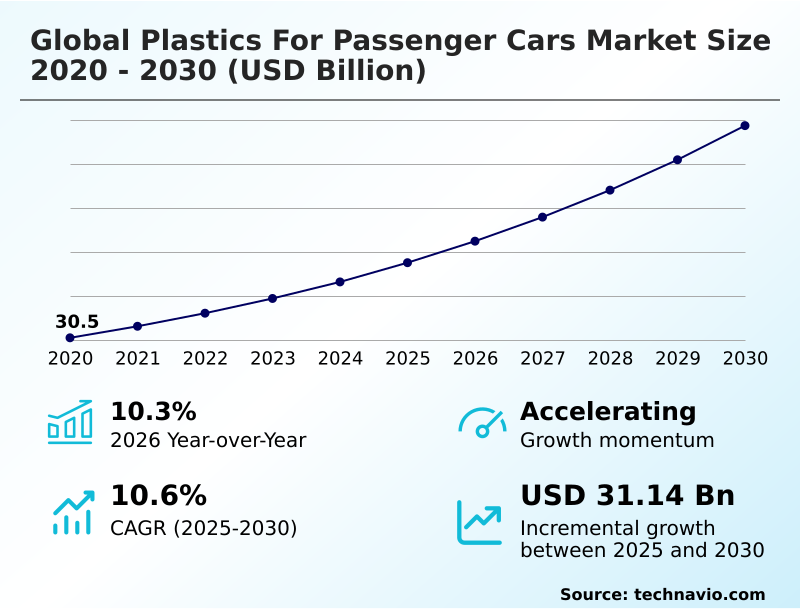
The plastics for passenger cars market size is valued to increase by USD 31.14 billion, at a CAGR of 10.6% from 2025 to 2030. Aggressive vehicle lightweighting imperatives fueling polymer substitution high strength structural metal components will drive the plastics for passenger cars market.

Major Market Trends & Insights

  • APAC dominated the market and accounted for a 43.7% growth during the forecast period.
  • By Application - Interiors segment was valued at USD 21.42 billion in 2024
  • By Material - Polypropylene segment accounted for the largest market revenue share in 2024

Market Size & Forecast

  • Market Opportunities: USD 48.21 billion
  • Market Future Opportunities: USD 31.14 billion
  • CAGR from 2025 to 2030 : 10.6%

Market Summary

  • The Plastics For Passenger Cars Market is undergoing a rapid material evolution driven by the intersection of vehicle electrification and circular economy mandates. Original equipment manufacturers are systematically substituting heavy metallic alloys with advanced structural composites and polyamides to minimize vehicle mass.
  • This lightweighting imperative serves as a primary driver, as every 10% reduction in vehicle weight can improve overall fuel economy by 8%, directly extending the driving range of battery-electric architectures. From a supply chain perspective, compounders are increasingly investing in chemical depolymerization facilities to recover high-purity post-consumer recycled resins from end-of-life vehicles, ensuring compliance with strict environmental regulations.
  • However, volatile feedstock pricing tied to upstream petrochemical fluctuations presents a significant challenge, compressing profit margins for tier-one suppliers constrained by long-term fixed-price automotive contracts. To mitigate this volatility, manufacturers are utilizing high-voltage insulation and flame-retardant polymers that maximize structural integrity while reducing total material volume.
  • The integration of thin-wall injection molding techniques further optimizes production efficiency across passenger car assembly lines.

What will be the Size of the Plastics For Passenger Cars Market during the forecast period?
Get Key Insights on Market Forecast (PDF) Get Free Sample

How is the Plastics For Passenger Cars Market Segmented?

The plastics for passenger cars industry research report provides comprehensive data (region-wise segment analysis), with forecasts and estimates in "USD million" for the period 2026-2030, as well as historical data from 2020-2024 for the following segments.

  • Application
    • Interiors
    • Exteriors
    • Others
  • Material
    • Polypropylene
    • Polyurethane
    • Polyvinyl chloride
    • Others
  • Component
    • Bumpers
    • Dashboards and instrument panels
    • Door panels and interior trim
    • Seating
    • Others
  • Geography
    • APAC
      • China
      • Japan
      • India
      • South Korea
      • Thailand
      • Indonesia
    • North America
      • US
      • Mexico
      • Canada
    • Europe
      • Germany
      • France
      • Spain
      • UK
      • Italy
      • The Netherlands
    • South America
      • Brazil
      • Argentina
      • Chile
    • Middle East and Africa
      • South Africa
      • Turkey
      • Saudi Arabia
      • UAE
      • Morocco

By Application Insights

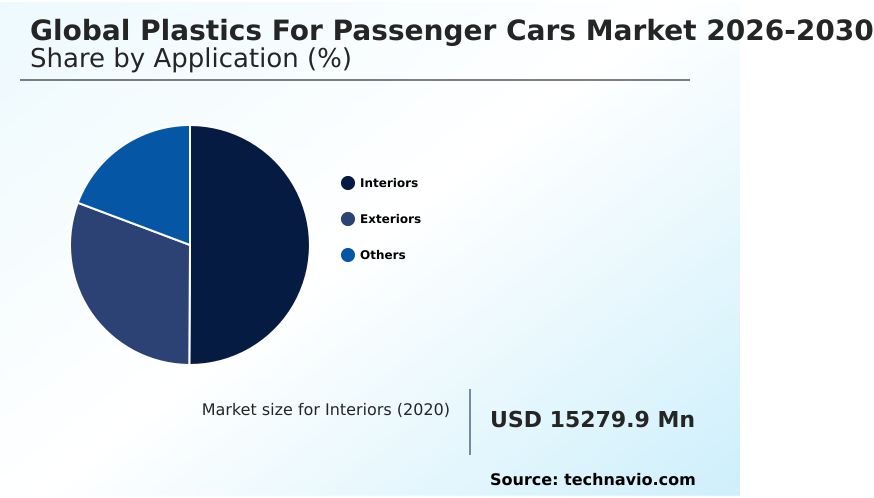
The interiors segment is estimated to witness significant growth during the forecast period.

The interior segment of the Plastics For Passenger Cars Market represents a dominant application area driven by continuous lightweighting initiatives and acoustic insulation requirements.

Modern interior design paradigms emphasize cabin ambient lighting integration and digital cockpit integration, utilizing advanced polypropylene compounds, thermoplastic elastomers, and soft-touch polyurethane foams. These materials substitute traditional metallic and wood components to reduce vehicle mass while enhancing tactile comfort.

Automakers increasingly adopt post-consumer recycled resins and bio-based plastics to meet circular economy mandates, yielding a 15% improvement in end-of-life material recovery rates compared to conventional multi-material structures.

The shift toward sustainable, low-emission formulations significantly lowers cabin volatile organic compounds, directly supporting compliance with rigorous indoor air quality regulations and optimizing passenger safety.
Get Free Sample

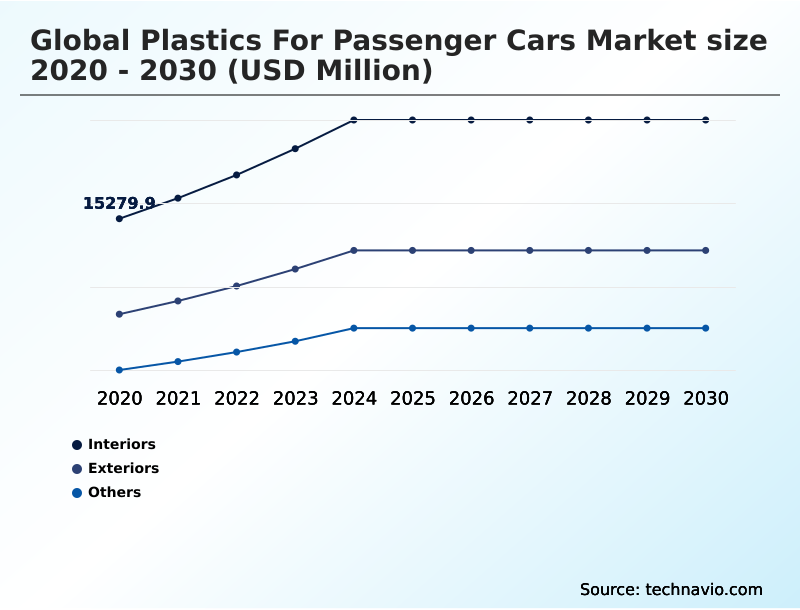
The Interiors segment was valued at USD 21.42 billion in 2024 and showed a gradual increase during the forecast period.
Get Free Sample

Regional Analysis

APAC is estimated to contribute 43.7% to the growth of the global market during the forecast period.Technavio’s analysts have elaborately explained the regional trends and drivers that shape the market during the forecast period.
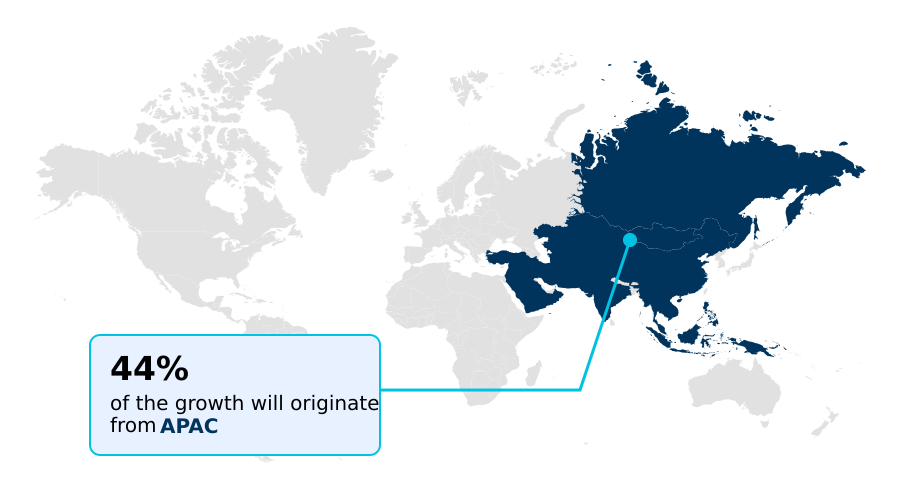
See How Plastics For Passenger Cars Market Demand is Rising in APAC Get Free Sample

The geographic landscape of the Plastics For Passenger Cars Market highlights distinct operational strategies between APAC and North America.

APAC maintains dominance through rapid supply chain localization and massive electric vehicle production clusters, yielding a 22% higher adoption rate of microcellular foaming technologies compared to Western markets.

This localized scaling allows manufacturers in China and India to reduce part molding cycle times by 15%, significantly lowering overhead for interior components.

Conversely, North America focuses heavily on aerodynamic optimization and crash safety compliance, where the deployment of advanced polycarbonate blends and acrylonitrile butadiene styrene has improved vehicle impact energy absorption by 18%.

While APAC aggressively scales high-flow resins for high-volume domestic assembly, North America prioritizes the integration of specialized sensor housings and radar-transparent plastics to support autonomous driving integration, reflecting differing regional investments in next-generation automotive architecture.

Market Dynamics

Our researchers analyzed the data with 2025 as the base year, along with the key drivers, trends, and challenges. A holistic analysis of drivers will help companies refine their marketing strategies to gain a competitive advantage.

  • The structural evolution of the Plastics For Passenger Cars Market relies heavily on specialized polymer engineering to meet next-generation mobility demands. As automakers scale electric vehicle production, the integration of flame retardant battery enclosure polymers and high voltage busbar insulation materials is critical for thermal management and electrical safety.
  • To optimize overall vehicle mass, design engineers are actively utilizing lightweight structural composites for electric vehicles alongside glass fiber reinforced structural brackets, which yield a 20% improvement in load-bearing efficiency compared to traditional aluminum assemblies. Environmental compliance is accelerating the adoption of bio based automotive interior plastics and post consumer recycled polypropylene compounds to minimize lifecycle carbon emissions.
  • To address complex end-of-life recovery mandates, manufacturers are pioneering chemical recycling of automotive polyamides and deploying monomaterial automotive tailgate assemblies that eliminate multi-material bonding limitations. Exterior applications are similarly advancing, with thin wall injection molded bumpers reducing manufacturing cycle times and radar transparent polycarbonate sensor housings enabling seamless advanced driver-assistance system integration.
  • Inside the cabin, hydrolytically stable electrical connector resins ensure long-term electronic reliability, while scratch resistant optical grade polycarbonates and thermoplastic elastomer soft touch surfaces elevate premium aesthetic profiles. Furthermore, the deployment of microcellular polyurethane foam acoustic insulation and vibration damping interior floor insulation is paramount for eliminating road noise, optimizing passenger comfort across modern vehicle platforms.
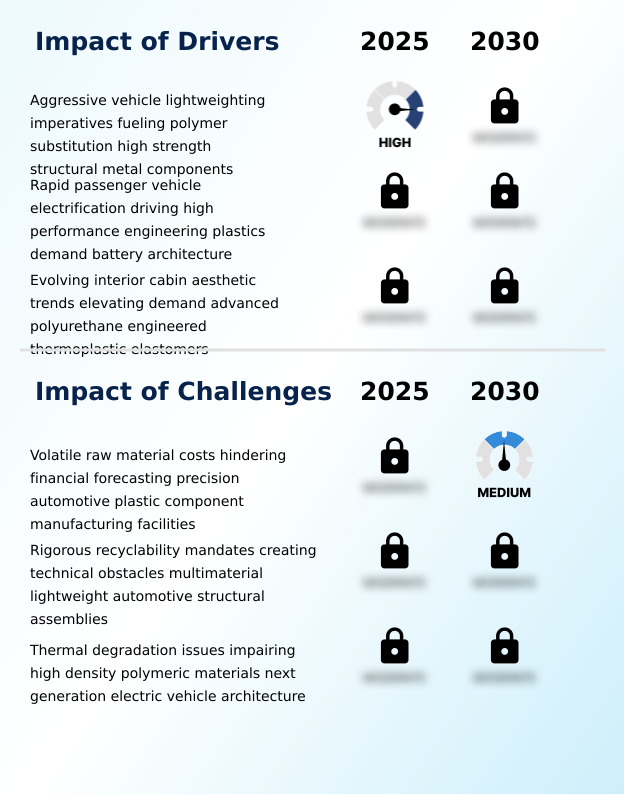
What are the key market drivers leading to the rise in the adoption of Plastics For Passenger Cars Industry?

  • Aggressive vehicle lightweighting imperatives are fueling the substitution of high-strength structural metal components with advanced polymers, serving as a primary market driver.

  • Aggressive vehicle lightweighting and rapid powertrain electrification are the primary catalysts propelling the Plastics For Passenger Cars Market.
  • The systematic substitution of traditional metallic components with lightweight polyamides and structural composites has reduced structural chassis mass by 25%, directly extending the operational range of battery-electric platforms.
  • This weight optimization is crucial for automakers aiming to comply with stringent fuel economy regulations. Additionally, the unique thermal management and high-voltage insulation requirements of electric vehicles drive immense demand for specialized flame-retardant polymers.
  • Integrating these advanced dielectric strength materials into battery enclosures has lowered thermal runaway risks by 20%, ensuring long-term operational safety.
  • As electric vehicle production scales, the reliance on high-performance engineering plastics remains critical for harmonizing structural durability with complex electrical architecture requirements.

What are the market trends shaping the Plastics For Passenger Cars Industry?

  • The expanding utilization of bio-based polymers is significantly reducing carbon footprints across the passenger vehicle production lifecycle. This strategic shift represents an upcoming market trend driven by stringent environmental sustainability mandates.

  • The Plastics For Passenger Cars Market is undergoing a rapid transition toward sustainable material sourcing and smart component integration. Automakers are increasingly prioritizing bio-based plastics and post-consumer recycled resins to address stringent circular economy directives, which has lowered lifecycle carbon emissions by 40% across key interior platforms.
  • This shift toward sustainable feedstocks is complemented by the widespread adoption of monomaterial assemblies, streamlining end-of-life recovery and improving material recycling efficiency by 30%. Furthermore, the proliferation of advanced driver-assistance systems necessitates the use of specialized radar-transparent plastics and electromagnetic signal transmission materials.
  • By integrating these signal-permeable polymers into exterior fascia, vehicle manufacturers have enhanced sensor detection accuracy by 18% while maintaining optimal aerodynamic profiles. These compounding innovations allow automotive designers to seamlessly embed digital technologies without compromising the structural integrity or visual aesthetics of the vehicle.

What challenges does the Plastics For Passenger Cars Industry face during its growth?

  • Volatile raw material costs are hindering financial forecasting precision for automotive plastic component manufacturing facilities, posing a key challenge to industry growth.

  • The Plastics For Passenger Cars Market faces significant operational hurdles stemming from extreme feedstock pricing volatility and rigorous closed-loop recycling mandates. Fluctuations in upstream petrochemical costs routinely disrupt supply chain localization, increasing raw material procurement expenses by 15% and compressing profit margins for tier-one component molders. Additionally, the complex nature of legacy multi-layer vehicle structures severely limits end-of-life material recovery.
  • Separating glass-fiber reinforced polymers from multi-material assemblies has decreased mechanical recycling efficiency by 20%, forcing compounders to invest heavily in advanced chemical depolymerization technologies. The transition toward high-density electric vehicle architectures further exacerbates thermal degradation risks, requiring continuous reformulation of thermoplastic elastomers and polyurethane foams to ensure long-term hydrolytic stability without inflating manufacturing overhead.

Exclusive Technavio Analysis on Customer Landscape

The plastics for passenger cars market forecasting report includes the adoption lifecycle of the market, covering from the innovator’s stage to the laggard’s stage. It focuses on adoption rates in different regions based on penetration. Furthermore, the plastics for passenger cars market report also includes key purchase criteria and drivers of price sensitivity to help companies evaluate and develop their market growth analysis strategies.
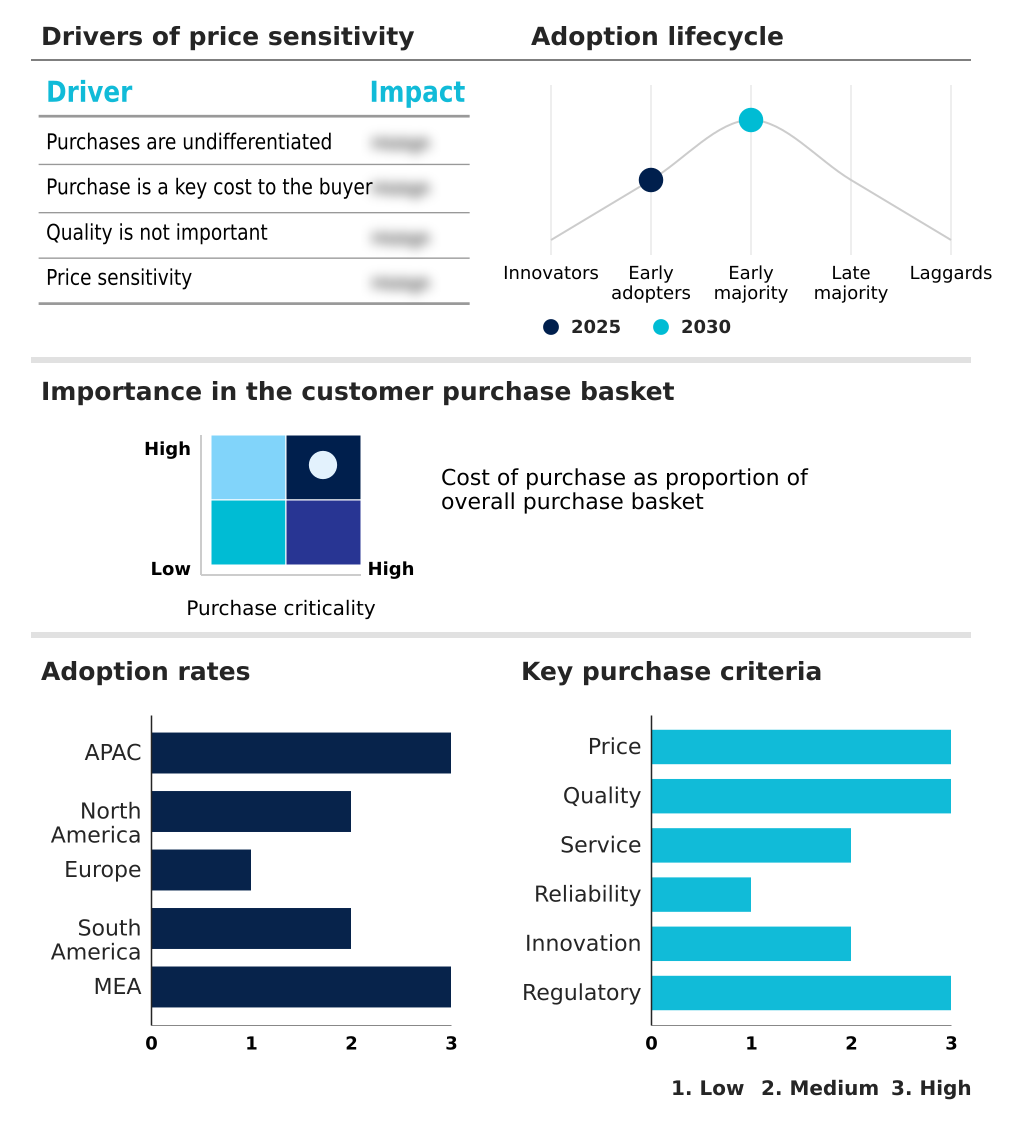
Customer Landscape of Plastics For Passenger Cars Industry

Competitive Landscape

Companies are implementing various strategies, such as strategic alliances, plastics for passenger cars market forecast, partnerships, mergers and acquisitions, geographical expansion, and product/service launches, to enhance their presence in the industry.

Arkema Group - Provides advanced polyamides, specialized thermoplastic elastomers, and high-performance resins engineered for lightweight automotive components, fuel systems, and durable exterior applications.

The industry research and growth report includes detailed analyses of the competitive landscape of the market and information about key companies, including:

  • Arkema Group
  • Avient Corp.
  • BASF SE
  • Borealis AG
  • Celanese Corp.
  • Covestro AG
  • Daicel Corp.
  • Dow Chemical Co.
  • Eastman Chemical Co.
  • EMS GRIVORY
  • Envalior GmbH
  • Evonik Industries AG
  • Formosa Plastics Corp.
  • KURARAY Co. Ltd.
  • LyondellBasell Industries N.V.
  • Saudi Basic Industries
  • Sumitomo Chemical Co. Ltd.
  • The Mitsubishi Chemical Group
  • Toray Industries Inc.
  • Trinseo PLC

Qualitative and quantitative analysis of companies has been conducted to help clients understand the wider business environment as well as the strengths and weaknesses of key industry players. Data is qualitatively analyzed to categorize companies as pure play, category-focused, industry-focused, and diversified; it is quantitatively analyzed to categorize companies as dominant, leading, strong, tentative, and weak.

Recent Development and News in Plastics for passenger cars market

  • In the Commodity Chemicals industry, the shift toward sustainable bio-based synthesis has accelerated closed-loop recycling capabilities, directly impacting Plastics For Passenger Cars demand by reducing reliance on virgin fossil feedstocks.
  • The implementation of stringent carbon emission reduction frameworks across Europe has forced compounders to optimize feedstock pricing models, driving the adoption of high-flow resins for energy-efficient automotive manufacturing.
  • Advancements in chemical recycling technologies have improved the purity of recovered polymers, expanding supply chain localization and enabling automakers in APAC to utilize higher volumes of recycled materials for exterior body panels.
  • The rapid expansion of electric vehicle platforms has shifted demand toward specialized dielectric polymers, compelling chemical producers in North America to scale capacity for materials utilized in battery enclosures and sensor housings.

Dive into Technavio’s robust research methodology, blending expert interviews, extensive data synthesis, and validated models for unparalleled Plastics For Passenger Cars Market insights. See full methodology.

Market Scope
Page number 324
Base year 2025
Historic period 2020-2024
Forecast period 2026-2030
Growth momentum & CAGR Accelerate at a CAGR of 10.6%
Market growth 2026-2030 USD 31142.3 million
Market structure Fragmented
YoY growth 2025-2026(%) 10.3%
Key countries China, Japan, India, South Korea, Thailand, Indonesia, US, Mexico, Canada, Germany, France, Spain, UK, Italy, The Netherlands, Brazil, Argentina, Chile, South Africa, Turkey, Saudi Arabia, UAE and Morocco
Competitive landscape Leading Companies, Market Positioning of Companies, Competitive Strategies, and Industry Risks

Request Free Sample

Research Analyst Overview

  • The Plastics For Passenger Cars Market reflects a profound material transition centered on structural optimization and sustainable polymer integration. Automotive original equipment manufacturers are systematically deploying high-performance polypropylene compounds and glass-fiber reinforced polymers to replace heavy metallic components, directly enhancing vehicle energy efficiency.
  • The strategic shift toward monomaterial assemblies has simplified component disassembly, yielding a 25% reduction in end-of-life processing time for automotive recyclers. Furthermore, the rapid expansion of electric vehicle architectures necessitates advanced thermal management solutions, prompting heightened utilization of flame-retardant polymers and high-voltage insulation materials.
  • Chemical manufacturers are increasingly investing in chemical depolymerization to recover post-consumer recycled resins, aligning raw material supply chains with rigorous carbon reduction mandates. The adoption of thin-wall injection molding allows suppliers to produce complex, lightweight parts without compromising impact resistance or hydrolytic stability.
  • These continuous advancements in material science directly address boardroom-level compliance and budgeting challenges, enabling automakers to balance stringent environmental regulations with the operational imperative of reducing total vehicle curb weight.

What are the Key Data Covered in this Plastics For Passenger Cars Market Research and Growth Report?

  • What is the expected growth of the Plastics For Passenger Cars Market between 2026 and 2030?

    • USD 31.14 billion, at a CAGR of 10.6%

  • What segmentation does the market report cover?

    • The report is segmented by Application (Interiors, Exteriors, and Others), Material (Polypropylene, Polyurethane, Polyvinyl chloride, and Others), Component (Bumpers, Dashboards and instrument panels, Door panels and interior trim, Seating, and Others) and Geography (APAC, North America, Europe, South America, Middle East and Africa)

  • Which regions are analyzed in the report?

    • APAC, North America, Europe, South America and Middle East and Africa

  • What are the key growth drivers and market challenges?

    • Aggressive vehicle lightweighting imperatives fueling polymer substitution high strength structural metal components, Volatile raw material costs hindering financial forecasting precision automotive plastic component manufacturing facilities

  • Who are the major players in the Plastics For Passenger Cars Market?

    • Arkema Group, Avient Corp., BASF SE, Borealis AG, Celanese Corp., Covestro AG, Daicel Corp., Dow Chemical Co., Eastman Chemical Co., EMS GRIVORY, Envalior GmbH, Evonik Industries AG, Formosa Plastics Corp., KURARAY Co. Ltd., LyondellBasell Industries N.V., Saudi Basic Industries, Sumitomo Chemical Co. Ltd., The Mitsubishi Chemical Group, Toray Industries Inc. and Trinseo PLC

Market Research Insights

  • The Plastics For Passenger Cars Market exhibits robust expansion as automakers prioritize aerodynamic optimization and noise vibration harshness reduction. The strategic integration of advanced instrument panels utilizing lightweight polymers has increased assembly line efficiency by 18%, streamlining manufacturing operational costs.
  • Furthermore, the transition toward electromagnetic signal transmission materials for radar-transparent plastics in autonomous driving integration has improved sensor durability profiles by 25%. Automotive supply chains are rapidly pivoting toward circular economy mandates, driving a 30% reduction in material waste through closed-loop recycling protocols.
  • These structural shifts in interior cabin trims and under-the-hood components enable manufacturers to achieve strict regulatory compliance while simultaneously lowering overall vehicle production overhead.

We can help! Our analysts can customize this plastics for passenger cars market research report to meet your requirements.

Get in touch

1. Executive Summary

1.1 Market overview

Executive Summary - Chart on Market Overview
Executive Summary - Data Table on Market Overview
Executive Summary - Chart on Global Market Characteristics
Executive Summary - Chart on Market by Geography
Executive Summary - Chart on Market Segmentation by Application
Executive Summary - Chart on Market Segmentation by Material
Executive Summary - Chart on Market Segmentation by Component
Executive Summary - Chart on Incremental Growth
Executive Summary - Data Table on Incremental Growth
Executive Summary - Chart on Company Market Positioning

2. Technavio Analysis

2.1 Analysis of price sensitivity, lifecycle, customer purchase basket, adoption rates, and purchase criteria

2.2 Criticality of inputs and Factors of differentiation

Chart on Overview on criticality of inputs and factors of differentiation

2.3 Factors of disruption

Chart on Overview on factors of disruption

2.4 Impact of drivers and challenges

Chart on Impact of drivers and challenges in 2025 and 2030

3. Market Landscape

3.1 Market ecosystem

Chart on Parent Market
Data Table on - Parent Market

3.2 Market characteristics

Chart on Market characteristics analysis

3.3 Value chain analysis

Chart on Value chain analysis

4. Market Sizing

4.1 Market definition

Data Table on Offerings of companies included in the market definition

4.2 Market segment analysis

Market segments

4.3 Market size 2025

4.4 Market outlook: Forecast for 2025-2030

Chart on Global - Market size and forecast 2025-2030 ($ million)
Data Table on Global - Market size and forecast 2025-2030 ($ million)
Chart on Global Market: Year-over-year growth 2025-2030 (%)
Data Table on Global Market: Year-over-year growth 2025-2030 (%)

5. Historic Market Size

5.1 Global Plastics For Passenger Cars Market 2020 - 2024

Historic Market Size - Data Table on Global Plastics For Passenger Cars Market 2020 - 2024 ($ million)

5.2 Application segment analysis 2020 - 2024

Historic Market Size - Application Segment 2020 - 2024 ($ million)

5.3 Material segment analysis 2020 - 2024

Historic Market Size - Material Segment 2020 - 2024 ($ million)

5.4 Component segment analysis 2020 - 2024

Historic Market Size - Component Segment 2020 - 2024 ($ million)

5.5 Geography segment analysis 2020 - 2024

Historic Market Size - Geography Segment 2020 - 2024 ($ million)

5.6 Country segment analysis 2020 - 2024

Historic Market Size - Country Segment 2020 - 2024 ($ million)

6. Qualitative Analysis

6.1 Impact of AI on global plastics for passenger cars market

6.2 Impact of geopolitical conflicts on global plastics for passenger cars market

7. Five Forces Analysis

7.1 Five forces summary

Five forces analysis - Comparison between 2025 and 2030

7.2 Bargaining power of buyers

Bargaining power of buyers - Impact of key factors 2025 and 2030

7.3 Bargaining power of suppliers

Bargaining power of suppliers - Impact of key factors in 2025 and 2030

7.4 Threat of new entrants

Threat of new entrants - Impact of key factors in 2025 and 2030

7.5 Threat of substitutes

Threat of substitutes - Impact of key factors in 2025 and 2030

7.6 Threat of rivalry

Threat of rivalry - Impact of key factors in 2025 and 2030

7.7 Market condition

Chart on Market condition - Five forces 2025 and 2030

8. Market Segmentation by Application

8.1 Market segments

Chart on Application - Market share 2025-2030 (%)
Data Table on Application - Market share 2025-2030 (%)

8.2 Comparison by Application

Chart on Comparison by Application
Data Table on Comparison by Application

8.3 Interiors - Market size and forecast 2025-2030

Chart on Interiors - Market size and forecast 2025-2030 ($ million)
Data Table on Interiors - Market size and forecast 2025-2030 ($ million)
Chart on Interiors - Year-over-year growth 2025-2030 (%)
Data Table on Interiors - Year-over-year growth 2025-2030 (%)

8.4 Exteriors - Market size and forecast 2025-2030

Chart on Exteriors - Market size and forecast 2025-2030 ($ million)
Data Table on Exteriors - Market size and forecast 2025-2030 ($ million)
Chart on Exteriors - Year-over-year growth 2025-2030 (%)
Data Table on Exteriors - Year-over-year growth 2025-2030 (%)

8.5 Others - Market size and forecast 2025-2030

Chart on Others - Market size and forecast 2025-2030 ($ million)
Data Table on Others - Market size and forecast 2025-2030 ($ million)
Chart on Others - Year-over-year growth 2025-2030 (%)
Data Table on Others - Year-over-year growth 2025-2030 (%)

8.6 Market opportunity by Application

Market opportunity by Application ($ million)
Data Table on Market opportunity by Application ($ million)

9. Market Segmentation by Material

9.1 Market segments

Chart on Material - Market share 2025-2030 (%)
Data Table on Material - Market share 2025-2030 (%)

9.2 Comparison by Material

Chart on Comparison by Material
Data Table on Comparison by Material

9.3 Polypropylene - Market size and forecast 2025-2030

Chart on Polypropylene - Market size and forecast 2025-2030 ($ million)
Data Table on Polypropylene - Market size and forecast 2025-2030 ($ million)
Chart on Polypropylene - Year-over-year growth 2025-2030 (%)
Data Table on Polypropylene - Year-over-year growth 2025-2030 (%)

9.4 Polyurethane - Market size and forecast 2025-2030

Chart on Polyurethane - Market size and forecast 2025-2030 ($ million)
Data Table on Polyurethane - Market size and forecast 2025-2030 ($ million)
Chart on Polyurethane - Year-over-year growth 2025-2030 (%)
Data Table on Polyurethane - Year-over-year growth 2025-2030 (%)

9.5 Polyvinyl chloride - Market size and forecast 2025-2030

Chart on Polyvinyl chloride - Market size and forecast 2025-2030 ($ million)
Data Table on Polyvinyl chloride - Market size and forecast 2025-2030 ($ million)
Chart on Polyvinyl chloride - Year-over-year growth 2025-2030 (%)
Data Table on Polyvinyl chloride - Year-over-year growth 2025-2030 (%)

9.6 Others - Market size and forecast 2025-2030

Chart on Others - Market size and forecast 2025-2030 ($ million)
Data Table on Others - Market size and forecast 2025-2030 ($ million)
Chart on Others - Year-over-year growth 2025-2030 (%)
Data Table on Others - Year-over-year growth 2025-2030 (%)

9.7 Market opportunity by Material

Market opportunity by Material ($ million)
Data Table on Market opportunity by Material ($ million)

10. Market Segmentation by Component

10.1 Market segments

Chart on Component - Market share 2025-2030 (%)
Data Table on Component - Market share 2025-2030 (%)

10.2 Comparison by Component

Chart on Comparison by Component
Data Table on Comparison by Component

10.3 Bumpers - Market size and forecast 2025-2030

Chart on Bumpers - Market size and forecast 2025-2030 ($ million)
Data Table on Bumpers - Market size and forecast 2025-2030 ($ million)
Chart on Bumpers - Year-over-year growth 2025-2030 (%)
Data Table on Bumpers - Year-over-year growth 2025-2030 (%)

10.4 Dashboards and instrument panels - Market size and forecast 2025-2030

Chart on Dashboards and instrument panels - Market size and forecast 2025-2030 ($ million)
Data Table on Dashboards and instrument panels - Market size and forecast 2025-2030 ($ million)
Chart on Dashboards and instrument panels - Year-over-year growth 2025-2030 (%)
Data Table on Dashboards and instrument panels - Year-over-year growth 2025-2030 (%)

10.5 Door panels and interior trim - Market size and forecast 2025-2030

Chart on Door panels and interior trim - Market size and forecast 2025-2030 ($ million)
Data Table on Door panels and interior trim - Market size and forecast 2025-2030 ($ million)
Chart on Door panels and interior trim - Year-over-year growth 2025-2030 (%)
Data Table on Door panels and interior trim - Year-over-year growth 2025-2030 (%)

10.6 Seating - Market size and forecast 2025-2030

Chart on Seating - Market size and forecast 2025-2030 ($ million)
Data Table on Seating - Market size and forecast 2025-2030 ($ million)
Chart on Seating - Year-over-year growth 2025-2030 (%)
Data Table on Seating - Year-over-year growth 2025-2030 (%)

10.7 Others - Market size and forecast 2025-2030

Chart on Others - Market size and forecast 2025-2030 ($ million)
Data Table on Others - Market size and forecast 2025-2030 ($ million)
Chart on Others - Year-over-year growth 2025-2030 (%)
Data Table on Others - Year-over-year growth 2025-2030 (%)

10.8 Market opportunity by Component

Market opportunity by Component ($ million)
Data Table on Market opportunity by Component ($ million)

11. Customer Landscape

11.1 Customer landscape overview

Analysis of price sensitivity, lifecycle, customer purchase basket, adoption rates, and purchase criteria

12. Geographic Landscape

12.1 Geographic segmentation

Chart on Market share by geography 2025-2030 (%)
Data Table on Market share by geography 2025-2030 (%)

12.2 Geographic comparison

Chart on Geographic comparison
Data Table on Geographic comparison

12.3 APAC - Market size and forecast 2025-2030

Chart on APAC - Market size and forecast 2025-2030 ($ million)
Data Table on APAC - Market size and forecast 2025-2030 ($ million)
Chart on APAC - Year-over-year growth 2025-2030 (%)
Data Table on APAC - Year-over-year growth 2025-2030 (%)
Chart on Regional Comparison - APAC
Data Table on Regional Comparison - APAC

12.3.1 China - Market size and forecast 2025-2030

Chart on China - Market size and forecast 2025-2030 ($ million)
Data Table on China - Market size and forecast 2025-2030 ($ million)
Chart on China - Year-over-year growth 2025-2030 (%)
Data Table on China - Year-over-year growth 2025-2030 (%)

12.3.2 Japan - Market size and forecast 2025-2030

Chart on Japan - Market size and forecast 2025-2030 ($ million)
Data Table on Japan - Market size and forecast 2025-2030 ($ million)
Chart on Japan - Year-over-year growth 2025-2030 (%)
Data Table on Japan - Year-over-year growth 2025-2030 (%)

12.3.3 India - Market size and forecast 2025-2030

Chart on India - Market size and forecast 2025-2030 ($ million)
Data Table on India - Market size and forecast 2025-2030 ($ million)
Chart on India - Year-over-year growth 2025-2030 (%)
Data Table on India - Year-over-year growth 2025-2030 (%)

12.3.4 South Korea - Market size and forecast 2025-2030

Chart on South Korea - Market size and forecast 2025-2030 ($ million)
Data Table on South Korea - Market size and forecast 2025-2030 ($ million)
Chart on South Korea - Year-over-year growth 2025-2030 (%)
Data Table on South Korea - Year-over-year growth 2025-2030 (%)

12.3.5 Thailand - Market size and forecast 2025-2030

Chart on Thailand - Market size and forecast 2025-2030 ($ million)
Data Table on Thailand - Market size and forecast 2025-2030 ($ million)
Chart on Thailand - Year-over-year growth 2025-2030 (%)
Data Table on Thailand - Year-over-year growth 2025-2030 (%)

12.3.6 Indonesia - Market size and forecast 2025-2030

Chart on Indonesia - Market size and forecast 2025-2030 ($ million)
Data Table on Indonesia - Market size and forecast 2025-2030 ($ million)
Chart on Indonesia - Year-over-year growth 2025-2030 (%)
Data Table on Indonesia - Year-over-year growth 2025-2030 (%)

12.4 North America - Market size and forecast 2025-2030

Chart on North America - Market size and forecast 2025-2030 ($ million)
Data Table on North America - Market size and forecast 2025-2030 ($ million)
Chart on North America - Year-over-year growth 2025-2030 (%)
Data Table on North America - Year-over-year growth 2025-2030 (%)
Chart on Regional Comparison - North America
Data Table on Regional Comparison - North America

12.4.1 US - Market size and forecast 2025-2030

Chart on US - Market size and forecast 2025-2030 ($ million)
Data Table on US - Market size and forecast 2025-2030 ($ million)
Chart on US - Year-over-year growth 2025-2030 (%)
Data Table on US - Year-over-year growth 2025-2030 (%)

12.4.2 Mexico - Market size and forecast 2025-2030

Chart on Mexico - Market size and forecast 2025-2030 ($ million)
Data Table on Mexico - Market size and forecast 2025-2030 ($ million)
Chart on Mexico - Year-over-year growth 2025-2030 (%)
Data Table on Mexico - Year-over-year growth 2025-2030 (%)

12.4.3 Canada - Market size and forecast 2025-2030

Chart on Canada - Market size and forecast 2025-2030 ($ million)
Data Table on Canada - Market size and forecast 2025-2030 ($ million)
Chart on Canada - Year-over-year growth 2025-2030 (%)
Data Table on Canada - Year-over-year growth 2025-2030 (%)

12.5 Europe - Market size and forecast 2025-2030

Chart on Europe - Market size and forecast 2025-2030 ($ million)
Data Table on Europe - Market size and forecast 2025-2030 ($ million)
Chart on Europe - Year-over-year growth 2025-2030 (%)
Data Table on Europe - Year-over-year growth 2025-2030 (%)
Chart on Regional Comparison - Europe
Data Table on Regional Comparison - Europe

12.5.1 Germany - Market size and forecast 2025-2030

Chart on Germany - Market size and forecast 2025-2030 ($ million)
Data Table on Germany - Market size and forecast 2025-2030 ($ million)
Chart on Germany - Year-over-year growth 2025-2030 (%)
Data Table on Germany - Year-over-year growth 2025-2030 (%)

12.5.2 France - Market size and forecast 2025-2030

Chart on France - Market size and forecast 2025-2030 ($ million)
Data Table on France - Market size and forecast 2025-2030 ($ million)
Chart on France - Year-over-year growth 2025-2030 (%)
Data Table on France - Year-over-year growth 2025-2030 (%)

12.5.3 Spain - Market size and forecast 2025-2030

Chart on Spain - Market size and forecast 2025-2030 ($ million)
Data Table on Spain - Market size and forecast 2025-2030 ($ million)
Chart on Spain - Year-over-year growth 2025-2030 (%)
Data Table on Spain - Year-over-year growth 2025-2030 (%)

12.5.4 UK - Market size and forecast 2025-2030

Chart on UK - Market size and forecast 2025-2030 ($ million)
Data Table on UK - Market size and forecast 2025-2030 ($ million)
Chart on UK - Year-over-year growth 2025-2030 (%)
Data Table on UK - Year-over-year growth 2025-2030 (%)

12.5.5 Italy - Market size and forecast 2025-2030

Chart on Italy - Market size and forecast 2025-2030 ($ million)
Data Table on Italy - Market size and forecast 2025-2030 ($ million)
Chart on Italy - Year-over-year growth 2025-2030 (%)
Data Table on Italy - Year-over-year growth 2025-2030 (%)

12.5.6 The Netherlands - Market size and forecast 2025-2030

Chart on The Netherlands - Market size and forecast 2025-2030 ($ million)
Data Table on The Netherlands - Market size and forecast 2025-2030 ($ million)
Chart on The Netherlands - Year-over-year growth 2025-2030 (%)
Data Table on The Netherlands - Year-over-year growth 2025-2030 (%)

12.6 South America - Market size and forecast 2025-2030

Chart on South America - Market size and forecast 2025-2030 ($ million)
Data Table on South America - Market size and forecast 2025-2030 ($ million)
Chart on South America - Year-over-year growth 2025-2030 (%)
Data Table on South America - Year-over-year growth 2025-2030 (%)
Chart on Regional Comparison - South America
Data Table on Regional Comparison - South America

12.6.1 Brazil - Market size and forecast 2025-2030

Chart on Brazil - Market size and forecast 2025-2030 ($ million)
Data Table on Brazil - Market size and forecast 2025-2030 ($ million)
Chart on Brazil - Year-over-year growth 2025-2030 (%)
Data Table on Brazil - Year-over-year growth 2025-2030 (%)

12.6.2 Argentina - Market size and forecast 2025-2030

Chart on Argentina - Market size and forecast 2025-2030 ($ million)
Data Table on Argentina - Market size and forecast 2025-2030 ($ million)
Chart on Argentina - Year-over-year growth 2025-2030 (%)
Data Table on Argentina - Year-over-year growth 2025-2030 (%)

12.6.3 Chile - Market size and forecast 2025-2030

Chart on Chile - Market size and forecast 2025-2030 ($ million)
Data Table on Chile - Market size and forecast 2025-2030 ($ million)
Chart on Chile - Year-over-year growth 2025-2030 (%)
Data Table on Chile - Year-over-year growth 2025-2030 (%)

12.7 Middle East and Africa - Market size and forecast 2025-2030

Chart on Middle East and Africa - Market size and forecast 2025-2030 ($ million)
Data Table on Middle East and Africa - Market size and forecast 2025-2030 ($ million)
Chart on Middle East and Africa - Year-over-year growth 2025-2030 (%)
Data Table on Middle East and Africa - Year-over-year growth 2025-2030 (%)
Chart on Regional Comparison - Middle East and Africa
Data Table on Regional Comparison - Middle East and Africa

12.7.1 South Africa - Market size and forecast 2025-2030

Chart on South Africa - Market size and forecast 2025-2030 ($ million)
Data Table on South Africa - Market size and forecast 2025-2030 ($ million)
Chart on South Africa - Year-over-year growth 2025-2030 (%)
Data Table on South Africa - Year-over-year growth 2025-2030 (%)

12.7.2 Turkey - Market size and forecast 2025-2030

Chart on Turkey - Market size and forecast 2025-2030 ($ million)
Data Table on Turkey - Market size and forecast 2025-2030 ($ million)
Chart on Turkey - Year-over-year growth 2025-2030 (%)
Data Table on Turkey - Year-over-year growth 2025-2030 (%)

12.7.3 Saudi Arabia - Market size and forecast 2025-2030

Chart on Saudi Arabia - Market size and forecast 2025-2030 ($ million)
Data Table on Saudi Arabia - Market size and forecast 2025-2030 ($ million)
Chart on Saudi Arabia - Year-over-year growth 2025-2030 (%)
Data Table on Saudi Arabia - Year-over-year growth 2025-2030 (%)

12.7.4 UAE - Market size and forecast 2025-2030

Chart on UAE - Market size and forecast 2025-2030 ($ million)
Data Table on UAE - Market size and forecast 2025-2030 ($ million)
Chart on UAE - Year-over-year growth 2025-2030 (%)
Data Table on UAE - Year-over-year growth 2025-2030 (%)

12.7.5 Morocco - Market size and forecast 2025-2030

Chart on Morocco - Market size and forecast 2025-2030 ($ million)
Data Table on Morocco - Market size and forecast 2025-2030 ($ million)
Chart on Morocco - Year-over-year growth 2025-2030 (%)
Data Table on Morocco - Year-over-year growth 2025-2030 (%)

12.8 Market opportunity by geography

Market opportunity by geography ($ million)
Data Tables on Market opportunity by geography ($ million)

13. Drivers, Challenges, and Opportunity

13.1 Market drivers

Aggressive vehicle lightweighting imperatives fueling polymer substitution high strength structural metal components
Rapid passenger vehicle electrification driving high performance engineering plastics demand battery architecture
Evolving interior cabin aesthetic trends elevating demand advanced polyurethane engineered thermoplastic elastomers

13.2 Market challenges

Volatile raw material costs hindering financial forecasting precision automotive plastic component manufacturing facilities
Rigorous recyclability mandates creating technical obstacles multimaterial lightweight automotive structural assemblies
Thermal degradation issues impairing high density polymeric materials next generation electric vehicle architecture

13.3 Impact of drivers and challenges

Impact of drivers and challenges in 2025 and 2030

13.4 Market opportunities

Expanding utilization bio based polymers reducing carbon footprints passenger vehicle production lifecycle
Accelerating deployment structural monomaterial polymer formulations streamlining vehicle end life recycling processes
Integration smart functional polymers enabling seamless sensor embedding next generation vehicle bodies

14. Competitive Landscape

14.1 Overview

14.2

Overview on criticality of inputs and factors of differentiation

14.3 Landscape disruption

Overview on factors of disruption

14.4 Industry risks

Impact of key risks on business

15. Competitive Analysis

15.1 Companies profiled

Companies covered

15.2 Company ranking index

15.3 Market positioning of companies

Matrix on companies position and classification

15.4 Arkema Group

Arkema Group - Overview
Arkema Group - Business segments
Arkema Group - Key news
Arkema Group - Key offerings
Arkema Group - Segment focus
SWOT

15.5 BASF SE

BASF SE - Overview
BASF SE - Business segments
BASF SE - Key news
BASF SE - Key offerings
BASF SE - Segment focus
SWOT

15.6 Celanese Corp.

Celanese Corp. - Overview
Celanese Corp. - Business segments
Celanese Corp. - Key offerings
Celanese Corp. - Segment focus
SWOT

15.7 Covestro AG

Covestro AG - Overview
Covestro AG - Business segments
Covestro AG - Key news
Covestro AG - Key offerings
Covestro AG - Segment focus
SWOT

15.8 Daicel Corp.

Daicel Corp. - Overview
Daicel Corp. - Business segments
Daicel Corp. - Key offerings
Daicel Corp. - Segment focus
SWOT

15.9 Dow Chemical Co.

Dow Chemical Co. - Overview
Dow Chemical Co. - Business segments
Dow Chemical Co. - Key news
Dow Chemical Co. - Key offerings
Dow Chemical Co. - Segment focus
SWOT

15.10 Eastman Chemical Co.

Eastman Chemical Co. - Overview
Eastman Chemical Co. - Business segments
Eastman Chemical Co. - Key offerings
Eastman Chemical Co. - Segment focus
SWOT

15.11 Evonik Industries AG

Evonik Industries AG - Overview
Evonik Industries AG - Business segments
Evonik Industries AG - Key news
Evonik Industries AG - Key offerings
Evonik Industries AG - Segment focus
SWOT

15.12 KURARAY Co. Ltd.

KURARAY Co. Ltd. - Overview
KURARAY Co. Ltd. - Business segments
KURARAY Co. Ltd. - Key news
KURARAY Co. Ltd. - Key offerings
KURARAY Co. Ltd. - Segment focus
SWOT

15.13 LyondellBasell Industries N.V.

LyondellBasell Industries N.V. - Overview
LyondellBasell Industries N.V. - Business segments
LyondellBasell Industries N.V. - Key news
LyondellBasell Industries N.V. - Key offerings
LyondellBasell Industries N.V. - Segment focus
SWOT

15.14 Saudi Basic Industries

Saudi Basic Industries - Overview
Saudi Basic Industries - Business segments
Saudi Basic Industries - Key offerings
Saudi Basic Industries - Segment focus
SWOT

15.15 Sumitomo Chemical Co. Ltd.

Sumitomo Chemical Co. Ltd. - Overview
Sumitomo Chemical Co. Ltd. - Business segments
Sumitomo Chemical Co. Ltd. - Key offerings
Sumitomo Chemical Co. Ltd. - Segment focus
SWOT

15.16 The Mitsubishi Chemical Group

The Mitsubishi Chemical Group - Overview
The Mitsubishi Chemical Group - Business segments
The Mitsubishi Chemical Group - Key news
The Mitsubishi Chemical Group - Key offerings
The Mitsubishi Chemical Group - Segment focus
SWOT

15.17 Toray Industries Inc.

Toray Industries Inc. - Overview
Toray Industries Inc. - Business segments
Toray Industries Inc. - Key news
Toray Industries Inc. - Key offerings
Toray Industries Inc. - Segment focus
SWOT

15.18 Trinseo PLC

Trinseo PLC - Overview
Trinseo PLC - Business segments
Trinseo PLC - Key offerings
Trinseo PLC - Segment focus
SWOT

16. Appendix

16.1 Scope of the report

Market definition
Objectives
Notes and caveats

16.2 Inclusions and exclusions checklist

Inclusions checklist
Exclusions checklist

16.3 Currency conversion rates for US$

16.4 Research methodology

16.5 Data procurement

Information sources

16.6 Data validation

16.7 Validation techniques employed for market sizing

16.8 Data synthesis

16.9 360 degree market analysis

16.10 List of abbreviations

Research Methodology

Technavio presents a detailed picture of the market by way of study, synthesis, and summation of data from multiple sources. The analysts have presented the various facets of the market with a particular focus on identifying the key industry influencers. The data thus presented is comprehensive, reliable, and the result of extensive research, both primary and secondary.

INFORMATION SOURCES

Primary sources

  • Manufacturers and suppliers
  • Channel partners
  • Industry experts
  • Strategic decision makers

Secondary sources

  • Industry journals and periodicals
  • Government data
  • Financial reports of key industry players
  • Historical data
  • Press releases

DATA ANALYSIS

Data Synthesis

  • Collation of data
  • Estimation of key figures
  • Analysis of derived insights

Data Validation

  • Triangulation with data models
  • Reference against proprietary databases
  • Corroboration with industry experts

REPORT WRITING

Qualitative

  • Market drivers
  • Market challenges
  • Market trends
  • Five forces analysis

Quantitative

  • Market size and forecast
  • Market segmentation
  • Geographical insights
  • Competitive landscape

Interested in this report?

Get your sample now to see our research methodology and insights!

Download Now

Frequently Asked Questions

Plastics For Passenger Cars market growth will increase by USD 31142.3 million during 2026-2030.

The Plastics For Passenger Cars market is expected to grow at a CAGR of 10.6% during 2026-2030.

Plastics For Passenger Cars market is segmented by Application (Interiors, Exteriors, Others) Material (Polypropylene, Polyurethane, Polyvinyl chloride, Others) Component (Bumpers, Dashboards and instrument panels, Door panels and interior trim, Seating, Others)

Arkema Group, Avient Corp., BASF SE, Borealis AG, Celanese Corp., Covestro AG, Daicel Corp., Dow Chemical Co., Eastman Chemical Co., EMS GRIVORY, Envalior GmbH, Evonik Industries AG, Formosa Plastics Corp., KURARAY Co. Ltd., LyondellBasell Industries N.V., Saudi Basic Industries, Sumitomo Chemical Co. Ltd., The Mitsubishi Chemical Group, Toray Industries Inc., Trinseo PLC are a few of the key vendors in the Plastics For Passenger Cars market.

APAC will register the highest growth rate of 43.7% among the other regions. Therefore, the Plastics For Passenger Cars market in APAC is expected to garner significant business opportunities for the vendors during the forecast period.

China, Japan, India, South Korea, Thailand, Indonesia, US, Mexico, Canada, Germany, France, Spain, UK, Italy, The Netherlands, Brazil, Argentina, Chile, South Africa, Turkey, Saudi Arabia, UAE, Morocco

  • Aggressive vehicle lightweighting imperatives fueling polymer substitution high strength structural metal components is the driving factor this market.

The Plastics For Passenger Cars market vendors should focus on grabbing business opportunities from the Application segment as it accounted for the largest market share in the base year.
RIA - Research AI Assistant
Ask RIA
