



US Professional Development Market Size 2026-2030
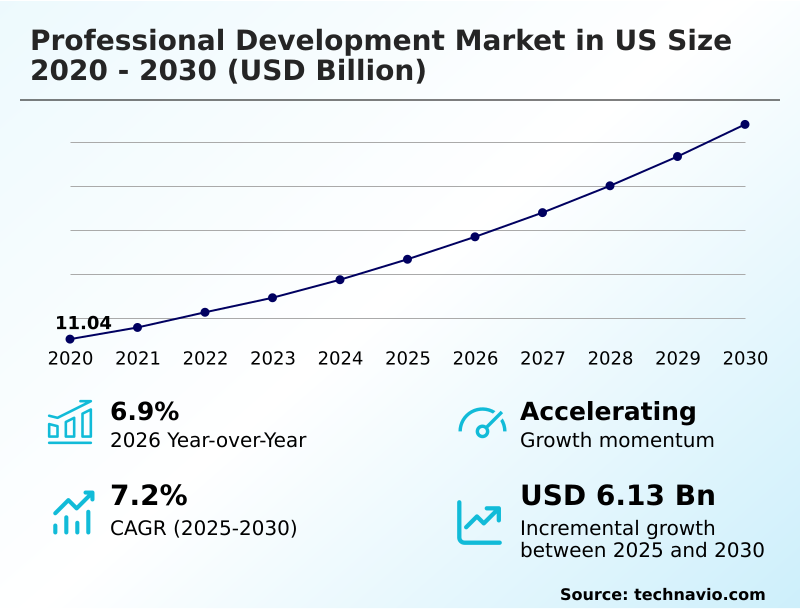
The us professional development market size is valued to increase by USD 6.13 billion, at a CAGR of 7.2% from 2025 to 2030. Acceleration of AI-driven skills transformation will drive the us professional development market.
Major Market Trends & Insights
- By End-user - K-12 segment was valued at USD 6.55 billion in 2024
- By Type - Online segment accounted for the largest market revenue share in 2024
Market Size & Forecast
- Market Opportunities: USD 9.76 billion
- Market Future Opportunities: USD 6.13 billion
- CAGR from 2025 to 2030 : 7.2%
Market Summary
- The professional development market in US is undergoing a fundamental transformation, driven by the need for organizations to maintain a competitive edge through a highly skilled workforce. The systemic shift toward AI-driven skills transformation and skills-based talent management compels enterprises to move beyond episodic training events.
- Instead, they are adopting continuous learning models that use agentic AI learning ecosystems and real-time coaching platforms to deliver personalized learning pathways.
- In a typical business scenario, a financial services firm might use such a system for its compliance tracking systems, providing behavioral change simulations and asynchronous digital modules to ensure its staff remains current with evolving regulations, thereby mitigating risk.
- This approach, which emphasizes verifiable micro-credentials and competency gap analysis, is essential for leadership pipeline development and cultivating a resilient organizational culture. The focus is on creating a workforce that is not only proficient in current tasks but also adaptable to future technological disruptions and market shifts.
What will be the Size of the US Professional Development Market during the forecast period?
Get Key Insights on Market Forecast (PDF) Request Free Sample
How is the US Professional Development Market Segmented?
The us professional development industry research report provides comprehensive data (region-wise segment analysis), with forecasts and estimates in "USD million" for the period 2026-2030, as well as historical data from 2020-2024 for the following segments.
- End-user
- K-12
- Higher education
- Pre K-12
- Type
- Online
- Offline
- Product
- Career advancement
- Skill enhancement
- Compliance and regulatory requirements
- Personal growth
- Product type
- Entry-level
- Mid-level
- Senior-level
- Executive education
- Geography
- North America
- US
- North America
By End-user Insights
The k-12 segment is estimated to witness significant growth during the forecast period.
The K-12 sub-segment is undergoing a significant transformation, with professional development shifting to a continuous process. This evolution is driven by the need for educators to master adaptive learning technology and implement new pedagogical strategies.
Effective strategic workforce planning and robust succession planning frameworks are becoming essential for school districts to manage talent pipelines. A focus on high-potential employee identification ensures that future leaders are prepared, while the organizational culture cultivation supports teacher retention.
There is a strong emphasis on digital fluency development and curriculum flexibility, with industry partnership management becoming more common. This is reflected in a 74% increase in AI learners among educators, highlighting a clear enterprise talent strategy focused on upskilling.
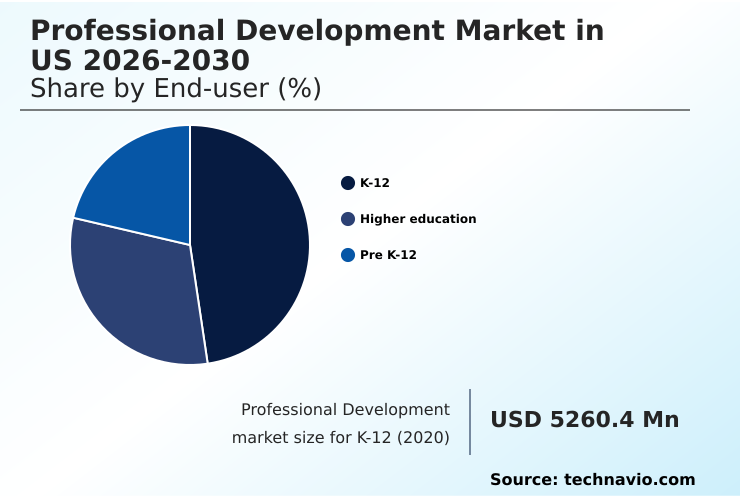
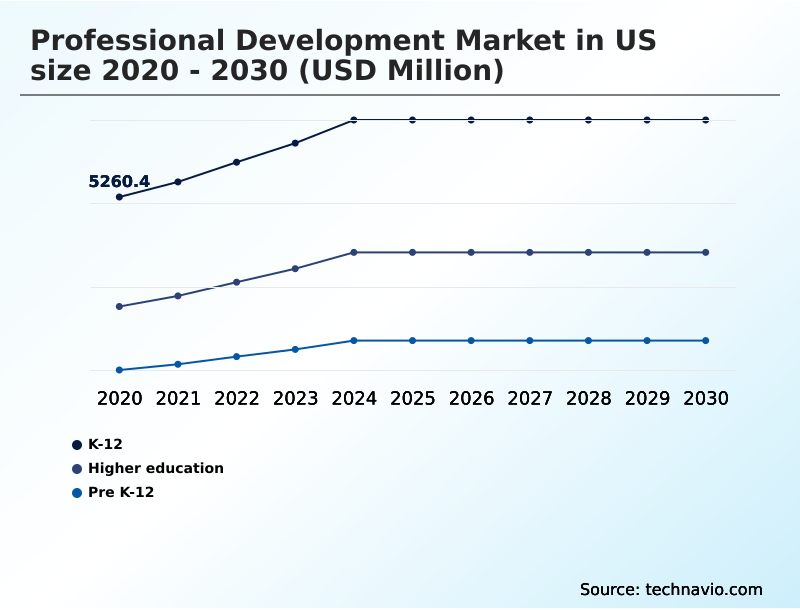
The K-12 segment was valued at USD 6.55 billion in 2024 and showed a gradual increase during the forecast period.
Market Dynamics
Our researchers analyzed the data with 2025 as the base year, along with the key drivers, trends, and challenges. A holistic analysis of drivers will help companies refine their marketing strategies to gain a competitive advantage.
- Modern corporate strategy is increasingly focused on integrating AI coaching into productivity software to enhance workforce capabilities. The core challenge involves measuring ROI of leadership development programs while simultaneously developing personalized upskilling and reskilling strategies. This requires deploying skills-based internal talent mobility and implementing adaptive learning for compliance training.
- Success hinges on assessing competency gaps with workforce analytics and designing micro-credentials for technical skills. Organizations are also fostering social-emotional resilience in hybrid teams through innovative methods. Many are now using agentic AI for real-time feedback, as this approach is directly linking professional development to talent retention.
- A key area of focus is managing cognitive overload in continuous learning, with some firms seeing a 15% improvement in knowledge retention by using targeted microlearning. Another critical task is ensuring content relevance amid regulatory changes, which necessitates building a data-driven assessment framework.
- To improve talent pipelines, companies are creating gamified onboarding for new hires and aligning training with succession planning. There is also a growing concern about the impact of AI on critical thinking skills, leading to more emphasis on developing human-centric skills for automation.
- Firms are leveraging coaching for high-potential employees and using digital badges for skill verification to support the structuring of career paths with skill mapping.
What are the key market drivers leading to the rise in the adoption of US Professional Development Industry?
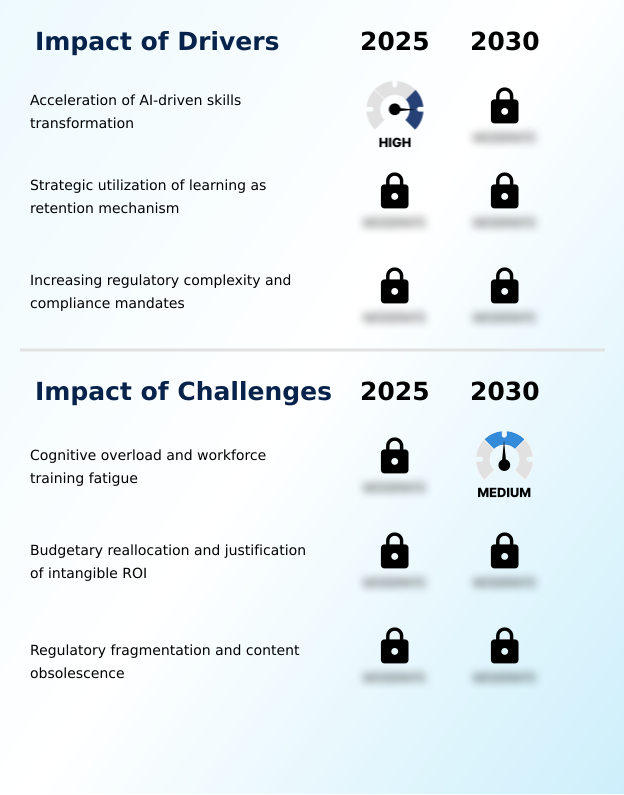
- The acceleration of AI-driven skills transformation serves as a key driver for the market's growth, necessitating continuous upskilling across the workforce.
- The primary market driver is the widespread AI-driven skills transformation, which compels organizations to adopt skills-based talent management. This strategic shift is supported by robust digital workforce analytics, which enable companies to issue verifiable micro-credentials and manage talent effectively.
- An emphasis on employee growth prioritization has become a critical talent retention mechanism, leading to a comprehensive corporate learning restructuring. Internal mobility frameworks and skills-mapped career pathways are now integral to human capital management integration.
- For example, 65% of IT decision-makers are prioritizing upskilling existing talent to close skill gaps. The implementation of digital pedagogy within hybrid work model training ensures that employees receive consistent education, while executive leadership development programs prepare future leaders.
- The necessity of adhering to regulatory compliance mandates is addressed through advanced compliance tracking systems, further fueling market demand.
What are the market trends shaping the US Professional Development Industry?
- The integration of agentic AI with real-time coaching is emerging as a significant market trend. This development reshapes learning by embedding dynamic support directly into professional workflows.
- The market is rapidly evolving with the adoption of agentic AI learning ecosystems and real-time coaching platforms. These technologies enable personalized learning pathways, moving away from static training models toward dynamic, on-demand support. This shift facilitates learning in the flow of work, addressing attention fatigue mitigation by providing timely, relevant information through asynchronous digital modules.
- Micro-credentialing frameworks are also gaining prominence as a means for professionals to validate specific skills, supporting clear career advancement pathways. Organizations using behavioral change simulations report a 35% improvement in skill application. Additionally, there is a greater emphasis on leadership pipeline development within a psychologically safe workplace, where auditable training records and sophisticated instructional design ensure quality and compliance.
- In fact, a recent analysis showed that 79% of professionals feel more secure in their roles when clear development paths are available.
What challenges does the US Professional Development Industry face during its growth?
- Cognitive overload combined with workforce training fatigue presents a primary challenge affecting industry growth and employee engagement in continuous learning initiatives.
- A significant challenge is the need for effective cognitive overload mitigation to combat widespread workforce training fatigue. As organizations push for continuous upskilling, they must deploy high-fidelity assessment tools to ensure learning is impactful without overwhelming employees. This involves a focus on human-centric skills and data orchestration literacy, which are increasingly vital in automated workplaces.
- The implementation of a formal AI ethics curriculum and legislative compliance training adds complexity, requiring constant content relevance management. Approximately 50% of organizations are now using specialized assessments to counteract skill atrophy. To justify budgets, providers are shifting toward outcome-based pricing models, supported by advanced performance tracking technologies.
- This ensures that investments align with corporate governance and a clear risk management strategy, making the business case for sophisticated data-driven assessment tools.
Exclusive Technavio Analysis on Customer Landscape
The us professional development market forecasting report includes the adoption lifecycle of the market, covering from the innovator’s stage to the laggard’s stage. It focuses on adoption rates in different regions based on penetration. Furthermore, the us professional development market report also includes key purchase criteria and drivers of price sensitivity to help companies evaluate and develop their market growth analysis strategies.
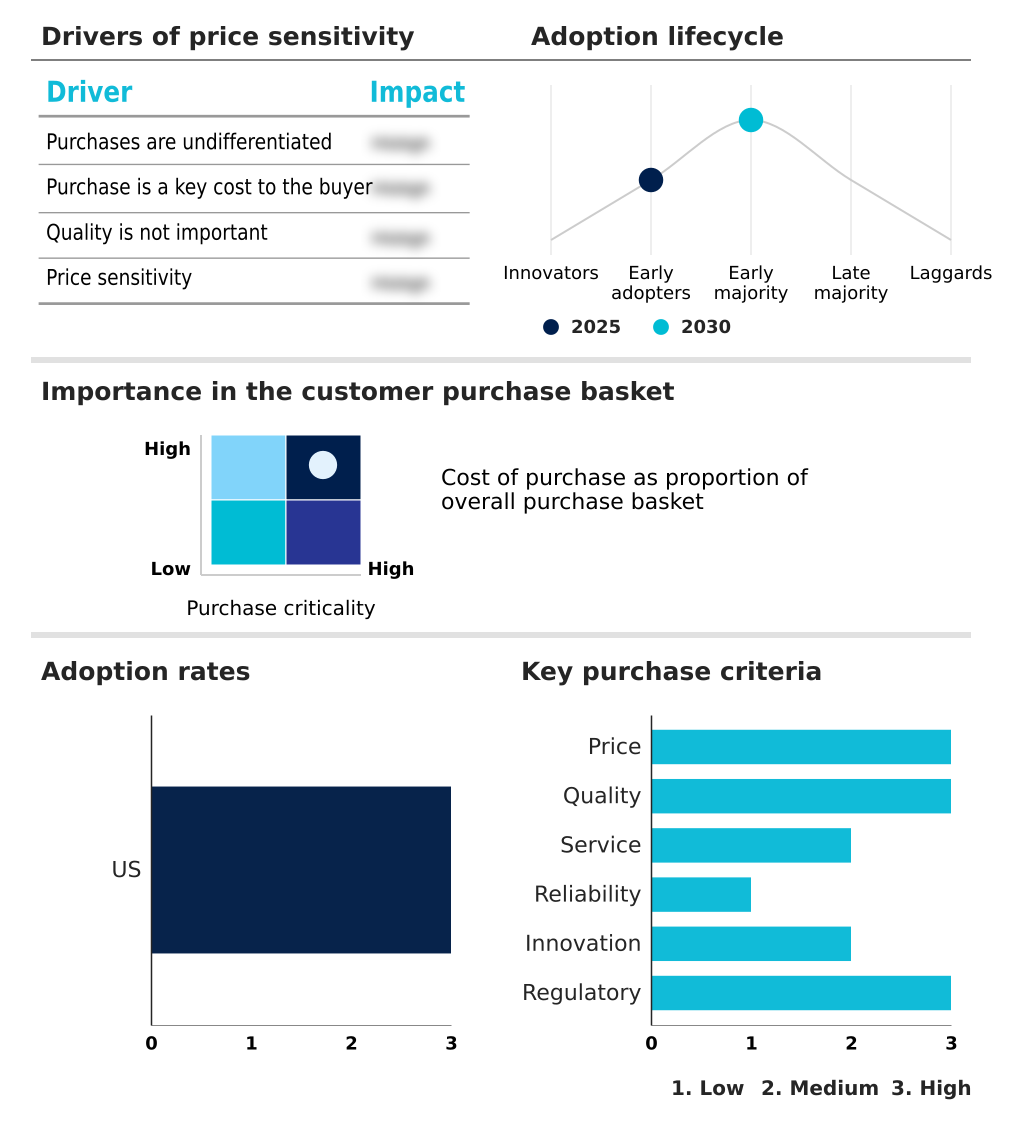
Customer Landscape of US Professional Development Industry
Competitive Landscape
Companies are implementing various strategies, such as strategic alliances, us professional development market forecast, partnerships, mergers and acquisitions, geographical expansion, and product/service launches, to enhance their presence in the industry.
Adobe Inc. - Offers professional certifications, executive coaching, and leadership training programs designed to advance corporate and individual capabilities across various professional levels.
The industry research and growth report includes detailed analyses of the competitive landscape of the market and information about key companies, including:
- Adobe Inc.
- BetterUP Inc.
- Cisco Systems Inc.
- Dale Carnegie and Associates
- Development Dimensions Inc.
- Discovery Education Inc.
- ExecOnline Inc.
- Franklin Covey Co.
- GP Strategies Corp.
- Harvard Business Publishing
- Harvard University
- Houghton Mifflin Harcourt Co.
- Kaplan Inc.
- Microsoft Corp.
- Parchment Inc.
- Pearson Plc
- Pluralsight LLC
- Scholastic Corp.
- Skillsoft Corp.
- Toastmasters International
Qualitative and quantitative analysis of companies has been conducted to help clients understand the wider business environment as well as the strengths and weaknesses of key industry players. Data is qualitatively analyzed to categorize companies as pure play, category-focused, industry-focused, and diversified; it is quantitatively analyzed to categorize companies as dominant, leading, strong, tentative, and weak.
Recent Development and News in Us professional development market
- In September 2024, Skillsoft Corp. unveiled a reimagined learner experience on its Percipio platform, integrating generative AI to deliver personalized and adaptive learning experiences to accelerate the development of critical skills.
- In January 2025, Microsoft Corp. and Pearson Plc announced a multiyear strategic partnership to deliver new AI-powered products, services, and credentials to prepare the workforce for an AI-driven economy.
- In April 2025, Pluralsight LLC released its second annual AI Skills Report, which revealed that 79% of tech workers admitted to pretending to know more about AI than they actually did, highlighting a significant credibility gap.
- In May 2025, Franklin Covey Co. was recognized by Training Industry as a Top 20 Leadership Training Company for the fifteenth consecutive time, reflecting its consistent performance in the corporate learning and development sector.
Dive into Technavio’s robust research methodology, blending expert interviews, extensive data synthesis, and validated models for unparalleled US Professional Development Market insights. See full methodology.
| Market Scope | |
|---|---|
| Page number | 212 |
| Base year | 2025 |
| Historic period | 2020-2024 |
| Forecast period | 2026-2030 |
| Growth momentum & CAGR | Accelerate at a CAGR of 7.2% |
| Market growth 2026-2030 | USD 6129.4 million |
| Market structure | Fragmented |
| YoY growth 2025-2026(%) | 6.9% |
| Key countries | US |
| Competitive landscape | Leading Companies, Market Positioning of Companies, Competitive Strategies, and Industry Risks |
Research Analyst Overview
- The professional development market in US is defined by a strategic pivot towards AI-driven skills transformation and skills-based talent management. Organizations are leveraging agentic AI learning ecosystems, real-time coaching platforms, and digital workforce analytics for competency gap analysis and to create personalized learning pathways. This involves using adaptive learning technology for everything from immersive onboarding programs to executive leadership development.
- Strategic workforce planning and succession planning frameworks are now critical, using continuous skills audits for high-potential employee identification. The goal is cultivating an organizational culture that supports hybrid work model training through gamified learning experiences and peer-to-peer mentoring networks. A key focus is on mitigating cognitive overload and workforce training fatigue through effective digital pedagogy and blended learning models.
- This requires a deep understanding of data orchestration literacy and AI ethics curriculum, alongside legislative compliance training and trauma-informed teaching practices. Enterprises utilize compliance tracking systems and data-driven assessment tools to issue verifiable micro-credentials for human-centric skills. For instance, firms that integrate behavioral change simulations into their leadership pipeline development report a 20% increase in managerial effectiveness.
- This entire ecosystem, supported by asynchronous digital modules and skills taxonomy mapping, allows for the creation of robust internal talent marketplaces.
What are the Key Data Covered in this US Professional Development Market Research and Growth Report?
-
What is the expected growth of the US Professional Development Market between 2026 and 2030?
-
USD 6.13 billion, at a CAGR of 7.2%
-
-
What segmentation does the market report cover?
-
The report is segmented by End-user (K-12, Higher education, and Pre K-12), Type (Online, and Offline), Product (Career advancement, Skill enhancement, Compliance and regulatory requirements, and Personal growth), Product Type (Entry-level, Mid-level, Senior-level, and Executive education) and Geography (North America)
-
-
Which regions are analyzed in the report?
-
North America
-
-
What are the key growth drivers and market challenges?
-
Acceleration of AI-driven skills transformation, Cognitive overload and workforce training fatigue
-
-
Who are the major players in the US Professional Development Market?
-
Adobe Inc., BetterUP Inc., Cisco Systems Inc., Dale Carnegie and Associates, Development Dimensions Inc., Discovery Education Inc., ExecOnline Inc., Franklin Covey Co., GP Strategies Corp., Harvard Business Publishing, Harvard University, Houghton Mifflin Harcourt Co., Kaplan Inc., Microsoft Corp., Parchment Inc., Pearson Plc, Pluralsight LLC, Scholastic Corp., Skillsoft Corp. and Toastmasters International
-
Market Research Insights
- The prioritization of employee growth, now a key talent retention mechanism, is reshaping human capital management integration. This strategic shift requires robust internal mobility frameworks and skills-mapped career pathways, moving beyond traditional professional certifications.
- A focus on corporate learning restructuring and cross-functional agent of change initiatives is evident, with organizations fostering a fearless organizational culture and emphasizing psychological safety in the workplace to boost innovation. Such an environment relies on auditable training records and a solid risk management strategy aligned with corporate governance.
- For instance, some firms have seen a 40% improvement in employee engagement catalyst metrics after implementing comprehensive emotional intelligence modules and stress management programs. These efforts, supported by social learning features and effective instructional design, are critical for digital fluency development and creating sustainable growth. This outcome-based pricing models approach ensures that investments in professional development deliver measurable returns.
We can help! Our analysts can customize this us professional development market research report to meet your requirements.
 RIA -
RIA -