



Pulp Market Size 2026-2030
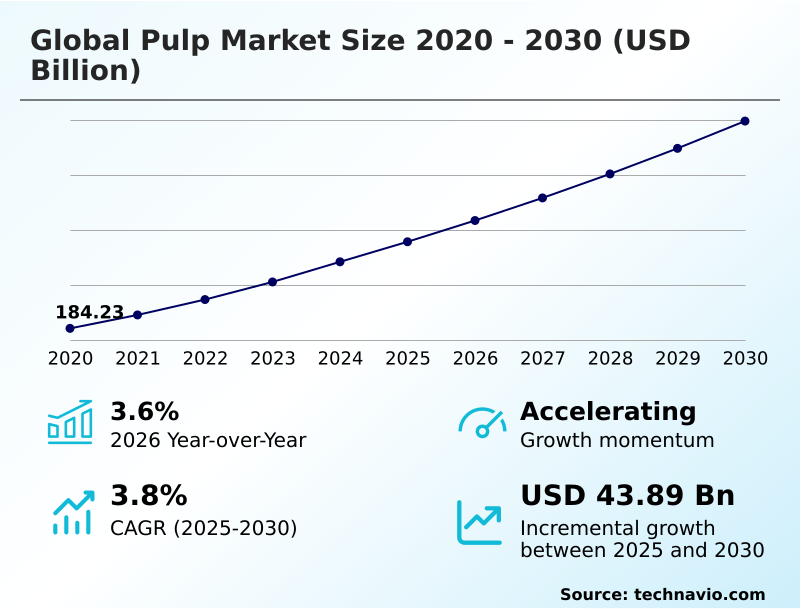
The pulp market size is valued to increase by USD 43.89 billion, at a CAGR of 3.8% from 2025 to 2030. Sustained momentum in transition toward sustainable fiber-based packaging will drive the pulp market.
Major Market Trends & Insights
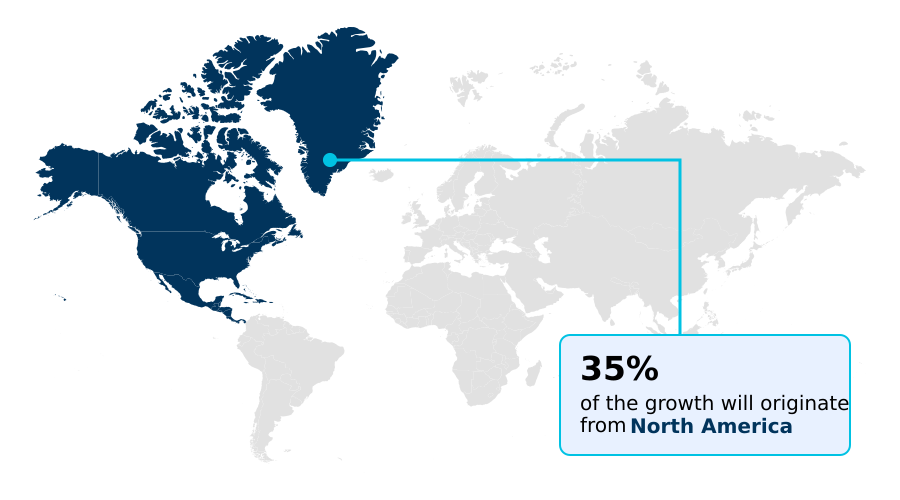
- North America dominated the market and accounted for a 34.9% growth during the forecast period.
- By Application - Printing and writing paper segment was valued at USD 67.43 billion in 2024
- By Grade Type - Chemical pulp segment accounted for the largest market revenue share in 2024
Market Size & Forecast
- Market Opportunities: USD 75.38 billion
- Market Future Opportunities: USD 43.89 billion
- CAGR from 2025 to 2030 : 3.8%
Market Summary
- The pulp market is undergoing a significant transformation, driven by a global shift towards sustainability and resource efficiency. Demand is increasingly moving beyond traditional paper products to encompass a wide array of applications, from biodegradable packaging to advanced biomaterials.
- This evolution is compelling producers to innovate, focusing on specialty grades like dissolving pulp for textiles and fluff pulp for hygiene products. A key business scenario involves the optimization of the supply chain through digitalization.
- For instance, integrated producers are leveraging real-time data analytics to manage forest resources more effectively, predict harvest yields, and align raw material flow with mill capacity, thereby enhancing operational efficiency and reducing waste. The industry is also investing heavily in biorefining technologies, which allow for the extraction of high-value chemicals from pulping byproducts.
- This not only creates new revenue streams but also reinforces the market's role in the circular economy by maximizing the utility of wood fibers. The focus on environmental stewardship, coupled with technological advancements, defines the current competitive landscape and shapes future growth trajectories.
What will be the Size of the Pulp Market during the forecast period?
Get Key Insights on Market Forecast (PDF) Get Free Sample
How is the Pulp Market Segmented?
The pulp industry research report provides comprehensive data (region-wise segment analysis), with forecasts and estimates in "USD million" for the period 2026-2030, as well as historical data from 2020-2024 for the following segments.
- Application
- Printing and writing paper
- Tissue paper
- Specialty paper
- Packaging paper
- Others
- Grade type
- Chemical pulp
- Mechanical and semi-chemical pulp
- Non-wood pulp
- Source
- Wood pulp
- Agro-based pulp
- Recycled pulp
- Geography
- North America
- US
- Canada
- Mexico
- APAC
- China
- Japan
- India
- Europe
- UK
- Germany
- France
- South America
- Brazil
- Argentina
- Middle East and Africa
- UAE
- South Africa
- Saudi Arabia
- Rest of World (ROW)
- North America
By Application Insights
The printing and writing paper segment is estimated to witness significant growth during the forecast period.
The market segmentation reveals distinct performance characteristics across different fiber sources. The use of chemical pulp provides superior strength, while mechanical pulp offers high yield and opacity for specific applications.
The emergence of non-wood pulp from agricultural residues and crops presents a sustainable alternative, supporting the demand for renewable materials. The market distinguishes between virgin pulp for high-purity applications and recycled pulp which is central to circularity goals.
The choice between hardwood pulp for smoothness and softwood pulp for strength is a critical decision in manufacturing.
This diversity allows for the creation of eco-friendly fibers and high-performance fibers, with some advanced processes improving fiber recovery by up to 8%. The push for sustainable fiber substitution and biodegradable materials is reshaping how these segments are valued.
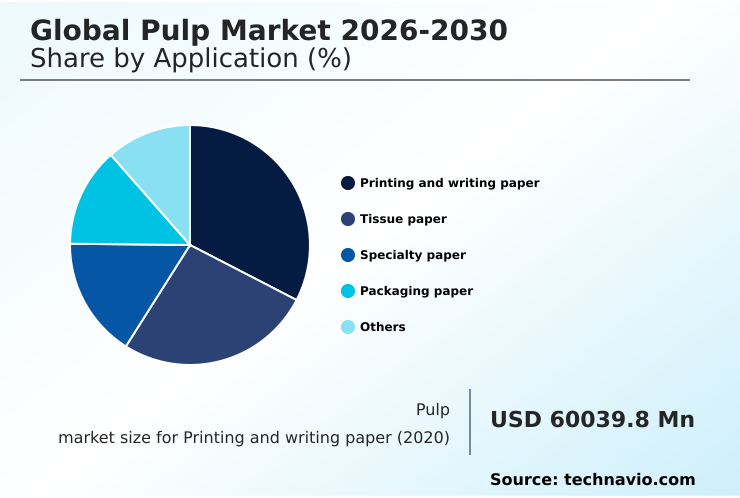
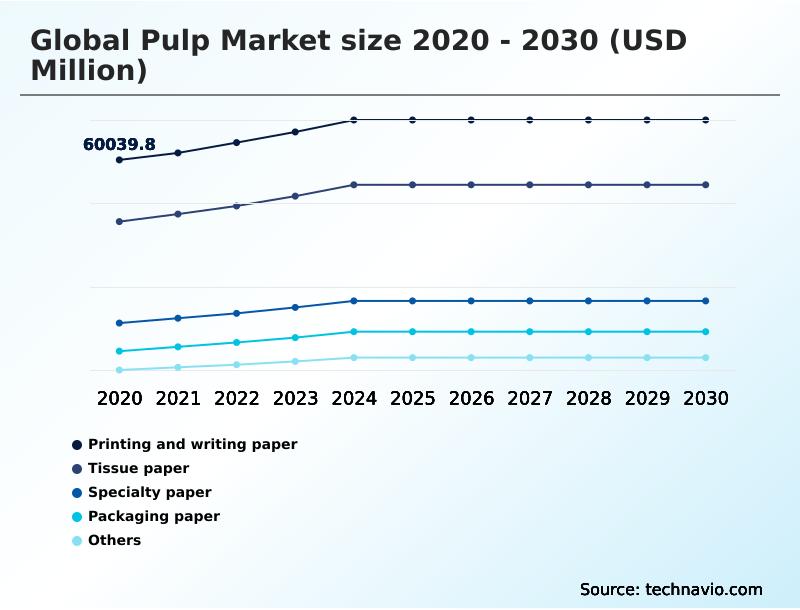
The Printing and writing paper segment was valued at USD 67.43 billion in 2024 and showed a gradual increase during the forecast period.
Regional Analysis
North America is estimated to contribute 34.9% to the growth of the global market during the forecast period.Technavio’s analysts have elaborately explained the regional trends and drivers that shape the market during the forecast period.
See How Pulp Market Demand is Rising in North America Get Free Sample
The geographic landscape is defined by regional specializations and the adoption of advanced automation. North America is poised to contribute nearly 35% of the market's incremental growth, while APAC exhibits a robust CAGR of 4.0%.
In regions with high labor costs, autonomous mill operations are becoming prevalent, where predictive maintenance algorithms are reducing equipment downtime by over 25%. The chemical recovery cycle is being optimized globally to improve efficiency.
The growth of wood-based textiles, including lyocell fibers and viscose fibers, is driving investment in specialized mills in resource-rich areas.
The expansion of molded fiber products as a plastic alternative is creating new manufacturing hubs, supported by closed-loop water systems that improve resource efficiency optimization and attract companies focused on value-added specialty grades and raw material diversification.
Market Dynamics
Our researchers analyzed the data with 2025 as the base year, along with the key drivers, trends, and challenges. A holistic analysis of drivers will help companies refine their marketing strategies to gain a competitive advantage.
- The global pulp market is evolving through several interconnected strategic shifts. The focus on dissolving pulp for the textile industry is a direct result of the fashion world's search for sustainable materials, creating a high-value stream for producers. Simultaneously, the exploration of nanocellulose in advanced material science is opening up applications in electronics and medicine.
- These innovations are supported by the integration of biorefining technologies for resource optimization, which transform mills into multi-product facilities. This trend is closely tied to the sustainable fiber-based packaging transition, as companies increasingly favor plastic substitution with fiber-based packaging. The adoption of AI and autonomous mill operations improves efficiency and addresses labor challenges.
- However, the impact of decarbonization on pulp manufacturing requires significant capital investment, a challenge compounded by the pulp market's response to geopolitical volatility. To compete, companies are navigating complex environmental regulations for wood sourcing and advancing recycled fiber processing.
- The development of wood-based textiles and dissolving pulp innovation continues to be a major growth area, alongside the rising demand for fluff pulp in personal care products. The technical debate between chemical pulp versus mechanical pulp yield continues to influence mill design.
- Furthermore, lignin valorization in pulp biorefineries and the use of digital twin systems for forest management represent the industry's high-tech future. Closed-loop systems in pulp production and the pursuit of high-purity cellulose for specialty applications are becoming standard.
- Elemental chlorine-free bleaching process benefits are now widely recognized, while managing wastewater discharge in pulp mills and creating functional barrier papers for food packaging remain critical focus areas.
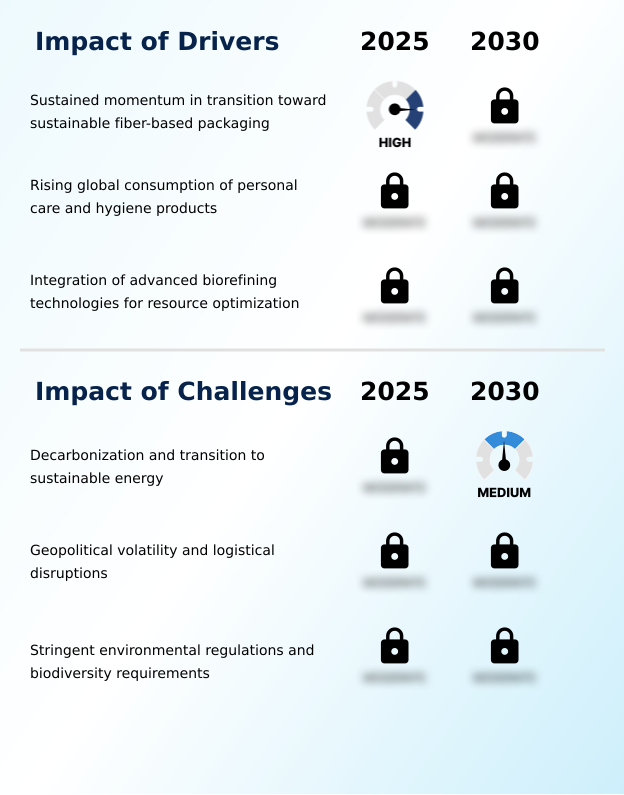
What are the key market drivers leading to the rise in the adoption of Pulp Industry?
- Sustained momentum in the transition toward sustainable fiber-based packaging is a key driver of market growth.
- Key market drivers are centered on material science innovation and biorefining. The demand for advanced fiber-based packaging and functional barrier papers is a direct response to plastic substitution mandates.
- Biorefining technologies are unlocking new revenue streams by extracting high-value bio-based chemicals and bio-adhesives from pulping side-streams. This includes the valorization of lignin and hemicellulose into renewable resins and bio-based plastics, pushing the industry towards total resource utilization.
- The industry 4.0 integration is enabling the development of high-performance specialty papers and tissue paper, with some smart mills reporting a 10% reduction in chemical waste. This push toward advanced material science diversifies product portfolios beyond traditional paper.
What are the market trends shaping the Pulp Industry?
- The proliferation of nanocellulose in advanced material science is an emerging trend. This development is reshaping material applications across various industries.
- The market is being transformed by a focus on high-value products. The development of dissolving pulp is driven by the textile industry's shift toward regenerative forestry practices. Concurrently, fluff pulp is evolving with advanced superabsorbent properties for hygiene products, leveraging eucalyptus pulp for softness and sustainability.
- The production of bleached softwood kraft pulp is being optimized through decarbonization of operations and the exploration of green hydrogen energy. Innovations in kraft pulp support the trend toward robust e-commerce packaging. The production of high-purity cellulose and nanocellulose is aligned with circular economy principles, enabling applications in new industries.
- These advancements, combined with sustainable forest management, show that mills investing in such technologies can reduce water usage by up to 15%.
What challenges does the Pulp Industry face during its growth?
- The decarbonization of operations and the transition to sustainable energy sources present a key challenge to industry growth.
- Navigating regulatory and logistical complexities is a primary challenge. The need for enhanced supply chain traceability is intensifying due to new deforestation regulation mandates, requiring robust biodiversity monitoring. Environmental compliance is becoming more stringent, with a focus on eliminating per- and polyfluoroalkyl substances and meeting strict wastewater discharge standards.
- The geopolitical volatility impact on logistics creates uncertainty in the supply of packaging paper and other grades. To mitigate these risks, companies are investing in technologies like oxygen delignification and elemental chlorine-free bleaching. Adopting advanced digital systems can improve compliance reporting accuracy by over 20%, turning regulatory burdens into operational advantages while supporting regenerative forestry practices.
Exclusive Technavio Analysis on Customer Landscape
The pulp market forecasting report includes the adoption lifecycle of the market, covering from the innovator’s stage to the laggard’s stage. It focuses on adoption rates in different regions based on penetration. Furthermore, the pulp market report also includes key purchase criteria and drivers of price sensitivity to help companies evaluate and develop their market growth analysis strategies.
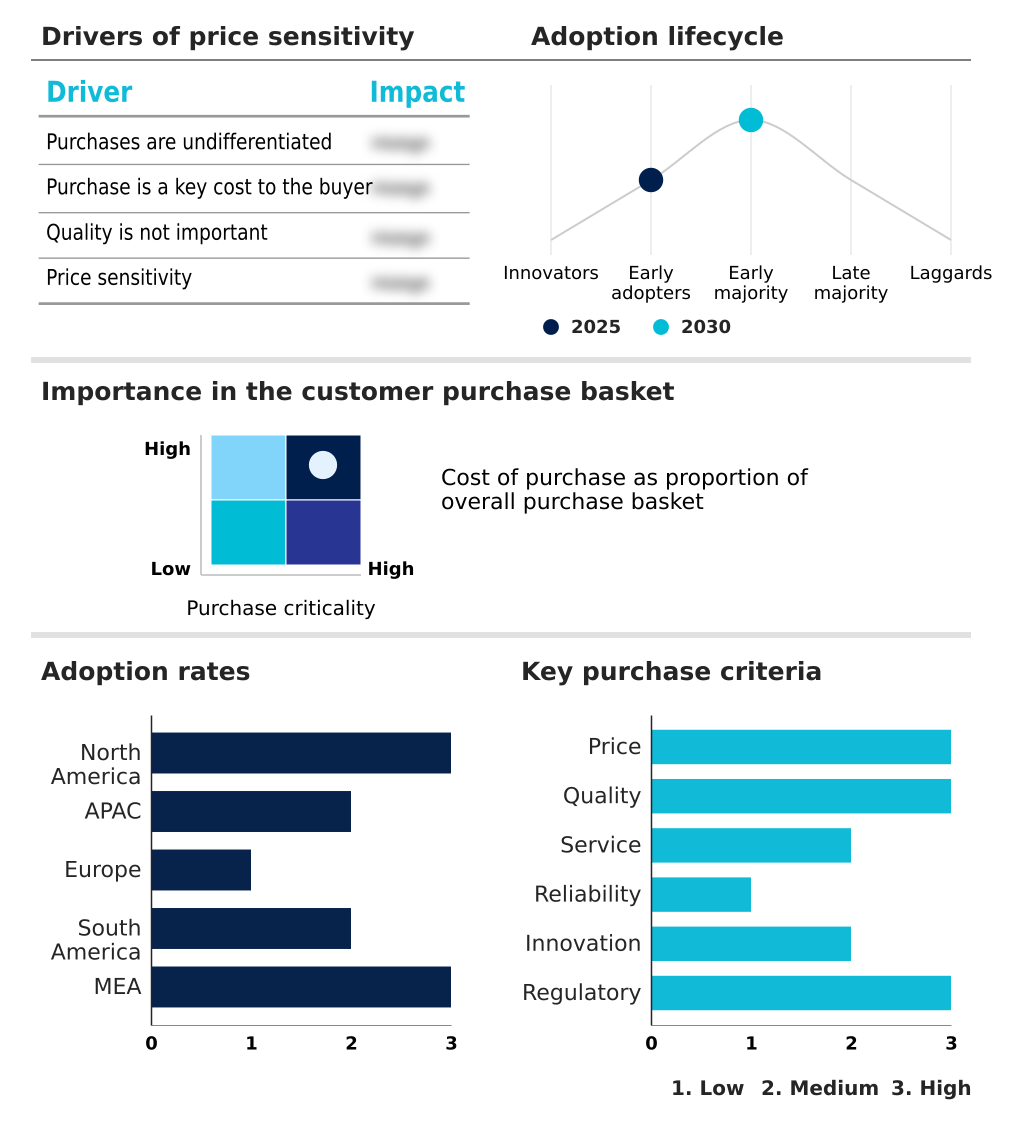
Customer Landscape of Pulp Industry
Competitive Landscape
Companies are implementing various strategies, such as strategic alliances, pulp market forecast, partnerships, mergers and acquisitions, geographical expansion, and product/service launches, to enhance their presence in the industry.
Asia Pacific Resources - Key offerings include high-purity cellulose, dissolving pulp, and fluff pulp, catering to diverse industrial applications in packaging, textiles, and hygiene products.
The industry research and growth report includes detailed analyses of the competitive landscape of the market and information about key companies, including:
- Asia Pacific Resources
- Asia Pulp and Paper APP Sinar
- Canfor Corp.
- Celulosa Arauco y Constitucion
- Domtar Corp.
- Empresas CMPC SA
- Ilim Group
- International Paper Co.
- Klabin S.A.
- Metsa Group
- Mondi Plc
- Nippon Communications Foundation
- Oji Holdings Corp.
- Resolute Forest Products Inc.
- Sappi Ltd.
- Sodra
- Suzano SA
- The SCA Group LLC
- UPM Kymmene Corp.
- West Fraser Timber Co. Ltd.
Qualitative and quantitative analysis of companies has been conducted to help clients understand the wider business environment as well as the strengths and weaknesses of key industry players. Data is qualitatively analyzed to categorize companies as pure play, category-focused, industry-focused, and diversified; it is quantitatively analyzed to categorize companies as dominant, leading, strong, tentative, and weak.
Recent Development and News in Pulp market
- In August 2025, Stora Enso finalized a partnership with a major European electronics manufacturer to integrate micro-fibrillated cellulose into the production of biodegradable circuit boards.
- In September 2025, Metsa Group deployed a fully autonomous wood-handling and sorting system at a primary production facility that utilizes real-time imaging and machine learning to optimize the fiber yield of every log.
- In October 2025, Lenzing AG introduced a new generation of lyocell fibers produced from a blend of virgin dissolving pulp and chemically recycled textile waste.
- In May 2025, Mondi Group announced the successful commercialization of a new range of high-performance functional barrier papers that are fully recyclable and designed to replace plastic laminates in dry food packaging.
Dive into Technavio’s robust research methodology, blending expert interviews, extensive data synthesis, and validated models for unparalleled Pulp Market insights. See full methodology.
| Market Scope | |
|---|---|
| Page number | 307 |
| Base year | 2025 |
| Historic period | 2020-2024 |
| Forecast period | 2026-2030 |
| Growth momentum & CAGR | Accelerate at a CAGR of 3.8% |
| Market growth 2026-2030 | USD 43888.1 million |
| Market structure | Fragmented |
| YoY growth 2025-2026(%) | 3.6% |
| Key countries | US, Canada, Mexico, China, Japan, India, South Korea, Indonesia, Australia, UK, Germany, France, Italy, Spain, The Netherlands, Brazil, Argentina, Chile, UAE, South Africa, Saudi Arabia, Egypt and Qatar |
| Competitive landscape | Leading Companies, Market Positioning of Companies, Competitive Strategies, and Industry Risks |
Research Analyst Overview
- The pulp market's evolution is driven by the convergence of sustainability mandates and technological innovation. The industry is moving beyond commodity grades to sophisticated materials like nanocellulose and dissolving pulp for wood-based textiles, including lyocell fibers and viscose fibers.
- This diversification relies on a broad spectrum of inputs, from chemical pulp and mechanical pulp to non-wood pulp, with a clear distinction between virgin pulp and recycled pulp. The choice of hardwood pulp or softwood pulp, such as bleached softwood kraft pulp from eucalyptus pulp sources, is critical for achieving desired product qualities like high-purity cellulose.
- Advanced biorefining technologies are central to this shift, enabling the extraction of lignin and hemicellulose while optimizing the chemical recovery cycle. To meet stringent environmental standards, producers are adopting elemental chlorine-free bleaching and oxygen delignification. For boardroom strategy, the integration of a digital twin system for predictive maintenance and autonomous mill operations is crucial for maintaining competitiveness.
- Firms that successfully integrate these technologies into the production of fiber-based packaging, functional barrier papers, specialty papers, tissue paper, printing paper, writing paper, and molded fiber products can realize efficiency gains exceeding 20% in resource utilization.
What are the Key Data Covered in this Pulp Market Research and Growth Report?
-
What is the expected growth of the Pulp Market between 2026 and 2030?
-
USD 43.89 billion, at a CAGR of 3.8%
-
-
What segmentation does the market report cover?
-
The report is segmented by Application (Printing and writing paper, Tissue paper, Specialty paper, Packaging paper, and Others), Grade Type (Chemical pulp, Mechanical and semi-chemical pulp, and Non-wood pulp), Source (Wood pulp, Agro-based pulp, and Recycled pulp) and Geography (North America, APAC, Europe, South America, Middle East and Africa)
-
-
Which regions are analyzed in the report?
-
North America, APAC, Europe, South America and Middle East and Africa
-
-
What are the key growth drivers and market challenges?
-
Sustained momentum in transition toward sustainable fiber-based packaging, Decarbonization and transition to sustainable energy
-
-
Who are the major players in the Pulp Market?
-
Asia Pacific Resources, Asia Pulp and Paper APP Sinar, Canfor Corp., Celulosa Arauco y Constitucion, Domtar Corp., Empresas CMPC SA, Ilim Group, International Paper Co., Klabin S.A., Metsa Group, Mondi Plc, Nippon Communications Foundation, Oji Holdings Corp., Resolute Forest Products Inc., Sappi Ltd., Sodra, Suzano SA, The SCA Group LLC, UPM Kymmene Corp. and West Fraser Timber Co. Ltd.
-
Market Research Insights
- The market's dynamics are shaped by a strategic pivot towards high-performance fibers and sustainable fiber substitution. The adoption of circular economy principles is not just a trend but a competitive necessity, with leading firms achieving a 12% improvement in resource efficiency optimization through closed-loop water systems. This focus on sustainability extends to raw material diversification and regenerative forestry practices.
- The push for wood-based cellulosic fibers is compelling investment in advanced biorefining, where the conversion of waste streams into bio-based chemicals can increase a facility’s overall value output by over 15%. This strategic shift underscores the market's transition from a commodity-driven industry to a high-tech, value-added sector.
We can help! Our analysts can customize this pulp market research report to meet your requirements.
 RIA -
RIA -