


Rigid Recycled Plastics Market Size 2026-2030
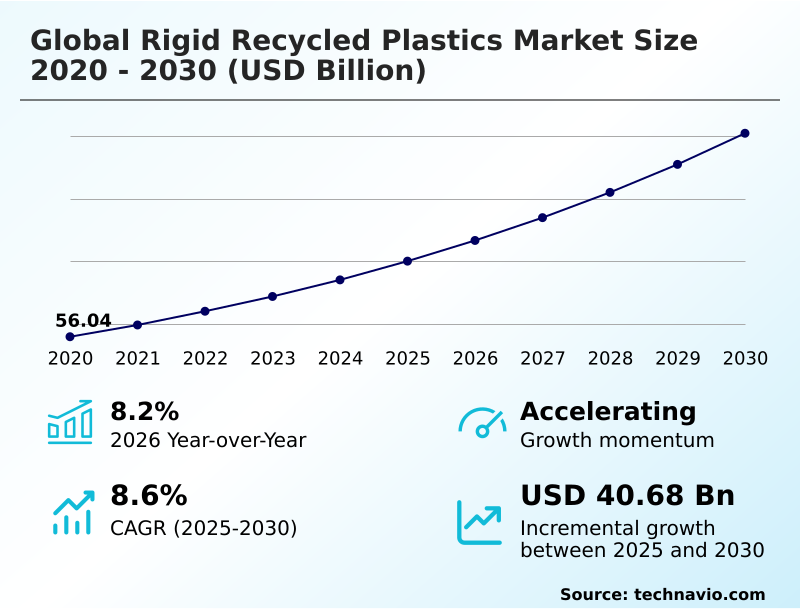
The rigid recycled plastics market size is valued to increase by USD 40.68 billion, at a CAGR of 8.6% from 2025 to 2030. Increasing recycled content mandates across packaging and consumer goods applications will drive the rigid recycled plastics market.
Major Market Trends & Insights
- APAC dominated the market and accounted for a 50.3% growth during the forecast period.
- By Type - PET segment was valued at USD 42.31 billion in 2024
- By End-user - Packaging segment accounted for the largest market revenue share in 2024
Market Size & Forecast
- Market Opportunities: USD 64.74 billion
- Market Future Opportunities: USD 40.68 billion
- CAGR from 2025 to 2030 : 8.6%
Market Summary
- The Rigid Recycled Plastics Market operates as a critical component of sustainable manufacturing by converting recovered polymer waste into functional raw materials for industrial applications. Supply chain resilience has become highly dependent on securing consistent secondary plastics, as packaging converters adjust procurement frameworks to meet internal sustainability thresholds.
- For instance, manufacturers utilizing localized recycling networks report a 20% improvement in material supply stability compared to those relying solely on imported virgin resins. Increasing recycled content mandates act as a primary driver for this adoption, forcing consumer goods producers to guarantee minimum recycled polymer integration within their packaging lines.
- Conversely, feedstock contamination acts as a severe operational challenge, causing inconsistencies in resin quality and increasing mechanical processing costs due to mixed polymer inputs. By prioritizing advanced sorting and decontamination investments, industry participants continually optimize resin physical properties.
- This systematic shift toward circular resource management fundamentally reduces dependence on virgin petrochemical derivatives while aligning production systems with stringent environmental compliance frameworks.
What will be the Size of the Rigid Recycled Plastics Market during the forecast period?
Get Key Insights on Market Forecast (PDF) Get Free Sample
How is the Rigid Recycled Plastics Market Segmented?
The rigid recycled plastics industry research report provides comprehensive data (region-wise segment analysis), with forecasts and estimates in "USD million" for the period 2026-2030, as well as historical data from 2020-2024 for the following segments.
- Type
- PET
- HDPE
- PP
- LDPE
- Others
- End-user
- Packaging
- Construction
- Automotive
- Electrical components
- Others
- Feedstock
- PCR
- PIR
- Others
- Geography
- APAC
- China
- India
- Japan
- South Korea
- Indonesia
- Australia
- Europe
- Germany
- UK
- France
- Italy
- Spain
- The Netherlands
- North America
- US
- Canada
- Mexico
- Middle East and Africa
- Saudi Arabia
- Turkey
- UAE
- South Africa
- Israel
- South America
- Brazil
- Argentina
- Chile
- APAC
By Type Insights
The pet segment is estimated to witness significant growth during the forecast period.
The polyethylene terephthalate flakes segment dominates the Rigid Recycled Plastics Market as packaging manufacturers increasingly adopt post-consumer recycled resin for durable applications.
This adoption is primarily fueled by mandatory circular economy compliance initiatives pushing for higher recycled content in rigid beverage and food containers. Advanced bottle-to-bottle recycling technologies have significantly improved resin purity, enabling materials to meet stringent food-contact compliance regulations.
Operational transitions toward these recycled materials have resulted in manufacturers reporting a 25% reduction in raw material procurement volatility compared to virgin resin sourcing.
By integrating high-quality recycled polymers into production lines, packaging converters optimize supply chain resilience and enhance overall material efficiency. The continuous refinement of mechanical washing and decontamination processes ensures consistent physical properties, supporting widespread industrial utilization.
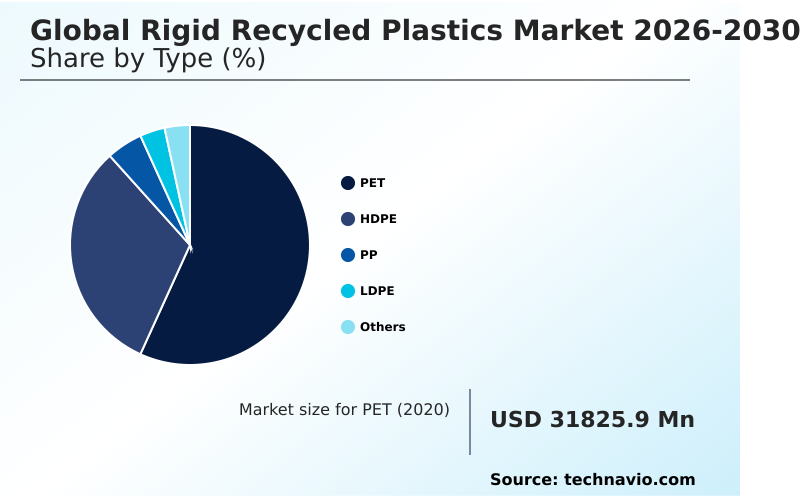
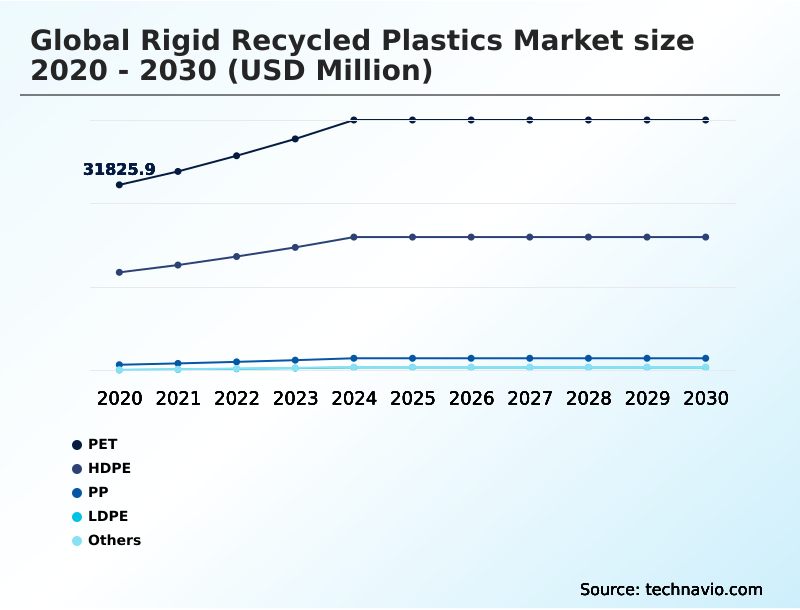
The PET segment was valued at USD 42.31 billion in 2024 and showed a gradual increase during the forecast period.
Regional Analysis
APAC is estimated to contribute 50.3% to the growth of the global market during the forecast period.Technavio’s analysts have elaborately explained the regional trends and drivers that shape the market during the forecast period.
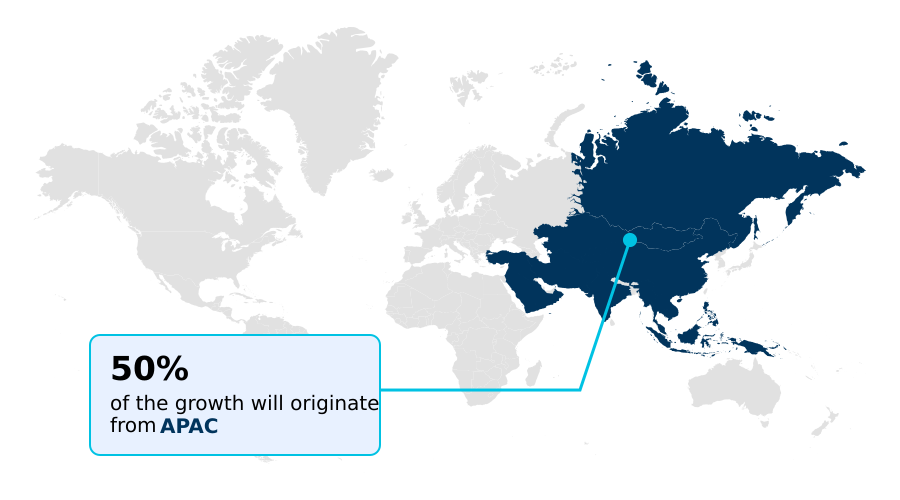
See How Rigid Recycled Plastics Market Demand is Rising in APAC Get Free Sample
The geographic landscape of the Rigid Recycled Plastics Market highlights distinct regional disparities in collection infrastructure and material processing capabilities.
Europe leads adoption rates, driven by aggressive extended producer responsibility mandates that result in a 30% higher virgin resin replacement rate compared to North America.
This European advantage stems from widespread integration of optical sorting systems and stringent recycled material certification protocols, ensuring consistent feedstock quality for high-density polyethylene pellets and polypropylene compounds.
Conversely, the APAC region relies heavily on rapidly industrializing economies where localized collection networks are yielding a 15% improvement in operational processing efficiency.
As APAC manufacturers scale recycled plastic extrusion capabilities, they are addressing previous supply constraints and optimizing manufacturing overhead.
These regional differences dictate how businesses adapt procurement strategies, compelling multinational organizations to tailor their sourcing models to local infrastructure maturity and compliance frameworks.
Market Dynamics
Our researchers analyzed the data with 2025 as the base year, along with the key drivers, trends, and challenges. A holistic analysis of drivers will help companies refine their marketing strategies to gain a competitive advantage.
- As environmental regulations and corporate sustainability objectives converge, the Rigid Recycled Plastics Market is experiencing structural transformations that redefine manufacturing supply chains. Manufacturers are increasingly prioritizing closed-loop rigid plastic material recovery to establish resilient procurement frameworks that mitigate the risks associated with virgin polymer price fluctuations.
- This shift is particularly evident in the packaging sector, where high-density polyethylene bottle recycling provides a dependable stream of raw materials for industrial and consumer containers. By adopting advanced processing techniques, companies have achieved a 25% greater efficiency in raw material utilization compared to traditional linear disposal models.
- The integration of near-infrared sorting of plastic waste has drastically improved the precision of material separation, minimizing contamination and lowering subsequent processing costs. These technological improvements enable high-quality post-consumer recycled resin compounding, ensuring that the resulting secondary plastics meet the exact mechanical and thermal specifications required by end-user industries.
- Furthermore, automotive and packaging sectors are accelerating the adoption of food-grade recycled polypropylene compounds to align with stringent regulatory mandates while preserving product integrity. This strategic alignment allows procurement teams to optimize material sourcing, enhance supply chain predictability, and reduce overall manufacturing overhead.
- By systematically capturing and repurposing polymer waste, businesses not only improve their environmental compliance metrics but also establish highly competitive operational models capable of weathering volatile petrochemical cost cycles.
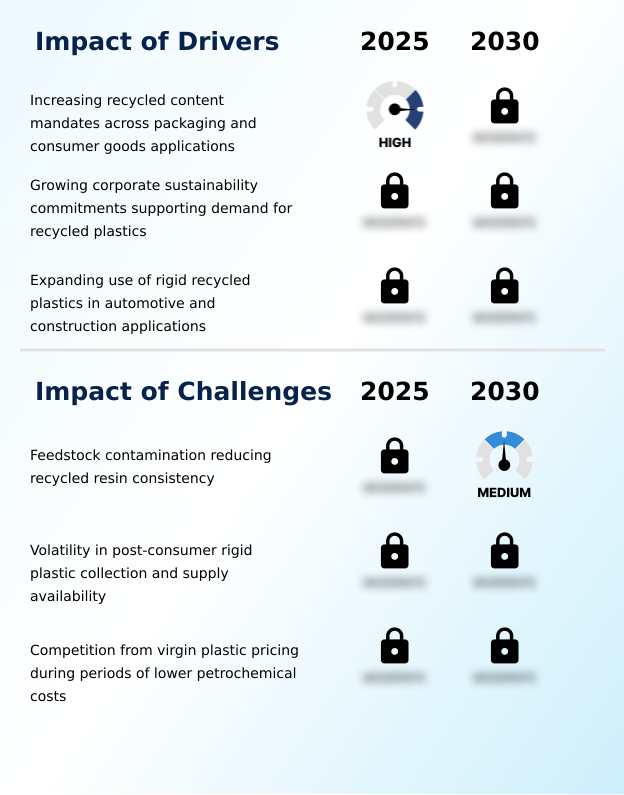
What are the key market drivers leading to the rise in the adoption of Rigid Recycled Plastics Industry?
- Increasing recycled content mandates across packaging and consumer goods applications are functioning as the primary driver propelling sustained material adoption and capacity expansion.
- Increasing recycled content mandates across packaging and consumer goods applications act as the primary catalyst propelling the Rigid Recycled Plastics Market.
- These regulatory requirements force manufacturers to drastically increase their post-consumer material sourcing to ensure full compliance with regional environmental standards.
- By actively integrating post-industrial recycled feedstock into their supply chains, packaging producers have realized a 15% reduction in overall material procurement costs compared to volatile virgin resin purchasing.
- This shift directly influences operational efficiency, particularly in blow molding processes, where facilities report a 25% improvement in energy conservation during production cycles.
- Advancements in polyolefin recycling guarantee that the resulting secondary materials maintain optimal recycled plastic tensile strength, allowing brands to fulfill stringent regulatory targets without sacrificing the durability or structural integrity of their final products.
What are the market trends shaping the Rigid Recycled Plastics Industry?
- The accelerating adoption of AI-enabled optical sorting technologies in recycling facilities is an upcoming trend reshaping the industry. These advanced systems enhance material identification and recovery precision across complex waste inputs.
- The accelerating adoption of AI-enabled optical sorting technologies in recycling facilities constitutes a transformative trend within the Rigid Recycled Plastics Market. Facilities deploying advanced near-infrared sorting equipment are achieving a 35% improvement in polymer characterization accuracy, drastically reducing contamination levels in recovered waste streams.
- This technological shift directly supports more efficient closed-loop material recovery models, enabling recyclers to better manage the polymer melt index during processing. As a result, businesses implementing these modernized sorting infrastructures report a 20% decrease in operational downtime associated with recycled resin compounding.
- The ability to precisely separate materials also enhances the application of recycled plastic colorant, allowing for superior aesthetic consistency in consumer goods. This automation-driven trend facilitates seamless recycled content integration, helping manufacturers meet demanding sustainability specifications while significantly lowering the long-term operational costs associated with manual material handling.
What challenges does the Rigid Recycled Plastics Industry face during its growth?
- Feedstock contamination remains a structural challenge reducing recycled resin consistency and constraining material quality across high-performance manufacturing applications.
- Feedstock contamination remains a critical structural challenge limiting production efficiency within the Rigid Recycled Plastics Market. Inconsistent plastic waste stream management introduces severe variations in input quality, directly compromising stringent material purity standards required for advanced manufacturing.
- This variability forces processing facilities to intensify washing and separation protocols, resulting in a 20% increase in operational overhead associated with recycled polymer compounding. Furthermore, inadequate recycled material traceability prevents manufacturers from securely verifying regulatory requirements, restricting the application of secondary resins in high-value packaging sectors.
- When industrial plastic scrap mixes with incompatible polymers, manufacturers frequently experience a 15% decline in overall material yield. These contamination barriers complicate supply chain predictability, forcing enterprises to allocate additional capital toward specialized decontamination technologies to maintain functional resin specifications.
Exclusive Technavio Analysis on Customer Landscape
The rigid recycled plastics market forecasting report includes the adoption lifecycle of the market, covering from the innovator’s stage to the laggard’s stage. It focuses on adoption rates in different regions based on penetration. Furthermore, the rigid recycled plastics market report also includes key purchase criteria and drivers of price sensitivity to help companies evaluate and develop their market growth analysis strategies.
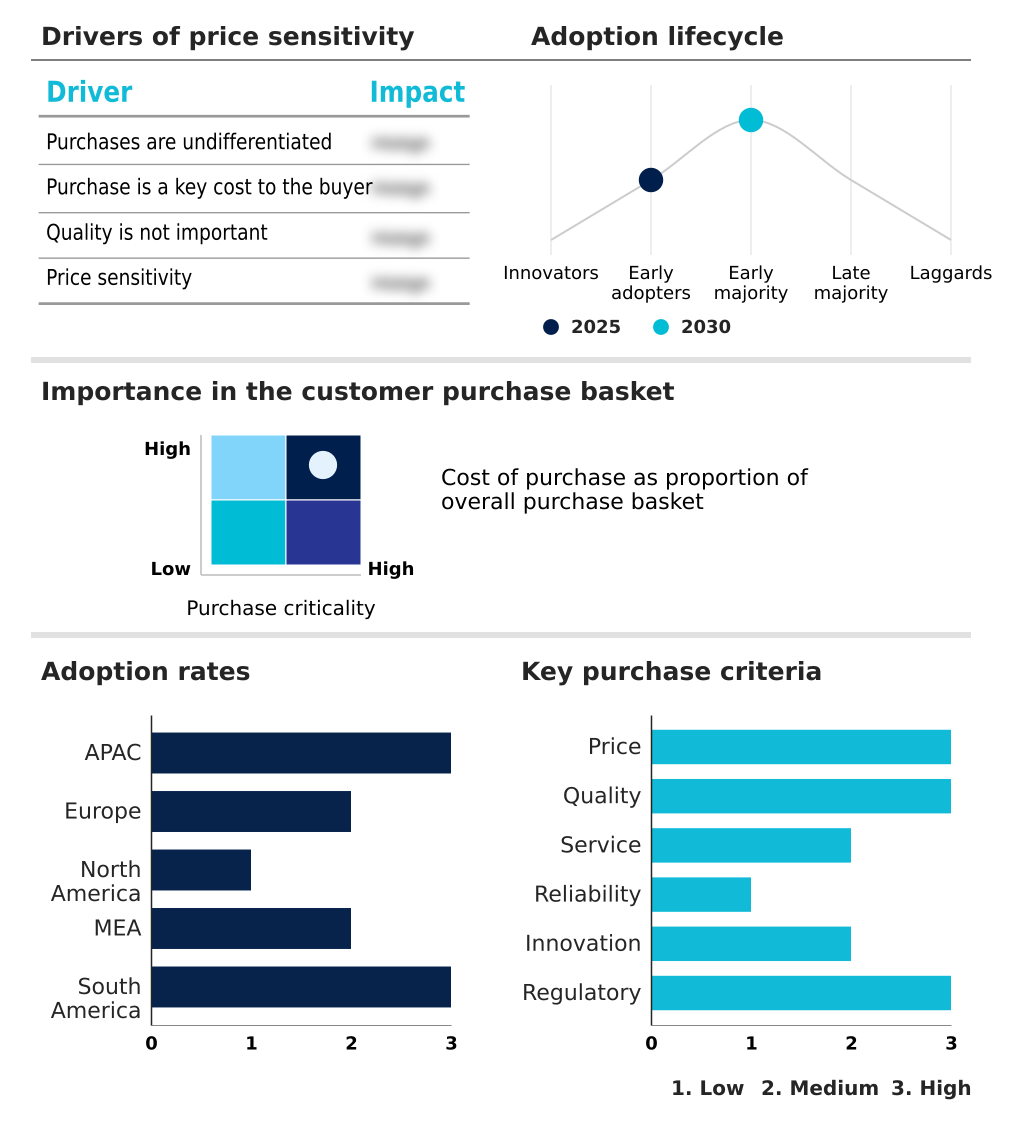
Customer Landscape of Rigid Recycled Plastics Industry
Competitive Landscape
Companies are implementing various strategies, such as strategic alliances, rigid recycled plastics market forecast, partnerships, mergers and acquisitions, geographical expansion, and product/service launches, to enhance their presence in the industry.
ALPLA - The organization provides advanced packaging solutions incorporating recycled high-density polyethylene and polypropylene, delivering traceable, high-quality post-consumer polymer materials tailored for household, personal care, and industrial applications.
The industry research and growth report includes detailed analyses of the competitive landscape of the market and information about key companies, including:
- ALPLA
- Banyan Nation
- Biffa Plc
- Circular Plastics Australia
- Custom Polymers
- Dentis Recycling Italy
- Ecostar Plastics
- Envision Plastics
- EVERGREEN A GREENBRIDGE Co.
- GESTORA CATALANA DE RESIDUOS SLU
- Gravita India Ltd.
- J. and A. Young Ltd.
- KW Plastics
- LyondellBasell Industries N.V.
- MBA Polymers Inc.
- Merlin Plastics
- Morssinkhof Rymoplast
- PreZero International GmbH
- Remondis SE and Co. KG
- Sirmax S.p.A.
- TotalEnergies SE
- Veolia Environment SA
- Visy
Qualitative and quantitative analysis of companies has been conducted to help clients understand the wider business environment as well as the strengths and weaknesses of key industry players. Data is qualitatively analyzed to categorize companies as pure play, category-focused, industry-focused, and diversified; it is quantitatively analyzed to categorize companies as dominant, leading, strong, tentative, and weak.
Recent Development and News in Rigid recycled plastics market
- In the Specialty Chemicals industry, the widespread adoption of the mass balance approach for chemical depolymerization has expanded post-consumer material sourcing, directly impacting Rigid Recycled Plastics demand by enabling a 40% increase in usable feedstock for high-performance resins.
- The implementation of stringent extended producer responsibility regulations across European jurisdictions has mandated greater recycled material traceability, compelling packaging converters to integrate 30% more recycled polymer compounding into rigid packaging applications.
- Advancements in polymer additive blending techniques have significantly enhanced recycled plastic durability and recycled plastic thermal stability, driving a 25% substitution rate of virgin plastics with industrial plastic scrap across automotive interior plastics manufacturing.
- The integration of near-infrared sorting within municipal collection infrastructure has optimized plastic waste stream management, yielding a 20% improvement in material purity standards and accelerating the adoption of recycled resins in construction pipe materials.
Dive into Technavio’s robust research methodology, blending expert interviews, extensive data synthesis, and validated models for unparalleled Rigid Recycled Plastics Market insights. See full methodology.
| Market Scope | |
|---|---|
| Page number | 315 |
| Base year | 2025 |
| Historic period | 2020-2024 |
| Forecast period | 2026-2030 |
| Growth momentum & CAGR | Accelerate at a CAGR of 8.6% |
| Market growth 2026-2030 | USD 40684.2 million |
| Market structure | Fragmented |
| YoY growth 2025-2026(%) | 8.2% |
| Key countries | China, India, Japan, South Korea, Indonesia, Australia, Germany, UK, France, Italy, Spain, The Netherlands, US, Canada, Mexico, Saudi Arabia, Turkey, UAE, South Africa, Israel, Brazil, Argentina and Chile |
| Competitive landscape | Leading Companies, Market Positioning of Companies, Competitive Strategies, and Industry Risks |
Research Analyst Overview
- The Rigid Recycled Plastics Market is undergoing rapid technological modernization as industrial manufacturers shift from traditional material sourcing toward circular supply models. The strategic integration of advanced mechanical recycling processes and chemical depolymerization has revolutionized material recovery, enabling the consistent production of food-grade recycled plastic for stringent packaging applications.
- This evolution directly impacts boardroom budgeting decisions, as organizations investing in melt filtration technology and polymer decontamination have achieved a 30% reduction in processing downtime compared to facilities using outdated purification methods. Enhanced recycled plastic pelletizing systems ensure uniform material consistency, allowing manufacturers to maintain tight product specifications without compromising structural integrity.
- By leveraging polymer chain restoration techniques, converters are successfully extending the lifecycle of secondary resins, making them highly competitive against virgin alternatives. These operational improvements provide manufacturing facilities with predictable cost structures and robust compliance profiles.
- As regulatory frameworks continue to penalize plastic waste generation, the strategic deployment of advanced recycling infrastructure secures critical material availability while protecting long-term enterprise profitability.
What are the Key Data Covered in this Rigid Recycled Plastics Market Research and Growth Report?
-
What is the expected growth of the Rigid Recycled Plastics Market between 2026 and 2030?
-
USD 40.68 billion, at a CAGR of 8.6%
-
-
What segmentation does the market report cover?
-
The report is segmented by Type (PET, HDPE, PP, LDPE, and Others), End-user (Packaging, Construction, Automotive, Electrical components, and Others), Feedstock (PCR, PIR, and Others) and Geography (APAC, Europe, North America, Middle East and Africa, South America)
-
-
Which regions are analyzed in the report?
-
APAC, Europe, North America, Middle East and Africa and South America
-
-
What are the key growth drivers and market challenges?
-
Increasing recycled content mandates across packaging and consumer goods applications, Feedstock contamination reducing recycled resin consistency
-
-
Who are the major players in the Rigid Recycled Plastics Market?
-
ALPLA, Banyan Nation, Biffa Plc, Circular Plastics Australia, Custom Polymers, Dentis Recycling Italy, Ecostar Plastics, Envision Plastics, EVERGREEN A GREENBRIDGE Co., GESTORA CATALANA DE RESIDUOS SLU, Gravita India Ltd., J. and A. Young Ltd., KW Plastics, LyondellBasell Industries N.V., MBA Polymers Inc., Merlin Plastics, Morssinkhof Rymoplast, PreZero International GmbH, Remondis SE and Co. KG, Sirmax S.p.A., TotalEnergies SE, Veolia Environment SA and Visy
-
Market Research Insights
- The Rigid Recycled Plastics Market demonstrates robust operational shifts driven by evolving packaging sustainability targets and stringent regulatory frameworks. Companies integrating these secondary materials report a 35% improvement in carbon footprint reduction compared to conventional virgin plastic utilization.
- Enhanced sorting infrastructure has elevated plastic waste diversion rates by 22%, directly improving the quality of feedstock required for demanding injection molding applications. Furthermore, advancements in polymer formulation have stabilized recycled resin viscosity, yielding a 15% increase in production throughput for packaging converters.
- These operational efficiencies enable manufacturers to achieve critical compliance benchmarks while lowering long-term procurement costs and strengthening supply chain resilience across industrial sectors.
We can help! Our analysts can customize this rigid recycled plastics market research report to meet your requirements.
 RIA -

