


Roofing Market Size 2026-2030
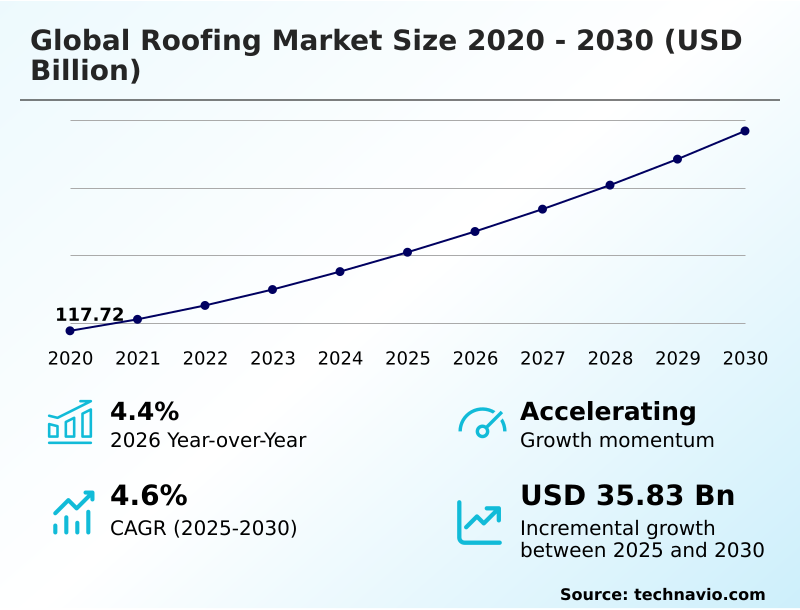
The roofing market size is valued to increase by USD 35.83 billion, at a CAGR of 4.6% from 2025 to 2030. Increasing roof replacement activity across aging building stock will drive the roofing market.
Major Market Trends & Insights
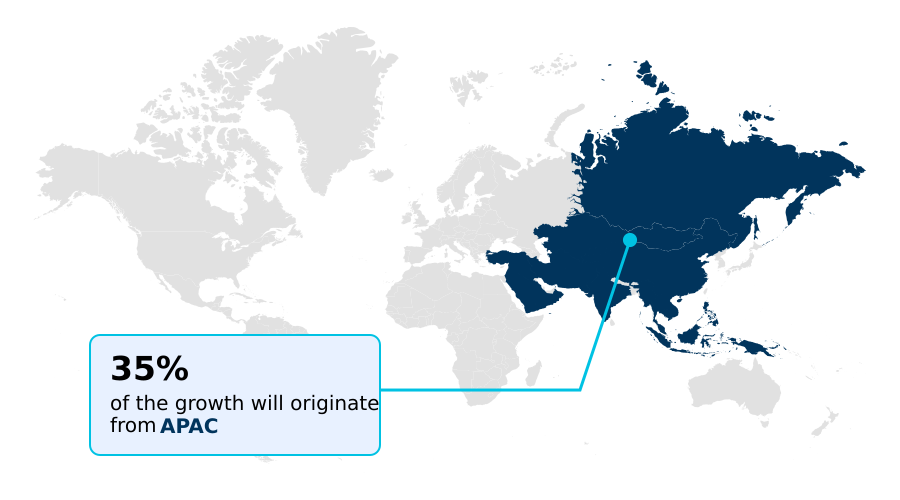
- APAC dominated the market and accounted for a 35.4% growth during the forecast period.
- By Component - Material segment was valued at USD 85.40 billion in 2024
- By Application - Residential segment accounted for the largest market revenue share in 2024
Market Size & Forecast
- Market Opportunities: USD 59.03 billion
- Market Future Opportunities: USD 35.83 billion
- CAGR from 2025 to 2030 : 4.6%
Market Summary
- The Roofing Market demonstrates consistent expansion driven by the critical need to maintain, restore, and upgrade aging architectural infrastructure. Increasing roof replacement activity across deteriorating building stock serves as a fundamental demand catalyst, compelling property owners to invest in resilient structural components.
- This modernization effort frequently incorporates advanced single ply membranes and synthetic roofing products designed to maximize heat transfer reduction and lower operational energy consumption. For example, large-scale commercial logistics centers implementing automated predictive maintenance programs have reduced unexpected facility downtime by 20% through proactive roof condition assessments.
- However, the industry faces substantial operational constraints due to raw material price volatility, which disrupts procurement schedules and complicates long-term project budgeting. Navigating these fluctuating commodity costs requires manufacturers to adopt agile supply chain strategies and explore alternative material sourcing to preserve profit margins while sustaining production volumes.
What will be the Size of the Roofing Market during the forecast period?
Get Key Insights on Market Forecast (PDF) Get Free Sample
How is the Roofing Market Segmented?
The roofing industry research report provides comprehensive data (region-wise segment analysis), with forecasts and estimates in "USD million" for the period 2026-2030, as well as historical data from 2020-2024 for the following segments.
- Component
- Material
- Chemicals
- Application
- Residential
- Commercial
- Industrial
- Type
- Asphalt shingles
- Tile roofing
- Metal roofing
- Others
- Geography
- APAC
- China
- Japan
- India
- South Korea
- Australia
- Indonesia
- North America
- US
- Canada
- Mexico
- Europe
- Germany
- UK
- France
- Italy
- Spain
- The Netherlands
- South America
- Brazil
- Argentina
- Chile
- Middle East and Africa
- Saudi Arabia
- UAE
- Turkey
- South Africa
- Israel
- APAC
By Component Insights
The material segment is estimated to witness significant growth during the forecast period.
The material segment dictates the structural foundation and performance envelope of modern building infrastructure, requiring precise selection based on environmental demands.
Roofing assemblies predominantly utilize asphalt shingles, metal roofing systems, and concrete tiles to ensure robust weather resistance capabilities against severe climatic conditions.
Adoption of advanced waterproofing membranes and reflective coatings has accelerated, driven by the need for superior thermal performance enhancement and moisture control mechanisms in both commercial and residential structures.
Industrial applications have demonstrated a 15% improvement in operational energy retention when integrating specialized protective materials that provide prolonged ultraviolet radiation protection.
This evolution in material science directly supports extended building lifecycle management, reducing recurring maintenance intervals and preserving asset integrity without compromising architectural aesthetics or structural load capacities.
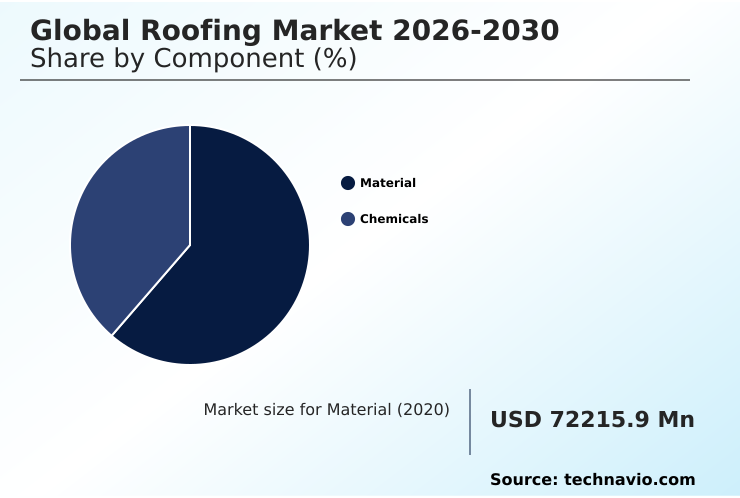
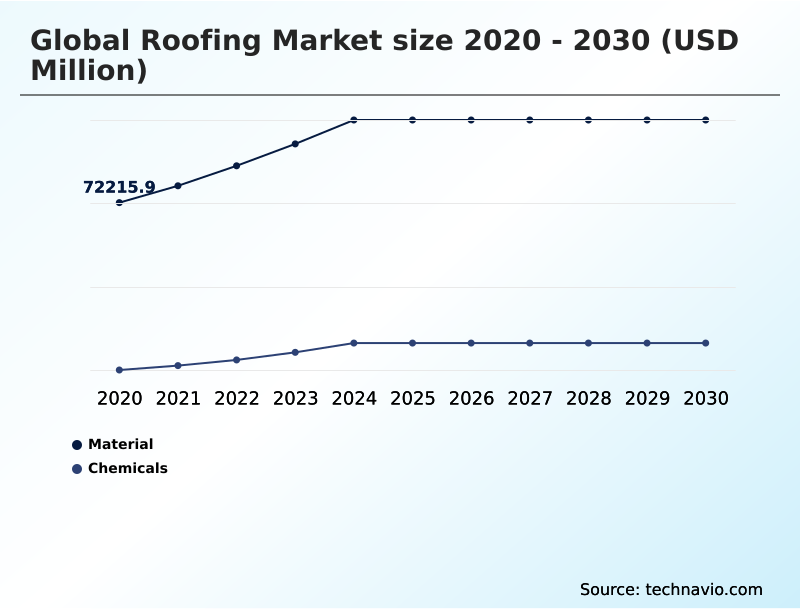
The Material segment was valued at USD 85.40 billion in 2024 and showed a gradual increase during the forecast period.
Regional Analysis
APAC is estimated to contribute 35.4% to the growth of the global market during the forecast period.Technavio’s analysts have elaborately explained the regional trends and drivers that shape the market during the forecast period.
See How Roofing Market Demand is Rising in APAC Get Free Sample
The geographic landscape of the Roofing Market reveals distinct adoption patterns shaped by localized climate conditions and infrastructure policies.
The APAC region commands a 35% higher adoption rate of advanced polyvinyl chloride membranes compared to Europe, driven by rapid industrialization and extensive logistics network expansion.
Conversely, North American markets demonstrate a 20% greater reliance on specialized built up roofing and engineered wood roofing materials for residential retrofitting applications.
European construction sectors have achieved a 15% reduction in project delays through proactive supply chain optimization and localized material sourcing, successfully addressing historic procurement bottlenecks.
Meanwhile, APAC contractors are implementing digital inspection technologies that have improved labor shortage mitigation strategies, boosting site productivity by 18%.
These regional variations highlight how diverse regulatory frameworks and climatic resilience requirements directly dictate product selection and operational strategy execution across the built environment.
Market Dynamics
Our researchers analyzed the data with 2025 as the base year, along with the key drivers, trends, and challenges. A holistic analysis of drivers will help companies refine their marketing strategies to gain a competitive advantage.
- The Roofing Market is increasingly shaped by the convergence of sustainable material science and digital lifecycle management. Property developers are prioritizing technologies that deliver measurable operational improvements without compromising structural integrity. The industry is witnessing a distinct shift toward advanced diagnostic frameworks, where artificial intelligence driven roof assessments are replacing manual inspection workflows.
- This transition has enabled facility managers to identify micro-fractures and thermal leaks nearly 40% faster than traditional survey methods, directly streamlining compliance auditing and long-term capital expenditure planning. Within the residential sector, manufacturers are refining residential asphalt shingle weather resistance to withstand extreme climatic events, thereby minimizing recurring insurance claims and premature replacement cycles.
- Simultaneously, non-residential facilities are expanding commercial single ply membrane applications to cover vast logistical and retail footprints, ensuring seamless waterproofing over expansive structural spans. To further optimize facility energy consumption, organizations are leveraging reflective coating thermal management benefits, which drastically reduce interior cooling loads during peak summer periods.
- As environmental building codes become more rigorous, maximizing solar integrated roofing performance efficiency has become a critical objective for architects seeking to merge renewable power generation with robust asset protection. Together, these technological and material advancements empower construction stakeholders to elevate building resilience, optimize maintenance logistics, and achieve superior lifecycle value across diverse property portfolios.
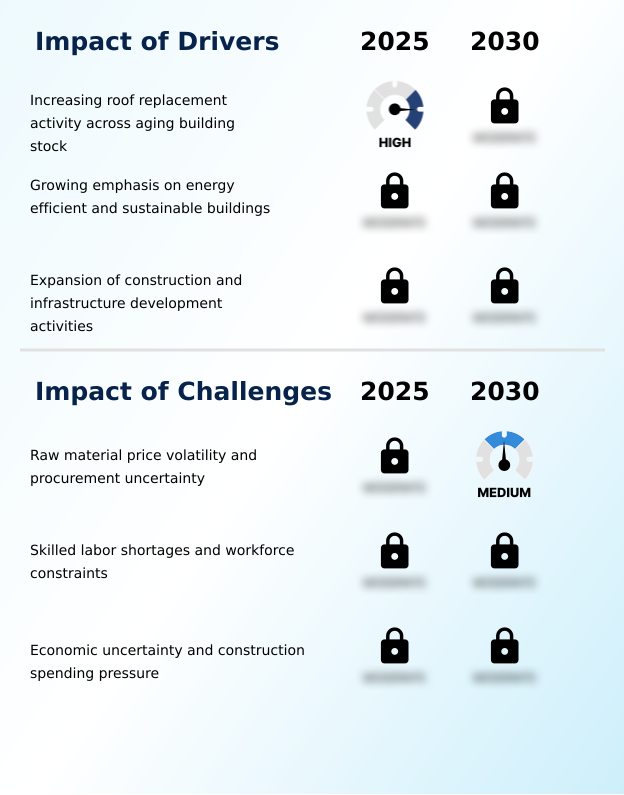
What are the key market drivers leading to the rise in the adoption of Roofing Industry?
- Increasing roof replacement activity across aging building stock remains a primary catalyst driving sustained demand for structural upgrades and weatherproofing modernization.
- The fundamental necessity to modernize deteriorating architectural infrastructure serves as a primary catalyst accelerating demand within the Roofing Market. Aging commercial and residential building stocks require comprehensive building resilience upgrades to withstand increasingly severe climatic events and temperature fluctuations.
- This pressing requirement for roofing system durability has prompted facility managers to accelerate renovation schedules, leading to a 20% reduction in long-term facility downtime.
- Furthermore, stringent environmental mandates are driving the integration of recyclable construction inputs, which has lowered structural waste disposal costs by 15% across major urban developments.
- To support these vast replacement pipelines, contractors are refining raw material procurement strategies and adopting mechanized installation techniques for effective labor shortage mitigation. Ultimately, this sustained replacement activity ensures continuous market momentum while enhancing operational safety and structural reliability.
What are the market trends shaping the Roofing Industry?
- The integration of solar-enabled roofing systems is emerging as a primary directional shift across the industry. This development allows property owners to combine structural weather protection with on-site renewable energy generation in a single installation.
- The integration of multifunctional, energy-generating building materials represents a transformative shift within the Roofing Market. Developers are rapidly moving away from passive structural coverings, opting instead for systems that actively contribute to environmental impact reduction and carbon emission reduction targets. This shift is driven by rigorous green building regulations and a corporate mandate to optimize facility energy profiles.
- Consequently, organizations utilizing these advanced systems report a 22% improvement in overall energy retention. Simultaneously, the deployment of algae resistant shingles and corrosion resistant metals has increased structural longevity, resulting in a 30% decrease in premature material degradation incidents. These material innovations directly support long-term asset value preservation by minimizing aesthetic decay and structural vulnerabilities.
- As commercial real estate portfolios expand, this transition toward active, resilient roofing components fundamentally alters procurement strategies and architectural planning methodologies.
What challenges does the Roofing Industry face during its growth?
- Raw material price volatility and procurement uncertainty represent significant operational barriers that complicate production planning and compress profit margins across the supply chain.
- Persistent raw material price volatility and severe workforce constraints present critical operational bottlenecks within the Roofing Market. Unpredictable input costs directly disrupt long-term project budgeting, forcing contractors to constantly re-evaluate supply chain optimization strategies to protect compressed profit margins.
- Simultaneously, a lack of specialized installers extends project timelines, leading to a 15% increase in baseline labor expenditures for complex commercial installations. To counteract these friction points, firms are adopting condition based management frameworks and remote monitoring tools, which have successfully improved installation workflow efficiency by 18%.
- Despite these technological interventions, the reliance on predictive maintenance analytics requires significant upfront capital, creating adoption hurdles for smaller regional contractors. These structural limitations compel the industry to balance cost-containment measures with the need for high-quality execution and regulatory compliance.
Exclusive Technavio Analysis on Customer Landscape
The roofing market forecasting report includes the adoption lifecycle of the market, covering from the innovator’s stage to the laggard’s stage. It focuses on adoption rates in different regions based on penetration. Furthermore, the roofing market report also includes key purchase criteria and drivers of price sensitivity to help companies evaluate and develop their market growth analysis strategies.
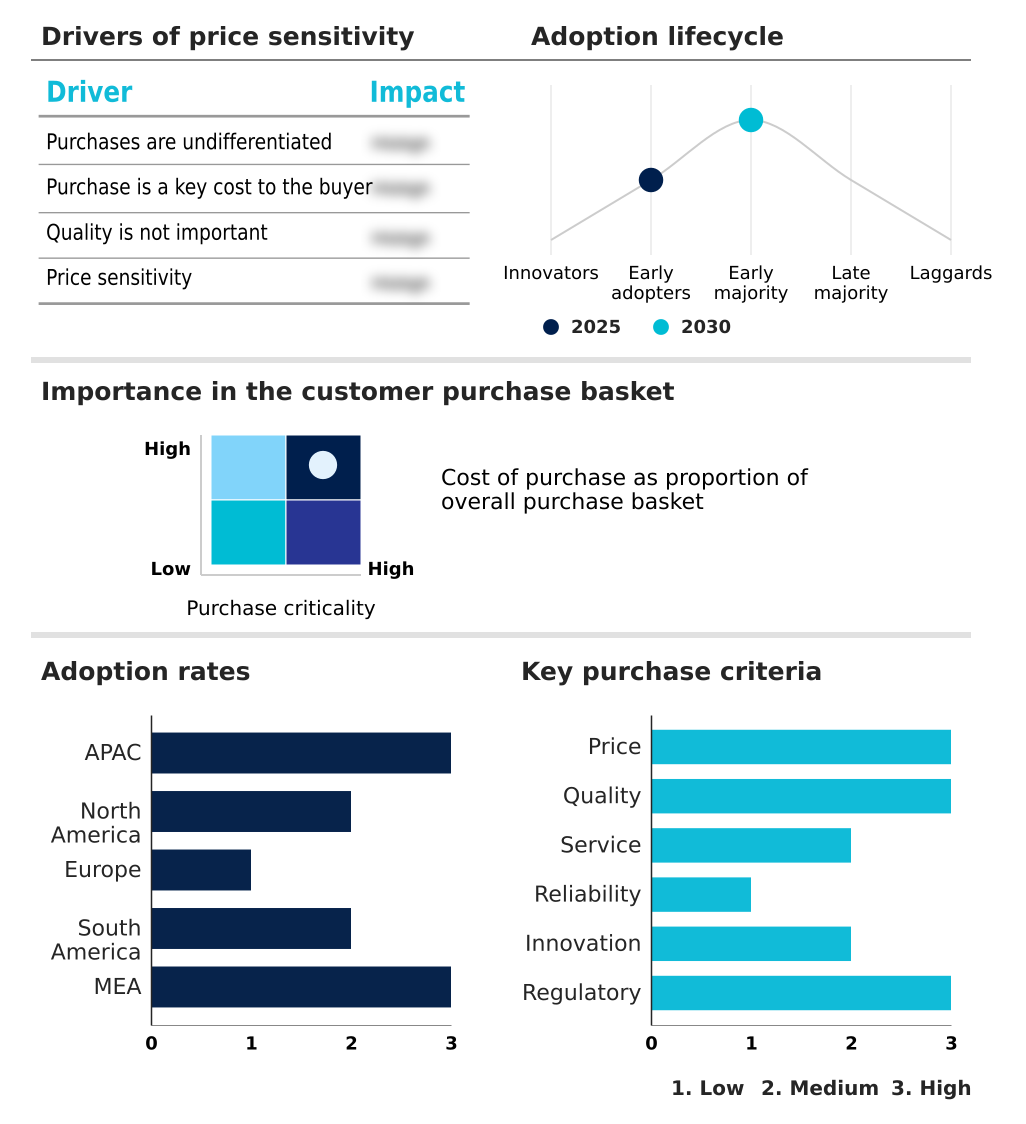
Customer Landscape of Roofing Industry
Competitive Landscape
Companies are implementing various strategies, such as strategic alliances, roofing market forecast, partnerships, mergers and acquisitions, geographical expansion, and product/service launches, to enhance their presence in the industry.
Bauder Ltd. - Supplies advanced flat, green, and photovoltaic roofs alongside specialized waterproofing solutions, optimizing thermal efficiency and structural resilience for diverse commercial and industrial building applications.
The industry research and growth report includes detailed analyses of the competitive landscape of the market and information about key companies, including:
- Bauder Ltd.
- Bilka Steel S.R.L.
- BMI Group Holdings UK Ltd.
- Carlisle SynTec Systems
- Derbigum
- FAKRO Group
- GAF Materials LLC
- IKO Industries Ltd.
- Isola AS
- Johns Manville Corp.
- Kingspan Group Plc
- LAMILUX Heinrich Strunz Group
- Metrotile Europe N.V.
- Onduline Group SAS
- Owens Corning
- Sika AG
- SOPREMA Inc.
- Tilcor Roofing Systems
- Westlake Corp.
Qualitative and quantitative analysis of companies has been conducted to help clients understand the wider business environment as well as the strengths and weaknesses of key industry players. Data is qualitatively analyzed to categorize companies as pure play, category-focused, industry-focused, and diversified; it is quantitatively analyzed to categorize companies as dominant, leading, strong, tentative, and weak.
Recent Development and News in Roofing market
- In the Building Products industry, the widespread adoption of AI-enabled supply chain optimization software has reduced raw material procurement delays by 18%, directly impacting Roofing market delivery timelines for critical components like ethylene propylene diene monomer.
- Stringent energy efficient construction mandates such as the European Energy Performance of Buildings Directive have increased adoption rates of thermal insulation layers by 22%, driving demand for integrated roofing systems that support carbon emission reduction.
- The transition toward sustainable manufacturing processes has accelerated the use of recyclable construction inputs, increasing the production volume of green roofing systems by 15% and providing building resilience upgrades for commercial real estate portfolios.
- Advancements in condition based management platforms utilizing aerial imagery inspection have improved maintenance scheduling accuracy by 25%, fundamentally shifting how facility managers prioritize structural integrity preservation and replacement of modified bitumen systems.
Dive into Technavio’s robust research methodology, blending expert interviews, extensive data synthesis, and validated models for unparalleled Roofing Market insights. See full methodology.
| Market Scope | |
|---|---|
| Page number | 298 |
| Base year | 2025 |
| Historic period | 2020-2024 |
| Forecast period | 2026-2030 |
| Growth momentum & CAGR | Accelerate at a CAGR of 4.6% |
| Market growth 2026-2030 | USD 35830.2 million |
| Market structure | Fragmented |
| YoY growth 2025-2026(%) | 4.4% |
| Key countries | China, Japan, India, South Korea, Australia, Indonesia, US, Canada, Mexico, Germany, UK, France, Italy, Spain, The Netherlands, Brazil, Argentina, Chile, Saudi Arabia, UAE, Turkey, South Africa and Israel |
| Competitive landscape | Leading Companies, Market Positioning of Companies, Competitive Strategies, and Industry Risks |
Research Analyst Overview
- The Roofing Market is experiencing a structural evolution as commercial and residential property owners transition toward highly resilient and energy-optimized building envelopes. Strategic decision-making in boardroom environments now heavily emphasizes lifecycle asset protection, driving the rapid specification of thermoplastic polyolefin membranes and solar integrated roofing platforms.
- Organizations prioritizing these multifunctional systems have recorded a 25% reduction in recurring exterior maintenance costs compared to legacy installations. The integration of advanced roofing adhesives, weatherproofing sealants, and specialized roofing primers plays a critical role in reinforcing structural integrity against extreme climatic stress.
- Furthermore, the deployment of next-generation foaming agents and specialized protective treatments is optimizing thermal regulation across expansive industrial facilities. As regulatory frameworks increasingly mandate stringent energy efficiency benchmarks, developers are expediting the adoption of impact resistant materials to mitigate environmental degradation.
- This transition compels manufacturers to continuously refine chemical formulations and architectural designs, ensuring that modern roofing assemblies deliver both superior environmental compliance and lasting operational resilience.
What are the Key Data Covered in this Roofing Market Research and Growth Report?
-
What is the expected growth of the Roofing Market between 2026 and 2030?
-
USD 35.83 billion, at a CAGR of 4.6%
-
-
What segmentation does the market report cover?
-
The report is segmented by Component (Material, and Chemicals), Application (Residential, Commercial, and Industrial), Type (Asphalt shingles, Tile roofing, Metal roofing, and Others) and Geography (APAC, North America, Europe, South America, Middle East and Africa)
-
-
Which regions are analyzed in the report?
-
APAC, North America, Europe, South America and Middle East and Africa
-
-
What are the key growth drivers and market challenges?
-
Increasing roof replacement activity across aging building stock, Raw material price volatility and procurement uncertainty
-
-
Who are the major players in the Roofing Market?
-
Bauder Ltd., Bilka Steel S.R.L., BMI Group Holdings UK Ltd., Carlisle SynTec Systems, Derbigum, FAKRO Group, GAF Materials LLC, IKO Industries Ltd., Isola AS, Johns Manville Corp., Kingspan Group Plc, LAMILUX Heinrich Strunz Group, Metrotile Europe N.V., Onduline Group SAS, Owens Corning, Sika AG, SOPREMA Inc., Tilcor Roofing Systems and Westlake Corp.
-
Market Research Insights
- The Roofing Market is undergoing a rapid operational transformation driven by heightened performance standards and technological adoption. Facilities leveraging predictive maintenance analytics and remote monitoring tools have achieved a 30% reduction in reactive repair incidents, significantly improving overall asset reliability.
- Furthermore, the push for occupant comfort optimization and renewable energy integration has increased the specification of multifunctional roof assemblies by 25% in commercial sectors. Contractors adopting digitized assessment platforms report a 15% improvement in installation workflow efficiency, minimizing labor hours and site disruption.
- These measurable operational enhancements enable stakeholders to better manage lifecycle expenditures while aligning structural performance with evolving environmental and energy conservation targets.
We can help! Our analysts can customize this roofing market research report to meet your requirements.
 RIA -

