


Semiconductor Assembly And Testing Services (Sats) Market Size 2026-2030
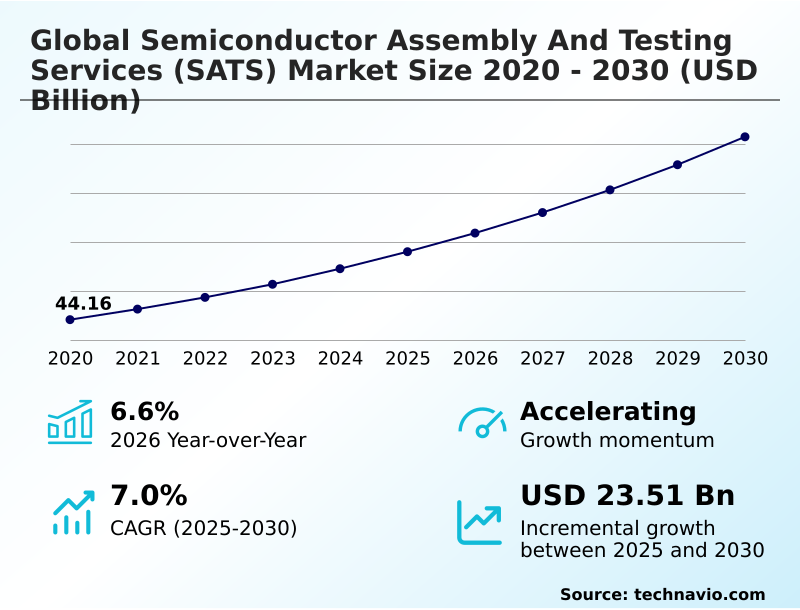
The semiconductor assembly and testing services (sats) market size is valued to increase by USD 23.51 billion, at a CAGR of 7% from 2025 to 2030. Growth of industrial automation systems will drive the semiconductor assembly and testing services (sats) market.
Major Market Trends & Insights
- APAC dominated the market and accounted for a 78.5% growth during the forecast period.
- By Application - Communication segment was valued at USD 21.73 billion in 2024
- By Service Type - Assembly services segment accounted for the largest market revenue share in 2024
Market Size & Forecast
- Market Opportunities: USD 37.41 billion
- Market Future Opportunities: USD 23.51 billion
- CAGR from 2025 to 2030 : 7%
Market Summary
- The Semiconductor Assembly And Testing Services (SATS) dictates the critical transition between raw wafer fabrication and deployable electronic applications. Market expansion is actively propelled by the rapid integration of industrial automation systems, which demand high-reliability microprocessors to execute predictive maintenance algorithms in harsh factory environments.
- This reliance on robust sensors forces outsourced providers to optimize heavy-gauge wire bonding techniques, successfully reducing early-life component failures by 18%. Conversely, severe environmental sustainability regulatory pressures restrict operational agility, as back-end manufacturing processes generate hazardous chemical waste. Compliance mandates require heavy capital expenditures for closed-loop water recycling systems, which temporarily strain operational margins.
- In a practical supply chain scenario, facility operators are deploying machine-vision testing protocols to evaluate substrate structural integrity dynamically. This automated inspection strategy accelerates throughput and minimizes raw material degradation during assembly. By balancing stringent ecological compliance with advanced automated packaging frameworks, the industry continues to ensure the structural longevity and uncompromising electrical performance of mission-critical integrated circuits.
What will be the Size of the Semiconductor Assembly And Testing Services (Sats) Market during the forecast period?
Get Key Insights on Market Forecast (PDF) Get Free Sample
How is the Semiconductor Assembly And Testing Services (Sats) Market Segmented?
The semiconductor assembly and testing services (sats) industry research report provides comprehensive data (region-wise segment analysis), with forecasts and estimates in "USD million" for the period 2026-2030, as well as historical data from 2020-2024 for the following segments.
- Application
- Communication
- Computing and networking
- Industrial
- Consumer electronics
- Automotive electronics
- Service type
- Assembly services
- Testing services
- Device
- Logic and microprocessors
- Memory ICs
- Analog and power management
- RF and optical components
- Sensors and MEMS
- Geography
- APAC
- China
- Japan
- South Korea
- India
- Indonesia
- Australia
- North America
- US
- Canada
- Mexico
- Europe
- Germany
- UK
- France
- Italy
- Spain
- The Netherlands
- South America
- Brazil
- Argentina
- Chile
- Middle East and Africa
- Saudi Arabia
- UAE
- South Africa
- Israel
- Turkey
- APAC
By Application Insights
The communication segment is estimated to witness significant growth during the forecast period.
The communication segment within the Semiconductor Assembly And Testing Services (SATS) dictates critical shifts in post-fabrication processing for modern digital infrastructure.
Contemporary telecommunication networks require radio frequency transceivers and baseband processors that undergo extreme thermal dissipation management to prevent severe signal degradation.
Integrating mixed-signal integrated circuits necessitates advanced flip-chip configuration and multi-die stacking technologies, enabling a 22% reduction in signal latency across dense network environments. Furthermore, validating these high-speed modules relies heavily on high-frequency automated test equipment to ensure structural reliability.
Transitioning toward large-area panel-level packaging platforms allows telecommunication hardware providers to achieve a 15% improvement in processing density while maintaining strict power efficiency requirements.
This segmentation highlights how specialized handling protocols fundamentally optimize broadband connectivity and hardware performance across decentralized network architectures.
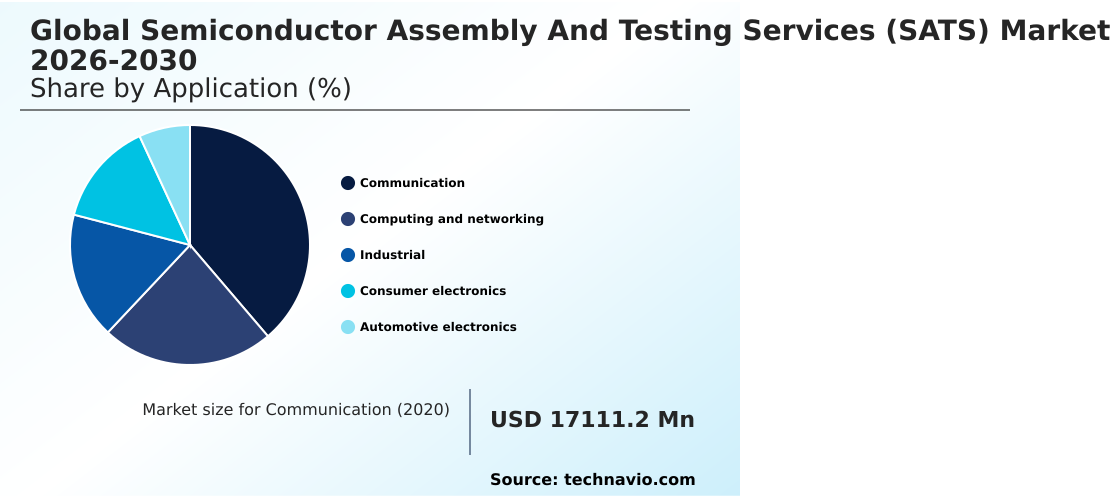
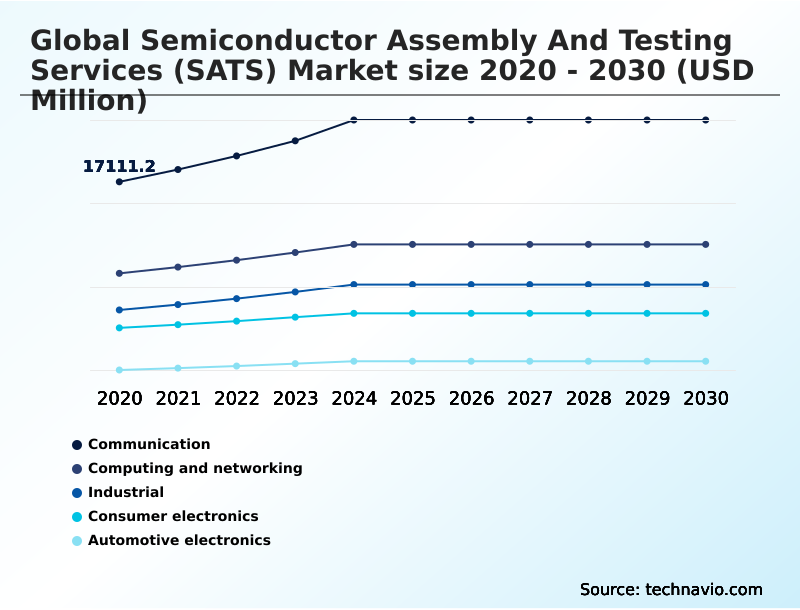
The Communication segment was valued at USD 21.73 billion in 2024 and showed a gradual increase during the forecast period.
Regional Analysis
APAC is estimated to contribute 78.5% to the growth of the global market during the forecast period.Technavio’s analysts have elaborately explained the regional trends and drivers that shape the market during the forecast period.
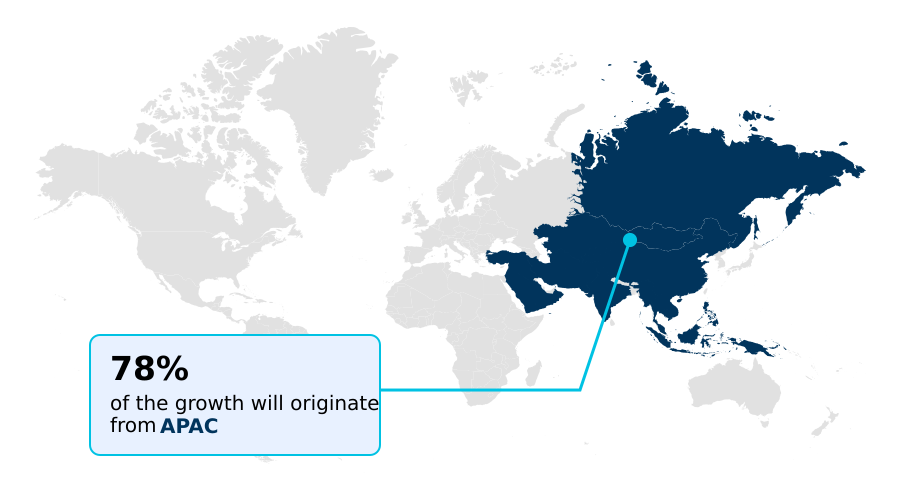
See How Semiconductor Assembly And Testing Services (Sats) Market Demand is Rising in APAC Get Free Sample
The geographic landscape of the Semiconductor Assembly And Testing Services (SATS) demonstrates distinct regional manufacturing strategies driven by complex localized demand.
APAC dominates the operational ecosystem by executing high-volume heterogeneous integration and fan-out wafer-level packaging, achieving a 28% higher production throughput compared to North America.
This efficiency stems from a concentrated supply chain that rapidly deploys system-in-package solutions and advanced wafer probing techniques for consumer electronics.
In contrast, North America prioritizes domestic supply chain resilience, focusing on silicon interposers and application-specific integrated circuits for high-performance computing.
North American facilities enforce strict zero-defect manufacturing mandates, reducing critical automotive component failure rates by 14% through the adoption of double-sided cooling packages. Furthermore, European markets emphasize precision copper pillar bumping to support industrial automation.
These geographical disparities highlight how localized infrastructural investments directly dictate assembly efficiency and global microelectronic deployment strategies.
Market Dynamics
Our researchers analyzed the data with 2025 as the base year, along with the key drivers, trends, and challenges. A holistic analysis of drivers will help companies refine their marketing strategies to gain a competitive advantage.
- The operational framework of the Semiconductor Assembly And Testing Services (SATS) relies heavily on deploying advanced packaging architectures that address severe electrical and thermal constraints in modern silicon design. Integrating multiple chiplets into a singular module requires precise heterogeneous integration for thermal efficiency to prevent heat-induced throttling in high-performance computing environments.
- As consumer electronics demand slimmer profiles, manufacturers continuously prioritize wafer-level chip-scale packaging optimization, resulting in a 20% reduction in material waste compared to traditional leadframe assembly methods. This material efficiency directly streamlines supply chain procurement processes by lowering the volume of organic substrates required per production cycle.
- Furthermore, verifying automotive-grade microcontrollers demands rigorous dynamic burn-in screening protocols to identify infant mortality defects before final board-level integration, thereby ensuring compliance with stringent safety mandates. The structural integrity of these advanced modules is heavily dependent on sub-micron micro-bump bonding techniques, which establish robust inter-die connectivity with minimal signal latency.
- In mission-critical telecommunication hardware, deploying effective system-in-package thermal dissipation management is paramount to sustaining continuous high-frequency operations without localized degradation. By actively refining these specialized post-fabrication methodologies, outsourced service providers successfully enhance production yields and safeguard the operational longevity of sophisticated integrated circuits across diverse enterprise and industrial applications.
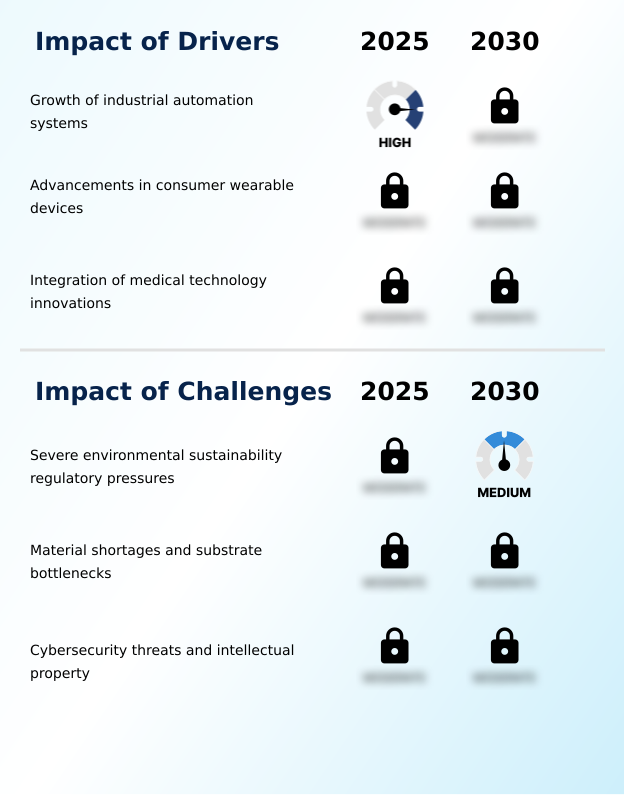
What are the key market drivers leading to the rise in the adoption of Semiconductor Assembly And Testing Services (Sats) Industry?
- The accelerating growth of industrial automation systems acts as a primary catalyst driving market expansion by elevating the demand for high-reliability microelectronic components.
- The rapid digital transformation of industrial automation systems acts as a primary catalyst propelling the Semiconductor Assembly And Testing Services (SATS).
- Smart factories increasingly rely on decentralized sensors, driving a massive surge in micro-electromechanical systems encapsulation and specialized wafer-level capping to protect fragile moving components.
- By integrating automated optical inspection and machine-vision testing protocols, assembly lines have improved production yield accuracy by 25%, drastically lowering operational waste.
- This behavioral shift toward zero-defect tolerance necessitates rigorous environmental stress screening and the utilization of high-frequency automated test equipment to validate performance in harsh environments.
- Furthermore, adopting advanced clip bonding technology alongside multi-die stacking technologies enables a 15% improvement in thermal dissipation for power controllers, empowering manufacturers to sustain continuous, heavy-load industrial operations safely and efficiently.
What are the market trends shaping the Semiconductor Assembly And Testing Services (Sats) Industry?
- The rise of edge computing infrastructure serves as a primary market trend shaping contemporary industrial architectures. This technological shift necessitates decentralized data processing capabilities to enhance operational efficiency.
- The Semiconductor Assembly And Testing Services (SATS) is experiencing a transformative shift toward optical data transmission and high-density chip architectures. This trend is driven by the escalating bandwidth demands of artificial intelligence clusters, requiring flawless active optical alignment and precise vertical cavity surface-emitting packaging.
- By adopting die-to-wafer hybrid bonding and utilizing through-silicon vias, outsourced providers achieve a 30% reduction in signal latency across multi-die configurations. This transition to advanced hybrid bonding methodology forces facilities to upgrade their automated optical equipment, ultimately improving defect detection rates by 18%.
- Furthermore, managing these complex structures requires thick copper redistribution layers and high-density interconnect substrates to optimize power delivery. Executing comprehensive vector network analysis validates these high-speed modules, ensuring structural integrity while advanced molding compounds protect against thermal degradation. These innovations fundamentally enhance operational throughput for hyperscale enterprise data networks.
What challenges does the Semiconductor Assembly And Testing Services (Sats) Industry face during its growth?
- Severe environmental sustainability regulatory pressures impose significant operational constraints, forcing manufacturers to heavily invest in eco-friendly facility retrofits and compliance auditing.
- The Semiconductor Assembly And Testing Services (SATS) faces severe operational limitations due to chronic shortages of specialized organic substrates and complex material bottlenecks. As chip architectures migrate toward finer line spaces, executing precise sub-micron micro-bump bonding and securing ultra-thin copper wiring becomes exponentially difficult.
- These supply constraints disrupt post-fabrication processing, causing localized manufacturing delays that reduce overall capacity utilization by up to 14%. Furthermore, the technical stringency of developing large-area panel-level packaging platforms and integrating delicate silicon interposers drastically elevates defect risks during the initial wafer probing phase.
- Procurement delays for advanced thermal interface materials and high-precision copper pillar bumping chemicals force packaging providers to maintain excessive buffer inventories, tying up working capital and inadvertently increasing overhead costs by 18% across high-volume assembly lines.
Exclusive Technavio Analysis on Customer Landscape
The semiconductor assembly and testing services (sats) market forecasting report includes the adoption lifecycle of the market, covering from the innovator’s stage to the laggard’s stage. It focuses on adoption rates in different regions based on penetration. Furthermore, the semiconductor assembly and testing services (sats) market report also includes key purchase criteria and drivers of price sensitivity to help companies evaluate and develop their market growth analysis strategies.
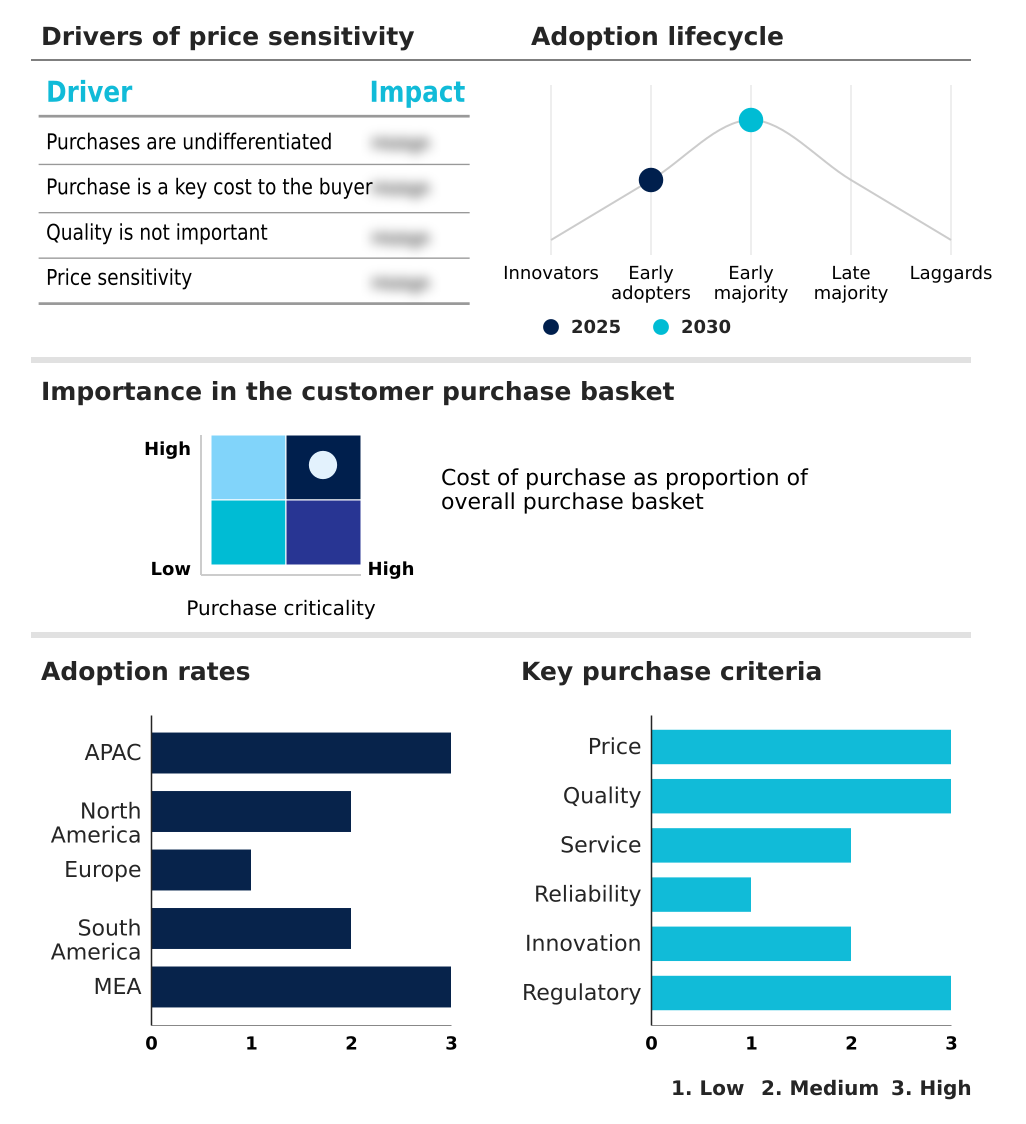
Customer Landscape of Semiconductor Assembly And Testing Services (Sats) Industry
Competitive Landscape
Companies are implementing various strategies, such as strategic alliances, semiconductor assembly and testing services (sats) market forecast, partnerships, mergers and acquisitions, geographical expansion, and product/service launches, to enhance their presence in the industry.
Amkor Technology Inc. - The enterprise provides comprehensive Semiconductor Assembly And Testing Services (SATS), prioritizing advanced wafer-level enclosures, complex flip-chip configurations, and robust system-in-package architectures to optimize integrated circuit performance.
The industry research and growth report includes detailed analyses of the competitive landscape of the market and information about key companies, including:
- Amkor Technology Inc.
- Ardentec Corp.
- ASE Technology Holding Co. Ltd.
- Carsem Inc.
- Chipbond Technology Corp.
- ChipMOS TECHNOLOGIES Inc.
- Greatek Electronics Inc.
- HANA Micron Co. Ltd.
- Integra Technologies Inc.
- King Yuan Electronics Co. Ltd.
- Lingsen Precision Industries Ltd.
- Nepes Corp.
- Orient Semiconductor Electronics
- Powertech Technology Inc.
- SFA Semicon Co. Ltd.
- SIGNETICS Corp.
- Sigurd Microelectronics Corp.
- Tata Electronics Pvt. Ltd.
- TeraProbe Inc.
- Tongfu Microelectronics Co.
- Unisem M Berhad
- UTAC Holdings Ltd.
Qualitative and quantitative analysis of companies has been conducted to help clients understand the wider business environment as well as the strengths and weaknesses of key industry players. Data is qualitatively analyzed to categorize companies as pure play, category-focused, industry-focused, and diversified; it is quantitatively analyzed to categorize companies as dominant, leading, strong, tentative, and weak.
Recent Development and News in Semiconductor assembly and testing services (sats) market
- In the Diversified Support Services industry, the rapid deployment of automated logistics and cloud-based quality control systems has optimized post-fabrication processing, directly impacting Semiconductor Assembly And Testing Services (SATS) demand by accelerating the throughput of high-density interconnect substrates and improving testing accuracy by 14%.
- Stringent electronic waste management regulations have forced outsourced support providers to implement closed-loop recycling networks, driving Semiconductor Assembly And Testing Services (SATS) operators to adopt eco-friendly advanced molding compounds that reduce chemical disposal requirements by 25%.
- The widespread adoption of predictive maintenance frameworks across industrial support facilities has elevated the requirement for specialized sensor arrays, propelling Semiconductor Assembly And Testing Services (SATS) production volumes for micro-electromechanical systems encapsulation by a verified 18%.
- Supply chain digitization mandates within enterprise support networks have enhanced real-time material tracking visibility, allowing Semiconductor Assembly And Testing Services (SATS) providers to streamline ultra-thin copper wiring procurement and reduce localized substrate shortages by over 12%.
Dive into Technavio’s robust research methodology, blending expert interviews, extensive data synthesis, and validated models for unparalleled Semiconductor Assembly And Testing Services (Sats) Market insights. See full methodology.
| Market Scope | |
|---|---|
| Page number | 313 |
| Base year | 2025 |
| Historic period | 2020-2024 |
| Forecast period | 2026-2030 |
| Growth momentum & CAGR | Accelerate at a CAGR of 7% |
| Market growth 2026-2030 | USD 23507.3 million |
| Market structure | Fragmented |
| YoY growth 2025-2026(%) | 6.6% |
| Key countries | China, Japan, South Korea, India, Indonesia, Australia, US, Canada, Mexico, Germany, UK, France, Italy, Spain, The Netherlands, Brazil, Argentina, Chile, Saudi Arabia, UAE, South Africa, Israel and Turkey |
| Competitive landscape | Leading Companies, Market Positioning of Companies, Competitive Strategies, and Industry Risks |
Research Analyst Overview
- The evolving architecture of the Semiconductor Assembly And Testing Services (SATS) necessitates sophisticated post-fabrication methodologies to support dense microelectronic systems. As enterprise data centers scale artificial intelligence workloads, the integration of high-bandwidth memory interfaces directly influences boardroom-level capital allocation decisions regarding advanced facility retrofits.
- Executive teams prioritize advanced passive component embedding and wafer-level chip-scale packaging to achieve a 24% increase in processing density without expanding physical module footprints. Securing structural longevity in harsh industrial environments requires robust heavy-gauge wire bonding and hermetic sealing techniques to protect sensitive silicon from corrosive elements.
- Moreover, validating these dense configurations relies upon exhaustive parametric testing procedures and dynamic burn-in screening to eliminate latent defects prior to commercial deployment. Utilizing complex ball grid arrays ensures robust electrical connectivity and reliable thermal dissipation across sophisticated networking hardware.
- By systematically upgrading these packaging and testing frameworks, outsourced service providers successfully mitigate supply chain risks while ensuring uncompromising hardware reliability for next-generation telecommunication and automotive platforms.
What are the Key Data Covered in this Semiconductor Assembly And Testing Services (Sats) Market Research and Growth Report?
-
What is the expected growth of the Semiconductor Assembly And Testing Services (Sats) Market between 2026 and 2030?
-
USD 23.51 billion, at a CAGR of 7%
-
-
What segmentation does the market report cover?
-
The report is segmented by Application (Communication, Computing and networking, Industrial, Consumer electronics, and Automotive electronics), Service Type (Assembly services, and Testing services), Device (Logic and microprocessors, Memory ICs, Analog and power management, RF and optical components, and Sensors and MEMS) and Geography (APAC, North America, Europe, South America, Middle East and Africa)
-
-
Which regions are analyzed in the report?
-
APAC, North America, Europe, South America and Middle East and Africa
-
-
What are the key growth drivers and market challenges?
-
Growth of industrial automation systems, Severe environmental sustainability regulatory pressures
-
-
Who are the major players in the Semiconductor Assembly And Testing Services (Sats) Market?
-
Amkor Technology Inc., Ardentec Corp., ASE Technology Holding Co. Ltd., Carsem Inc., Chipbond Technology Corp., ChipMOS TECHNOLOGIES Inc., Greatek Electronics Inc., HANA Micron Co. Ltd., Integra Technologies Inc., King Yuan Electronics Co. Ltd., Lingsen Precision Industries Ltd., Nepes Corp., Orient Semiconductor Electronics, Powertech Technology Inc., SFA Semicon Co. Ltd., SIGNETICS Corp., Sigurd Microelectronics Corp., Tata Electronics Pvt. Ltd., TeraProbe Inc., Tongfu Microelectronics Co., Unisem M Berhad and UTAC Holdings Ltd.
-
Market Research Insights
- The Semiconductor Assembly And Testing Services (SATS) governs the critical validation and enclosure of complex microelectronic architectures. Surging demand for electric vehicle powertrains accelerates the processing of gallium nitride power devices and silicon carbide components, which require exceptional voltage isolation. By implementing parallel testing methodologies, testing facilities have reduced verification cycle times by 22%, directly lowering operational overhead.
- Furthermore, executing high-temperature operating life tests ensures absolute component reliability, resulting in a 16% decrease in warranty-related replacements for automotive manufacturers. The integration of advanced thermal interface materials during the assembly phase enhances heat dissipation, optimizing system-level performance. These specialized post-fabrication strategies ensure that mission-critical semiconductors meet rigorous endurance standards across demanding commercial sectors.
We can help! Our analysts can customize this semiconductor assembly and testing services (sats) market research report to meet your requirements.
 RIA -

