
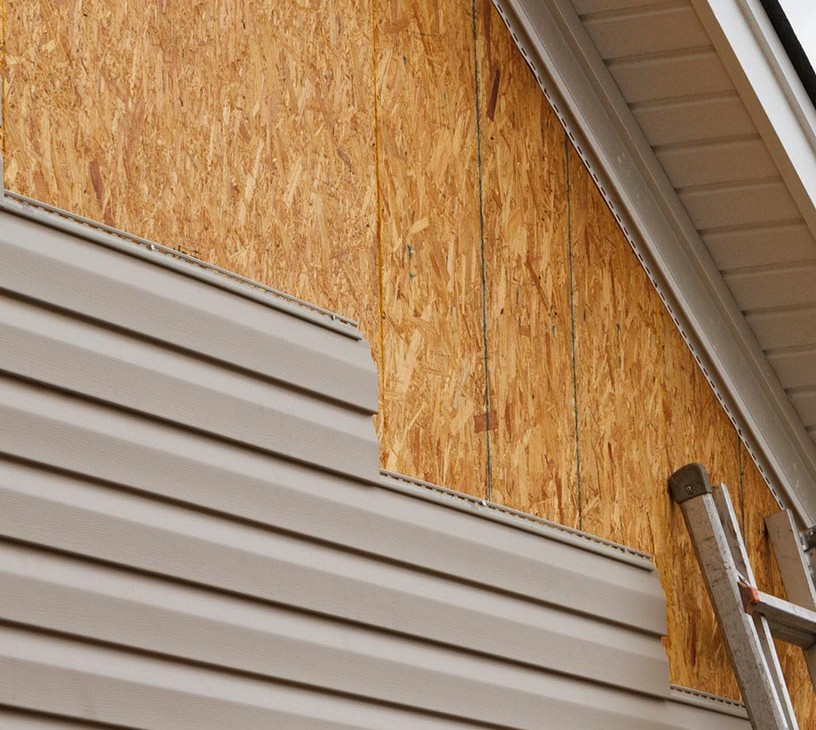


Siding Market Size 2026-2030
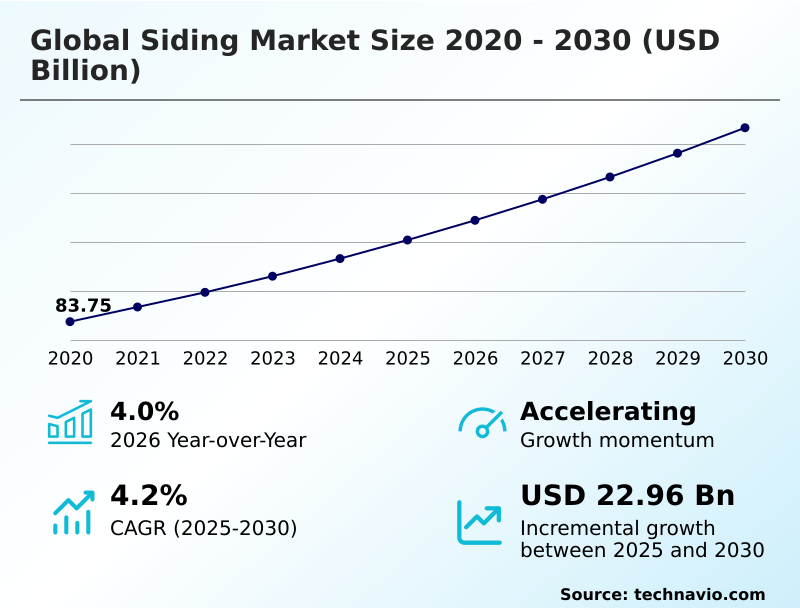
The siding market size is valued to increase by USD 22.96 billion, at a CAGR of 4.2% from 2025 to 2030. Rising demand for energy efficient and sustainable building materials will drive the siding market.
Major Market Trends & Insights
- APAC dominated the market and accounted for a 51.5% growth during the forecast period.
- By End-user - Residential segment was valued at USD 62.45 billion in 2024
- By Material - Vinyl segment accounted for the largest market revenue share in 2024
Market Size & Forecast
- Market Opportunities: USD 39.66 billion
- Market Future Opportunities: USD 22.96 billion
- CAGR from 2025 to 2030 : 4.2%
Market Summary
- The siding market is undergoing a significant transformation, driven by a convergence of technological innovation in materials and a growing emphasis on sustainable construction practices. The sector has moved beyond offering simple protective layers to providing sophisticated building envelope solutions that are integral to a structure's energy performance, aesthetic identity, and long-term resilience.
- Homeowners and developers now demand high-performance products like fiber cement siding and insulated vinyl systems that offer superior weather resistance, require minimal maintenance, and contribute to lower energy consumption. This shift is compelling manufacturers to invest in developing advanced composite cladding and engineered wood siding that mimic natural textures while providing enhanced durability.
- For instance, a commercial developer might select a specific metal facade system not just for its modern look but for its ability to integrate with a rainscreen system, improving moisture management and reducing the building's operational costs. The industry also faces challenges related to supply chain volatility and the need for skilled labor for complex installations.
- As building codes become more stringent and environmental regulations tighten, the market will continue to favor innovative materials that balance performance, cost, and sustainability, ensuring the building envelope is both protective and efficient.
What will be the Size of the Siding Market during the forecast period?
Get Key Insights on Market Forecast (PDF) Get Free Sample
How is the Siding Market Segmented?
The siding industry research report provides comprehensive data (region-wise segment analysis), with forecasts and estimates in "USD million" for the period 2026-2030, as well as historical data from 2020-2024 for the following segments.
- End-user
- Residential
- Commercial
- Public infrastructure
- Material
- Vinyl
- Fiber cement
- Wood
- Others
- Application
- New construction
- Repair and maintenance
- Geography
- APAC
- China
- India
- Japan
- North America
- US
- Canada
- Mexico
- Europe
- Germany
- UK
- France
- Middle East and Africa
- Saudi Arabia
- UAE
- South Africa
- South America
- Brazil
- Argentina
- Colombia
- Rest of World (ROW)
- APAC
By End-user Insights
The residential segment is estimated to witness significant growth during the forecast period.
The residential segment is a important area of the siding market, driven by homeowner focus on curb appeal and property value. Demand is high for materials offering a blend of aesthetic versatility, such as board-and-batten detailing, and long-term durability.
Homeowners increasingly adopt high-performance vinyl and engineered wood siding for their minimal maintenance. As consumers become more aware of environmental impacts, there is a clear shift toward sustainable siding materials, with an emphasis on low-carbon manufacturing.
This trend is reinforced by the repair and maintenance sector, where updating aging housing stock to improve energy efficiency is a key driver.
In new construction applications, advanced siding systems that contribute to a building's thermal performance are now standard, with some integrated systems improving energy efficiency by over 15%.
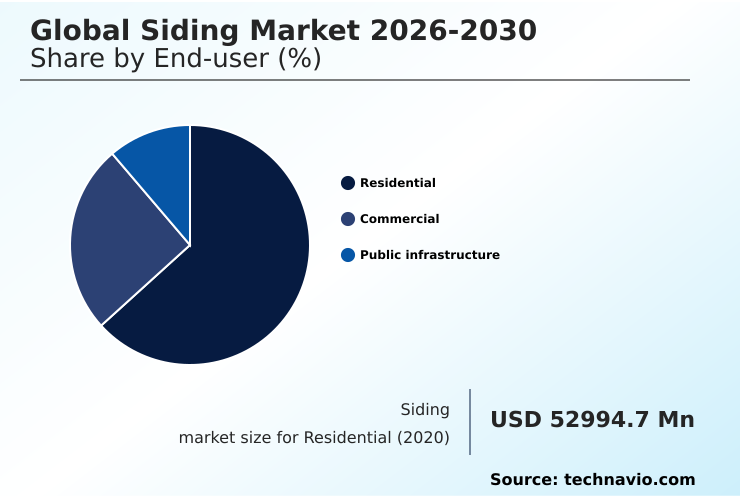
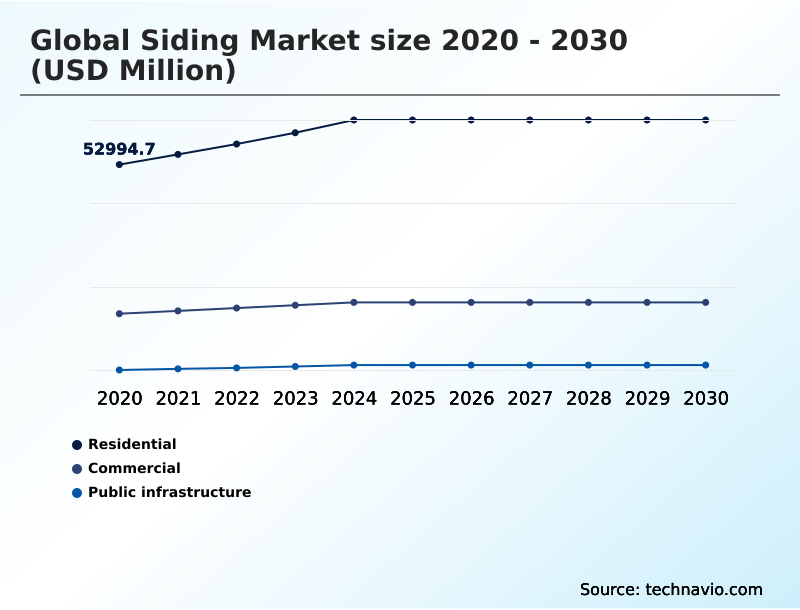
The Residential segment was valued at USD 62.45 billion in 2024 and showed a gradual increase during the forecast period.
Regional Analysis
APAC is estimated to contribute 51.5% to the growth of the global market during the forecast period.Technavio’s analysts have elaborately explained the regional trends and drivers that shape the market during the forecast period.
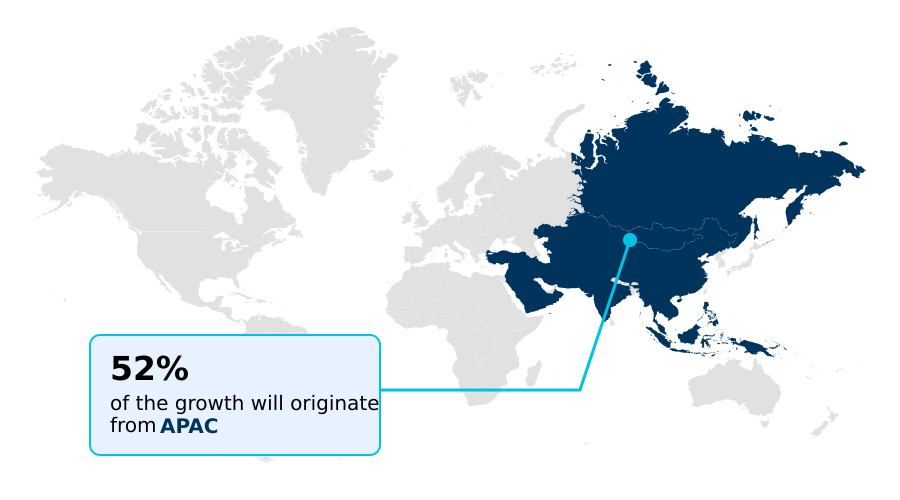
See How Siding Market Demand is Rising in APAC Get Free Sample
The geographic landscape of the siding market is diverse, with regional dynamics shaping demand and material preferences. In North America, the market is characterized by a strong residential repair and maintenance sector, where materials offering high architectural versatility are favored.
This region, along with Europe, leads with a 4.5% and 3.3% growth rate, respectively, driven by stringent building codes. Conversely, APAC is the fastest-growing region, fueled by rapid residential infrastructure expansion and a focus on high-density residential projects.
South America shows the highest growth trajectory at 4.9%, driven by urbanization and an increasing adoption of modern building practices. The Middle East and Africa prioritize materials that offer extreme weather resistance for their large-scale commercial infrastructure.
This varied landscape requires manufacturers to adapt their product portfolios to meet distinct climatic, regulatory, and aesthetic demands, from fire resistance in some areas to moisture management in others.
Market Dynamics
Our researchers analyzed the data with 2025 as the base year, along with the key drivers, trends, and challenges. A holistic analysis of drivers will help companies refine their marketing strategies to gain a competitive advantage.
- The global siding market is increasingly defined by niche applications and specialized product development aimed at solving complex architectural and environmental challenges. For instance, the demand for energy-efficient insulated siding systems is no longer a peripheral trend but a core requirement in regions with stringent thermal performance codes.
- These systems are critical for reducing a building's carbon footprint and operational costs. Similarly, the development of siding materials with low embodied carbon is gaining traction, as developers and regulators prioritize the entire lifecycle impact of construction materials. This is particularly relevant in the context of green building certifications, which reward the use of sustainable and recycled content.
- In the high-end residential and commercial sectors, there is a growing market for high-performance low-maintenance building products that offer aesthetic longevity without the need for constant upkeep. These materials often combine advanced coatings with robust substrates.
- For large-scale urban developments, siding for high-density residential construction must meet a unique set of criteria, including ease of installation, fire safety, and acoustic performance, with some modular systems reducing installation times by over 20% compared to traditional methods.
- Furthermore, in regions susceptible to natural disasters, the specification of fire-resistant siding for wildfire-prone areas has become a non-negotiable aspect of building safety, driving innovation in non-combustible composites and fiber cement formulations.
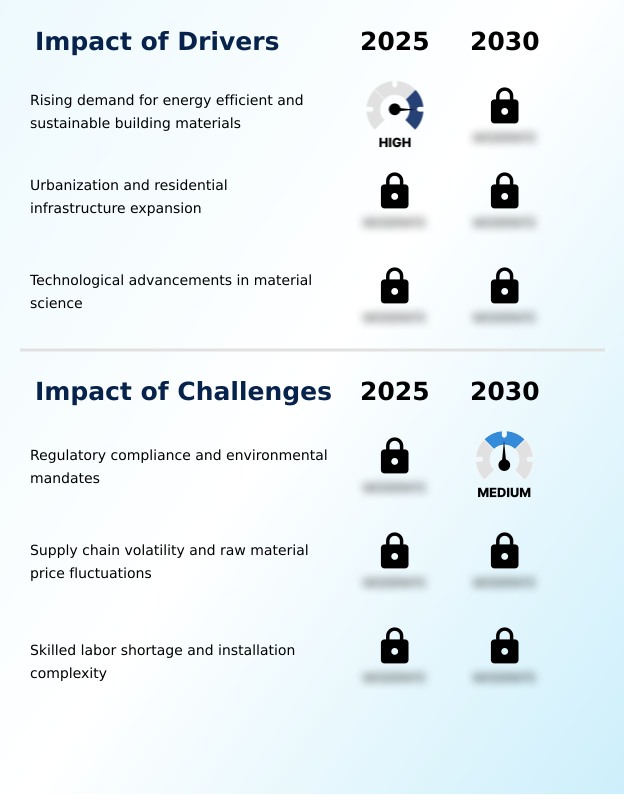
What are the key market drivers leading to the rise in the adoption of Siding Industry?
- The rising demand for energy-efficient and sustainable building materials is a key driver propelling market growth.
- Market growth is primarily fueled by the increasing demand for high-performance, sustainable building materials. The global push for energy efficiency in both new construction applications and the repair and maintenance sector is a significant factor.
- Buildings constructed with advanced, insulated siding systems have been shown to reduce annual heating and cooling costs by up to 30%, a compelling value proposition for property owners.
- Technological advancements in material science are also creating new opportunities, enabling the production of more durable and weather-resistant products. Furthermore, the expansion of residential infrastructure to accommodate urbanization creates a steady demand for cost-effective and reliable exterior solutions.
- Companies that innovate in low-carbon manufacturing processes are gaining a competitive edge, with some achieving a 10% improvement in energy efficiency.
What are the market trends shaping the Siding Industry?
- The integration of sustainable practices and circular economy principles is an influential trend shaping the market, driving innovation in material sourcing and product lifecycle management.
- Key trends are reshaping the siding market, with a strong emphasis on efficiency and sustainability. The move toward digital manufacturing and advanced life-cycle assessment (LCA) is central, allowing for greater precision and waste reduction. The integration of Building Information Modeling (BIM) into the design process has enabled firms to improve material usage accuracy by up to 15%.
- Simultaneously, the adoption of aesthetic evolution through hybrid materials is allowing for greater design freedom without sacrificing performance. This is complemented by a growing use of circular economy principles in the supply chain, with an increasing number of products incorporating recycled content.
- This industry-wide shift has demonstrated that sustainable practices can yield significant operational benefits, with some manufacturers reducing on-site labor requirements by 20% through modular construction integration.
What challenges does the Siding Industry face during its growth?
- Navigating complex regulatory compliance standards and evolving environmental mandates presents a key challenge to industry growth.
- The siding market faces several critical challenges that impact operational stability and profitability. Supply chain volatility stands out as a major issue, with unpredictable fluctuations in raw material costs causing price increases of over 25% in a single quarter for some inputs. This instability makes long-term project budgeting difficult and squeezes manufacturer margins.
- Another significant hurdle is the persistent skilled labor shortage, which affects installation quality and timelines. The lack of qualified installers for complex systems is contributing to project delays, increasing construction schedules by an average of 15% in some regions.
- Additionally, navigating the complex web of regulatory compliance and environmental mandates across different geographies requires substantial investment in testing and certification, creating a high barrier to entry for smaller players and adding to the operational costs for established firms.
Exclusive Technavio Analysis on Customer Landscape
The siding market forecasting report includes the adoption lifecycle of the market, covering from the innovator’s stage to the laggard’s stage. It focuses on adoption rates in different regions based on penetration. Furthermore, the siding market report also includes key purchase criteria and drivers of price sensitivity to help companies evaluate and develop their market growth analysis strategies.
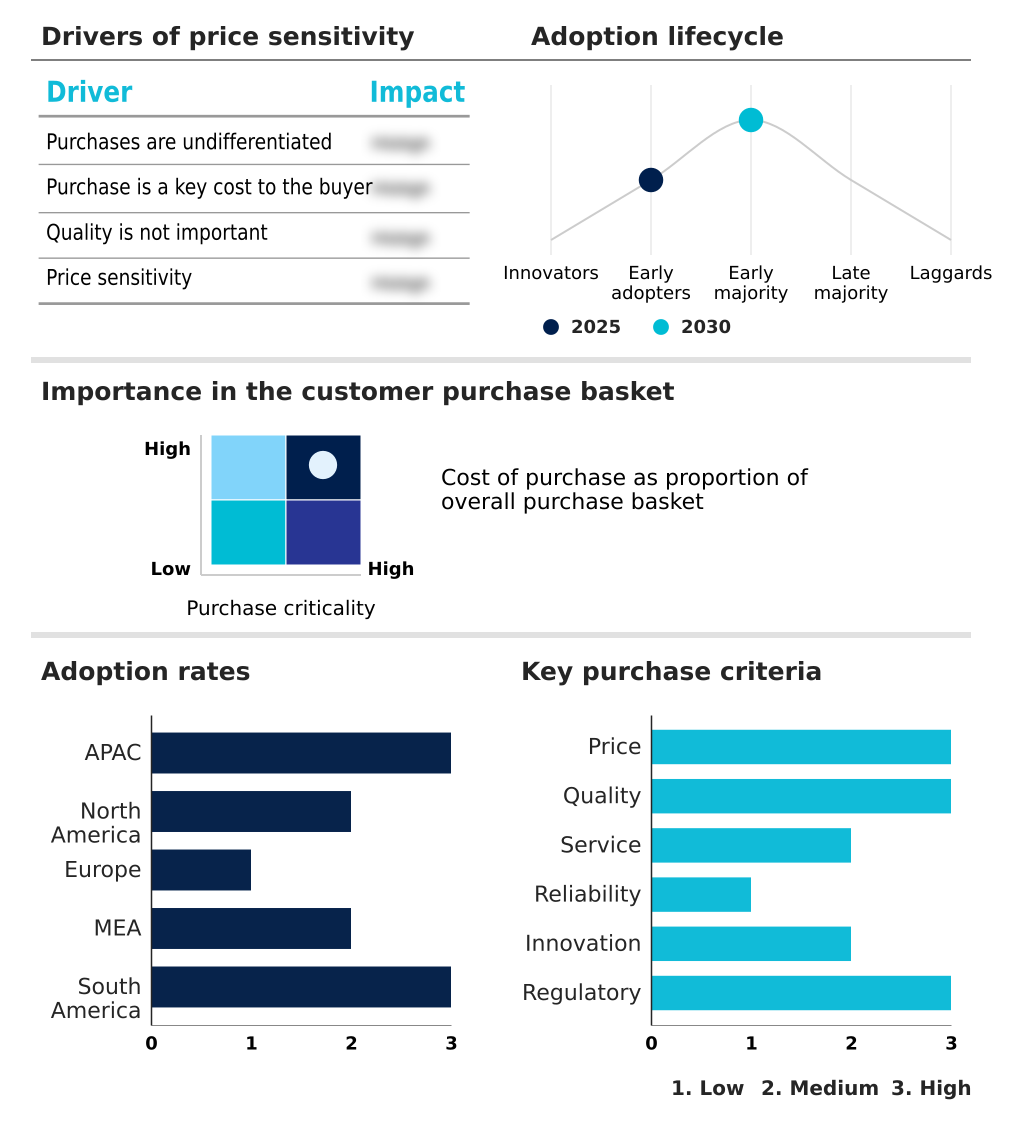
Customer Landscape of Siding Industry
Competitive Landscape
Companies are implementing various strategies, such as strategic alliances, siding market forecast, partnerships, mergers and acquisitions, geographical expansion, and product/service launches, to enhance their presence in the industry.
Alumasc Group plc - Key offerings include advanced building facade solutions and specialized aluminum cladding systems engineered for durability and aesthetic versatility in modern construction.
The industry research and growth report includes detailed analyses of the competitive landscape of the market and information about key companies, including:
- Alumasc Group plc
- Alumil S.A.
- ATAS International Inc.
- CertainTeed
- Docke Extrusion LLC
- Georgia Pacific LLC
- Gulf Extrusions Co. LLC
- James Hardie Industries plc
- Kingspan Group Plc
- Knauf Insulation
- LIXIL Corp.
- Louisiana Pacific Corp.
- Ply Gem
- Revelstone
- Roto Frank AG
- Swisspearl Group AG
- VEKA AG
- Westlake Corp. Inc.
- Woodtone
Qualitative and quantitative analysis of companies has been conducted to help clients understand the wider business environment as well as the strengths and weaknesses of key industry players. Data is qualitatively analyzed to categorize companies as pure play, category-focused, industry-focused, and diversified; it is quantitatively analyzed to categorize companies as dominant, leading, strong, tentative, and weak.
Recent Development and News in Siding market
- In May 2025, James Hardie Industries plc announced its acquisition of a building technology startup to integrate AI-driven design and material selection tools into its fiber cement siding offerings.
- In February 2025, CertainTeed launched its 'EverGreen' collection, a new line of insulated vinyl siding made with 40% recycled content, targeting LEED-certified residential and commercial projects.
- In November 2024, Kingspan Group Plc completed a USD 75 million expansion of its North American manufacturing facility to increase production capacity for its insulated metal panels and facade systems.
- In August 2024, Westlake Corp. Inc. formed a strategic partnership with a leading software firm to develop a digital platform for optimizing supply chain logistics and inventory management for its PVC building products.
Dive into Technavio’s robust research methodology, blending expert interviews, extensive data synthesis, and validated models for unparalleled Siding Market insights. See full methodology.
| Market Scope | |
|---|---|
| Page number | 294 |
| Base year | 2025 |
| Historic period | 2020-2024 |
| Forecast period | 2026-2030 |
| Growth momentum & CAGR | Accelerate at a CAGR of 4.2% |
| Market growth 2026-2030 | USD 22961.4 million |
| Market structure | Fragmented |
| YoY growth 2025-2026(%) | 4.0% |
| Key countries | China, India, Japan, South Korea, Australia, Indonesia, US, Canada, Mexico, Germany, UK, France, Italy, Spain, The Netherlands, Saudi Arabia, UAE, South Africa, Egypt, Nigeria, Brazil, Argentina and Colombia |
| Competitive landscape | Leading Companies, Market Positioning of Companies, Competitive Strategies, and Industry Risks |
Research Analyst Overview
- The siding market is evolving beyond simple aesthetics to become a critical nexus of material science and building performance engineering. The emphasis is now on integrated exterior wall materials and comprehensive building envelope solutions that address durability, energy efficiency, and environmental impact.
- Key advancements in fiber cement siding and composite cladding are enabling architects to achieve ambitious designs without compromising on fire resistance or weather resistance. The industry is also seeing a push towards lightweight concrete panels and advanced metal facade systems, particularly in commercial construction. Board-and-batten detailing and other classic styles are being reimagined with modern materials that offer superior longevity.
- For boardroom consideration, the increasing demand for non-combustible materials directly impacts R&D budgeting and strategic compliance planning. Innovations in high-performance coatings have led to a 40% reduction in warranty claims related to UV radiation resistance and fading, showcasing a tangible return on investment in material quality.
- The focus on moisture management and preventing thermal bridging with products like insulated vinyl systems is now a standard practice, reshaping product portfolios across the board. The market's trajectory is clearly toward systems-based thinking, where aluminum cladding, PVC building products, stone veneer siding, and architectural concrete are all components of a highly engineered, functional facade.
What are the Key Data Covered in this Siding Market Research and Growth Report?
-
What is the expected growth of the Siding Market between 2026 and 2030?
-
USD 22.96 billion, at a CAGR of 4.2%
-
-
What segmentation does the market report cover?
-
The report is segmented by End-user (Residential, Commercial, and Public infrastructure), Material (Vinyl, Fiber cement, Wood, and Others), Application (New construction, and Repair and maintenance) and Geography (APAC, North America, Europe, Middle East and Africa, South America)
-
-
Which regions are analyzed in the report?
-
APAC, North America, Europe, Middle East and Africa and South America
-
-
What are the key growth drivers and market challenges?
-
Rising demand for energy efficient and sustainable building materials, Regulatory compliance and environmental mandates
-
-
Who are the major players in the Siding Market?
-
Alumasc Group plc, Alumil S.A., ATAS International Inc., CertainTeed, Docke Extrusion LLC, Georgia Pacific LLC, Gulf Extrusions Co. LLC, James Hardie Industries plc, Kingspan Group Plc, Knauf Insulation, LIXIL Corp., Louisiana Pacific Corp., Ply Gem, Revelstone, Roto Frank AG, Swisspearl Group AG, VEKA AG, Westlake Corp. Inc. and Woodtone
-
Market Research Insights
- The siding market is influenced by dynamic shifts in construction methodologies and material science. Firms leveraging digital twin technology for project planning report up to a 15% reduction in material waste, optimizing the use of resources in high-density residential projects.
- The adoption of off-site prefabrication has accelerated, with some contractors shortening project timelines by as much as 25% by using factory-assembled panels that include exterior cladding products. This trend toward modular construction integration is a direct response to the persistent skilled labor shortage.
- Furthermore, the push for green building certifications has led to a notable increase in the specification of materials with documented environmental product declarations (EPDs). Navigating regulatory compliance remains a critical factor, shaping product development and market access strategies across different regions.
We can help! Our analysts can customize this siding market research report to meet your requirements.
 RIA -
RIA -