Spray Polyurethane Foam Market Analysis, Size, and Forecast 2026-2030: APAC (China, India, and Japan), North America (US, Canada, and Mexico), Europe (Germany, UK, and France), South America (Brazil, Argentina, and Colombia), Middle East and Africa (Saudi Arabia, UAE, and South Africa), and Rest of World (ROW)

Spray Polyurethane Foam Market Analysis, Size, and Forecast 2026-2030:
APAC (China, India, and Japan), North America (US, Canada, and Mexico), Europe (Germany, UK, and France), South America (Brazil, Argentina, and Colombia), Middle East and Africa (Saudi Arabia, UAE, and South Africa), and Rest of World (ROW)

Published: Oct 2026 303 Pages SKU: IRTNTR40415

Market Overview at a Glance

$2.34 B
Market Opportunity
10.3%
CAGR 2025 - 2030
40.9%
APAC Growth
$1.58 B
Residential segment 2024

Spray Polyurethane Foam Market Size 2026-2030

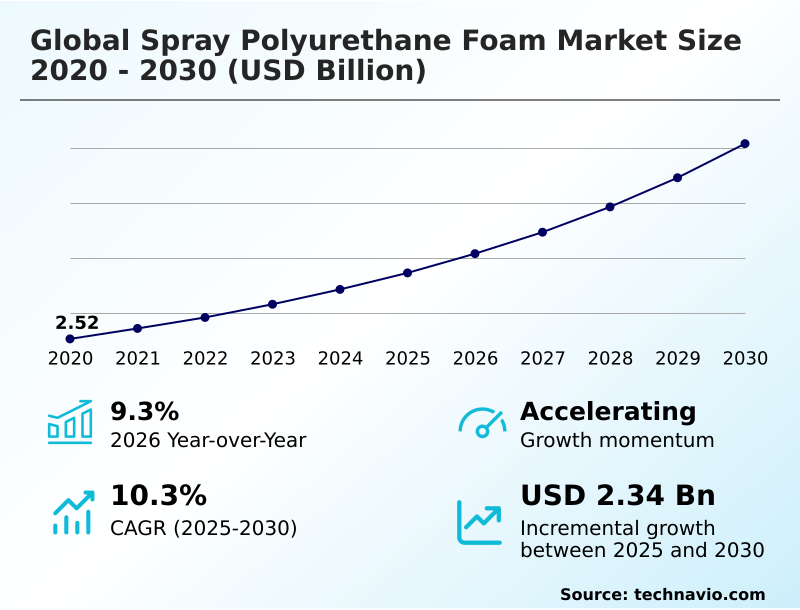
The spray polyurethane foam market size is valued to increase by USD 2.34 billion, at a CAGR of 10.3% from 2025 to 2030. Increasing demand for energy-efficient building solutions will drive the spray polyurethane foam market.

Major Market Trends & Insights

  • APAC dominated the market and accounted for a 40.9% growth during the forecast period.
  • By Application - Residential segment was valued at USD 1.58 billion in 2024
  • By Type - Open cell segment accounted for the largest market revenue share in 2024

Market Size & Forecast

  • Market Opportunities: USD 3.54 billion
  • Market Future Opportunities: USD 2.34 billion
  • CAGR from 2025 to 2030 : 10.3%

Market Summary

  • The Spray Polyurethane Foam Market exhibits robust momentum driven by the urgent necessity to optimize building energy consumption. An increasing demand for energy-efficient building solutions compels architectural firms to integrate advanced insulation technologies that minimize thermal bridging. For instance, commercial cold storage facilities utilizing high-density foam achieve a 30% improvement in ambient temperature retention compared to traditional fiberglass installations.
  • This structural upgrade directly reduces the mechanical burden on heavy-duty HVAC systems. Despite these operational advantages, regulatory compliance and the transition to low-impact chemical components severely challenge chemical formulators. Transitioning away from legacy blowing agents requires immense capital expenditure, causing significant supply chain bottlenecks for smaller applicators navigating strict environmental mandates.
  • The widespread shift toward advanced hydrofluoroolefins fundamentally alters raw material procurement strategies. Consequently, construction conglomerates are forming strategic alliances with specialty chemical providers to secure continuous access to compliant resins, ensuring uninterrupted project timelines across large-scale commercial developments.

What will be the Size of the Spray Polyurethane Foam Market during the forecast period?
Get Key Insights on Market Forecast (PDF) Get Free Sample

How is the Spray Polyurethane Foam Market Segmented?

The spray polyurethane foam industry research report provides comprehensive data (region-wise segment analysis), with forecasts and estimates in "USD million" for the period 2026-2030, as well as historical data from 2020-2024 for the following segments.

  • Application
    • Residential
    • Commercial
    • Industrial
  • Type
    • Open cell
    • Closed cell
  • Product
    • Two component high pressure foam
    • Two component low pressure foam
    • One component foam
  • Geography
    • APAC
      • China
      • India
      • Japan
      • South Korea
      • Australia
      • Indonesia
    • North America
      • US
      • Canada
      • Mexico
    • Europe
      • Germany
      • UK
      • France
      • Italy
      • Spain
      • The Netherlands
    • South America
      • Brazil
      • Argentina
      • Colombia
    • Middle East and Africa
      • Saudi Arabia
      • UAE
      • South Africa
      • Turkey
      • Israel

By Application Insights

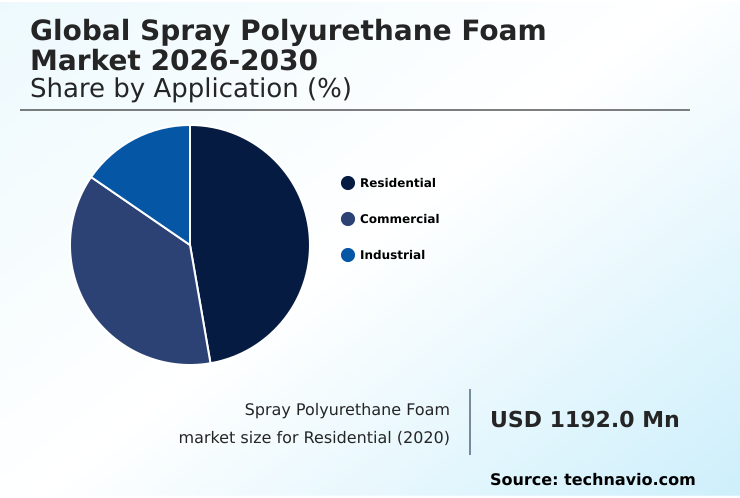
The residential segment is estimated to witness significant growth during the forecast period.

The residential application segment of the Spray Polyurethane Foam industry is experiencing a continuous operational shift as builders prioritize advanced climate control within modern dwellings.

Homeowners increasingly mandate robust residential attic and crawl space weatherization strategies to combat thermal bridging and air infiltration. By deploying high density closed cell foam, contractors establish a monolithic thermal insulation layer that effectively eliminates drafts.

This transition toward an airtight building envelope seal yields significant efficiency gains, notably reducing HVAC mechanical loads by 25%.

Compared to traditional fiberglass batts, utilizing spray-applied thermal resistance performance solutions improves the overall moisture resilience of residential assemblies by a factor of three.

Consequently, developers are standardizing these advanced chemical insulation systems to meet stringent environmental building codes and guarantee long-term structural durability.
Get Free Sample

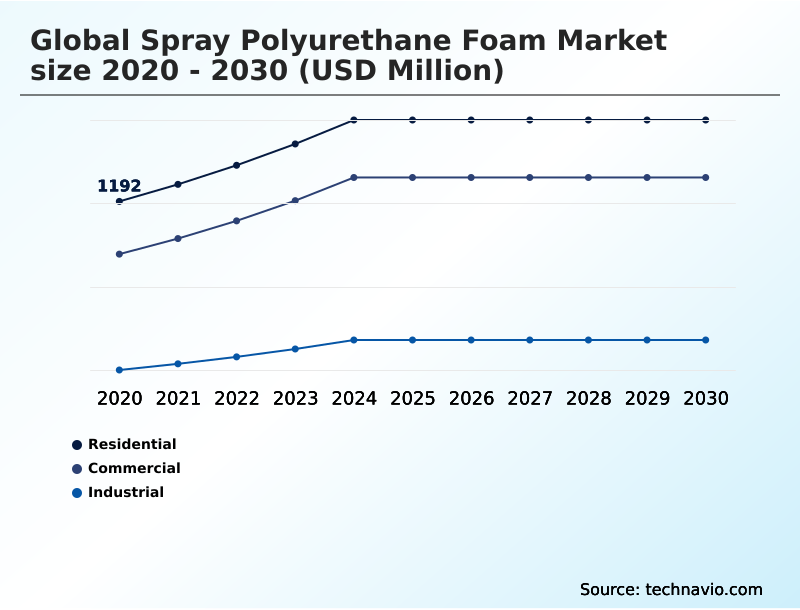
The Residential segment was valued at USD 1.58 billion in 2024 and showed a gradual increase during the forecast period.
Get Free Sample

Regional Analysis

APAC is estimated to contribute 40.9% to the growth of the global market during the forecast period.Technavio’s analysts have elaborately explained the regional trends and drivers that shape the market during the forecast period.
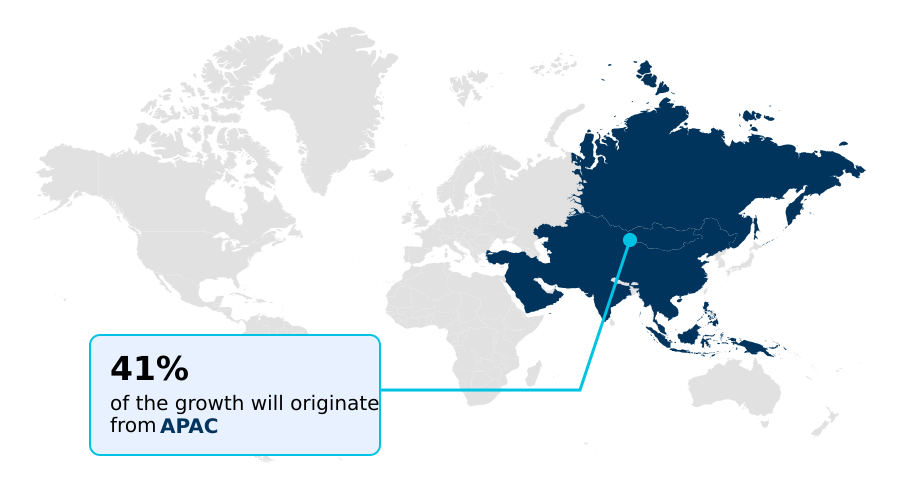
See How Spray Polyurethane Foam Market Demand is Rising in APAC Get Free Sample

The geographic landscape of the Spray Polyurethane Foam industry reveals distinct strategic divergence between North America and APAC.

North America maintains stringent building energy efficiency standards, compelling contractors to deploy advanced spray foam application equipment that guarantees a flawless airtight building envelope seal.

Consequently, retrofitted commercial structures in the United States achieve a 35% reduction in thermal energy loss.

Conversely, rapid urbanization in APAC drives the necessity for superior moisture diffusion control within tropical climates, leading to a 28% higher adoption rate of closed-cell systems compared to Europe.

As APAC developers scale up cold chain logistics, the demand for a continuous monolithic thermal insulation layer has surged, cutting facility refrigeration expenses by 20%.

These regional disparities highlight how localized climatic challenges and regulatory pressures dictate the procurement of specialized chemical insulation systems.

Market Dynamics

Our researchers analyzed the data with 2025 as the base year, along with the key drivers, trends, and challenges. A holistic analysis of drivers will help companies refine their marketing strategies to gain a competitive advantage.

  • The operational dynamics of the Spray Polyurethane Foam sector are rapidly evolving as construction stakeholders navigate complex environmental regulations for high global warming substances. This regulatory environment has forced chemical blenders to engineer next-generation blowing agents that deliver superior thermal resistance without compromising compliance parameters.
  • Within the housing sector, residential attic and crawl space weatherization has shifted from a niche upgrade to a standardized energy conservation tactic. Builders utilizing modern closed-cell formulas achieve a thermal retention capacity that is nearly twice as effective as conventional fiberglass alternatives.
  • This transition is paralleled in the commercial realm, where commercial flat roof continuous insulation provides a seamless defense against persistent weather intrusion and drastically lowers lifecycle maintenance expenditures. Furthermore, the demanding requirements of cryogenic industrial cold storage facilities necessitate absolute precision during the application phase to prevent catastrophic temperature failures.
  • To achieve this, advanced applicators have rapidly adopted Internet of Things connected spray foam rigs. These intelligent dispensing platforms monitor chemical ratios and fluid temperatures in real time, reducing material waste by approximately 15% and ensuring optimal curing integrity.
  • By integrating sophisticated data diagnostics with high-performance insulation chemistry, industry operators can safeguard their supply chain margins while delivering unparalleled energy efficiency across diverse architectural and industrial building envelopes.
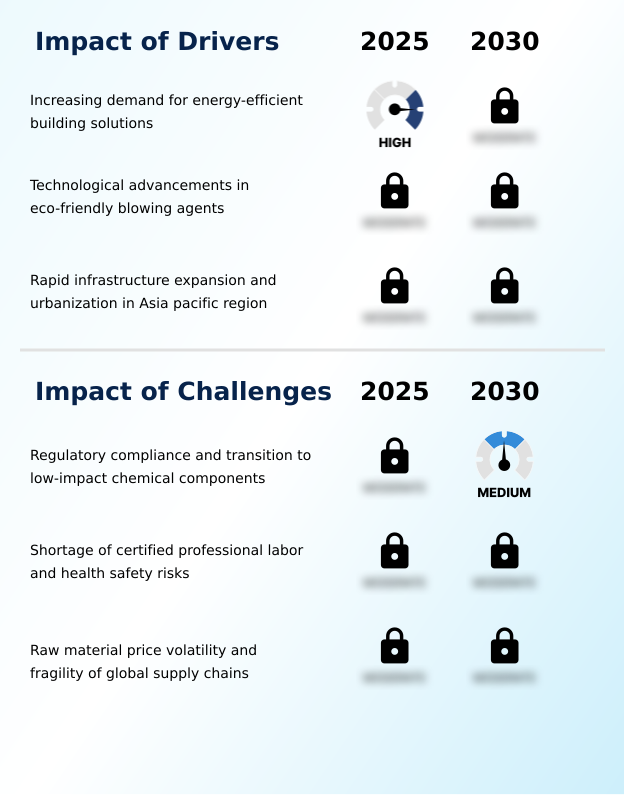
What are the key market drivers leading to the rise in the adoption of Spray Polyurethane Foam Industry?

  • The escalating demand for energy-efficient building solutions remains the primary catalyst propelling market expansion.

  • The escalating necessity to optimize building climate control serves as the primary catalyst propelling the Spray Polyurethane Foam sector. Facility managers are prioritizing a monolithic thermal insulation layer to aggressively combat HVAC inefficiencies.
  • The widespread implementation of commercial flat roof continuous insulation delivers an airtight building envelope seal that reduces overall facility energy consumption by 22%.
  • Simultaneously, targeted residential attic and crawl space weatherization programs improve domestic thermal resistance performance, effectively lowering household utility expenditures by 15%. This behavioral shift toward proactive structural weatherproofing is driven by stringent governmental carbon-reduction mandates.
  • By eliminating persistent thermal bridging, these advanced chemical solutions provide property owners with immediate operational cost reductions while significantly extending the lifecycle resilience of the underlying architectural framework.

What are the market trends shaping the Spray Polyurethane Foam Industry?

  • The integration of bio-based feedstocks and circular economy principles is significantly transforming the market landscape.

  • The Spray Polyurethane Foam landscape is witnessing a profound shift toward digitalization and material circularity. Formulators are aggressively integrating chemically recycled plastic waste and bio-based polyurethane polyols to dramatically lower the carbon footprint of building materials. Concurrently, the deployment of Internet of Things connected spray foam rigs empowers field technicians to meticulously monitor the polyurethane cellular structure during application.
  • This data-driven oversight reduces material waste by 18% and enhances first-pass installation accuracy by 25% over analog machinery. As off-site construction accelerates, the integration of rigid spray foam into modular building systems increases transit durability and accelerates factory throughput by 30%.
  • These innovations not only align with aggressive green building certifications but also deliver measurable operational efficiencies that safeguard contractor profitability against rising raw material costs.

What challenges does the Spray Polyurethane Foam Industry face during its growth?

  • Strict regulatory compliance and the complex transition toward low-impact chemical components pose substantial hurdles for industry participants.

  • Navigating complex environmental regulations for high global warming substances presents a formidable structural barrier for the Spray Polyurethane Foam sector. The mandatory chemical transition to advanced hydrofluoroolefin blowing agents demands extreme precision during the exothermic curing reaction, requiring applicators to invest heavily in upgraded spray foam application equipment. This technological retooling has subsequently increased initial contractor capital expenditures by 35%.
  • Furthermore, persistent petrochemical feedstock volatility disrupts supply chain predictability, causing raw material procurement costs to fluctuate by up to 20% quarter-over-quarter. These operational limitations force regional blenders to absorb shrinking profit margins while struggling to maintain compliance with fragmented international environmental protocols, ultimately delaying the execution of large-scale infrastructure retrofitting projects across emerging industrial markets.

Exclusive Technavio Analysis on Customer Landscape

The spray polyurethane foam market forecasting report includes the adoption lifecycle of the market, covering from the innovator’s stage to the laggard’s stage. It focuses on adoption rates in different regions based on penetration. Furthermore, the spray polyurethane foam market report also includes key purchase criteria and drivers of price sensitivity to help companies evaluate and develop their market growth analysis strategies.
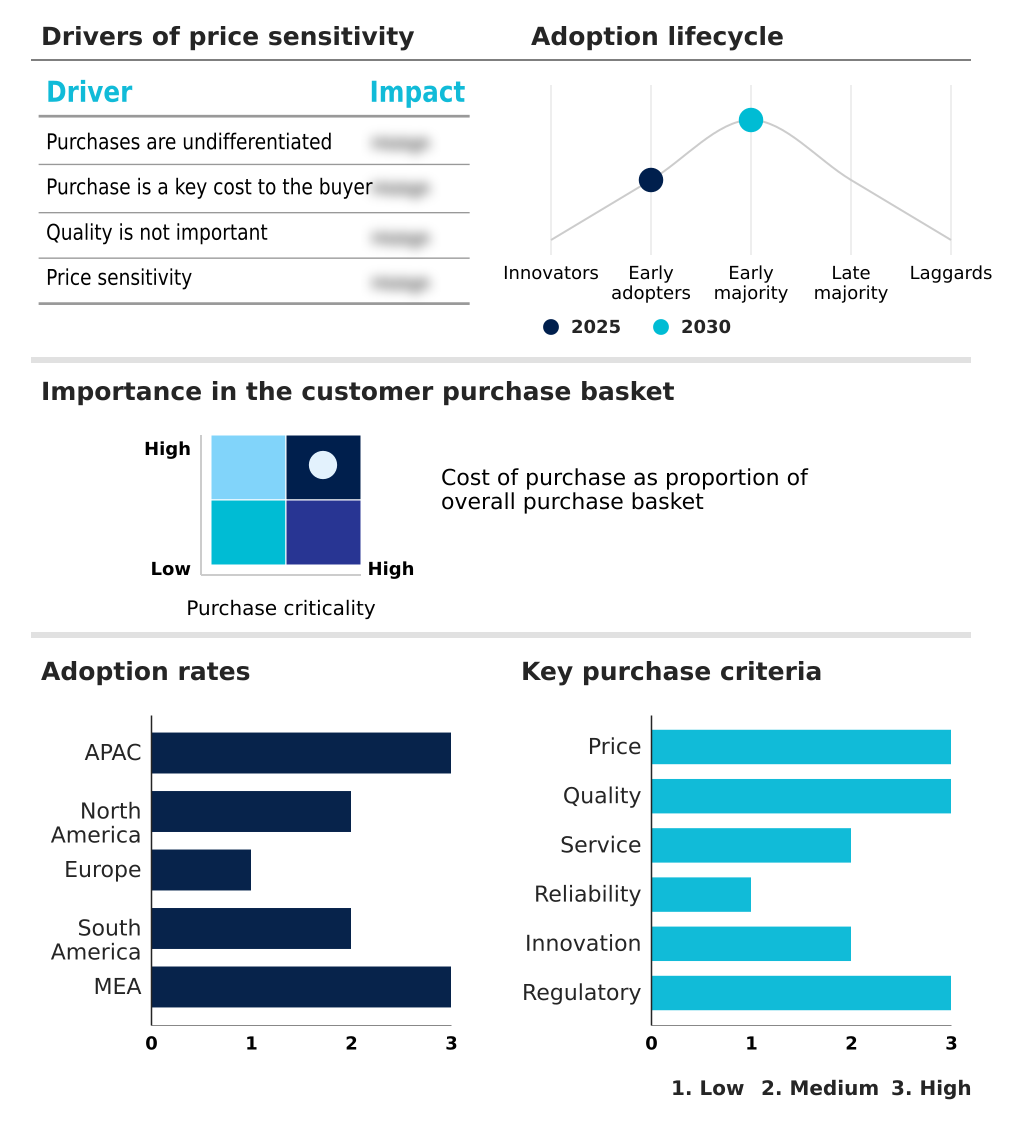
Customer Landscape of Spray Polyurethane Foam Industry

Competitive Landscape

Companies are implementing various strategies, such as strategic alliances, spray polyurethane foam market forecast, partnerships, mergers and acquisitions, geographical expansion, and product/service launches, to enhance their presence in the industry.

BASF SE - Comprehensive Spray Polyurethane Foam systems offer advanced thermal insulation and an airtight building envelope seal, significantly enhancing energy efficiency and structural resilience in modern construction projects.

The industry research and growth report includes detailed analyses of the competitive landscape of the market and information about key companies, including:

  • BASF SE
  • Carlisle Spray Foam Insulation
  • CertainTeed
  • Covestro AG
  • Dow Chemical Co.
  • Elastochem Specialty Chemicals
  • Foam Supplies Inc.
  • Gaco Western LLC
  • Huntsman International LLC
  • Isothane Ltd.
  • Johns Manville Corp.
  • Kingspan Group Plc
  • NCFI Polyurethanes
  • Owens Corning
  • Pearl Polyurethane Systems LLC
  • Rhino Linings Corp.
  • SES Foam LLC
  • SOPREMA SAS
  • Specialty Products Inc.
  • Stepan Co.

Qualitative and quantitative analysis of companies has been conducted to help clients understand the wider business environment as well as the strengths and weaknesses of key industry players. Data is qualitatively analyzed to categorize companies as pure play, category-focused, industry-focused, and diversified; it is quantitatively analyzed to categorize companies as dominant, leading, strong, tentative, and weak.

Recent Development and News in Spray polyurethane foam market

  • In the Specialty Chemicals industry, the rapid transition toward low-carbon manufacturing processes has accelerated the adoption of hydrofluoroolefin blowing agents, directly impacting Spray Polyurethane Foam demand by enabling contractors to meet stringent net-zero building regulations.
  • The enforcement of strict environmental regulations regarding high global warming substances has phased out legacy ozone-depleting materials, forcing a complete reformulation of isocyanate resin formulations utilized within the Spray Polyurethane Foam market.
  • Widespread supply chain disruptions involving petrochemical feedstock volatility have catalyzed the commercialization of bio-based polyurethane polyols, providing Spray Polyurethane Foam manufacturers with stable, alternative raw materials derived from renewable agricultural resources.
  • Advancements in precision chemical dispensing technologies have introduced Internet of Things connected spray foam rigs, elevating the application quality of Spray Polyurethane Foam by reducing chemical waste during the exothermic curing reaction.

Dive into Technavio’s robust research methodology, blending expert interviews, extensive data synthesis, and validated models for unparalleled Spray Polyurethane Foam Market insights. See full methodology.

Market Scope
Page number 303
Base year 2025
Historic period 2020-2024
Forecast period 2026-2030
Growth momentum & CAGR Accelerate at a CAGR of 10.3%
Market growth 2026-2030 USD 2343.3 million
Market structure Fragmented
YoY growth 2025-2026(%) 9.3%
Key countries China, India, Japan, South Korea, Australia, Indonesia, US, Canada, Mexico, Germany, UK, France, Italy, Spain, The Netherlands, Brazil, Argentina, Colombia, Saudi Arabia, UAE, South Africa, Turkey and Israel
Competitive landscape Leading Companies, Market Positioning of Companies, Competitive Strategies, and Industry Risks

Request Free Sample

Research Analyst Overview

  • The continuous evolution of the Spray Polyurethane Foam sector reflects a profound commitment to sustainable architecture and energy optimization. Industry participants are fundamentally restructuring their material pipelines to incorporate bio-based polyurethane polyols and chemically recycled plastic waste, successfully insulating their operations from the volatility of traditional petrochemical markets.
  • The deployment of high density closed cell foam through advanced two component high pressure systems guarantees a remarkably uniform polyurethane cellular structure. This structural consistency directly enables a 30% reduction in thermal energy leakage compared to legacy insulation boards.
  • Furthermore, the ongoing transition toward hydrofluoroolefin blowing agents represents a critical compliance maneuver that decisively lowers the embodied carbon of commercial real estate portfolios. By prioritizing precision application and eco-friendly chemical components, strategic decision-makers are enhancing overall building longevity while mitigating lifecycle environmental impacts.
  • These technological shifts empower contractors to rapidly meet zero-emission mandates, transforming functional insulation upgrades into vital assets for modern corporate sustainability reporting.

What are the Key Data Covered in this Spray Polyurethane Foam Market Research and Growth Report?

  • What is the expected growth of the Spray Polyurethane Foam Market between 2026 and 2030?

    • USD 2.34 billion, at a CAGR of 10.3%

  • What segmentation does the market report cover?

    • The report is segmented by Application (Residential, Commercial, and Industrial), Type (Open cell, and Closed cell), Product (Two component high pressure foam, Two component low pressure foam, and One component foam) and Geography (APAC, North America, Europe, South America, Middle East and Africa)

  • Which regions are analyzed in the report?

    • APAC, North America, Europe, South America and Middle East and Africa

  • What are the key growth drivers and market challenges?

    • Increasing demand for energy-efficient building solutions, Regulatory compliance and transition to low-impact chemical components

  • Who are the major players in the Spray Polyurethane Foam Market?

    • BASF SE, Carlisle Spray Foam Insulation, CertainTeed, Covestro AG, Dow Chemical Co., Elastochem Specialty Chemicals, Foam Supplies Inc., Gaco Western LLC, Huntsman International LLC, Isothane Ltd., Johns Manville Corp., Kingspan Group Plc, NCFI Polyurethanes, Owens Corning, Pearl Polyurethane Systems LLC, Rhino Linings Corp., SES Foam LLC, SOPREMA SAS, Specialty Products Inc. and Stepan Co.

Market Research Insights

  • The Spray Polyurethane Foam Market demonstrates continuous evolution as urban developers strive to satisfy rigorous building energy efficiency standards. Advanced chemical formulations deliver superior moisture diffusion control, improving indoor environmental quality by 40% compared to conventional fiber-based barriers. Additionally, the integration of acoustic dampening insulation into multi-family residential structures reduces sound transmission by 22%, dramatically enhancing occupant comfort.
  • Contractors increasingly rely on the rigid insulation structural support provided by closed-cell systems, which bolsters wall racking strength against severe weather events. By adopting these multifunctional insulation solutions, property managers reduce long-term facility maintenance overheads by 18%, ensuring strict compliance with modern climate resilience protocols.

We can help! Our analysts can customize this spray polyurethane foam market research report to meet your requirements.

Get in touch

1. Executive Summary

1.1 Market overview

Executive Summary - Chart on Market Overview
Executive Summary - Data Table on Market Overview
Executive Summary - Chart on Global Market Characteristics
Executive Summary - Chart on Market by Geography
Executive Summary - Chart on Market Segmentation by Application
Executive Summary - Chart on Market Segmentation by Type
Executive Summary - Chart on Market Segmentation by Product
Executive Summary - Chart on Incremental Growth
Executive Summary - Data Table on Incremental Growth
Executive Summary - Chart on Company Market Positioning

2. Technavio Analysis

2.1 Analysis of price sensitivity, lifecycle, customer purchase basket, adoption rates, and purchase criteria

2.2 Criticality of inputs and Factors of differentiation

Chart on Overview on criticality of inputs and factors of differentiation

2.3 Factors of disruption

Chart on Overview on factors of disruption

2.4 Impact of drivers and challenges

Chart on Impact of drivers and challenges in 2025 and 2030

3. Market Landscape

3.1 Market ecosystem

Chart on Parent Market
Data Table on - Parent Market

3.2 Market characteristics

Chart on Market characteristics analysis

3.3 Value chain analysis

Chart on Value chain analysis

4. Market Sizing

4.1 Market definition

Data Table on Offerings of companies included in the market definition

4.2 Market segment analysis

Market segments

4.3 Market size 2025

4.4 Market outlook: Forecast for 2025-2030

Chart on Global - Market size and forecast 2025-2030 ($ million)
Data Table on Global - Market size and forecast 2025-2030 ($ million)
Chart on Global Market: Year-over-year growth 2025-2030 (%)
Data Table on Global Market: Year-over-year growth 2025-2030 (%)

5. Historic Market Size

5.1 Global Spray Polyurethane Foam Market 2020 - 2024

Historic Market Size - Data Table on Global Spray Polyurethane Foam Market 2020 - 2024 ($ million)

5.2 Application segment analysis 2020 - 2024

Historic Market Size - Application Segment 2020 - 2024 ($ million)

5.3 Type segment analysis 2020 - 2024

Historic Market Size - Type Segment 2020 - 2024 ($ million)

5.4 Product segment analysis 2020 - 2024

Historic Market Size - Product Segment 2020 - 2024 ($ million)

5.5 Geography segment analysis 2020 - 2024

Historic Market Size - Geography Segment 2020 - 2024 ($ million)

5.6 Country segment analysis 2020 - 2024

Historic Market Size - Country Segment 2020 - 2024 ($ million)

6. Qualitative Analysis

6.1 Impact of AI on Global Spray Polyurethane Foam Market

6.2 Impact of geopolitical conflicts on Global Spray Polyurethane Foam Market

7. Five Forces Analysis

7.1 Five forces summary

Five forces analysis - Comparison between 2025 and 2030

7.2 Bargaining power of buyers

Bargaining power of buyers - Impact of key factors 2025 and 2030

7.3 Bargaining power of suppliers

Bargaining power of suppliers - Impact of key factors in 2025 and 2030

7.4 Threat of new entrants

Threat of new entrants - Impact of key factors in 2025 and 2030

7.5 Threat of substitutes

Threat of substitutes - Impact of key factors in 2025 and 2030

7.6 Threat of rivalry

Threat of rivalry - Impact of key factors in 2025 and 2030

7.7 Market condition

Chart on Market condition - Five forces 2025 and 2030

8. Market Segmentation by Application

8.1 Market segments

Chart on Application - Market share 2025-2030 (%)
Data Table on Application - Market share 2025-2030 (%)

8.2 Comparison by Application

Chart on Comparison by Application
Data Table on Comparison by Application

8.3 Residential - Market size and forecast 2025-2030

Chart on Residential - Market size and forecast 2025-2030 ($ million)
Data Table on Residential - Market size and forecast 2025-2030 ($ million)
Chart on Residential - Year-over-year growth 2025-2030 (%)
Data Table on Residential - Year-over-year growth 2025-2030 (%)

8.4 Commercial - Market size and forecast 2025-2030

Chart on Commercial - Market size and forecast 2025-2030 ($ million)
Data Table on Commercial - Market size and forecast 2025-2030 ($ million)
Chart on Commercial - Year-over-year growth 2025-2030 (%)
Data Table on Commercial - Year-over-year growth 2025-2030 (%)

8.5 Industrial - Market size and forecast 2025-2030

Chart on Industrial - Market size and forecast 2025-2030 ($ million)
Data Table on Industrial - Market size and forecast 2025-2030 ($ million)
Chart on Industrial - Year-over-year growth 2025-2030 (%)
Data Table on Industrial - Year-over-year growth 2025-2030 (%)

8.6 Market opportunity by Application

Market opportunity by Application ($ million)
Data Table on Market opportunity by Application ($ million)

9. Market Segmentation by Type

9.1 Market segments

Chart on Type - Market share 2025-2030 (%)
Data Table on Type - Market share 2025-2030 (%)

9.2 Comparison by Type

Chart on Comparison by Type
Data Table on Comparison by Type

9.3 Open cell - Market size and forecast 2025-2030

Chart on Open cell - Market size and forecast 2025-2030 ($ million)
Data Table on Open cell - Market size and forecast 2025-2030 ($ million)
Chart on Open cell - Year-over-year growth 2025-2030 (%)
Data Table on Open cell - Year-over-year growth 2025-2030 (%)

9.4 Closed cell - Market size and forecast 2025-2030

Chart on Closed cell - Market size and forecast 2025-2030 ($ million)
Data Table on Closed cell - Market size and forecast 2025-2030 ($ million)
Chart on Closed cell - Year-over-year growth 2025-2030 (%)
Data Table on Closed cell - Year-over-year growth 2025-2030 (%)

9.5 Market opportunity by Type

Market opportunity by Type ($ million)
Data Table on Market opportunity by Type ($ million)

10. Market Segmentation by Product

10.1 Market segments

Chart on Product - Market share 2025-2030 (%)
Data Table on Product - Market share 2025-2030 (%)

10.2 Comparison by Product

Chart on Comparison by Product
Data Table on Comparison by Product

10.3 Two component high pressure foam - Market size and forecast 2025-2030

Chart on Two component high pressure foam - Market size and forecast 2025-2030 ($ million)
Data Table on Two component high pressure foam - Market size and forecast 2025-2030 ($ million)
Chart on Two component high pressure foam - Year-over-year growth 2025-2030 (%)
Data Table on Two component high pressure foam - Year-over-year growth 2025-2030 (%)

10.4 Two component low pressure foam - Market size and forecast 2025-2030

Chart on Two component low pressure foam - Market size and forecast 2025-2030 ($ million)
Data Table on Two component low pressure foam - Market size and forecast 2025-2030 ($ million)
Chart on Two component low pressure foam - Year-over-year growth 2025-2030 (%)
Data Table on Two component low pressure foam - Year-over-year growth 2025-2030 (%)

10.5 One component foam - Market size and forecast 2025-2030

Chart on One component foam - Market size and forecast 2025-2030 ($ million)
Data Table on One component foam - Market size and forecast 2025-2030 ($ million)
Chart on One component foam - Year-over-year growth 2025-2030 (%)
Data Table on One component foam - Year-over-year growth 2025-2030 (%)

10.6 Market opportunity by Product

Market opportunity by Product ($ million)
Data Table on Market opportunity by Product ($ million)

11. Customer Landscape

11.1 Customer landscape overview

Analysis of price sensitivity, lifecycle, customer purchase basket, adoption rates, and purchase criteria

12. Geographic Landscape

12.1 Geographic segmentation

Chart on Market share by geography 2025-2030 (%)
Data Table on Market share by geography 2025-2030 (%)

12.2 Geographic comparison

Chart on Geographic comparison
Data Table on Geographic comparison

12.3 APAC - Market size and forecast 2025-2030

Chart on APAC - Market size and forecast 2025-2030 ($ million)
Data Table on APAC - Market size and forecast 2025-2030 ($ million)
Chart on APAC - Year-over-year growth 2025-2030 (%)
Data Table on APAC - Year-over-year growth 2025-2030 (%)
Chart on Regional Comparison - APAC
Data Table on Regional Comparison - APAC

12.3.1 China - Market size and forecast 2025-2030

Chart on China - Market size and forecast 2025-2030 ($ million)
Data Table on China - Market size and forecast 2025-2030 ($ million)
Chart on China - Year-over-year growth 2025-2030 (%)
Data Table on China - Year-over-year growth 2025-2030 (%)

12.3.2 India - Market size and forecast 2025-2030

Chart on India - Market size and forecast 2025-2030 ($ million)
Data Table on India - Market size and forecast 2025-2030 ($ million)
Chart on India - Year-over-year growth 2025-2030 (%)
Data Table on India - Year-over-year growth 2025-2030 (%)

12.3.3 Japan - Market size and forecast 2025-2030

Chart on Japan - Market size and forecast 2025-2030 ($ million)
Data Table on Japan - Market size and forecast 2025-2030 ($ million)
Chart on Japan - Year-over-year growth 2025-2030 (%)
Data Table on Japan - Year-over-year growth 2025-2030 (%)

12.3.4 South Korea - Market size and forecast 2025-2030

Chart on South Korea - Market size and forecast 2025-2030 ($ million)
Data Table on South Korea - Market size and forecast 2025-2030 ($ million)
Chart on South Korea - Year-over-year growth 2025-2030 (%)
Data Table on South Korea - Year-over-year growth 2025-2030 (%)

12.3.5 Australia - Market size and forecast 2025-2030

Chart on Australia - Market size and forecast 2025-2030 ($ million)
Data Table on Australia - Market size and forecast 2025-2030 ($ million)
Chart on Australia - Year-over-year growth 2025-2030 (%)
Data Table on Australia - Year-over-year growth 2025-2030 (%)

12.3.6 Indonesia - Market size and forecast 2025-2030

Chart on Indonesia - Market size and forecast 2025-2030 ($ million)
Data Table on Indonesia - Market size and forecast 2025-2030 ($ million)
Chart on Indonesia - Year-over-year growth 2025-2030 (%)
Data Table on Indonesia - Year-over-year growth 2025-2030 (%)

12.4 North America - Market size and forecast 2025-2030

Chart on North America - Market size and forecast 2025-2030 ($ million)
Data Table on North America - Market size and forecast 2025-2030 ($ million)
Chart on North America - Year-over-year growth 2025-2030 (%)
Data Table on North America - Year-over-year growth 2025-2030 (%)
Chart on Regional Comparison - North America
Data Table on Regional Comparison - North America

12.4.1 US - Market size and forecast 2025-2030

Chart on US - Market size and forecast 2025-2030 ($ million)
Data Table on US - Market size and forecast 2025-2030 ($ million)
Chart on US - Year-over-year growth 2025-2030 (%)
Data Table on US - Year-over-year growth 2025-2030 (%)

12.4.2 Canada - Market size and forecast 2025-2030

Chart on Canada - Market size and forecast 2025-2030 ($ million)
Data Table on Canada - Market size and forecast 2025-2030 ($ million)
Chart on Canada - Year-over-year growth 2025-2030 (%)
Data Table on Canada - Year-over-year growth 2025-2030 (%)

12.4.3 Mexico - Market size and forecast 2025-2030

Chart on Mexico - Market size and forecast 2025-2030 ($ million)
Data Table on Mexico - Market size and forecast 2025-2030 ($ million)
Chart on Mexico - Year-over-year growth 2025-2030 (%)
Data Table on Mexico - Year-over-year growth 2025-2030 (%)

12.5 Europe - Market size and forecast 2025-2030

Chart on Europe - Market size and forecast 2025-2030 ($ million)
Data Table on Europe - Market size and forecast 2025-2030 ($ million)
Chart on Europe - Year-over-year growth 2025-2030 (%)
Data Table on Europe - Year-over-year growth 2025-2030 (%)
Chart on Regional Comparison - Europe
Data Table on Regional Comparison - Europe

12.5.1 Germany - Market size and forecast 2025-2030

Chart on Germany - Market size and forecast 2025-2030 ($ million)
Data Table on Germany - Market size and forecast 2025-2030 ($ million)
Chart on Germany - Year-over-year growth 2025-2030 (%)
Data Table on Germany - Year-over-year growth 2025-2030 (%)

12.5.2 UK - Market size and forecast 2025-2030

Chart on UK - Market size and forecast 2025-2030 ($ million)
Data Table on UK - Market size and forecast 2025-2030 ($ million)
Chart on UK - Year-over-year growth 2025-2030 (%)
Data Table on UK - Year-over-year growth 2025-2030 (%)

12.5.3 France - Market size and forecast 2025-2030

Chart on France - Market size and forecast 2025-2030 ($ million)
Data Table on France - Market size and forecast 2025-2030 ($ million)
Chart on France - Year-over-year growth 2025-2030 (%)
Data Table on France - Year-over-year growth 2025-2030 (%)

12.5.4 Italy - Market size and forecast 2025-2030

Chart on Italy - Market size and forecast 2025-2030 ($ million)
Data Table on Italy - Market size and forecast 2025-2030 ($ million)
Chart on Italy - Year-over-year growth 2025-2030 (%)
Data Table on Italy - Year-over-year growth 2025-2030 (%)

12.5.5 Spain - Market size and forecast 2025-2030

Chart on Spain - Market size and forecast 2025-2030 ($ million)
Data Table on Spain - Market size and forecast 2025-2030 ($ million)
Chart on Spain - Year-over-year growth 2025-2030 (%)
Data Table on Spain - Year-over-year growth 2025-2030 (%)

12.5.6 The Netherlands - Market size and forecast 2025-2030

Chart on The Netherlands - Market size and forecast 2025-2030 ($ million)
Data Table on The Netherlands - Market size and forecast 2025-2030 ($ million)
Chart on The Netherlands - Year-over-year growth 2025-2030 (%)
Data Table on The Netherlands - Year-over-year growth 2025-2030 (%)

12.6 South America - Market size and forecast 2025-2030

Chart on South America - Market size and forecast 2025-2030 ($ million)
Data Table on South America - Market size and forecast 2025-2030 ($ million)
Chart on South America - Year-over-year growth 2025-2030 (%)
Data Table on South America - Year-over-year growth 2025-2030 (%)
Chart on Regional Comparison - South America
Data Table on Regional Comparison - South America

12.6.1 Brazil - Market size and forecast 2025-2030

Chart on Brazil - Market size and forecast 2025-2030 ($ million)
Data Table on Brazil - Market size and forecast 2025-2030 ($ million)
Chart on Brazil - Year-over-year growth 2025-2030 (%)
Data Table on Brazil - Year-over-year growth 2025-2030 (%)

12.6.2 Argentina - Market size and forecast 2025-2030

Chart on Argentina - Market size and forecast 2025-2030 ($ million)
Data Table on Argentina - Market size and forecast 2025-2030 ($ million)
Chart on Argentina - Year-over-year growth 2025-2030 (%)
Data Table on Argentina - Year-over-year growth 2025-2030 (%)

12.6.3 Colombia - Market size and forecast 2025-2030

Chart on Colombia - Market size and forecast 2025-2030 ($ million)
Data Table on Colombia - Market size and forecast 2025-2030 ($ million)
Chart on Colombia - Year-over-year growth 2025-2030 (%)
Data Table on Colombia - Year-over-year growth 2025-2030 (%)

12.7 Middle East and Africa - Market size and forecast 2025-2030

Chart on Middle East and Africa - Market size and forecast 2025-2030 ($ million)
Data Table on Middle East and Africa - Market size and forecast 2025-2030 ($ million)
Chart on Middle East and Africa - Year-over-year growth 2025-2030 (%)
Data Table on Middle East and Africa - Year-over-year growth 2025-2030 (%)
Chart on Regional Comparison - Middle East and Africa
Data Table on Regional Comparison - Middle East and Africa

12.7.1 Saudi Arabia - Market size and forecast 2025-2030

Chart on Saudi Arabia - Market size and forecast 2025-2030 ($ million)
Data Table on Saudi Arabia - Market size and forecast 2025-2030 ($ million)
Chart on Saudi Arabia - Year-over-year growth 2025-2030 (%)
Data Table on Saudi Arabia - Year-over-year growth 2025-2030 (%)

12.7.2 UAE - Market size and forecast 2025-2030

Chart on UAE - Market size and forecast 2025-2030 ($ million)
Data Table on UAE - Market size and forecast 2025-2030 ($ million)
Chart on UAE - Year-over-year growth 2025-2030 (%)
Data Table on UAE - Year-over-year growth 2025-2030 (%)

12.7.3 South Africa - Market size and forecast 2025-2030

Chart on South Africa - Market size and forecast 2025-2030 ($ million)
Data Table on South Africa - Market size and forecast 2025-2030 ($ million)
Chart on South Africa - Year-over-year growth 2025-2030 (%)
Data Table on South Africa - Year-over-year growth 2025-2030 (%)

12.7.4 Turkey - Market size and forecast 2025-2030

Chart on Turkey - Market size and forecast 2025-2030 ($ million)
Data Table on Turkey - Market size and forecast 2025-2030 ($ million)
Chart on Turkey - Year-over-year growth 2025-2030 (%)
Data Table on Turkey - Year-over-year growth 2025-2030 (%)

12.7.5 Israel - Market size and forecast 2025-2030

Chart on Israel - Market size and forecast 2025-2030 ($ million)
Data Table on Israel - Market size and forecast 2025-2030 ($ million)
Chart on Israel - Year-over-year growth 2025-2030 (%)
Data Table on Israel - Year-over-year growth 2025-2030 (%)

12.8 Market opportunity by geography

Market opportunity by geography ($ million)
Data Tables on Market opportunity by geography ($ million)

13. Drivers, Challenges, and Opportunity

13.1 Market drivers

Increasing demand for energy-efficient building solutions
Technological advancements in eco-friendly blowing agents
Rapid infrastructure expansion and urbanization in Asia pacific region

13.2 Market challenges

Regulatory compliance and transition to low-impact chemical components
Shortage of certified professional labor and health safety risks
Raw material price volatility and fragility of global supply chains

13.3 Impact of drivers and challenges

Impact of drivers and challenges in 2025 and 2030

13.4 Market opportunities

Integration of bio-based feedstocks and circular economy principles
Digitalization and precision application through smart technologies
Advancement of modular construction and prefabricated building systems

14. Competitive Landscape

14.1 Overview

14.2

Overview on criticality of inputs and factors of differentiation

14.3 Landscape disruption

Overview on factors of disruption

14.4 Industry risks

Impact of key risks on business

15. Competitive Analysis

15.1 Companies profiled

Companies covered

15.2 Company ranking index

15.3 Market positioning of companies

Matrix on companies position and classification

15.4 BASF SE

BASF SE - Overview
BASF SE - Business segments
BASF SE - Key news
BASF SE - Key offerings
BASF SE - Segment focus
SWOT

15.5 CertainTeed

CertainTeed - Overview
CertainTeed - Product / Service
CertainTeed - Key offerings
SWOT

15.6 Covestro AG

Covestro AG - Overview
Covestro AG - Business segments
Covestro AG - Key news
Covestro AG - Key offerings
Covestro AG - Segment focus
SWOT

15.7 Dow Chemical Co.

Dow Chemical Co. - Overview
Dow Chemical Co. - Business segments
Dow Chemical Co. - Key news
Dow Chemical Co. - Key offerings
Dow Chemical Co. - Segment focus
SWOT

15.8 Elastochem Specialty Chemicals

Elastochem Specialty Chemicals - Overview
Elastochem Specialty Chemicals - Product / Service
Elastochem Specialty Chemicals - Key offerings
SWOT

15.9 Foam Supplies Inc.

Foam Supplies Inc. - Overview
Foam Supplies Inc. - Product / Service
Foam Supplies Inc. - Key offerings
SWOT

15.10 Huntsman International LLC

Huntsman International LLC - Overview
Huntsman International LLC - Business segments
Huntsman International LLC - Key news
Huntsman International LLC - Key offerings
Huntsman International LLC - Segment focus
SWOT

15.11 Isothane Ltd.

Isothane Ltd. - Overview
Isothane Ltd. - Product / Service
Isothane Ltd. - Key offerings
SWOT

15.12 Johns Manville Corp.

Johns Manville Corp. - Overview
Johns Manville Corp. - Product / Service
Johns Manville Corp. - Key offerings
SWOT

15.13 Kingspan Group Plc

Kingspan Group Plc - Overview
Kingspan Group Plc - Business segments
Kingspan Group Plc - Key offerings
Kingspan Group Plc - Segment focus
SWOT

15.14 Owens Corning

Owens Corning - Overview
Owens Corning - Business segments
Owens Corning - Key offerings
Owens Corning - Segment focus
SWOT

15.15 Rhino Linings Corp.

Rhino Linings Corp. - Overview
Rhino Linings Corp. - Product / Service
Rhino Linings Corp. - Key offerings
SWOT

15.16 SOPREMA SAS

SOPREMA SAS - Overview
SOPREMA SAS - Product / Service
SOPREMA SAS - Key offerings
SWOT

15.17 Specialty Products Inc.

Specialty Products Inc. - Overview
Specialty Products Inc. - Product / Service
Specialty Products Inc. - Key offerings
SWOT

15.18 Stepan Co.

Stepan Co. - Overview
Stepan Co. - Business segments
Stepan Co. - Key offerings
Stepan Co. - Segment focus
SWOT

16. Appendix

16.1 Scope of the report

Market definition
Objectives
Notes and caveats

16.2 Inclusions and exclusions checklist

Inclusions checklist
Exclusions checklist

16.3 Currency conversion rates for US$

16.4 Research methodology

16.5 Data procurement

Information sources

16.6 Data validation

16.7 Validation techniques employed for market sizing

16.8 Data synthesis

16.9 360 degree market analysis

16.10 List of abbreviations

Research Methodology

Technavio presents a detailed picture of the market by way of study, synthesis, and summation of data from multiple sources. The analysts have presented the various facets of the market with a particular focus on identifying the key industry influencers. The data thus presented is comprehensive, reliable, and the result of extensive research, both primary and secondary.

INFORMATION SOURCES

Primary sources

  • Manufacturers and suppliers
  • Channel partners
  • Industry experts
  • Strategic decision makers

Secondary sources

  • Industry journals and periodicals
  • Government data
  • Financial reports of key industry players
  • Historical data
  • Press releases

DATA ANALYSIS

Data Synthesis

  • Collation of data
  • Estimation of key figures
  • Analysis of derived insights

Data Validation

  • Triangulation with data models
  • Reference against proprietary databases
  • Corroboration with industry experts

REPORT WRITING

Qualitative

  • Market drivers
  • Market challenges
  • Market trends
  • Five forces analysis

Quantitative

  • Market size and forecast
  • Market segmentation
  • Geographical insights
  • Competitive landscape

Interested in this report?

Get your sample now to see our research methodology and insights!

Download Now

Frequently Asked Questions

Spray Polyurethane Foam market growth will increase by USD 2343.3 million during 2026-2030.

The Spray Polyurethane Foam market is expected to grow at a CAGR of 10.3% during 2026-2030.

Spray Polyurethane Foam market is segmented by Application (Residential, Commercial, Industrial) Type (Open cell, Closed cell) Product (Two component high pressure foam, Two component low pressure foam, One component foam)

BASF SE, Carlisle Spray Foam Insulation, CertainTeed, Covestro AG, Dow Chemical Co., Elastochem Specialty Chemicals, Foam Supplies Inc., Gaco Western LLC, Huntsman International LLC, Isothane Ltd., Johns Manville Corp., Kingspan Group Plc, NCFI Polyurethanes, Owens Corning, Pearl Polyurethane Systems LLC, Rhino Linings Corp., SES Foam LLC, SOPREMA SAS, Specialty Products Inc., Stepan Co. are a few of the key vendors in the Spray Polyurethane Foam market.

APAC will register the highest growth rate of 40.9% among the other regions. Therefore, the Spray Polyurethane Foam market in APAC is expected to garner significant business opportunities for the vendors during the forecast period.

China, India, Japan, South Korea, Australia, Indonesia, US, Canada, Mexico, Germany, UK, France, Italy, Spain, The Netherlands, Brazil, Argentina, Colombia, Saudi Arabia, UAE, South Africa, Turkey, Israel

  • Increasing demand for energy-efficient building solutions is the driving factor this market.

The Spray Polyurethane Foam market vendors should focus on grabbing business opportunities from the Application segment as it accounted for the largest market share in the base year.
RIA - Research AI Assistant
Ask RIA
