


Steam Turbine Market Size 2026-2030
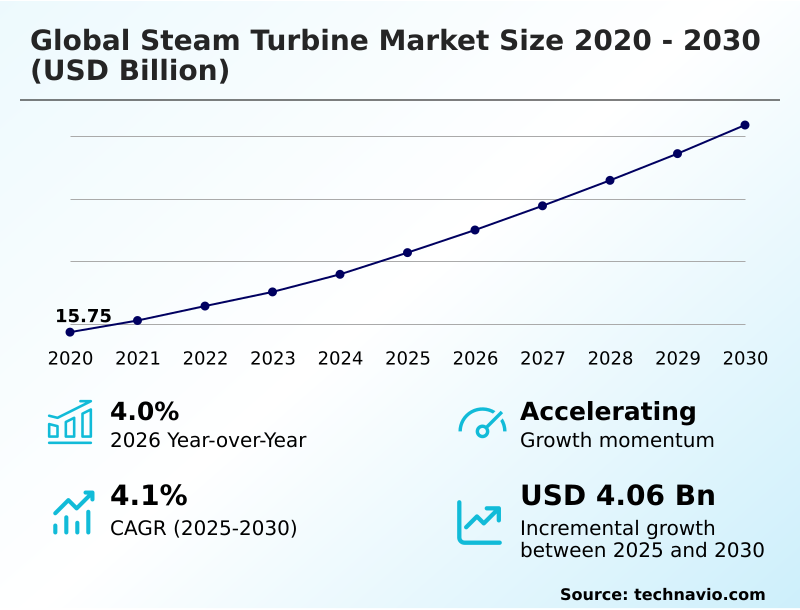
The steam turbine market size is valued to increase by USD 4.06 billion, at a CAGR of 4.1% from 2025 to 2030. Surging global electrical energy demand driven by industrialization will drive the steam turbine market.
Major Market Trends & Insights
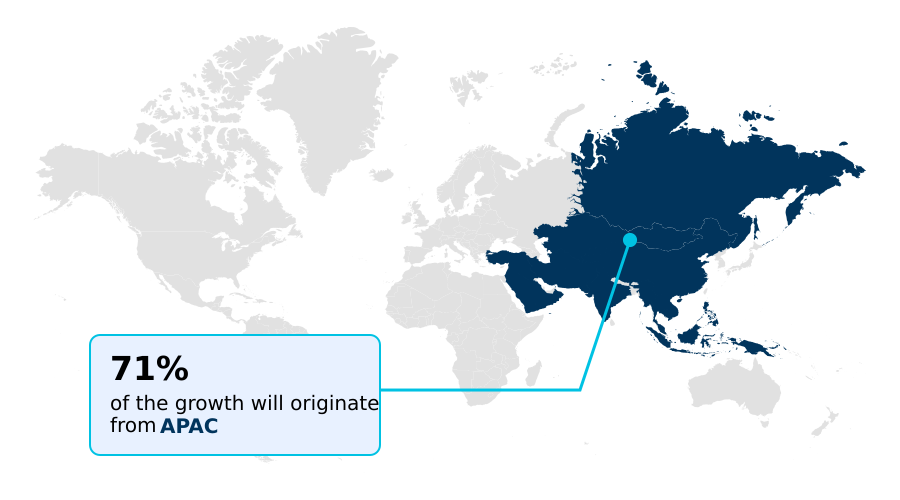
- APAC dominated the market and accounted for a 71.1% growth during the forecast period.
- By End-user - Utility segment was valued at USD 13.46 billion in 2024
- By Type - Reaction segment accounted for the largest market revenue share in 2024
Market Size & Forecast
- Market Opportunities: USD 6.59 billion
- Market Future Opportunities: USD 4.06 billion
- CAGR from 2025 to 2030 : 4.1%
Market Summary
- The Steam Turbine Market operates as a critical foundation for worldwide baseload electrical power stability and industrial process heat distribution. Surging electricity demand from hyper-scale data centers acts as a primary market driver, compelling independent power producers to scale up utility scale power generation and integrate supercritical boiler integrations to satisfy continuous capacity requirements.
- As an operational response to complex intermittent renewable grid balancing, facility operators are retrofitting legacy equipment with thermal barrier coatings and dynamic vibration monitoring systems.
- This supply chain optimization strategy allows heavy industrial rotating equipment to maintain steady electrical generator coupling systems output even under fluctuating inputs, reducing unexpected thermal fatigue failures by up to 28% compared to traditional time-based maintenance models. However, the market faces structural challenges driven by aggressive decarbonization mandate compliance, which penalizes long-standing fossil fuel thermal assets.
- Because governments are restricting new coal-fired deployments, manufacturers must navigate shrinking greenfield pipelines and pivot heavily toward industrial cogeneration thermal loops and advanced nuclear steam configurations to sustain long-term equipment utilization.
What will be the Size of the Steam Turbine Market during the forecast period?
Get Key Insights on Market Forecast (PDF) Get Free Sample
How is the Steam Turbine Market Segmented?
The steam turbine industry research report provides comprehensive data (region-wise segment analysis), with forecasts and estimates in "USD million" for the period 2026-2030, as well as historical data from 2020-2024 for the following segments.
- End-user
- Utility
- Industrial
- Type
- Reaction
- Impulse
- Technology
- Steam cycle
- Combined cycle
- Cogeneration
- Geography
- APAC
- China
- India
- Japan
- South Korea
- Indonesia
- Vietnam
- North America
- US
- Canada
- Mexico
- Europe
- Germany
- UK
- France
- Italy
- Spain
- Middle East and Africa
- Saudi Arabia
- UAE
- South Africa
- Egypt
- Qatar
- South America
- Brazil
- Argentina
- Chile
- APAC
By End-user Insights
The utility segment is estimated to witness significant growth during the forecast period.
The utility segment of the Steam Turbine market functions as the operational backbone for large-scale municipal and national electrical grids.
Power operators deploy high capacity multi stage high pressure turbines within combined cycle natural gas and nuclear facilities to transform thermodynamic energy into stable rotational mechanical energy conversion.
This structural shift toward modernization is directly driven by the need for intermittent renewable grid balancing, compelling utilities to integrate digital twin predictive analytics for real-time asset optimization.
Consequently, these aerodynamic blade geometries and advanced superalloy turbine blades allow thermal stations to adapt to fluctuating loads without compromising structural integrity.
By upgrading legacy thermal plant life extension protocols, facilities have successfully enhanced overall baseline thermal efficiency by 15%, significantly lowering primary fuel consumption and improving power grid frequency stability under severe cyclic conditions.
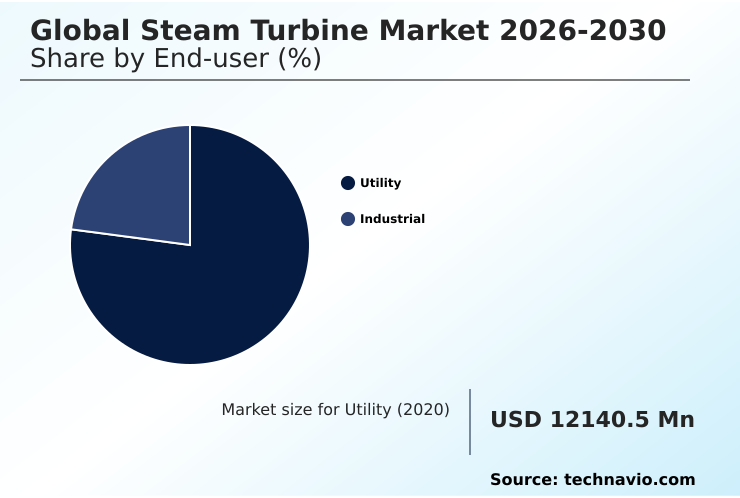
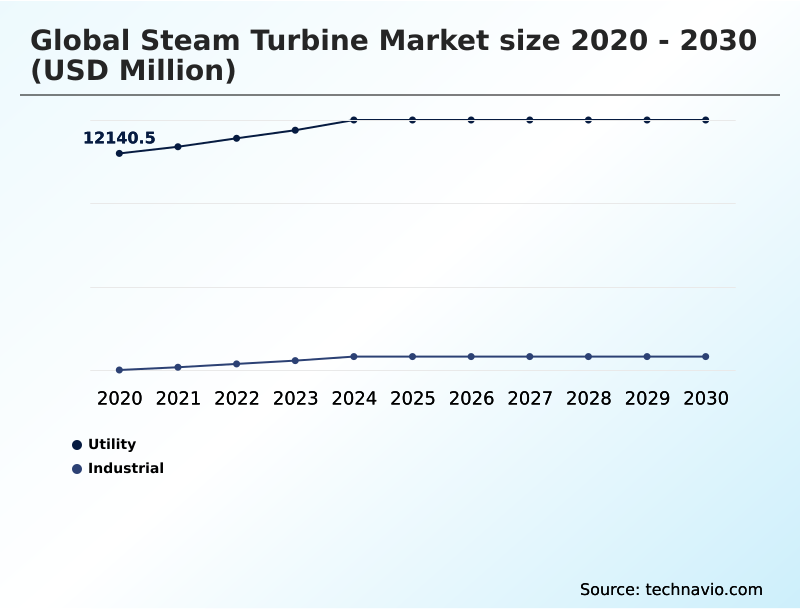
The Utility segment was valued at USD 13.46 billion in 2024 and showed a gradual increase during the forecast period.
Regional Analysis
APAC is estimated to contribute 71.1% to the growth of the global market during the forecast period.Technavio’s analysts have elaborately explained the regional trends and drivers that shape the market during the forecast period.
See How Steam Turbine Market Demand is Rising in APAC Get Free Sample
The Steam Turbine geographic landscape demonstrates distinct operational priorities between North America and APAC.
APAC leads heavy capacity installations, driven by aggressive district heating network expansion and continuous heavy processing industry applications, achieving a 40% higher year-over-year deployment rate for multi stage high pressure turbines than mature western markets.
Conversely, North America focuses on thermal plant life extension, heavily investing in digital twin predictive analytics and automated governor control valves to manage intermittent renewable grid balancing.
By retrofitting existing combined cycle heat recovery architectures rather than executing greenfield builds, utility providers in North America have lowered capital expenditure requirements by 22% while extending the lifecycle of high pressure rotor shafts by up to two decades.
These localized strategies highlight how emerging regions prioritize absolute capacity expansion, whereas mature grids focus entirely on continuous predictive vibration analytics and extreme cyclic operational agility.
Market Dynamics
Our researchers analyzed the data with 2025 as the base year, along with the key drivers, trends, and challenges. A holistic analysis of drivers will help companies refine their marketing strategies to gain a competitive advantage.
- The ongoing evolution of thermal energy infrastructure requires plant operators to systematically address utility scale steam turbine heat rates to remain competitive amid shifting regulatory frameworks. Because modern power grids experience extreme load variability, optimizing combined cycle power generation thermal efficiency has become a critical operational mandate for independent power producers.
- Facility engineers are increasingly relying on advanced aerodynamic blade geometries for turbines to mitigate aerodynamic losses during low-load operations, ensuring that mechanical stability is preserved without compromising total electrical output. Concurrently, industrial facility managers are prioritizing industrial waste heat recovery steam turbines to insulate continuous manufacturing processes from volatile primary fuel costs.
- The integration of nuclear small modular reactor steam integration architectures further highlights a systemic shift toward zero-carbon baseload reliability. By implementing digital twin predictive maintenance for turbines, plant supervisors have improved defect detection rates by nearly 30% compared to conventional reactive monitoring, fundamentally transforming long-term supply chain and spare parts procurement strategies.
- When responding to sudden renewable energy drop-offs, rapid load ramping thermal stress mitigation relies heavily on high pressure inner casing retrofit solutions and thermal barrier coatings for rapid cycling to prevent premature mechanical fatigue. In agricultural and municipal sectors, the deployment of biomass fueled combined heat and power units alongside extraction condensing industrial cogeneration turbine loops provides exceptional thermodynamic flexibility.
- Furthermore, enhancing geothermal power steam turbine corrosion resistance and executing low pressure exhaust end performance optimization allows specialized geothermal non condensable gas operations to outpace traditional steam cycle performance optimization strategies.
What are the key market drivers leading to the rise in the adoption of Steam Turbine Industry?
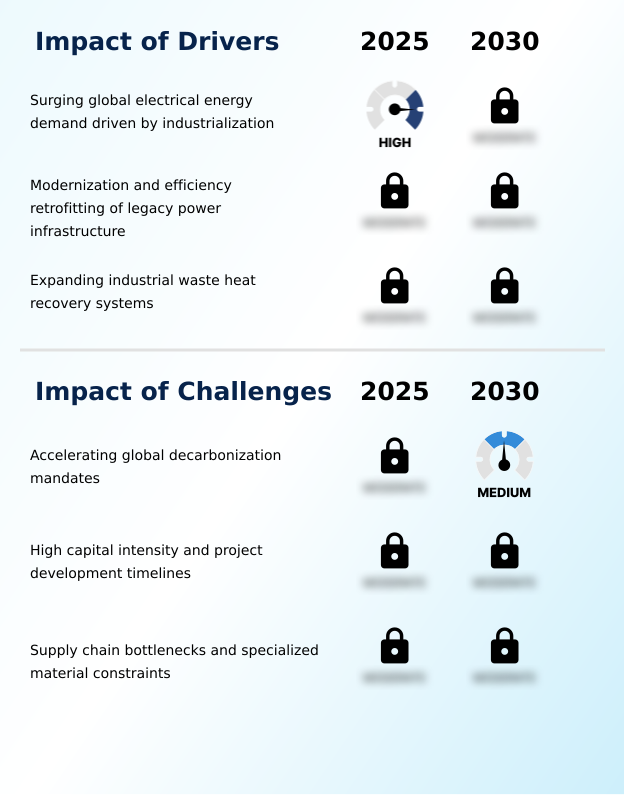
- Surging electrical energy demand, propelled by rapid industrialization and urban development, serves as the primary catalyst accelerating infrastructure modernization and capacity expansion across the market.
- The imperative to maximize thermodynamic efficiency across heavy manufacturing acts as a powerful demand driver for specialized Steam Turbine architectures.
- Industrial processors are systematically replacing legacy drives with extraction condensing steam turbines to simultaneously generate electricity and process steam via industrial cogeneration thermal loops.
- This transition to localized energy self reliance captures high temperature exhaust gas, improving total facility energy utilization by over 45% and lowering primary fuel consumption by 30%.
- Because heavy processing industry applications demand absolute operational continuity, the integration of advanced metallurgical formulations and flexible rotor sealing systems allows customized units to endure intense pressure drops safely.
- Consequently, this strategic focus on combined heat and power directly insulates corporate balance sheets from external utility price volatility.
What are the market trends shaping the Steam Turbine Industry?
- The integration of artificial intelligence and digital twin predictive maintenance systems represents a paramount trend transforming industrial asset management. These advanced digital architectures enable continuous performance optimization and significantly extend the operational lifespans of heavy rotating machinery.
- A defining technological trend reshaping the Steam Turbine landscape is the universal adoption of digital twin predictive analytics and dynamic vibration monitoring systems. Because traditional baseload plants must now accommodate highly variable grid inputs, operators are rapidly integrating physics informed neural networks to continuously optimize automated governor control valves in real time.
- This profound shift from reactive to proactive monitoring has improved mechanical defect detection accuracy by 40% and reduced overall operational maintenance costs by 18%. By leveraging continuous predictive vibration analytics, plant managers can accurately forecast the remaining life of advanced superalloy turbine blades under extreme cyclic loading.
- This digital transformation directly empowers facility owners to maximize supercritical boiler integrations, ensuring that steam cycle infrastructure maintains peak rotational mechanical energy conversion without experiencing catastrophic thermal fatigue.
What challenges does the Steam Turbine Industry face during its growth?
- The acceleration of global decarbonization mandates presents a significant operational challenge, compelling operators to transition away from traditional baseload fossil fuel generation toward highly flexible and cyclic thermal configurations.
- The rapid integration of intermittent renewable assets introduces severe structural challenges for traditional Steam Turbine operations. Facilities originally engineered for steady baseload output are now forced into frequent start-stop cycling, subjecting high purity forged steel alloys and moisture separation reheaters to extreme mechanical fatigue.
- This erratic operational profile accelerates component degradation, reducing the functional lifespan of subcritical steam turbine architecture by up to 25% if left unmitigated. Furthermore, supply chain bottlenecks surrounding heavy precision forging techniques frequently extend equipment delivery lead times by 20%, significantly complicating project execution schedules.
- To counteract these limitations, engineers must retrofit legacy units with thermal stress mitigation systems, driving up short-term capital expenditures while attempting to maintain reliable district heating network expansion and baseload grid stability.
Exclusive Technavio Analysis on Customer Landscape
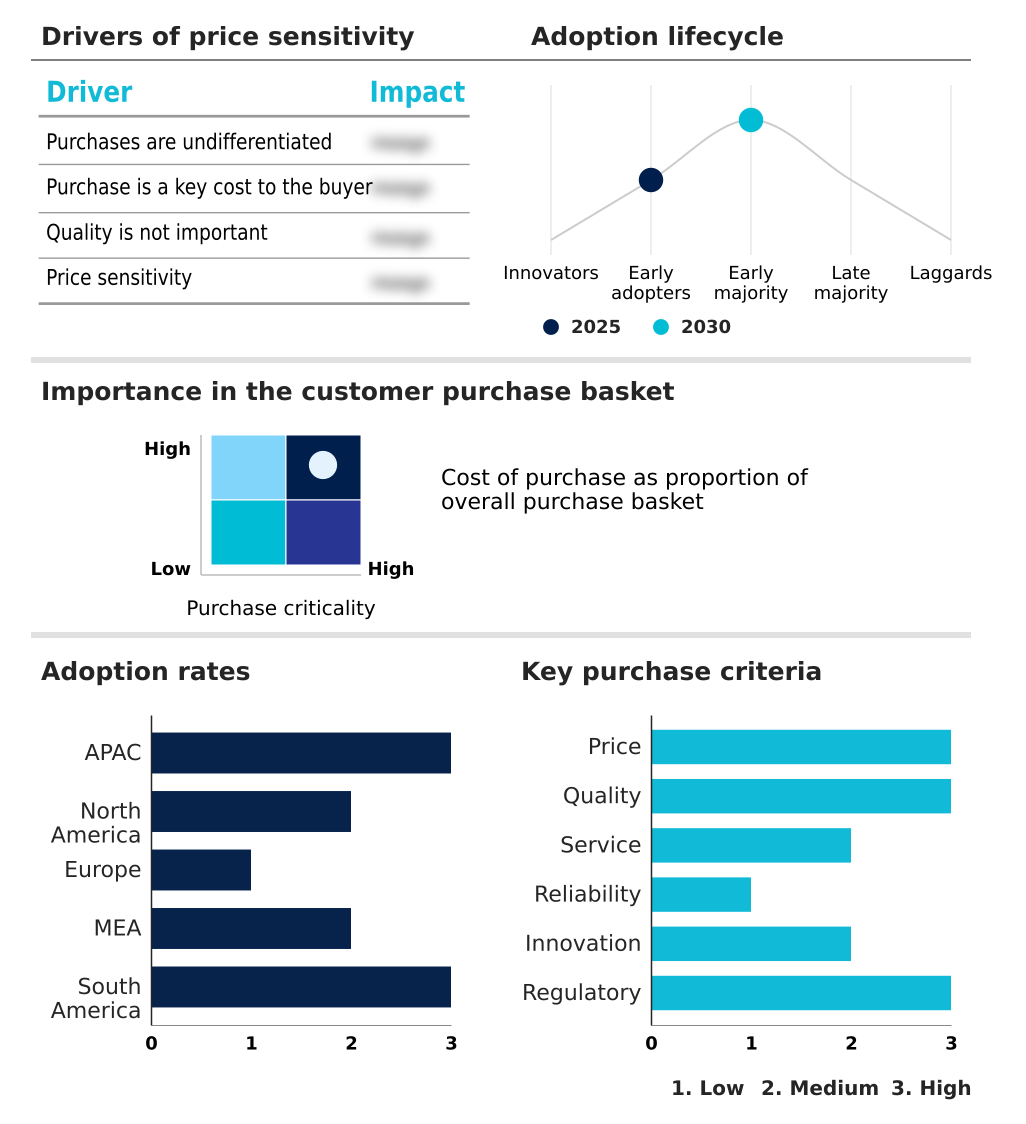
The steam turbine market forecasting report includes the adoption lifecycle of the market, covering from the innovator’s stage to the laggard’s stage. It focuses on adoption rates in different regions based on penetration. Furthermore, the steam turbine market report also includes key purchase criteria and drivers of price sensitivity to help companies evaluate and develop their market growth analysis strategies.
Customer Landscape of Steam Turbine Industry
Competitive Landscape
Companies are implementing various strategies, such as strategic alliances, steam turbine market forecast, partnerships, mergers and acquisitions, geographical expansion, and product/service launches, to enhance their presence in the industry.
Ansaldo Energia S.p.A. - Delivers highly engineered industrial rotating equipment, specifically focusing on advanced utility scale power generation systems and mechanical drive applications tailored for high-efficiency combined cycle heat recovery operations.
The industry research and growth report includes detailed analyses of the competitive landscape of the market and information about key companies, including:
- Ansaldo Energia S.p.A.
- Baker Hughes Co.
- Bharat Heavy Electricals Ltd.
- Chart Industries Inc.
- Chola Turbo Machinery
- Depretto Industrie S.r.l.
- Dongfang Electric Corp. Ltd.
- Doosan Enerbility Co. Ltd.
- Elliott Co.
- Everllence SE
- Fuji Electric Co. Ltd.
- GE Vernova Inc.
- Harbin Electric Company Ltd.
- Hayward Tyler Fluid Handling Ltd.
- Kawasaki Heavy Industries Ltd.
- Mitsubishi Heavy Industries
- Shanghai Electric Group Co.
- Siemens Energy AG
- Skinner Power Systems
- Toshiba Corp.
- Triveni Turbines Ltd.
- Turtle Turbines
- WEG S.A
Qualitative and quantitative analysis of companies has been conducted to help clients understand the wider business environment as well as the strengths and weaknesses of key industry players. Data is qualitatively analyzed to categorize companies as pure play, category-focused, industry-focused, and diversified; it is quantitatively analyzed to categorize companies as dominant, leading, strong, tentative, and weak.
Recent Development and News in Steam turbine market
- In the Renewable Electricity industry, the rapid deployment of utility scale power generation utilizing intermittent wind and solar assets has mandated extreme grid flexibility, directly impacting Steam Turbine demand by requiring rapid load ramping capability and advanced thermal stress mitigation systems.
- Stringent decarbonization mandate compliance across global emission frameworks has forced heavy processing industry applications to transition away from legacy fossil fuel thermal assets, accelerating the adoption of biomass fueled combined heat and power systems to maintain localized energy self reliance.
- The transition toward decentralized municipal waste to energy infrastructure has required localized facilities to upgrade district heating network expansion projects, driving consistent downstream integration of custom engineered extraction condensing steam turbines to optimize industrial process heat distribution.
- Expanding investments in small modular reactor deployment for zero-emission baseload electrical power stability have reshaped secondary steam cycle optimization standards, fundamentally altering the structural engineering requirements for heavy industrial rotating equipment deployed in high-moisture operational environments.
Dive into Technavio’s robust research methodology, blending expert interviews, extensive data synthesis, and validated models for unparalleled Steam Turbine Market insights. See full methodology.
| Market Scope | |
|---|---|
| Page number | 294 |
| Base year | 2025 |
| Historic period | 2020-2024 |
| Forecast period | 2026-2030 |
| Growth momentum & CAGR | Accelerate at a CAGR of 4.1% |
| Market growth 2026-2030 | USD 4056.9 million |
| Market structure | Fragmented |
| YoY growth 2025-2026(%) | 4.0% |
| Key countries | China, India, Japan, South Korea, Indonesia, Vietnam, US, Canada, Mexico, Germany, Russia, UK, France, Italy, Spain, Saudi Arabia, UAE, South Africa, Egypt, Qatar, Brazil, Argentina and Chile |
| Competitive landscape | Leading Companies, Market Positioning of Companies, Competitive Strategies, and Industry Risks |
Research Analyst Overview
- The Steam Turbine environment is undergoing a fundamental structural realignment as industrial operators prioritize thermodynamic efficiency and extreme operational flexibility. Boardroom-level asset planning now heavily favors the deployment of physics informed neural networks and continuous predictive vibration analytics to maximize asset availability and navigate strict environmental compliance frameworks.
- By actively monitoring thermal fatigue resistance tracking across high pressure rotor shafts, generation facilities have achieved a 25% reduction in unscheduled mechanical failures, directly enhancing localized energy self reliance. This transition is further supported by the integration of advanced superalloy turbine blades and precision multi axis machining, which collectively push the performance boundaries of modern rotating equipment.
- Heavy precision forging techniques are being refined to produce robust casings capable of withstanding rapid thermal transients. Furthermore, non destructive casing evaluations and low pressure casing bypass systems enable legacy installations to safely accommodate highly variable steam flows.
- These technological advancements ensure that industrial mechanical drive applications and large-scale utility grids maintain uninterrupted rotational mechanical energy conversion under increasingly dynamic operating conditions.
What are the Key Data Covered in this Steam Turbine Market Research and Growth Report?
-
What is the expected growth of the Steam Turbine Market between 2026 and 2030?
-
USD 4.06 billion, at a CAGR of 4.1%
-
-
What segmentation does the market report cover?
-
The report is segmented by End-user (Utility, and Industrial), Type (Reaction, and Impulse), Technology (Steam cycle, Combined cycle, and Cogeneration) and Geography (APAC, North America, Europe, Middle East and Africa, South America)
-
-
Which regions are analyzed in the report?
-
APAC, North America, Europe, Middle East and Africa and South America
-
-
What are the key growth drivers and market challenges?
-
Surging global electrical energy demand driven by industrialization, Accelerating global decarbonization mandates
-
-
Who are the major players in the Steam Turbine Market?
-
Ansaldo Energia S.p.A., Baker Hughes Co., Bharat Heavy Electricals Ltd., Chart Industries Inc., Chola Turbo Machinery, Depretto Industrie S.r.l., Dongfang Electric Corp. Ltd., Doosan Enerbility Co. Ltd., Elliott Co., Everllence SE, Fuji Electric Co. Ltd., GE Vernova Inc., Harbin Electric Company Ltd., Hayward Tyler Fluid Handling Ltd., Kawasaki Heavy Industries Ltd., Mitsubishi Heavy Industries, Shanghai Electric Group Co., Siemens Energy AG, Skinner Power Systems, Toshiba Corp., Triveni Turbines Ltd., Turtle Turbines and WEG S.A
-
Market Research Insights
- The Steam Turbine Market is experiencing a structural transition focused on localized energy self reliance and operational thermal stress management. As power producers transition away from conventional baseload operations, the integration of predictive diagnostic maintenance tools has reduced unscheduled plant downtime by 24%, directly improving overall asset ROI.
- Concurrently, heavy processing industry applications are actively deploying combined heat and power systems to maximize fuel utilization. By capturing high temperature exhaust gas, industrial captive power plants have achieved a 35% improvement in baseline thermodynamic efficiency, significantly lowering primary energy expenditures.
- These strategic equipment upgrades allow facility managers to navigate strict decarbonization mandate compliance while maintaining essential steam cycle performance optimization across continuous manufacturing cycles.
We can help! Our analysts can customize this steam turbine market research report to meet your requirements.
 RIA -

