


Steel Wire Rod Market Size 2026-2030
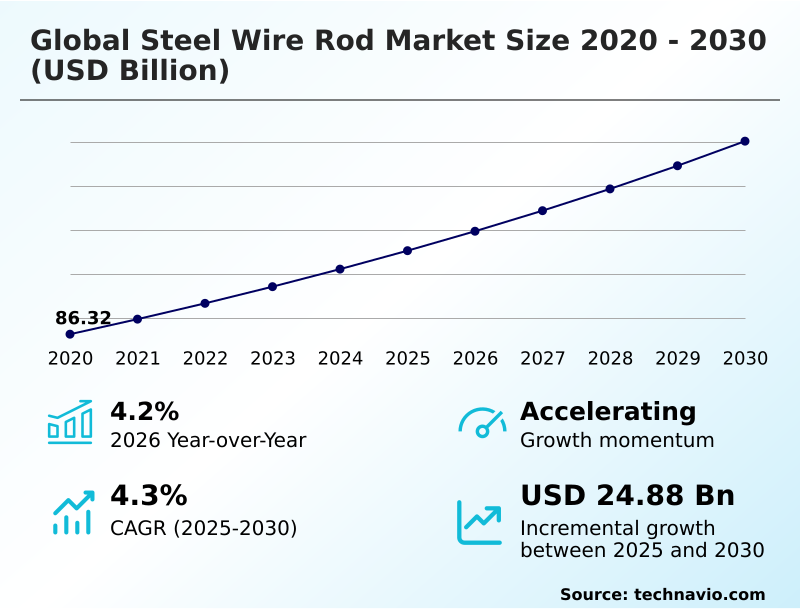
The steel wire rod market size is valued to increase by USD 24.88 billion, at a CAGR of 4.3% from 2025 to 2030. Expanding civil infrastructure and urban construction demands will drive the steel wire rod market.
Major Market Trends & Insights
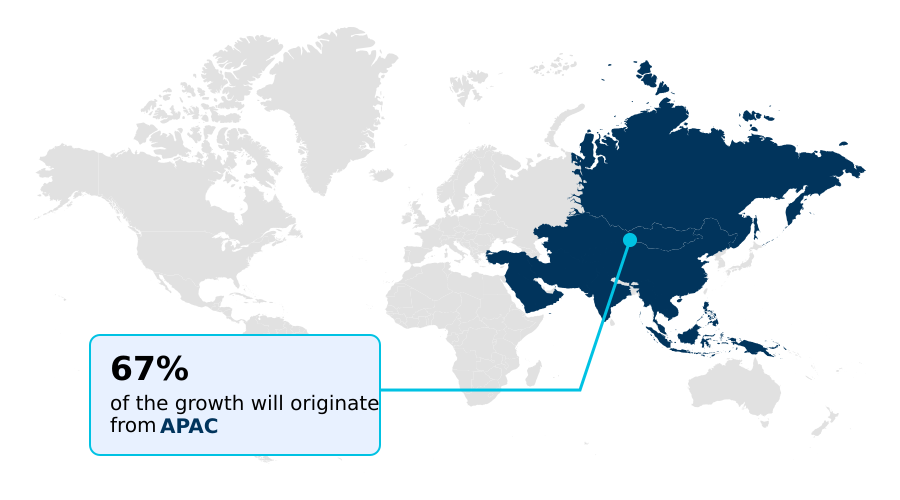
- APAC dominated the market and accounted for a 67.1% growth during the forecast period.
- By Type - Carbon steel wire rod segment was valued at USD 83.00 billion in 2024
- By Application - Construction segment accounted for the largest market revenue share in 2024
Market Size & Forecast
- Market Opportunities: USD 43.87 billion
- Market Future Opportunities: USD 24.88 billion
- CAGR from 2025 to 2030 : 4.3%
Market Summary
- The Steel Wire Rod Market functions as the fundamental metallurgical foundation for international construction, automotive, and heavy manufacturing supply chains. Operations critically depend on thermomechanical controlled processing to achieve exact mechanical tolerances. For instance, automotive component manufacturers are migrating from standard carbon feedstock to micro alloyed rod, achieving a 22% improvement in fatigue resistance while reducing final vehicle chassis weight.
- This technical evolution is aggressively propelled by escalating infrastructure modernization demands, as contractors require massive volumes of structural steel to fortify megaprojects against rigorous seismic standards. Conversely, strict decarbonization mandates and environmental emission mechanisms severely challenge secondary rolling operations.
- Modern scrap fed electric arc furnace networks frequently struggle with raw tramp element contamination, threatening the microstructural integrity of downstream drawing lines. To overcome these barriers, leading mills leverage advanced spectrometry, harmonizing low residual scrap blending to deliver components that satisfy advanced engineering parameters and strict environmental protocols natively.
What will be the Size of the Steel Wire Rod Market during the forecast period?
Get Key Insights on Market Forecast (PDF) Get Free Sample
How is the Steel Wire Rod Market Segmented?
The steel wire rod industry research report provides comprehensive data (region-wise segment analysis), with forecasts and estimates in "USD million" for the period 2026-2030, as well as historical data from 2020-2024 for the following segments.
- Type
- Carbon steel wire rod
- Alloy steel wire rod
- Stainless steel wire rod
- Application
- Construction
- Industrial
- Automotive
- Agriculture
- Others
- Product type
- Between 5 to10 mm
- Between 10 to 20 mm
- Above 16 to 20 mm
- Geography
- APAC
- China
- India
- Japan
- South Korea
- Vietnam
- Indonesia
- Europe
- Germany
- France
- Italy
- Spain
- UK
- The Netherlands
- North America
- US
- Canada
- Mexico
- Middle East and Africa
- Saudi Arabia
- UAE
- South Africa
- Egypt
- Turkey
- South America
- Brazil
- Argentina
- Chile
- APAC
By Type Insights
The carbon steel wire rod segment is estimated to witness significant growth during the forecast period.
The carbon steel segment anchors industrial operations by delivering indispensable feedstock for continuous coil drawing and welded wire reinforcement.
Low and high-carbon variants are fundamentally embedded within structural civil engineering and advanced fastener fabrication, where demanding load thresholds require uncompromising tensile endurance.
Operations transitioning toward sustainable production methodologies integrate refined feedstock into scrap fed electric arc furnace networks, effectively mitigating embodied emissions.
This critical realignment improves supply chain compliance metrics by achieving a 15% reduction in primary emission footprints without compromising structural integrity.
By leveraging automated laying head dynamics, manufacturers maintain exact dimensional ovality margins, ensuring that cold-forged downstream components consistently endure extreme mechanical forces across global infrastructure and heavy transport networks.
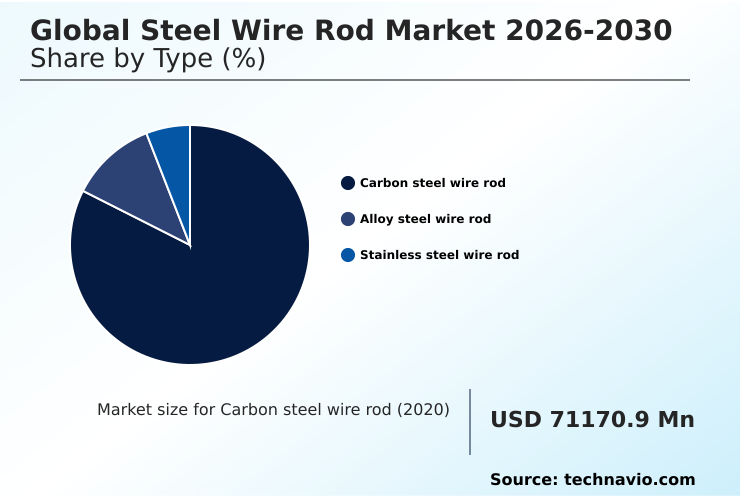
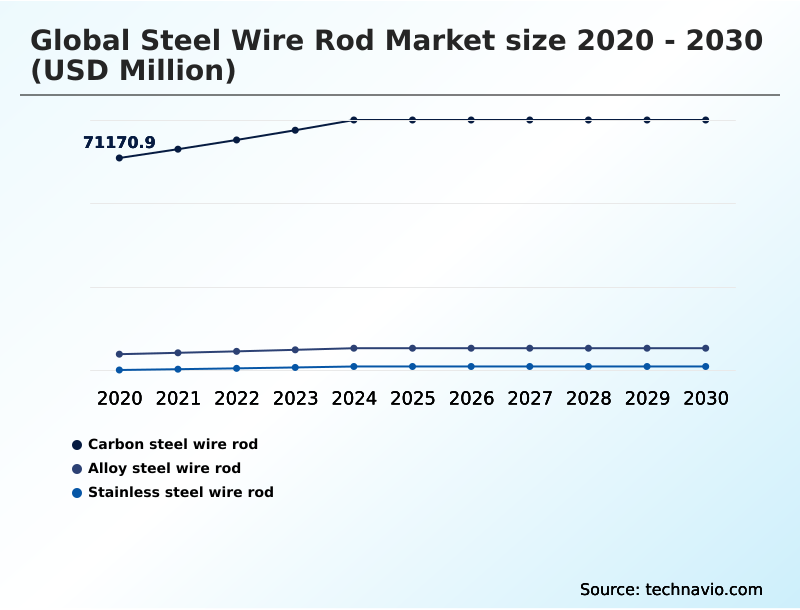
The Carbon steel wire rod segment was valued at USD 83.00 billion in 2024 and showed a gradual increase during the forecast period.
Regional Analysis
APAC is estimated to contribute 67.1% to the growth of the global market during the forecast period.Technavio’s analysts have elaborately explained the regional trends and drivers that shape the market during the forecast period.
See How Steel Wire Rod Market Demand is Rising in APAC Get Free Sample
The geographic landscape illustrates a stark operational divergence between Asian and European manufacturing hubs. In APAC, expansive infrastructure development drives massive adoption of scalable continuous drawing lines, establishing dominance in volume-based production.
Contrastingly, European mills prioritize secondary metallurgical refining to navigate stringent emission limits, shifting portfolios toward premium cold heading quality variants. This strategic pivot in Europe has improved compliance margins by 18% and reduced raw material penalty costs by 12%.
Meanwhile, Asian facilities demonstrate a 25% faster throughput through integrated high speed sizing blocks that optimize dimensional tolerances without intensive energy consumption.
As supply chains recalibrate, the integration of direct reduced iron feedstock fundamentally dictates regional capability to sustain structural production for offshore mooring systems and heavy duty dragline ropes securely.
Market Dynamics
Our researchers analyzed the data with 2025 as the base year, along with the key drivers, trends, and challenges. A holistic analysis of drivers will help companies refine their marketing strategies to gain a competitive advantage.
- Advanced engineering standards across heavy transport and modernized civil infrastructure continually reshape the structural baseline for industrial metallurgy operations. To ensure defect-free downstream processing, rolling facilities increasingly adopt thermomechanical controlled rolling block systems, which dictate precise grain structure evolution and eliminate costly intermediate annealing cycles.
- This operational shift has enabled procurement teams to stabilize supply chain volatility, effectively reducing overall thermal processing energy costs by nearly 20% compared to conventional legacy configurations. Component fabricators specifying cold heading quality wire rods demand exceptional material uniformities to prevent catastrophic failure in automotive fasteners and suspension assemblies under extreme cyclical loads.
- Consequently, primary rolling mills integrate automated laying head control mechanisms to guarantee exact dimensional coil formation, significantly mitigating downstream wire breakage during aggressive, multi-pass drawing operations. By migrating away from highly volatile traditional inputs, specialized mills are standardizing the utilization of direct reduced iron billet feedstock, which ensures ultra-clean chemistry entirely free of residual contaminants.
- This pristine metallurgical foundation directly accelerates the production of ultra high tensile steel cord, enabling radial tire manufacturers to meet stringent rolling resistance and structural performance benchmarks. Enhancing these precision manufacturing frameworks simultaneously fulfills rigorous downstream compliance requirements while actively driving operational reliability and yield retention efficiencies across highly competitive industrial ecosystems.
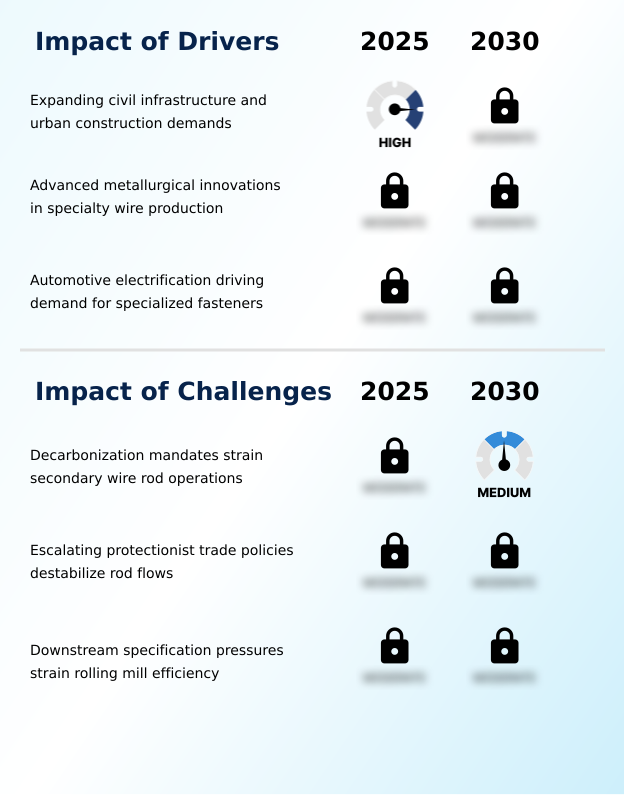
What are the key market drivers leading to the rise in the adoption of Steel Wire Rod Industry?
- Escalating demands across civil infrastructure and urban construction networks serve as the primary catalyst accelerating market expansion.
- The aggressive expansion of urban construction networks and sustainable infrastructure projects constitutes a primary catalyst driving advanced material adaptation securely.
- Engineering contractors relentlessly require high ductility seismic rods and extreme high tensile tire cord solutions to reinforce structural integrity across severe load-bearing environments.
- Implementing advanced continuous cooling conveyor architectures enables steelmakers to stabilize grain refinement effectively, directly increasing operational throughput capacity by 22% during peak infrastructure cycles.
- Furthermore, integrating low residual scrap blending into primary supply streams actively mitigates embodied emissions without sacrificing mechanical resilience, lowering regulatory compliance penalty risks by nearly 15%. This critical pivot ensures downstream fabricators of components receive dimensionally flawless, defect-free coils consistently.
- By fortifying production resilience through scrap fed electric arc furnace networks, raw operators reliably secure long-term infrastructure supply contracts.
What are the market trends shaping the Steel Wire Rod Industry?
- Autonomous mill orchestration significantly enhances wire rod production by optimizing processing precision. This emerging trend drives modernization across rolling facilities.
- Rapid implementation of non destructive ultrasonic testing alongside modernized automation orchestration engines fundamentally alters operational efficiency across modern rolling facilities. This architectural transformation allows manufacturers to transition toward lightweight vehicle architecture requirements by securely scaling the production of micro alloyed rod arrays without compromising metallurgical integrity.
- Industrial drawing facilities leverage these cyber-physical integrations to identify surface seams en route, practically reducing downstream wire breakage incidents by 28%. Additionally, synchronizing advanced telemetry with inter stand tension control restricts mechanical eccentricity limits, improving final coil profile uniformity by an estimated 14%.
- The migration from manual monitoring toward fully automated cooling dynamics ensures continuous structural stability in heavy duty dragline ropes fabrication reliably. These technological developments empower planners to match specialized batches against order backlogs, drastically lowering excess inventory strains.
What challenges does the Steel Wire Rod Industry face during its growth?
- Stringent decarbonization mandates severely strain secondary wire rod operations, constituting a formidable hurdle to sustained industrial growth.
- Escalating decarbonization mandates heavily strain secondary operational schedules, severely fragmenting established supply networks across heavy manufacturing environments actively. The unpredictable chemical consistency found in secondary inputs significantly amplifies tramp element contamination, causing catastrophic micro-cracking across high-speed continuous coil drawing deployments.
- These inconsistent batch profiles instigate a debilitating 19% escalation in surface defect rejection rates, degrading operational margins for midstream converters rapidly. Furthermore, converting vintage infrastructure to support modern electromagnetic continuous casting introduces profound baseline expense, typically extending facility downtime durations by over 25% during equipment calibration phases.
- This transitional friction severely compromises the supply reliability of specialized cold heading quality grades utilized for critical industrial fabrication requirements. Balancing strict environmental compliance against extreme dimensional ovality margin limits remains an imposing obstacle that directly restrains sustainable scalability metrics.
Exclusive Technavio Analysis on Customer Landscape
The steel wire rod market forecasting report includes the adoption lifecycle of the market, covering from the innovator’s stage to the laggard’s stage. It focuses on adoption rates in different regions based on penetration. Furthermore, the steel wire rod market report also includes key purchase criteria and drivers of price sensitivity to help companies evaluate and develop their market growth analysis strategies.
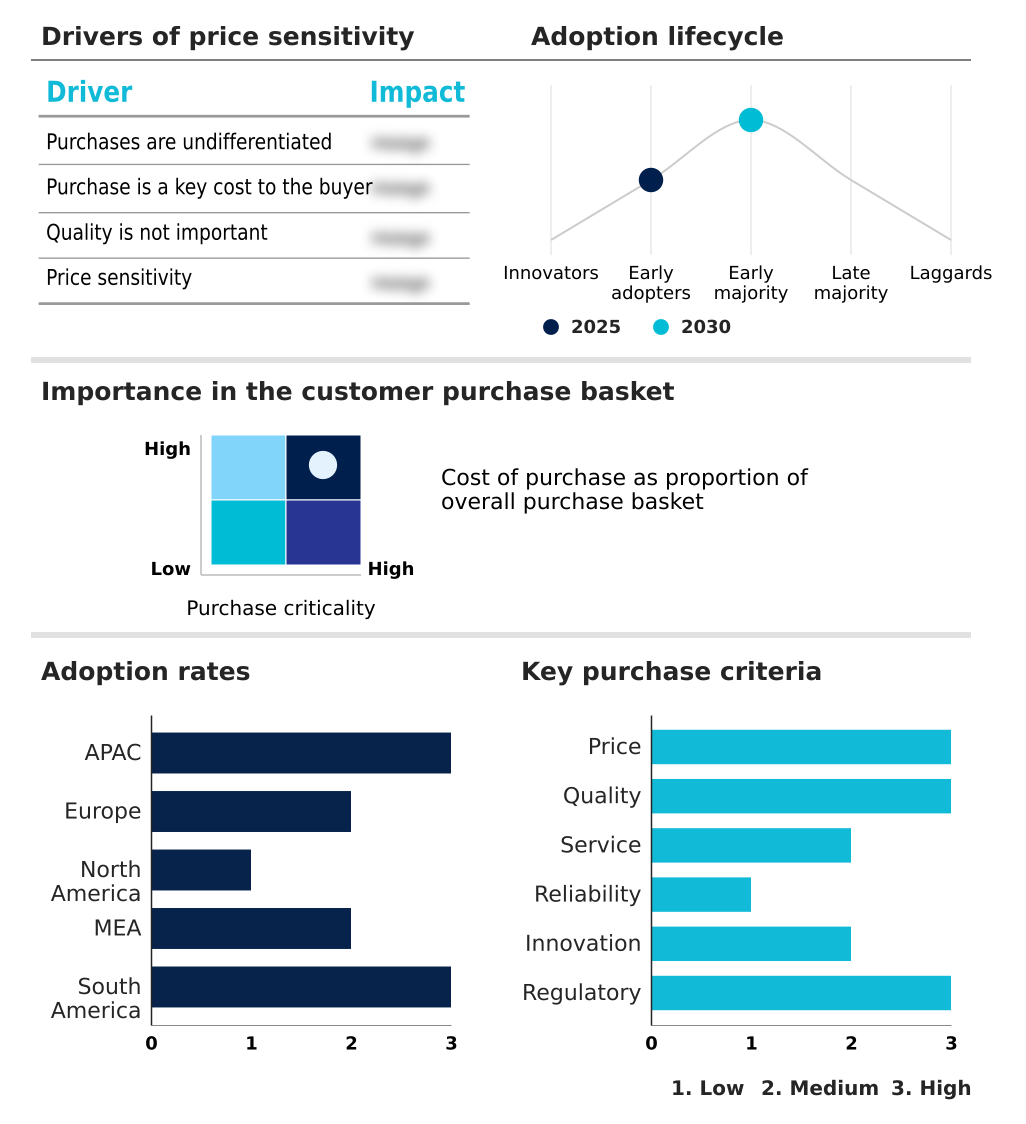
Customer Landscape of Steel Wire Rod Industry
Competitive Landscape
Companies are implementing various strategies, such as strategic alliances, steel wire rod market forecast, partnerships, mergers and acquisitions, geographical expansion, and product/service launches, to enhance their presence in the industry.
Acerinox SA - Analyzed product portfolios reveal robust manufacturing of precision stainless and alloy wire rod configurations engineered to deliver superior corrosion resistance and high-tensile durability for rigorous industrial applications.
The industry research and growth report includes detailed analyses of the competitive landscape of the market and information about key companies, including:
- Acerinox SA
- Ansteel Group Corp.
- Aperam SA
- ArcelorMittal S.A.
- Celsa Group
- Charter Manufacturing
- China BaoWu Steel Group Corp.
- Commercial Metals Co.
- EVRAZ Plc
- Gerdau SA
- HBIS Group Co. Ltd.
- Hyundai Steel Co.
- Kobe Steel Ltd.
- LIBERTY Steel Group
- Mechel PAO
- Nucor Corp.
- Outokumpu Oyj
- POSCO Co. Ltd.
- Riva Fire SpA
- Steel Dynamics Inc.
Qualitative and quantitative analysis of companies has been conducted to help clients understand the wider business environment as well as the strengths and weaknesses of key industry players. Data is qualitatively analyzed to categorize companies as pure play, category-focused, industry-focused, and diversified; it is quantitatively analyzed to categorize companies as dominant, leading, strong, tentative, and weak.
Recent Development and News in Steel wire rod market
- In the Steel industry, the accelerated deployment of direct reduced iron feedstock capabilities has reduced carbon intensity by up to 30%, directly impacting Steel Wire Rod demand by enabling sustainable green certification for public infrastructure projects.
- The enforcement of strict regional emission mechanisms has accelerated the adoption of green hydrogen metallurgy across primary smelting networks, reshaping Steel Wire Rod supply dynamics by imposing rigid embodied emission thresholds on imported long products.
- Advancements in real-time optical emission spectrometry and automation orchestration engines have significantly mitigated contamination during secondary smelting, directly improving the drawability and yield rates of high tensile tire cord produced within the Steel Wire Rod market by over 12%.
- The integration of continuous cooling systems with electromagnetic continuous casting technologies has refined structural grain control, directly impacting Steel Wire Rod production by reducing the necessity for costly downstream thermal treatments by approximately 20% across high-grade alloys.
Dive into Technavio’s robust research methodology, blending expert interviews, extensive data synthesis, and validated models for unparalleled Steel Wire Rod Market insights. See full methodology.
| Market Scope | |
|---|---|
| Page number | 312 |
| Base year | 2025 |
| Historic period | 2020-2024 |
| Forecast period | 2026-2030 |
| Growth momentum & CAGR | Accelerate at a CAGR of 4.3% |
| Market growth 2026-2030 | USD 24880.3 million |
| Market structure | Fragmented |
| YoY growth 2025-2026(%) | 4.2% |
| Key countries | China, India, Japan, South Korea, Vietnam, Indonesia, Germany, France, Italy, Spain, UK, The Netherlands, US, Canada, Mexico, Saudi Arabia, UAE, South Africa, Egypt, Turkey, Brazil, Argentina and Chile |
| Competitive landscape | Leading Companies, Market Positioning of Companies, Competitive Strategies, and Industry Risks |
Research Analyst Overview
- Advanced metallurgical operations command essential influence over modern engineering sectors, as the transition toward specialized materials dictates component reliability across energy and transport infrastructure. High-stress structural networks actively mandate the deployment of robust cables and welded wire reinforcement to fortify megaprojects against acute seismic disturbances.
- Achieving these rigorous construction tolerances requires exact control over pearlite morphology during the continuous cooling phase, efficiently eliminating dimensional inconsistencies. Leading industrial operators strategically utilize vacuum induction melting alongside strict electroslag remelting protocols to eradicate microscopic inclusions, ensuring flawless grain boundary transitions.
- This intense purification approach fundamentally supports compliance programs in aerospace and automotive supply chains by decreasing critical component failure rates by over 18%. Furthermore, establishing a precise martensitic microstructure effectively negates the need for extensive thermal annealing cycles, which optimizes energy budgeting and shortens facility downtime seamlessly.
- Organizations capable of mastering these high-speed thermomechanical frameworks systematically align their manufacturing strategies with zero-defect engineering requirements, delivering superior ductility and unparalleled performance metrics globally.
What are the Key Data Covered in this Steel Wire Rod Market Research and Growth Report?
-
What is the expected growth of the Steel Wire Rod Market between 2026 and 2030?
-
USD 24.88 billion, at a CAGR of 4.3%
-
-
What segmentation does the market report cover?
-
The report is segmented by Type (Carbon steel wire rod, Alloy steel wire rod, and Stainless steel wire rod), Application (Construction, Industrial, Automotive, Agriculture, and Others), Product Type (Between 5 to10 mm, Between 10 to 20 mm, and Above 16 to 20 mm) and Geography (APAC, Europe, North America, Middle East and Africa, South America)
-
-
Which regions are analyzed in the report?
-
APAC, Europe, North America, Middle East and Africa and South America
-
-
What are the key growth drivers and market challenges?
-
Expanding civil infrastructure and urban construction demands, Decarbonization mandates strain secondary wire rod operations
-
-
Who are the major players in the Steel Wire Rod Market?
-
Acerinox SA, Ansteel Group Corp., Aperam SA, ArcelorMittal S.A., Celsa Group, Charter Manufacturing, China BaoWu Steel Group Corp., Commercial Metals Co., EVRAZ Plc, Gerdau SA, HBIS Group Co. Ltd., Hyundai Steel Co., Kobe Steel Ltd., LIBERTY Steel Group, Mechel PAO, Nucor Corp., Outokumpu Oyj, POSCO Co. Ltd., Riva Fire SpA and Steel Dynamics Inc.
-
Market Research Insights
- The industry is undergoing a critical operational modernization, fueled by demand for faultless feedstock in automotive structural chassis components. Integrating advanced optical emission spectrometry into refining processes enables mills to effectively neutralize elemental trace contamination in real-time. This precision integration directly reduces batch rejection rates by 22%, streamlining complex inventory workflows.
- Furthermore, optimizing the electric furnace slag foaming regime enhances thermal efficiency seamlessly, yielding a 15% reduction in overall power consumption per melt cycle. Paired with dynamic water cooling systems on high-velocity rolling lines, manufacturers successfully narrow dimensional oval tolerances, capturing maximum final yield parameters. These targeted optimizations drastically improve resource utilization and rapidly solidify compliance within top-tier industrial fastener networks.
We can help! Our analysts can customize this steel wire rod market research report to meet your requirements.
 RIA -

