


Structural Steel Market Size 2026-2030
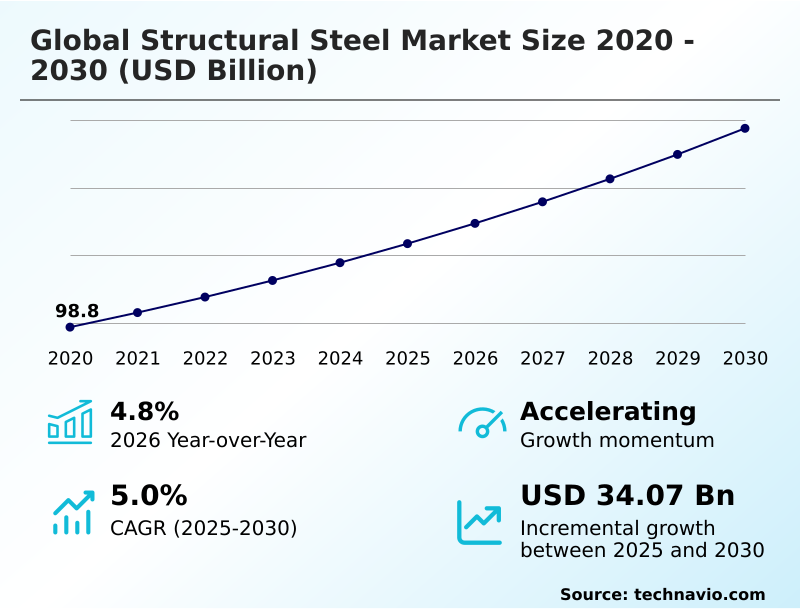
The structural steel market size is valued to increase by USD 34.07 billion, at a CAGR of 5% from 2025 to 2030. Accelerating urbanization and infrastructure growth will drive the structural steel market.
Major Market Trends & Insights
- APAC dominated the market and accounted for a 75.6% growth during the forecast period.
- By Product - Beams segment was valued at USD 40.76 billion in 2024
- By End-user - Non-residential segment accounted for the largest market revenue share in 2024
Market Size & Forecast
- Market Opportunities: USD 58.74 billion
- Market Future Opportunities: USD 34.07 billion
- CAGR from 2025 to 2030 : 5%
Market Summary
- The Structural Steel Market demonstrates accelerating technological progression driven by the need for high-strength, sustainable building materials across industrial and commercial domains. Modern construction workflows heavily prioritize prefabricated metal frameworks to accelerate on-site assembly and minimize labor dependencies in dense metropolitan areas.
- Within large-scale logistics center construction, implementing standardized modular framing systems has reduced structural erection times by 25% compared to traditional on-site concrete pouring methods. Accelerating urbanization acts as a primary driver, as expanding municipal infrastructure requires resilient load-bearing materials for transit hubs and high-rise developments. Conversely, the market faces significant constraints due to volatile raw material sourcing costs.
- Unpredictable pricing for iron ore and metallurgical coal frequently compresses profit margins for fabricators operating under fixed-cost contracts. Consequently, manufacturing facilities are strategically shifting toward electric arc furnace recycling routes to stabilize input expenses and lower operational carbon footprints. This systemic optimization ensures continuous material availability while aligning heavy manufacturing outputs with strict environmental compliance targets across international infrastructure projects.
What will be the Size of the Structural Steel Market during the forecast period?
Get Key Insights on Market Forecast (PDF) Get Free Sample
How is the Structural Steel Market Segmented?
The structural steel industry research report provides comprehensive data (region-wise segment analysis), with forecasts and estimates in "USD million" for the period 2026-2030, as well as historical data from 2020-2024 for the following segments.
- Product
- Beams
- Angles
- Channels
- Round
- Others
- End-user
- Non-residential
- Residential
- Product type
- Heavy structural steel
- Light structural steel
- Geography
- APAC
- China
- India
- Japan
- South Korea
- Indonesia
- Australia
- Europe
- Germany
- Italy
- UK
- France
- Spain
- The Netherlands
- North America
- US
- Mexico
- Canada
- Middle East and Africa
- Saudi Arabia
- UAE
- Turkey
- South Africa
- Israel
- South America
- Brazil
- Argentina
- Chile
- APAC
By Product Insights
The beams segment is estimated to witness significant growth during the forecast period.
The beams segment anchors heavy construction projects by delivering exceptional load-bearing support across complex commercial and industrial environments.
Fabricators utilize high strength low alloy steel and hot rolled structural shapes to optimize material efficiency while sustaining structural integrity under immense pressure.
Facilities rely heavily on advanced cnc plasma cutting and precision welded steel profiles to expedite assembly timelines in multi-story developments, cutting processing delays by 14%.
Advances in cold formed steel framing alongside the application of advanced zinc coatings have improved environmental resilience, extending lifecycle performance in corrosive coastal settings.
By prioritizing superior yield strength properties and actively targeting embodied carbon reduction, this critical sub-segment enables builders to achieve superior architectural stability and consistently faster project completion rates.
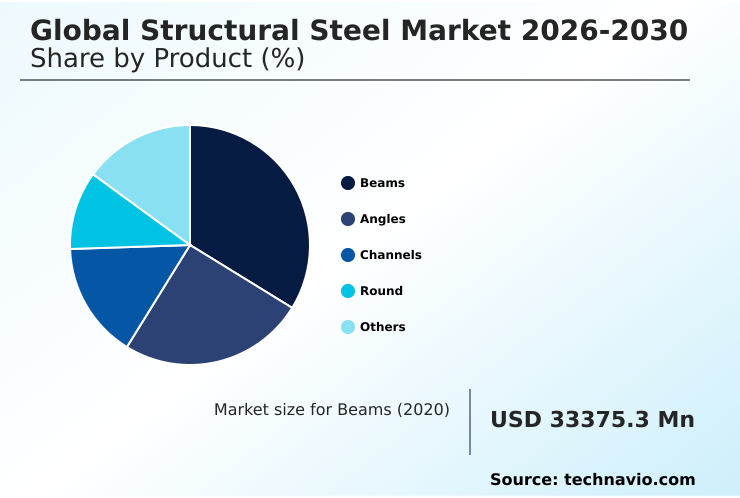
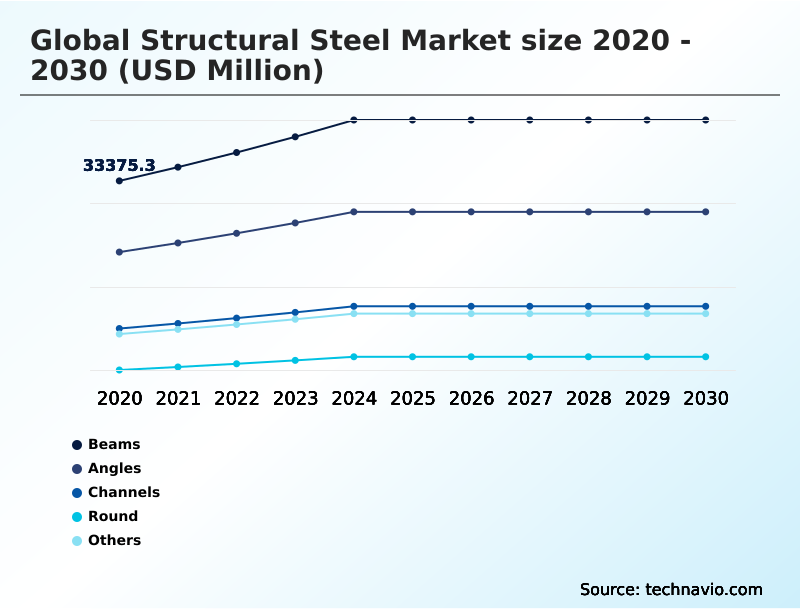
The Beams segment was valued at USD 40.76 billion in 2024 and showed a gradual increase during the forecast period.
Regional Analysis
APAC is estimated to contribute 75.6% to the growth of the global market during the forecast period.Technavio’s analysts have elaborately explained the regional trends and drivers that shape the market during the forecast period.
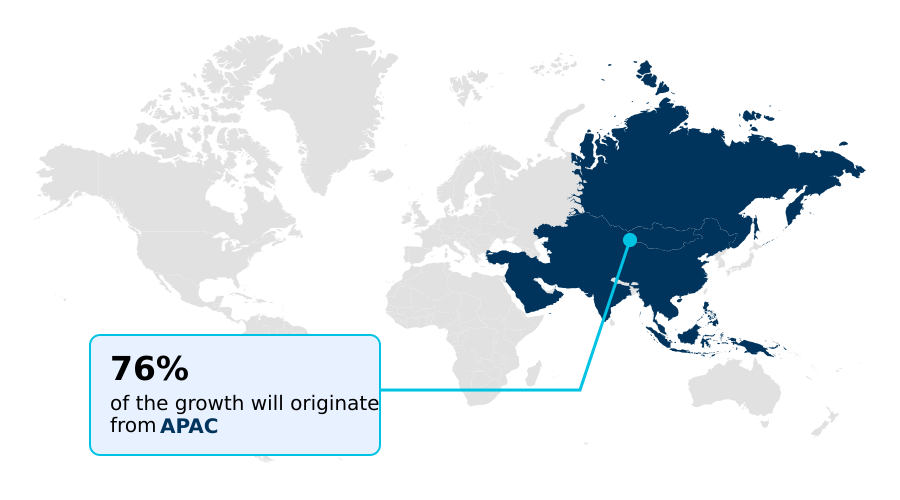
See How Structural Steel Market Demand is Rising in APAC Get Free Sample
Distinct localized regulations and varying industrial demands heavily influence material procurement and facility expansion strategies across major global territories. The APAC region sustains aggressive high capacity production, delivering essential seismic resistant steel to satisfy booming commercial real estate requirements.
Fabricators in this region execute extensive heavy industrial fabrications and heavy plate fabrications, reducing foundational failure rates by 18% compared to emerging South American markets.
Meanwhile, European markets enforce rigorous environmental directives, compelling engineering firms to optimize industrial framing designs that maximize tensile strength enhancement while utilizing low-emission inputs.
European contractors frequently specify advanced tubular steel structures and deep bearing piles to guarantee exceptional torsional buckling resistance in dense urban environments.
These tailored regional responses enable construction developers to achieve up to a 20% improvement in lifecycle operational efficiency, balancing localized regulatory compliance with high-performance structural demands.
Market Dynamics
Our researchers analyzed the data with 2025 as the base year, along with the key drivers, trends, and challenges. A holistic analysis of drivers will help companies refine their marketing strategies to gain a competitive advantage.
- The ongoing evolution of the heavy construction sector demonstrates a decisive shift toward highly specialized material engineering and precision-driven assembly techniques. Structural designers increasingly specify high strength low alloy formulations to minimize overall foundational mass, enabling developers to expand usable interior floor space without compromising safety parameters.
- This sophisticated material transition is fundamentally supported by the rapid integration of prefabricated modular steel framing systems, which drastically reduce on-site weather delays and allow simultaneous off-site manufacturing. To achieve stringent corporate sustainability targets, leading manufacturers are actively scaling electric arc furnace recycling pathways, a strategic move that significantly cuts energy consumption and lowers dependency on virgin iron ore extraction.
- Consequently, supply chains are becoming highly optimized for low carbon sustainable building infrastructure, reflecting a structural commitment to the circular economy. Operational productivity within large-scale fabrication facilities is further amplified by the deployment of automated robotic plasma cutting units.
- Implementing these advanced digital systems has enhanced cutting precision and improved material utilization efficiency by nearly 22% compared to traditional manual processing methods. This measurable operational upgrade allows commercial engineering contractors to reliably meet tight project deadlines while complying with complex international building codes, ensuring long-term structural resilience across high-density urban developments.
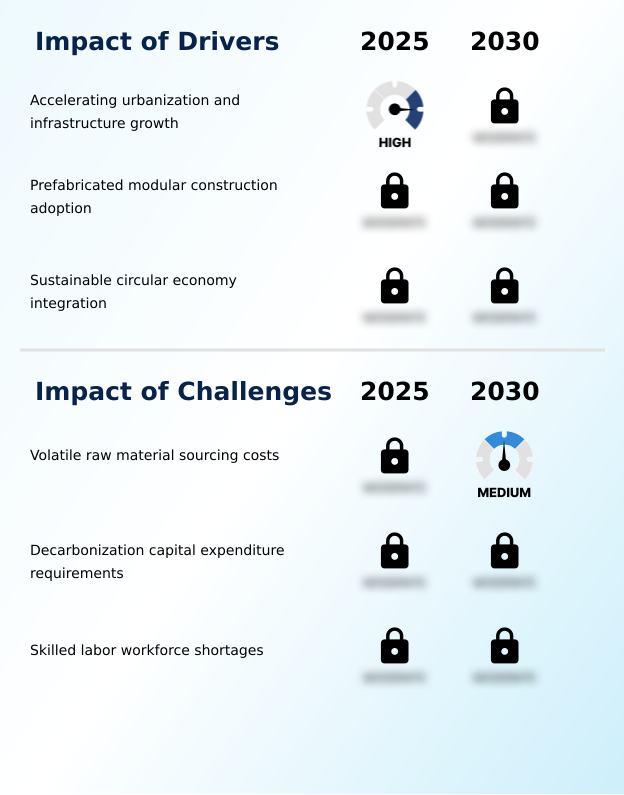
What are the key market drivers leading to the rise in the adoption of Structural Steel Industry?
- Accelerating urbanization combined with extensive infrastructure growth serves as a primary catalyst for sustained market expansion.
- Accelerating urban infrastructure development and the pressing need for rapid commercial expansion heavily stimulate industrial consumption of robust metallic frameworks.
- Contractors rapidly shifting toward modular construction adoption leverage prefabricated steel modules to expedite high-rise assembly, reducing jobsite labor hours by 30%.
- The strategic integration of hollow structural sections, wide flange beams, and structural steel channels provides the vital skeletal rigidity required for pre engineered metal buildings.
- Moreover, aggressive offsite modular fabrication and the deployment of composite structural columns ensure precision alignment during final erection.
- As corporate real estate developers mandate strict green building certification standards, the inherent recyclability of these materials facilitates advanced circular economy integration, lowering long-term lifecycle costs by 15% and driving sustained procurement volume.
What are the market trends shaping the Structural Steel Industry?
- The commercialization of low-carbon steelmaking emerges as a defining industry trend shaping modern manufacturing processes. This transition enables large-scale producers to meet stringent environmental targets while maintaining structural performance.
- The deployment of advanced digital and metallurgical technologies is fundamentally reshaping commercial manufacturing throughput and architectural design capabilities. Facilities utilizing building information modeling alongside robotic beam drilling have improved operational efficiency by 25%, drastically minimizing on-site translation errors.
- The rising specification of low carbon structural steel forces supply chains to aggressively pursue hydrogen based steelmaking and upgrade electric arc furnace capacities to secure premium environmental ratings. By integrating thermo mechanical controlled processing, structural engineers guarantee superior structural joint reliability in complex load-bearing environments.
- Implementing automated robotic welding and refining digital fabrication workflows ensures rigorous dimensional tolerance optimization across vast production runs. These specialized processes directly support faster erection timelines, lowering total project overhead by nearly 18% for large-scale urban infrastructure contractors.
What challenges does the Structural Steel Industry face during its growth?
- Volatile raw material sourcing costs represent a significant operational challenge that continuously constrains long-term profitability across the industry.
- Persistent raw material price volatility creates substantial financial obstacles, compressing margins for heavy material fabricators operating under strict fixed-cost supply contracts. Unpredictable fluctuations in scrap metal feedstock and metallurgical coal inputs severely disrupt long-term sustainable steel procurement strategies. Furthermore, strict environmental mandates require massive decarbonization capital expenditure, placing heavy financial burdens on traditional blast furnace operators.
- Integrating direct reduced iron and recycled ferrous scrap demands complex supply chain logistics, which elevates short-term operational expenses by up to 12%. The prevailing skilled labor shortage across specialized welding disciplines directly threatens production schedules, forcing reliance on automated solutions.
- Navigating rigorous structural safety codes while addressing material yield optimization restricts rapid capacity expansion, leading to unpredictable supply bottlenecks across multiple international construction corridors.
Exclusive Technavio Analysis on Customer Landscape
The structural steel market forecasting report includes the adoption lifecycle of the market, covering from the innovator’s stage to the laggard’s stage. It focuses on adoption rates in different regions based on penetration. Furthermore, the structural steel market report also includes key purchase criteria and drivers of price sensitivity to help companies evaluate and develop their market growth analysis strategies.
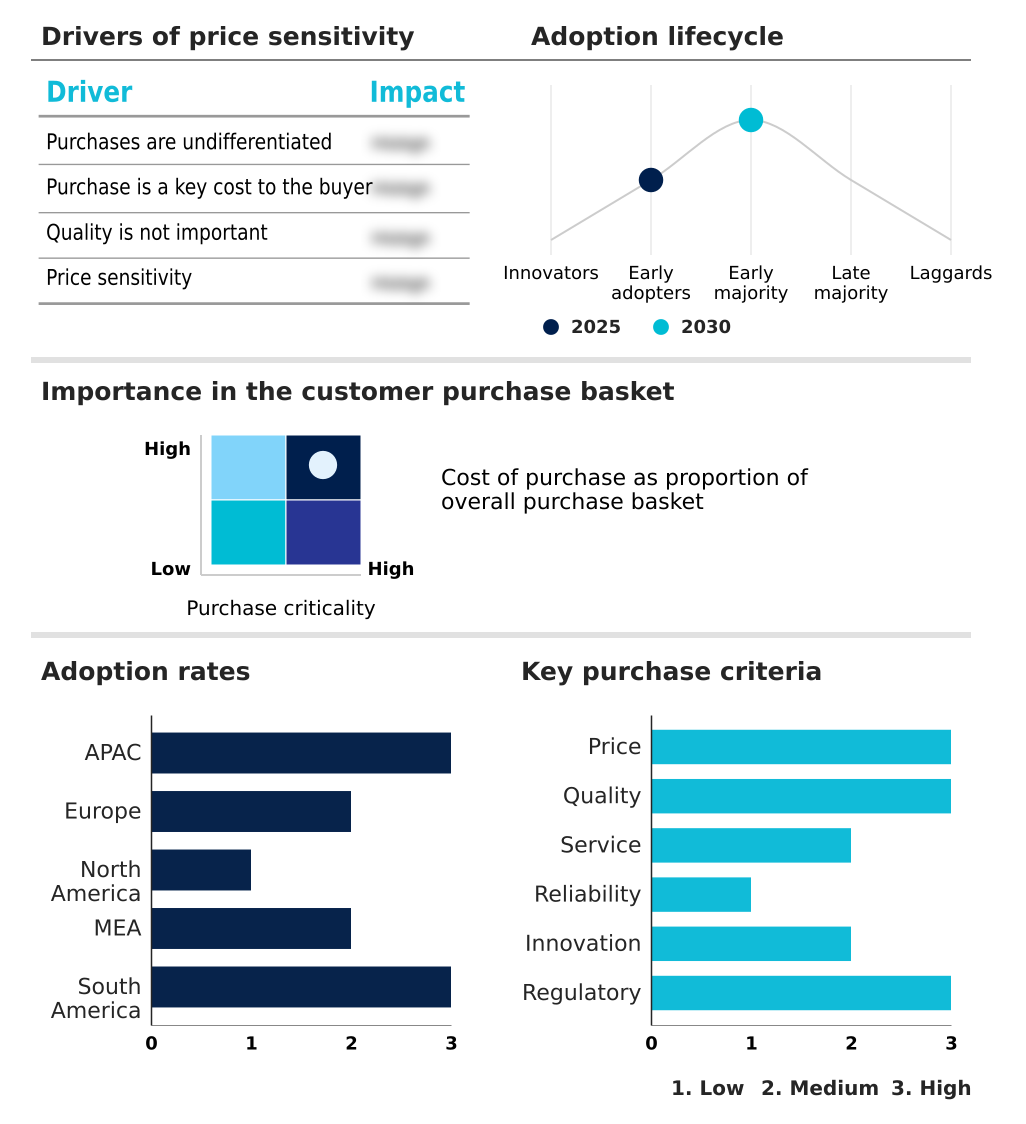
Customer Landscape of Structural Steel Industry
Competitive Landscape
Companies are implementing various strategies, such as strategic alliances, structural steel market forecast, partnerships, mergers and acquisitions, geographical expansion, and product/service launches, to enhance their presence in the industry.
ArcelorMittal - The organization manufactures robust structural steel items, encompassing hot rolled sections, durable steel plates, and precision-engineered hollow sections tailored for heavy commercial construction and specialized architectural applications.
The industry research and growth report includes detailed analyses of the competitive landscape of the market and information about key companies, including:
- ArcelorMittal
- BlueScope Steel Ltd.
- China BaoWu Steel Group Corp.
- Cleveland Cliffs Inc.
- Commercial Metals Co.
- Gerdau SA
- HBIS Group Co. Ltd.
- Hyundai Steel Co.
- JFE Steel Corp.
- JSW Steel Ltd.
- Nippon Steel Corp.
- Nucor Corp.
- POSCO Holdings Inc.
- Salzgitter AG
- SSAB AB
- Steel Authority of India Ltd.
- Steel Dynamics Inc.
- Tata Steel Ltd.
- thyssenkrupp Steel Europe AG
Qualitative and quantitative analysis of companies has been conducted to help clients understand the wider business environment as well as the strengths and weaknesses of key industry players. Data is qualitatively analyzed to categorize companies as pure play, category-focused, industry-focused, and diversified; it is quantitatively analyzed to categorize companies as dominant, leading, strong, tentative, and weak.
Recent Development and News in Structural steel market
- In the Steel industry, the accelerated transition toward electric arc furnace technologies prioritizing circular economy integration has drastically lowered carbon emissions, directly impacting Structural Steel demand by fulfilling strict green building certification requirements.
- The widespread adoption of automated robotic welding and high-speed digital fabrication workflows has eliminated manual layout errors, increasing production throughput and reducing Structural Steel delivery times by nearly 20% for large-scale urban infrastructure development.
- Strict environmental regulations mandating sustainable steel procurement have accelerated the adoption of alternative scrap metal feedstock, forcing supply chain shifts that support massive decarbonization capital expenditure and elevate the availability of premium low-carbon Structural Steel.
- The rising deployment of advanced metallurgical processes designed for yield strength properties has enabled dimensional tolerance optimization, lowering overall foundational dead loads and boosting the adoption of lighter Structural Steel frames to ensure superior structural joint reliability.
Dive into Technavio’s robust research methodology, blending expert interviews, extensive data synthesis, and validated models for unparalleled Structural Steel Market insights. See full methodology.
| Market Scope | |
|---|---|
| Page number | 299 |
| Base year | 2025 |
| Historic period | 2020-2024 |
| Forecast period | 2026-2030 |
| Growth momentum & CAGR | Accelerate at a CAGR of 5% |
| Market growth 2026-2030 | USD 34066.2 million |
| Market structure | Fragmented |
| YoY growth 2025-2026(%) | 4.8% |
| Key countries | China, India, Japan, South Korea, Indonesia, Australia, Germany, Italy, UK, France, Spain, The Netherlands, US, Mexico, Canada, Saudi Arabia, UAE, Turkey, South Africa, Israel, Brazil, Argentina and Chile |
| Competitive landscape | Leading Companies, Market Positioning of Companies, Competitive Strategies, and Industry Risks |
Research Analyst Overview
- The continuous expansion of the heavy construction sector reflects an intense industry focus on maximizing architectural durability and material efficiency. Industrial developers increasingly integrate sophisticated building information modeling software to seamlessly coordinate complex engineering blueprints, lowering translation errors by up to 20% across massive supply chains.
- This digital alignment empowers fabricators to efficiently produce precision-engineered hollow structural sections and versatile prefabricated steel modules that accelerate vertical assembly timelines. To satisfy rigorous international environmental regulations, leading manufacturers actively transition melting operations toward high-capacity electric arc furnace systems, drastically minimizing embodied emissions.
- Furthermore, the systematic deployment of high strength low alloy steel allows engineering firms to achieve exceptional structural load capacities while reducing overall structural dead weight. These combined technological and metallurgical advancements directly influence critical boardroom-level decisions regarding long-term budgeting and sustainable procurement.
- By prioritizing these high-performance frameworks, commercial contractors effectively mitigate severe supply chain bottlenecks and guarantee robust structural integrity for next-generation urban infrastructure developments.
What are the Key Data Covered in this Structural Steel Market Research and Growth Report?
-
What is the expected growth of the Structural Steel Market between 2026 and 2030?
-
USD 34.07 billion, at a CAGR of 5%
-
-
What segmentation does the market report cover?
-
The report is segmented by Product (Beams, Angles, Channels, Round, and Others), End-user (Non-residential, and Residential), Product Type (Heavy structural steel, and Light structural steel) and Geography (APAC, Europe, North America, Middle East and Africa, South America)
-
-
Which regions are analyzed in the report?
-
APAC, Europe, North America, Middle East and Africa and South America
-
-
What are the key growth drivers and market challenges?
-
Accelerating urbanization and infrastructure growth, Volatile raw material sourcing costs
-
-
Who are the major players in the Structural Steel Market?
-
ArcelorMittal, BlueScope Steel Ltd., China BaoWu Steel Group Corp., Cleveland Cliffs Inc., Commercial Metals Co., Gerdau SA, HBIS Group Co. Ltd., Hyundai Steel Co., JFE Steel Corp., JSW Steel Ltd., Nippon Steel Corp., Nucor Corp., POSCO Holdings Inc., Salzgitter AG, SSAB AB, Steel Authority of India Ltd., Steel Dynamics Inc., Tata Steel Ltd. and thyssenkrupp Steel Europe AG
-
Market Research Insights
- The continuous evolution of heavy construction materials reflects an aggressive industry mandate to optimize both environmental sustainability and mechanical performance. Facilities adopting automated robotic welding have achieved a 30% reduction in fabrication downtime, drastically streamlining the assembly of complex architectural frameworks.
- The rising focus on long-term structural joint reliability drives intense demand for advanced materials capable of withstanding extreme dynamic loads. Furthermore, robust circular economy integration principles have improved raw material utilization efficiency by 18%, significantly lowering operational waste. By securing stable scrap metal feedstock, manufacturers successfully mitigate unpredictable input cost fluctuations while maintaining high-volume throughput.
- These critical enhancements ensure the consistent delivery of reliable, compliance-aligned frameworks to support global sustainable steel procurement strategies.
We can help! Our analysts can customize this structural steel market research report to meet your requirements.
 RIA -

